
This report contains the collective views of an international group of experts and does not necessarily represent the decisions or the stated policy of the United Nations Environment Programme, the International Labour Organization, or the World Health Organization.
Concise International Chemical Assessment Document 64
First draft prepared by Philip Copestake, Toxicology Advice & Consulting Ltd, Surrey, United Kingdom; and Mr Heath Malcolm, Centre for Ecology & Hydrology, Monks Wood, United Kingdom
Published under the joint sponsorship of the United Nations Environment Programme, the International Labour Organization, and the World Health Organization, and produced within the framework of the Inter-Organization Programme for the Sound Management of Chemicals.
World Health Organization
Geneva, 2005
The International Programme on Chemical Safety (IPCS), established in 1980, is a joint venture of the United Nations Environment Programme (UNEP), the International Labour Organization (ILO), and the World Health Organization (WHO). The overall objectives of the IPCS are to establish the scientific basis for assessment of the risk to human health and the environment from exposure to chemicals, through international peer review processes, as a prerequisite for the promotion of chemical safety, and to provide technical assistance in strengthening national capacities for the sound management of chemicals.
The Inter-Organization Programme for the Sound Management of Chemicals (IOMC) was established in 1995 by UNEP, ILO, the Food and Agriculture Organization of the United Nations, WHO, the United Nations Industrial Development Organization, the United Nations Institute for Training and Research, and the Organisation for Economic Co-operation and Development (Participating Organizations), following recommendations made by the 1992 UN Conference on Environment and Development to strengthen cooperation and increase coordination in the field of chemical safety. The purpose of the IOMC is to promote coordination of the policies and activities pursued by the Participating Organizations, jointly or separately, to achieve the sound management of chemicals in relation to human health and the environment.
WHO Library Cataloguing-in-Publication Data
Butyl acetates.
(Concise international chemical assessment document ; 64)
1.Acetates - toxicity 2.Acetates - adverse effects 3.Risk assessment 4.Environmental exposure I.International Programme on Chemical Safety II.Series.
ISBN 92 4 153064 2 (LC/NLM Classification: QD 305.A2)
ISSN 1020-6167
©World Health Organization 2005
All rights reserved. Publications of the World Health Organization can be obtained from WHO Press, World Health Organization, 20 Avenue Appia, 1211 Geneva 27, Switzerland (tel: +41 22 791 2476; fax: +41 22 791 4857; email: bookorders@who.int). Requests for permission to reproduce or translate WHO publications — whether for sale or for noncommercial distribution — should be addressed to WHO Press, at the above address (fax: +41 22 791 4806; email: permissions@who.int).
The designations employed and the presentation of the material in this publication do not imply the expression of any opinion whatsoever on the part of the World Health Organization concerning the legal status of any country, territory, city or area or of its authorities, or concerning the delimitation of its frontiers or boundaries. Dotted lines on maps represent approximate border lines for which there may not yet be full agreement.
The mention of specific companies or of certain manufacturers’ products does not imply that they are endorsed or recommended by the World Health Organization in preference to others of a similar nature that are not mentioned. Errors and omissions excepted, the names of proprietary products are distinguished by initial capital letters.
All reasonable precautions have been taken by WHO to verify the information contained in this publication. However, the published material is being distributed without warranty of any kind, either express or implied. The responsibility for the interpretation and use of the material lies with the reader. In no event shall the World Health Organization be liable for damages arising from its use.
Risk assessment activities of the International Programme on Chemical Safety, including the production of Concise International Chemical Assessment Documents, are supported financially by the Department of Health and Department for Environment, Food & Rural Affairs, UK, Environmental Protection Agency, Food and Drug Administration, and National Institute of Environmental Health Sciences, USA, European Commission, German Federal Ministry of Environment, Nature Conservation and Nuclear Safety, Health Canada, Japanese Ministry of Health, Labour and Welfare, and Swiss Agency for Environment, Forests and Landscape.
Technically and linguistically edited by Marla Sheffer, Ottawa, Canada, and printed by Wissenchaftliche Verlagsgesellschaft mbH, Stuttgart, Germany
Concise International Chemical Assessment Documents (CICADs) are the latest in a family of publications from the International Programme on Chemical Safety (IPCS) — a cooperative programme of the World Health Organization (WHO), the International Labour Organization (ILO), and the United Nations Environment Programme (UNEP). CICADs join the Environmental Health Criteria documents (EHCs) as authoritative documents on the risk assessment of chemicals.
International Chemical Safety Cards on the relevant chemical(s) are attached at the end of the CICAD, to provide the reader with concise information on the protection of human health and on emergency action. They are produced in a separate peer-reviewed procedure at IPCS. They may be complemented by information from IPCS Poison Information Monographs (PIM), similarly produced separately from the CICAD process.
CICADs are concise documents that provide summaries of the relevant scientific information concerning the potential effects of chemicals upon human health and/or the environment. They are usually based on selected national or regional evaluation documents or on existing EHCs. Before acceptance for publication as CICADs by IPCS, these documents undergo extensive peer review by internationally selected experts to ensure their completeness, accuracy in the way in which the original data are represented, and the validity of the conclusions drawn.
The primary objective of CICADs is characterization of hazard and dose–response from exposure to a chemical. CICADs are not a summary of all available data on a particular chemical; rather, they include only that information considered critical for characterization of the risk posed by the chemical. The critical studies are, however, presented in sufficient detail to support the conclusions drawn. For additional information, the reader should consult the identified source documents upon which the CICAD has been based.
Risks to human health and the environment will vary considerably depending upon the type and extent of exposure. Responsible authorities are strongly encouraged to characterize risk on the basis of locally measured or predicted exposure scenarios. To assist the reader, examples of exposure estimation and risk characterization are provided in CICADs, whenever possible. These examples cannot be considered as representing all possible exposure situations, but are provided as guidance only. The reader is referred to EHC 170.1
While every effort is made to ensure that CICADs represent the current status of knowledge, new information is being developed constantly. Unless otherwise stated, CICADs are based on a search of the scientific literature to the date shown in the executive summary. In the event that a reader becomes aware of new information that would change the conclusions drawn in a CICAD, the reader is requested to contact IPCS to inform it of the new information.
Procedures
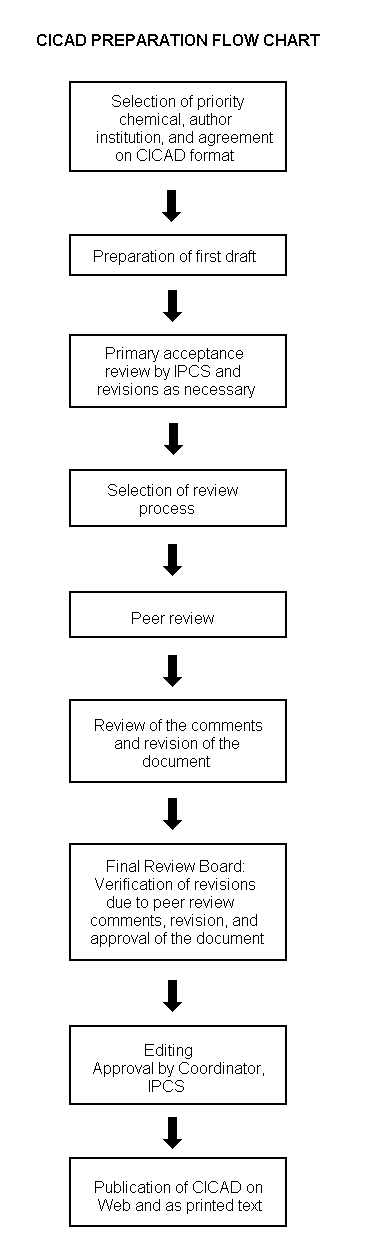
The flow chart shows the procedures followed to produce a CICAD. These procedures are designed to take advantage of the expertise that exists around the world — expertise that is required to produce the high-quality evaluations of toxicological, exposure, and other data that are necessary for assessing risks to human health and/or the environment. The IPCS Risk Assessment Steering Group advises the Coordinator, IPCS, on the selection of chemicals for an IPCS risk assessment based on the following criteria:
Thus, it is typical of a priority chemical that
|
Advice from Risk Assessment Steering Group Criteria of priority:
Thus, it is typical of a priority chemical that
Special emphasis is placed on avoiding duplication of effort by WHO and other international organizations. A prerequisite of the production of a CICAD is the availability of a recent high-quality national/regional risk assessment document = source document. The source document and the CICAD may be produced in parallel. If the source document does not contain an environmental section, this may be produced de novo, provided it is not controversial. If no source document is available, IPCS may produce a de novo risk assessment document if the cost is justified. Depending on the complexity and extent of controversy of the issues involved, the steering group may advise on different levels of peer review:
|
The Steering Group will also advise IPCS on the appropriate form of the document (i.e., a standard CICAD or a de novo CICAD) and which institution bears the responsibility of the document production, as well as on the type and extent of the international peer review.
The first draft is usually based on an existing national, regional, or international review. When no appropriate source document is available, a CICAD may be produced de novo. Authors of the first draft are usually, but not necessarily, from the institution that developed the original review. A standard outline has been developed to encourage consistency in form. The first draft undergoes primary review by IPCS to ensure that it meets the specified criteria for CICADs.
The second stage involves international peer review by scientists known for their particular expertise and by scientists selected from an international roster compiled by IPCS through recommendations from IPCS national Contact Points and from IPCS Participating Institutions. Adequate time is allowed for the selected experts to undertake a thorough review. Authors are required to take reviewers’ comments into account and revise their draft, if necessary. The resulting second draft is submitted to a Final Review Board together with the reviewers’ comments. At any stage in the international review process, a consultative group may be necessary to address specific areas of the science. When a CICAD is prepared de novo, a consultative group is normally convened.
The CICAD Final Review Board has several important functions:
Board members serve in their personal capacity, not as representatives of any organization, government, or industry. They are selected because of their expertise in human and environmental toxicology or because of their experience in the regulation of chemicals. Boards are chosen according to the range of expertise required for a meeting and the need for balanced geographic representation.
Board members, authors, reviewers, consultants, and advisers who participate in the preparation of a CICAD are required to declare any real or potential conflict of interest in relation to the subjects under discussion at any stage of the process. Representatives of nongovernmental organizations may be invited to observe the proceedings of the Final Review Board. Observers may participate in Board discussions only at the invitation of the Chairperson, and they may not participate in the final decision-making process.
This CICAD2 on n-butyl, isobutyl, sec-butyl, and tert-butyl acetates was prepared by Toxicology Advice & Consulting Ltd and the Centre for Ecology & Hydrology. The health effects sections were based on the Dutch Expert Committee on Occupational Standards and Swedish Criteria Group for Occupational Standards Basis for an Occupational Standard (Stouten & Bogaerts, 2002). Data identified as of September 2000 were considered in this source document. A comprehensive literature search of several online databases was conducted by Toxicology Advice & Consulting Ltd in January 2004 to identify any references published subsequent to those incorporated in the source document. The environmental and ecotoxicological sections were prepared by the Centre for Ecology & Hydrology from a review of the literature. Information on the nature of the peer review and the availability of the source document is presented in Appendix 2. Information on the peer review of this CICAD is presented in Appendix 3. This CICAD was considered and approved as an international assessment at a meeting of the Final Review Board, held in Hanoi, Viet Nam, on 28 September – 1 October 2004. Participants at the Final Review Board meeting are presented in Appendix 4. The International Chemical Safety Cards for n-butyl acetate (IPCS, 2003a), isobutyl acetate (IPCS, 2003b), sec-butyl acetate (IPCS, 2003c),and tert-butyl acetate (IPCS, 2002), produced by the International Programme on Chemical Safety in a separate, peer-reviewed process, have also been reproduced in this document.
The butyl acetate isomers n-butyl acetate (CAS No.
Butyl acetates can occur naturally, and they are present in various plant tissues. They may be released to the environment from industrial plants during their manufacture and use, as well as following their use as solvents in products such as lacquers, inks, coatings, and adhesives. n-Butyl acetate is used as a food flavorant and in materials for food contact use. Butyl acetates may also be formed in the atmosphere as a product of the photochemical oxidation of other chemicals.
Butyl acetates released to the environment are likely to volatilize to the atmosphere, where they will undergo photochemical oxidation reactions with hydroxyl radicals and chlorine atoms. Butyl acetates in solution will undergo hydrolysis reactions, at a rate determined by the pH of the solution. Butyl acetates are readily biodegradable. Their physicochemical properties suggest that butyl acetates will not bind to soil or be bioaccumulated.
Butyl acetates have been detected in river water, but the concentrations were not quantified. They have also been detected in air samples from industrial and chemical waste sites at concentrations up to 4.8 µg/m3. Exposure of the general population may occur from domestic sources, with n-butyl acetate concentrations up to 23 µg/m3 reported in household air. Occupational exposure to butyl acetate particles and vapour may occur in workplaces involving painting, printing, lacquering, or glueing. Mean occupational air concentrations as measured by personal air sampling ranged up to 413 mg/m3.
It is expected that the butyl acetates are readily absorbed by the respiratory tract, the skin, and the gastrointestinal tract, although no published quantitative data were identified. n-Butyl acetate, isobutyl acetate, and sec-butyl acetate may be readily hydrolysed to acetic acid and their respective alcohols (n-butanol, isobutanol, and sec-butanol) in the blood, liver, small intestine, and respiratory tract. tert-Butyl acetate is less readily hydrolysed, with about 20% of the inhaled isomer being metabolized by a different pathway involving hydroxylation to produce 2-hydroxyisopropyl acetate. Where appropriate, data on the alcohols relevant to an assessment of toxic hazard and risk of butyl acetates have been included in this CICAD. n-Butyl acetate is probably excreted via exhaled air and urine both as the unchanged compound and as metabolites after transformation in the body. Humans exposed to atmospheres containing n-butyl acetate at a concentration of 200 mg/m3 were reported to excrete 50% of the inhaled compound in the exhaled air.
Data on the acute inhalation toxicity of n-butyl acetate are highly inconsistent, with LC50 values ranging from 740 to above 45 000 mg/m3. The explanation for the inconsistent results is not known. However, the results of a recent well designed and performed experiment indicate that the toxicity of n-butyl acetate following a single 4-h inhalation is low, with no deaths occurring at exposures up to approximately 45 000 mg/m3. Additionally, n-butyl acetate has low acute toxicity by the oral and dermal routes. Oral LD50 values in male and female rats were 13.1 and 11.0 g/kg body weight, respectively, whereas no deaths occurred in rabbits exposed by the dermal route to 14.4 g/kg body weight. Data (where available) on the other isomers indicate low toxicity by the inhalation, oral, and dermal routes.
Most results indicate that n-butyl, isobutyl, and tert-butyl acetates are, at most, only slightly irritating to the skin and eyes, although there is some indication of more severe irritation with certain exposure conditions. No data on irritation were identified for sec-butyl acetate. n-Butyl acetate and isobutyl acetate have been tested for skin sensitization potential, with negative results.
Published data on systemic toxicity following repeated exposure are limited to n-butyl acetate. The principal effect observed following inhalation exposure was a reduction in activity levels at 7200 mg/m3 and above, with a NOAEC of 2400 mg/m3. However, a 13-week neurotoxicity study in which rats were exposed by inhalation to atmospheres containing up to 14 000 mg/m3 found no evidence of neurotoxicity in functional observational battery, motor activity, and scheduled-controlled operant behaviour tests or on microscopic examination of nervous system tissues.
Only limited studies (with only one tested concentration) are available on the reproductive and developmental toxicity of n-butyl acetate. Although there were signs of developmental toxicity reported, maternal toxicity was also present. Data from a developmental toxicity study with the major metabolite, n-butanol, suggest that it is not a developmental toxin. No data were identified on the other butyl acetate isomers. Studies with the key metabolites isobutanol and sec-butanol indicate lack of specific reproductive or developmental toxicity.
None of the butyl acetate isomers has been tested in long-term carcinogenicity studies. Results (where available) from genotoxicity studies, however, indicate a lack of activity. Although the metabolite tert-butanol has given some evidence of carcinogenicity in rats and mice, genotoxicity assays with this compound again failed to show any activity.
Human studies indicate that n-butyl acetate exposure via inhalation may be slightly irritating to the eyes, nose, and throat. Sensitivity to odour occurs at concentrations several orders of magnitude lower than levels at which nose and throat irritation are reported. Isobutyl acetate (2% in petrolatum) was not irritating when applied as a 48-h covered patch. No, or only very limited, data concerning effects on humans were available on the other isomers.
Based on the limited data set for n-butyl acetate, a tolerable concentration of 0.4 mg/m3 has been derived. This is based on results from the 13-week inhalation study in rats providing the lowest NOAEC. An uncertainty factor of 1000 is used, allowing for interspecies extrapolation, intraspecies variability, and extrapolation from medium-term to long-term exposure. The only available study in which representative levels of n-butyl acetate in households were identified reported values up to 0.02 mg/m3, which is 20 times less than the tolerable concentration. Occupational exposure levels, however, may exceed this tolerable concentration.
Acute toxicity data suggest that butyl acetate has moderate to low toxicity to aquatic organisms. An EC50 value of 675 mg/litre was reported for growth of green algae exposed to n-butyl acetate for 72 h. Twenty-four-hour LC50/EC50 values for aquatic invertebrates exposed to n-butyl acetate and isobutyl acetate were 72.8–205 mg/litre and 250–1200 mg/litre, respectively. Ninety-six-hour LC50 values for fish ranged from 18 to 185 mg/litre for n-butyl acetate. Forty-eight-hour LC50 values for fish exposed to isobutyl acetate ranged from 71 to 141 mg/litre. NOEC values for growth of lettuce exposed to tert-butyl acetate were 100 mg/litre (14-day NOEC in soil) and 32 mg/litre (16-day NOEC in hydroponic solution).
The butyl acetate isomers n-butyl acetate, isobutyl acetate, sec-butyl acetate, and tert-butyl acetate are colourless, flammable liquids with fruity odours. The relative molecular mass of each isomer is 116.2. Some physicochemical properties for the butyl acetate isomers are outlined in Table 1. An odour threshold value for nbutyl acetate is reported as 1.9 mg/m3 (Amoore & Hautala, 1983). Other odour threshold values reported for butyl acetates are 0.031 mg/m3 (Kruize, 1988) and 0.92 mg/m3 (Devos et al., 1990), although it is not clear to which isomers these refer.
Table 1: Physical and chemical properties.
|
n-Butyl acetate |
Isobutyl acetate |
sec-Butyl acetatea |
tert-Butyl acetate |
|
|
Synonyms |
Butyl acetate; butyl ethanoate; acetic acid, n-butyl ester |
2-Methyl-1-propyl acetate; acetic acid, 2-methylpropyl ester; beta-methylpropyl ethanoate |
1-Methylpropyl acetate; acetic acid, 2-butyl ester |
Acetic acid, tert-butyl ester; acetic acid, 1,1-dimethylethyl ester |
|
CAS No. |
|
|
|
|
|
Vapour pressure (kPa, 20 °C) |
1.2 |
1.73 |
1.33 |
6.3 at 25 °C |
|
Solubility in water (g/litre, 20 °C) |
7 |
7 |
8 |
Practically insoluble |
|
log Kow |
1.81–1.82 |
1.78 |
1.51 |
1.76 |
|
Henry’s law constant (kPa·m3/mol) |
2.85 × 10⁻² – 3.25 × 10⁻² |
3.53 × 10⁻² |
No data available |
8.73 × 10⁻² |
a Exists in D- and L-isomeric forms.
The structural formulae of the four butyl acetate isomers are given below:
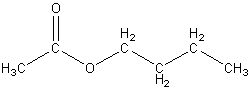
n-butyl acetate
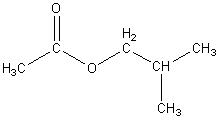
isobutyl acetate
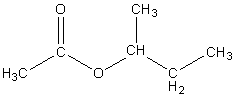
sec-butyl acetate
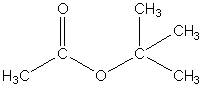
tert-butyl acetate
The conversion factors3 for the butyl acetate isomers in air (at 20 °C, 101.3 kPa) are:
1 ppm = 4.83 mg/m3
1 mg/m3 = 0.207 ppm
In this CICAD, data on butyl alcohols (relative molecular mass 74.12) that are relevant to an assessment of the toxic hazard and risk of butyl acetates have been included, where appropriate. The conversion factors for the butyl alcohols in air (at 20 °C and 101.3 kPa) are as follows:
1 ppm = 3.08 mg/m3
1 mg/m3 = 0.325 ppm
Technical grades of butyl acetates contain butyl alcohol as an impurity, and small amounts of water may also be present (Syracuse Research Corp., 1979). Commercial grades that are in current use are better defined and of higher purity than those used in the early 1930s, when studies on the toxicity of these esters began (Zaleski, 1992).
In cosmetic grades of n-butyl acetate, lesser amounts of n-butyl alcohol and isobutyl alcohol and traces of n-propyl acetate and isobutyl acetate are present, with a maximum of 10% for the sum of all possible impurities (Toy, 1989).
Methods are available for measuring butyl acetates in environmental samples (NIOSH, 1994). Ten litres of air are sampled on a solid sorbent tube (coconut shell charcoal) and desorbed with carbon disulfide. Aliquots are analysed by gas chromatography equipped with a flame ionization detector. For 10-litre air samples, the method is applicable for n-butyl acetate, isobutyl acetate, sec-butyl acetate, and tert-butyl acetate at concentration ranges of 352–1475 mg/m3, 306–1280 mg/m3, 478–2005 mg/m3, and 424–1780 mg/m3, respectively.
The use of diffusive samples in monitoring butyl acetate vapours in indoor/workplace air has been reported (De Bortoli et al., 1987; Gentry & Walsh, 1987; Kristensson & Beving, 1987; Sala, 1987).
Butyl acetates can be determined by infrared and ultraviolet spectroscopy, gas chromatography, gas chromatography/mass spectrometry, and headspace gas chromatography (Toy, 1989; Weller & Wolf, 1989).
Butyl acetate recovery rates were measured in two types of canister used to sample atmospheric air for analysis of volatile organic compounds, including butyl acetate, at different relative humidities. Recoveries after 28 days in a fused silica-lined canister were 63% and 83% at relative humidity levels of 27% and 53%, respectively. The corresponding values for a polished stainless steel canister were 18% and 93% (Ochiai et al., 2002).
Analysis of low concentrations of butyl acetate in water often requires a preconcentration stage. Senin et al. (1988) reported a method for the analysis of wastewater using a modified aluminosilicate sorbent, zeolite TsVK XI-a, and analysis by gas chromatography with a double flame ionization detector to give a detection limit of 0.1 mg/litre.
Concentrations of organic solvents such as n-butyl acetate have been quantitatively and quasi-continuously analysed in the waste air of a pharmaceutical production facility by means of infrared spectrometry (Düblin & Thöne, 1989).
Several chromatographic methods to determine butyl acetates and butyl alcohols (to which the acetates are rapidly hydrolysed in the blood) have been published, including one proposed by the US EPA (Spingarn et al., 1982; Uehori et al., 1987; Franke et al., 1988; Streete et al., 1992).
No validated methods for biological monitoring of workers exposed to butyl acetates were identified.
All of the butyl acetate isomers have been found to occur naturally in a range of fruits and food products. The n-butyl, isobutyl, and tert-butyl acetates are found in bananas and related fruits (Bisesi, 1994).
n-Butyl acetate has been identified in sunflower (Helianthus annuus) stems (Buchbauer et al., 1993). It is formed during fermentation in yeast and has also been detected in a wide variety of food products, including milk, cheese, beer, rum, brandy, wine, whiskey, cocoa, black tea, coffee, roasted nuts, vinegar, and honey (Maarse & Visscher, 1989). Concentrations were up to 29.5 mg/kg in apples and up to 0.1 mg/kg in grapes, mangoes, melons, and strawberries. n-Butyl acetate has also been detected in apricots and plums (Gomez et al., 1993) and in nectarines (Takeoka et al., 1988). Concentrations in vinegar were up to 166 mg/kg. In drinks, n-butyl acetate was found in apple juice at levels up to 2.2 mg/kg, in cider up to 1.3 mg/kg, in beer up to 0.2 mg/kg, and in weinbrand (a type of brandy) up to 0.4 mg/kg (Maarse & Visscher, 1989).
Isobutyl acetate is found naturally in raspberries, pears, pineapples, and natural cocoa aroma (Opdyke, 1978), black currants, guava, grapes, melons, peaches, strawberries, tomatoes, soya beans, plums, passion fruit, star fruit, and dill herb (Maarse & Visscher, 1989).
sec-Butyl acetate has been found in vinegar at concentrations of 43–67 mg/kg (Maarse & Visscher, 1989).
Butyl acetates may be formed in the atmosphere during the photochemical oxidation of other chemicals. Butyl acetate has been identified as a product of gas-phase reactions of ethyl-n-butyl ether with hydroxyl radicals in the presence of nitric oxide. The molar yield for this reaction was 0.032 ± 0.001 (Johnson & Andino, 2001). tert-Butyl acetate has been identified as a product of gas-phase reactions of di-tert-butyl ether with chlorine atoms and hydroxyl radicals (Langer et al., 1996). The molar tert-butyl acetate yields were 0.85 ± 0.11 and 0.84 ± 0.11 for reactions with chlorine atoms and hydroxyl radicals, respectively. tert-Butyl acetate is a product of ethyl-tert-butyl ether reactions with hydroxyl radicals in the presence of nitrogen oxides (Smith et al., 1992). The molar tert-butyl acetate yield was 0.13 ± 0.001.
Annual global production of butyl acetate was 528 000 tonnes in 1998, whereas annual production of butyl acetate in the USA was reported to be 170 000 tonnes. For regions outside of the USA, annual production was as follows: Japan, 50 000 tonnes; Mexico, 8000 tonnes; South America, 39 000 tonnes; China (Province of Taiwan), 40 000 tonnes; and Western Europe, 221 000 tonnes (CEH, 1999).
In the USA, about 100 000 tonnes of butanol were consumed in 1997 to manufacture butyl acetate (CEH, 1999), which would amount to the manufacture of approximately 150 000 tonnes of n-butyl acetate (assuming 95% theoretical yield for the chemical conversion). The anticipated 1997–2002 US average annual rate of growth of n-butyl acetate production was estimated at 2.2% (CEH, 1999). In Japan, about 38 000 tonnes of butanol were converted to n-butyl acetate in 1997. Using the same yield assumption as above for the chemical conversion, 1997 production in Japan was calculated to be 56 600 tonnes (CEH, 1999).
Global industrial production of isobutyl acetate in 2002 was approximately 74 000 tonnes (CEH, 2003).
Butyl acetates, especially n-butyl acetate and isobutyl acetate, are used as solvents. The Dutch paint industry was reported to have used 1750 tons [sic] of n-butyl acetate and 1275 tonnes of isobutyl acetate in 1979 (Doorgeest et al., 1986). According to data from the Substances in Preparations in Nordic Countries database (SPIN), total uses in Finland, Denmark, and Norway for 2001 were approximately 28 300 tonnes for n-butyl acetate (in 5200 preparations), 1600 tonnes for isobutyl acetate (in 250 preparations), and 30 tonnes for sec-butyl acetate (in 15–20 preparations), respectively. No information was available on tert-butyl acetate in these three countries. n-Butyl acetate is mainly used as a solvent and a thinner in the production of nitrocellulose lacquers in the protective coatings industry. It is also used in the manufacture of high-polish lacquers and varnishes, in a protective low-viscosity vehicle coating used in the motor industry, and in liquid floor wax (Zaleski, 1992). n-Butyl acetate is further used in:
Both n-butyl and isobutyl acetates are used in perfumery. Isobutyl acetate is also used as a component of hydraulic fluids and as a solvent in manufacturing lacquers and paint removers. sec-Butyl acetate also serves as a solvent for nitrocellulose and nail enamel and in the production of paper coatings.
tert-Butyl acetate is used as a solvent for lacquers (Zaleski, 1992).
Butyl acetate has been identified as a suitable drilling fluid for use during deep ice-coring projects (Gosink et al., 1991).
In Sweden, in 1988, it has been reported that n-butyl acetate was used in 1795 general products and 205 consumer products, totalling approximately 16 000 tonnes; isobutyl acetate was used in 55 general products and 15 consumer products, totalling approximately 45 tonnes; and sec-butyl acetate was used in 1 general product and no consumer products, totalling approximately 200 kg. tert-Butyl acetate was apparently not used in Sweden during this period (Swedish Work Environment Authority, 2001).
n-Butyl acetate may be released to the environment during its use in industrial coatings installations where the plant is not equipped to recover or incinerate vapours. Quantitative data on the amounts released were not available (IUCLID, 2000). n-Butyl acetate is also released to the environment during its use in lacquers, inks, coatings, and adhesives (IUCLID, 2000).
Releases of n-butyl acetate to the atmosphere from industrial plants in the Netherlands were 1170 and 1280 tonnes in 1990 and 1988, respectively (Berdowski & Jonker, 1993). The corresponding figures for isobutyl acetate were 4.2 and 5.6 tonnes per year.
Releases of butyl acetate to surface water from industrial plants in the Netherlands were 0.5 and 2.9 tonnes in 1990 and 1988, respectively (Berdowski & Jonker, 1993).
Butyl acetate used as a drilling fluid is likely to evaporate to the atmosphere, although some may disperse to the water column (Gosink et al., 1991).
There is a paucity of measured volatilization rates for n-butyl acetate, but its Henry’s law constant values (ranging from 2.85 × 10⁻² to 3.25 × 10⁻² kPa·m3/mol) suggest that n-butyl acetate will evaporate from water at a moderate rate (SIDS, 2001). The volatilization half-life from a model river (EPIWIN model version 3.05; Syracuse Research Corp., 2000) 1 m deep, flowing at 1 m/s, with a wind velocity of 3 m/s, was calculated to be 6.1 h; the half-life from a similar river with a depth of 10 m was 7.4 days (IUCLID, 2000). Corresponding values from a model river and lake were 201 min and 5.3 days (SIDS, 2002). Output from the Mackay Fugacity Model Level III (Syracuse Research Corp., 2000) suggested that n-butyl acetate is likely to be distributed to air (93.4%), water (5.78%), soil (0.063%), and sediment (<0.1%) (SIDS, 2002).
For isobutyl acetate, there is also a paucity of measured volatilization rates, but its Henry’s law constant value of 3.53 × 10⁻² kPa·m3/mol suggests that it will evaporate from water at a moderate rate (SIDS, 2003). The volatilization half-lives from a model river and lake (EPIWIN model version 3.05; Syracuse Research Corp., 2000) were 2.9 h and 5.08 days (SIDS, 2003). Output from the Mackay Fugacity Model Level III (Syracuse Research Corp., 2000) suggested that isobutyl acetate is likely to be distributed to air (12.3%), water (42.7%), soil (44.9%), and sediment (0.106%) (SIDS, 2003).
Using the Mackay Fugacity Model Level III, when tert-butyl acetate is discharged to water, 60% evaporates and 13% is removed by chemical reaction; very little is transferred to sediment. When tert-butyl acetate is emitted to air, only 0.25% deposits in water and soil (Webster & Mackay, 1999).
n-Butyl acetate and isobutyl acetate in solution will both undergo hydrolysis reactions to form acetic acid. These reactions follow second-order kinetics and are dependent upon the concentrations of the catalyst ions, hydrogen and hydroxyl. For n-butyl acetate, hydrolysis is more rapid at pH values greater than 5.5 (Johannes et al., 1997). Half-lives for n-butyl acetate calculated at 20 °C ranged from 11.4 days at pH 9 to 114 days at pH 8 to 3.1 years at pH 7 (SIDS, 2002). Half-lives for isobutyl acetate calculated at 20 °C using the HYDROWIN model version 1.67 (US EPA, 2000) ranged from 3.3 years at pH 7 to 122 days at pH 8 (SIDS, 2003).
n-Butyl acetate in the atmosphere will undergo reactions with hydroxyl radicals to form 2-oxobutyl acetate and 3-oxybutyl acetate. Experimentally derived rate constants for this reaction were calculated to be 5.2 ± 0.5 × 10⁻¹² cm3/molecule per second (Veillerot et al., 1996), 5.71 ± 0.94 × 10⁻¹² cm3/molecule per second (Williams et al., 1993), and 3.29 ± 0.35 × 10⁻¹² cm3/molecule per second (Ferrari et al., 1996). Other atmospheric processes, such as direct photolysis, wet deposition, and dry deposition, are not expected to play an important role in the removal of n-butyl acetate from the atmosphere (SIDS, 2001).
tert-Butyl acetate in the atmosphere will undergo reactions with chorine atoms. The rate constant for this reaction was calculated to be 1.6 ± 0.3 × 10⁻¹¹ cm3/ molecule per second (Langer et al., 1996). Reactions with hydroxyl radicals gave a rate constant of 4.4 ± 0.4 × 10⁻¹³ cm3/molecule per second. Products formed from reactions of tert-butyl acetate with hydroxyl radicals in the presence of nitric oxide were acetic anhydride and acetone, with molar formation yields of 0.49 ± 0.05 and 0.20 ± 0.02, respectively (Tuazon et al., 1998).
The photochemical removal of isobutyl acetate as mediated by hydroxyl radicals occurs with calculated half-lives of 1.9–2.3 days (SIDS, 2003).
The Koc for n-butyl acetate was calculated to be 233 (Karickhoff et al., 1979), whereas that for isobutyl acetate was calculated (using the PCKOCWIN model version 1.66; US EPA, 2000) to be 17.5 (SIDS, 2003). Log Kow values ranging from 1.81 to 1.82 for n-butyl acetate and of 1.78 for isobutyl acetate suggest that both are unlikely to partition from water to soil, sediment, or biota, and they therefore may be leached through soil to groundwater (SIDS, 2001, 2003).
n-Butyl acetate is readily biodegradable. Eighty-three per cent of n-butyl acetate was degraded within 20 days by a non-adapted culture from domestic sewage sludge, while 61% was degraded in seawater. Measured chemical oxygen demand was reported to be 2.32 mg/ mg, with a theoretical oxygen demand of 2.20 mg/mg (Price et al., 1974). Isobutyl acetate is also readily biodegradable. In the same study, 81% of isobutyl acetate was degraded by sewage sludge, and 37% was degraded in seawater within 20 days.
Biodegradation of tert-butyl acetate by US EPA-approved Polyseed was 28% in 28 days. Using acclimated bacteria, biodegradation was 70% or 75% in 28 days (M.I. Banton, personal communication, 1998). Thus, depending on the microorganisms present, tert-butyl acetate is either inherently biodegradable or readily biodegradable.
A stable microbial population consisting of seven strains of bacteria and three strains of yeast, isolated from various samples of soil, water, and activated sludge, was able to completely degrade initial concentrations of up to 10 g/litre of a mixture of butyl acetate and xylene within 96 h (Gardin et al., 1999). The mixture contained 70% xylene (meta- and ortho-isomers) and 30% butyl acetate (isomers not specified). Degradation was higher in a two-phase aqueous:silicone oil-phase system, with a degradation rate of 53 mg/litre per hour for butyl acetate (Gardin et al., 1999).
Five species of fungus were able to use n-butyl acetate vapour as the sole source of carbon and energy. Species used in this test were Cladosporium resinae, Cladosporium sphaerospermum, Exophiala lecanii-corni, Mucor rouxii, and Phanerochaete chrysosporium, and significant growth of each fungus was reported within 30 days at pH 3.5, 5.0, and 6.5 (Qi et al., 2002).
The low log Kow values suggest that n-butyl acetate, isobutyl acetate, and sec-butyl acetate are unlikely to be bioaccumulated by organisms. A BCF in fish of 14 was calculated for n-butyl acetate using its log Kow (Staples, 2001), whereas a BCF in fish of 4.7 was calculated for isobutyl acetate using the log Kow for isobutyl acetate (SIDS, 2003). tert-Butyl acetate has a negligible tendency to bioaccumulate. The BCF is less than 5 (Webster & Mackay, 1999).
In a German field study in selected representative households, low levels of n-butyl acetate were found, at concentrations ranging from not detected (detection limit not given) to 23 µg/m3. The total concentration of volatile organic compounds was 2–3 times higher in winter than in summer (Seifert et al., 1989). n-Butyl acetate was detected at median concentrations of 2–5 µg/m3 in private homes in England (location unspecified) (Crump, 1995), and it was identified in 69% of samples from 26 homes in Finland (location unspecified) (Kostianen, 1995).
In a Swiss study of new and recently renovated buildings, a butyl acetate concentration of 549 µg/m3 was measured. Butyl acetate was found to be off-gassed from a sealing wax on a cork floor (Rothweiler et al., 1992).
Butyl acetate concentrations of 0.1 and 4.8 µg/m3 emanating from US industrial and chemical waste disposal sites have been reported (Pellizzari, 1982).
n-Butyl acetate was present in water samples from seven of the eight small rivers that act as tributaries to Lake Constance (south-west Germany) (Jüttner, 1992). Isobutyl acetate was present in only one tributary. The concentrations were not quantified.
A summary of levels of butyl acetates in workplace air is presented in Table 2. The occurrence of n-butyl acetate particulates in paint spray aerosols has been investigated in six US commercial furniture facilities where sealers and lacquers containing 13–42% (w/w) n-butyl acetate were used. Theoretically, n-butyl acetate in paint particles will vaporize very quickly (e.g., 0.5–1 s for a 20-µm particle). In practice, breathing zone 8-h time-weighted average measurements (24 data sets) showed a mean total (i.e., vapour plus particles) exposure level of 19 mg/m3 (range 5.2–48.3 mg/m3), of which the particle exposure (mean 3.8 mg/m3; range not detected – 11.0 mg/m3) contributed about 20% (Williams, 1995).
Table 2: Occupational air levels (personal air sampling).
|
Work |
Isomer |
Mean concentration (mg/m3) |
Concentration range (mg/m3) |
Reference |
|
Paint industry |
n-Butyl acetate |
– |
13, 17a |
Petren & Vesterberg, 1987 |
|
Paint industry |
n-Butyl acetate |
9.7 |
0–200 |
Wang & Chen, 1993 |
|
Paint industry |
n-Butyl acetate |
9b |
1–1680 |
Lundberg & Hakansson, 1985 |
|
Paint industry |
n-Butyl acetate |
Up to 330 |
van der Belt et al., 1982 |
|
|
Isobutyl acetate |
Up to 110 |
|||
|
Glue manufacture |
n-Butyl acetate |
Up to 17 |
van der Wal & van der Belt, 1984 |
|
|
Painter’s workplace |
Isobutyl acetate |
– |
4–58 |
Doorgeest et al., 1986 |
|
Lacquering furniture |
n-Butyl acetate |
– |
0.3–120 |
Doorgeest et al., 1986 |
|
Isobutyl acetate |
0.2–486 |
|||
|
Lacquering brushes (dipping) |
n-Butyl acetate |
– |
4–50 |
Doorgeest et al., 1986 |
|
Indoor painting (brushing, rolling) |
Butyl acetate |
– |
2–6 |
Scheffers et al., 1985 |
|
Indoor painting (rolling water-based paint) |
Butyl acetate |
0.006 |
Up to 0.030 |
Norris et al., 1997 |
|
Spray painting |
Butyl acetate |
– |
54, 65c |
Scheffers et al., 1985 |
|
Spray painting |
Butyl acetate |
– |
22.3–76.5 |
Triebig & Schaller, 1991 |
|
Spray painting |
Butyl acetate |
33 |
Up to 629 |
Kurppa & Husman, 1982 |
|
Spray painting |
Butyl acetate |
9 |
– |
Alexandersson & Hedenstierna, 1988 |
|
Spray painting |
n-Butyl acetate |
19 |
5.2–48.3 |
Williams, 1995 |
|
Spray painting |
n-Butyl acetate |
– |
16.5–180 |
De Medinilla & Espigares, 1988 |
|
Isobutyl acetate |
– |
37.6–134.0 |
||
|
Spray painting |
Butyl acetate |
11.7 |
2–23 |
Winder & Turner, 1992 |
|
Fingernail sculptors |
Butyl acetate |
1.9 ± 2.4 |
<0.5–11.2 |
Hiipakka & Samimi, 1987 |
|
Screen printers: |
Butyl acetate |
Samimi, 1982 |
||
|
- printing press |
55.9 ± 3.9 |
|||
|
- automatic dryer conveyor belt |
12.1 ± 6.3 |
|||
|
- manual drying |
21.9 ± 7.3 |
|||
|
- paint mixing |
16.5 ± 5.3 |
|||
|
- screen wash |
413 ± 82.6 |
a n-Butyl acetate was found in 2 out of 22 air samples.
b Median concentration.
c Data from two subjects.
In Belgium, isobutyl acetate was identified in the air of 5% of operations using printing pastes and inks, 17% using paints and varnishes, 45% of auto repair shops, and about 30% of miscellaneous industries (Veulemans et al., 1987). Isobutyl acetate was detected in shoe and leather factories in Italy at concentrations of 0.2–1.6 mg/m3 (Cresci et al., 1985). A mean concentration of 0.5 mg/m3 was detected in the workplace air of a US company performing spray painting and glueing (Whitehead et al., 1984). Isobutyl acetate was determined in the breathing zone of an automobile paintshop in Spain at concentrations of 37.6, 109.6, and 134.0 mg/m3 (de Medinilla & Espigares, 1988). n-Butyl acetate was detected in the range of 0.02–0.79 mg/m3 during 1 work week in 10 houses above the workrooms of screen printing plants in inner Amsterdam (Verhoeff et al., 1988). A study was conducted among 196 paint workers in two paint manufacturing factories and 25 various kinds of spray painting factories in Tapei, China (Province of Taiwan). Workers were exposed to mixtures of organic solvents, and butyl acetate was among the eight most frequently used. It was detected (73 samples taken during a 24-h period) at a range of 0–200 mg/m3 (Wang & Chen, 1993).
Data are insufficient to estimate human exposure from all routes. JECFA (1998) estimated current levels of intake of n-butyl acetate from use as a flavouring agent in food as 170 μg/person per day in the USA and 1200 μg/person per day in Europe (see section 12). This is likely to be a minor source of overall human exposure.
The most common routes of entry of the butyl acetate isomers into the body are via the lungs and through the skin. Their presence in fruit and a range of other food products makes the oral route also of importance. Although no published quantitative data on absorption were identified, it is expected that the butyl acetate isomers would be absorbed readily by the respiratory tract, the skin, and the gastrointestinal tract.
Human blood/air and rat blood/air partition coefficients for n-butyl acetate were experimentally determined to be 677 and 1160, respectively; those for isobutyl acetate were found to be 578 and 880, respectively (Kaneko et al., 1994). Some rat tissue/blood partition coefficients for these butyl acetates are presented in Table 3.
Table 3: Rat tissue/blood partition coefficients for n-butyl and isobutyl acetate.a,b
|
Isomer |
Tissue/blood partition coefficient |
||||
|
Liver |
Kidney |
Brain |
Muscle |
Fat |
|
|
n-Butyl acetate |
3.14 |
2.72 |
1.85 |
1.76 |
17 |
|
Isobutyl acetate |
5.06 |
4.08 |
2.65 |
2.12 |
21.3 |
a From Kaneko et al. (1994).
b Calculated as (tissue/air) / (blood/air).
n-Butyl acetate, isobutyl acetate, and sec-butyl acetate may be readily hydrolysed to acetic acid and their respective alcohols in the blood, liver, small intestine, and respiratory tract, as has been shown in a number of in vitro experiments using homogenates from liver, small intestinal mucosa, and ethmoturbinates (Longland et al., 1977; Dahl et al., 1987). tert-Butyl acetate is less readily hydrolysed. When added to blood samples from male volunteers or female rats, respective hydrolysis half-lives of n-butyl acetate were 4 and 12 min, while those of tert-butyl acetate were 300 and 270 min (Essig et al., 1989).
The acetic acid is oxidized via the citric acid cycle to carbon dioxide and water. n-Butanol and isobutanol are rapidly metabolized by alcohol dehydrogenase to the respective aldehyde and by aldehyde dehydrogenase to the corresponding acids. These are oxidized further to carbon dioxide. Small amounts of isobutanol may be excreted unchanged or conjugated as a glucuronide (IPCS, 1987).
sec-Butanol is also metabolized by alcohol dehydrogenase, and the metabolite methyl ethyl ketone is excreted in the breath or urine or is further metabolized, producing 3-hydroxy-2-butanone and 2,3-butanediol (IPCS, 1987).
tert-Butanol, however, is a poor substrate for alcohol dehydrogenase and is only slowly metabolized in mammals. It is eliminated in urine as a glucuronide conjugate and as acetone and via the breath as acetone and carbon dioxide (IPCS, 1987).
When a single dose of approximately 30 mg/kg body weight of 14C-labelled n-butyl acetate (in 0.9% sodium chloride; 0.59–0.67 MBq/animal) was injected intravenously into the tail vein of male Sprague-Dawley rats (n = 32), the isomer was eliminated very rapidly from the blood, with a half-life of 0.4 min. Following dosing, [14C]n-butyl acetate was detected in brain tissues within the first 2.5 min, reaching a maximum concentration of 3.8 µg equivalents/g tissue after approximately 2 min. Maximum levels of the metabolite [14C]n-butanol of 52 and 79 µg equivalents/g tissue were found in whole blood and brain, respectively, approximately 2.5 min after dosing. The metabolite was rapidly eliminated from both blood and brain (with a half-life of approximately 1 min); 20 min after dosing, concentrations were below the detection limit (not given). Other metabolites detected in the blood, although to only a minor degree in the brain, included n-butyric acid (with a maximum of 5.7 µg equivalents/g whole blood at 7.4 min, followed by a slow decrease) and polar metabolites (i.e., citric acid cycle intermediates, glucuronide and sulfate conjugates; with a maximum level of 12.2 µg equivalents/g tissue at 4.2 min) (Deisinger & English, 1997).
When nembutal-anaesthetized rats were exposed for 1 h to n-butyl acetate at 33 880 mg/m3 via a tracheal cannula, a nearly constant n-butyl acetate blood level of 140 µmol/litre (16.3 mg/litre) was reached within 1 min. No n-butyl acetate could be detected 1 min after the exposure had finished. Blood levels of n-butanol increased over 40 min of exposure to 480 µmol/litre (35.6 mg/litre). When the exposure was stopped, n-butanol was eliminated from the blood with a half-life of 5 min (Essig et al., 1989).
In a similar experiment, groups of five rats were exposed for 5 h to n-butyl acetate at a concentration of 4840 mg/m3. n-Butyl acetate and n-butanol concentrations in the blood were measured during the first hour at 10-min intervals and during the next 4 h at 15-min intervals. After a steady increase, followed by a slight decrease, the concentration of n-butyl acetate reached a nearly constant level of 24.6 ± 3.8 µmol/litre blood (2.9 ± 0.4 mg/litre) at about 1 h. The concentration of n-butanol followed a similar pattern, reaching a level of 52.4 ± 10.3 µmol/litre (3.9 ± 0.8 mg/litre). When animals were given, after 30 min of exposure, a single intraperitoneal injection of ethanol (790 mg/kg body weight), the amount of n-butanol in the blood was doubled, while mean n-butyl acetate levels were slightly lower (Groth & Freundt, 1991). Alcohol dehydrogenase, involved in the metabolism of n-butanol to its aldehyde, may be inhibited or retarded by ethanol. The increase in n-butanol is thus explained by substrate competition between both alcohols and the alcohol dehydrogenase with ethanol in excess.
Experiments were also performed in rats with the isomer tert-butyl acetate. Inhalation of 22 264 mg/m3 for 2 h resulted in continuously increasing blood levels to approximately 400 µmol/litre (46.5 mg/litre). When exposure ceased, tert-butyl acetate was eliminated in two phases, with half-lives of 5 and 70 min. Blood levels of the metabolite tert-butanol increased continuously throughout the experimental period of 300 min (Essig et al., 1989). When rats were exposed to about 2100 mg/m3, blood levels of both tert-butyl acetate and tert-butanol steadily increased during the 5-h experimental period, with tert-butyl acetate levels generally exceeding those of tert-butanol. At 4 h, these levels became approximately equal; tert-butyl acetate levels reached a plateau value of about 285 µmol/litre (33.1 mg/litre), while tert-butanol continued to increase to approximately 340 µmol/litre (25.2 mg/litre) by the end of the experiment. During exposure to 4356 mg/m3 for 4.25 h, peak concentrations of approximately 450 and 550 µmol/litre (52.3 and 40.8 mg/litre) were measured for tert-butyl acetate and tert-butanol, respectively. Thereafter, tert-butyl acetate levels rapidly declined to approximately 250 µmol/litre (29.0 mg/litre) within 15 min (the end of the experiment), while the tert-butanol level remained constant (Groth & Freundt, 1991).
Rats exposed via inhalation to isobutyl acetate at 9700 mg/m3 in a closed chamber had blood concentrations of isobutanol twice those of isobutyl acetate at both 5 and 10 min (Poet, 2003). From 10 to 25 min into the exposure, the blood isobutanol concentrations were approximately 2- to 2.5-fold higher than the corresponding isobutyl acetate levels.
In vitro experiments have demonstrated that oxidative cytochrome P450-mediated mechanisms may play a role in the cleavage of acetate esters. Using microsomes isolated from phenobarbital-induced rat livers, butyl acetate (at a concentration of 10%, as higher concentrations disrupt the microsomal suspension) bound to cytochrome P450 (type I) stimulated carbon monoxide-inhibitable NADPH oxidation in a way typical for cytochrome P450 substrates. It did not alter cytochrome P450, cytochrome b5, or NADPH-cytochrome c reductase levels (Ivanetich et al., 1978).
For the oxidation of n-butyl acetate by cytochrome P450 2E1, the major ethanol-inducible isoform purified from rabbit liver, a KM of 1.5 mmol/litre and a Vmax of 0.15 nmol aldehyde formed per minute per nanomole P450 were determined (Peng et al., 1995).
Using a reconstituted system containing cytochrome P450 2B4, the major phenobarbital-inducible isoform purified from rabbit liver, sec-butyl acetate was demonstrated to undergo hydroxylation to an unstable hemiketal (2-hydroxy-2-acetoxybutane) followed by a non-hydrolytic cleavage to 2-butanone (methyl ethyl ketone) (Peng et al., 1995).
n-Butyl acetate is probably excreted via exhaled air and urine both as the unchanged compound and as metabolites after transformation in the body. Humans exposed to atmospheres containing n-butyl acetate at a concentration of 200 mg/m3 were reported to excrete 50% of the inhaled compound in the exhaled air (Anonymous, 1992). No data on elimination for the other isomers were identified.
A pharmacokinetic model for n-butyl acetate and its metabolites (butanol, butyraldehyde, and butyrate) has been developed with the objective of formulating a family approach for estimating reference concentrations/doses using internal dose metrics for a series of metabolically related organic chemicals (Barton et al., 2000). This was provisionally parameterized based on limited literature and experimental data. The model consists of submodels for each chemical linked by metabolism and includes compartments for the liver, lung, fat (for the n-butyl acetate component), other tissues, arterial blood, and venous blood. Fat was not included in the models of the metabolites due to their lower lipophilicity. The rate of metabolism was described using a Michaelis-Menten equation (in which metabolism is a function of the maximum metabolic rate for that tissue), the free concentration in tissue, and the concentration at which half-maximal activity occurs. Three routes of administration were included: intravenous injection, oral intubation, and inhalation. The model was implemented for adult rats exposed to n-butyl acetate, and the limited available pharmacokinetic data were used to estimate values for metabolism and clearance parameters. The data allowed development of an initial set of values for the chemical-specific parameters. As an example, using a NOAEC of 2400 mg/m3 for inhalation exposure (6 h/day) to n-butyl acetate identified from the 13-week toxicity study of Bernard & David (1996) (see section 8.4), the model estimated that an equivalent NOAEC for n-butanol would be 2500 mg/m3 (when effects are proportional to blood concentrations of n-butanol or its metabolites), the higher dose reflecting the difference in respiratory tract absorption between the two molecules.
In an unpublished study, the absorption, distribution, metabolism, and excretion of tert-butyl acetate were investigated following inhalation of 480 or 4800 mg/m3. Metabolism of tert-butyl acetate appeared to follow two pathways — one involving hydroxylation to produce 2-hydroxyisopropyl acetate (20% at 480 mg/m3) and the second involving cleavage of the ester linkage to produce tert-butanol and acetic acid (80% at 480 mg/m3). At 4800 mg/m3, 69% of the inhaled dose was eliminated in the urine and 27% in expired air. At 480 mg/m3, 89% was in the urine and 5% in air, suggesting that metabolism of tert-butyl acetate may be somewhat saturated at 4800 mg/m3 (Girkin & Kirkpatrick, 2000).
Data on the acute toxicity of n-butyl acetate by the inhalation route are summarized in Table 4. The results from studies in rats show that exposure to nearly saturated atmospheres generated by evaporation did not result in death. The data from atmospheres/aerosols generated by atomizers are highly inconsistent, with LC50 values ranging from 740 mg/m3 to above 45 000 mg/m3. Following the report of an LC50 of 740 mg/m3 for aerosolized n-butyl acetate (Debets, 1986), further studies were conducted at three different laboratories in an attempt to replicate the data, to differentiate between data from vapours and aerosols, and to investigate the role of small particles and of relative humidity (unpublished studies reviewed in Norris et al., 1997). These inconsistencies occurred not only between laboratories, but also within the same laboratory. Using identical inhalation equipment and aerosol generation procedures, one laboratory observed no mortality at concentrations up to approximately 21 395 mg/m3. In a second laboratory, LC50s of approximately 1900 mg/m3 and 5300 mg/m3 were determined, while no deaths occurred in a third experiment with exposures up to 45 000 mg/m3. In the third laboratory, findings not observed in the other two laboratories included low chamber relative humidity, brief times to death (all dead within 24 h post-exposure, 7/10 animals in the highest concentration group died in the last 2 h of exposure versus mortality 1–4 days post-exposure in the other studies), and the histological finding of vesicular emphysema, suggesting that there might have been methodological problems in this study. The explanation for the inconsistent results from exposure to aerosolized n-butyl acetate is not known (Norris et al., 1997).
Table 4: Effects on experimental animals due to acute inhalation exposure to n-butyl acetate.
|
Species |
Concentration (mg/m3) |
Duration (h) |
Effect |
Remarks |
Reference |
|
Rat (n = 5 per sex per group) |
800 |
4 |
6/10 dead |
Head-only; dynamic inhalation system; atomizer |
Debets, 1986 |
|
2 200 |
4 |
10/10 dead |
|||
|
5 200 |
4 |
10/10 dead |
|||
|
Rat (n = 5 per sex per group) |
32 000 |
4 |
0/10 dead |
Whole body; statically generated, nearly saturated vapour |
Nachreiner & Dodd, 1987 |
|
29 200 |
4 |
0/10 dead |
Whole body; dynamic inhalation system; evaporation |
||
|
13 890 |
4 |
0/10 dead |
|||
|
9 345 |
4 |
0/10 dead |
|||
|
Rat (n = 5 per sex per group) |
1 305 |
4 |
0/10 dead |
Whole body; dynamic inhalation system; atomizer |
Nachreiner & Dodd, 1987 |
|
2 490 |
4 |
10/10 dead |
|||
|
Rat |
4 990 |
4 |
0/10 dead |
Head only; dynamic inhalation system; atomizer |
BASF AG/NOTOX C. V., 1988 |
|
Rat |
21 395 |
4 |
0/10 dead |
Head-nose only; dynamic inhalation system; atomizer |
BASF AG, 1988a |
|
Rat |
2 005 |
4 |
0/10 dead |
Head-nose only; dynamic inhalation system; atomizer |
BASF AG, 1988b |
|
21 395 |
4 |
0/10 dead |
|||
|
Rat |
21 395 |
4 |
0/10 dead |
Head-nose only; dynamic inhalation system; evaporation |
BASF AG,1988c |
|
Rat (n = 5 per sex per group) |
3 990 |
4 |
3/10 dead |
Whole body; dynamic inhalation system; atomizer |
Nachreiner, 1993 |
|
5 730 |
4 |
5/10 dead |
|||
|
5 790 |
4 |
6/10 dead |
|||
|
6 560 |
4 |
9/10 dead |
|||
|
Rat (n = 5 per sex per group) |
3 900 |
4 |
0/10 dead |
Whole body; dynamic inhalation system; different atomizers under varying conditions (pressure, humidity) testing new and old (latter two data) production material |
Nachreiner, 1994 |
|
6 800 |
4 |
0/10 dead |
|||
|
7 000 |
4 |
0/10 dead |
|||
|
7 300 |
4 |
0/10 dead |
|||
|
7 600 |
4 |
0/10 dead |
|||
|
25 000 |
4 |
0/10 dead |
|||
|
45 000 |
4 |
0/10 dead |
|||
|
7 300 |
4 |
0/10 dead |
|||
|
7 500 |
4 |
0/10 dead |
|||
|
Rat (n = 10 per sex per group) |
7 200 |
6 |
0/20 dead |
Vapours generated by evaporation |
Bernard & David, 1994 |
|
14 000 |
6 |
0/20 dead |
|||
|
29 000 |
6 |
0/20 dead |
|||
|
Mouse |
6 000 |
2 |
LC50 |
NIOSH, 2003 |
|
|
Guinea-pig |
16 000 |
0.08 |
Irritation |
Sayers et al., 1936 |
|
|
13.5 |
No other effects |
||||
|
33 000 |
6 |
Incoordination |
|||
|
11.7 |
Narcosis |
||||
|
67 000 |
0.25–0.5 |
Narcosis |
|||
|
4 |
Dead |
Clinical signs observed in rats during acute inhalation exposures (from atomizers) ranged from eye irritation (periocular wetness, blepharospasms) to nervous system effects (hypoactivity, ataxia, forced/shallow breathing, narcosis). At gross necropsy of the deceased animals, discoloration of the lungs and fluid in the thoracic cavity and trachea were observed. Microscopic examination of the lungs from some animals revealed congestion, alveolar haemorrhage, sloughing of bronchiolar mucosa, necrosis of alveolar epithelial cells, and oedema (Nachreiner & Dodd, 1987; Nachreiner, 1993). Discoloration of the lungs was also observed in rats surviving a 4-h exposure to approximately 23 000 or 43 000 mg/m3. Clinical signs (narcosis, incoordination, perioral wetness) were seen only at the higher level on the exposure day; no clinical signs were observed during the 14-day post-exposure period. Exposure to concentrations of 3900 mg/m3 and above caused blepharospasms (Nachreiner, 1994).
There were apparently no deaths when four groups of 20 rats (10 per sex) were exposed for 6 h to 0, 7200, 14 000, or 29 000 mg/m3 of n-butyl acetate vapours generated by evaporation (and not present in aerosol form). Body weight decreases, over 14 days following exposure, between treated and control animals did not exceed 10%, but were statistically significant for the male animals of the low-dose (on post-exposure day 7) and high-dose (on post-exposure days 7 and 14) groups (Bernard & David, 1994).
Data on the acute toxicity of n-butyl acetate by other routes are summarized in Table 5. They indicate that n-butyl acetate has low toxicity by the oral and dermal routes.
Table 5: Effects on experimental animals after single oral or dermal exposure to n-butyl acetate.
|
Species |
Dose (g/kg body weight)a |
Route |
Effect |
Reference |
|
Rat (male) |
13.1 |
Oral |
LD50 |
Bushy Run Research Center, 1987; Myers & Tyler, 1992 |
|
Rat (female) |
11.0 |
Oral |
LD50 |
Bushy Run Research Center, 1987; Myers & Tyler, 1992 |
|
Rat |
14.1 |
Oral |
Increase in serum ornithine |
Smyth et al., 1954 |
|
Mouse |
6.0 |
Oral |
LD50 |
NIOSH, 2003 |
|
Rabbit |
2.2 |
Oral |
ND50b |
Munch, 1972 |
|
Rabbit |
3.2 |
Oral |
LD50 |
NIOSH, 2003 |
|
Rabbit |
7.7 |
Oral |
LD50 |
Munch, 1972 |
|
Guinea-pig |
4.7 |
Oral |
LD50 |
NIOSH, 2003 |
|
Rabbit (male and female) |
14.4 |
Dermal |
No deaths |
Bushy Run Research Center, 1987; Myers & Tyler, 1992 |
|
Guinea-pig |
0.9 g / 3.1 cm2 |
Dermal |
No pathological changes in the skin; no alterations in morphology of liver and kidneys |
Kronevi et al., 1979 |
a Except where otherwise noted.
b ND50 = the quantity that produced stupor and loss of voluntary movements in half of the animals.
Data on the acute toxicity of isobutyl acetate are presented in Table 6. They indicate that isobutyl acetate has low toxicity via the inhalation, oral, and dermal routes.
Table 6: Effects on experimental animals after acute exposure to isobutyl acetate.
|
Species |
Concentration/ dosea |
Duration (h) |
Route |
Effect |
Reference |
|
Rat |
38 900 |
4 |
Inhalation |
4/6 animals died |
Smyth et al., 1962 |
|
Rat |
14 000 |
6 |
Inhalation |
No toxicity symptoms |
Bisesi, 1994 |
|
100 000 |
2.5 |
Inhalation |
LC100 |
Bisesi, 1994 |
|
|
Rat |
13.4 |
– |
Oral |
LD50 |
Smyth et al., 1962 |
|
Rat |
15.0 |
– |
Oral |
LD50 |
Smyth et al., 1962 |
|
Rabbit |
4.3 |
– |
Oral |
ND50b |
Munch, 1972 |
|
Rabbit |
4.8 |
– |
Oral |
LD50 |
Munch, 1972 |
|
Rabbit |
>17.4 |
– |
Dermal |
LD50 |
Smyth et al., 1962 |
a Units are mg/m3 for inhalation routes, g/kg body weight for oral and dermal routes.
b ND50 = the dose that produced stupor and loss of voluntary movements in half of the animals.
An unpublished report (Roudabush, 1970) states that all rats survived exposure to sec-butyl acetate for 6 h at approximately 17 000 mg/m3, while all rats died when exposed for 4 h to 116 000 mg/m3. An oral LD50 of 3200–6400 mg/kg body weight was also reported for rats (no further details available).
For tert-butyl acetate, a 4-h LC50 of 13 300 mg/m3 has been determined for Sprague-Dawley rats by exposing groups of five per sex to aerosol concentrations of 5000, 10 000, 15 000, or 30 000 mg/m3 (particle size and distribution not given). Symptoms observed included inactivity and sedation, hyperactivity comparable to the excitation state of anaesthesia, coma, and death. Although the onset of the effects was much shorter at the higher concentrations, the time course of clinical signs during the exposure period was generally similar at all concentrations. Postmortem examination showed some evidence of pulmonary congestion and haemorrhage only (observation time 14 days) (Kay, 1953). In another study, all rats (Harlan Sprague-Dawley; five per sex) survived nose-only exposure to a mean vapour concentration of 2230 mg/m3 for 4 h. Apart from slight weight loss between days 0 and 7 in one female and red penile discharge in one male animal, no abnormalities were observed in body weight, clinical, or gross necropsy observations (observation time 14 days) (Bennick, 1997). A 6-h LC50 of 20 000 mg/m3 has been determined for Sprague-Dawley rats by exposing groups of five per sex to vapour concentrations of 9000, 17 000, or 24 000 mg/m3. Symptoms observed included exaggerated breathing immediately post-exposure, periodic shaking of the head and thorax, immobility and lethargy, cold to touch, unconsciousness, and death. Postmortem examination showed evidence of pulmonary congestion in decedents. No compound-related pathology was seen in survivors (observation time 14 days) (Kenney, 1999).
An oral LD50 of 3.8 ml/kg body weight (approximately 3420 mg/kg body weight) was estimated in rats (Sprague-Dawley; five per sex per group) by using eight dose groups and a dose range of 1.0–12.0 ml/kg body weight. At 1.0 ml/kg body weight, only a slight restlessness was observed. At doses of 2.0 ml/kg body weight and above, initial restlessness was followed by ataxia, coma, and death. With increasing doses, the severity and incidence of effects increased and time of onset of effects decreased. No tissue or organ changes were observed in the dead animals at postmortem examination (observation time 14 days) (Kay, 1953). An oral LD50 of 4.5 g/kg body weight (males: 4.1 g/kg body weight; females: 4.75 g/kg body weight) was determined in another study in which Wistar rats (five per sex per group) were given 2.0, 5.0, or 7.0 g/kg body weight. Clinical signs observed included ataxia, flaccid muscle tone, lethargy, dyspnoea, loss of righting reflex, prostration, piloerection, tremors, and coma. Necropsy findings in the surviving animals were normal; in those animals dying as a result of treatment, there were abnormalities in various organs as well as wetness and red and brown staining of the nose and mouth area (DeGeorge, 1997d).
No mortality or effects on body weight were found in New Zealand White rabbits (five per sex per group) following 24-h covered contact between tert-butyl acetate at 2000 mg/kg body weight and the clipped intact dorsal skin. There were instances of diarrhoea in 3 of 10 animals during the first week following exposure. Apart from kidney abnormalities in one female animal, no abnormalities were observed on postmortem macroscopic examination (DeGeorge, 1997c). No overt toxicity was observed following 24-h covered application of single doses ranging from 2.0 to 23.0 ml/kg body weight (approximately 1800–20 700 mg/kg body weight) to the clipped skin of New Zealand White rabbits (two per sex per group) (observation time 14 days) (Kay, 1953).
Following 24-h application of 0.01 ml of the neat material to the clipped skin of five albino rabbits, n-butyl acetate was at most only slightly irritating (Smyth et al., 1954). When 0.5 ml was applied to the clipped intact dorsal skin of New Zealand White rabbits (n = 5) under gauze patches and loosely covered with impervious sheeting for 4 h, no irritation was observed over an observation period of 14 days. Severe irritation occurred, however, if the occlusion period was 24 h (Bushy Run Research Center, 1987; Myers & Tyler, 1992).
Slight irritation was observed when 0.1 ml of n-butyl acetate (99% purity) was instilled into the conjunctival sac of four rabbits for 24 h. A maximum Draize score of 7.5 (out of a possible total of 110) was recorded; scores at 48 h, 72 h, and 7 days were 2.0, 2.0, and 0.5, respectively (ECETOC, 1992). In a similar study, iritis and minor to moderate conjunctivitis (both of which had healed within 48 h), but no corneal damage, were observed when 0.1 ml was instilled into the eyes of six rabbits. A maximum Draize score of 14.7/110 (occurring at 4 h) was recorded (Bushy Run Research Center, 1987; Myers & Tyler, 1992). Following instillation of 100%, 30%, 10%, and 3% n-butyl acetate into the conjunctival sac of rabbits for 24 h, Kennah et al. (1989) reported Draize scores of 8, 11, 19, and 2, respectively (no further details given).
However, in an early study, n-butyl acetate was rated as a severe irritant after a 5-µl volume was instilled into the eyes of rabbits (Smyth et al., 1954). Eye irritation was observed in guinea-pigs exposed for 5 min to atmospheres containing n-butyl acetate at approximately 16 000 mg/m3 (Sayers et al., 1936). Exposure to 2420 mg/m3 for 10 (guinea-pigs) or 20 (rabbits) days or to 4840 mg/m3 for 4 days (guinea-pigs, rabbits) did not result in corneal or conjunctival injury or in changes in corneal sensation (Anonymous, 1992).
Irritation of the respiratory tract has been investigated by determining the concentration associated with a 50% decrease in the respiratory rate (RD50). Using Swiss OF1 mice (n = probably 10), the RD50 for n-butyl acetate was approximately 3470 mg/m3 (Muller & Greff, 1984; Bos et al., 1992). An RD50 of approximately 8340 mg/m3 was determined in another study using male BALB/c mice (n = 8–10) (Korsak & Rydzynski, 1994). In a 13-week inhalation study in which rats were exposed 6 h/day, 5 days/week, olfactory epithelial necrosis was reported, of minimal to mild severity at 7260 mg/m3 and of mild to moderate severity at 14 520 mg/m3. No such lesions were observed after an exposure to 2662 mg/m3 (Anonymous, 1996; Shulman, 1996).
n-Butyl acetate showed no sensitization potential when tested in a maximization test using guinea-pigs or in a mouse ear swelling test (Gad et al., 1986). In the maximization test, 15 Hartley strain guinea-pigs were each given intradermal injections of n-butyl acetate together with an adjuvant, followed 7 days later with a 48-h covered patch. A challenge patch (24-h covered contact) was applied 7 days after this induction regimen. In the mouse study, groups of 10–15 animals were given intradermal injections of an adjuvant and repeated skin applications of n-butyl acetate. After a 7-day non-treatment period, a topical application of n-butyl acetate was made to one ear, the other acting as control. Ear thickness was assessed 24 h and 48 h following this challenge.
Isobutyl acetate has been tested for skin and eye irritation, although not using protocols that would meet modern regulatory guidelines. The isomer caused no irritation to rabbit skin (scoring grade 1 on a scale of 1–10) following uncovered application of 0.01 ml of an undiluted sample for 24 h (Smyth et al., 1962). Data from an unpublished report submitted to the US Research Institute for Fragrance Materials suggested that the neat material was moderately irritating when applied under occlusion for 24 h to the intact or abraded skin of rabbits (Opdyke, 1978).
The neat material (0.5 ml) was reported to cause a moderate inflammation in the eyes of rabbits (scoring grade 2 on a scale of 1–10) (Smyth et al., 1962).
Irritation to the respiratory tract has been investigated in mice. The RD50 was 3890 mg/m3 (Muller & Greff, 1984; Bos et al., 1992).
Isobutyl acetate was apparently not a skin sensitizer in guinea-pigs (no further details on this unpublished study available) (Huels AG, 1988a).
No data were identified on the irritation or sensitization potential of sec-butyl acetate.
The primary skin irritation potential of tert-butyl acetate has been tested by applying 0.5 ml of the neat material to the clipped intact dorsal skin of New Zealand White rabbits (three per sex) under gauze patches, semi-occlusively wrapped with plastic, for 4 h. The wrappings were then removed, the residual test compound was washed off with distilled water, and the skin was scored for irritation at 30–60 min and at 24, 48, and 72 h following removal of the patch. Very slight, barely perceptible erythema (scoring 1 on a scale of 0–4) was observed in 6/6, 4/6, 0/6, and 0/6 animals at 30–60 min and 24, 48, and 72 h, respectively. Oedema was absent at all observation intervals. No ulceration, necrosis, or any other evidence of tissue destruction was observed (DeGeorge, 1997a).
No dermal responses (erythema or oedema) were observed during a 14-day observation period following 24-h covered contact between tert-butyl acetate and the clipped intact dorsal skin of New Zealand White rabbits (DeGeorge, 1997c). Erythema, which had cleared within 48 h, was the only effect reported following 24-h covered contact with the clipped skin of New Zealand White rabbits (two per sex per group) (observation time 14 days) (Kay, 1953).
The potential of tert-butyl acetate to cause eye irritation was tested by instilling 0.1 ml into the conjunctival sac of one eye of male New Zealand White rabbits (n = 6). Treatment induced corneal opacity in 1/6 (which had cleared by day 2), iritis in 3/6 (cleared by day 2), and conjunctival irritation in 6/6 animals (cleared by day 3) and resulted in mean Draize scores of 14.5, 6.8, 2.0, 0, and 0 (out of a possible total of 110) at observation times of 1, 24, 48, and 72 h and 7 days, respectively (DeGeorge, 1997b). In another study, instillation of 0.1 ml into the conjunctival sac of five New Zealand White rabbits caused minimal conjunctival irritation, which lasted for 96 h. Mean Draize scores were 4.8, 3.6, 2.0, 2.0, 1.6, and 0 at observation times of 1, 24, 48, 72, and 96 h and 7 days, respectively (Kay, 1953).
In an unpublished study conducted to select exposure concentrations for a subsequent 13-week study (see section 8.4 below), male and female Sprague-Dawley rats were exposed to n-butyl acetate vapour at approximately 0, 3630, 7260, or 14 520 mg/m3, 6 h/day, 5 days/week, for 2 weeks. Each exposure group consisted of five male and five female ad libitum-fed animals and five feed-restricted male animals. There were treatment-related reductions in activity levels (hypoactivity; slower response to tapping on the chamber wall). In the 3630 mg/m3 group, these reductions were of "minimal to minor" severity early in the exposure and absent by the end of the experiment. At 7260 mg/m3, the severity of the effect decreased from "minor" to "minimal" over the course of the exposure, while in the 14 520 mg/m3 exposed group, it remained "minor" throughout the experimental period. Other occasional signs noted were sialorrhoea (excessive saliva and drooling) in 4/15 and 8/15 animals at 7260 and 14 520 mg/m3, respectively, and red sialorrhoea, porphyrin tears and nasal discharge, brown discoloured facial hair, and unkempt hair coat in individual animals of the 14 520 mg/m3 group. There was no apparent difference in these clinical signs between ad libitum-fed and feed-restricted animals. Apart from two animals of the feed-restricted 14 520 mg/m3 group, animals in all treated groups were normal following the exposure. Some transient effects on mean body weights were observed (decreases in female animals at 7260 mg/m3 and in male and female animals at 14 520 mg/m3), but a statistically significant decrease in mean terminal body weight and in mean body weight gain were observed only in the male animals of the feed-restricted 14 520 mg/m3 exposed group. There were no effects on absolute or relative lung, kidney, or liver weights or histological changes (Bernard & David, 1995). (The extent of microscopic examination was not given in the source document.)
No effects on blood counts, urine examinations, or necropsy data (not further defined) were reported in (unspecified numbers of) guinea-pigs exposed to 4840 mg/m3, 4 h/day, for 28 days (Anonymous, 1992).
When (an unspecified number of) cats were exposed to atmospheres containing approximately 20 000 mg/m3, 6 h/day for 6 days, weakness, weight loss, and minor changes in blood values were reported. At approximately 15 000 mg/m3, changes in blood cell morphology were observed, and at 7600 mg/m3, there was increased salivation (Anonymous, 1992).
No relevant data were identified on the toxicity of isobutyl acetate and sec-butyl acetate following short-term exposure.
In an unpublished study, groups of five male and five female ad libitum-fed Sprague-Dawley rats were exposed to tert-butyl acetate vapour at approximately 0, 580, 2100, or 7900 mg/m3, 6 h/day, 5 days/week, for 2 weeks. No treatment-related clinical signs of toxicity or effects on mean body weight, food consumption, or water consumption were observed in any group. Liver weights were increased in male rats exposed at 7900 mg/m3. Centrilobular hepatocyte hypertrophy was seen in all males at 7900 mg/m3 and in one of five males at 2100 mg/m3. An increased degree of cortical tubules with hyaline droplets was reported in all male groups treated with tert-butyl acetate (Kenney, 2000). (All gross lesions, liver, kidney, nasal turbinates, larynx, and lung were examined microscopically.)
In an inhalation study with exposure for 13–14 weeks, conducted in parallel with a subchronic neurotoxicity study (see section 8.8 below), groups of 15 male and 15 female Sprague-Dawley rats were exposed to target vapour concentrations of approximately 0, 2400, 7200, or 14 000 mg/m3, 6 h/day, 5 days/week. On day 30, five animals per sex per group were killed for clinical pathology. There was no compound-related mortality in any of the groups. In the 14 000 mg/m3 group, all animals showed slightly reduced activity (defined as less movement, decreased alertness, and slower response to tapping on the chamber wall in comparison with control animals). Occasionally, signs of sialorrhoea and red discoloration of the chin hair were observed. Mean body weights and food intake were generally lower than those of the control animals throughout the study. At the end of the study, weight gains for males and females were lower than those of controls by 38% and 22%, respectively. There were no treatment-related ophthalmological changes or adverse effects on haematology or clinical chemistry parameters. Organ weight changes included decreased absolute liver and kidney weights, decreased absolute and relative spleen weights (males), and increased relative adrenal and lung weights (males). There were also decreased absolute (males) and relative brain weights and increased relative testes weight. On gross and microscopic examination, lesions found were limited to the stomach (minimal haemorrhage in the glandular gastric mucosa in 2/10 females; minimal white discoloration in the non-glandular gastric mucosa in 1/10 females; minimal to mild inflammatory and degenerative lesions of stomach mucosa in 3/10 females) and the nasal passages (olfactory epithelial necrosis of mild to moderate severity in all males and females). At 7200 mg/m3, all animals exhibited slightly reduced activity. Mean body weights were lower at week 6 onwards for males and at week 2 onwards for females. Overall, weight gains were approximately 20–30% lower than those for controls. Food intake was generally lower throughout the study. There were no effects on ophthalmology, haematology, or clinical chemistry parameters. Organ weight changes observed included decreased absolute spleen, liver, and (in females) kidney weights and (in females) increased relative adrenal and brain weights. Males also had an increased relative testes weight. On microscopic examination, histological lesions in the nasal passages consisting of olfactory epithelial necrosis, of minimal to mild extent, in 4 of 10 male animals and in 3 of 10 female animals were observed. No treatment-related effects were observed in the 2400 mg/m3 exposure group. Although numbers of epididymal sperm for all treated groups were lower than controls, the changes were not statistically significant, testicular sperm counts were unchanged, and no dose–response was observed. A NOAEC was therefore considered to be 2400 mg/m3 (Bernard & David, 1996; David et al., 2001).
No data were identified on the toxicity of isobutyl acetate following medium-term exposure. Data on isobutanol are included here, as these are considered relevant given the rapid hydrolysis of isobutyl acetate to isobutanol.
As part of an evaluation of the potential neurotoxicity of isobutanol (see section 8.8 below), groups of at least 10 male and 10 female Sprague-Dawley rats were exposed 6 h/day, 5 days/week, for up to 14 weeks to isobutanol vapour concentrations of approximately 0, 770, 3100, or 7700 mg/m3. There was a slight (but statistically significant) increase in red blood cell counts, haematocrit, and haemoglobin parameters in females exposed to 7700 mg/m3 when compared with controls. There were no changes in ophthalmology, serum chemistry, organ weights, or gross and microscopic pathology that were attributed to the isobutanol exposure (Li et al., 1999). A NOAEC for isobutanol was 3100 mg/m3.
In an unpublished study, groups of 30 male and 30 female rats were given isobutanol at doses of 0, 100, 316, or 1000 mg/kg body weight per day by gavage for up to 13 weeks. Hypoactivity, ataxia, salivation, laboured respiration, rales, prostration, hypothermia, and emaciation were reported in animals administered the top dose. Hypoactivity and ataxia were the most common clinical signs, and these had largely resolved after 4 weeks of exposure. No clinical signs were seen at 100 or 316 mg/kg body weight per day, and there were apparently no treatment-related effects on organ weights, gross pathology, or histopathology observed (TRL, 1987). The NOAEL was 316 mg of isobutanol per kg body weight per day.
No relevant data were found for sec- or tert-butyl acetate.
No data were found on the long-term toxicity or carcinogenicity of butyl acetates.
No adequate studies on n-butanol, sec-butanol, or isobutanol (to which the respective butyl acetates are readily metabolized) were identified. However, for tert-butanol, long-term carcinogenicity studies have been conducted by the US NTP in which groups of 60 male and 60 female F344/N rats and B6C3F1 mice were given drinking-water containing the alcohol for up to 2 years. For rats, average daily doses were approximately 0, 90, 200, or 420 mg/kg body weight for males and 0, 180, 330, or 650 mg/kg body weight for females. Average daily doses in mice were 0, 540, 1040, or 2070 mg/kg body weight in males and 0, 510, 1020, or 2110 mg/kg body weight in females. In these studies, there was some evidence of carcinogenic activity reported for male rats given drinking-water providing up to approximately 420 mg/kg body weight per day, based on increased incidences of renal tubule adenomas and carcinomas (combined). In a standard evaluation at the end of the study, incidences of combined adenomas and carcinomas were 1/50, 3/50, 4/50, and 3/50. An extended evaluation of the kidney identified additional adenomas and carcinonomas. Incidences of adenomas and carcinomas combined for the standard and extended evaluations were 8/50, 11/50, 19/50, and 13/50. No evidence of carcinogenicity was observed in females rats (given up to 650 mg/kg body weight per day). In mice, there was equivocal evidence of carcinogenic activity in males given drinking-water providing up to 2070 mg/kg body weight per day, based on marginally increased incidence of follicular cell adenoma or carcinoma (combined) of the thyroid gland. Incidences were 1/60, 0/59, 4/59, and 2/57. In female mice (given up to 2110 mg/kg body weight per day), there was some evidence of carcinogenic activity based on increased incidences of follicular cell adenoma of the thyroid gland. Incidences were 2/58, 3/60, 2/59, and 9/59 (NTP, 1995).
No data on the in vivo genotoxicity of n-butyl acetate were identified. An unpublished report of an in vivo test with the metabolite n-butanol is available; Engelhardt & Hoffmann (1998) found no evidence of clastogenicity or impairment of chromosome distribution in a mouse micronucleus test using oral gavage doses of n-butanol at up to 2000 mg/kg body weight.
n-Butyl acetate has been tested adequately at sufficiently high concentrations in bacteria (Salmonella typhimurium, Escherichia coli), yeast (Saccharomyces cerevisiae), and one mammalian cell system (Chinese hamster lung fibroblasts) (see Table 7). The results indicate a lack of genotoxic potential. n-Butanol was not mutagenic to Salmonella typhimurium (Ames test) and failed to induce chromosomal damage or effects in human lymphocytes or Chinese hamster cells in vitro (IPCS, 1987).
Table 7: In vitro genotoxicity of n-butyl acetate.
|
Test system |
End-point |
Test concentrations (µg/plate)a |
Result |
Reference |
|
|
Without metabolic activation |
With metabolic activation |
||||
|
Salmonella typhimurium strains TA100, TA1535, TA1537, TA98, TA97 |
Gene mutation |
33–10 000 |
Negative |
Negative |
Zeiger et al., 1992 |
|
Salmonella typhimurium strains TA100, TA1535, TA1537, TA98, TA1538 |
Gene mutation |
1–5000 |
Negative |
Negative |
Shimizu et al., 1985 |
|
Salmonella typhimurium strains TA100, TA1535, TA1537, TA98, TA94, TA92 |
Gene mutation |
Up to 10 000 |
Negative |
Negative |
Ishidate et al., 1984 |
|
Escherichia coli strain WP2 uvrA |
Gene mutation |
1–5000 |
Negative |
Negative |
Shimizu et al., 1985 |
|
Saccharomyces cerevisiae strain D61.M |
Mitotic aneuploidy |
0.25–0.4% |
Negative |
Not tested |
Zimmerman et al., 1985 |
|
Chinese hamster lung fibroblasts |
Chromosome aberrations; polyploidy |
Up to 2000 |
Negative |
Not tested |
Ishidate et al., 1984 |
a Unless otherwise indicated.
No data on the in vivo genotoxicity of isobutyl acetate were identified. An unpublished report of an in vivo test with isobutanol is available; there was no evidence of clastogenicity or impairment of chromosome distribution in a mouse micronucleus test using oral gavage isobutanol doses of up to 2000 mg/kg body weight (Engelhardt & Hoffmann, 2000). (Only limited details on this study were available, although both positive and negative control compounds were said to have given the expected responses.)
Isobutyl acetate was not mutagenic to Salmonella typhimurium bacteria in an (unpublished) Ames test (Huels AG, 1988b). (No further details on this study were available.)
No relevant data were identified on sec-butyl acetate. The metabolite sec-butanol was not mutagenic to Salmonella typhimurium bacteria in Ames tests that included strains TA98, TA100, TA1535, TA1537, and TA1538 or to Escherichia coli WP2uvrA/pKM101, and it failed to cause gene conversion in yeast (Saccharomyces cerevisiae JD1) (Brooks et al., 1988; Elf Atochem, 1989). sec-Butanol also apparently failed to cause chromosome aberrations in Chinese hamster ovary cells in vitro (Brooks et al., 1988). A further metabolite of sec-butyl acetate, methyl ethyl ketone (see section 7), has an essentially negative genotoxicity profile, including negative results from a range of in vitro and in vivo studies (ECETOC, 2003).
In an in vivo test with tert-butyl acetate, there was no statistically significant increase in the frequency of micronucleated immature erythrocytes and no decrease in the proportion of immature erythrocytes in rats treated with a 6-h exposure to 480, 1900, or 7700 mg/m3 when killed 24 or 48 h later (Mason, 2000).
tert-Butyl acetate was not mutagenic to Salmonella typhimurium bacteria in an (unpublished) Ames test that included strains TA98, TA100, TA102, TA1735, and TA1737 or to Escherichia coli WP2uvrA/pKM101 (CM891) (May, 2000). It failed to induce chromosomal aberrations in human lymphocytes in vitro at concentrations up to 10 mmol/litre (Akhurst, 2000). The metabolite tert-butanol apparently failed to show any genotoxic potential in a bacterial (Ames) test or in mouse lymphoma and in vitro cytogenetic assays (IPCS, 1987).
Mating and reproductive performance (pregnancy rates, numbers of corpora lutea, implantation sites, resorptions, live fetuses per litter) were not affected in studies in which groups of 37–42 female rats were exposed to 0 or 7260 mg/m3 for 3 weeks (5 days/week) prior to mating to untreated males and throughout days 1–16 of pregnancy. In exposed animals, a statistically significant decrease in food intake and evidence of maternal toxicity (decreased body weights, decreased absolute liver weights, and increased relative kidney and lung weights) were observed (Hackett et al., 1983).
No effect on pregnancy rate was reported when groups of 18 male Sprague-Dawley rats were exposed (7 h/day for 6 weeks) to approximately 0, 9200, or 18 000 mg/m3 of the metabolite n-butanol and mated with unexposed females (Nelson et al., 1989).
Although no data were identified on isobutyl acetate, an unpublished two-generation reproductive toxicity study by the inhalation route is available for the major metabolite, isobutanol. Groups of 30 male and 30 female rats were exposed (whole body) to isobutanol at approximately 0, 1500, 3100, or 7700 mg/m3 for 6 h/day, 7 days/week, for 10 weeks prior to mating. Females were exposed through gestation day 20, with exposure reinitiated on lactation day 5 and continued through lactation day 28. The F1 pups were weaned on postnatal day 29, and those chosen to represent the next generation started direct inhalation exposures on postnatal day 29. These F1 male and female animals (30 per sex per group) were exposed for 10 weeks prior to mating. There was apparently no parental systemic toxicity and no effect on fertility at any dose (WIL Research Laboratories, 2003).
No data were identified on sec-butyl acetate. In a two-generation reproductive toxicity study in rats with the major metabolite, sec-butanol, there was no effect on fertility reported. sec-Butanol was administered in drinking-water initially at up to 3.0% (providing approximately 4500 mg/kg body weight per day) to groups of 30 male and 30 female Wistar rats. This was reduced to 2.0% (3000 mg/kg body weight per day) in the second generation due to toxicity (Cox et al., 1975; Gallo et al., 1977).
No relevant data were identified on tert-butyl acetate.
The developmental toxicity of n-butyl acetate has been evaluated in rats and rabbits (Hackett et al., 1983). In Sprague-Dawley rats, groups of 37–42 were exposed to 0 or 7260 mg/m3, 7 h/day, during gestation days 7–16, during gestation days 1–16, or pregestationally for 3 weeks (5 days/week) and subsequently during gestation days 1–16. The animals of all groups were mated with unexposed males. During exposure, a statistically significant decrease in food intake was observed in all groups. Maternal toxicity, including decreased body weight (P < 0.01), decreased absolute liver weight (P = 0.01), and increased relative kidney and lung weights (P = 0.03 and 0.01, respectively), was observed in all treated groups. Signs of minor developmental toxicity were observed. In all treated groups, fetal growth (body weight, crown–rump length) was statistically significantly reduced. Increased incidences of rib dysmorphology and reduced pelvic ossification were observed in the groups exposed during days 7–16 (P = 0.05 and 0.08, respectively) or 1–16 (P = 0.07 and 0.002, respectively). In addition, there was an increased incidence of hydroureter in the group exposed pregestationally and on days 1–16 (P = 0.05).
Groups of 21–25 female New Zealand White rabbits were exposed to n-butyl acetate at 0 or 7260 mg/m3, 7 h/day, on days 7–19 or 1–19 of pregnancy. There was no effect on maternal body weights, but absolute organ weights (kidney, spleen, lung) were statistically significantly increased in treated animals. Increased incidences of minor developmental effects, including retinal folds (P = 0.04), misaligned sternebrae (P = 0.04), and morphological variations in the gall-bladder (P = 0.05), were noted in the fetuses of animals treated on days 1–19 (Hackett et al., 1983).
The results found in these developmental studies are difficult to interpret, as only one concentration was tested, at which both maternal and fetal effects were observed. The possibility that the observed fetal effects were a consequence of maternal toxicity cannot be excluded.
The developmental toxicity of the major metabolite n-butanol has also been investigated, and details are given below.
Groups of approximately 15 female Sprague-Dawley rats were exposed (7 h/day) to n-butanol at 0, 11 000, 18 000, or 25 000 mg/m3 on gestation days 1–19, and fetuses were examined on day 20. Maternal toxicity was reported at 18 000 mg/m3 and above. Fetal weights were decreased slightly at 18 000 mg/m3 and above, but there was no significant treatment-related increase in the incidence of malformations or variations. NOAECs for both maternal toxicity and developmental toxicity were said to be 11 000 mg/m3 (Nelson et al., 1989).
In a developmental neurotoxicity study with n-butanol, groups of 18 male Sprague-Dawley rats were exposed (7 h/day for 6 weeks) to approximately 0, 9200, or 18 000 mg/m3 and mated with untreated females. In a separate experiment, groups of 15 pregnant female rats were exposed to similar concentrations from days 1 to 20 of gestation and allowed to deliver. The offspring from these two groups were then observed over postnatal days 10–90 for signs of developmental neurotoxicity (see also section 8.8). A small number of effects were seen in behavioural and neurochemical assessments in rats exposed to 18 000 mg/m3, although no clear treatment-related pattern was apparent (Nelson et al., 1989).
No data on isobutyl acetate were identified. Developmental toxicity studies on the isobutyl acetate metabolite isobutanol are available. Groups of female Wistar rats (25 per group) or Himalayan rabbits (15 per group) were exposed via inhalation to isobutanol at 0, 500, 2500, or 10 000 mg/m3 for 6 h/day during gestation (rats, days 6–15; rabbits, days 7–19). Rabbit dams exposed to 10 000 mg/m3 had slight decreases in body weight gain during gestation, whereas exposures in rats had no treatment-related effects. No evidence of developmental toxicity or fetotoxicity was reported in either the rat or the rabbit fetuses (Klimisch, 1990a,b; Klimisch & Hellwig, 1995).
No data on the developmental toxicity of sec-butyl acetate were identified. In a developmental toxicity study with the metabolite sec-butanol, groups of 15–16 rats were exposed (7 h/day) by inhalation on days 1–19 of gestation to 0, 11 000, 15 000, or 22 000 mg/m3. Fetuses were examined on day 20 of gestation. Maternal toxicity (reduced growth) was evident in all dose groups. There was a reduced number of live fetuses and increased resorptions at the top dose, with reduced fetal body weight at 15 000 mg/m3 and above. A NOAEC for maternal toxicity was not identified, whereas a NOAEC for developmental toxicity of sec-butanol was 11 000 mg/m3 (Nelson et al., 1989).
In a two-generation reproductive toxicity study with sec-butanol, groups of 30 male and 30 female Wistar rats were given drinking-water containing 0, 0.3, 1.0, or 3.0% (providing approximately 0, 450, 1500, and 4500 mg/kg body weight per day). The top dose was reduced to 2.0% (providing 3000 mg/kg body weight per day) during the second generation because of toxicity. In a developmental toxicity phase, in which fetuses were examined on day 20 of gestation, there was a significant reduction in fetal weight and retarded skeletal maturation at 2.0%, although there were apparently no skeletal or visceral malformations. No effects were observed at 0.3% or 1.0%. A NOAEL for developmental toxicity was thus 1.0% (approximately 1500 mg/kg body weight per day) (Cox et al., 1975; Gallo et al., 1977).
No relevant data were identified on tert-butyl acetate. The developmental toxicity of tert-butanol has been investigated to some extent. Groups of 15–16 Sprague-Dawley rats were exposed (7 h/day) by inhalation to 0, 6200, 11 000, or 15 000 mg/m3 of this metabolite on days 1–19 of gestation. Fetuses were examined on day 20 of gestation. Maternal toxicity (reduced growth) was evident at the top dose. Fetal body weight was reduced at all dose levels, and the number of skeletal variations was increased among the treated litters (Nelson et al., 1989). Mice (Swiss-Webster) were given 0, 0.5, 0.75, or 1.0% tert-butanol-derived calories in a liquid diet (corresponding to doses of 3–7 g/kg body weight per day) from days 6 to 20 of gestation. Maternal body weight gain and neonatal body weights were reduced in a dose-dependent manner. Behavioural development — manifest as decrements in a variety of tests, including righting reflex, open field, and cliff avoidance — was delayed. The investigators concluded that tert-butanol was approximately 5 times more potent than ethanol in producing a developmental delay in postnatal physiological and psychomotor performance (Daniel & Evans, 1982).
A study investigating effects on the nervous system following acute exposure has been conducted with n-butyl acetate vapours generated by evaporation. Measurements indicated that the test compound was not present in aerosol form. Four groups of 20 rats (10 per sex) were exposed to 0, 7200, 14 000, or 29 000 mg/m3 for 6 h. During exposure, reduced activity and reduced response to stimuli (tapping on the chamber) were observed in all dose groups, ranging from "minimal" in the low-dose group to "minor to moderate" in the high-dose group. These observations were subjective and incomplete, since they included only those animals that were visible through the inhalation chamber windows. Motor activity measured in 10-min intervals during a 60-min period (30 min after ending exposure and on post-exposure days 1, 7, and 14) was transiently (i.e., only immediately following exposure and not on post-exposure days 1–14) reduced in the mid- and high-dose groups. The functional observational battery examinations (1.5 h after ending exposure and on post-exposure days 7 and 14) showed no effects on motor activity in the open field. Effects were observed directly after exposure only and included slightly unkempt hair coat in the high-dose group and increased forelimb grip strength for the female animals of the mid-dose group (Bernard & David, 1994).
In a separate study, the effect of exposure to vaporized n-butyl acetate on the behaviour of Wistar rats was tested using rotarod performance and the hot plate test (10 rats per group; exposure time 4 h; testing immediately after ending exposure). The ED50 for rotarod performance (i.e., the concentration at which 50% of the animals did not succeed in remaining on the rotating rod for 2 min) was calculated to be approximately 35 900 mg/m3, whereas the ED50 for the hot plate test (i.e., the concentration at which the latency of the paw lick response was increased by 50% when compared with the response under control conditions) was approximately 28 000 mg/m3 (Korsak & Rydzynski, 1994).
In a neurotoxicity study conducted in male and female Sprague-Dawley rats, groups of 30–40 animals of each sex were exposed to n-butyl acetate at 0, 2400, 7200, or 14 000 mg/m3, 6 h/day, 5 days/week, for 13–14 weeks (65 exposures over 14 weeks). End-points were functional observational battery and motor activity (during weeks 1–13 in 10–15 animals per sex per group), neuropathology (gross and microscopic examination of tissue from the brain, spinal cord, dorsal and ventral spinal roots, dorsal root ganglia, sciatic nerve, and tibial nerve at study termination in five animals per sex per group), and scheduled-controlled operant behaviour (during exposure and 2 weeks post-exposure in 10 feed-restricted male animals per group). Clinical observations were made through the inhalation chamber windows before, during, and after exposure and during the functional observational battery test. No treatment-related effects indicative of neurotoxicity were observed in the functional observational battery, motor activity, scheduled-controlled operant behaviour, or gross and microscopic examinations in any of the exposure groups (Bernard et al., 1996; David et al., 1998).
A developmental neurotoxicity study with n-butanol has also been published (see also section 8.7.2.1). Offspring from untreated female rats mated with males exposed (7 h/day for 6 weeks) to concentrations of 0, 9200, or 18 000 mg/m3 or from females exposed to similar concentrations on days 1–20 of gestation were assessed on postnatal days 10–90 for a range of behavioural and neurochemical parameters: ascent on a wire mesh screen, rotarod, open-field and photoelectrically monitored activity, running wheel, avoidance conditioning, operant conditioning, and acetylcholine, dopamine, norepinephrine, serotonin, met-enkephalin, beta-endorphin, and Substance P neurotransmitter levels from the cerebrum, cerebellum, brainstem, and midbrain. A small number of changes were seen in the offspring of rats exposed to 18 000 mg/m3, although no clear treatment-related pattern of effects was apparent (Nelson et al., 1989).
The primary metabolite of isobutyl acetate, isobutanol, has been evaluated for potential neurotoxicity in rats. Groups of at least 10 male and 10 female Sprague-Dawley rats were exposed 6 h/day, 5 days/week, for up to 14 weeks to isobutanol vapour concentrations of approximately 0, 770, 3100, or 7700 mg/m3. End-points assessed were functional observational battery, motor activity, neuropathology, and scheduled-controlled operant behaviour. The only effect reported was a slight reduction in responsiveness to external stimuli in all treated groups during exposure, which was considered to be a transient effect from acute exposure to isobutanol (Li et al., 1999).
No relevant data were identified for sec- or tert-butyl acetate.
In a volunteer study with 10 Swedish subjects, the majority reported exposure to approximately 970 mg/m3 for 3–5 min to be irritating to the throat and exposure to approximately 1400 mg/m3 to be irritating to the nose and the eyes (and very irritating to the throat) (Nelson et al., 1943). The degree of irritation was scored subjectively based on the three categories "not," "slightly," and "very." In another study, the irritant effects on volunteers without previous occupational solvent exposure were evaluated (Iregren et al., 1993). Three experiments were conducted, with different exposure regimens: 1) four 20-min sessions, 24 h apart, with concentrations of 350, 700, 1050, and 1400 mg/m3 (n = 24); 2) two 20-min sessions, 7 days apart, with 70 and 1400 mg/m3 (n = 23); and 3) two 4-h exposures with a 7-day interval and exposure concentrations of 70 and 700 mg/m3 (n = 12). A 10-point rating scale (from 0 "not at all" to 9 "very much") for perceived irritation (eyes, throat, nose, skin, breathing difficulties, smell) and for central nervous system effects (headache, nausea, etc.), various measures of eye irritation, and pulmonary function tests were used. The results showed only a very low level of irritation from these exposures, as revealed by categorical ratings (mean ratings were at the extreme lower part of the scale), magnitude estimation, and some of the clinical measures of eye irritation and pulmonary functions, such as eye redness, lipid layer thickness, and bronchial responsiveness. Thus, exposure to the highest concentrations tested (i.e., 1400 mg/m3 for 20 min and 700 mg/m3 for 4 h) caused only minimal irritation to the eyes and respiratory tract (Iregren et al., 1993).
Concentration response functions for the detection of odour, nasal pungency, and eye irritation from n-butyl acetate have been explored in groups of volunteers with normal olfaction (normosmics) and subjects lacking olfaction (anosmics). Olfactory sensitivity was much higher than both nasal pungency and eye irritation, by a concentration difference of 6 orders of magnitude (Cometto-Muñiz et al., 2001, 2002).
Some individuals claim to be particularly sensitive to the effects of chemical exposures, and a number of studies have been designed in an attempt to explore this phenomenon (Ørbræk et al., 1998; Österberg et al., 2000, 2003). Although volunteers with subjective hypersensitivity to chemicals reported significantly more irritation and fatigue than a corresponding reference group and there was slight deterioration in performance in a simple reaction time task on exposure to low levels of n-butyl acetate, it is difficult to draw conclusions from these experiments, as the unpleasant and strong smell of the compound may influence the results.
No evidence of irritation or sensitization was reported in unpublished studies involving repeated insult patch tests with n-butyl acetate (4% in petrolatum) or as a nail enamel containing 25.5% n-butyl acetate on the skin of groups of (10–55) volunteers. The North American Contact Dermatitis Group has apparently listed n-butyl acetate as a dermatitis-causing ingredient identified by patch test on the basis that it caused 1 cutaneous reaction in 149 dermatitis patients patch-tested with individual cosmetic ingredients (Toy, 1989).
A worker in a penicillin factory who developed allergic contact dermatitis (eczema of the hands, arms, and face) gave a positive reaction to "butyl acetate" (presumably the n-isomer) when patch-tested at 5% in olive oil (Roed-Petersen, 1980).
No evidence of irritation (in a 48-h closed-patch test) or sensitization (in a maximization test with 28 volunteers) was reported for isobutyl acetate (2% in petrolatum) (Opdyke, 1978).
No data on effects of sec-butyl acetate or tert-butyl acetate on humans were identified.
Data on the acute toxicity of butyl acetates to aquatic organisms are summarized in Table 8.
Table 8: Data on the acute toxicity of butyl acetates to aquatic organisms.a
|
Organism |
Isomer |
Exposure (h) |
Test |
Value (mg/litre) |
Reference |
|
Microorganisms |
|||||
|
Pseudomonas putida |
n-Butyl acetate |
16 |
EC3 |
115 |
Bringmann & Kühn, 1980 |
|
Isobutyl acetate |
16 |
EC3 |
200 |
||
|
tert-Butyl acetate |
16 |
EC3 |
78 |
||
|
Microcystis aeruginosa |
n-Butyl acetate |
192 |
EC3 |
280 |
Bringmann & Kühn, 1978b |
|
192 |
EC3 |
420 |
Bringmann & Kühn, 1978a |
||
|
Isobutyl acetate |
192 |
EC3 |
205 |
Bringmann & Kühn, 1978b |
|
|
tert-Butyl acetate |
192 |
EC3 |
420 |
||
|
Chilomonas paramaecium |
n-Butyl acetate |
48 |
EC3 |
671 |
Bringmann & Kühn, 1981 |
|
Isobutyl acetate |
48 |
EC3 |
600 |
||
|
tert-Butyl acetate |
48 |
EC3 |
463 |
||
|
Entosiphon sulcatum |
n-Butyl acetate |
72 |
EC3 |
321 |
Bringmann & Kühn, 1980 |
|
Isobutyl acetate |
72 |
EC3 |
411 |
||
|
tert-Butyl acetate |
72 |
EC3 |
970 |
||
|
Uronema parduczi |
n-Butyl acetate |
20 |
EC3 |
574 |
Bringmann & Kühn, 1981 |
|
Isobutyl acetate |
20 |
EC3 |
727 |
||
|
tert-Butyl acetate |
20 |
EC3 |
1850 |
||
|
Tetrahymena thermophila |
sec-Butyl acetate |
48 |
EC10 (growth) |
141–155 |
Pauli et al., 1993 |
|
sec-Butyl acetate |
48 |
EC20 (growth) |
166–183 |
||
|
sec-Butyl acetate |
48 |
EC50 (growth) |
234–316 |
||
|
sec-Butyl acetate |
48 |
NOEC (growth) |
110–126 |
||
|
Plants |
|||||
|
Scenedesmus subspicatus |
n-Butyl acetate |
72 |
EC50 (growth) |
675 |
IUCLID, 2000 |
|
n-Butyl acetate |
72 |
EC10 (growth) |
296 |
||
|
n-Butyl acetate |
72 |
EC90 (growth) |
1541 |
||
|
Scenedesmus quadricauda |
n-Butyl acetate |
192 |
EC3 (cell count) |
21 |
Bringmann & Kühn, 1980 |
|
Isobutyl acetate |
192 |
EC3 (cell count) |
80 |
||
|
tert-Butyl acetate |
192 |
EC3 (cell count) |
3700 |
||
|
Invertebrates |
|||||
|
Daphnia magna |
n-Butyl acetate |
24 |
EC50 (immobilization) |
72.8 |
IUCLID, 2000 |
|
n-Butyl acetate |
24 |
EC50 (immobilization) |
205 |
Bringmann & Kühn, 1982 |
|
|
24 |
EC0 (immobilization) |
93 |
|||
|
24 |
EC100 (immobilization) |
500 |
|||
|
Isobutyl acetate |
24 |
EC50 (immobilization) |
250–342 |
||
|
24 |
EC0 (immobilization) |
119 |
|||
|
24 |
EC100 (immobilization) |
638 |
|||
|
Brine shrimp (Artemia salina) |
n-Butyl acetate |
24 |
LC50 |
150 |
Price et al., 1974 |
|
n-Butyl acetate |
48 |
LC50 |
32 |
||
|
Isobutyl acetate |
24 |
LC50 |
1200 |
||
|
Fish |
|||||
|
Bluegill (Lepomis macrochirus) |
n-Butyl acetate |
96 |
LC50 |
100 |
Dawson et al., 1975–1976 |
|
Golden orfe (Leuciscus idus melanotus) |
Isobutyl acetate |
48 |
LC50 |
71–141 |
Juhnke & Lüdemann, 1978 |
|
48 |
LC0 |
44–70 |
|||
|
48 |
LC100 |
72–176 |
|||
|
tert-Butyl acetate |
48 |
LC50 |
361–423 |
||
|
48 |
LC0 |
348–378 |
|||
|
48 |
LC100 |
418–432 |
|||
|
n-Butyl acetate |
96 |
LC50 |
62 |
IUCLID, 2000 |
|
|
96 |
LC0 |
50 |
|||
|
96 |
LC100 |
80 |
|||
|
Atlantic silverside (Menidia beryllina) |
n-Butyl acetate |
96 |
LC50 |
185 |
Dawson et al., 1975–1976 |
|
Fathead minnow (Pimephales promelas) |
n-Butyl acetate |
96 |
LC50 |
18* |
Brooke et al., 1984 |
|
a |
All toxicity values were derived from studies carried out in static test systems with the exception of that marked with an asterisk (*), which was carried out under flow-through conditions. |
Values for the acute aquatic toxicity of butyl acetate vary widely over 2 orders of magnitude, and no trophic level is consistently more or less sensitive than other levels (Staples, 2001). n-Butyl acetate is moderately volatile. Although few of the aquatic toxicity studies controlled exposure to take into account potential volatilization, the amount of volatilization from the test systems is expected to be sufficiently low so as not to invalidate the results (SIDS, 2001).
The toxicity of tert-butyl acetate to lettuce (Lactuca sativa) was measured in both hydroponic solution and soil (Adema & Henzen, 2001). The 14-day NOEC for growth in soil was 100 mg/litre, with a corresponding NOEC value for mortality of >1000 mg/litre. For the hydroponic solution, the 16-day NOEC for growth was 32 mg/litre, with a corresponding NOEC for mortality of 320 mg/litre.
No case–control or epidemiological studies were identified in which systemic effects could be attributed to exposure to n-butyl acetate. Minimal irritation to the eyes and respiratory tract was observed in volunteers exposed to 700 mg/m3 for 4 h (Iregren et al., 1993).
No adequate data were identified from studies in laboratory animals on which direct conclusions regarding carcinogenicity or reproductive and developmental toxicity can be based. Data from a developmental toxicity study with n-butanol suggest that this major metabolite of n-butyl acetate is not a developmental toxin, with a NOAEC for both maternal and developmental toxicity of approximately 11 000 mg/m3 (Nelson et al., 1989). The available genotoxicity data for n-butyl acetate (in vitro assays and an in vivo test with n-butanol; Engelhardt & Hoffmann, 1988) suggest a lack of activity.
The varying results of the acute inhalation studies, particularly those in rats exposed to atmospheres generated by atomizers, are difficult to interpret. It has been suggested that the difference in toxicity might be due to the differing methods of generating atmospheres (i.e., evaporation versus atomization, or vapours versus aerosols; Anonymous, 1992), although the results from several studies with atomized n-butyl acetate were already conflicting. In addition, it has been demonstrated that either the n-butyl acetate particulates in these experiments were extremely short-lived or their concentrations were very low to virtually non-existent, and the mortality observed cannot therefore be definitively attributed to the presence of aerosols. The results of a recent well designed and performed experiment gave an LC50 value exceeding 45 000 mg/m3 (Nachreiner, 1994), suggesting that the toxicity of n-butyl acetate following a single 4-h inhalation exposure is low. In addition, repeated exposures to n-butyl acetate vapour at concentrations up to 14 000 mg/m3 for 13 weeks did not result in mortality, suggesting that the higher LC50 values are more credible. Furthermore, n-butyl acetate has a very low acute toxicity following oral administration and dermal application.
Slight transient behavioural effects (following exposure for 6 h) and effects on body weight, absolute liver weight, and relative kidney and lung weights (exposure 7 h/day, 10–31 days) were found in rats exposed to approximately 7260 mg/m3 (Hackett et al., 1983; Bernard & David, 1994). Furthermore, two subchronic studies have been performed in which rats were exposed to n-butyl acetate at 0, 2400, 7200, or 14 000 mg/m3 for 13–14 weeks (Bernard & David, 1996; Bernard et al., 1996). Animals exposed to 7200 mg/m3 showed decreased mean body weight, decreased mean body weight gain, decreased transient motor activity (nervous system), and minimal to mild necrosis of the olfactory epithelium. The degeneration of olfactory epithelium is a common lesion in rats exposed by inhalation to acetate esters of short-chain alcohols due to the liberation of acetic acid in these cells from hydrolysis. Since rats are obligate nose-breathers, the delivered dose to this portion of the nose is higher in rats than in humans. The significance of this lesion to human health is thus unclear. There was no persistent neurotoxicity following exposure to up to 14 000 mg/m3. It is concluded that both systemic and local effects occur, and the subchronic study of Bernard & David (1996) gives a NOAEC of 2400 mg/m3.
Data on the other butyl acetate isomers are limited. Based on results from studies in laboratory animals, irritation is probably also a critical effect for isobutyl acetate. No adequate data were identified on carcinogenicity, although results of assays for genotoxicity suggest a lack of activity. Although the metabolite tert-butanol has given some evidence of carcinogenicity in rats and mice, genotoxicity assays with this compound have failed to show any activity. No data were available to directly evaluate reproductive or developmental toxicity. Results of developmental toxicity studies with the metabolites isobutanol and sec-butanol suggest that they lack the potential to cause a specific developmental toxic effect.
Quantitative guidance for n-butyl acetate is provided as an example of a possible basis for derivation of limits of exposure. Information on the isobutyl, tert-butyl, and sec-butyl acetates are insufficient to enable derivation of tolerable intakes or concentrations.
In a 13-week inhalation study in rats, a NOAEC of 2400 mg/m3 (exposure 6 h/day, 5 days/week) was identified (Bernard & David, 1996; David et al., 2001). At higher exposures, decreased growth, decreased transient motor activity (nervous system), and minimal to mild necrosis of the olfactory epithelium were observed. No data on effects following long-term administration were available. A tolerable concentration for n-butyl acetate can be calculated from the medium-term study as follows by applying an uncertainty factor of 1000: 10 for intraspecies variability, 10 for interspecies extrapolation, and 10 for extrapolation from medium-term to long-term exposure:
|
TC |
= (2400 mg/m3/1000) × (6/24) × (5/7) |
|
= 0.4 mg/m3 (rounded to one significant figure) |
where:
Based on the limited data available on humans, this value is considered to be highly conservative.
No data are available with which to derive a tolerable intake by the oral route.
Exposure data are generally inadequate to enable sample risk characterization to be performed. The only available study in which representative levels of n-butyl acetate in households were identifed (Seifert et al., 1989) reported values (up to 0.02 mg/m3) that are at least 20 times less than the tolerable concentration derived above. A Swiss study (Rothweiler et al., 1992) reported butyl acetate levels up to 0.5 mg/m3 in new and recently renovated buildings, a maximum value that is likely to decrease over time.
There is a paucity of data on levels of butyl acetate isomers in environmental media, making estimates of exposure to human populations difficult. There is also uncertainty in that the toxicity profile for n-butyl acetate is limited. No human (case–control or epidemiological) data are available with which to assess the possible systemic effects due to exposure to this isomer. Some of the data available from experiments in laboratory animals on the effects of exposure to n-butyl acetate are also conflicting and thus difficult to interpret. In addition, no data are available with which to make an assessment of the potential carcinogenicity of n-butyl acetate, although the genotoxicity profile of both this isomer and its major metabolite, n-butanol, suggest lack of activity. Data on the other butyl acetate isomers (isobutyl, sec-butyl, and tert-butyl acetates) are even more severely limited, making an assessment of risks from exposure to these isomers difficult to undertake.
n-Butyl acetate and isobutyl acetate are not expected to persist in the environment or bioaccumulate. Most of the n-butyl acetate and isobutyl acetate released to the environment is likely to partition to the atmosphere, where the compounds will degrade following photo-oxidation reactions with hydroxyl radicals. The toxicity data indicate that n-butyl acetate and isobutyl acetate have low to moderate toxicity to aquatic organisms. There is a paucity of data on concentrations measured in the environment, although effects on aquatic organisms are unlikely to occur unless there is a spill or accidental release. The only available data on the toxicity of butyl acetates to terrestrial organisms refer to a lettuce exposed to tert-butyl acetate solutions in both soil and hydroponic test systems. This study was not suitable to assess the toxicity to terrestrial organisms.
Butyl acetate was evaluated by JECFA at its 11th meeting held in 1967, but the Committee was unable to establish an acceptable daily intake due to a lack of data (JECFA, 1968).
At its 49th meeting, JECFA evaluated a group of esters of aliphatic acyclic primary alcohols with aliphatic linear saturated carboxylic acids, including n-butyl acetate, using its Procedure for the Safety Evaluation of Flavouring Agents. The Committee concluded that, for use as a flavouring agent in food, there was no safety concern based on estimated current levels of intake (170 µg/person per day in the USA and 1200 µg/person per day in Europe) (JECFA, 1998).
n-Butyl acetate and isobutyl acetate have been evaluated under the OECD’s High Production Volume Programme (SIDS, 2001, 2003).
Adema DMM, Henzen L (2001) DE invloed van 50 prioritaire stiffen op de groei van Lactuca sativa. Delft, TNO (TNO Report No. 21003).
Akhurst LC (2000) Report to Lyondell Chemicals Worldwide. Tertiary-butyl acetate: In vitro mammalian chromosome aberration test in human lymphocytes. Huntingdon, Cambridgeshire, Huntingdon Life Sciences Ltd, pp. 1–29.
Alexandersson R, Hedenstierna G (1988) Respiratory hazards associated with exposure to formaldehyde and solvents in acid-curing paints. Archives of Environmental Health, 43:222–227.
Amoore JE, Hautala E (1983) Odor as an aid to chemical safety: odor thresholds compared with threshold limit values and volatilities for 214 industrial chemicals in air and water dilution. Journal of Applied Toxicology, 3:272–290.
Anonymous (1992) Notice of intended changes — n-butyl acetate and formaldehyde. Applied Occupational and Environmental Hygiene, 7:846–851.
Anonymous (1996) Shell Chemical reports "surprising" results of n-butyl acetate tests. Pesticide and Toxic Chemical News, 24:16.
Barton HA, Deisinger PJ, English JC, Gearhart JM, Faber WD, Tyler TR, Banton MI, Teeguarden J, Andersen ME (2000) Family approach for estimating reference concentrations/doses for series of related organic chemicals. Toxicological Sciences, 54:251–261.
BASF AG (1988a) Study on the acute inhalation toxicity LC50 of n-butyl acetate in rats 4-h exposure. Ludwigshafen, BASF Aktiengesellschaft, Abteilung Toxikologie (Project No. 1310001/887001) [cited in Norris et al., 1997].
BASF AG (1988b) Study on the acute inhalation toxicity LC50 of n-butyl acetate as a liquid aerosol in rats 4-h exposure. Ludwigshafen, BASF Aktiengesellschaft, Abteilung Toxikologie (Project No. 1310535/887063) [cited in Norris et al., 1997].
BASF AG (1988c) Study on the acute inhalation toxicity LC50 of n-butyl acetate as a vapor in rats 4-h exposure. Ludwigshafen, BASF Aktiengesellschaft, Abteilung Toxikologie (Project No. 1310535/887044) [cited in Norris et al., 1997].
BASF AG/NOTOX C. V. (1988) Acute inhalation toxicity study of n-butyl acetate in the rat. ‘s Hertogenbosch, NOTOX C.V. (Reference No. 0849/153) [cited in Norris et al., 1997].
Bennick JE (1997) Acute inhalation toxicity study in rats. Sugar Land, TX, Stillmeadow, Inc. (Study No. 3639-97) (available from the National Technical Information Service, Springfield, VA; Order No. OTSO0573684-1).
Berdowski JJM, Jonker WJ (1993) Industriële emissies in Nederland. Bedrijfsgroepen indivuele stoffen en verdeling over regio's. Vijfde inventarisatieronde — 1990. The Hague, Ministry of Housing, Physical Planning and Environment.
Bernard LG, David RM (1994) n-Butyl acetate. An acute inhalation toxicity study in the rat. HAEL No. 93-0305, KAN 900710, CAS No.
Bernard LG, David RM (1995) n-Butyl acetate. A two-week inhalation probe study. HAEL No. 94-0305, KAN 900710, CAS No.
Bernard LG, David RM (1996) n-Butyl acetate. A thirteen-week subchronic inhalation toxicity study in the rat. HAEL No. 94-0305, KAN 900710, CAS No.
Bernard LG, David RM, Hosenfeld RS (1996) n-Butyl acetate. A thirteen-week subchronic inhalation neurotoxicity study in the rat. HAEL Nos. 93-0305 and 94-0306, KAN 900710, CAS No.
Bisesi MS (1994) Esters. In: Clayton GD, Clayton FE, eds. Patty’s industrial hygiene and toxicology, 4th ed. Vol. IID. New York, NY, J. Wiley & Sons, pp. 2967–3118.
Bos PMJ, Zwart A, Reuzel PGJ (1992) Evaluation of the sensory irritation test for the assessment of occupational health risk. CRC Critical Reviews in Toxicology, 21:423–450.
Bringmann G, Kühn R (1978a) [Limiting values for the damaging effects of water pollutant material to blue-green algae (Microcystis aeruginosa) and green algae (Scenedesmus quadricauda) using the cell multiplication inhibition test.] Vom Wasser, 80:45–60 (in German).
Bringmann G, Kühn R (1978b) Testing of substances for their toxicity threshold: model organisms Microcystis (Diplocystis) aeruginosa and Scenedesmus quadricauda. Mitteilungen Internationalen Vereinigung für Theoretische und Angewandte Limnologie, 21:275–284.
Bringmann G, Kühn R (1980) Comparison of the toxicity thresholds of water pollutants to bacteria, algae, and protozoa in the cell multiplication inhibition test. Water Research, 14(3):231–241.
Bringmann G, Kühn R (1981) Vergleich der Wirkung von Schadstoffen auf flagellate sowie ciliate bzw. auf holozoische bakterienfressende sowie saprozoische Protozoen. GWF-Wasser/Abwasser, 122(H7):308–313.
Bringmann G, Kühn R (1982) [Results of toxic action of water pollutants on Daphnia magna Straus tested by an improved standardized procedure.]. Zeitschrift für Wasser und Abwasser Forschung, 15:1–6 (in German).
Brooke LT, Call DJ, Geiger DL, Northcott CE (1984) Acute toxicities of organic chemicals to fathead minnows (Pimephales promelas). Vol. 1. Superior, WI, University of Wisconsin, Center for Lake Superior Environmental Studies.
Brooks TM, Meyer AL, Hutson DH (1988) The genetic toxicology of some hydrocarbon and oxygenated solvents. Mutagenesis, 3:227–231 [cited in ECETOC, 2003].
Buchbauer G, Jirovetz L, Wasicky M, Nikiforov A (1993) Headspace analysis of aroma constituents of sunflower stems. Fresenius’ Journal of Analytical Chemistry, 347(10–11):465–467.
Bushy Run Research Center (1987) n-Butyl acetate: Acute vapor inhalation toxicity test in rats. Export, PA, Bushy Run Research Center (Project Report No. 50-116) (courtesy of the Manager of the Oxo Process Panel of the Chemical Manufacturers Association, Washington, DC).
CEH (1999) CEH marketing research report, Oxo Chemicals. Menlo, CA, SRI International, Chemical Economics Handbook [cited in SIDS, 2001].
CEH (2003) CEH marketing research report (610.7000 A, March 2003) on alkyl acetates. Prepared by S. Bizzari with T. Kalin and Y. Ishikawa. Menlo, CA, SRI International, Chemical Economics Handbook [cited in SIDS, 2003].
Cometto-Muñiz JE, Cain WS, Abraham MH, Gola JMR (2001) Ocular and nasal trigeminal detection of butyl acetate and toluene presented singly and in mixtures. Toxicological Sciences, 63:233–244.
Cometto-Muñiz JE, Cain WS, Abraham MH, Gola JMR (2002) Psychometric functions for the olfactory and trigeminal detectability of butyl acetate and toluene. Journal of Applied Toxicology, 22:25–30.
Cox GE, Bailey DE, Morgareidge K (1975) Toxicity studies in rats with 2-butanol including growth, reproduction, and teratologic observation. Molndal, Astra Nutrition, Food and Drug Research Laboratories (LaB No. 2093; with TSE 8(e) cover note dated 11 May 1992 by Shell Oil, Houston, TX) [cited in ECETOC, 2003].
Cresci A et al. (1985) [Exposure to solvents in shoe and leather factories.] Nuovi Annali d’Igiene e Microbiologia, 36:61–76.
Crump DR (1995) Volatile organic compounds in indoor air. Issues in Environmental Science and Technology, 4:109–124.
Dahl AR, Miller SC, Petridou-Fischer J (1987) Carboxylesterases in the respiratory tracts of rabbits, rats and Syrian hamsters. Toxicology Letters, 36:129–136.
Daniel MA, Evans MA (1982) Quantitative comparison of maternal ethanol and maternal tertiary butanol diet on postnatal development. Journal of Pharmacology and Experimental Therapeutics, 222:294–300.
David RM, Tyler TR, Ouellette R, Faber WD, Banton MI, Garman RH, Gill MW, O’Donoghue JL (1998) Evaluation of subchronic neurotoxicity of n-butyl acetate vapor. Neurotoxicology, 19:809–822.
David RM, Tyler TR, Ouellette R, Faber WD, Banton MI (2001) Evaluation of subchronic toxicity of n-butyl acetate vapor. Food and Chemical Toxicology, 39:877–886.
Dawson GW, Jennings AL, Drozdowski D, Rider E (1975–1976) The acute toxicity of 47 industrial chemicals to fresh and saltwater fishes. Journal of Hazardous Materials, 1(4):303–318.
Debets FMH (1986) Evaluation of the acute inhalation toxicity study of T-3916 in the rat. ‘s Hertogenbosch, NOTOX C.V.
De Bortoli M, Mølhave L, Ullrich D (1987) European interlaboratory comparison of passive samplers for organic vapour monitoring in indoor air. In: Commission of the European Communities, ed. Diffusive sampling: an alternative approach to workplace air monitoring. Luxembourg, Office for Official Publications of the European Communities, pp. 238–241 (Publication No. EUR 10555).
DeGeorge G (1997a) Primary dermal irritation in rabbits. Spinnerstown, PA, MB Research Laboratories, Inc. (Research Project No. MB 97-6119.03; available from the National Technical Information Service, Springfield, VA; Order No. OTSO0573684-1).
DeGeorge G (1997b) Primary eye irritation/corrosion in rabbits. Spinnerstown, PA, MB Research Laboratories, Inc. (Research Project No. MB 97-6119.04; available from the National Technical Information Service, Springfield, VA; Order No. OTS00573684-1).
DeGeorge G (1997c) Acute dermal toxicity in rabbits/LD50 in rabbits. Spinnerstown, PA, MB Research Laboratories, Inc. (Research Project No. MB 97-6119.02; available from the National Technical Information Service, Springfield, VA; Order No. OTSO0573684-1).
DeGeorge G (1997d) Single dose oral toxicity in rats/LD50 in rats. Spinnerstown, PA, MB Research Laboratories, Inc. (Research Project No. MB 97-6119.01; available from the National Technical Information Service, Springfield, VA; Order No. OTSO0573684-1).
Deisinger PJ, English JC (1997d) The in vivo pharmacokinetics of n-butyl acetate in rats after iv administration. HAEL No. 94-0306, CAS No.
De Medinilla J, Espigares M (1988) Contamination by organic solvents in auto paint shops. Annals of Occupational Hygiene, 32:509–513.
Devos M, Patte F, Rouault J, Laffort P, Van Gemert LJ (1990) Standardized human olfactory thresholds. Zeist, TNO Nutrition and Food Research (TNO Report No. 2639-A).
Doorgeest T, Meijer PB, De Mik G (1986) Chronische effecten tengevolge van blootstelling aan organische oplosmiddelen. Voorburg, Directorate General of Labour, Ministry of Social Affairs and Employment (Report No. S 29-1).
Düblin T, Thöne HJ (1989) Quantitative analyses of organic multicomponent mixtures of gases and vapors in industrial air emissions by IR-spectroscopy. Fresenius’ Zeitschrift für Analytische Chemie, 335:279–285.
ECETOC (1992) Eye irritation: reference chemicals databank. Brussels, European Chemical Industry Ecology & Toxicology Centre, pp. A9–10 (Technical Report No. 48).
ECETOC (2003) sec-Butanol (CAS No.
Elf Atochem (1989) Butanol secondaire. Test d’Ames, essai de mutation réverse sur Salmonella typhimurium. Report RS860890421/JV2, prepared by Sanofi Recherche, Montpellier, for Elf Atochem, Paris [cited in ECETOC, 2003].
Engelhardt D, Hoffmann HD (1998) Cytogenetic study in vivo with BOH in the mouse micronucleus test — single oral administration. Ludwigshafen/Rhein, BASF Aktiengesellschaft, Department of Toxicology (Project No. 26M0346/974126) [cited in SIDS, 2001].
Engelhardt D, Hoffmann HD (2000) Cytogenetic study in vivo with isobutanol in the mouse micronucleus test — single oral administration. Ludwigshafen/Rhein, BASF Aktiengesellschaft, Department of Toxicology (Project No. 26M0243/994085) [cited in SIDS, 2003].
Essig KM, Groth G, Freundt KJ (1989) Different elimination of n-butyl acetate and t-butyl acetate. Archives of Pharmacology, Suppl. 340:R33 (Abstract No. 87).
Ferrari C, Roche A, Jacob V, Foster P, Baussand P (1996) Kinetics of the reaction of OH radicals with a series of esters under simulated conditions at 295 K. International Journal of Chemical Kinetics, 28(8):609–614.
Franke JP, Wijsbeek J, De Zeeuw RA, Moller MR, Niermeyer H (1988) Systematic analysis of solvents and other volatile substances by gas chromatography. Journal of Analytical Toxicology, 12:20–24.
Gad SC, Dunn BJ, Dobbs DW, Reilly C, Walsh RD (1986) Development and validation of an alternative dermal sensitization test: the mouse ear swelling test (MEST). Toxicology and Applied Pharmacology, 84:93–114.
Gallo MA, Oser BL, Cox GE, Baily DE (1977) Studies on the long-term toxicity of 2-butanol. Toxicology and Applied Pharmacology, 41:135 (abstract).
Gardin H, Lebeault JM, Pauss A (1999) Biodegradation of xylene and butyl acetate using an aqueous–silicon oil two-phase system. Biodegradation, 10(3):193–200.
Gentry SJ, Walsh PT (1987) Eight-h TWA personal monitoring using a diffusive sampler and short-term stain tube. American Industrial Hygiene Association Journal, 43:287–292.
Girkin R, Kirkpatrick D (2000) Report to Lyondell Chemicals Worldwide. 14C-[Tertiary-butyl acetate]: Metabolism and pharmacokinetic study in the rat after inhalation. Huntingdon, Cambridgeshire, Huntingdon Life Sciences Ltd, pp. 1–90.
Gomez E, Ledbetter CA, Harstell PL (1993) Volatile compounds in apricot, plum, and their interspecific hybrids. Journal of Agricultural and Food Chemistry, 41:1669–1676.
Gosink TA, Kelley JJ, Koci BR, Burton TW, Tumeo MA (1991) Butyl acetate, an alternative drilling-fluid for deep ice-coring projects. Journal of Glaciology, 37(125):170–176.
Groth G, Freundt KJ (1991) Blutalkohol unter Anwesenheit von n-Butylacetat. Blutalkohol, 28:166–173.
Hackett PL, Brown MG, Buschbom RL, Clark ML, Miller RA, Music RL, Rowe SE, Schirmer RE, Sikov MR (1983) Teratogenic study of ethylene and propylene oxide and n-butyl acetate. Springfield, VA, US Department of Commerce, National Technical Information Service (Report No. PB83-258038).
Hiipakka D, Samimi B (1987) Exposure of acrylic fingernail sculptors to organic vapors and methacrylate dusts. American Industrial Hygiene Association Journal, 48:230–237.
Huels AG (1988a) Report 1187 (unpublished) [cited in SIDS, 2003].
Huels AG (1988b) Report 88/191 (unpublished) [cited in SIDS, 2003].
IPCS (1987) Butanols — four isomers: 1-butanol, 2-butanol, tert-butanol, isobutanol. Geneva, World Health Organization, International Programme on Chemical Safety (Environmental Health Criteria 65).
IPCS (2002) International Chemical Safety Card — tert-Butyl acetate. Geneva, World Health Organization, International Programme on Chemical Safety (ICSC 1445) (available at: http://www.ilo.org/public/english/protection/safework/cis/products/icsc/dtasht/_icsc14/icsc1445.pdf).
IPCS (2003a) International Chemical Safety Card — n-Butyl acetate. Geneva, World Health Organization, International Programme on Chemical Safety (ICSC 0399) (available at: http://www.ilo.org/public/english/protection/safework/cis/products/icsc/dtasht/_icsc03/icsc0399.pdf).
IPCS (2003b) International Chemical Safety Card — Isobutyl acetate. Geneva, World Health Organization, International Programme on Chemical Safety (ICSC 0494) (available at: http://www.ilo.org/public/english/protection/safework/cis/products/icsc/dtasht/_icsc04/icsc0494.pdf).
IPCS (2003c) International Chemical Safety Card — sec-Butyl acetate. Geneva, World Health Organization, International Programme on Chemical Safety (ICSC 0840) (available at: http://www.ilo.org/public/english/protection/safework/cis/products/icsc/dtasht/_icsc08/icsc0840.pdf).
Iregren A, Loef A, Toomingas A, Wang Z (1993) Irritation effects from experimental exposure to n-butyl acetate. American Journal of Industrial Medicine, 24:727–742.
Ishidate MJ, Sofuni T, Yoshikawa K, Hayashi M, Nohmi T, Sawada M, Matsuoka A (1984) Primary mutagenicity screening of food additives currently used in Japan. Food and Chemical Toxicology, 22:623–636.
IUCLID (2000) IUCLID datasheet for butyl acetate. Ispra, European Chemicals Bureau, International Uniform Chemical Information Database.
Ivanetich KM, Lucas S, Marsh JA, Ziman MR, Katz ID, Bradshaw JJ (1978) Organic compounds. Their interaction with and degradation of hepatic microsomal drug-metabolizing enzymes in vitro. Drug Metabolism and Disposition, 6:218–225.
JECFA (1968) Specifications for the identity and purity of food additives and their toxicological evaluation: some flavouring substances and non-nutritive sweetening agents. 11th report of the Joint FAO/WHO Expert Committee on Food Additives. Rome, Food and Agriculture Organization of the United Nations; and Geneva, World Health Organization (FAO Nutrition Meetings Report Series No. 44; WHO Technical Report Series No. 383).
JECFA (1998) Safety evaluation of certain food additives and contaminants. Esters of aliphatic acyclic primary alcohols with aliphatic linear saturated carboxylic acids. 49th meeting of the Joint FAO/WHO Expert Committee on Food Additives. Geneva, World Health Organization (WHO Food Additives Series 40).
Johannes I, Mölder L, Tamvelius H (1997) Hydrolysis of butyl acetate. Oil Shale, 14(4):579–590.
Johnson D, Andino JM (2001) Laboratory studies of the OH-initiated photooxidation of ethyl-n-butyl ether and di-n-butyl ether. International Journal of Chemical Kinetics, 33(5):328–341.
Juhnke I, Lüdemann D (1978) [Results of the examination of the effects of 200 chemical compounds on fish toxicity using the golden orfe test.] Zeitschrift für Wasser und Abwasser Forschung, 11(5):161–164 (in German).
Jüttner F (1992) Flavour compounds in weakly polluted rivers as a means to differentiate pollution sources. Water Science and Technology, 25(2):155–164.
Kaneko T, Wang PY, Sato A (1994) Partition coefficients of some acetate esters and alcohols in water, blood, olive oil, and rat tissues. Occupational and Environmental Medicine, 51:68–72.
Karickhoff S, Brown DS, Scott TA (1979) Sorption of hydrophobic pollutants on natural sediments. Water Research, 13:421–428.
Kay IH (1953) Report to the Texas Company. Toxicity studies on TFA-168. Northbrook, IL, Industrial Bio-Test Laboratories, Inc. (available from the National Technical Information Service, Springfield, VA; Order No. OTS00556824).
Kennah HE II, Hignet S, Laux PE, Dorko JD, Barrow CS (1989) An objective procedure for quantitating eye irritation based upon changes of corneal thickness. Fundamental and Applied Toxicology, 12:258–268.
Kenney TJ (1999) Report to Lyondell Chemicals Worldwide. Tertiary-butyl acetate acute (six-hour) inhalation study in rats. Huntingdon, Cambridgeshire, Huntingdon Life Sciences Ltd, pp. 1–50.
Kenney TJ (2000) Report to Lyondell Chemicals Worldwide. Tertiary-butyl acetate: 14 day repeat dose snout only inhalation toxicity range finding study in rats. Huntingdon, Cambridgeshire, Huntingdon Life Sciences Ltd, pp. 1–107.
Klimisch H-J (1990a) Prenatal toxicity of 2-methyl-1-propanol in rats after inhalation. Ludwigshafen, BASF Aktiengesellschaft, Department of Toxicology (Project No. 37R0057/88047).
Klimisch H-J (1990b) Prenatal toxicity of 2-methyl-1-propanol in rabbits after inhalation. Ludwigshafen, BASF Aktiengesellschaft, Department of Toxicology (BG No. 96; Project No. 90R0057/88048).
Klimisch H-J, Hellwig J (1995) Studies on the prenatal toxicity of 3-methyl-1-butanol and 2-methyl-1-propanol in rats and rabbits following inhalation exposure. Fundamental and Applied Toxicology, 27:77–89.
Korsak Z, Rydzynski K (1994) Effects of acute combined inhalation exposure to n-butyl alcohol and n-butyl acetate in experimental animals. International Journal of Occupational Medicine and Environmental Health, 7:273–280.
Kostianen R (1995) Volatile organic compounds in the indoor air of normal and sick houses. Atmospheric Environment, 29:693–702.
Kristensson J, Beving H (1987) A study of painters occupationally exposed to water and solvent based paints. In: Commission of the European Communities, ed. Diffusive sampling: an alternative approach to workplace air monitoring. Luxembourg, Office for Official Publications of the European Communities, pp. 71–74 (Publication No. EUR 10555).
Kronevi T, Wahlberg J, Holmberg B (1979) Histopathology of skin, liver, and kidney after epicutaneous administration of five industrial solvents to guinea pigs. Environmental Research, 19:56–69.
Kruize I (1988) Bepaling van de geurdrempelwaarde van een zestal oplosmiddelen. Apeldoorn, TNO Environment, Energy and Process Innovation (TNO Report No. MT 88-339).
Kurppa K, Husman K (1982) Car painter’s exposure to a mixture of organic solvents. Serum activities of liver enzymes. Scandinavian Journal of Work, Environment and Health, 8:137–140.
Langer S, Ljungström E, Wängberg I, Wallington TJ, Hurley MD, Nielsen OJ (1996) Atmospheric chemistry of di-tert-butyl ether: Rates and products of the reactions with chlorine atoms, hydroxyl radicals, and nitrate radicals. International Journal of Chemical Kinetics, 28(4):299–306.
Li AA, Thake DC, Kaempfe TA, Branch DK, O’Donnell P, Speck FL, Tyler TR, Faber WD, Jasti SL, Ouellette R, Banton MI (1999) Neurotoxicity evaluation of rats after subchronic inhalation exposure to isobutanol. Neurotoxicology, 20(6):889–900.
Longland RC, Shilling WH, Gangolli SD (1977) The hydrolysis of flavouring esters by artificial gastrointestinal juices and rat tissue preparations. Toxicology, 8:197–204.
Lundberg I, Hakansson M (1985) Normal serum activities of liver enzymes in Swedish paint industry workers with heavy exposure to organic solvents. British Journal of Industrial Medicine, 42:596–600.
Maarse H, Visscher CA, eds. (1989) Volatile compounds in food: qualitative and quantitative data, 6th ed. Vol. I. Zeist, TNO-CIVO Food Analysis Institute, p. 1127.
Mason CE (2000) Report to Lyondell Chemicals Worldwide. Tertiary-butyl acetate: Rat micronucleus test. Huntingdon, Cambridgeshire, Huntingdon Life Sciences Ltd, pp. 1–48.
May K (2000) Report to Lyondell Chemicals Worldwide. Tertiary-butyl acetate: Bacterial mutation assay. Huntingdon, Cambridgeshire, Huntingdon Life Sciences Ltd, pp. 1–32.
Muller J, Greff G (1984) Recherche de relations entre toxicité de molécules d’interêt industriel et propriétés physico-chimiques: test d’irritation des voies aériennes supérieures appliqué à quatre familles chimiques. Food and Chemical Toxicology, 22:661–664.
Munch JC (1972) Aliphatic alcohols and alkyl esters: Narcotic and lethal potential to tadpoles and to rabbits. Industrial Medicine and Surgery, 41:31–33.
Myers RC, Tyler TR (1992) Acute toxicologic evaluation of n-butyl acetate. Acute Toxicity Data, 1:196.
Nachreiner DJ (1993) n-Butyl acetate (old production process material): acute inhalation toxicity study. Export, PA, Bushy Run Research Center (Laboratory Project Identification No. 91U0111) (courtesy of the Manager of the Oxo Process Panel of the Chemical Manufacturers Association, Washington, DC).
Nachreiner DJ (1994) n-Butyl acetate, urethane grade (current production material): acute inhalation toxicity study. Export, PA, Bushy Run Research Center (Laboratory Project Identification No. 92U1102) (courtesy of the Manager of the Oxo Process Panel of the Chemical Manufacturers Association, Washington, DC).
Nachreiner DJ, Dodd DE (1987) n-Butyl acetate: acute vapor inhalation toxicity test in rats. Export, PA, Bushy Run Research Center (Project Report No. 50-135) (courtesy of the Manager of the Oxo Pocess Panel of the Chemical Manufacturers Association, Washington, DC).
Nelson BK, Brightwell WS, Kahn A, Burg JR, Goad PT (1989) Lack of selective developmental toxicity of three butanol isomers administered by inhalation to rats. Fundamental and Applied Toxicology, 12(3):469–479.
Nelson KW, Ege JF, Ross M, Woodman LE, Silverman L (1943) Sensory response to certain industrial solvent vapors. Journal of Industrial Hygiene and Toxicology, 25:282–285.
NIOSH (1994) NIOSH manual of analytical methods (NMAM®), 4th ed. Cincinnati, OH, US Department of Health and Human Services, National Institute for Occupational Safety and Health (DHHS (NIOSH) Publication No. 94-113).
NIOSH (2003) Registry of Toxic Effects of Chemical Substances (RTECS). Online version via Canadian Centre for Occupational Health and Safety (CCOHS). Cincinnati, OH, US Department of Health and Human Services, National Institute for Occupational Safety and Health (files last updated August 2003).
Norris JC, Tyler TR, Klimisch HJ, Zimmerman DD (1997) Acute inhalation toxicity studies of n-butyl acetate. Inhalation Toxicology, 9:623–646.
NTP (1995) Toxicology and carcinogenesis studies of t-butyl alcohol in F344/N rats and B6C3F1 mice (drinking water studies). Research Triangle Park, NC, US Department of Health and Human Services, National Institute of Environmental Health Sciences, National Toxicology Program (Technical Report Series No. 436; NTIS Publication No. PB96-162748).
Ochiai N, Tsuji A, Nakamura N, Daishima S, Cardin DB (2002) Stabilities of 58 volatile organic compounds in fused-silica-lined and SUMMA polished canisters under various humidified conditions. Journal of Environmental Monitoring, 4(6):879–889.
Opdyke DLJ (1978) Monograph on fragrance raw materials. Isobutyl acetate. Food and Cosmetics Toxicology, 16:795–796.
Ørbræk P, Österberg K, Åkesson B, Bergendorf U, Karlson B, Seger L (1998) Suprathreshold intensity and annoyance reactions in experimental challenge to toluene and n-butyl acetate among subjects with long-term solvent exposure. Scandinavian Journal of Work, Environment and Health, 24:432–438.
Österberg K, Ørbræk P, Karlson B, Seger L, Åkesson B, Bergendorf U (2000) Psychological test performance during experimental challenge to toluene and n-butyl acetate in cases of solvent induced toxic encephalopathy. Scandinavian Journal of Work, Environment and Health, 26:219–226.
Österberg K, Ørbræk P, Karlson B, Seger L, Åkesson B, Bergendorf U (2003) Annoyance and performance during experimental chemical challenge of subjects with multiple chemical sensitivity. Scandinavian Journal of Work, Environment and Health, 29:40–50.
Pauli W, Berger S, Schmitz S, Jaskulka L, Stadtlander K (1993) Validierung toxikologischer prüfparameter an Tetrahymena: Membranfunktionen, chemotaxis, Rotation im elektrischen Drehfeld. Berlin, Umweltforschungsplan des Bundesministers für Umwelt, Naturschutz und Reaktorsicherheit (106 03 083) (in German).
Pellizzari ED (1982) Analysis for organic vapor emissions near industrial and chemical waste disposal sites. Environmental Science and Technology, 16:781–785.
Peng HM, Raner GM, Vaz ADN, Coon MJ (1995) Oxidative cleavage of esters and amides to carbonyl products by cytochrome P450. Archives of Biochemistry and Biophysics, 318:333–339.
Petren S, Vesterberg O (1987) Studies of transferrin in serum of workers exposed to organic solvents. British Journal of Industrial Medicine, 44:566–568.
Poet T (2003) Unpublished data provided by Battelle, Pacific Northwest National Laboratory, US Department of Energy, for Oxo-Process Panel, Chemstart, American Chemistry Council, Arlington, VA [cited in SIDS, 2003].
Price KS, Waggy GT, Conway RA (1974) Brine shrimp bioassay and seawater BOD of petrochemicals. Journal of the Water Pollution Control Federation, 46(1):63–77.
Qi B, Moe WM, Kinney KA (2002) Biodegradation of volatile organic compounds by five fungal species. Applied Microbiology and Biotechnology, 58(5):684–689.
Roed-Petersen J (1980) Allergic contact dermatitis from butyl acetate. Contact Dermatitis, 6:55.
Rothweiler H, Waeger PA, Schlatter C (1992) Volatile organic compounds and some very volatile organic compounds in new and recently renovated buildings in Switzerland. Atmospheric Environment, 26A:2219–2225.
Roudabush RL (1970) Toxicity and health hazard summary of sec-butyl acetate. Rochester, NY, Eastman Kodak Company, Laboratory of Industrial Medicine (available from the National Technical Information Service, Springfield, VA; Order No. OTS00556683).
Sala C (1987) Passive sampling with liquid or solid substrate. In: Commission of the European Communities, ed. Diffusive sampling: an alternative approach to workplace air monitoring. Luxembourg, Office for Official Publications of the European Communities, pp. 262–265 (Publication No. EUR 10555).
Samimi B (1982) Exposure to isophorone and other organic solvents in a screen printing plant. American Industrial Hygiene Association Journal, 43:43–48.
Sayers RR, Schrenk HH, Patty FA (1936) Acute response of guinea pigs to vapors of some new commercial organic solvents. n-Butyl acetate. Public Health Reports, 51:1229–1239.
Scheffers TML, Jongeneelen FJ, Bragt PC (1985) Development of effect-specific limit values (ESLVs) for solvent mixtures in painting. Annals of Occupational Hygiene, 29:191–199.
Seifert B, Mailahn W, Schulz C, Ullrich D (1989) Seasonal variation of concentrations of volatile organic compounds in selected German homes. Environment International, 15:397–408.
Senin NN, Filippov YS, Tolikina NF, Smolyaninov GA, Volkov SA, Kukushkin VS (1988) Gas-chromatographic determination of butyl acetate in wastewaters with preliminary sorption concentration. Journal of Analytical Chemistry of the USSR, 43(5):714–717.
Shimizu H, Suzuki Y, Takemura N, Goto S, Matsushita H (1985) The results of microbial mutation test for forty-three industrial chemicals. Japanese Journal of Industrial Health, 27:400–419.
Shulman RN (1996) Letter and attachment (dated 13 March) to the Document Processing Center of the Office of Toxic Substances of the US Environmental Protection Agency, Washington, DC. Houston TX, Shell Chemical Company, Health, Safety and Environment (available from Documents Express, Washington, DC).
SIDS (2001) n-Butyl acetate: Screening Information Data Set: Initial assessment report for the 13th SIDS Initial Assessment Meeting, Bern, Switzerland, 6–9 November 2001. Paris, Organisation for Economic Co-operation and Development.
SIDS (2002) Robust summaries and SIDS dossier for: n-butyl acetate. Paris, Organisation for Economic Co-operation and Development, Screening Information Data Set.
SIDS (2003) Isobutyl acetate: Screening Information Data Set: Initial assessment report for the 17th SIDS Initial Assessment Meeting, Arona, Italy, 11–14 November 2003. Paris, Organisation for Economic Co-operation and Development.
Smith DF, Kleindienst TE, Hudgens EE, McIver CD, Bufalini JJ (1992) Kinetics and mechanism of the atmospheric oxidation of ethyl tertiary butyl ether. International Journal of Chemical Kinetics, 24(2):199–215.
Smyth HF, Carpenter CP, Weil CS, Pozzani UC (1954) Range finding toxicity tests. List V. Archives of Industrial Hygiene and Occupational Medicine, 10:61–68.
Smyth HF, Carpenter CP, Weil CS, Pozzani UC, Striegel JA (1962) Range-finding toxicity data. List VI. Archives of Industrial Hygiene and Occupational Medicine, 23:95–107.
SPIN (Substances in Preparations in Nordic Countries database) Online version searched January 2004.
Spingarn NE, Northington DJ, Pressely T (1982) Analysis of volatile hazardous substances by GC/MS. Journal of Chromatographic Science, 20:286–288.
Staples CA (2001) A review of the environmental fate and aquatic effects of a series of C4 and C8 oxo-process chemicals. Chemosphere, 45(3):339–346.
Stouten H, Bogaerts W (2002) DECOS and SCG basis for an occupational standard. n-, iso-, sec-, and tert-butyl acetate. Dutch Expert Committee on Occupational Standards and Swedish Criteria Group for Occupational Standards. Stockholm, Arbetslivsinstitute (National Institute for Working Life) (Arbete och Hälsa (Work and Health) NR 2002: II) (available at: http://ebib.arbetslivsinstitutet.se/ah/2002/ah2002_11.pdf).
Streete PJ, Ruprah M, Ramsey JD, Flanagan RJ (1992) Detection and identification of volatile substances by headspace capillary gas chromatography to aid the diagnosis of acute poisoning. Analyst (London), 117:1111–1127.
Swedish Work Environment Authority (2001) Impact description to accompany the provisions on occupational exposure limit values and measures against air contaminants for the prevention of ill health. Stockholm, Swedish Work Environment Authority, Chemistry and Microbiology Division (AFS 2000:3; Report No. 2001:17).
Syracuse Research Corp. (1979) n-Butyl acetate. In: Information profiles on potential occupational hazards. Vol. 1. Single chemicals. Springfield, VA, US Department of Commerce, National Technical Information Service (Report No. PB81-147993).
Syracuse Research Corp. (2000) User’s guide for Estimation Programs Interface for Windows, Version 3. North Syracuse, NY, Syracuse Research Corporation.
Takeoka GR, Flath RA, Guntert M (1988) Nectarine volatiles: Vacuum steam distillation versus headspace sampling. Journal of Agricultural and Food Chemistry, 36:553–560.
Toy NJ (1989) Final report on the safety assessment of ethyl acetate and butyl acetate. Journal of the American College of Toxicology, 8:681–705.
Triebig G, Schaller KH (1991) Arbeitsmedizinische Untersuchungen zur Gefahrstoffbelastung von Malern und Lackierern. Staub - Reinhalt Luft, 51:1–4.
TRL (1987) Rat oral subchronic toxicity study final report. Compound: Isobutyl alcohol. Muskegon, MI, Toxicity Research Laboratories, Ltd (TRL Study No. 032-002).
Tuazon EC, Aschmann SM, Atkinson R, Carter WPL (1998) The reactions of selected acetates with the OH radical in the presence of NO: Novel rearrangement of alkoxy radicals of structure RC(O)OCH(O)R. Journal of Physical Chemistry A, 102(13):2316–2321.
Uehori R, Nagata T, Kimura K, Kudo K, Noda M (1987) Screening of volatile compounds present in human blood using retention indexes in gas chromatography. Journal of Chromatography, 411:251–257.
US EPA (2000) EPIWIN (Estimation Program Interface fror Windows Version 3.10). Washington, DC, US Environmental Protection Agency.
van der Belt R, Ebens R, Hoogeveen AW (1982) Onderzoek naar de gezondheidsrisico’s van beroepsmatige blootstelling in de verfindustrie. Part E, Omgevingsmetingen, Appendix 1. Delft, IMG-TNO.
van der Wal JF, van der Belt R (1984) Expositie van werknemers in een lijmfabriek aan luchtverontreininging. Delft, IMG-TNO, p. 114 (Report No. F2171).
Veillerot M, Foster P, Guillermo R, Galloo JC (1996) Gas-phase reaction of n-butyl acetate with the hydroxyl radical under simulated tropospheric conditions: Relative rate constant and product study. International Journal of Chemical Kinetics, 28(4):235–243.
Verhoeff AP, Suk J, van Wijnen JH (1988) Residential indoor air contamination by screen printing plants. International Archives of Occupational and Environmental Health, 60(3):201–209.
Veulemans H, Groeseneken D, Masschelein R, van Vlem E (1987) Survey of ethylene glycol ether exposures in Belgian Industries and workshops. American Industrial Hygiene Association Journal, 48:671–678.
Wang JD, Chen JD (1993) Acute and chronic neurological symptoms among paint workers exposed to mixtures of organic solvents. Environmental Research, 61:107–116.
Webster E, Mackay D (1999) Report on the environmental fate of tert-butyl acetate. Peterborough, Ontario, Trent University, 15 pp.
Weller JP, Wolf M (1989) Mass spectroscopy and headspace-GC. Beitrage zur Gerichtlichen Medizin, 47:525–532.
Whitehead LW, Ball GL, Fine LJ, Langolf GD (1984) Solvent vapor exposures in booth spray painting and spray glueing, and associated operations. American Industrial Hygiene Association Journal, 45(11):767–772.
WIL Research Laboratories (2003) An inhalation two-generation reproductive toxicity study of isobutanol in rats. Sponsored by the Oxo-Process Panel of the American Chemistry Panel, Arlington, VA. Ashland, OH, WIL Research Laboratories (Study No. WIL-186013) [cited in SIDS, 2003].
Williams CH (1995) Exposure assessment study for n-butyl acetate in paint spray aerosols. Vol. 1. Report. Austin, TX, Radian Corporation (courtesy of the Manager of the Oxo Process Panel of the Chemical Manufacturers Association, Washington, DC).
Williams DC, Orji LN, Stone DA (1993) Kinetics of the reactions of OH radicals with selected acetates and other esters under simulated atmospheric conditions. International Journal of Chemical Kinetics, 25(7):539–548.
Winder C, Turner PJ (1992) Solvent exposure and related work practices amongst apprentice spray painters in automotive body repair workshops. Annals of Occupational Hygiene, 36:385–394.
Zaleski J (1992) Butyl acetates. In: Thurman RG, Kaufman FC, eds. Ethel Browning’s toxicity and metabolism of industrial solvents, 2nd ed. Vol. 3. Alcohols and ethers. Amsterdam, Elsevier Science Publishers BV, pp. 247–255.
Zeiger E, Anderson B, Haworth S, Lawlor T, Mortelmans K (1992) Salmonella mutagenicity tests: V. Results from the testing of 311 chemicals. Environmental and Molecular Mutagenesis, 19(Suppl. 21):2–141.
Zimmerman FK, Mayer VW, Scheel I, Resnick MA (1985) Acetone, methyl ethyl ketone, ethyl acetate, acetonitrile and other polar aprotic solvents are strong inducers of aneuploidy in Saccharomyces cerevisiae. Mutation Research, 149:3–351.
|
ATSDR |
Agency for Toxic Substances and Disease Registry |
|
BCF |
bioconcentration factor |
|
CANCERLIT |
Cancer Literature Online |
|
CAS |
Chemical Abstracts Service |
|
CCRIS |
Chemical Carcinogenesis Research Information System |
|
CICAD |
Concise International Chemical Assessment Document |
|
CIS |
Chemical Information System |
|
DART |
Developmental & Reproductive Toxicology |
|
EC50 |
median effective concentration |
|
ED50 |
median effective dose |
|
EHC |
Environmental Health Criteria monographs |
|
EPA |
Environmental Protection Agency (USA) |
|
ETIC |
Environmental Teratology Information Center |
|
FAO |
Food and Agriculture Organization of the United Nations |
|
GENE-TOX |
Genetic Toxicology |
|
HSDB |
Hazardous Substances Data Bank |
|
IARC |
International Agency for Research on Cancer |
|
ICSC |
International Chemical Safety Card |
|
IOMC |
Inter-Organization Programme for the Sound Management of Chemicals |
|
IRIS |
Integrated Risk Information System |
|
JECFA |
Joint FAO/WHO Expert Committee on Food Additives |
|
JMPR |
Joint FAO/WHO Meeting on Pesticide Residues |
|
KM |
Michaelis-Menten constant |
|
Koc |
soil–sediment partition coefficient |
|
Kow |
octanol–water partition coefficient |
|
LC50 |
median lethal concentration |
|
LD50 |
median lethal dose |
|
NADPH |
nicotinamide adenine dinucleotide phosphate, reduced form |
|
NOAEC |
no-observed-adverse-effect concentration |
|
NOAEL |
no-observed-adverse-effect level |
|
NOEC |
no-observed-effect concentration |
|
NTP |
National Toxicology Program (USA) |
|
OECD |
Organisation for Economic Co-operation and Development |
|
RD50 |
concentration associated with a 50% decrease in the respiratory rate |
|
RTECS |
Registry of Toxic Effects of Chemical Substances |
|
SI |
International System of Units (Système international d’unités) |
|
SIDS |
Screening Information Data Set |
|
TSCA |
Toxic Substances Control Act |
|
USA |
United States of America |
|
Vmax |
maximal reaction velocity |
|
WHO |
World Health Organization |
|
w/w |
weight by weight |
Stouten & Bogaerts (2002)
An agreement has been signed by the Dutch Expert Committee on Occupational Standards of the Dutch Health Council and the Swedish Criteria Group for Occupational Standards of the Swedish National Institute for Working Life. The purpose of the agreement is to write joint scientific criteria documents for occupational exposure limits. The numerical limits are developed separately by The Netherlands and Sweden according to their different national policies. The evaluation of health effects of butyl acetates is a product of this agreement.
The draft document DECOS and SCG basis for an occupational standard. n-, iso-, sec-, and tert-butyl acetate was written by H. Stouten and W. Bogaerts from the Department of Occupational Toxicology of the TNO, Nutrition and Food Research Institute, Zeist, The Netherlands. The document has been reviewed by the Dutch Expert Committee as well as by the Swedish Criteria Group.
The full text is available at: http://ebib.arbetslivsinstitutet.se/ah/2002/ah2002_11.pdf
* * * * *
Additional sources of information were the SIDS Initial Assessment Reports for the 13th SIDS Initial Assessment Meeting in Bern, Switzerland, on 6–9 November 2001 on n-butyl acetate and for the 17th SIDS Initial Assessment Meeting in Arona, Italy, on 11–14 November 2003 on isobutyl acetate (SIDS, 2001, 2003).
* * * * *
A comprehensive literature search was conducted in January 2004 by Toxicology Advice & Consulting Ltd in order to identify critical data published since publication of the source document. Databases searched included:
The draft CICAD on n-butyl, isobutyl, sec-butyl, and tert-butyl acetates was sent for review to institutions and organizations identified by IPCS after contact with IPCS national Contact Points and Participating Institutions, as well as to identified experts. Comments were received from:
M.I. Banton, Lyondell Chemical Company, Houston, TX, USA
M. Baril, Institut de Recherche en Santé et en Sécurité du Travail du Québec (IRSST), Montreal, Canada
R. Benson, US EPA, Denver, CO, USA
R. Chhabra, National Institutes of Health, Research Triangle Park, NC, USA
I. Desi, Department of Public Health, University of Szeged, Szeged, Hungary
L. Fishbein, Fairfax, VA, USA
B. Francis, American Chemistry Council, Arlington, VA, USA
H. Greim, Technical University of Munich, Freising-Weihenstephan, Germany
R.F. Hertel, Federal Institute for Risk Assessment, Berlin, Germany
C. Hiremath, US EPA, Research Triangle Park, NC, USA
S. Humphreys, Center for Food Safety and Applied Nutrition, Food and Drug Administration, Washington, DC, USA
R. Jäckh, BASF AG, Ludwigshafen, Germany
H. Savolainen, Ministry of Social Affairs & Health, Tampere, Finland
E. Soderlund, Norwegian Institute of Public Health, Nydalen, Oslo, Norway
J.L. Stauber, CSIRO Energy Technology, Menai, New South Wales, Australia
M.H. Sweeney, US Embassy, Hanoi, Viet Nam
D. Willcocks, National Industrial Chemicals Notification and Assessment Scheme, Sydney, New South Wales, Australia
K. Ziegler-Skylakakis, European Commission, Luxembourg
Hanoi, Viet Nam
28 September – 1 October 2004
Members
Mr D.T. Bai, Centre of Environmental Protection & Chemical Safety, Institute of Industrial Chemistry, Hanoi, Viet Nam
Dr R. Chhabra, National Institute of Environmental Health Sciences, Research Triangle Park, NC, USA
Mr P. Copestake, Toxicology Advice & Consulting Ltd, Surrey, United Kingdom
Dr C. De Rosa, Agency for Toxic Substances and Disease Registry, Centres for Disease Control and Prevention, Atlanta, GA, USA
Dr S. Dobson, Centre for Ecology & Hydrology, Monks Wood, Abbots Ripton, Huntingdon, Cambridgeshire, United Kingdom
Dr G. Dura, National Institute of Environmental Health of József Fodor Public Health Centre, Budapest, Hungary
Ms C.W. Fang, National Institute of Occupational Safety and Health Malaysia, Selangor, Malaysia
Dr L. Fishbein, Fairfax, VA, USA
Dr L. Fruchtengarten, Poison Control Center of Sao Paulo, Sao Paulo, Brazil
Dr C.L. Geraci, Document Development Branch, Centers for Disease Control and Prevention / National Institute for Occupational Safety and Health, Cincinnati, OH, USA
Dr H. Gibb, Sciences International, Alexandria, VA, USA
Dr R.F. Hertel, Federal Institute for Risk Assessment, Berlin, Germany
Mr P. Howe, Centre for Ecology & Hydrology, Monks Wood, Abbots Ripton, Huntingdon, Cambridgeshire, United Kingdom
Dr S. Ishimitsu, Division of Safety Information on Drug, Food and Chemicals, National Institute of Health Sciences, Tokyo, Japan
Dr J. Kielhorn, Fraunhofer Institute for Toxicology and Experimental Medicine, Hanover, Germany
Dr S. Kunarattanapruke, Food & Drug Administration, Ministry of Public Health, Nonthaburi, Thailand
Dr Y. Liang, Department of Occupational Health, Fudan University School of Public Health, Shanghai, China
Ms B. Meek, Existing Substances Division, Environmental Health Directorate, Health Canada, Ottawa, Ontario, Canada
Mr F.K. Muchiri, Directorate of Occupational Health and Safety Services, Nairobi, Kenya
Dr O. Sabzevari, Food and Drug Control Labs, Ministry of Health & Medical Education, Tehran, Islamic Republic of Iran
Dr J. Stauber, CSIRO Energy Technology, Menai, New South
Dr M.H. Sweeney, US Embassy, Hanoi, Viet Nam
Mr P. Watts, Toxicology Advice & Consulting Ltd, Surrey, United Kingdom
Ms D. Willcocks, National Industrial Chemicals Notification and Assessment Scheme, Sydney, New South Wales, Australia
Dr K. Ziegler-Skylakakis, European Commission, Luxembourg
Secretariat
Dr A. Aitio, International Programme on Chemical Safety, World Health Organization, Geneva, Switzerland
Le présent CICAD4 portant sur les acétates de n-butyle, d’isobutyle, de sec-butyle et de tert-butyle a été préparé par Toxicology Advice & Consulting Ltd et le Centre d’écologie et d’hydrologie. Les parties consacrées aux effets sanitaires ont été élaborées à partir des bases pour l’établissement d’une norme professionnelle du Comité néerlandais d’experts sur la normalisation professionnelle et du Groupe suédois pour la définition de critères de normalisation professionnelle (Stouten & Bogaerts, 2002). Ce document source prend en compte les données reconnues comme postérieures à septembre 2000. Une étude bibliographique très complète, réalisée sur plusieurs bases de données en ligne, a été menée par Toxicology Advice & Consulting Ltd en janvier 2004 afin d’identifier toutes les références publiées après celles figurant dans le document source. Les parties environnementales et écotoxicologiques ont été rédigées par le Centre d’écologie et d’hydrologie à partir d’une revue de la littérature. Les informations relatives aux modalités de l’examen par les pairs et à la disponibilité du document source sont présentées à l’appendice 2. Les résultats de l’examen par les pairs du présent CICAD figurent à l’appendice 3. Ce CICAD a été examiné et approuvé en tant qu’évaluation internationale lors de la réunion du Comité d’évaluation finale, qui s’est tenue à Hanoi, Viêtnam, du 28 septembre au 1er octobre 2004. La liste des membres de ce comité est donnée à l’appendice 4. Les fiches internationales sur la sécurité chimique de l’acétate de n-butyle (IPCS, 2003a), de l’acétate d’isobutyle (IPCS, 2003b), de l’acétate de sec-butyle (IPCS, 2003c) et de l’acétate de tert-butyle (IPCS, 2002), établies par le Programme international sur la sécurité chimique, dans le cadre d’un processus séparé faisant l’objet d’un examen par des pairs, sont aussi reproduites dans le présent document.
Les isomères de l’acétate de butyle, acétate de n-butyle (N° CAS
Les acétates de butyle peuvent avoir une origine naturelle et sont présents dans divers tissus végétaux. Ils peuvent être rejetés dans l’environnement par des usines, lors de leur production et de leur utilisation, ou encore après usage, en tant que solvants intégrés à des produits tels que des laques, des encres, des revêtements et des adhésifs. L’acétate de n-butyle est utilisé comme exhausteur de goût et dans des matériaux destinés au contact avec les aliments. Des acétates de butyle peuvent aussi se former dans l’atmosphère, par photo-oxydation d’autres substances.
Les acétates de butyle rejetés dans l’environnement peuvent se volatiliser dans l’atmosphère, où ils subissent des réactions de photo-oxydation avec des radicaux hydroxyle et des atomes de chlore. Les acétates de butyle en solution sont soumis à des réactions d’hydrolyse, à une vitesse déterminée par le pH de la solution. Les acétates de butyle sont facilement biodégradables. Leurs caractéristiques physicochimiques laissent supposer qu’ils ne se lient pas au sol et ne subissent pas de bioaccumulation.
On a détecté des acétates de butyle dans l’eau de rivière, sans que leur présence ait été quantifiée. On a également identifié ces composés dans des échantillons d’air provenant de décharges, à des concentrations allant jusqu’à 4,8 µg/m3. La population générale peut être exposée à des sources domestiques, des concentrations d’acétate de n-butyle allant jusqu’à 23 µg/m3 étant signalées dans l’atmosphère des habitations. Une exposition professionnelle aux particules ou aux vapeurs d’acétate de butyle peut se produire au niveau des postes de travail où s’effectuent des travaux de peinture, d’impression, de vernissage ou de collage. Les concentrations moyennes mesurées dans l’atmosphère de travail par échantillonnage individuel vont jusqu’à 413 mg/m3.
Malgré l’absence de données quantitatives publiées, on s’attend à ce que les acétates de butyle soient facilement absorbés par les voies respiratoires, la peau et le tractus gastro-intestinal. Les acétates de n-butyle, d’isobutyle et de sec-butyle peuvent être facilement hydrolysés en acide acétique et en leurs alcools correspondants (n-butanol, isobutanol et sec-butanol) dans le sang, le foie, l’intestin grêle et les voies respiratoires. L’acétate de tert-butyle est moins facile à hydroliser, environ 20 % de l’isomère inhalé étant métabolisé par une voie différente faisant intervenir l’hydroxylation en acétate de 2-hydroxyisopropyle. Dans les cas utiles, des données sur les alcools, utilisables pour évaluer les dangers et les risques toxiques associés aux acétates de butyle, ont été intégrées à ce CICAD. Il est probable que l’acétate de n-butyle est excrété via l’air exhalé et les urines, à la fois sous forme de composé non modifié et de métabolites résultant de la transformation dans l’organisme. Il est rapporté que des êtres humains exposés à une concentration de 200 mg/m3 d’acétate de n-butyle dans l’air excrètent 50 % du composé inhalé dans l’air exhalé.
Les données relatives à la toxicité aiguë par inhalation de l’acétate de n-butyle sont peu cohérentes, avec des valeurs de la CL50 allant de 740 à plus de 45 000 mg/m3. La raison de cette incohérence n’est pas connue. Néanmoins, les résultats d’une expérience récente, convenablement conçue et menée, indiquent que la toxicité de l’acétate de n-butyle résultant d’une exposition par inhalation unique sur 4 h est faible, aucun décès n’intervenant pour des concentrations allant jusqu’à 45 000 mg/m3 environ. De plus, la toxicité aiguë par voie orale et cutanée de l’acétate de n-butyle est limitée. La DL50 orale vaut respectivement 13,1 et 11,0 g/kg de poids corporel chez le rat male et le rat femelle, tandis qu’on n’observe aucun décès chez le lapin exposé par voie cutanée à 14,4 g/kg de poids corporel. Les données relatives aux autres isomères (lorsqu’elles sont disponibles) indiquent une faible toxicité par inhalation et par voie orale ou cutanée.
La plupart des résultats indiquent que les acétates de n-butyle, d’isobutyle et de tert-butyle n’ont, tout au plus, qu’une action légèrement irritante sur la peau et les yeux, bien que, pour certaines conditions d’exposition, on enregistre quelques signes d’une irritation plus sévère. Aucune donnée d’irritation n’a été relevée pour l’acétate de sec-butyle. Les tests visant à mettre en évidence un potentiel de sensibilisation cutanée pour l’acétate de n-butyle et l’acétate d’isobutyle ont fourni des résultats négatifs.
Les données publiées sur la toxicité systémique due à une exposition répétée concernent uniquement l’acétate de n-butyle. Le principal effet observé à la suite d’une exposition par inhalation est une réduction des niveaux d’activité pour une concentration d’exposition de 7200 mg/m3 et plus, avec une concentration sans effet nocif observé (CSENO) de 2400 mg/m3. Cependant, une étude de neurotoxicité sur 13 semaines, dans laquelle des rats ont été exposés à des atmosphères contenant jusqu’à 14 000 mg/m3 d’acétate de n-butyle, n’a mis en évidence aucun effet neurotoxique lors de la réalisation d’une batterie de tests fonctionnels et d’observation, de tests d’activité motrice et de programmes de renforcement comportemental (tests SCOB), ou encore lors de l’examen au microscope de tissus nerveux.
Les études disponibles sur la toxicité pour la reproduction et le développement de l’acétate de n-butyle sont limitées (une seule concentration testée). Si certaines preuves de toxicité pour le développement ont été rapportées, il apparaît également une maternotoxicité. D’après les données d’une étude de toxicité pour le développement menée sur le principal métabolite, le n-butanol, ce dernier ne serait pas une toxine agissant sur le développement. L’étude bibliographique n’a relevé aucune donnée concernant les autres isomères de l’acétate de butyle. Les études effectuées sur les métabolites principaux, isobutanol et sec-butanol, ne révèlent aucune toxicité spécifique pour la reproduction et le développement.
Aucun des isomères de l’acétate de butyle n’a été soumis à une étude de cancérogénicité à long terme. Les résultats (lorsqu’ils sont disponibles) des études de génotoxicité ne font cependant apparaître aucune activité génotoxique. Bien que le métabolite tert-butanol ait présenté certains indices de cancérogénicité chez le rat et la souris, les essais de génotoxicité réalisés avec ce composé ne font apparaître une fois encore aucune activité.
Les études chez l’homme indiquent que l’exposition par inhalation à l’acétate de n-butyle peut produire une action légèrement irritante sur les yeux, le nez et la gorge. La sensibilité à l’odeur se manifeste pour des concentrations inférieures de plusieurs ordres de grandeur à celles déclenchant des effets irritants pour le nez et la gorge. L’acétate d’isobutyle (à 2 % dans le pétrolatum) ne manifeste pas d’action irritante lors de l’application d’un patch couvert pendant 48 h. Les données relatives aux effets sur l’homme des autres isomères sont inexistantes ou très restreintes.
Une concentration tolérable de 0,4 mg/m3 a été établie d’après les données limitées dont on dispose pour l’acétate de n-butyle. Cette valeur repose sur les résultats de l’étude d’exposition par inhalation de 13 semaines menée chez le rat et fournissant la CSENO la plus faible. Pour déterminer ces valeurs, on a appliqué un facteur d’incertitude de 1000, tenant compte de la variabilité interindividus, de l’extrapolation entre espèces et de l’extrapolation entre exposition à moyen terme et à long terme. La seule étude disponible fournissant des concentrations représentatives d’acétate de n-butyle dans les habitations, mentionne des valeurs allant jusqu’à 0,02 mg/m3, niveau 20 fois inférieur à la concentration tolérable. Les niveaux d’exposition professionnelle peuvent néanmoins dépasser cette concentration tolérable.
Les données de toxicité aiguë laissent à penser que l’acétate de butyle présente une toxicité modérée à faible pour les organismes aquatiques. Une CE50 de 675 mg/l a été rapportée dans le cas d’une algue verte, exposée pendant sa croissance à l’acétate de n-butyle pendant 72 h. Les valeurs de la CL50/CE50 à 24 h pour les invertébrés aquatiques exposés à l’acétate de n-butyle et à l’acétate d’isobutyle atteignent respectivement 72,8-205 mg/l et 250-1200 mg/l. La CL50 à 96 h pour les poissons va de 18 à 185 mg/l pour l’acétate de n-butyle. La CL50 à 48 h pour les poissons exposés à l’acétate d’isobutyle va de 71 à 141 mg/l. Les valeurs de la concentration sans effet observé (CSEO) pour la laitue exposée pendant sa croissance à l’acétate de tert-butyle sont de 100 mg/l (CSEO à 14 j dans le sol) et de 32 mg/l (CSEO à 16 j dans une solution hydroponique).
Este CICAD5 sobre los acetatos de n-butilo, isobutilo, sec-butilo y tert-butilo fue preparado por Toxicology Advice & Consulting Ltd y el Centro de Ecología e Hidrología. Las secciones relativas a los efectos en la salud se basaron en el trabajo del Comité de Expertos Neerlandeses en Normas del Trabajo y el Grupo Sueco de Criterios para las Normas del Trabajo sobre la Base para una norma laboral (Stouten & Bogaerts, 2002). En este documento se examinaron los datos identificados hasta septiembre de 2000. Toxicology Advice & Consulting Ltd realizó una búsqueda bibliográfica amplia de varias bases de datos en línea en enero de 2004 para localizar cualquier referencia publicada después de las incorporadas al documento original. El Centro de Ecología e Hidrología preparó las secciones de medio ambiente y ecotoxicología a partir de un examen de la bibliografía. La información sobre el carácter del examen colegiado y la disponibilidad del documento original se presenta en el apéndice 2. La información sobre el examen colegiado de este CICAD figura en el apéndice 3. Este CICAD se examinó y aprobó como evaluación internacional en una reunión de la Junta de Evaluación Final, celebrada en Hanoi (Viet Nam) del 28 de septiembre al 1º de octubre de 2004. La lista de participantes en esta reunión figura en el apéndice 4. También se reproducen en el presente documento las Fichas internacionales de seguridad química para el acetato de n-butilo (IPCS, 2003a), el acetato de isobutilo (IPCS, 2003b), el acetato de sec-butilo (IPCS, 2003c) y el acetato de tert-butilo (IPCS, 2002), preparadas por el Programa Internacional de Seguridad de las Sustancias Químicas en un proceso de examen colegiado separado.
Los isómeros del acetato de butilo, el acetato de n-butilo (CAS Nº
Los acetatos de butilo se pueden encontrar en la naturaleza y están presentes en diversos tejidos vegetales. Se pueden liberar en el medio ambiente a partir de instalaciones industriales durante su fabricación y utilización y tras su empleo como disolventes en productos como barnices, tintas, revestimientos y adhesivos. El acetato de n-butilo se utiliza como aromatizante de alimentos y en materiales que están en contacto con los alimentos. Los acetatos de butilo también se pueden formar en la atmósfera como producto de la oxidación fotoquímica de otras sustancias químicas.
Los acetatos de butilo liberados en el medio ambiente probablemente se volatilizan hacia la atmósfera, donde sufren reacciones de oxidación fotoquímica con radicales hidroxilo y átomos de cloro. En solución experimentan reacciones de hidrólisis a una velocidad que depende del pH de la solución. Son fácilmente biodegradables. Sus propiedades fisicoquímicas indican que estos compuestos no se unen al suelo ni experimentan procesos de bioacumulación.
Se han detectado acetatos de butilo en agua de río, pero las concentraciones no se cuantificaron. También se han detectado en muestras de aire de zonas industriales y de residuos químicos en concentraciones de hasta 4,8 µg/m3. Se puede producir exposición de la población general a partir de fuentes domésticas, habiéndose identificado concentraciones de acetato de n-butilo de hasta 23 µg/m3 en el aire ambiente de los hogares. Puede haber exposición ocupacional a partículas y vapor de acetato de butilo en lugares de trabajo relacionados con actividades de pintura, impresión, lacado o encolado. Las concentraciones medias en el aire del lugar de trabajo medidas por muestreo del aire personal llegaron a ser de 413 mg/m3.
Se supone que los acetatos de butilo se absorben con facilidad por el tracto respiratorio, la piel y el tracto gastrointestinal, aunque no se han encontrado datos cuantitativos publicados. Los acetatos de n-butilo, isobutilo y sec-butilo se hidrolizan con facilidad para formar ácido acético y sus respectivos alcoholes (n-butanol, isobutanol, y sec-butanol) en la sangre, el hígado, el intestino delgado y el tracto respiratorio. El acetato de tert-butilo se hidroliza con menos facilidad y alrededor del 20% del isómero inhalado se metaboliza por una vía diferente en la que interviene una hidroxilación, para producir acetato de 2-hidroxiisopropilo. Se han incluido en este CICAD, cuando procedía, datos relativos a los alcoholes pertinentes para una evaluación del peligro tóxico y el riesgo de los acetatos de butilo. El acetato de n-butilo probablemente se excreta con el aire exhalado y la orina como componente inalterado y como metabolitos tras la transformación en el organismo. Se ha notificado que las personas expuestas a atmósferas que contienen concentraciones de acetato de n-butilo de 200 mg/m3 excretaban el 50% del compuesto inhalado en el aire exhalado.
Los datos sobre la toxicidad aguda del acetato de n-butilo por inhalación son muy desiguales, con valores de la CL50 que varían entre 740 y más de 45 000 mg/m3. No se conoce ninguna explicación de la falta de concordancia de los resultados. Sin embargo, los resultados de un experimento reciente bien formulado y realizado indican que la toxicidad del acetato de n-butilo tras una inhalación única de 4 horas es baja, sin que se registraran muertes con exposiciones de hasta unos 45 000 mg/m3. Además, el acetato de n-butilo tiene una toxicidad aguda baja por vía oral y cutánea. Los valores de la DL50 por vía oral en ratas machos y hembras fueron de 13,1 y 11,0 g/kg de peso corporal, respectivamente, mientras que no se registraron muertes en los conejos expuestos por vía cutánea a 14,4 g/kg peso corporal. Los datos (cuando los hay) sobre los demás isómeros indican una toxicidad baja por las vías respiratoria, oral y cutánea.
La mayor parte de los resultados indican que los acetatos de n-butilo, isobutilo y tert-butilo provocan como máximo una ligera irritación cutánea y ocular, aunque hay algunos indicios de irritación más grave en determinadas condiciones de exposición. No se identificaron datos sobre la irritación para el acetato de sec-butilo. Se han sometido a prueba los acetatos de n-butilo e isobutilo para detectar su potencial de sensibilización cutánea, con resultados negativos.
Los datos publicados sobre la toxicidad sistémica tras una exposición repetida se limitan al acetato de n-butilo. El principal efecto observado tras la exposición por inhalación fue una reducción de los niveles de actividad a concentraciones de 7200 mg/m3 y superiores, con una NOAEC de 2400 mg/m3. Sin embargo, en un estudio de neurotoxicidad de 13 semanas en el que se expusieron ratas por inhalación a atmósferas que contenían hasta 14 000 mg/m3 no se encontraron pruebas de neurotoxicidad en una batería de observación funcional, la actividad motora y pruebas controladas de refuerzo programado del comportamiento, o en el examen microscópico de tejidos del sistema nervioso.
Sólo se dispone de estudios limitados (sólo se ha sometido a prueba una concentración) sobre la toxicidad reproductiva y en el desarrollo del acetato de n-butilo. Aunque se habían notificado signos de toxicidad en el desarrollo, también había toxicidad materna. Los datos procedentes de un estudio de toxicidad en el desarrollo con el metabolito principal, el n-butanol, parecen indicar que no es una toxina para el desarrollo. No se han identificado datos sobre los demás isómeros del acetato de butilo. Los estudios realizados con los metabolitos más importantes, el isobutanol y el sec-butanol, indican la ausencia de una toxicidad reproductiva o del desarrollo específica.
Ninguno de los isómeros del acetato de butilo se ha sometido a estudios de carcinogenicidad prolongados. Sin embargo, los resultados (cuando los hay) de los estudios de genotoxicidad indican una falta de actividad. Aunque con el metabolito tert-butanol se han obtenido algunas pruebas de carcinogenicidad en ratas y ratones, en las valoraciones de la genotoxicidad no se logró demostrar ninguna actividad.
En estudios con personas se ha puesto de manifiesto que la exposición al acetato de n-butilo por inhalación puede provocar una ligera irritación de los ojos, la nariz y la garganta. La sensibilidad al olor se produce a concentraciones de varios órdenes de magnitud inferiores a los niveles en los cuales se han notificado la irritación de la nariz y la garganta. El acetato de isobutilo (2% en la vaselina) no tuvo un efecto irritante cuando se aplicó como un parche cubierto durante 48 horas. No se dispone de datos relativos a los efectos de los otros isómeros en el ser humano, o son muy limitados.
A partir de los limitados datos establecidos para el acetato de n-butilo, se ha obtenido una concentración tolerable de 0,4 mg/m3. Se basa en los resultados de un estudio de inhalación de 13 semanas con ratas en el que se obtuvo la NOAEC más baja. Se utiliza un factor de incertidumbre de 1000, que deja margen para una variabilidad intraespecífica, la extrapolación interespecífica y la extrapolación a la exposición prolongada a partir de la media. En el único estudio disponible en el cual se determinaron niveles representativos de acetato de n-butilo en los hogares se notificaron valores de hasta 0,02 mg/m3, es decir, una concentración 20 veces menor de la tolerable. Sin embargo, los niveles de exposición ocupacional pueden superar esta concentración tolerable.
Los datos sobre la toxicidad aguda parecen indicar que el acetato de butilo tiene una toxicidad entre moderada y baja para los organismos acuáticos. Se notificó un valor de la CE50 de 675 mg/l para el crecimiento de las algas verdes expuestas a acetato de n-butilo durante 72 h. Los valores de la CL50/CE50 a las 24 horas para los invertebrados acuáticos expuestos a los acetatos de n-butilo e isobutilo fueron de 72,8–205 mg/l y 250–1200 mg/l, respectivamente. Los valores de la CL50 a las 96 horas para los peces expuestos al acetato de n-butilo oscilaron entre 18 y 185 mg/l. Los valores de la CL50 a las 48 horas para los peces expuestos al acetato de isobutilo variaron entre 71 y 141 mg/l. Los valores de la NOEC para el crecimiento de la lechuga expuesta al acetato de tert-butilo fueron de 100 mg/l (NOEC de 14 días en el suelo) y 32 mg/l (NOEC de 16 días en solución hidropónica).
FOOTNOTES:
    See Also:
       Toxicological Abbreviations