
INTERNATIONAL PROGRAMME ON CHEMICAL SAFETY
ENVIRONMENTAL HEALTH CRITERIA 106
BERYLLIUM
This report contains the collective views of an international group of
experts and does not necessarily represent the decisions or the stated
policy of the United Nations Environment Programme, the International
Labour Organisation, or the World Health Organization.
Published under the joint sponsorship of
the United Nations Environment Programme,
the International Labour Organisation,
and the World Health Organization
World Health Orgnization
Geneva, 1990
The International Programme on Chemical Safety (IPCS) is a
joint venture of the United Nations Environment Programme, the
International Labour Organisation, and the World Health
Organization. The main objective of the IPCS is to carry out and
disseminate evaluations of the effects of chemicals on human health
and the quality of the environment. Supporting activities include
the development of epidemiological, experimental laboratory, and
risk-assessment methods that could produce internationally
comparable results, and the development of manpower in the field of
toxicology. Other activities carried out by the IPCS include the
development of know-how for coping with chemical accidents,
coordination of laboratory testing and epidemiological studies, and
promotion of research on the mechanisms of the biological action of
chemicals.
WHO Library Cataloguing in Publication Data
Beryllium.
(Environmental health criteria ; 106)
1.Beryllium
I.Series
ISBN 92 4 157106 3 (NLM Classification: QV 275)
ISSN 0250-863X
The World Health Organization welcomes requests for permission
to reproduce or translate its publications, in part or in full.
Applications and enquiries should be addressed to the Office of
Publications, World Health Organization, Geneva, Switzerland, which
will be glad to provide the latest information on any changes made
to the text, plans for new editions, and reprints and translations
already available.
(c) World Health Organization 1990
Publications of the World Health Organization enjoy copyright
protection in accordance with the provisions of Protocol 2 of the
Universal Copyright Convention. All rights reserved.
The designations employed and the presentation of the material
in this publication do not imply the expression of any opinion
whatsoever on the part of the Secretariat of the World Health
Organization concerning the legal status of any country, territory,
city or area or of its authorities, or concerning the delimitation
of its frontiers or boundaries.
The mention of specific companies or of certain manufacturers'
products does not imply that they are endorsed or recommended by the
World Health Organization in preference to others of a similar
nature that are not mentioned. Errors and omissions excepted, the
names of proprietary products are distinguished by initial capital
letters.
CONTENTS
ENVIRONMENTAL HEALTH CRITERIA FOR BERYLLIUM
1. SUMMARY AND CONCLUSIONS
1.1. Identity, physical and chemical properties, analytical
methods
1.2. Sources of human and environmental exposure
1.3. Environmental transport, distribution, and
transformation
1.4. Environmental levels and human exposure
1.5. Kinetics and metabolism
1.6. Effects on organisms in the environment
1.7. Effects on experimental animals and in vitro test
systems
1.8. Effects on human beings
1.9. Evaluation of human health risks and effects on the
environment
1.9.1. Human health risks
1.9.2. Effects on the environment
2. IDENTITY, PHYSICAL AND CHEMICAL PROPERTIES, ANALYTICAL METHODS
2.1. Identity
2.1.1. Pure beryllium and beryllium compounds
2.1.2. Impure beryllium compounds
2.2. Physical and chemical properties
2.3. Analytical methods
2.3.1. Sampling procedure and sample preparation
2.3.1.1 Sampling
2.3.1.2 Sample decomposition
2.3.1.3 Separation and concentration
2.3.2. Detection and measurement
3. SOURCES OF HUMAN AND ENVIRONMENTAL EXPOSURE
3.1. Natural occurrence
3.2. Man-made sources
3.2.1. Industrial production and processing
3.2.1.1 Production levels
3.2.1.2 Manufacturing process
3.2.1.3 Emissions during production and use
3.2.1.4 Disposal of wastes
3.2.2. Coal and oil combustion
3.3. Uses
4. ENVIRONMENTAL TRANSPORT, DISTRIBUTION, AND TRANSFORMATION
5. ENVIRONMENTAL LEVELS AND HUMAN EXPOSURE
5.1. Environmental levels
5.1.1. Ambient air
5.1.2. Surface waters and sediments
5.1.3. Soil
5.1.4. Food and drinking-water
5.1.5. Tobacco
5.1.6. Environmental organisms
5.1.6.1 Plants
5.1.6.2 Animals
5.2. General population exposure
5.3. Occupational exposure
5.3.1. Exposure levels
5.3.2. Occupational exposure standards
5.3.3. Biological monitoring
6. KINETICS AND METABOLISM
6.1. Absorption
6.1.1. Respiratory absorption
6.1.2. Dermal absorption
6.1.3. Gastrointestinal absorption
6.2. Distribution and retention
6.3. Elimination and excretion
6.4. Biological half-life
7. EFFECTS ON ORGANISMS IN THE ENVIRONMENT
7.1. Microorganisms
7.2. Aquatic organisms
7.2.1. Plants
7.2.2. Animals
7.3. Terrestrial organisms
7.3.1. Plants
7.3.2. Animals
8. EFFECTS ON EXPERIMENTAL ANIMALS AND IN VITRO TEST SYSTEMS
8.1. Single exposures
8.2. Short- and long-term exposures
8.2.1. Short-term exposure
8.2.1.1 Oral
8.2.1.2 Inhalation
8.2.1.3 Other
8.2.2. Long-term exposure
8.2.2.1 Oral
8.2.2.2 Inhalation
8.3. Skin irritation and sensitization
8.4. Reproduction, embryotoxicity, and teratogenicity
8.5. Mutagenicity and related end-points
8.5.1. DNA damage
8.5.2. Mutation
8.5.2.1 Bacteria and yeast
8.5.2.2 Cultured mammalian cells
8.5.3. Chromosomal effects
8.6. Carcinogenicity
8.6.1. Bone cancer
8.6.2. Lung cancer
8.7. Mechanisms of toxicity, mode of action
8.7.1. Effects on enzymes and proteins
8.7.2. Immunological reactions
9. EFFECTS ON HUMAN BEINGS
9.1. General population exposure
9.2. Occupational exposure
9.2.1. Effects of short- and long-term exposure
9.2.1.1 Acute disease
9.2.1.2 Chronic disease
9.3. Carcinogenicity
9.3.1. Epidemiological studies
10. EVALUATION OF HUMAN HEALTH RISKS AND EFFECTS ON THE
ENVIRONMENT
10.1. Evaluation of human health risks
10.2. Evaluation of effects on the environment
10.3. Conclusions
10.3.1. Acute beryllium disease
10.3.2. Chronic beryllium disease
10.3.3. Cancer
11. RECOMMENDATIONS
12. PREVIOUS EVALUATIONS BY INTERNATIONAL BODIES
REFERENCES
RESUME
RESUMEN
WHO TASK GROUP ON ENVIRONMENTAL HEALTH CRITERIA FOR BERYLLIUM
Members
Dr V. Bencko, Institute of Tropical Health, Postgraduate School of
Medicine and Pharmacy, Prague, Czechoslovakia
Dr A.W. Choudhry, Division of Environmental and Occupational
Health, Kenya Medical Research Centre (KEMRI), Nairobi, Kenya
(Chairman)
Dr R. Hertel, Fraunhofer Institute of Toxicology and Aerosol
Research, Hanover, Federal Republic of Germany
Dr P.F. Infante, Office of Standards Review, Occupational Safety
and Health Administration, US Department of Labor, Washington,
DC, USA
Professor A. Massoud, Department of Community, Environmental and
Occupational Medicine, Ain Shams University, Abbassia, Cairo,
Egypt
Dr L.A. Naumova, Institute of Industrial Hygiene and Occupational
Diseases, Moscow, USSR (Vice-Chairman)
Professor A.L. Reeves, Faculty of Allied Health Professions,
Department of Occupational and Environmental Health, Wayne State
University, Detroit, Michigan, USA
Dr G. Rosner, Fraunhofer Institute of Toxicology and Aerosol
Research, Hanover, Federal Republic of Germany (Rapporteur)
Representatives of Nongovernmental Organizations
Dr A.V. Roscin, representative of the International Commission on
Occupational Health (ICOH), also a designated national observer,
Central Institute for Advanced Medical Training, Moscow, USSR
Observers
Dr N.A. Khelkovsky-Sergeev, Institute of Industrial Hygiene and
Occupational Diseases, Moscow, USSR
Secretariat
Dr Z. Grigorevskaya, Centre for International Projects, Moscow,
USSR (Project Officer)
Dr E.M. Smith, International Programme on Chemical Safety, Division
of Environmental Health, World Health Organization, Geneva,
Switzerland (Secretary)
Dr V. Turosov (also representing International Agency for Research
on Cancer), Cancer Research Center, Academy of Medical Sciences
of the USSR, Moscow, USSR
NOTE TO READERS OF THE CRITERIA DOCUMENTS
Every effort has been made to present information in the
criteria documents as accurately as possible without unduly
delaying their publication. In the interest of all users of the
environmental health criteria documents, readers are kindly
requested to communicate any errors that may have occurred to the
Manager of the International Programme on Chemical Safety, World
Health Organization, Geneva, Switzerland, in order that they may be
included in corrigenda, which will appear in subsequent volumes.
* * *
A detailed data profile and a legal file can be obtained from
the International Register of Potentially Toxic Chemicals, Palais
des Nations, 1211 Geneva 10, Switzerland (Telephone no.
7988400/7985850).
ENVIRONMENTAL HEALTH CRITERIA FOR BERYLLIUM
A WHO Task Group on Environmental Health Criteria for Beryllium
met at the Ukrania Hotel, Moscow, USSR, from 3 to 7 July 1989,
under the auspices of the USSR State Committee for Environmental
Protection, Centre for International Projects. Dr S.N. Morozov
welcomed the participants on behalf of the host institution and
Dr E. Smith opened the meeting on behalf of the three cooperating
organizations of the IPCS (ILO/UNEP/WHO). The Task Group reviewed
and revised the draft criteria document and made an evaluation of
the health risks of exposure to beryllium.
The first draft of this document was prepared by Dr R. HERTEL
and Dr G. ROSNER, Fraunhofer Institute for Toxicology and Aerosol
Research, Hanover, Federal Republic of Germany. This draft was
reviewed in the light of international comments by a Working Group
comprising Dr V. BENCKO, Prague, Czechoslovakia, Dr M. PISCATOR,
Stockholm, Sweden, Dr F.W. SUNDERMAN, Farmington, Connecticut, USA,
with the assistance of Dr R. Hertel and Dr G. Rosner. The revised
draft resulting from this Working Group was submitted for the Task
Group review. Dr E. SMITH, IPCS Central Unit, was responsible for
the overall scientific content of the document and the organization
of the meetings, and Mrs M.O. HEAD of Oxford, England, was
responsible for the editing.
The efforts of all who helped in the preparation and
finalization of the document are gratefully acknowledged.
* * *
Financial support for the Task Group was provided by the United
Nations Environment Programme, through the USSR Commission for
UNEP. Partial financial support for the publication of this
criteria document was kindly provided by the United States
Department of Health and Human Services, through a contract from
the National Institute of Environmental Health Sciences, Research
Triangle Park, North Carolina, USA-a WHO Collaborating Centre for
Environmental Health Effects.
1. SUMMARY AND CONCLUSIONS
1.1 Identity, Physical and Chemical Properties, Analytical Methods
Beryllium is a steel-grey, brittle metal, existing naturally
only as the 9Be isotope. Its compounds are divalent. Beryllium
has several unique properties. It is the lightest of all solid
and chemically-stable substances, with an unusually high melting
point, specific heat, heat of fusion, and strength-to-weight ratio.
It has excellent electrical and thermal conductivities. Because of
its low atomic number, beryllium is very permeable to X-rays. Its
nuclear properties include the breaking, scattering, and reflecting
of neutrons, as well as the emission of neutrons on alpha-
bombardment.
Beryllium has a number of chemical properties in common with
aluminium, particularly its high affinity for oxygen. Hence, a
very stable surface film of beryllium oxide (BeO) is formed on the
surface of metallic beryllium and beryllium alloys, providing high
resistance to corrosion, water, and cold oxidizing acids. When
ignited in oxygen, beryllium powder burns with a temperature of
4500 °C. Sintered beryllium oxide ("beryllia") is very stable and
possesses ceramic properties. Cationic beryllium salts are
hydrolysed in water and react to form insoluble hydroxides or
hydrated complexes at pH values in the range of 5 - 8, and
beryllates, above pH 8.
As an additive in alloys, beryllium confers a combination of
outstanding properties on other metals, particularly, resistance to
corrosion, high modulus of elasticity, non-magnetic and non-
sparking characteristics, increased electrical and thermal
conductivities, and a greater strength than that of steel.
A variety of analytical methods have been used to determine
beryllium in various media. Older methods include spectroscopic,
fluorometric, and spectrophotometric techniques. Flameless atomic
absorption spectrometry and gas chromatography are the methods of
choice; the detection limits are 0.5 ng/sample (flameless atomic
absorption) and 0.04 pg/sample (gas chromatography with electron-
capture detection). In addition, inductively coupled plasma atomic
emission spectrometry is being increasingly used.
1.2 Sources of Human and Environmental Exposure
Beryllium is the 35th most abundant element in the earth's
crust, with an average content of about 6 mg/kg. Apart from the
gemstones, emerald (chromium-containing beryl) and aquamarine
(iron-containing beryl), only 2 beryllium minerals are of economic
significance. Beryl contains up to 4% of beryllium and is mined in
Argentina, Brazil, China, India, Portugal, the USSR, and in several
countries in southern and central Africa. Although it contains
less than 1% beryllium, bertrandite has become the main source of
this metal in the USA.
The annual global production of beryllium minerals in the
period 1980 - 84 was estimated to be around 10 000 tonnes, which
corresponds to approximately 400 tonnes of beryllium. Despite the
considerable fluctuations in beryllium supply and demand resulting
from sporadic government programmes in armaments, nuclear energy,
and aerospace, demand for beryllium was expected, in 1986, to
increase at an average annual rate of about 4% up to 1990.
In general, beryllium emissions during production and use are
of minor importance compared with emissions that occur during the
combustion of coal and fuel oil, which have natural average
contents of 1.8 - 2.2 mg Be/kg dry weight, and up to 100 µg
Be/litre, respectively. Beryllium emission from the combustion of
fossil fuels amounted to approximately 93% of the total beryllium
emission in the USA, one of the main producer countries. Improved
control measures can substantially reduce the emission of beryllium
from power plants.
Though the combustion of fossil fuels determines the beryllium
background levels in ambient air, production-related sources can
lead to locally elevated ambient concentrations, particularly where
there are insufficient control measures. Similarly, emissions
arising from the testing and use of beryllium-powered rockets could
be of potential local significance. In occupational settings,
exposure occurs mainly during the processing of beryllium ores,
metallic beryllium, beryllium-containing alloys, and beryllium
oxide. Production industries exist only in Japan, the USA, and the
USSR. In other countries, the imported pure metal, alloys, or
ceramic beryllium oxide are processed to end products.
Most beryllium waste results from pollution control measures
and is either recycled or buried. Recycling of the majority of
end-products is not economically worth while because of their small
volume and low beryllium content.
Approximately 72% of the world production of beryllium is used
in the form of beryllium-copper and other alloys in the aerospace,
electronics, and mechanical industries. About 20% is used as the
free metal, mainly in the aerospace, weapons, and nuclear
industries. The remainder is used as beryllium oxide for ceramic
applications, principally in electronics and microelectronics.
1.3 Environmental Transport, Distribution, and Transformation
Data concerning the fate of beryllium in the environment are
limited. Atmospheric beryllium oxide particles return to earth
through wet and dry deposition. Within the environmental pH range
of 4 - 8, beryllium is strongly absorbed by finely-dispersed
sedimentary minerals, thus preventing release to ground water.
Beryllium is believed not to biomagnify to any extent within
food chains. Most plants take up beryllium from the soil in small
amounts, and very little is translocated from the roots to other
plant parts.
1.4 Environmental Levels and Human Exposure
Beryllium concentrations in surface and drinking-waters are
usually in the low µg/litre range. Levels in soils range between 1
and 7 mg/kg. Terrestrial plants generally contain less than 1 mg
beryllium/kg dry weight. Amounts of up to approximately 100 µg/kg
fresh weight have been found in various marine organisms.
Atmospheric beryllium concentrations at rural sites in the USA
ranged from 0.03 to 0.06 ng/m3. In countries with less fossil fuel
combustion, background levels should be lower. Annual average
beryllium concentrations in urban air in the USA were found to
range from <0.1 to 6.7 ng/m3. In Japanese cities, an average of
0.04 ng/m3 was found with the highest values (0.2 ng/m3) occurring
in industrial areas.
Before the establishment of control measures in the 1950s,
atmospheric beryllium concentrations were extremely high in the
vicinity of production and processing plants. In addition,
"para-occupational" exposure used to occur in workers' families,
known as neighbourhood cases, which were related to contact with
the worker's clothes, atmospheric exposure, or both. Today, these
sources of exposure are normally insignificant for the general
population. The principal source of environmental exposure of the
general population to airborne beryllium is the combustion of
fossil fuels. Exceptionally high exposure could occur in the
vicinity of power plants that burn coal containing high levels of
beryllium and do not apply adequate control measures. Tobacco
smoking is probably another important source of beryllium exposure.
The growing use of beryllium in base dental casting alloys
could be of some significance for the general population, because
of the high potential of beryllium to provoke contact allergic
reactions.
Prior to 1950, exposure to beryllium in working environments
was usually very high, and concentrations exceeding 1 mg/m3 were
not unusual. Control measures to meet the occupational standards
of 1 - 5 µg Be/m3 (time-weighted average), established by various
countries, have drastically reduced work-place concentrations of
beryllium, though these values are not being achieved everywhere.
Levels of beryllium in tissues or body fluids may be indicative
of a previous exposure situation. In persons who have not been
specifically exposed, levels in the urine are around 1 µg/litre and
those in lung tissue, less than 20 µg/kg (dry weight). The limited
data available do not allow the substantiation of a clear
relationship between exposure and body burden, though clearly
elevated levels (>20 µg/kg) have been found in lung tissue samples
from patients with beryllium disease.
1.5 Kinetics and Metabolism
There are no human data on the deposition or absorption of
inhaled beryllium. Animal studies have shown that, after being
deposited in the lungs, beryllium remains there and is slowly
absorbed into the blood. Pulmonary clearance is biphasic, with a
fast elimination phase in the first 1 - 2 weeks following cessation
of exposure.
Most of the beryllium circulating in the blood is transported
in the form of a colloidal phosphate. A significant part of the
inhaled dose is incorporated into the skeleton, which is the
ultimate site of beryllium storage. Generally, inhalation exposure
also results in long-term storage of appreciable amounts of
beryllium in lung tissue, particularly in pulmonary lymph nodes.
More soluble beryllium compounds are also translocated to the
liver, abdominal lymph nodes, spleen, heart, muscle, skin, and
kidney.
Following oral administration of beryllium, a small amount
(less than 1% of the dose) is generally absorbed into the blood and
stored in the skeleton. Small amounts have also been found in the
gastrointestinal tract and in the liver.
The absorption of beryllium through intact skin is negligible,
as beryllium is bound by epidermal constituents.
A considerable proportion of absorbed beryllium is rapidly
eliminated, mainly in the urine, and, to a small extent, in the
faeces. Part of inhaled beryllium is also eliminated in the
faeces, probably as a result of clearance from the respiratory
tract and ingestion of swallowed beryllium.
Because of the long storage of beryllium in the skeleton and
lungs, its biological half-life is extremely long. A half-life of
450 days has been calculated for the human skeleton.
1.6 Effects on Organisms in the Environment
Soil microorganisms grown in a magnesium-deficient medium grow
better in the presence of beryllium, because of the partial
substitution of beryllium for magnesium in the organisms'
metabolism. Similar growth-stimulating effects have been noted in
algae and crop plants. This phenomenon seems to be pH-dependent,
as it only occurs at high pH. At pH 7 or below, beryllium is toxic
for aquatic and terrestrial plants, regardless of the magnesium
levels in the growth medium.
Generally, plant growth is inhibited by soluble beryllium
compounds at mg/litre concentrations. For example, in bush beans
(Phaseolus vulgaris) grown in nutrient solution at pH 5.3, an 88%
yield reduction was observed at a concentration of 5 mg Be/litre.
Effects were first observed on the roots, which turned brown and
failed to resume normal elongation. Roots accumulate most of the
beryllium taken up, and very little is translocated to the upper
parts of the plant. The critical contents of beryllium resulting
in a 50% decrease in yield were estimated to be about 3000 mg Be/kg
dry weight and 6 mg Be/kg, respectively, in the roots and outer
leaves of cabbage plants (Brassica oleracea).
Stunting of both roots and foliage was noted in soil cultures
of beans, wheat, and ladino clover, but no chlorosis or mottling of
the foliage occurred.
In soil culture, beryllium phytotoxicity is governed by the
nature of soil, particularly its cation exchange capacity and the
pH of the soil solution. Apart from the magnesium-substituting
effect, the diminished phytotoxicity under alkaline conditions also
results from the precipitation of beryllium as unavailable
phosphate salt.
The mechanism underlying the phytotoxicity of beryllium is
probably based on the inhibition of specific enzymes, particularly
plant phosphatases. Beryllium also inhibits uptake of essential
mineral ions.
In acute toxicity studies on different freshwater fish species,
LC50 values were found to vary from 0.15 to 32 mg Be/litre,
depending on species and test conditions. Toxicity to fish
increased with decreasing water hardness; beryllium sulfate was one
to two orders of magnitude more toxic for fathead minnows and
bluegills in soft water than in hard water. Salamander larvae and
the waterflea (Daphnia magna) showed a similar sensitivity.
There are no validated data on the long-term toxicity of
beryllium in aquatic animals. However, one unpublished study has
provided evidence of Daphnia magna being adversely affected at
considerably lower concentrations (5 µg Be/litre) in long-term
reproduction tests than in acute toxicity tests (EC50, 2500 µg
Be/litre).
1.7 Effects on Experimental Animals and In Vitro Test Systems
Symptoms of acute beryllium poisoning in experimental animals
were respiratory disorders, spasms, hypoglycaemic shock, and
respiratory paralysis.
Implantation of beryllium compounds and metallic beryllium in
the subcutaneous tissues may produce granulomas, similar to those
observed in human beings. Guinea-pigs developed cutaneous
hypersensitivity on intradermal injection of soluble beryllium
compounds.
As a secondary effect, beryllium carbonate produced rickets
(rachitis) in young rats, through intestinal precipitation of
beryllium phosphate and concomitant phosphorus deprivation.
Acute chemical pneumonitis occurred in various animal species
following the inhalation of beryllium metal or different beryllium
compounds, including insoluble forms. Repeated daily exposure to
beryllium sulfate mist, at a mean concentration of 2 mg Be/m3, was
lethal for rats (90% deaths), dogs (80%), cats (80%), rabbits
(10%), guinea-pigs (60%), monkeys (100%), goats (100%), hamsters
(50%), and mice (10%). Because of a synergistic effect of the
fluoride ion, the effects of beryllium fluoride were about twice as
great as those of the sulfate. Some of the lesions in the lungs
resembled those in man, but the granulomas were not identical.
The inhalation toxicity of insoluble beryllium oxide depends to
a great extent on its physical and chemical properties, which can
alter considerably, depending on production conditions. Because
its ultimate particle size is smaller and there is less
aggregation, low-fired BeO (400 °C) at 3.6 mg Be/m3 for 40 days
caused mortality in rats and marked lung damage in dogs, whereas
high-fired BeO grades (1350 °C and 1150 °C) did not produce
pulmonary damage, in spite of a higher total exposure (32 mg Be/m3,
360 h).
The characteristic non-malignant response to long-term, low-
level inhalation exposure to soluble and insoluble beryllium
compounds is chronic pneumonitis associated with granulomas, which
only partly corresponds to the chronic disease seen in humans
beings.
The results of genotoxicity tests indicate that beryllium
interacts with DNA and causes gene mutations, chromosomal
aberrations, and sister chromatid exchange in cultured mammalian
somatic cells, though it was not mutagenic in bacterial test
systems.
Intravenous (3.7 - 700 mg Be) and intramedullary (0.144 - 216
mg Be) injection of beryllium metal and various compounds produced
osteosarcomas and chondrosarcomas in rabbits, with metastases
occurring in 40 - 100% of the animals, most frequently in the
lungs.
In rats, inhalation (0.8 - 9000 µg Be/m3) or intratracheal
(0.3 - 9 mg Be) exposure to soluble and insoluble beryllium
compounds, beryllium metal, and various beryllium alloys induced
lung tumours of the adenoma or adenocarcinoma type, partly
metastasizing. Beryl (620 µg Be/m3) was the only beryllium ore
that caused lung carcinomas (bertrandite, at 210 µg Be/m3, did
not). Beryllium oxide proved carcinogenic to rats, but the
incidence of pulmonary adenocarcinomas was much higher after
intratracheal administration (9 mg Be) of a low-fired specification
(51%) compared with high-fired oxides (11 - 16%). At the time of
many of these studies, study design and laboratory practice did not
usually comply with current practices. Thus, the reported
inhalation exposure data should be considered with particular care.
The induction of pulmonary cancer by beryllium is highly
species-specific. While rats and, perhaps, monkeys are very
susceptible in this respect, no pulmonary tumours have been
observed in rabbits, hamsters, or guinea-pigs.
Mechanisms for beryllium toxicity have been based on 3
theories: (1) beryllium affects phosphate metabolism by inhibiting
crucial enzymes, particularly alkaline phosphatase; (2) beryllium
inhibits replication and cell proliferation by affecting enzymes of
nucleic acid metabolism; and (3) beryllium toxicity involves an
immunological mechanism, as shown in guinea-pigs, which develop
cell-mediated hypersensivity in the skin.
1.8 Effects on Human Beings
Toxicologically relevant exposure to beryllium is almost
exclusively confined to the work-place. Before the introduction of
improved emission control and hygiene measures in beryllium plants,
several "neighbourhood" cases of chronic beryllium disease were
reported. By 1966, a total of 60 cases had been reported in the
USA, some of which were related to contact with workers' clothes
("para-occupational" exposure) or to air exposure in the close
vicinity of beryllium plants. No cases have been reported in
recent years.
Recently, several cases of an allergic contact stomatitis,
probably caused by beryllium-containing dental prostheses, have
been reported.
In the 1930s and 1940s, several hundred cases of acute
beryllium disease occurred, particularly in workers in beryllium-
extraction plants in Germany, Italy, the USA, and the USSR.
Inhalation of soluble beryllium salts, particularly the fluoride
and sulfate, at concentrations exceeding 100 µg Be/m3, consistently
produced acute symptoms among almost all exposed workers, while, at
a level of 15 µg/m3 and below (determined using out-of-date
analytical methods), no cases were registered. After adoption of a
maximum exposure concentration of 25 µg/m3 in the early 1950s,
cases of acute beryllium disease drastically decreased.
Signs and symptoms of acute beryllium disease range from mild
inflammation of the nasal mucous membranes and pharynx to
tracheobronchitis and severe chemical pneumonitis. In severe
cases, patients died of acute pneumonitis, but in most cases, after
cessation of exposure, complete recovery occurred within 1 - 4
weeks. In a few cases, chronic beryllium disease developed years
after recovery from the acute form.
Direct contact with soluble beryllium compounds causes contact
dermatitis and possibly conjunctivitis. Sensitized individuals
react much more rapidly and to lower amounts of beryllium. Soluble
or insoluble beryllium compounds, introduced in, or beneath, the
skin produce chronic ulcerations, with granulomas often appearing
after several years.
Chronic beryllium disease differs from the acute form in having
a latent period ranging from several weeks up to more than 20
years; it is of long duration and progressive in severity. In the
US Beryllium Case Registry (a central file on reported cases of
beryllium disease, established in 1952) 888 cases were registered
up to 1983. Six hundred and twenty two cases were classified as
chronic, of which 557 resulted from occupational exposure, mainly
within the fluorescent lamp industry (319 cases) or within
beryllium extraction plants (101 cases). After the use of zinc
beryllium silicate and beryllium oxide in fluorescent tube
phosphors was abandoned in 1949, and an occupational exposure limit
(TWA, 2 µg Be/m3) was adopted, cases of chronic beryllium disease
dramatically decreased, but new cases resulting from exposure to an
air concentration of around 2 µg/m3 have been recorded.
The term "chronic beryllium disease" is preferred to the term
"berylliosis", because this disease differs from a typical
pneumoconiosis. Granulomatous inflammation of the lung, associated
with dyspnoea on exertion, cough, chest pain, weight loss, fatigue,
and general weakness, is the most typical feature; right heart
enlargement with accompanying cardiac failure, hepatomegaly,
splenomegaly, cyanosis, and finger clubbing may also occur.
Changes in serum proteins and liver function, renal stones, and
osteosclerosis have also been found to be associated with chronic
beryllium disease. The evolution of chronic beryllium disease is
not uniform; in some cases, spontaneous remission for weeks or
years is encountered, followed by exacerbations. In the majority
of cases, progressive pulmonary disease is seen with an increased
risk of death from cardiac or respiratory failure. The reported
morbidity rates among beryllium workers vary from 0.3 to 7.5%. In
patients with chronic beryllium disease, the mortality rates are as
high as 37%.
Macroscopically, the lungs may show diffuse changes, with
widespread scattered small nodules and interstitial fibrosis.
Microscopically, there are sarcoid-like granulomas with varying
amounts of interstitial inflammation, which are usually
indistinguishable from those in other granulomatoses, such as
sarcoidosis or tuberculosis.
History taking and tissue analysis serve as a valuable basis in
the diagnosis of beryllium disease, though the presence of
beryllium in biological material does not prove the presence of
disease. Patch testing is not recommended, because it is not very
reliable and is itself highly sensitizing. The most useful
diagnostic aids are the macrophage migration inhibition assay and
the lymphocyte-blast transformation test.
These methods of measuring hypersensitivity are based on an
immune mechanism that probably underlies chronic beryllium disease
and the delayed cutaneous and granulomatous hypersensitivity.
The great variability in latency and the lack of dose-response
relationships in chronic beryllium disease may be explained by
immunological sensitization. Pregnancy seems to be a precipitating
"stress factor", as 66% of 95 females, registered among the fatal
cases in the US Beryllium Case Registry, were pregnant.
Sources of exposure for patients with beryllium disease also
include beryllium metal alloy production, machining, ceramics
production and research, and energy production. The present
occupational exposure standards may not exclude the development of
chronic beryllium disease in sensitized individuals.
In several epidemiological studies, the carcinogenicity of
beryllium has been examined among workers employed in two US
beryllium production facilities and among clinical cases in a
registry of beryllium-related lung conditions, derived from these
facilities and other occupations. The results of these studies
have been questioned on the grounds of selection bias, confounding
from cigarette smoking, and underestimation of the expected number
of lung cancer deaths, since mortality rates for the period
1965 - 67 had been used to estimate expected mortality for the
years 1968 - 75. While the first two issues are unlikely to have
played a major role in the excess lung cancer risk, the data
presented in this document have been based on an "adjusted"
expected number of lung cancer deaths. Significantly elevated
risks of lung cancer were noted in all studies.
1.9 Evaluation of Human Health Risks and Effects on
the Environment
1.9.1 Human health risks
Provided that the control measures in the beryllium industry
are adequate, general population exposure today is mainly confined
to low levels of airborne beryllium from the combustion of fossil
fuels. In exceptional cases, where coal with an unusually high
beryllium content is burned, health problems could arise. The use
of beryllium for dental prostheses should be reconsidered, because
of the high sensitization potential of beryllium.
Cases of acute beryllium disease resulting in nasopharyngitis,
bronchitis, and severe chemical pneumonitis have drastically
decreased and, today, may only occur as a consequence of failures
in control measure systems. Chronic beryllium disease differs from
the acute form in having a latent period of several weeks to more
than 20 years; it is of long duration and progressive in severity.
The lung is mainly affected; granulomatous inflammation, associated
with dyspnoea on exertion, cough, chest pain, weight loss, and
general weakness, is the typical feature. Effects on other organs
may be of a secondary nature, rather than systemic. The great
variability in latency and the lack of dose-response may still
occur today among sensitized individuals who have experienced
exposure to a concentration of around 2 µg/m3.
Despite some deficiencies in study design and laboratory
practice, the carcinogenic activity of beryllium in different
animal species has been confirmed.
Several epidemiological studies have provided evidence of an
excess lung cancer risk from occupational exposure to beryllium.
Although a number of criticisms have been raised about the
interpretation of these results, available data lead to the
conclusion that beryllium is the most likely single explanation for
the excess lung cancer observed in the exposed workers.
1.9.2 Effects on the environment
Data concerning the fate of beryllium in the environment,
including its effects on aquatic and terrestrial organisms, are
limited. Beryllium levels in surface waters (µg/litre range) and
soils (mg/kg dry weight range) are usually low and probably do not
negatively affect the environment.
2. IDENTITY, PHYSICAL AND CHEMICAL PROPERTIES, ANALYTICAL METHODS
The element beryllium (Be) was discovered in 1798 by the French
chemist Vauquelin, who prepared the hydroxide of beryllium. The
metallic element was first isolated in independent experiments by
Wöhler (1828) and Bussy (Anon, 1828). Owing to the sweet taste of
its salts, the new element was called glucinium (G) by Bussy.
Today this name is still used in the French chemical literature.
In 1957, Wöhler's name "beryllium" was officially recognized by
IUPAC (Ballance et al., 1978).
2.1 Identity
2.1.1 Pure beryllium and beryllium compounds
Pure beryllium is a steel-grey, brittle metal, the first
element of the second group (alkaline earths) and the third element
of the first period of the periodic table. Its compounds are
divalent.
Synonyms, trade names, and the chemical formulae of pure
beryllium and some of its compounds are given in Table 1.
2.1.2 Impure beryllium compounds
Impure beryllium compounds are mainly represented by the
beryllium ores bertrandite and beryl, and numerous beryllium
alloys, some of which are listed in Table 2.
2.2 Physical and Chemical Properties
Some chemical and physical data of beryllium and selected
beryllium compounds are listed in Table 3.
Elemental beryllium has many unique properties (Krejci &
Scheel, 1966; Petzow & Aldinger, 1974; Ballance et al., 1978;
Newland, 1982; Reeves, 1986). It is the lightest of all solid and
chemically stable substances with an unusually high melting point.
It has a very low density and very high specific heat (1970 kJ/(kg x
K), 25 °C), heat of fusion (11.7 kJ/mol), sound conductance (12 600
m/s), and strength-to-weight ratio.
Beryllium is lighter than aluminium, but is more than 40% more
rigid than steel. It also has excellent electrical and thermal
conductivities. The only marked adverse feature is its relatively
high brittleness, which has restricted the use of metallic
beryllium to specialized applications.
Table 1. CAS chemical names and registry numbers, synonyms, trade names and atomic or molecular formulae of pure beryllium
and beryllium compoundsa
------------------------------------------------------------------------------------------------------------------------------
CAS chemical name CAS registry number Synonyms and trade names Formula
------------------------------------------------------------------------------------------------------------------------------
Beryllium 7440-41-7 Beryllium-9; glucinium Be
Acetic acid, beryllium salt 543-81-7 Beryllium acetate; beryllium acetate normal Be(C2H3O2)2
Hexakis[acetato-0:0]- 19049-40-2 Beryllium acetate, basic; beryllium oxide Be4O(C2H3O2)6
oxotetraberyllium acetate
Bis[carbonato-(2-)]dihydroxy- 66104-24-3 Beryllium carbonate; beryllium carbonate, (BeCO3)2 x Be(OH)2
triberyllium basic; beryllium oxide carbonate
Beryllium chloride 7787-47-5 Beryllium dichloride BeCl2
Beryllium fluoride 7787-49-7 Beryllium difluoride BeF2
Beryllium hydroxide 13327-32-7 Beryllium dihydroxide; beryllium hydrate Be(OH)2
Beryllium oxide 1304-56-9 Beryllia; beryllium monoxide; Thermalox BeO
Phosphoric acid, beryllium 13598-15-7 Beryllium phosphate; beryllium hydrogen BeHPO4
salt (1:1) phosphate
Phenakite 13598-00-0 Beryllium silicate; beryllium silicic acid; Be2SiO4
orthosilicate
Sulfuric acid, beryllium 13510-49-1 Beryllium sulfate BeSO4
salt (1:1)
Silicic acid, beryllium zinc 39413-47-3 Zinc beryllium silicate Exact composition unknown or
salt undetermined
------------------------------------------------------------------------------------------------------------------------------
a Adapted from: IARC (1980).
Table 2. CAS chemical names and registry numbers, synonyms, trade names, beryllium content and
molecular formulae of beryllium ores and alloysa
--------------------------------------------------------------------------------------------------
CAS chemical CAS Synonyms and trade names Composition Formula
name registry
number
--------------------------------------------------------------------------------------------------
Bertrandite 12161-82-9 Bertrandite; 42.1 % BeO; 4BeO x 2SiO2 x H2O
[Be4(H2Si2O9)] beryllium silicate 50.3 % SiO2;
hydrate 7.6 % water
Beryl 1302-52-9 Beryl ore; beryllium 10-13 % BeO; 3BeO x Al2O3 x 6SiO2
[Be3(AlSi3O9)2] aluminium silicate; 16-19 % Al2O3;
beryllium alumino- 64-70 % SiO2
silicate 1-2 % alkali metal
oxides; 1-2 % iron
and other oxides
Aluminum 12770-50-2 Beryllium-aluminium 62 % Be; -
alloy, Al, Be alloy; alumin(i)um- 38 % Al
beryllium alloy; Lockalloy
Copper alloy, 11133-98-5 Beryllium-copper- 0.3-2.0 % Be; -
Cu, Be alloy; beryllium 96.9-98.3 % Cu;
copper 0.2 % min. Ni
and Co; 0.6 % max.
Ni, Fe, and Co;
Nickel alloy, 37227-61-5 Beryllium nickel 2-3 % Be; -
Ni, Be alloy; nickel- up to 4 %
beryllium alloy other additives
rest: Ni
--------------------------------------------------------------------------------------------------
a Adapted from: IARC (1980).
Table 3. Physical and chemical properties of beryllium and selected beryllium compoundsa
---------------------------------------------------------------------------------------------------------
Chemical name Atomic/ Melting- Boiling- Density Crystal system Solubility
molecular point (°C) point (g/cm3)
mass (°C)
---------------------------------------------------------------------------------------------------------
Beryllium 9.01 1278 ± 5 2970 1.85 alpha-close-packed insol. cold H2O;
(5 mm Hg) (20 °C) hexagonal, sl. sol. hot H2O;
beta-body-centred sol. dil. acids
cubic and alkalies
Beryllium 127.10 300 - - plates insol. cold H2O, ethanol
acetate (dec.) and other common organic
solvents; slow hydrolysis
in boiling-water
Beryllium 79.92 405 520 1.899 needles very sol. H2O, ethanol
chloride (25 °C) and diethyl ether;
sl. sol. benzene and
chloroform
Beryllium 47.01 544 1160 1.986 amorphous very sol. H2O; sol.
fluoride (800, subl.) (25 °C) H2SO4 and ethanol
Beryllium 43.03 - - 1.92 powder or very sl. sol. H2O and
hydroxide crystals dil. alkali; sol. hot
conc. NaOH and acids
Beryllium 133.03 60 - - deliquescent very sol. H2O and
nitrateb crystalline mass alcohol
Beryllium 25.01 2530 ± 30 3900 3.01 hexagonal 0.2 mg/litre H2O; sol.
oxide conc. H2SO4
Beryllium 105.07 550-600 - 2.443 - insol. cold H2O;
sulfate (dec.) converted to
tetrahydrate in hot water
Beryllium 177.14 100 400 1.713 tetrahedric 425 g/litre H2O; insol.
sulfate (-2H2O) (-4H2O) crystalls ethanol; sl. sol. conc.
tetrahydrate H2SO4
---------------------------------------------------------------------------------------------------------
a Adapted from: IARC (1980), unless otherwise specified. b Windholz (1976).
conc. = concentrated; dec. = decomposition; dil. = dilute; insol. = insoluble; sl. = slightly;
sol. = soluble; subl. = sublimation.
Beryllium occurs naturally only as the 9Be isotope; 4 unstable
isotopes with mass numbers of 6, 7, 8, and 10 have been identified.
Because of its low atomic number, beryllium is very permeable to
X-rays. The neutron emission upon alpha-bombardment is the most
important of its nuclear physical properties, and beryllium can be
used as a neutron source. Moreover, its low neutron absorption
properties and its high-scattering cross-section determine its
characteristics as a suitable moderator and reflector of structural
material in nuclear facilities; while most other metals absorb
neutrons from the fission of nuclear fuel, beryllium atoms only
reduce the energy of such neutrons and reflect them back into the
fission zone.
The chemical properties of beryllium differ considerably from
those of the other alkaline earths, but it has a number of chemical
properties in common with aluminium (Krejci & Scheel, 1966; Petzow
& Aldinger, 1974; Reeves, 1986). Beryllium shows a very high
affinity for oxygen; on exposure to air or water vapour, a thin
film of beryllium oxide (BeO) forms on the surface of the bare
metal, providing the metal with a high resistance to corrosion.
Like aluminium, beryllium oxide (BeO) is amphoteric. The very
stable surface film also renders the metal resistant to water and
cold oxidizing acids. Dichromate in water enhances this resistance
by forming a protective film of chromate, similar to that formed on
aluminium. In powder form, beryllium is readily oxidized in moist
air and burns, because of the high entropy of formation of BeO
(23 x 103 kJ/kg), with a temperature of about 4500 °C, when ignited
in oxygen.
Beryllium powder reacts with fluorine at room temperature, and
with chlorine, bromine, iodide, sulfur, and the vapour of selenium
or tellurium to a significant extent only at elevated temperatures
(Petzow & Aldinger, 1974). From about 900 °C, nitrogen and ammonia
react violently with beryllium to form beryllium nitride (Be3N2).
No reaction takes place with hydrogen, even at high temperatures.
Melted beryllium reacts with most oxides, nitrides, sulfides, and
carbides. Because of its amphoteric character, beryllium is
dissolved by dilute acids and alkalis.
Cationic beryllium salts are hydrolysed in water and react to
form insoluble hydroxides or hydrated complexes at pH values
between 5 and 8, and beryllates above a pH of 8 (Reeves, 1986).
Beryllium oxide ("beryllia") is a colourless crystalline solid
or an amorphous white powder with an extremely high melting point,
high thermal conductivity, low thermal expansion, and high
electrical resistivity. It can either be moulded or applied as a
coating to a metal or other base; through the process of sintering
(1480 °C), a hard compact mass with a smooth glassy surface is
formed (Krejci & Scheel, 1966). The ceramic properties of sintered
beryllium oxide make it suitable for the production or protection
of materials used at high temperatures in corrosive environments.
A detailed review of the properties of beryllium compounds is
given by Krejci & Scheel (1966).
The use of beryllium in alloys is based on a combination of
outstanding properties that are conferred on other metals (Petzow &
Aldinger, 1974). Low density combined with strength, high melting
point, resistance to oxidation, and a high modulus of elasticity
make beryllium alloys suitable as light-weight materials that must
withstand high acceleration or centrifugal forces. Their
advantages over steel include greater resistance to corrosion,
higher electrical and thermal conductivities, greater strength, and
non-magnetic and non-sparking characteristics. Magnesium alloys
containing 0.1% beryllium have a markedly reduced risk of
combustion.
Most metals form very brittle intermetallic compounds with
beryllium. This and the low solubility of most elements in solid
beryllium are the reasons that beryllium-rich alloys have not
played a significant role. The only alloy with a high beryllium
content is lockalloy containing 62% beryllium and 38% aluminium.
Lockalloy has a high modulus of elasticity and low density with
reasonable ductility. Aluminium does not form beryllides. Other
alloys contain up to 3% beryllium (Petzow & Aldinger, 1974; IARC,
1980).
Of the intermetallic compounds, the beryllides of niobium,
tantalum, titanium, and vanadium are gaining interest in the
aerospace industry (Stokinger, 1981). Their properties include
high strength at elevated temperature and good thermal conductivity
and oxidation resistance, combined with densities that are lower
than those of refractory metals and many ceramics. The most
adverse feature of beryllides is their limited plastic
deformability (Walsh & Rees, 1978).
2.3 Analytical Methods
Methods for sampling, sample preparation, and the determination
of beryllium have been reviewed by Drury et al. (1978) and Delves
(1981). Since a detailed review of all the analytical procedures
is beyond the scope of this document, only a brief overview is
provided, including a summary of methods for the sampling and
determination of beryllium in various matrices (Table 4).
2.3.1 Sampling procedure and sample preparation
2.3.1.1 Sampling
Since most environmental samples contain only trace amounts of
beryllium, the proper collection and treatment of samples, before
analysis, is essential.
Beryllium in air is sampled by means of high-volume samplers
using low-ash cellulose fibre, cellulose ester, or fibreglass
papers as filters for non-volatile contaminants, and liquid- or
solid-filled scrubbers or cold traps to collect volatile forms of
beryllium. In the USSR, air sampling is performed on filters made
of polyvinyl-chloride fibres plunged in filter-supporters (Izmerov,
1985).
Table 4. Analytical methods for beryllium and beryllium compounds
--------------------------------------------------------------------------------------------------------------------------------
Medium Sampling method Analytical method Detection limit Comments Reference
--------------------------------------------------------------------------------------------------------------------------------
Air
Air Collect particulates with glass Gas chromatography 0.04 pg/sample No interference with Ross & Sievers
fibre filter; digest ashed filter with electron- several other metals; (1972)
in boiling HCl and HNO3 refluxing capture detection relatively rapid
for 3 h; add EDTA-buffer solution (40 min); relatively
and NaOH to pH 5.5-6.0; add inexpensive chromatograph;
benzene solution of trifluoro- applicable for routine
acetylacetone; decant chelate; analysis of ultratrace
wash with NaOH concentrations (0.1 ng/m3)
Air Ash glass fibre filter strips; Optical emission 5.3 µg/ml Scott et al.
add HNO3/HClO4 containing indium spectrometry (1976)
and yttrium; reflux; concentrate;
add HNO3; centrifuge; add LiCl2
solution
Air Dissolve glass fibre filter in Atomic absorption 2.5 ng/m3 Zdrojewski et
hydrofluoric acid; add HNO3; spectrophotometry al. (1976)
boil; dilute Graphite furnace 0.05 ng/m3
atomic absorption
spectrophotometry
Air Extract filter with H2SO4; add Spectrophotometry 1 ng/ml sample Inexpensive Mulwani & Sathe
chrome Azurol S, gum arabic (605 nm) (1977)
solution and EDTA; adjust to pH
2; add cetylpyridinium bromide
and hexamine solution; adjust to
pH 5
Air Collect particles on filter; Emission spectro- 3.6 ng/filter Rapid, near real-time Cremers &
no sample preparation required scopy using laser- (32 mm diameter, method (3-5 min); due to Radziemski
induced breakdown for particles particle size dependence (1985)
spark 0.5-5 µm in and interferences, only
diameter) semi-quantitative
Air Pass air through mixed cellulose Graphite-furnace 5 ng/sample Identical with official IARC (1986)
ester membrane filter via personal atomic absorption NIOSH method; suitable
sampling pump; digest filter in spectrophotometry for working range 0.5-10
HNO3/H2SO4; evaporate to dryness; µg/m3 for a 90-litre air
dissolve in 2%-NaOH/3%-H2SO4 sample
--------------------------------------------------------------------------------------------------------------------------------
Table 4. (contd.)
--------------------------------------------------------------------------------------------------------------------------------
Medium Sampling method Analytical method Detection limit Comments Reference
--------------------------------------------------------------------------------------------------------------------------------
Biological samples
Urine Add HNO3 and heat to dryness; Atomic absorption 2 µg/litre Bokowski (1968)
concentrate by adding NH4OH to spectrometry,
pH 1.5, EDTA, acetylacetone, nitrous oxide-
NH4OH to pH 7; separate in acetylene flame
funnel; centrifuge; draw off
lower layer
Organic Digest sample by low temperature Gas chromatography 10 pg/sample Suitable for trace levels Kaiser et al.
materials ashing or pressure decomposition with electron- (< 1 g) in limited amounts of (1972)
(blood, with HNO3/HF in teflon tube; capture detection organic materials
tissue, eliminate interfering elements
food, with EDTA; add trifluoroacetyl-
sewage, acetone in benzene; concentrate
mud, etc. by evaporation
Organic Digest sample in teflon tube Flameless atomic 0.6 µg/litre Stiefel et al.
materials under pressure; add EDTA - and absorption (for 1-ml urine (1976)
(blood, acetyl acetone; separate Be- spectrometry; sample)
muscle, complex by liquid-liquid graphite tube
urine, extraction with benzene treated with
etc.) ZrOCl2 to increase
Be-signal
Organic Wet-ash dried tissue in HNO3/ Fluorescence Not specified Used to determine Wicks & Burke
materials HClO4 in platinum dish; add EDTA spectrometry Standard Reference (1977)
and NH4OH to pH 7-8; add Materials (SRM)
acetylacetone; extract with
chloroform; add cyclohexane-
diammine-tetraacetic acid and
2-hydroxy-3-napthoic acid reagent
Biological Digest sample in HNO3/HClO4; Graphite-furnace 1 µg/kg Hurlbut (1978)
tissues evaporate; dissolve in HNO3 atomic absorption
(hair, containing lanthanum spectrometry
fingernail,
faeces)
--------------------------------------------------------------------------------------------------------------------------------
Table 4. (contd.)
--------------------------------------------------------------------------------------------------------------------------------
Medium Sampling method Analytical method Detection limit Comments Reference
--------------------------------------------------------------------------------------------------------------------------------
Biological samples (contd.)
Urine Add HNO3 containing lanthanum Graphite-furnace 0.01 µg/litre Lanthanum enhanced signal Hurlbut (1978)
or add HNO3 and excess NH4OH; atomic absorption and masked various cations
centrifuge; decant solution; heat spectrometry
Lung Digest dried sample in HNO3/ Graphite-furnace Not specified; Accuracy proved with Baumgardt et
tissue HClO4; heat to dryness and atomic absorption reported range: reference material and by al. (1986)
dissolve residue in HNO3 spectrometry 0.002-0.03 µg/ comparing with other
g dry weight analytical methods
Water
Fresh Acidify with HNO3 to stabilize Graphite-furnace 0.06 µg/litre Used to analyse Standard Epstein et al.
water solution atomic absorption Reference Material (1978)
spectometry
Graphite-furnace 2 µg/litre
atomic emission
spectrometry
Sea water Acidify with HCl; add Gas chromatography 18 pg/kg Precision: 5.5% at Measures &
trifluoroacetylacetone; extract with electron 180 pg/kg Edmond (1982)
beryllium complex with benzine capture detection
--------------------------------------------------------------------------------------------------------------------------------
Water samples should be collected in borosilicate glass or
plastic containers. It is important to adjust the pH to 5, or
below, to prevent losses due to adsorption of beryllium on the
surface of containers. Particulate matter should be filtered out
and analysed separately.
Urine samples are also acidified and can be preserved by adding
a 37% formalin solution (Keenan & Holtz, 1964). Precautions must
be taken to avoid contamination of the urine sample during
collection at the work-place. Animal tissues and vegetable matter
can also be preserved by adding formalin, or by cooling.
[Formaldehyde is irritant, may cause sensitization, and is a
possible human carcinogen.] The use of formalin is discouraged in
multielemental analyses, as this preservative contains large
amounts of contaminants. Instead, immediate freezing of the
samples and storage below -15 °C is recommended (Katz, 1985).
2.3.1.2 Sample decomposition
Organic matter, including air particulate filters, must be
destroyed to free the beryllium contents. This is accomplished, by
wet digestion using different mixtures of nitric, sulfuric, and
perchloric acid, or by dry ashing.
The NIOSH method for the determination of beryllium in air
involves the digestion of cellulose ester membrane filters in a
mixture of nitric and sulfuric acids (NIOSH, 1984).
Soft tissue and small bone samples can be decomposed by
covering the sample with concentrated nitric acid and repeatedly
heating to dryness. The dried (400 °C) residue can then be
analysed. Large bone samples are dried to constant weight at
105 °C and dry ashed in a muffle furnace by raising the temperature
gradually to 500 °C and heating for several hours. The ash residue
is extracted with hydrochloric acid (Drury et al., 1978).
Kingston & Jassie (1986) described the use of microwave energy
for the acid digestion of organic samples as a time-saving and
reliable method.
2.3.1.3 Separation and concentration
Several techniques are used to concentrate or separate
beryllium from interfering elements, prior to analysis (Drury et
al., 1978). Precipitation of beryllium as the phosphate,
hydroxide, or organic complex is only recommended for the
separation of macro quantities of beryllium from small amounts of
impurities. Alternatively, it can be coprecipitated with calcium,
manganese, titanium, and iron phosphates, and with aluminium and
iron hydroxides. However, in both cases, considerable losses may
occur.
In contrast to precipitation, solvent extraction can be used
for micro quantities of beryllium. Organic solvents, such as
benzene, chloroform, or carbon tetrachloride, containing a
beryllium complexing agent, are added to aqueous solutions in
which cationic impurities have been complexed with
ethylenediaminetetraacetic acid. The latter does not complex
beryllium. After separating the two solvents, the organic phase,
which contains the beryllium, is either further processed or
directly used in analysis (Drury et al., 1978).
Interfering substances can also be removed by ion exchange
techniques, using either cation or anion exchangers, and by
electrolysis with a mercury cathode.
2.3.2 Detection and measurement
Older methods used up to the 1960s included spectroscopic,
fluorometric, and spectrophotometric techniques. The main
deficiency of spectrophotometric methods lies in the non-
specificity of the complexing agents used to form coloured
complexes with beryllium. The limit of detection with these
methods is 100 ng Be/sample (Fishbein, 1984). The fluorometric
method, which is based on fluorescent dyes, preferably morin, has a
very low limit of detection of 0.02 ng Be/sample; its sensitivity
is only exceeded by that of the gas chromatographic method.
However, fluorometry may be subject to many errors, unless
several time-consuming and cumbersome processing steps are applied
prior to analysis. Emission spectroscopy is the most satisfactory
method, in terms of specificity and sensitivity. Thermal or
electrical excitation of the samples, which must be highly
concentrated, is accomplished by the use of a direct or alternating
current arc, and alternating current spark, with limits of
detection in the range of 0.5 - 5.0 ng Be/sample (Drury et al.,
1978; Fishbein, 1984).
Atomic absorption spectrometry is a rapid and very convenient
method for the analysis of environmental samples. The limit of
detection for the flame technique is 2 - 10 ng/ml, or lower when
pre-analysis concentration is employed (Bokowski, 1968). The
flameless method is much more sensitive. Hurlbut (1978) achieved
detection limits of 1 ng/g for faecal, hair, and fingernail samples
and of 0.01 ng/ml for urine samples. Addition of lanthanum was
found to enhance the absorption signal and eliminate interference
by various cations. Stiefel et al. (1980b) provided a detection
limit of 0.01 ng/g for immunoelectrophoretic blood fractions.
Using graphite-furnace atomic absorption spectrophotometry, the
NIOSH procedure for the determination of beryllium in air is
recommended for a working range of 0.05 - 1.0 µg/sample or
0.5 - 10.0 µg/m3 of air for a 90-litre sample (NIOSH, 1984).
Inductively coupled plasma atomic emission spectrometry has
been introduced to determine beryllium directly in a variety of
biological and environmental matrices (Schramel & Li-Qiang, 1982;
Wolnik et al., 1984; Awadallah et al., 1986; Caroli et al., 1988).
This method is superior to the previous method, because of its high
sensitivity and low level of interferences.
Owing to its high sensitivity and specificity, gas
chromatography is also used for determining beryllium in
environmental and biological media, particularly at ultratrace
levels. To convert beryllium into a volatile form, it is commonly
chelated with trifluoroacetylacetone and injected into the
chromatographic column. Using an electron-capture detector, Taylor
& Arnold (1971) determined beryllium in human blood with a
detection limit of 0.08 pg Be/sample. When combined with mass
spectrometry, sensitivities in the range of 0.04 - 10 pg Be/sample
were achieved (Wolf et al., 1972). Ross & Sievers (1972) developed
a routine method for environmental air analysis. At a limit of
detection of 0.04 pg Be/sample, beryllium concentrations in the
range of 0.49 - 0.6 ng Be/m3 could be determined. Because of its
carcinogenic properties, a safer alternative to benzene should be
considered as a solvent for trifluoroacetylacetone.
In the USSR, a photometric method is used to determine
beryllium in the air, with a sensitivity of 0.005 µg/sample
(Krivorutchko, 1966). Using gas chromatography, a sensitivity of
1.5 x 10⁻⁵ µg/sample is achieved (Yavorovskaya & Grinberg, 1974).
By successive treatment of the samples with water, 5% HCl, and
fusing with potassium fluoride, the differential determination of
water-soluble salts, beryllium metal, and its oxide is possible
(Naumova & Grinberg, 1974).
Other analytical techniques, such as polarography, enzyme
inhibition, and various types of activation techniques, have been
used, but do not play a major role in routine analysis (Drury et
al., 1978). Laser ion mass analysis is a promising technique for
the identification of beryllium in tissue sections (Jones Williams
& Kelland, 1986). Cremers & Radziemski (1985) used the laser-
induced spark technique to develop a near real-time method for
monitoring airborne beryllium concentrations.
3. SOURCES OF HUMAN AND ENVIRONMENTAL EXPOSURE
3.1 Natural Occurrence
Beryllium is the 35th most abundant element in the earth's
crust, with an average content of about 6 mg/kg (Mason, 1952). It
occurs in rocks and minerals at concentrations of between 0.038 and
11.4 mg/kg (Drury et al., 1978). More than 40 minerals with
beryllium as the main constituent are known. Most beryllium
minerals were probably formed during the cooling of granitic
magmas, which led to an accumulation of crystallization products,
usually in association with quartz (Beus, 1966). Thus, the
beryllium content generally increases with increasing contents of
silica and alkalis. The most highly enriched beryllium deposits
are found in granitic pegmatites, in which independent beryllium
minerals crystallize (Wedepohl, 1966).
Only two beryllium minerals are of economic significance.
Beryl, an aluminosilicate, is mined in Argentina, Brazil, China,
India, Portugal, the USSR, and in several countries of southern and
central Africa (US Bureau of Mines, 1985a). Beryl contains up to
4% beryllium. In its purest gem quality, it occurs as emerald
(chromium-containing beryl), aquamarine (iron-containing beryl),
and as some semi-precious stones.
Although bertrandite contains less than 1% beryllium, it became
economically important in the late 1960s, because its processing
to beryllium hydroxide (section 3.2) is highly efficient.
Bertrandite, mined at Spor Mountain, Utah, USA, accounts for about
85% of the US consumption of beryllium ore (US Bureau of Mines,
1982). The total world reserves of beryllium that can be recovered
by mining are estimated at 200 000 tonnes (Petzow & Aldinger,
1974).
Clays and residual minerals contain most of the beryllium of
the original rocks from which they have been formed by weathering.
Clay soils contain between 2 and 5 mg Be/kg, while sandstones
contain less than 1 mg/kg and limestones, much less than 1 mg/kg
(Griffitts et al., 1977).
The most important source of environmental beryllium is the
burning of coal. It can be found in the ash of many coals at
concentrations of about 100 mg/kg (Griffitts et al., 1977).
Globally, coals contain average concentrations of between 1.8 and
2.2 mg/kg dry weight (US EPA, 1987). Coal samples from Australia,
the Federal Republic of Germany, Norway, Poland, the United
Kingdom, USA, and USSR showed concentrations of between < 5 and
15 mg Be/kg (Lövblad, 1977). Mineral oils contain up to 100 µg
Be/litre (Drury et al., 1978). The occurrence of beryllium in coal
and mineral oil is most probably the result of beryllium
accumulation in the precursor plants.
The beryllium contents of natural waters and unpolluted air are
very low (Fishbein, 1981) (section 5.1.1).
3.2 Man-Made Sources
3.2.1 Production levels and manufacture
3.2.1.1 Production levels
Beryllium production started in some industrialized countries
around 1916 (Petzow & Aldinger, 1974). In the early 1930s, it
gained commercial importance following the discovery that
beryllium-copper alloys were extraordinarily hard, resistant to
corrosion, non-magnetic, did not spark, and withstood high
temperatures. In addition, because of its nuclear and thermal
properties and high specific modulus, beryllium metal proved
attractive for nuclear and aerospace applications, including
weapons. This is the main reason that reliable data on the
production and consumption of beryllium are scarce and incomplete.
Moreover, considerable fluctuations in beryllium supply and demand
result from sporadic government programmes in armaments, nuclear
energy, and aerospace. For example, the beryllium demand in the
USA, created by the programme for the development of the atomic
bomb (Manhattan Project), was about equivalent to the total world
demand up to 1940 (Newland, 1982).
World production, excluding the USA, parallelled the
fluctuations of the beryllium market with 222 tonnes produced in
1965, 320 tonnes in 1969, and 144 tonnes in 1974. Data on US
production are now available and the world production of beryllium
can be characterized as shown in Table 5. Including its production
from bertrandite, the USA appears to be the world's largest
producer of beryllium raw materials. Estimated world production of
beryllium minerals was between 8873 and 10335 tonnes in the period
1980 - 84, which corresponds to between 355 and 413 tonnes of
beryllium.
Table 5. World mine production of beryllium (tonnes)a
-------------------------------------------------------------------
Country 1980 1981 1982 1983 1984
-------------------------------------------------------------------
Argentina 1.4 0.3 0.3 1.1 0.7
Brazil (exports) 24.2 37.6 46.8 55.2 55.2
Madagascar 0.4 0.4 0.4 0.4 0.4
Mozambique 0.9 0.8 0.7 0.7 0.7
Portugal 0.8 0.8 0.8 0.8 0.8
Rwanda 4.8 2.6 3.0 1.4 1.6
South Africa, Republic of - 5.4 2.6 1.0 -
USA 298.0 293.4 218.0 266.6 241.2
USSR 80.0 80.0 80.0 84.0 84.0
Zimbabwe 0.4 1.8 2.3 2.2 2.2
Total 410.9 423.1 354.9 413.4 386.8
-------------------------------------------------------------------
a Adapted from: US Bureau of Mines (1985a). Data calculated from
beryl ore production figures assuming a beryllium content of 4%.
Production industries exist only in Japan, the USA, and the
USSR. In other countries, the imported pure metal, alloys, or the
ceramic beryllium oxide are processed to end-products (Preuss &
Oster, 1980).
The doubling of capacity for beryllium-copper strip has been
reported by one US producer, to meet the increasing use of this
material in electronic devices (US Bureau of Mines, 1985a). Demand
for beryllium was expected, in 1986, to increase at an average
annual rate of about 4%, up to 1990 (US Bureau of Mines, 1986).
3.2.1.2 Manufacturing process
The first step in the production of pure beryllium metal or
beryllium compounds involves the extraction of a concentrate of
crystals of beryllium ores by manual selection or, where conditions
warrant, by mechanized mining methods (US Bureau of Mines, 1985b).
Two commercial methods are used to process beryl to beryllium
hydroxide (Petzow & Aldinger, 1974; Stokinger, 1981; Reeves, 1986).
In the fluoride process, beryl is sintered together with sodium
silicofluoride, or the less expensive sodium fluoroferrate, at
700 - 800 °C to convert beryllium oxide to a water-soluble salt
(Na2BeF4). This is then leached with water and precipitated from
the purified solution with caustic soda as beryllium hydroxide.
The sulfate process involves the alkaline or heat processing of
beryl and addition of strong sulfuric acid to the fused, quenched,
and ground minerals to extract the sulfates of beryllium,
aluminium, and other impurities. Following purification of this
solution the beryllium sulfate (BeSO4) is precipitated as the
hydroxide.
A less complicated procedure has been developed to process the
bertrandite ore. The so-called SX-carbonate-process makes caustic
pretreatment redundant and involves the direct leaching of
beryllium sulfate with sulfuric acid and subsequent precipitation
of beryllium hydroxide, which has a comparable high degree of
purity (Petzow & Aldinger, 1974).
Beryllium hydroxide is the starting material for the production
of beryllium, beryllia, and beryllium alloys. For further
processing, it is ignited to form the oxide (BeO) or converted to
the fluoride (BeF2). By means of the thermal reduction of BeF2
with other metals, mainly magnesium, beryllium metal is obtained,
which can be further processed by furnace, by electrolytic
refining, or by powder-metallurgical techniques.
The commercial manufacture of copper-beryllium alloys, which
are the most important beryllium alloys, involves melting together
virgin copper scrap, pure cobalt or a copper-cobalt master alloy,
and a copper-beryllium master alloy containing about 4% beryllium
(Ballance et al., 1978). The copper-beryllium master alloy is
produced by an arc-furnace method in which beryllium oxide is
reduced by carbon, in the presence of molten copper.
3.2.1.3 Emissions during production and use
The emissions of atmospheric beryllium in the USA are
summarized in Table 6. Natural emissions are negligible compared
with man-made emissions. At present, coal combustion in power
plants is a main source of beryllium emission. The application of
advanced dust emission control techniques could help to cut
beryllium emissions considerably. Because of the lack of data,
beryllium emissions into the atmosphere, resulting from the
military use of beryllium, cannot be accounted for. Although the
contribution of metallurgical sources to the overall beryllium
pollution is negligible (Table 6), locally elevated ambient
concentrations are likely to result from beryllium emissions during
production and processing, particularly in case of insufficient
control measures. Sources are beryllium extraction plants, ceramic
plants, foundries, machine shops, propellant plants, incinerators,
rocket-motor test facilities, and open-burning sites for waste
disposal (US EPA, 1973).
Table 6. Atmospheric beryllium emissions from different sources in the USA
------------------------------------------------------------------------------------------
Source Total US Emission Annual Percentage
production factor emission of total
(tonnes/year) (g/tonne) (tonnes/year) emission
------------------------------------------------------------------------------------------
Natural sourcesa
Windblown dust 8.2 x 10⁶ 0.6 5 2.48
Volcanic particles 0.41 x 10⁶ 0.6 0.2 0.10
-------------------
Total emission from natural sources 5.2 2.58
Man-made sources
Beryllium production and processing:
Mining negligiblec
Ore processinga 8 x 10³ 37.5 0.3 0.15
Be production negligiblec
Ceramic productionc 32 450 0.014 0.01
Cast iron productionc - - 3.6 1.79
Production of Be alloys and compoundsb - - 5 2.48
-------------------
Total emission from beryllium production 8.914 4.43
Combustion of fossil fuels
Coala 640 x 106 0.28 180 89.46
Fuel oila 148 x 106 0.048 7.1 3.53
---------------------
Total emission from combustion of fossil fuels 187.1 92.99
---------------------
Total beryllium emission from all sources 201.2 100.00
------------------------------------------------------------------------------------------
a Data from US Environmental Protection Agency (1987).
b Data from Drury et al. (1978).
c Data from US Environmental Protection Agency (1971).
Beryllium extraction and production plants emit many forms of
beryllium including beryl ore dust, beryllium and beryllium oxide
acid fume and dust, and a slurry of Be(OH)2 and (NH4)2BeF4 (US EPA,
1973). There are no recent data on emissions during the production
and processing of beryllium; according to earlier data from the US
EPA (1971), about 5 kg of beryllium for every 1000 tonnes of
beryllium processed are released into the ambient atmosphere during
beryllium production, resulting in a total emission of 6 kg in the
USA in the year 1968 (Drury et al., 1978). About 0.45 kg of
beryllium in the form of BeO-containing dusts, fumes, and mists are
emitted for every tonne processed to beryllia ceramics (US EPA,
1971), amounting to only 14.4 kg of the total US emission from this
source in 1968, assuming a production of 32 tonnes of beryllia
ceramics (10% of total beryllium demand in 1968). Major emissions
result from the cast iron production and fabrication of beryllium
alloys and compounds (Table 6). Beryllium emissions into the US
atmosphere from production-related sources added up to about 8.6
tonnes in 1968. This is only about 4.4% of the overall emission
from all sources.
As outlined in section 3.3, considerable amounts of beryllium
are used for military purposes, e.g., as rocket propellant. During
test flights, a major part of the beryllium will be released to the
atmosphere (Drury et al., 1978).
3.2.1.4 Disposal of wastes
Most of the beryllium scrap is resold to the producer;
recycling of most end-products is not worthwhile, because of their
small size and, usually, their low beryllium content (Griffitts et
al., 1977). They are either discarded along with other solid
wastes or salvaged for the copper in the alloy. In one instance,
beryllium-copper dust was dumped on to railroad tracks (OSHA,
Personal communication, 1989).
The major portion of beryllium waste results from pollution
control measures (Powers, 1976). The beryllium-containing dust
retained in scrubbers, electric sleeve filters, and multi-staged
purification devices is recycled into the production process, as
are liquid and solid wastes from hydrometallurgical and other
processes (Izmerov, 1985). Waste waters must be filtered before
discharging into the receiving waters. High efficiency is achieved
in sewage purification using filters made of "lavsan" to remove
metallic beryllium particles (Bobrischev-Pushkin et al., 1976).
Liquid, solid, or particulate waste that is too dilute to
recycle is buried in water-proof tailings ponds or in plastic
containers sealed in metal drums (US EPA, 1973). Often these
wastes are first burned to produce the chemically inert beryllium
oxide. The exhaust gases are scrubbed to retain particulates. The
disposal of scrap beryllium propellant involves underground
detonation and subsequent filtering of exhaust gases through
particulate air filters.
The flue gas cleaning system of industrial waste incineration
plants is designed to meet the national emission standards. For
instance, according to the Clean Air Act of the Federal Republic of
Germany, the sum of the emissions of beryllium, benz( a)pyrene, and
dibenzanthracene must not exceed 0.1 mg/m3 in the flue gases of
hazardous waste incinerators. Test runs showed an average
beryllium emission of 0.02 mg/m3 (STP) (Erbach, 1984).
3.2.2 Coal and oil combustion
A major source of atmospheric beryllium is the combustion of
fossil fuels, of which coal is the most important pollutant source.
The US EPA (1987) estimated that between 10 and 30% of the
beryllium contained in coal is emitted during the combustion
process. The remainder is retained by the captured fly ash. On
the basis of the average beryllium content of coal (1.4 mg/kg), the
combustion of 790 x 106 tonnes of coal in the USA during 1984
resulted in a total beryllium emission of 220 ± 110 tonnes/year,
while the consumption of 110 x 106 tonnes of fuel oil led to a
beryllium release of more than 7.1 tonnes. In 1981, the total
beryllium emission from fossil fuel combustion was 187.1
tonnes/year or about 93% of the combined emissions from all sources
(Table 6).
The emission factor is dependent on the efficiency of
mechanical and electrostatic precipitors of power plants. Thus,
improved dust emission control measures will cut the emission of
pollutants substantially. For instance, the average efficiency of
fly-ash collectors (electrostatic precipitators) in coal-power
plants in the Federal Republic of Germany is assumed to be between
97 and 99%. Hence, only 2.1 tonnes of beryllium were calculated to
be released into the atmosphere in 1981 from the combustion of
about 82 x 106 tonnes of coal (Brumsack et al., 1984).
3.3 Uses
Some of the most current applications of beryllium are listed
in Table 7.
Almost all of the beryllium produced is used as the free metal,
in the form of its alloys, or as the oxide. The various beryllium
compounds are primarily used as intermediates in the preparation of
beryllium metal or its alloys. Zinc beryllium silicate and
beryllium oxide were used widely in fluorescent tube phosphors,
until this application was abandoned in 1949 because of
considerable health hazards (Newland, 1982).
The main use of beryllium arises from the outstanding
properties that it confers on other metals; about 72% of the
beryllium produced is used in the form of beryllium-copper and
other alloys. About 20% is used as the free metal (Reeves, 1986)
and beryllium oxide accounts for the remaining 8%. In 1983, it was
estimated that about 65% of the US consumption was in the form of
beryllium alloys, about 15% in the oxide form, and the remainder in
the metal form (US Bureau of Mines, 1985b).
Table 7. Uses of beryllium metal, beryllium alloys, and beryllium oxide as related to
their propertiesa
------------------------------------------------------------------------------------------
Form Properties Technology Use
------------------------------------------------------------------------------------------
Beryllium High strength-to-weight Aerospace Windshield frames in US space shuttles
metal ratio Structural components in aeroplanes,
rockets, satellites, and space
vehiclesb
Antennae in data-gathering satellitesc
Turbine rotor blades
Heat sink Aircraft brakes
Heat shields for space vehicles and
missiles
Dimensional stability Inertial guidance systems
Other control systems
Mirror components of satellite optical
systems
High heat-of- Rocket propellant
combustion-to weight
ratio
Neutron source and Weapons Nuclear weapons
moderator
Moderator and reflector Nuclear Components of nuclear reactors
for neutrons
Nuclear fuel element as UBe13 alloyd
Neutron reflector in high-flux test
reactors
Transparency for X-rays X-ray and Windows in X-ray tubes and radiation
radiation detection devices
Coating for biological X-ray
microanalysisb
Transparency for X-rays Computer Ultrathin foil for X-ray lithography
Beryllium- Dimensional stability Aerospace Aircraft engine parts
copper
alloys
Beryllium- High strength; good Electronic Contacts
copper electrical and thermal Switches
alloys conductivity Circuit breaker parts
Fuse clips
High-frequency connector plugs
------------------------------------------------------------------------------------------
Table 7. (contd.)
------------------------------------------------------------------------------------------
Form Properties Technology Use
------------------------------------------------------------------------------------------
Beryllium- High strength Mechanical Springs
copper Bearings
alloys Gear parts
(contd.) Camera shutters
Golf club headse
Non-sparking Tools
High strength; good Others Injection moulds for plastics
thermal conductivity; Precision castings
dimensional stability Diaphragms
Welding electrodes
Beryllium- Aerospace Construction materials for aircraft
aluminium and spacecraftf
alloy
(Lockalloy)
Beryllium- High strength Electronic Springsf
copper- Good conductivity Switchesf
cobalt- Contactsf
alloyf,g Welding electrodes and holdersg
Mechanical Bushingsg
Bearingsg
Soldering iron tipsg
Others Nozzles for gas and oil burnersg
Plunger tips for die-casting machinesg
Beryllium- Higher thermal Aerospace Aircraft and spacecraft partsh
nickel- conductivity than
alloy beryllium-copper alloys Glass Various glass-moulding functionsf
Beryllium- Electronic Electrical connectorsf
nickel
alloy Others Springsf
Diamond drill bit matricesh
Watch balance wheelsh
Beryllium- Facilitated castability Dentistry Alternatives to gold alloys used for
nickel- High porcelain-metal crowns and bridgesi,k
chromium bond strength
alloy
Beryllium High thermal Aerospace Rocket-chamber-combustion liners
oxide conductivity, heat
capacity, and Electronic Electrical insulator
electrical resistivity Resistor coresh
------------------------------------------------------------------------------------------
Table 7. (contd.)
------------------------------------------------------------------------------------------
Form Properties Technology Use
------------------------------------------------------------------------------------------
Beryllium Ceramic properties Integrated circuit chip carriersh
oxide Radio, laser, and microwave tubesh
(contd.) Spark plugs
Other high-voltage electrical components
Moderator and reflector Nuclear Components of nuclear reactorsl
for neutrons
High thermal Others Mantels in gas lanternsm
conductivity
------------------------------------------------------------------------------------------
a Adapted from: Newland (1982), unless otherwise specified.
b Lupton & Aldinger (1983).
c Greenfield (1971).
d Stokinger (1981).
e OSHA (1989).
f Ballance et al. (1978).
g IARC (1980).
h Reeves (1986).
i Covington et al. (1985a).
k Bencko (1989).
l Boland (1958).
m Griggs (1973).
Most beryllium-copper alloys are used in parts that need
extraordinary hardness, such as bushings, bearings, springs,
electric contacts, and switches. A more recent use is the
manufacture of 1.8% beryllium-copper alloy golf club heads. Other
important applications include the manufacture of welding
electrodes and precision casting for optical and mechanical
recording instruments. Non-sparking tools made of beryllium-copper
alloys are convenient materials for use in explosive atmospheres,
e.g., in petroleum refineries.
Beryllium-aluminium alloys are gaining interest for use as
construction materials in aircraft and spacecraft technology
(Izmerov, 1985). Also, some intermetallic compounds of beryllium,
particularly the beryllides of niobium, tantalum, titanium,
vanadium, and the borides of beryllium are being considered for use
as structural materials for space vehicles (Stokinger, 1981).
Beryllium-nickel alloy is used in the place of beryllium-copper
alloy for high-temperature applications (Farkas, 1977). It also
has greater hardness than the copper alloy and is therefore used in
the production of components requiring this property, e.g., watch-
balance wheels.
Beryllium-containing alloys are increasingly used in dentistry
as alternatives to more expensive gold alloys. When added to
nickel-chromium alloys, beryllium (2% or less) facilitates
castability and increases the porcelain-metal bond strength
(Covington et al., 1985a). Apart from dental prostheses, beryllium
has also been found in the cement used to fix crowns and bridges,
as reported by Schönherr & Pevny (1985), but no data were given.
The applications of beryllium metal are mainly related to its
nuclear and thermal properties and high specific modulus
(Greenfield, 1971; Ballance et al., 1978). For many years, the
major application of beryllium in the form of thin sheets, was in
X-ray windows. Such windows are also used in Geiger proportional
and scintillation counters.
In the 1950s, beryllium and its oxide were believed to be
promising moderator and reflector materials for nuclear reactors.
However, because the shut-down of a graphite-moderated reactor is
much faster and because of the high cost of beryllium, nuclear
applications have been limited to test reactors and, probably, to
mobile reactors, as used in nuclear submarines. It is also assumed
that beryllium is used as reflector material in atomic bombs. The
development of beryllium-based cladding material for uranium
dioxide fuel was abandoned in the 1960s, because of the high costs
and brittleness of beryllium, which caused tube cracking
(Greenfield, 1971; Buresch, 1983).
A major application of beryllium is for aircraft and spacecraft
structural materials where a combination of light weight, rigidity,
dimensional stability, and good thermal characteristics is
demanded. The advantage of using beryllium in missiles and
spacecraft lies in its superiority, in this respect, over any other
metal or alloy. For instance, basic weights of 3-stage missiles
are reduced by 40%, compared with steel (Greenfield, 1971). Its
high modulus of elasticity and dimensional stability make beryllium
an excellent material for use in aircraft and spacecraft
instruments including inertial guidance devices and other control
systems using gyroscopes, gimbals, torque tubes, and high-speed
rotating elements.
Beryllium is also used as a heat sink for aircraft wheel brakes
and the heat shields of re-entry space vehicles and missiles, and
for scanning mirrors and large mirror components of satellite
optical systems (Ballance et al., 1978).
Since most of these applications of beryllium are for military
devices, no data concerning the demand for beryllium for the
various applications are available. There is almost a total lack
of information on the use of beryllium powder as solid rocket
propellant, although test flights of such rockets could contribute
considerably to local non-occupational exposure to atmospheric
beryllium. It is believed that beryllium is gaining interest as an
ideal rocket propellant in terms of high heat of combustion at low
weight. In these properties, it is superior to other solid and
chemically stable substances (Reeves, 1977; Krampitz, 1980). The
existence of a rocket propellant industry (Fishbein, 1981) is
indicative of the importance of beryllium for this application.
Owing to its high thermal conductivity and heat capacity
combined with high electrical resistivity, beryllium oxide has
major ceramic applications in electronics and micro-electronics,
where it is used as an electrical insulator in parts requiring
thermal dissipation. Metallized beryllia is used for the removal
of heat in semiconductor devices and integrated circuits (Walsh &
Rees, 1978). Its high transparency to microwaves renders beryllium
oxide suitable for use in microwave technology (Ballance et al.,
1978). The oxide of beryllium is also a component of mantles of
gas lanterns, one of the rare non-industrial applications (Griggs,
1973).
4. ENVIRONMENTAL TRANSPORT, DISTRIBUTION, AND TRANSFORMATION
Data concerning the fate of beryllium in the environment are
limited. Since the major source of atmospheric beryllium is coal
combustion, the most prevalent chemical form is probably beryllium
oxide, mainly bound to particles smaller than 1 µm. The residence
time of these particles in the atmosphere is about 10 days (US EPA,
1987). Beryllium returns to earth by wet and dry deposition in a
similar manner to other metals and on particles of comparable size
distribution (Kwapulinski & Pastuszka, 1983).
During the natural processes of weathering and formation of
sediments, beryllium resembles aluminium in that it is enriched in
clays, bauxites, recent deep-sea deposits, and other hydrolyzate
sediments (Newland, 1982).
Reactions of beryllium in solution and soil depend on the pH.
At environmental pH ranges of 4 - 8, beryllium oxide is highly
insoluble, thus preventing mobilization in soil. Beryllium is
strongly absorbed by finely dispersed sedimentary materials
including clays, iron hydroxides, and organic substances (Izmerov,
1985). Thus, very little is released into ground water, during
weathering. If beryllium oxide is converted to the ionized salts
(chloride, sulfate, nitrate) during atmospheric transport,
solubility upon deposition and, hence, mobility in soils would be
greatly enhanced, but this has not been reported in the literature.
Because of the low solubility of beryllium oxide and hydroxide
at pH levels commonly found in natural waters, only small amounts
of beryllium are found in the form of the chloride, fluoride,
chlorocarbonate, or organic complexes (Griffitts et al., 1977).
If beryllium is bioavailable in the soil matrices, it can be
assimilated by plants and, thus, enter the food chain. Beryllium
is classified as a fast-exchange metal, and could potentially
interfere with the transport of nutritive metals, such as calcium,
into eukaryotic cells (Wood & Wang, 1983). Although there is a
lack of data on beryllium levels in environmental organisms
representing high trophic levels, and on the fate of beryllium in
ecosystems, it is not believed to biomagnify within food chains to
an extent that would imply an important pathway to the consumer.
From the beryllium levels found (section 5.1.6.1), it appears
that plants take up beryllium in small amounts. However, some
species act as accumulators of beryllium. Hickory trees ( Carya
spp.) contain as much as 1 mg/kg dry weight (Griffitts, 1977).
Nikonova (1967) found up to 10 mg/kg in several plant species in
the South Urals (USSR). Tundra plants (Seward Peninsula, Alaska)
tend to accumulate beryllium from soils, if the soil content is at,
or below, 20 mg/kg; however, above 50 mg/kg, the plants cannot
absorb more (Sainsbury et al., 1968). Thus, plant ash may contain
greater amounts of beryllium than the soil.
Tolle et al. (1983) investigated beryllium accumulation by
plants grown on soil that had been treated with beryllium-
containing precipitator fly ash from a power plant. The beryllium
concentration in the soil was not reported. Beryllium uptake by
mixed-species crops of alfalfa, timothy, and oats, planted either
in agricultural microcosms or in field plots, did not differ from
that of control plants. Moreover, uptake by oat grains was
comparable to uptake by oat stalks, indicating that there was not
any selective enrichment in the grains. Kloke et al. (1984)
estimated that the transfer plant/soil coefficient for beryllium
was of the order of magnitude of 0.01 - 0.1, depending on the plant
species and soil properties.
The roots of barley, bean, tomato, and sunflower plants, grown
for 30 days in aerated nutrient solution containing undetermined
levels of the Be7 isotope, showed a radioactivity of between 29 717
and 66 968 cpm/g. From the corresponding values in the leaf, stem,
and fruit (146 - 910 cpm/g), it can be concluded that very little
beryllium is translocated to other plant parts (Romney & Childress,
1965). Leaves seemed to take up more beryllium than stems or
fruits.
As with other metals, beryllium contamination also occurs from
the wet and dry deposition of beryllium-containing particles on the
above-ground plant parts. Although beryllium levels in the leaves
of some species have been reported (section 5.1.6), there are no
data concerning the uptake of atmospheric beryllium into leaves.
No data are available on the trophic transfer of beryllium in
aquatic ecosystems.
5. ENVIRONMENTAL LEVELS AND HUMAN EXPOSURE
5.1 Environmental Levels
5.1.1 Ambient air
The atmospheric background level of beryllium in the USA has
previously been reported to average less than 0.1 ng/m3 (Bowen,
1966) or 0.2 ng/m3 (Sussman et al., 1959). In a more recent
survey, the annual averages during 1977 - 81, at most monitoring
stations throughout the USA, were around the detection limit of
0.03 ng/m3 (US EPA, 1987). This agrees with the mean values of
0.03 - 0.06 ng/m3 found by Ross et al. (1977), at rural sites in
the USA, using a sensitive chelation-gas chromatographic method.
Since fossil fuel combustion contributes to the ubiquitous
occurrence of beryllium, particularly in the highly industrialized
northern hemisphere, these background levels reflect the overall
pollution from this source.
There appears to be a considerable range of reported values for
beryllium concentrations in urban air. The air of over 100 cities
in the USA, sampled in 1964 - 65, did not contain detectable
amounts of beryllium at a detection limit of 0.1 ng/m3 (Drury et
al., 1978). In the 1950s, beryllium concentrations of between 0.1
and 0.5 ng/m3 were found in major US cities, such as New York and
Los Angeles. The maximum level of beryllium in the air of more
than 30 metropolitan areas was 3 ng/m3 (Chambers et al., 1955).
The highest 24-h level measured in a 1977 survey in Atlanta,
Georgia, was 1.78 ng/m3. The annual averages, at urban monitoring
stations throughout the USA with levels exceeding 0.1 ng/m3, ranged
between 0.1 and 6.7 ng/m3, during 1981-86 (US EPA, 1987). Ross et
al. (1977) reported concentrations of beryllium in air particulates
of 0.04 - 0.07 ng/m3, at suburban sites, and 0.1 - 0.2 ng/m3, at
urban industrial sites, in Dayton, Ohio.
Using flameless atomic absorption spectrophotometry, Ikebe et
al. (1986) found an average of 0.042 ng/m3 in 76 air samples from
17 Japanese cities, collected between 1977 and 1980. The highest
values were found in Tokyo (0.222 ng/m3) and in an industrial area
in Kitakyushu (0.211 ng/m3).
Freise & Israel (1987) found annual mean values in Berlin
ranging between 0.2 and 0.33 ng/m3, for sectors with different wind
direction.
A concentration of 0.06 ng/m3 was measured in a residential and
office area as well as in the inner city area of Frankfurt (Federal
Republic of Germany), whereas a concentration of 0.02 ng/m3 was
measured in a rural area near Frankfurt (Mueller, 1979).
Before the introduction of control measures, atmospheric
beryllium concentrations were extremely high in the vicinity of
point sources. In the vicinity of a Pennsylvania (USA) processing
plant, a mean concentration of 15.5 ng/m3 and a maximum of 82.7
ng/m3 were reported. At various distances from the plant, the
average concentrations dropped from 28 ng/m3 at 0 - 800 m to about
6.6 ng/m3 at a distance of 1800 - 3200 m and to 1.4 ng/m3 further
away. During a partial plant shutdown, the beryllium level dropped
to 4.7 ng/m3, while a complete 2-week shutdown resulted in an
average of 1.5 ng/m3 (Sussman et al., 1959).
About 0.4 km from the stack of a beryllium emission source in
the USA, the beryllium concentration in air was 200 ng/m3; however,
at a distance of 16 km, it was below the detection limit (1 ng/m3)
(Eisenbud et al., 1949). The air level, 400 m from a beryllium
extracting and processing plant in the USSR that was not equipped
with emission control devices, averaged 1000 ng Be/m3; at 1000 m,
it was between 10 and 100 ng/m3. Between 500 and 1500 m from a
mechanical beryllium-finishing plant with operational filter
facilities, no beryllium was detected in the air (Izmerov, 1985).
Bobrischev-Pushkin et al. (1973, 1976) investigated the
atmospheric air conditions around a plant for the mechanical
treatment of beryllium. In accordance with health rules for
operations involving beryllium, the air emissions were subjected to
a multi-stage purification process using PVC fibre tissue as a
final filtering element. In 290 air samples taken at distances of
500, 900, 1000, and 1500 metres downwind from the plant, beryllium
could not be detected by gas chromatography (sensitivity 1.5 x 10⁻⁵
µg in the volume analysed).
Bencko et al. (1980) reported beryllium concentrations of
between 3.9 and 16.8 ng/m3 (average 8.4 ng/m3) in the vicinity of a
Czecho-slovakian power plant, situated at the edge of a town from
which the non-occupationally exposed group in this study was taken.
5.1.2 Surface waters and sediments
Beryllium concentrations in surface waters are usually in the
ng/litre range (Table 8). Levels reported for Australian rivers
ranged from not detectable to 0.08 µg/litre, with mean
concentrations of between 0.02 and 0.03 µg/litre (Meehan & Smythe,
1967). Although otherwise highly polluted, samples of the rivers
Rhine and Main (Federal Republic of Germany) contained beryllium
only at concentrations of < 0.005 - 0.02 µg/litre, with mean
values of 0.009 and 0.019 µg/litre, respectively (Reichert, 1974).
Higher levels were reported in the Rhine region in 1983 - 85 (IAWR,
1986): the mean values at two measuring stations were around 0.1
µg/litre, the maximum values were between 0.26 and 0.52 µg/litre.
Durum & Haffty (1961) analysed 15 major rivers in the USA and
Canada and found detectable amounts of beryllium in only 2 water
samples (< 0.06 µg Be/litre and < 0.22 µg Be/litre) out of 59.
Beryllium levels in seawater are ten times lower than those in
surface waters. In the Pacific Ocean, concentrations of 0.6
ng/litre (Merril et al., 1960) and 2 ng/litre (Meehan & Smythe,
1967) were reported. Data reported by Measures & Edmond (1982)
showed that still lower concentrations can be expected. In a
detailed profile analysis, the concentration of beryllium has been
shown to increase with depth. The mixed layer, up to about 500 m,
is characterized by a level of between 0.04 and 0.06 ng Be/litre;
the concentrations rise through the main thermocline to levels of
0.22 - 0.27 ng/litre (25 - 30 pmol/kg) in the deep and bottom
waters (2500 - 5900 m).
Table 8. Beryllium concentrations in surface waters
------------------------------------------------------------------------------------------
Number Surface water and Range mg/litre Reference
of location mean
samples
------------------------------------------------------------------------------------------
River
1 Lachlan (Farbes, Australia) 0.01 Meehan &
1 Macquarie (Bathurst, Australia) 0.01 Smythe (1967)
1 Nepean (Emu Plains, Australia) NDa
27 Woronara (Discharge Pt, Australia) 0.01-0.012 0.03
26 Woronara (Tolofin, Australia) 0.01-0.08 0.02
59 15 rivers in the USA and Canada ND-< 0.22b nsc Durum & Haffty (1961)
nsc Raw surface waters in the USA 0.01-1.22d 0.19 National Academy of
Sciences (1977)
nsc River Rhine (Federal Republic of < 0.005-0.011 0.009 Reichert (1974)
Germany)
nsc River Main (Federal Republic of 0.008-0.02 0.019
Germany)
nsc River Rhine (Netherlands) 0.36-0.58e 0.09 IAWR (1986)
Sea
1 Pacific Ocean - 0.002 Meehan & Smythe
1 Indian Ocean 0.001 (1967)
5 Pacific Ocean - 0.0006 Merril et al. (1960)
nsc Pacific Ocean, near Hawaii, depth - 0.00004 Measures & Edmond
40 m (1982)
------------------------------------------------------------------------------------------
a ND = not detected.
b Detected but less than figure indicated.
c ns = not specified.
d Beryllium was detected only in 5.4% of 1577 raw surface waters.
e Range of maximum values.
When several ground-water samples were analysed in the western
USA, beryllium was detected in only 3 highly acidic mine waters
(Griffitts et al., 1977). Ground-water samples from the Federal
Republic of Germany contained levels ranging from not detectable
(< 0.005 µg/litre) to 0.009 µg/litre with a mean of 0.008 µg/litre
(Reichert, 1974).
The beryllium contents of sediments correspond to those of soil
samples (section 5.1.3). Bottom sediments of lakes in Illinois,
USA, contained 1.4 - 7.4 mg/kg (Dreher et al., 1977). The mean
beryllium content of Tokyo Bay and Sagami Bay sediments (Japan) was
1.29 mg/kg (Asami & Fukazawa, 1985).
5.1.3 Soil
As outlined in section 3.1, beryllium is widely distributed in
soils at low concentrations. Geochemical surveys (e.g., US EPA
(1987)) suggested an overall average of about 6 mg/kg for beryllium
in the lithosphere as a whole. More specific data (Shacklette et
al., 1971) indicated lower levels for agricultural soils; 847
samples collected at a depth of 20 cm throughout the USA contained
between less than 1 and 7 mg beryllium/kg, averaging 0.6 mg/kg.
Only 12% of the samples exceeded 1.5 mg/kg. None were collected in
geological areas containing large deposits of beryllium minerals.
These areas are relatively rare, but they account for the overall
lithospheric average of 6 mg/kg.
The beryllium contents of uncontaminated Japanese soils were of
the same order of magnitude. Asami & Fukazawa (1985) analysed over
100 soil horizons from all over Japan and found a mean
concentration of 1.31 mg beryllium/kg. The beryllium contents of
the surface soils of paddy fields ranged from 1.10 to 1.95 mg/kg
and those of the subsoils, 0.88 - 1.95 mg/kg. Podzol and brown
forest soil contained between 0.01 and 2.72 mg/kg, with regional
differences. Mineral surface soils showed beryllium levels of
0.27 - 1.66 mg/kg. Beryllium distribution in the profiles of
forest soils reflected a leaching process; in all the profiles, the
beryllium contents generally increased with an increase in depth.
For example, beryllium contents of a yellowish brown forest soil
were as follows: 1.66 mg/kg in the topmost mineral layer
(A1-horizon, 0 - 9 cm), 2.39 mg/kg in the subsoil (B2-horizon,
17 - 30 cm), and 2.72 mg/kg in the layer below (C3-horizon, 48 - 58
cm). In some profiles, beryllium contents decreased again at
deeper horizons.
In some small and unpopulated areas in which rocks contained
unusually high levels of beryllium, the overlying soils also showed
relatively high beryllium concentrations. For instance, soils of
the beryllium district in the Lost River Valley, Alaska, contained
up to 300 mg beryllium/kg, with an average of 60 mg/kg (Shacklette
et al., 1971).
In the Federal Republic of Germany, an allowable concentration
of 10 mg/kg air-dried soil was proposed by Kloke et al. (1984) as a
guideline value for arable soils.
5.1.4 Food and drinking-water
Only limited data concerning the beryllium contents of foods
are available. Meehan & Smythe (1967), using a chemical analytical
method, found generally low levels in various food samples from New
South Wales, Australia including: beans, 10 µg/kg ash weight (0.07
µg/kg fresh weight (FW)); cabbage, 30 µg/kg (0.23 µg/kg FW); eggs,
6 µg/kg (0.05 µg/kg FW); milk, 20 µg/kg (0.17 g/kg FW); crabs,
100 - 170 µg/kg (15.4 - 26.2 µg/kg FW); whole marine fish, 21 - 23
µg/kg (10.6 - 10.9 µg/kg FW); fish fillets, not detectable - 40
µg/kg (up to 1.48 µg/kg FW); and oyster flesh, 30 - 100 µg/kg
(0.6 - 2.0 µg/kg FW).
Food samples from the Federal Republic of Germany, analysed
using atomic absorption spectrometry, contained the following
beryllium concentrations (Zorn & Diem, 1974): crispbread, 120
µg/kg dry weight; green head lettuce, 330 µg/kg; tomatoes, 240
µg/kg; polished rice, 80 µg/kg; and potatoes, 170 µg/kg. Assuming
an average moisture content of about 95% for tomatoes and lettuce,
77% for potatoes, and 17% for rice (Franke, 1985), these values
correspond to about 10 - 70 µg/kg, on a fresh weight basis.
Although these levels are somewhat higher than those reported
above, no direct comparison can be made, because of insufficient
numbers of samples and probable differences in sensitivity of the
analytical methods used in the studies.
Awadallah et al. (1986) recently published data on beryllium
concentrations in some Egyptian crop plants, measured by
inductively coupled plasma-atomic emission spectrometry. The
plants contained between 0.3 and 2.5 mg/kg dry weight. However,
the values reported are probably from single measurements and,
thus, the data base is very limited.
Levels of 0.02 - 0.17 µg Be/litre with a mean of 0.1 µg
Be/litre have been reported for drinking-water in the USA (National
Academy of Sciences, 1977). Detectable amounts were found in only
1.1% of the samples. According to APHA (1971), beryllium
concentrations in US drinking-water ranged from 0.01 to 0.7
µg/litre, with a mean of 0.013 µg/litre. In drinking-water samples
from the Federal Republic of Germany, beryllium concentrations
ranged between "not detectable" (< 0.005 µg/litre) and 0.009
µg/litre (mean 0.008 µg/litre) (Reichert, 1974). Sauer & Lieser
(1986) found beryllium levels of 0.025 ± 0.013 µg/litre (SD),
0.027 ± 0.008 µg/litre, and 0.024 ± 0.007 µg/litre, respectively,
in unfiltered, filtered (0.45 µm filter), and ultrafiltered (2 nm
filter) drinking-water samples from Wiesbaden, Federal Republic of
Germany. Thus, about 95% of the beryllium is in its molecular-
dispersed form.
5.1.5 Tobacco
Zorn & Diem (1974) determined the beryllium contents in 3
brands of cigarettes, using atomic absorption spectrometry. The
origin of the tobaccos and the number of samples analysed were not
indicated. The beryllium levels were 0.47, 0.68, and 0.74
µg/cigarette. Assuming a tobacco content of about 0.6 g/cigarette,
the tobacco contained between 0.8 and 1.2 mg Be/kg. Between 1.6
and 10% of the beryllium content, or 0.011 - 0.074 µg/cigarette,
was reported to pass into the smoke during smoking.
5.1.6 Environmental organisms
5.1.6.1 Plants
Apart from organisms analysed as foodstuffs, only few data
exist for beryllium levels in terrestrial or aquatic organisms.
The beryllium contents of plant samples are generally below 1
mg/kg dry weight. Exceptions are some plants that concentrate
beryllium from soils (Griffitts et al., 1977). As reported in
section 4.2, hickory trees contain as much as 1 mg beryllium/kg dry
weight or 30 mg/kg in plant ash. Nikonova (1967) analysed 45 plant
species in the Southern Urals (USSR) and detected beryllium in
samples of wood, bark, twigs, and leaves of 23 species in
concentrations of up to 0.001% (10 mg/kg). While many samples
contained only traces of beryllium, samples of birch ( Betula
verrucosa Ehrh.) and larch trees ( Larix sukaczewii Dylis.) showed
elevated concentrations. The use of bioaccumulators as indicators
of exploitable ore deposits was discussed by Nikonova (1967).
Conifers usually contain less than 0.1 mg/kg dry weight (< 1
mg/kg in the ash), while dogwood ( Cornus spp.) and other broad-
leaved trees and shrubs contain more than conifers. However,
Griffitts et al. (1977) did not give any values.
Investigating the movement of elements into the atmosphere from
coniferous trees in the subalpine forests of Colorado and Idaho
(USA), Curtin et al. (1974) found beryllium concentrations ranging
from traces up to 1 mg/kg in the ash of needles, twigs, and exudate
residues. This is well below 0.1 mg/kg on a dry weight basis. The
corresponding soil contents were on average 1.4 - 2.7 mg/kg ash
weight (mulch layer), 2.1 - 5.9 mg/kg (topmost mineral layer), and
1.9 - 5.4 mg/kg (subsoil).
Dittmann et al. (1984) used leaves of poplar trees (Populus
nigra) for monitoring beryllium in 2 industrialized regions of the
Federal Republic of Germany. In unwashed leaves collected from 38
trees in Saarland in 1982, levels of between 0.002 and 0.2 mg Be/kg
dry weight were found compared with 0.2 - 5 mg/kg dry weight in
samples of upper soil layers. The poplar leaves collected in the
Ruhr area in 1979 contained beryllium levels of between 0.003 and
0.03 mg/kg dry weight. In samples of grass (Lolium multiflorum),
from the same environment as the poplar trees, concentrations of
between 0.002 and 0.03 mg/kg were found. The considerable local
variations in the beryllium contents observed could not be related
to any environmental factors.
The same working group analysed spruce needles in the Saarland
(Federal Republic of Germany) in 1982 and 1984 (Mueller et al.,
1986). One-year-old needles contained between 0.002 and 0.033
mg/kg (mean: 0.013 mg/kg) and 2-year-old needles contained between
0.004 and 0.065 mg/kg dry weight (mean: 0.022 mg/kg).
5.1.6.2 Animals
Meehan & Smythe (1967) analysed various marine organisms and
found beryllium levels ranging from non-detectable amounts in eels
to 106 µg/kg fresh weight in Cunjevoi tunicates (Pyura
stolonifera). Byrne & DeLeon (1986) collected samples of oysters
(Crassostrea virginica) and clams (Rangia cuneata) from Lake
Pontchartrain, an estuary located in the deltaic plain of the
Mississippi River. Oysters contained an average of 51 µg Be/kg dry
weight (5.1 µg/kg fresh weight), clams from one site contained 83
µg/kg dry weight (12 µg/kg fresh weight), and those from another
site contained 380 µg/kg dry weight (54 µg/kg fresh weight).
Beryllium concentrations in the blubber of bowhead whales
(Balaena mysticetus) from the western Arctic were below the limit
of detection (10 µg/kg) in 6 samples and 10 µg/kg fresh weight in
one sample. Of the various tissues analysed, only the liver
contained detectable amounts of beryllium (244 µg/kg fresh weight)
(Byrne et al., 1985).
Investigating the suitability of bird feathers as
bioaccumulation indicators of heavy metals, Mueller et al. (1984)
measured between < 5 µg and 50 µg Be/kg dry weight in different
feathers of 3 jays (Garrulus glandarius), caught in Saarland,
Federal Republic of Germany.
5.2 General Population Exposure
For the general population not exposed to extraordinary sources
of beryllium, the principal sources of exposure seem to be food and
drinking-water; inhaled air and ingested dust are of minor
importance.
The daily human intake of beryllium from food has not been
determined, since the data on beryllium levels in food (section
5.1.4) are insufficient for a reliable estimation. In a study in
the United Kingdom (Hamilton & Minsky, 1973), the average dietary
intake was estimated to be < 15 µg/day. US EPA (1987) calculated a
total daily consumption of 422.8 ng, most of which came from food
(120 ng/day) and drinking-water (300 ng/day), while air (1.6
ng/day) and dust (1.2 ng/day) reportedly contributed very little to
the total intake of beryllium.
Although, from a toxicological point of view, the pulmonary and
dermal routes are the decisive routes, the dietary intake of
beryllium could explain the "normal" body burden resulting in a
urine level of beryllium of approximately 1 µg/litre (section 6.3).
Tobacco smoking is probably a major source of exposure in the
general population. Up to 0.074 µg Be/cigarette has been reported
to be in the smoke (section 5.1.5), hence, assuming that the smoke
is entirely inhaled, an average smoker (20 cigarettes per day)
takes in approximately 1.5 µg Be/day.
In the vicinity of point sources (section 5.1.1), the beryllium
intake through air and dust can be increased by 2 - 3 orders of
magnitude. In addition, possible secondary occupational or
"para-occupational" exposure of workers' families may significantly
increase the beryllium intake through dust, when the clothes of
occupationally exposed persons are not kept at the work-place, as
was usually the case in the 1940s. Investigating several cases of
non-occupational beryllium disease, Eisenbud et al. (1949)
conducted air analyses during simulated home laundering of work
clothes worn by employees at a beryllium-producing plant. When the
clothes were shaken, a short-term beryllium level of 125 - 2000
µg/m3 (mean: 500 µg/m3) was measured in the indoor air. During
the whole laundering procedure, an estimated amount of
approximately 17 µg/day could be inhaled by a person. Such
"neighbourhood cases", i.e., patients in which beryllium disease
occurred as a result of indirect exposure outside a plant (NIOSH,
1972), were first reported by Gelman (1938).
Of the various applications of beryllium, only two possible
sources of exposure for the general population could be of
significance, i.e., mantle-type camping lanterns and some dental
alloys (section 3.2). The mantle of a gas lantern contains about
650 µg beryllium in the form of its oxide. The experiments of
Griggs (1973) revealed that most of the beryllium (about 400 µg) is
volatilized in the first 15 min of burning a new, unused mantle.
It was estimated that, in a 14 m3-camper vehicle, a relatively high
short-term concentration of around 18 µg Be/m3 could occur in the
first few minutes. Since the beryllium emission is principally
confined to the process of lighting a new mantle, long-term
exposure to significant amounts would not be expected.
Because of a potentiated leakage effect, the dissolution of
beryllium from dental alloys that contain nickel and beryllium was
several orders of magnitude greater than expected (Covington et
al., 1985b). After incubation of pieces of dental alloys (squares
1 cm2 x 0.1 cm) in 5 ml human saliva for 120 days at 37 °C, the
saliva contained, depending on the alloy tested, between 0.3 and
3.48 mg Be/litre at pH 6 and between 12.4 and 43.0 mg/litre at pH
2. It should be noted that the normal pH of saliva is between 5.8
and 7.1.
Historically, the use of beryllia in fluorescent tube
phosphors, and particularly the disposal of broken tubes, were
important sources of exposure to beryllium and resulted in many
cases of beryllium disease. The production of beryllium-containing
fluorescent tubes was discontinued in 1949, but it appears that
they were still in use in Europe after that date (Tepper, 1972).
Emission and exposure standards for beryllium in ambient air in
the neighbourhood of beryllium production and processing plants
have been established in the USA and USSR. In the USA, beryllium-
related industries are required to limit atmospheric emissions of
beryllium to 10 g over a 24-h period or to an ambient air level of
0.01 µg/m3, as a monthly average (US EPA, 1978a). The maximum
allowable concentration (MAC) for ambient air, established in the
USSR, is 0.01 µg/m3 (Izmerov, 1985).
USA regulations also require that emissions of beryllium from
rocket-motor firing must not exceed 75 µg/(min x m3) for low-fired
(500 °C) beryllium oxide and 1500 µg/(min x m3) for high-fired
(1500 °C) beryllium oxide, both measured within the time limit of
10 - 60 min, accumulated during any 2 consecutive weeks, at the
property line or nearest place of human habitation (Reeves, 1986).
5.3 Occupational Exposure
5.3.1 Exposure levels
The range of industrial processes with potential occupational
exposure to beryllium has expanded during recent years. Such
industries include mining and processing activities, extraction
plants, the manufacture of beryllium alloys, beryllium chemicals,
and beryllium ceramics, non-ferrous foundries, the manufacture of
electronic and aerospace equipment, tools, and dies, metallurgical
operations, golf club manufacturing, and other processing of
beryllium-containing metals and ceramics. In these industries,
beryllium is released during various processes, such as melting,
casting, moulding, grinding, buffing, welding, cutting,
electroplating, milling, drilling, and baking. In addition,
occupational exposure to the dust or fumes of beryllium may occur
at rocket-motor test sites, incinerators, and open-burning sites
(IARC, 1980; Newland, 1982; Kjellström & Kennedy, 1984; OSHA,
Personal communication 1989). In the USSR, beryllium may be
released during the production of emeralds (Sidorenko, Personal
communication, 1988).
In 1971, approximately 8000 plants were operating in the USA
with about 30 000 employees potentially exposed to beryllium, 2500
of whom were involved in the production industry (NIOSH, 1972).
Health risks from beryllium exposure can still occur, particularly
in the production industry, in which extraction and sintering
processes are not easy to control (Preuss & Oster, 1980).
Before 1950, many cases of beryllium disease were caused by the
high exposure of workers to beryllium metal and its compounds,
during processing and manufacturing activities. Although there is
a lack of quantitative data on exposure to beryllium prior to 1947,
there seems to be little doubt that extremely high concentrations
were encountered in the work-place (NIOSH, 1972).
In the USA, concentrations greater than 1 mg beryllium/m3 were
not unusual (Eisenbud & Lisson, 1983). Laskin et al. (1950)
reported dust concentrations of 110 - 533 µg Be/m3 during the coke
removal operation and 1473 - 4710 µg/m3 during the beryllium-
pouring phase. Exposure levels of up to 43 300 µg/m3 were reported
by Zielinski (1961) for the breathing zone in an alloy plant.
High exposure to beryllium occurred during the production of
fluorescent and neon lamps when beryllium was used, together with
other metal salts, to coat the inner surface (Kjellström & Kennedy,
1984). After the discovery of an epidemic of beryllium disease
among fluorescent lamp workers, this use of beryllium was
discontinued in the USA in 1949.
In the USSR, similar exposure conditions were prevalent in the
beryllium industry in its early years (Izmerov, 1985). For
instance, during the electrolysis of beryllium salts, atmospheric
beryllium concentrations between 5 and 700 µg/m3 were reported.
In 1949, the US Atomic Energy Commission, one of the largest
consumers of beryllium at that time, introduced permissible
exposure concentrations of beryllium that were subsequently adopted
by the American Conference of Governmental Industrial Hygienists
(ACGIH) in 1955 (NIOSH, 1972).
In the 1950s, control measures were installed in beryllium
plants to meet occupational standards. As a result, exposure to
beryllium was considerably reduced. For example, in an Ohio
extraction plant where control measures were applied, the exposure
levels were 2 µg Be/m3 or less in 90 - 95% of about 2600 air
samples analysed (Breslin & Harris, 1959).
However, the US permissible exposure limit of 2 µg/m3 was still
being exceeded in various plants. In the Ohio plant, 5 - 10% of
the samples still contained concentrations greater than 25 µg/m3.
In the early 1970s, peak concentrations in a beryllium extraction
and processing plant were over 50 times the accepted peak limit
value (25 µg/m3), i.e., up to 1310 µg/m3 (Kanarek et al., 1973).
Follow-up analyses in 1974 showed a significant decrease in the
exposure levels (Sprince et al., 1978).
In a copper-beryllium alloy production plant, the 2 µg/m3
limit was considerably exceeded during the monitoring period
between 1953 and 1960, with time-weighted average values of
4.4 - 9.5 µg/m3 in 1953, 9.2 - 19.1 in 1956, and 23.1 - 54.6 µg/m3
in 1960 (NIOSH, 1972).
A wide range of worker exposure levels is frequently
encountered. In a beryllium-alloy plant, concentrations ranged
from < 0.1 µg/m3 in the mixing areas to 1050 µg/m3 in the oxide
areas (Cholak et al., 1967). The 5-day average level in this plant
was 60.3 µg/m3.
The US Atomic Energy Commission presented exposure data from 5
major beryllium-processing plants, for various periods during
1950 - 61 (NIOSH, 1972). Up to 40 - 75% of the average breathing-
zone concentrations exceeded 2 µg/m3, depending on the
effectiveness of the control measures installed. Maximum recorded
levels were as high as 550 µg/m3. However, values exceeding 50
µg/m3 were apparently due to the failure of control devices.
The National Institute of Occupational Safety and Health
(NIOSH) conducted several air surveys in different beryllium
facilities in the USA. Personal air samples taken at factories
where machining of beryllium metal and alloys involved drilling,
boring, cutting, and sanding operations, did not reveal any
detectable amounts of beryllium (Gilles, 1976; Boiano, 1980; Lewis,
1980). In a boat factory where workers were engaged in grid
blasting operations, beryllium concentrations of between 6 and 134
µg/m3 were measured. This indicates potential overexposure, since
respirators were not worn consistently (Moseley & Donohue, 1983).
In a beryllium production plant, concentrations of between 0.3 and
160 µg/m3 were found in a 1971 survey, the high values appearing in
the powdering operations (Donaldson, 1971). In another beryllium
production plant, the concentrations of airborne beryllium, as
measured in 1972 surveys, rarely exceeded the TLV of 2 µg/m3
(Donaldson & Shuler, 1972). Beryllium concentrations in 50
personal samples collected at a secondary copper smelter in 1982
ranged between < 0.2 and 0.5 µg/m3 (Cherniack & Kominsky, 1984).
In 1983, 121 personal air samples were obtained in the refinery and
manufacturing melt areas of a precious metals refinery. The
beryllium concentrations ranged from 0.22 to 42 µg/m3 (mean 1.4
µg/m3) (McManus et al., 1986). Concentrations in the beryllium
shop of another plant ranged from <0.2 to 7.2 µg/m3, with a mean
of 0.4 µg/m3 (Gunter & Thoburn, 1986).
Casting aluminium alloys with 4% beryllium was associated with
beryllium air levels in the range of 0.006 - 0.14 µg/m3. The most
extensive emission of beryllium occurred during the refining of the
alloy. Changes in technology, the exclusion of the refining
process, and the installation of ventilation reduced the beryllium
concentrations to 0.001 - 0.004 µg/m3 (Naumova, 1967).
A 1983 report showed that compliance with permissible limits
was not being consistently attained during the grinding, polishing,
cutting, and welding of beryllium-containing alloys in a metal-
processing plant in the Federal Republic of Germany (Minkwitz et
al., 1983). Breathing-zone air sampling revealed concentrations of
between 0.1 and 11.7 µg Be/m3 in the total dust (sampling duration:
32 - 133.5 min; analytical method according to NIOSH, 1977). The
technical guidance concentrations (TRK) established in the Federal
Republic of Germany were exceeded, particularly during the cutting
of alloys using a hand cutter (0.1 - 10.0 µg/m3) or an automatic
cutting machine (1.4 - 11.7 µg/m3) and during the welding process
(2.1 - 3.63 µg/m3 without exhaust extraction; and 1.12 - 1.34
µg/m3 with exhaust extraction).
Bobrischev-Pushkin et al. (1975) reported that air
contamination, when welding beryllium and its alloys, is determined
by the process of welding and depends on the technology and the
concentration of beryllium in the materials being used. The
highest emissions of beryllium into the air occur during argon-arc
welding. During diffusion and electric-beam welding, air
contamination occurs while taking the welded objects out of the
welding chambers. It is at its highest during the cleaning of the
welded objects. The concentration of beryllium in the air can
differ greatly, according to its ratio with other metals in the
welded alloys. Flux-core welding promotes the liberation of water-
soluble beryllium salts and requires protective measures to prevent
damage to mucous membranes and the skin.
The exposure of dental laboratory technicians to beryllium,
during the processing of beryllium-containing dental alloys, has
been investigated. Analyses of air samples collected in the
breathing zone showed that 2.0 µg/m3 was not exceeded when exhaust
extraction was used (Dvivedi & Shen, 1983). However, the use of an
electric handpiece without exhaust extraction produced a beryllium
concentration of 74.3 µg/m3, compared with a concentration of 1.75
µg/m3 when exhaust extraction was used.
In the USA, a newly identified use for beryllium-copper alloy
has been reported. Workers grinding, polishing, and finishing golf
club heads, made from this alloy, were exposed to average beryllium
breathing zone concentrations ranging from 2 to 14 µg/m3 (OSHA,
Personal communication, 1989).
To meet industrial hygiene standards, the installation,
maintenance and, if necessary, improvement of control measures is
required. Engineering controls should provide safe work-place
atmospheres, and should include closed systems and special local
exhaust devices (Preuss, 1975). Personal protective devices, such
as respirators, should be used in cases where high atmospheric
concentrations result during emergencies or maintenance or repair
(NIOSH, 1972).
5.3.2 Occupational exposure standards
The first hygiene standards for beryllium were introduced by
the US Atomic Energy Commission in 1949, on the basis of the
recommendations of Eisenbud et al. (1948, 1949). The short-term
exposure limit of 25 µg/m3, suggested by these authors, was derived
from limited investigations (section 9). There was no real
empirical basis for the establishment of the long-term occupational
exposure level of 2 µg/m3, which was derived, not from animal and
human data, but by analogy with industrial air limits for the
toxicity of other heavy metals (NIOSH, 1972). The values of 2
µg/m3, as an 8-h time-weighted average (TWA), 5 µg/m3, as a 30-min
ceiling limit, and 25 µg/m3, as an instantaneous maximum peak
exposure limit, never to be exceeded, were adopted in 1971 as the
permissible exposure limits in the USA. In addition, beryllium and
its compounds are grouped within the group of A2 carcinogens, i.e.,
industrial substances suspected to have carcinogenic potential for
man (ACGIH, 1988).
In the USSR, the occupational exposure limit is 1 µg/m3. In
addition, maximum allowable levels (MAL) of 2 mg/m2 for smooth and
low-sorbing materials, 5 mg/m2 for readily sorbing materials, and
0.5 mg/m2 for the floors of offices and public rooms, have been
established (Izmerov, 1985).
Several countries have adopted the exposure limits of either
the USA or the USSR (WHO,1990). In the Federal Republic of
Germany, the formerly legally binding MAK value (maximum
concentration value in the work-place) of 2 µg Be/m3 was redefined
as a technical guiding concentration (TRK) in 1982, because of the
carcinogenic potential of beryllium (DFG, 1988). TRK values are
assigned for carcinogenic substances to reduce the risk of a health
hazard. A TRK value of 5 µg/m3 (calculated as Be in total dust)
has been established for grinding beryllium metal and alloys,
apparently to meet the technical performance of the associated
control measures. For all other beryllium-related work processes,
the TRK value is 2 µg/m3.
A downward revision of the US standard from 2 µg/m3 to 1 µg/m3
(TLV) with a 15-min ceiling limit of 5 µg/m3, as well as a dermal
exposure limit, were proposed by the Occupational Safety and Health
Administration (OSHA, 1975). The proposal also included medical
surveillance and other auxiliary provisions, including periodic
exposure monitoring, worker training and education, and labelling
requirements. As of 1989, the proposed standard had not been
implemented.
The National Institute for Occupational Safety and Health
(NIOSH) recommended "that occupational exposure to beryllium be
controlled so that no workers will be exposed in excess of 0.5
µg Be/m3" (NIOSH, 1977). As NIOSH classifies beryllium as a
carcinogen, control of beryllium exposure to maintain the lowest
feasible limit is recommended.
On the basis of animal carcinogenicity studies, it has been
suggested in the USSR that the exposure limit in the air of working
areas should be 0.01 µg/m3 (Parfenov, 1988).
5.3.3 Biological monitoring
Analysis of tissues and body fluids for beryllium can indicate
previous exposure to beryllium. However, because earlier
analytical methods had relatively low sensitivities and were mostly
not validated by proper quality control procedures, there is a lack
of reliable data that could be used to establish the body burden of
beryllium in occupationally exposed people, compared with that in
the general population. The "normal" level in urine is elevated
following specific exposure, but this is not consistent (section
6.3).
Attempts have been made to use the beryllium contents of the
lung or lymph-node specimens as indicators of exposure and body
burden. Beryllium storage in tissues is of long duration,
especially in pulmonary lymph nodes and bones (section 6.4). As
with urinary beryllium, it is not possible, using the limited data
available, to establish a clear relationship between exposure and
body burden, though clearly elevated levels are found in tissue
samples of patients with beryllium disease (section 6.2).
Beryllium levels in lung tissue and urine may be of relevance
from the medical point of view, because the detection of elevated
beryllium levels in patients with lung disease is indicative of a
beryllium-related disease. On the other hand, low levels are not
evidence for the absence of chronic beryllium disease. Long-term,
low-level exposure and the concomitant elimination of beryllium may
result in a relatively low body burden. Moreover, because of the
allergic features of some of the effects of beryllium (section 9),
it is possible that very low exposures can possibly cause signs and
symptoms in previously sensitized persons.
6. KINETICS AND METABOLISM
6.1 Absorption
6.1.1 Respiratory absorption
Inhalation is the primary route of uptake of occupationally
exposed persons. There are no data on the deposition or absorption
of inhaled beryllium in human beings, but it can be expected that,
as with other inhaled particles, dose, size, and solubility are the
important factors governing deposition and lung clearance.
Animal studies have shown that, after deposition in the lungs,
beryllium is retained and slowly absorbed into the blood.
Pulmonary clearance of inhaled beryllium is biphasic, with a fast
elimination phase during the first 1 - 2 weeks after cessation of
exposure and a slow elimination phase thereafter. The initial fate
of beryllium, deposited in the lung by inhalation or by
intratracheal injection, depends on the physical and chemical
states of the compounds present.
Van Cleave & Kaylor (1955) studied the kinetics of 7Be in the
rat after intratracheal injection of trace amounts of either 7Be
citrate or 7BeSO4. Absorption of the soluble 7Be citrate complex
from the alveoli into the blood was fast, as can be seen from the
observation that almost 79% of the total injected dose had been
eliminated in the urine and faeces by day 4 and only 2.5% remained
in the lungs, decreasing to 1% at the end of 16 days. The liver
and skeleton were the sites of deposition of the mobilized 7Be. On
average, 55% of the original dose of the 7Be citrate was eliminated
via the kidneys in the first 24 h, but only 15% of the 7BeSO4 dose
was eliminated in the urine in that time, indicating a much slower
absorption from the lungs into the blood. At 16 days, 62% of the
total dose had been eliminated in the urine and faeces; 70% of the
remaining dose was still present in the lung. Thereafter,
pulmonary retention of beryllium decreased with a concomitant
increased deposition in mediastinal lymphatic structures. However,
in some preparations of 7BeSO4, retention of appreciable amounts
was still found after 315 days. This finding probably resulted from
the different particulate or colloidal features of the 7Be
administered.
Reeves et al. (1967) and Reeves & Vorwald (1967) also observed
long retention of beryllium in the lungs of rats following exposure
to a BeSO4 aerosol, at a mean concentration of 34 µg Be/m3, for 72
weeks (7 h/day, 5 days/week). An equilibrium concentration was
reached in the lungs and tracheobronchial lymph nodes at about 36
weeks. After cessation of exposure, pulmonary beryllium was first
eliminated with a half-time of about 2 weeks, followed by a
logarithmically decreasing clearance rate. However, some beryllium
(0.2 - 0.7 µg/kg), remained in the lungs for years, probably in an
encapsulated form.
In rats and guinea-pigs, Zorn et al. (1977) observed rapid lung
clearance during the first 5 days following a 3-h nasal exposure to
BeSO4 tagged with 7BeCl2. Only 2% of the dose of approximately
1634 µg Be per animal remained in the lungs after 5 days. During
the following 12 weeks, the pulmonary beryllium content further
decreased to 1.5% of the whole body activity, confirming the very
slow second elimination phase observed by Reeves & Vorwald (1967).
The relevance of the test material with respect to the
clearance of beryllium from the lungs of rats can also be
demonstrated by the results of several other studies. Kuznetzsov
et al. (1974) found a pulmonary half-time of 20 days following
intratracheal administration of 7BeCl2 (10 µCi). Bugryshev et al.
(1976) found that 20% of an intratracheal dose of BeCl2 was
retained in the lungs of rats, after 94 days. Significant
pulmonary retention of low-solubility BeO (unknown specification),
which lasted for several months, with a retention half-life of
approximately 12 months, was found in rats by Dutra et al. (1951).
Sanders et al. (1975) and Rhoads & Sanders (1985) found alveolar
half-times in rodents of about 6 and 13 months, respectively, after
inhalation of high-fired (1000 °C ) BeO.
Most beryllium that is inhaled is in the form of particulate
matter and must be mobilized by other means than passing directly
into the blood. This is mainly accomplished through the
mucociliary transport of particles deposited in the
tracheobronchial tree, (which, according to Camner et al. (1977),
is probably responsible for the rapid clearance of inhaled
particles during the first day), and also through the uptake of
beryllium by alveolar macrophages. Hart & Pittman (1980) observed
that insoluble beryllium complexes were more effectively
incorporated in vitro than soluble compounds. The temperature and
energy dependency that was observed, together with the demand for
calcium and magnesium ions, suggests that phagocytosis was
involved.
The results of studies by Lundborg et al. (1984) and Nilsen et
al. (1988) showed that alveolar macrophages dissolved inorganic
particles, probably because of the low pH in the phagolysosomes.
André et al. (1987) found that the dissolution by alveolar
macrophages of two industrial forms of beryllium, i.e., particles
of metal powder and particles of hot-pressed beryllium, was
consistent with the in vivo clearance observed in rats and baboons.
Beryllium-coated particles were highly toxic to macrophages
(Camner et al., 1974), indicating that elevated beryllium
concentrations inhibit pulmonary clearance. The decrease in the
alveolar clearance of a test aerosol (239PuO2) to 60% of the normal
rate, after exposure of rats to an aerosol of BeO was probably due
to the inhibition of macrophages by incorporated beryllium (Sanders
et al., 1975).
Lung clearance of beryllium appears to be species and sex-
dependent. Clearance was more rapid in hamsters than in rats, and,
in both species, it was greater in males than in females (Sanders
et al., 1975). Reeves & Vorwald (1967) also observed a greater
clearance rate in male rats than in females.
6.1.2 Dermal absorption
Uptake of beryllium through skin absorption contributes only
very small amounts to the total body burden of beryllium-exposed
persons. However, because of the skin effects elicited by
beryllium compounds, this route is of some significance.
Trace levels of 7BeCl2 were found to be absorbed at a low rate
through the rat tail (Petzow & Zorn, 1974). Although subsequent
systemic distribution of trace amounts of beryllium was observed,
systemic distribution through the intact skin is not expected
following local contact, because most beryllium salts do not remain
soluble at physiological pH (Reeves, 1986). Belman (1969) studied
the beryllium-binding properties of epidermal constituents of
guinea-pigs and found that ionic beryllium applied to the skin
became bound mainly to alkaline phosphatase and nucleic acids.
6.1.3 Gastrointestinal absorption
Faecal elimination of beryllium following its uptake through
inhalation (section 6.1.1) indicates that part of the inhaled
material goes to the gastrointestinal tract, either by mucociliary
action or by the swallowing of the insoluble material deposited in
the upper respiratory tract (Kjellström & Kennedy, 1984).
Estimates from animal studies, in which trace amounts of
carrier-free 7Be were administered as the chloride, show that
absorption of ingested beryllium is very low, with values generally
below 1% in pigs (Hyslop et al., 1943), rats, mice, monkeys, dogs
(Crowley et al., 1949; Furchner et al., 1973) and cows (Mullen et
al., 1972).
From the data reported by Reeves (1965), it appears that, in
rats, the absorption rate for BeSO4 is much higher, since about 80%
of the ingested beryllium (doses: 0.6 and 6.6 µg Be/day in the
drinking-water) was eliminated with the faeces. It was assumed
that the remainder was absorbed from the stomach, at the pH of
which the BeSO4 is in the ionized form; at the alkaline pH of the
intestine, beryllium precipitates as the phosphate. However, in
contrast to other studies, Reeves (1965) did not use radionuclide
7Be as tracer, but analysed beryllium by a spectrometric method.
The recovery was only between 60 and 91% of the total consumption.
On subtracting the measured beryllium content of the
gastrointestinal tract from the total body burden plus the urinary
beryllium, it is evident that only 0.06 - 1.5% of the total intake
must have been absorbed from the gastrointestinal tract into the
blood and distributed to the tissues or excreted by the kidneys.
6.2 Distribution and retention
Most of the beryllium circulating in the blood is transported
as colloidal phosphate, and only small amounts are transported as
citrate or hydroxide (Reeves, 1986). Stiefel et al. (1980b) found
that beryllium is bound to the prealbumins and gamma-globulin. The
relative distribution in these two fractions depends on the
concentration of beryllium in the blood. At 1 µg/kg, 8% is stored
in the prealbumin and about 60% in the gamma-globulin. Above 10
µg/kg, the distribution is reversed.
There is also a binding site for beryllium on the lymphocyte
membrane (Skilleter & Price, 1984).
Regardless of the animal species, a significant part of the
beryllium administered is incorporated in the skeleton. The extent
to which beryllium is deposited in other target tissues depends on
the route of administration, and the physical and chemical state,
and dose of the compound.
Following oral administration of carrier-free 7BeCl2 (0.7 -
1.3 mCi) to calves, only about 0.3% of the dose was absorbed from
the gastrointestinal tract, of which approximately 90% wase found
in the bone. The remainder was mainly localized in the
gastrointestinal tract and only 2% of the total body burden was
found in the liver (Mullen et al., 1972).
In rats receiving an average daily dose of 6.6 µg Be per rat
(BeSO4 in the drinking-water) for 24 weeks, 76% of the total body
recovery, minus the beryllium content in the gastrointestinal
tract, was in the skeleton, 16% in the blood, and 7% in the liver.
At a dose of 66 µg/day, 85% of the beryllium retained was deposited
in the skeleton, smaller amounts being found in the blood (11%) and
the liver (3%) (Reeves, 1965). The doses administered in this
study were a factor of 1000 higher than those in the preceding
study.
Scott et al. (1950) observed that carrier-free 7Be, injected
intravenously in rats and rabbits, was mainly deposited in the
bone.
Less than 10% of an intravenous dose of BeSO4 (0.75 - 15 µg
7Be/kg body weight) was found in the liver of rats, 24 h after
administration, but more than 25% was found at doses of 63 µg/kg
body weight or more (Witschi & Aldridge, 1968).
The distribution of intratracheally injected BeO is highly
dependent on the properties of the compound used (Spencer et al.,
1965). Relatively high levels of beryllium were found in the
liver, kidney, and bone of rats that had been treated with low-
fired BeO (produced by calcining alpha-Be(OH)2 for 10 h at 500 °C).
In contrast, beryllium from particles of high-fired BeO (1600 °C),
which has a low solubility, remained mainly in the lungs and very
little was distributed to the liver, kidneys, and bone. However,
no values were given by Spencer et al. (1965). Rhoads & Sanders
(1985) did not detect beryllium at any extrapulmonary site in rats
following nose-only inhalation of BeO dust (1000 °C). Clearance to
the pulmonary lymph nodes was about 2%, 63 days after exposure.
In general, inhalation exposure to beryllium compounds results
in long-term storage of appreciable amounts of beryllium in lung
tissue, particularly in pulmonary lymph nodes (section 6.1.1), and
in the skeleton, which is the ultimate site of beryllium storage.
More soluble beryllium compounds are also translocated to the
liver, abdominal lymph nodes, spleen, heart, muscle, skin, and
kidney.
Bencko et al. (1979a) reported that the placental permeability
for soluble 7BeCl2 (0.1 mg/kg body weight), intravenously
administered to mice, was slight. The concentrations of beryllium
in the placenta and in the remaining organs of the females was one
order of magnitude higher than those in the fetuses. The transfer
of ingested radioactive beryllium (3.1 mCi of carrier-free 7BeCl2
per animal) to the milk was low (Mullen et al., 1972). Less than
0.002% of the administered activity was secreted in the milk of cows.
Apart from bone, the lung is considered to be the primary
target organ in man. Sprince et al. (1976) analysed specimens
taken at autopsy and found less than 20 µg Be/kg dry weight in lung
tissue (mean: 5 µg/kg; range: 3 - 10 µg/kg; 6 cases) and
mediastinal lymph nodes (mean: 11 µg/kg; range: 6 - 19 µg/kg; 7
cases) of control patients without granulomatous disease. These
levels are in agreement with the normal range of 2 - 30 µg Be/kg
dry lung tissue covering 90% of the values found in 125 lung
specimens obtained during thoracic surgery (Baumgardt et al., 1986).
Using inductively coupled plasma atomic emission spectrometry,
Caroli et al. (1988) analysed different parts of lung tissue of 12
subjects in the urban Rome area. All were non-smokers, 50 or more
years old, and had not been occupationally exposed to beryllium
during their life-time. The overall mean of 5 µg/kg fresh weight
(median 6 µg/kg; 9th percentile 8 µg/kg) indicates a far smaller
concentration range than those above, which were on a dry weight
basis.
Analysis of lung tissue from 66 patients with beryllium disease
showed that 82% had Be levels of more than 20 µg/kg dry weight.
Even higher levels were found in lymph-node specimens from 5
patients; the peripheral lymph nodes contained between 2 and 490 µg
Be/kg dry weight (mean: 110 µg/kg), the mediastinal nodes contained
between 56 and 8500 µg/kg (mean: 3410 µg/kg) (Sprince et al., 1976).
From the examination of cases from the US Beryllium Case
Registry (Freiman & Hardy, 1970), it appears that the levels of
beryllium in the lungs of patients dying with acute disease are
generally higher than those in patients with chronic disease. As
expected, neither lung nor urinary beryllium levels are correlated
with the occurrence or severity of chronic beryllium disease
(Tepper, 1972). Apart from considerable variations in the
beryllium concentrations of several samples from the same lung,
great variability also exists in the tissue levels of beryllium in
the patients. There are more people with high beryllium body
burdens and no beryllium disease than there are people with chronic
beryllium disease. For example, healthy refinery workers had 1000
times higher values than persons with beryllium disease (Tepper,
1972).
6.3 Elimination and excretion
As pointed out in section 6.1, elimination of absorbed
beryllium occurs mainly in the urine and only to a minor degree in
the faeces. Most of the beryllium taken up by the oral route
passes through the gastrointestinal tract unabsorbed and is
eliminated in the faeces.
Rats injected intramuscularly with carrier-free 7Be
(approximately 20 mCi, i.e., 57 ng 7Be per rat) eliminated 15%,
14.6%, 24.4%, and 44% of the dose in the urine at 1, 4, 16, and 64
days, respectively, versus 4.25%, 4.17%, 9.25%, and 13.1% in the
faeces (Crowley et al., 1949).
After intravenous administration of very small doses of
carrier-free 7Be to rats (0.09 ng Be/kg body weight) and rabbits
(0.04 ng Be/kg body weight), urinary excretion was the major
elimination route (Scott et al., 1950). Elimination was greatest
during the first 24 h and amounted to 38.8% of the total dose in
rats and 28.8% in rabbits. In comparison, animals receiving 7Be
plus BeSO4 as a carrier, and, thus, a relatively large dose of 0.15
µg Be/kg body weight (rats) or 0.05 µg/kg body weight (rabbits),
excreted only 24.2% (rats) or 14% (rabbits) of the dose in the
urine. This reduction of the urinary excretion rate with
increasing dose may be explained by the increasing immobilization
of beryllium, because of its binding on proteins. Faecal
elimination of beryllium was comparatively low during the first
day, with only 0.1% of the dose excreted by this route in rabbits
and 3.5% (carrier-free 7Be) or 4.2% (with carrier) in rats.
Following the first rapid urinary elimination phase, the daily
urinary elimination in rabbits varied between 0.5 and 1.8% of the
dose with a concomitant faecal elimination of 0.2 - 0.5%.
This observation is consistent with the results of Furchner et
al. (1973) who determined urinary/faecal ratios of 3.21 in mice and
10.2 in rats, during the first 24 h after intraperitoneal
administration, and 3.5 in mice, 21.34 in rats, 4.03 in monkeys,
and 48.61 in dogs after intravenous administration. Thereafter,
the high urinary excretion rate declined rapidly and the amount
lost in the faeces equalled that in the urine. The mechanism of
urinary excretion is probably active tubular secretion, because
most of the colloidally bound plasma beryllium does not pass the
glomerulus in the kidney (Reeves, 1986).
True biliary excretion seems to play a minor role in total
beryllium elimination (Cikrt & Bencko, 1975). Elevated amounts of
beryllium eliminated in the faeces after intratracheal or
inhalation administration are probably the result of clearance from
the respiratory tract and ingestion of swallowed beryllium.
Quantitative data on the excretion of beryllium in human beings
are confined to some urinary levels in exposed and non-exposed
people.
Twenty of 22 non-occupationally exposed persons living in the
vicinity of beryllium plants did not have any beryllium (< 0.02
µg/litre) in their urine, though 8 of them were suspected of, or
diagnosed as, having berylliosis. Two persons living near a
beryllium refinery (0.4 km distance) showed urine concentrations of
0.02 and 0.06 µg Be/litre, respectively (Lieben et al., 1966).
Grewal & Kearns (1977) found an average concentration of 0.9 ± 0.4
µg/litre in 120 people from California. A similar value (0.9 ± 0.5
µg/litre) was reported by Stiefel et al. (1980a) for 20 non-
occupationally exposed persons from the Federal Republic of
Germany. It appears that a "normal" beryllium level in urine is
around 1 µg/litre. However, this level seems much too high
considering that gastrointestinal absorption of beryllium into the
blood is very low. From the estimated inhalation intake of 1.6 ng
Be/day per person it can be assumed that only a few nanograms of
beryllium will be excreted daily (US EPA, 1987).
The discrepancy between the reported and expected urinary
beryllium levels cannot be explained. The contribution of food is
unclear, since reliable data are not available (section 5.1.4).
Human data on the bioavailability of ingested beryllium are also
lacking. Moreover, the studies have not distinguished between
smokers and non-smokers. Stiefel et al.(1980a) reported levels of
about 2 µg Be/litre in the urine of smokers.
An increase in urinary beryllium of several µg/litre, following
inhalation exposure to beryllium, was reported by Hardy &
Chamberlin (1972). In the urine of 8 laboratory assistants, the
beryllium concentration increased from 1 µg/litre to about 4 µg/
litre, when the beryllium concentration in the laboratory air
increased from about 0.4 ng/m3 to 8 ng/m3, because of accidental
contamination with BeCl2 (Stiefel et al., 1980a). However, Lieben
et al. (1966) only found levels ranging between non-detectable
(< 0.02 µg/litre) and 0.26 µg/litre in the urine of beryllium
workers.
6.4 Biological half-life
A distinction must be made between the elimination of inhaled
beryllium from the lungs, and the total elimination of beryllium
from the body. In the first case, studies indicate that only the
non-ionized soluble forms of beryllium, such as the citrate, are
cleared from the lung rapidly (in about 4 days). The ionized
soluble forms become precipitated in lung tissue and behave like
particulate matter. Their clearance consists of a "fast phase" and
a "slow phase". The fast phase is probably because of uptake in
macrophages, which subsequently migrate out of the bronchopulmonary
system (Van Cleave & Kaylor, 1955; Kuznetsov et al., 1974; Hart &
Pittman, 1980; Hart et al., 1984; Finch et al., 1986). The half-
time of the fast phase is in the range of 1 - 60 days (Sanders et
al., 1975; Rhoads & Sanders, 1985). The slow phase of beryllium
clearance has a half-time of 0.6 - 2.3 years and it may represent
the slow dissolution and dissipation of the deposits that have
either become encapsulated in scar tissue or otherwise rendered
unavailable to the phagocytic action of migratory cells (Reeves,
1968; Rhoads & Sanders, 1985; Finch et al., 1986). There appears
to be a sex difference in the efficiency of clearance, at least in
rats, favouring males compared with females (Reeves & Vorwald,
1967; Reeves, 1968).
After intravenous injection of carrier-free 7BeCl2, Furchner et
al. (1973) calculated biological half-lives of 1210, 890, 1770, and
1270 days in mice, rats, monkeys, and dogs, respectively.
In human beings, the residence time for beryllium in the lung
may be several years, since appreciable amounts of beryllium can be
found in people, many years after cessation of exposure to
beryllium (section 5.3.3). In a report of the International
Commission on Radiological Protection (ICRP, 1960), the biological
half-life of beryllium in human beings was calculated to be 180,
120, 270, 540, and 450 days in the total body, kidneys, liver,
spleen, and bone, respectively.
7. EFFECTS ON ORGANISMS IN THE ENVIRONMENT
7.1 Microorganisms
Little is known about the effects of beryllium on
microorganisms. In an earlier study, Pirschle (1935) noted a
marked stimulating effect of higher concentrations of BeCl2 (0.1 -
0.001 mol/litre) and BeSO4 (0.1 - 0.01 mol/litre) on mycelial
growth. Be(NO3)2 did not affect growth, but suppressed the
formation of conidia. The effects of beryllium were more
comparable with those of aluminium than with those of the other
alkaline earths, reflecting its specific chemical properties
(section 2.2).
Gormley & London (1973) performed various experiments using
mixed and pure soil microorganisms grown in media containing 100
mg/litre of BeSO4 x 4H2O complexed with sodium citrate. They did
not observe any inhibitory effects of beryllium on cell growth. In
one mixed culture, a 20-h delay before the onset of the
log phase of growth occurred. However, in this culture, a
higher yield of biomass was noted compared with the control. Soil
micro-organisms, grown in a magnesium-deficient medium, grew better
in the presence of beryllium, indicating that beryllium can
substitute magnesium to some extent. This effect has also been
observed in plants (section 7.3) and could be responsible for the
stimulatory effects reported.
Studies on Pseudomonas aeruginosa showed that several growth
factors are affected by potassium dioxalatoberyllate (K2[Be(C2O4)2])
at concentrations of 8 µmol/litre (72 µg/litre) or more. Also the
production of the pigment pyocyanin was found to be inhibited
(MacCordick et al., 1976).
Bringmann & Kuehn (1981) determined the growth-inhibiting
effects of beryllium nitrate, Be(NO3)2 x 4H2O, in protozoa.
The toxicity threshold levels were 0.004 mg Be2+/litre for the
flagellate Entosiphon sulcatum Stein, 0.017 mg/litre for the
ciliate Uronema parduczi Chatton-Lwoff, and 0.51 mg/litre for the
flagellate Chilomonas paramaecium Ehrenberg.
Wilke (1987) investigated the effects on soil microorganisms of
BeSO4 added to fertilizers. At a concentration of 30 mg Be/kg
soil, the biomass was reduced to 60% and nitrogen-mineralization to
57% of the control. At 80 mg/kg, the activities of dehydrogenase,
saccharase, and protease were also inhibited, while ATP-content,
alkaline phosphatase activity, and nitrification were unaffected.
7.2 Aquatic organisms
7.2.1 Plants
Hoagland (1952a) found that BeSO4 x 4H2O, at concentrations of
2 x 10⁻⁴ to 3 x 10⁻⁴ mol Be/litre (1.8 - 2.7 mg/litre), inhibited
growth of the green alga Chlorella pyrenoidosa by only 5.6 ± 5.9%
at an initial pH of 11.4, which decreased to about pH 7 in 24 h.
In further experiments, Hoagland (1952a) observed that, at a low
initial pH of 6.3, growth of both magnesium-deficient (1 x 10⁻⁴ mol
Mg/litre) and high-magnesium algae (2 x 10⁻³ mol Mg/litre) was
depressed by the addition of beryllium (2 x 10⁻⁴ mol Be/litre).
However, at pH 11.4, beryllium had a stimulatory effect, probably
because it became available to the algae and substituted magnesium
in the growth process, but not in the demands of chlorophyll.
Karlander & Krauss (1972) showed that the growth of Chlorella
vannieli was inhibited by BeCl2 at a concentration of 100 mg
Be/litre.
7.2.2 Animals
Laboratory studies on the acute toxicity of beryllium for
freshwater species are summarized in Table 9. Only one
invertebrate species (Daphnia magna) has been studied. Some 48-h
EC50 values were 7.9 mg Be/litre for BeCl2 and 18.0 mg Be/litre for
Be(NO3)2. In fish species, LC50 values varied from 0.15 to 32.0 mg
Be/litre, depending on the species and test conditions.
Beryllium sulfate was one to two orders of magnitude more toxic
for fathead minnows and bluegills in soft water than in hard water
(Tarzwell & Henderson, 1960). Slonim & Slonim (1973) noted an
exponential increase in the toxicity of beryllium for guppies, with
decreasing hardness.
Salamander larvae showed a similar sensitivity to beryllium
(Table 9) and were also more adversely affected in soft than in
hard water (Slonim & Ray, 1975).
The effects of beryllium on the development of early-life
stages have been examined in few studies. Dilling & Healey (1926)
examined the germination of frog spawn and the growth of tadpoles.
Beryllium nitrate at concentrations of 0.9 - 4.5 mg Be/litre did
not interfere with the development of eggs of undefined frog
species and tadpoles grew well at concentrations of 0.09 - 0.2 mg
Be/litre. Hildebrand & Cushman (1978) did not observe any adverse
effects on the development of eggs of the carp (Cyprinus carpio) at
beryllium concentrations below 0.08 mg/litre. However,
concentrations above 0.2 mg/litre reduced hatching success to 0%.
The hardness of the spring water used was approximately 50 mg
CaCO3/litre and carp eggs responded only slightly more sensitively
than adult fish under these low hardness conditions.
US EPA (1980) cited a comparative toxicity study on Daphnia
magna. The 48-h EC50 and chronic toxicity values in the same test
water (hardness: 220 mg CaCO3/litre) were 2500 and 5.3 µg Be/litre,
respectively, indicating a large difference between acute and
chronic toxicity. No effects on reproduction were observed at 3.8
µg/litre.
Table 9. Acute toxicity of beryllium for freshwater animals
-----------------------------------------------------------------------------------------------------
Test species Test Test Hardness Test Effect Concentration Reference
type chemical (mg/litre duration (mg Be/litre)
as CaCO3) (h)
-----------------------------------------------------------------------------------------------------
Water flea static beryllium 300 24 LC50 18 Bringmann &
(Daphnia magna) nitrate Kühn (1977)
Water flea static beryllium 180 48 EC50 7.9 US EPA
(Daphnia magna) chloride (1978b)
Bluegill (Lepomis static beryllium 20 96 LC50 1.3 Tarzwell &
macrochirus) sulfate Henderson
(1960)
Bluegill (Lepomis static beryllium 400 96 LC50 12 Tarzwell &
macrochirus) sulfate Henderson
(1960)
Brook trout static beryllium 140 96 LC50 5 Cardwell et
(Salvelinus fontinalis) sulfate al. (1976)
Channel catfish static beryllium 140 96 LC50 5 Cardwell et
(Ictalurus punctatus) sulfate al. (1976)
Fathead minnow flow- beryllium 140 96 LC50 3.25 Cardwell et
(Pimephales promelas) through sulfate al. (1976)
Fathead minnow static beryllium 20 96 LC50 0.15-0.2 Tarzwell &
(Pimephales promelas) sulfate Henderson
(1960)
Fathead minnow static beryllium 400 96 LC50 11-20 Tarzwell &
(Pimephales promelas) sulfate Henderson
(1960)
Flagfish flow- beryllium 140 96 LC50 3.5-4.4 Cardwell et
(Jordanella floridae) through sulfate al. (1976)
Goldfish flow- beryllium 147 96 LC50 4.8 Cardwell et
(Carassius auratus) through sulfate al. (1976)
-----------------------------------------------------------------------------------------------------
Table 9 (contd.)
-----------------------------------------------------------------------------------------------------
Test species Test Test Hardness Test Effect Concentration Reference
type chemical (mg/litre duration (mg Be/litre)
as CaCO3) (h)
-----------------------------------------------------------------------------------------------------
Guppy (Poecilla static beryllium 22 96 LC50 0.16 Slonim &
reticulata) sulfate Slonim
(1973)
Guppy (Poecilla static beryllium 150 96 LC50 6.1 Slonim &
reticulata) sulfate Slonim
(1973)
Guppy (Poecilla static beryllium 275 96 LC50 13.7 Slonim &
reticulata) sulfate Slonim
(1973)
Guppy (Poecilla static beryllium 400 96 LC50 20 Slonim &
reticulata) sulfate Slonim
(1973)
Guppy (Poecilla static beryllium 450 96 LC50 19-32 Slonim &
reticulata) sulfate Slonim
(1973)
Salamander larvae static beryllium 22 96 LC50 3.2-8.3 Slonim &
(Ambystoma maculatum) sulfate Ray (1975)
Salamander larvae static beryllium 400 96 LC50 18-31 Slonim &
(Ambystoma maculatum) sulfate Ray (1975)
-----------------------------------------------------------------------------------------------------
7.3 Terrestrial organisms
7.3.1 Plants
In studies with controlled nutrient media, Hoagland (1952a)
demonstrated a definite relationship between the presence of the
chemically similar magnesium and the effects of beryllium on the
growth of tomato plants. At a pH above 9, addition of 2 x 10⁻⁴ mol
Be/litre (1.8 mg/litre) as BeSO4 x 4H2O to magnesium-deficient
solutions produced rapid growth without evidence of magnesium
deficiency; in the absence of beryllium, growth was depressed and
chlorosis occurred within 2 weeks. It seems that beryllium can
reduce the magnesium requirement of plants, but not absolutely, as
plants with higher levels of magnesium deficiency grew at a slower
rate and died with no sign of chlorosis. The pH-dependency of
these phenomena raises the question as to whether the beryllate ion
(BeO2--), formed above a pH of 8, is the biologically active agent.
At more acidic pH values and at higher bioavailable
concentrations, beryllium is phytotoxic. Romney et al. (1962)
noted a definite decrease in the total dry weights of bush beans
(Phaseolus vulgaris) grown in nutrient solutions at a controlled pH
of 5.3. The mean total dry weights were 60.2, 40.2, 35.5, 20.6,
14.5, and 7.3 g from the 0, 0.5, 1, 2, 3, and 5 mg Be/litre
cultures, respectively. Reduction of yield was also seen in soil
cultures of beans, wheat, and ladino clover at beryllium levels
corresponding to 4% of the cation-exchange capacity in soil (Romney
& Childress, 1965). Effects were first observed on the roots,
which turned brown and failed to resume normal elongation. It
should be noted that roots accumulated most of the beryllium taken
up, and very little was translocated to the upper parts of the
plants. Stunting of both roots and foliage occurred, but there
was no chlorosis or mottling of foliage.
Williams & Le Riche (1968) observed similar effects and reduced
yield in kale grown in a nutrient culture solution containing more
than 2 mg/litre of beryllium (as BeSO4 x 4H2O). However, at a
concentration of 0.5 mg/litre, the yield was greater than in the
control.
Hara et al. (1977) grew cabbage plants (Brassica oleracea
L. var. capitata L.) in culture solutions containing 0, 0.5, 5, or
25 mg Be/litre (as Be(NO3)2) with a low or high supply (20 or 200
mg/litre) of calcium. The dry weights of each part of the plant,
especially of the inner leaves, decreased with increasing levels of
beryllium. A low calcium content increased this effect. The
critical content of beryllium that resulted in a 50% decrease in
yield was estimated to be about 3000 mg/kg in the roots and 6 mg
Be/kg dry weight in the outer leaves. The latter value corresponded
well with the "upper critical level" of 0.6 mg Be/kg dry weight in
the leaves and shoots of spring barley, Hordeum vulgare L. (Davis
et al., 1978).
In soil culture, beryllium phytotoxicity is governed by the
nature of the soil, particularly its cation-exchange capacity, and
the pH of the soil solution. Romney & Childress (1965) found that
beryllium was strongly adsorbed by soils and bentonite, but not by
kaolinite. It displaced barium, calcium, magnesium, and strontium
in various soil types and in bentonite. With increasing acidity,
beryllium became more soluble and hence more toxic to plants.
Williams & Le Riche (1968) concluded that the diminished
phytotoxicity under alkaline conditions was the result of
precipitation of beryllium as a phosphate salt, making it
unavailable to plants.
Kick et al. (1980) studied the effects of beryllium,
administered as BeCl2, on the yields of plants. Beryllium at 10
mg/kg sandy soil reduced the yield of spring barley (kernels) by
about 26%. Addition to peat led to a yield reduction of 72 - 79%,
whereas addition of kaolin diminished the yield-depressing effect
of BeCl2.
Beryllium also suppressed the germination of cress seed
( Lepidium sativum L.) at concentrations above 10-3 mol Be/litre (as
BeCl2 and BeSO4 x 4H2O) at a pH of 5 - 6. In addition, pigment
analyses showed a reduction in chlorophyll content, which,
however, was not correlated with beryllium concentrations (10-7 -
10-3 mol/litre) in the solutions applied (Langhans, 1984).
The mechanism underlying the phytotoxicity of beryllium
probably involves its inhibitory effects on enzyme activity and on
the uptake of essential mineral ions. As has been shown with
animal phosphatases (section 8.7.1), beryllium in micromolar
amounts also inhibits plant phosphatases (Hoagland, 1952b). Romney
& Childress (1965) noted inhibition of ribulose 1.5-diphosphate
carboxylase and phosphoenolpyruvate carboxylase at concentrations
above 1 µmol Be(NO3)2/litre. The resulting interference with
phosphorus metabolism is reflected by the enhanced phosphorus
uptake observed in pea plants (Lebedena, 1960) and increased
phosphorus concentrations in the tissues of alfalfa, barley, pea,
and lettuce plants (Romney & Childress, 1965). Conversely, uptake
of calcium was reduced in all plant parts, particularly in the
roots. Uptake of Na, K, Fe, and Mn was not influenced in these
plants. However, in bush beans grown in nutrient solutions, leaf
concentrations of these elements and of Cu, Zn, B, Al, Si, Mo, Sr,
and Ba were decreased by high beryllium concentrations (8 - 16
mg/litre as BeCl2) (Romney et al., 1980).
Encina & Becerra (1986) studied the effects of beryllium on
cytokinesis in onion root tips. BeCl2 at concentrations ranging
from 3 - 10 mmol/litre was found to slightly inhibit cytokinesis.
Induction of binucleate cells attained 2% at 10 mmol/litre. At
higher concentrations, production of binucleate cells clearly
decreased, probably because beryllium slowed down the rate of
telophase and the mitotic index. Beryllium may displace calcium
from its binding site, hence prohibiting the formation of cell
plates. This hypothesis was confirmed by the finding that, at
higher calcium levels, the specific inhibiting effect of beryllium
was negated.
7.3.2 Animals
No data are available on the effects of beryllium on domestic
or wild terrestrial animals in the environment.
8. EFFECTS ON EXPERIMENTAL ANIMALS AND IN VITRO TEST SYSTEMS
8.1 Single exposures
The acute toxicity of beryllium was first described by Siem
(1886) who observed that the toxicity of subcutaneously injected
beryllium in cats, dogs, and rabbits was ten times higher than that
of aluminium.
Acute toxicity data for different beryllium compounds in
experimental animals are summarized in Table 10. The LD50 data
show the low toxicity of ingested beryllium, compared with that of
parenterally administered beryllium. This is because of intestinal
precipitation of beryllium as nonabsorbable phosphate.
Signs of acute beryllium poisoning, which were observed in LD50
studies, were respiratory disorders, spasms, hypoglycaemic shock,
and respiratory paralysis (Kimmerle, 1966). Hypoglycaemia was
attributable to liver necrosis caused by beryllium. Aldridge et
al. (1949) observed severe midzonal liver necrosis, 1 - 2 days
after administration of lethal doses of beryllium.
Melnikov (1959) determined an LC50 of 3 mg Be/m3 for mice,
following a 2-h inhalation exposure to beryllium acetate mist.
Signs of poisoning were coughing, inflammation of the mucous
membranes, dyspnoea, and marked cyanosis before death. Pathological
examination revealed diffuse oedema in lung tissue, occasional
desquamative pneumonia, and marked degenerative and proliferative
changes in the liver, kidneys, and spleen.
The toxicity of ash from the burning of coal (section 3.1) with
a relatively high beryllium content was described by Jirele et al.
(1966). This initiated a series of studies concerned with the
immunotoxicity and toxicokinetics of this metal in Czechoslovakia.
By means of cell kinetic studies and histopathological
examination, Sendelbach et al. (1986) determined the acute response
in the lungs of mice and rats exposed to an aerosol of BeSO4 (13
mg/m3, 1 h).
Table 10. Acute toxicity of beryllium compounds (LD50 values
expressed as mg Be/kg body weight)
------------------------------------------------------------------
Compound/ Route of LD50 Reference
animal administrationa
------------------------------------------------------------------
Beryllium acetate
Rat ip 22.4 Venugopal & Luckey (1978)
Beryllium carbonate
Guinea-pig ip 1.2 Venugopal & Luckey (1978)
Beryllium chloride
Guinea-pig ip 6.3 Cochran et al. (1951)
Mouse im 1.3 Venugopal & Luckey (1978)
------------------------------------------------------------------
Table 10 (contd.)
------------------------------------------------------------------
Compound/ Route of LD50 Reference
animal administrationa
------------------------------------------------------------------
Beryllium chloride (contd.)
Mouse ip 0.15 Bianvenu et al. (1963)
Rat ip 0.6 Cochran et al. (1951)
Rat oral 9.8 Venugopal & Luckey (1978)
Beryllium fluoride
Mouse iv 0.34 Kimmerle (1966)
Mouse oral 19.1 Kimmerle (1966)
Mouse sc 3.8 Kimmerle (1966)
Beryllium hydroxide
Rat iv 0.8 Venugopal & Luckey (1978)
Beryllium nitrate
Guinea-pig ip 3.48 Hyslop et al. (1943)
Mouse iv 0.5 Kimmerle (1966)
Mouse sc 10.8 Kimmerle (1966)
Beryllium phosphate
Mouse iv 1.4 Venugopal & Luckey (1978)
Rat iv 0.36 Venugopal & Luckey (1978)
Rat oral 6.5 Venugopal & Luckey (1978)
Beryllium sulfate
Chicken iv 4.8 Krampitz et al. (1978)
Chicken sc 3.7 Krampitz et al. (1978)
Monkey iv 0.05 Venugopal & Luckey (1978)
Mouse iv 0.04 White et al. (1951)
Mouse oral 6.95 Venugopal & Luckey (1978)
Mouse sc 0.13 Morimoto (1959)
Rat ip 1.54 Sutton (1939)
Rat iv 0.62 Scott (1948)
Rat oral 7.02 Venugopal & Luckey (1978)
Rat sc 0.13 Morimoto (1959)
------------------------------------------------------------------
a im=intramuscular; ip=intraperitoneal; iv=intravenous;
sc=subcutaneous.
The animals did not exhibit any external effects during the
observation period of 21 days. On histopathological examination,
rat lungs showed three times greater cellular proliferation than
those of mice. The differential cell counts indicated that there
was endothelial and epithelial cell injury and an increase in
interstitial cells in rats, whereas the predominating cell
populations in mice were alveolar macrophages and interstitial and
endothelial cells. Histopathological changes were also more severe
in rats. The interstitium was thickened with infiltrated
interstitional macrophages and segmented leukocytes. Three weeks
after exposure, this response was largely resolved.
Bencko et al. (1979b) induced experimental berylliosis in
female rats. Five months after intratracheal instillation of 0.1
mg of beryllium oxide, the lesions were confirmed by
histopathological study, and by positive migration inhibition tests
on macrophages derived from splenic fragments. When the animals
were mated, 6 weeks after administration, and the F1 generation was
tested for genetic transmission of beryllium hypersensitivity, the
results of the migration inhibition test were negative.
Rats and hamsters were exposed to an aerosol of beryllium oxide
(BeO) calcined at 1000 °C (Sanders et al., 1975). The duration of
single nose-only exposures ranged from 30 to 180 min. Eight months
after exposure, some granulomatous lesions were seen in rats
exposed to the highest dose (100 µg Be/m3). The macrophages
assumed a foamy appearance within a month of exposure. BeO caused
a significant depression in the alveolar clearance of a test
aerosol (239PuO2).
8.2 Short- and long-term exposures
8.2.1 Short-term exposure
8.2.1.1 Oral
By adding large quantities of beryllium carbonate (1250 - 2000
mg/kg food) to a normal diet, Guyatt et al. (1933) produced rickets
(rachitis) in young rats after 24 - 28 days on the diet. The bone
lesions observed were not a direct effect of beryllium itself, but
were due to intestinal precipitation of beryllium phosphate and
concomitant phosphorus deprivation.
8.2.1.2 Inhalation
Acute chemical pneumonitis occurred in various animal species
following the inhalation of beryllium metal or different beryllium
compounds (Stokinger, 1981). Repeated, daily, 6-h exposures to
beryllium sulfate mist (mean concentration 47 mg BeSO4 x 6H2O/m3 or
2 mg Be/m3) were lethal for goats (100% deaths), guinea-pigs (60%),
monkeys (100%), rats (90%), dogs (80%), cats (80%), rabbits (10%),
hamsters (50%), and mice (10%). Death occurred within the first
week in the goats, guinea-pigs, and monkeys, in the second or third
week in the rats, and after one or two months in the dogs and cats.
Exposure to 0.95 mg BeSO4 x 6H2O/m3 (0.04 mg Be/m3), over 100 days,
did not lead to any deaths in the species tested (Stokinger et al.,
1950a). Beryllium fluroide was more toxic than the sulfate.
Inhalation of 1 mg BeF2/m3 (0.19 mg Be/m3) caused lung lesions in
cats, dogs, rabbits, and rats that were similar to those produced
by 10 mg BeSO4 x 6H2O/m3 (0.42 mg Be/m3). The lesions in the lungs
closely resembled those in man, but were not identical. They were
most severe and extensive in dogs, minimal in rats, and intermediate
in cats and rabbits (Stokinger et al., 1950b, 1953).
In addition to pulmonary injuries, a macrocytic anaemia was
observed in dogs and rabbits, with a tendency in dogs to return to
a normal blood pattern, despite continued exposure (Stokinger et
al., 1950a).
To compare the biological action of highly soluble beryllium
fluoride (BeF2) and beryllium sulfate (BeSO4) with that of the
poorly soluble beryllium phosphate (BeHPO4), Schepers (1964)
exposed monkeys, 4 in each group, to aerosols of these compounds
for 7 - 30 days, at a concentration of approximately 200 µg Be/m3.
BeF2 proved most toxic and BeHPO4 least toxic. The initial
response was a marked anorexia in the BeF2 group, and a moderate to
slight loss of appetite in the 2 other exposure groups. Dyspnoea,
a typical sign of human chronic beryllium disease, constituted
another striking sign, particularly in the animals exposed to BeF2.
Moderate recovery was noted, though, after cessation of exposure,
some animals died. In another study, mortality was 100% in monkeys
exposed to high beryllium phosphate concentrations of around 1140
and 8380 µg Be/m3.
The histological picture resembled that in other experimental
animals and in human beings. Pulmonary oedema and congestion and
marked changes in the liver, kidneys, adrenals, pancreas, thyroid,
and spleen were found in the animals exposed to BeF2 and the higher
concentrations of BeHPO4. Granulomas were noted in some monkeys,
but, unlike the sarcoidotic lesions characteristic for man, they
were of simple composition and confined to local lesions within the
alveolar walls (Schepers, 1964).
Insoluble beryllium compounds can also produce acute
pneumonitis. Hall et al. (1950) found that the toxicity of inhaled
BeO depended on the physical and chemical properties of the
compound, notably ultimate particle size, state of aggregation, and
solubility, which, in turn, were governed by the production
conditions. Two high-fired BeO grades (1350 °C and 1150 °C) did
not produce pulmonary damage in dogs, guinea-pigs, cats, or rats,
exposed for up to 360 h to concentrations of up to 88 mg BeO/m3 (32
mg Be/m3). However, exposure to low-fired BeO (400 °C), at 10 mg
BeO/m3 (3.6 mg Be/m3) for 40 days, caused mortality in rats and
marked lung damage in dogs, apparently because of its smaller
ultimate particle size and lesser degree of aggregation compared
with the high-fired grades. Crossmon & Vandemark (1954) and
Spencer et al. (1968) confirmed these results.
8.2.1.3 Other
Cloudman et al. (1949) observed symptoms of osteosclerosis in
the form of irregular thickening of the cortices of the long bones,
pelvis, and skull of rabbits, 94 days after repeated intravenous
injections of a total of 17 mg Be as zinc beryllium silicate.
8.2.2 Long-term exposure
8.2.2.1 Oral
The low bioavailability and, hence, toxicity of ingested
beryllium was confirmed by Schroeder & Mitchener (1975 a,b).
Exposure of rats and mice to beryllium, in the form of beryllium
sulfate in the drinking-water (5 mg Be/litre), did not show any
effects on life span and survival. Only slight effects on the body
weight of female mice occurred. A mild weight depression was also
the only response observed in rats receiving the highest dietary
concentration (500 mg BeSO4/kg) in a 2-year feeding study
(Morgareidge et al., 1977).
8.2.2.2 Inhalation
The characteristic non-malignant response to long-term, low-
level, inhalation exposure to soluble and insoluble beryllium
compounds is chronic pneumonitis associated with granulomas
(Stokinger, 1981). However, as with short-term exposure, the
beryllium granulomatosis observed in experimental animals only
partly corresponds with the chronic disease in human beings.
In the early studies of Policard (1948; 1949a; 1949b; 1950a;
1950b), temporary nodular granulomas were observed in the lungs of
guinea-pigs exposed to dusts of BeO, NaBeF3, Be(OH)2, beryl, or
elemental beryllium. Since inhalation of pure beryllium or beryl
dust only produced a temporary pulmonary reaction without formation
of granulomas, the fluoride (NaF), which was present in the
beryllium compounds administered, was believed to be the causative
agent. However, later studies established that beryllium itself
caused the pulmonary changes.
Schepers et al. (1957) exposed rats to a BeSO4 aerosol (Table
11) daily, for up to 6 months, and found that the characteristic
response was a stimulation of epithelial cell proliferation without
any formation of fibrotic tissue. Six main pulmonary reactions
occurred during the 6 months following cessation of exposure:
formation and clustering of foamy macrophages; infiltration of the
alveolar walls; lobular septal cell proliferation; epithelialization
of the peribronchial alveolar walls; granulomatosis with a central
core of large macrophages and a superficial thin zone of plasma
cells; and neoplasia. A similar picture was seen in various long-
term studies summarized in Table 11.
In a study by Wagner et al. (1969), the inhalation toxicities
of beryl and bertandite aerosols were compared at the "nuisance
limit" for all dusts (15 mg/m3) in rats, hamsters, and monkeys.
At this particle concentration, the beryllium contents of the
aerosols were 620 and 210 µg/m3 for beryl and bertrandite,
respectively. Exposure was continued intermittently for 17 months.
Pulmonary neoplasia was produced in the beryl-exposed rats,
whereas, in the bertrandite-exposed rats and in all other species,
the lesions were characterized as atypical proliferation and/or
granulomatous inflammation. The importance of genetic
predisposition was demonstrated by Barna et al. (1984) who
administered single doses of 10 mg BeO intratracheally to 2
commercial strains of guinea-pigs. Granulomatous lung disease
occurred in all the animals in one strain, but not in the other.
8.3 Skin irritation and sensitization
Dutra (1951) implanted beryllium compounds and metallic
beryllium in the subcutaneous tissues at 12 sites on the side of a
pig. Beryllium granulomas similar to those observed in human
beings were produced.
Table 11. Non-malignant pulmonary changes in experimental animals after long-term inhalation
exposure to beryllium compounds
------------------------------------------------------------------------------------------------------
Species Beryllium Concentration Maximum Non-malignant pulmonary changes Reference
compound (µg Be/m3) exposure
------------------------------------------------------------------------------------------------------
Rat BeSO4 36 26 weeks Foam-cell clusters; focal mural Schepers
(8 h/day; infiltration; lobular septal cell et al.
5.5 day/week) proliferation; peribronchial alvelor (1957)
wall epithelialization;
granulomatosis
Rat BeSO4 2.8 80 weeks No specific inflammatory abnormalties Vorwald
21 (7 h/day; Inflammatory changes in long- et al.
5 day/week) surviving rats (1966)
42 Chronic pneumonitis; focal
granulomatous lesions
194 Acute disease
Rat BeSO4 34 72 weeks Increase in lung weight; inflammatory Reeves
(7 h/day; and proliferative changes; clusters et al.
5 day/week) of macrophages in alveolar spaces; (1967)
occasionally granulomatosis and
fibrosis
Rat Bertrand- 210 73 weeks Granulomatous legions; lymph nodes Wagner
ite (6 h/day; composed of dust-laden macrophages et al.
5 day/week) (1969)
Rat Beryl 620 73 weeks Atypical cell proliferations; loose Wagner
(6 h/day; collections of foamy macrophages; no et al.
5 day/week) granulomatous lesions (1969)
Hamster Bertrand- 210 73 weeks Few granulomatous lesions; atypical Wagner
ite (6 h/day; proliferations et al.
5 day/week) (1969)
Hamster Beryl 620 73 weeks No granulomatous lesions; atypical Wagner
(6 h/day; cell proliferations et al.
5 day/week) (1969)
Table 11 (contd.)
------------------------------------------------------------------------------------------------------
Species Beryllium Concentration Maximum Non-malignant pulmonary changes Reference
compound (µg Be/m3) exposure
------------------------------------------------------------------------------------------------------
Monkey BeSO4 35 unknown Pneumonitis; granulomatosis Vorwald et
al. (1966)
Monkey Bertrand- 210 99 weeks Clusters of dust-loaded macrophages, Wagner et
ite (6 h/day; lymphocytes and plasma cells; no al. (1969)
5 day/week) other marked changes
Monkey Beryl 620 99 weeks Clusters of dust-loaded macrophages, Wagner et
(6 h/day; lymphocytes and plasma cells; no al. (1969)
5 day/week) other marked changes
Monkey BeO 3300-4400 30 min/month No major changes Conradi et
(1400 °C) (3 times) al. (1971)
Dog BeO 3300-4400 30 min/month No major changes Conradi et
(1400 °C) (3 times) al. (1971)
------------------------------------------------------------------------------------------------------
Cutaneous hypersensitivity occurred in guinea-pigs after intra-
dermal injection of soluble beryllium compounds (Alekseeva, 1966).
These findings were confirmed by other studies described in section
8.7.2.
8.4 Reproduction, embryotoxicity, and teratogenicity
Puzanova et al. (1978) injected BeCl2 subgerminally in chicken
embryos at early stages of embryogenesis. Doses exceeding 0.3 µg
were embryo-lethal; doses of 0.03 - 0.3 µg were not lethal, but
caused malformations consisting of malposed and malformed heart and
caudal regression, body wall aplasia, symptoms of the strait jacket
syndrome, and malformations of the mandible and facial clefts.
In a study on the transplacental absorption of beryllium (section
6.2), Bencko et al. (1979a) found that beryllium penetration through
the placenta was relatively poor, depending on the time of
administration. After intravenous administration of 0.1 mg BeCl2/kg
body weight on the 14th day of pregnancy, mouse fetuses contained an
average of 0.0013 mg Be/kg, which was about one order of magnitude
higher than the relative beryllium content of 0.0002 mg/kg, found
after administration on the 7th day of pregnancy.
Tsujii & Hoshishima (1979) studied the behaviour of the offspring
of mice exposed to beryllium sulfate during pregnancy. Six female
CFW strain mice received 11 intraperitoneal injections of BeSO4 (140
ng Be/mouse per day) during pregancy. The behaviour of the
offspring differed from that of the control animals as follows:
delayed response in head turning in a geotaxis test, acceleration in
a straight-walking test, delayed bar-holding response, acceleration
of bar holding.
The effects of beryllium nitrate on early and late pregnancy in
rats were investigated by Mathur et al. (1987). When beryllium was
injected intravenously at a dose of 0.316 mg/kg body weight on day 1
of pregnancy, implantation and late pregnancy phase were not
affected. Pups, which appeared to be normal when delivered, died
after 2 - 3 days, probably due to the toxic effects of beryllium.
When beryllium was administered on day 11 following mating, all the
fetuses were resorbed because of the immediate entry of beryllium
into the fetal circulation. Administration of beryllium after
the formation of the placenta, i.e., after day 12, prevented the
fetal resorption.
8.5 Mutagenicity and related end-points
8.5.1 DNA damage
Kubinski et al. (1977,1981) reported that salts of beryllium (30
µmol/litre) induced complexes between DNA and proteins in
Escherichia coli cells and Ehrlich ascites cells, suggesting an
interaction of beryllium with DNA.
The beryllium ion also seems to bind to DNA polymerases, since
beryllium chloride caused a dose-related (2 - 10 mmol/litre)
reduction in the accuracy of DNA synthesis in an in vitro assay
using purified DNA polymerase from avian myeloblastosis virus
(Sirover & Loeb, 1976).
Divalent beryllium was also found to increase misincorporation
of nucleoside triphosphates during polymerization of poly-d (A-T) by
Micrococcus luteus DNA polymerase (Luke et al., 1975). Associated
with this effect was a strong inhibition of one of the two
exonuclease activities of this enzyme. An increase in
misincorporation was also reported by Zakour et al. (1981).
In the E. coli pol+/pol- assay for DNA-modifying effects,
beryllium sulfate was inactive, with or without an S-9 activation
system (Rosenkranz & Poirier, 1979).
In the hepatocyte primary culture/DNA repair test, beryllium
sulfate tetrahydrate (0.1 - 1 g /litre) was negative (Williams et
al., 1982).
8.5.2 Mutation
8.5.2.1 Bacteria and yeast
Beryllium sulfate was not mutagenic in several bacterial
mutation assays. In the Salmonella typhimurium test, frequency of
the backward mutations was not significantly enhanced in the most
commonly used strains (TA 1535, TA 1536, TA 1537, TA 98, TA 100)
(Rosenkranz & Poirier, 1979; Simmon, 1979a).
Simmon et al. (1979) tested beryllium sulfate in the host-
mediated assay with different Salmonella strains (TA 1530, TA 1535,
TA 1538) and Saccharomyces cerevisiae D3. Beryllium sulfate given
to mice either orally (1200 mg/kg) or by intramuscular injection (25
mg/kg) was not mutagenic.
Beryllium chloride (10 mmol/litre) produced a weak mutagenic
response in the Bacillus subtilis rec. assay (Kanematsu et al.,
1980). However, no effect was noted in another rec. assay using 50
mmol beryllium chloride/litre (Nishioka, 1975). McCann et al.
(1975) hypothesized that the large amounts of magnesium salts,
citrate, and phosphate in the minimal medium of bacterial tests may
preclude the entry of beryllium into bacteria. The negative
mutagenic response of beryllium sulfate in the mitotic recombination
assay with Saccharomyces cerevisiae strain D3 (Simmon, 1979b) may
also be due to reduced penetration of beryllium into the cells.
8.5.2.2 Cultured mammalian cells
Beryllium caused gene mutations in cultured mammalian cells. At
concentrations of 2 and 3 mmol/litre, beryllium chloride enhanced
the induction of 8-azaguanine-resistant mutants in the Chinese
hamster V79 cells 6-fold compared with control values. The
underlying mutation resulted in a deficiency in the activity of the
enzyme hypoxanthine guanine phosphoribosyl transferase (Miyaki et
al., 1979). Hsie et al. (1979a,b) reported similar results using
beryllium sulfate.
8.5.3 Chromosomal effects
Beryllium caused marked chromosomal aberrations in cultured
mammalian cells. Talluri & Guiggiani (1967) reported that beryllium
chloride (0.5 - 10 mmol/litre) caused stickiness, chromatid gaps and
breaks, fragments, and mitotic delay in cultured peripheral
lymphocytes and primary kidney cells of the domestic pig.
Beryllium sulfate (0.03 mmol/litre) was clastogenic (i.e.,
chromosome-breaking) in Syrian hamster embryo cells with 19%
aberrations in the treated cells compared with 1.5% in the controls
(Larramendy et al., 1981). In the same study, a clear clastogenic
potential of beryllium in human lymphocytes was noted, though it was
less marked than in the animal cells.
Paton & Allison (1972) did not find any chromosomal aberrations
with 1 x 10⁻⁵ and 1 x 10⁻³ mmol beryllium sulfate/litre in human
diploid fibroblasts and human leukocytes in vitro.
Larramendy et al. (1981) reported a dose-related increase in
sister chromatid exchanges in both Syrian hamster embryo cells and
human lymphocytes. The exchange frequency in the human
lymphocytes was 11.30 ± 0.60, 17.75 ± 1.10, 18.15 ± 1.79, and
20.7 ± 1.01 at BeSO4 concentrations of 0 µg/ml (control), 1 µg/ml,
2.5 µg/ml, and 5 µg/ml culture medium. Similar data were found for
the animal cells.
There are no in vivo data on the clastogenic potential of
beryllium.
8.6 Carcinogenicity
8.6.1 Bone cancer
Gardner & Heslington (1946) investigated the carcinogenic
properties of beryllium. Osteosarcomas of the long bones developed
in 7 rabbits that survived 7 or more months after the intravenous
injection of zinc beryllium silicate (ZnBeSiO3) (which is used in
the fluorescent light tube industry). Both zinc oxide and zinc
silicate alone were inactive, while beryllium oxide (firing
temperature unstated) was also carcinogenic (Table 12).
Several investigators reproduced beryllium bone sarcoma in the
rabbit with beryllium metal and various beryllium compounds (Table
12). Intraveneous injection or intramedullary injection, in which
beryllium was directly introduced into the medullary cavity of
bones, were used in most of these studies.
In one study, osteosarcomas were found in mice after 20 - 22,
twice-weekly, intravenous injections of zinc beryllium silicate;
beryllium oxide did not induce any effects (Cloudman et al., 1949).
The numbers of mice and incidence of tumours were not stated.
Guinea-pigs and rats did not develop bone cancer after intravenous
injection of both zinc beryllium silicate and beryllium oxide (Gardner
& Heslington, 1946).
Table 12. Osteosarcoma from berylliuma
---------------------------------------------------------------------------------------------
Compoundb Species Total Mode of Incidence Incidence Reference
dose administrationc of tumours of
(mg Be) metastases
---------------------------------------------------------------------------------------------
ZnBeSiOx rabbit 60 iv in 20 doses 7/7 (100%) 3/7 (43%) Gardner &
BeO rabbit 360 iv in 20 doses unknown unknown Heslington
ZnBeSiOx guinea-pig 60 iv in 20 doses 0 - (1946)
BeO guinea-pig 360 iv in 20 doses 0 -
ZnBeSiOx rat 60 iv in 20 doses 0 -
BeO rat 360 iv in 20 doses 0 -
ZnBeSiOx rabbit 17 iv in 20-22 doses 4/5 (80%) 3/4 (75%) Cloudman et
BeO rabbit 140 iv in 20-22 doses 0 - al. (1949)
ZnBeSiOx mouse 0.26 iv in 20-22 doses unknown unknown
BeO mouse 0.55 iv in 20-22 doses 0 -
ZnMnBeSiOx rabbit 3.7-7.0 iv in 1-30 doses 3/6 (50%) Hoagland et
ZnMnBeSiOx rabbit 10-12.6 iv in 1-30 doses 3/4 (75%) 5/7 (71%) al. (1950)
BeO rabbit 360 iv in 1-30 doses 1/9 (11%)
ZnBeSiOx rabbit 7.2 iv in 6 doses 4/14 (29%) 2/4 (50%) Barnes et
ZnBeSiOx rabbit 15 iv in 10 doses 2/3 (67%) 1/2 (50%) al. (1950)
BeSiOx rabbit 180 iv in 6-10 doses 1/11 (9%) 0/1
ZnBeSiOx rabbit 64-90 iv in 17-25 doses 2/3 (67%) 2/2 (100%) Dutra &
BeO rabbit 360-700 iv in 20-26 doses 6/6 (100%) 6/6 (100%) Largent
(1950)
ZnBeSiOx rabbit 12 iv in 20 doses 5/10 (50%) > 2/5 (40%) Janes et
al. (1954)
ZnBeSiOx rabbit 12 iv in 20 doses 10/13 (77%) unknown Kelly et
BeO rabbit 360 iv unknown 2/3 (66%) Komitowski
(1967)
BeO rabbit 79-144 IMD 7/9 (78%) unknown Yamaguchi
BeO rabbit 151-216 IMD 11/11 (100%) unknown (1963)
ZnBeSiO3 rabbit 0.144 IMD 4/12 (33%) 3/4 (75%) Tapp (1969)
BeO rabbit 1 mg/m3 inhalation: 0/5 - Dutra et
6 mg/m3 25 h/week, 9-13 1/6 1/1 al. (1951)
30 mg/m3 months 0/8 -
---------------------------------------------------------------------------------------------
a Adapted from: Reeves (1979) and Groth (1980).
b ZnBeSiOx = zinc beryllium silicate; ZnMnBeSiOx = zinc manganese beryllium silicate;
BeO = beryllium oxide; BeSiOx = beryllium silicate.
c IMD = intramedullary; iv = intravenous.
As shown in the summary table (Table 12), the incidence of
tumours was consistently high in the rabbit studies, varying from 13
to 100%. The latent period varied from 5.5 to 24 months after the
last injection of beryllium (Groth, 1980). The osteosarcomas
developed in different bones, including the humerus, tibia, femur,
ilium, ischial tuberosity, lumbar vertebra, scapula, and ribs.
Frequently, two or more bones were affected in the same animal.
Metastases occurred in 40 - 100% of the animals, most frequently in
the lungs, but also in the liver, kidney, omentum, skin, and lymph
nodes (Groth, 1980).
The cell types of the bone tumours were described as
osteoblastic, chondroblastic, and fibroblastic, and differed from
animal to animal, with all 3 cell types occurring frequently in the
same tumour (Kelly et al., 1961). Tapp (1969) characterized the
sarcomas as chondrosarcomatous or anaplastic. The metastases
appeared to be similar in all respects to the primary tumours and
contained osseous tissue (Barnes et al., 1950; Dutra & Largent,
1950; Dutra et al., 1951). The metastatic osteogenic sarcomas
developing in the lungs could easily be distinguished from primary
lung neoplasms.
8.6.2 Lung cancer
Vorwald (1953) first reported experimental evidence for
pulmonary tumours induced by beryllium. These observations were
confirmed in several studies on rats following the inhalation of
beryllium sulfate, oxide, phosphate, fluoride, or beryl ore.
Positive results were also seen after intratracheal injection of
beryllium sulfate, oxide, metal, and various beryllium alloys.
Pulmonary carcinomas were produced in monkeys following inhalation
of beryllium sulfate and phosphate and after intrabronchial
implantation of a beryllium oxide suspension. No pulmonary
neoplasms were found in carcinogenicity studies on rabbits, guinea-
pigs, or hamsters. The results of the various inhalation and
intratracheal/intrabronchial studies are summarized in Tables 13
and 14.
The tumours observed in rats were usually adenocarcinomas
(Vorwald, 1953; Schepers et al., 1957; Reeves et al., 1967). Some
of the tumours developed metastases to tracheobronchial lymph nodes
and pleura (Vorwald, 1953) and to the adrenals, kidneys, liver,
pancreas, and brain (Schepers, 1961).
While bertrandite did not produce cancer, beryl ore caused
pulmonary adenomas, adenocarcinomas, and epidermoid carcinomas in
rats (Wagner et al., 1969). This difference is not explained by
the lower beryllium concentration in the bertrandite-exposure
group, since much lower absolute beryllium concentrations showed
positive results (Table 13).
Table 13. Pulmonary cancer after inhalation exposure to berylliuma
----------------------------------------------------------------------------------------------------------------
Species Compound Atmospheric Duration of exposure Incidence of Referenced
concentration pulmonary
(Be) carcinomas
----------------------------------------------------------------------------------------------------------------
Rat BeSO4 33-35 µg/m3 12-24 months, 33-38 h/week 4/8 Vorwald (1953)*
Rat BeSO4 33-35 µg/m3 13-18 months, 33-38 h/week 17/17 Vorwald et al. (1955)**
Rat BeSO4 55 µg/m3 3-18 months, 33-38 h/week 55/74 Vorwald (1962)*
Rat BeSO4 180 µg/m3 12 months, 33-38 h/week 11/27 Vorwald (1962)*
Rat BeSO4 18 µg/m3 3-22 months, 33-38 h/week 72/103 Vorwald (1962)*
Rat BeSO4 18 µg/m3 8-21 months, 33-38 h/week 31/63 Vorwald (1962)*
Rat BeSO4 18 µg/m3 9-24 months, 33-38 h/week 47/90 Vorwald (1962)*
Rat BeSO4 18 µg/m3 11-16 months, 33-38 h/week 9/21 Vorwald (1962)*
Rat BeSO4 1.8-2.0 µg/m3 8-21 months, 33-38 h/week 25/50 Vorwald (1962)*
Rat BeSO4 1.8-2.0 µg/m3 9-24 months, 33-38 h/week 43/95 Vorwald (1962)*
Rat BeSO4 1.8-2.0 µg/m3 13-16 months, 33-38 h/week 3/15 Vorwald (1962)*
Rat BeO 9000 µg/m3 3-12 months, 33-38 h/week 22/36 Vorwald (1962)*
Rat BeSO4 21-42 µg/m3 18 months, 33-38 h/week almost 100%b Vorwald et al. (1966)*
Rat BeSO4 2.8 µg/m3 18 months, 33-38 h/week 13/21 Vorwald et al. (1966)*
Rat BeSO4 32-35 µg/m3 6-9 months, 44 h/week 58/136c Schepers et al. (1957)**
Rat BeHPO4 32-35 µg/m3 1-12 months 35-60/170 Schepers (1961)*
Rat BeHPO4 227 µg/m3 1-12 months 7/40 Schepers (1961)*
Rat BeF2 9 µg/m3 6-15 months 10-20/200 Schepers (1961)*
Rat ZnMnBeSiO3 850-1250 µg/m3 1-9 months 4-20/200 Schepers (1961)*
Rat BeSO4 34 µg/m3 13 months, 35 h/week 43/43 Reeves et al. (1967)
Rat BeSO4 36 µg/m3 3 months, 35 h/week 19/22 Reeves & Deitch (1969)
Rat BeSO4 36 µg/m3 6 months, 35 h/week 33/33 Reeves & Deitch (1969)
Rat BeSO4 36 µg/m3 9 months, 35 h/week 15/15 Reeves & Deitch (1969)
Rat BeSO4 36 µg/m3 12 months, 35 h/week 21/21 Reeves & Deitch (1969)
Rat BeSO4 36 µg/m3 18 months, 35 h/week 13/15 Reeves & Deitch (1969)
Rat BeO 400 µg/m3 4 months, 5 h/week 8/21 Litvinov et al. (1984)
Rat BeO 30 µg/m3 4 months, 5 h/week 6/26 Litvinov et al. (1984)
Rat BeO 4 µg/m3 4 months, 5 h/week 4/39 Litvinov et al. (1984)
Rat BeO 0.8 µg/m3 4 months, 5 h/week 3/44 Litvinov et al. (1984)
Rat BeCl2 400 µg/m3 4 months, 5 h/week 11/19 Litvinov et al. (1984)
Rat BeCl2 30 µg/m3 4 months, 5 h/week 8/24 Litvinov et al. (1984)
Rat BeCl2 4 µg/m3 4 months, 5 h/week 2/42 Litvinov et al. (1984)
Rat BeCl2 0.8 µg/m3 4 months, 5 h/week 1/41 Litvinov et al. (1984)
Rat beryl 620 µg/m3 17 months, 30 h/week 18/19 Wagner et al. (1969)
Rat bertrandite 210 µg/m3 17 months, 30 h/week 0/30-60 Wagner et al. (1969)
----------------------------------------------------------------------------------------------------------------
Table 13 (contd.)
----------------------------------------------------------------------------------------------------------------
Species Compound Atmospheric Duration of exposure Incidence of Referenced
concentration pulmonary
(Be) carcinomas
----------------------------------------------------------------------------------------------------------------
Rabbit ZnMnBeSiO3 1000 µg/m3 24 months 0 Schepers (1961)
Guinea-pig ZnMnBeSiO3 100 µg/m3 22 months 0 Schepers (1961)
Guinea-pig BeSO4 35 µg/m3 12 months 0 Schepers (1961)
Guinea-pig BeSO4 3.7-30.4 µg/m3 18-24 months, 30 h/week 0/58 Reeves et al. (1972)
Hamster beryl 620 µg/m3 17 months, 30 h/week 0/48 Wagner et al. (1969)
Hamster bertrandite 210 µg/m3 17 months, 30 h/week 0/48 Wagner et al. (1969)
Monkey BeSO4 38.8 µg/m3 >36 months, 15 h/week 8/11 Vorwald (1968)
Monkey BeSO4 35-200 µg/m3 8 days, 6 h/day 0/4 Schepers (1964)
Monkey BeF2 180 µg/m3 8 days, 6 h/day 0/4 Schepers (1964)
Monkey BeHPO4 200 µg/m3 8 days, 6 h/day 0/4 Schepers (1964)
Monkey BeHPO4 1100 µg/m3 8 days, 6 h/day 1/4 Schepers (1964)
Monkey BeHPO4 8300 µg/m3 8 days, 6 h/day 0/4 Schepers (1964)
Monkey beryl 620 µg/m3 17 months, 30 h/week 0/12 Wagner et al. (1969)
Monkey bertrandite 210 µg/m3 17 months, 30 h/week 0/12 Wagner et al. (1969)
----------------------------------------------------------------------------------------------------------------
a From: Reeves (1978), adapted and supplemented.
b Number of animals not stated.
c Number of tumour-bearing animals not stated; total number of tumours: 76.
d These studies were not published as primary experimental publications, but were either quoted in
reviews (*) or published as abstracts (**). The documentation of experimental details, including
verification of chamber exposure concentration values, is unavailable. These figures, therefore, must
be treated with caution.
Table 14. Pulmonary cancer after intratracheal or intrabronchial injection of beryllium
-------------------------------------------------------------------------------------------------------
Species Compound Total Mode of Autopsy Incidence of Reference
dose administration intervala pulmonary
(Be) carcinomas
-------------------------------------------------------------------------------------------------------
Rat ZnMnBeSiOx 0.46 mg intratracheal ns 0 Vorwald (1950)
Rat BeO 0.338 mg intratracheal ns 1/4 Vorwald (1953)
in 3 doses
Rat BeSO4 0.033 mg intratracheal ns 1/5 Vorwald (1953)
in 3 doses
Rat BeO 9 mg intratracheal 30-77 weeks 23/45 Spencer et al.
(500 °C) (1968)
Rat BeO 9 mg intratracheal 30-69 weeks 3/19 Spencer et al.
(1100 °C) (1968)
Rat BeO 9 mg intratracheal 32-97 weeks 3/28 Spencer et al.
(1600 °C) (1968)
Rat Be metal 2.5 mg intratracheal 16-19 months 6/6 Groth et al.
(1980)
Rat Be metal 0.5 mg intratracheal 16-19 months 2/3 Groth et al.
(1980)
Rat Be metal, 2.5 mg intratracheal 16-19 months 4/4 Groth et al.
passivated (1980)
Rat BeAl alloy 1.55 mg intratracheal 16-19 months 7/11 Groth et al.
(1980)
Rat BeAl alloy 0.3 mg intratracheal 16-19 months 2/6 Groth et al.
(1980)
Rat 4% BeCu 0.1 mg intratracheal 16-19 months 0/11 Groth et al.
alloy (1980)
Rat 2.2 BeNi 0.056 mg intratracheal 16-19 months 0/12 Groth et al.
alloy (1980)
Rat 2.4% BeCuCo 0.06 intratracheal 16-19 months 0/15 Groth et al.
alloy (1980)
Rat BeO (900°C) 15 mg intratracheal 18 months 7/29 Ishinishi et
in 15 doses al. (1980)
Rabbit ZnMnBeSiOx 2.3-6.9 mg intratracheal ns 0 Vorwald (1950)
Table 14 (contd.)
-------------------------------------------------------------------------------------------------------
Species Compound Total Mode of Autopsy Incidence of Reference
dose administration intervala pulmonary
(Be) carcinomas
-------------------------------------------------------------------------------------------------------
Guinea-pig ZnMnBeSiOx 3.4 mg intratracheal ns 0 Vorwald (1950)
Guinea-pig Be stearate 5 mg intratracheal ns 0 Vorward (1950)
Guinea-pig Be(OH)2 31 mg intratracheal ns 0 Vorwald (1950)
Guinea-pig Be metal 54 mg intratracheal ns 0 Vorwald (1950)
Guinea-pig BeO 75 mg intratracheal ns 0 Vorwald (1950)
Monkey BeO 18-90 mg bronchomural ns 3/20 Vorwald (1968)
implant &
intrabronchial
injection
-------------------------------------------------------------------------------------------------------
a ns = not specified.
The physical and chemical properties of compounds of beryllium
apparently determine their carcinogenic potential, as demonstrated
by Spencer et al. (1968). Three different samples of beryllium
oxide, calcined at 500, 1100, or 1600 °C, respectively, were
injected intratracheally into rats. The results of all 3 studies
were positive, but the incidence of pulmonary adenocarcinomas was
highest after treatment with the low-fired BeO, where 23/45 or 51%
of the rats developed carcinomas, compared with 3/19 or 16% and
3/28 or 11% with the high-fired oxides. In a later study (Spencer
et al., 1972), BeO rocket exhaust product proved almost as
carcinogenic as low-fired BeO.
Lung tumours were also produced in rats by intratracheal
injection of beryllium metal, passivated beryllium metal, and a
beryllium-aluminium alloy (62% beryllium) at doses of 0.3 - 2.5 mg
Be/animal (Groth et al., 1980). No tumours were seen after
administration of other beryllium alloys. However, the latter were
injected in much lower doses (Table 14), possibly obscuring a
carcinogenic potential of these compounds.
In a short-term inhalation study carried out by Schepers (1964),
a small pulmonary neoplasm was found in 1 out of 20 rhesus monkeys
exposed to 1.1 mg Be/m3 (BeHPO4) for 8 days and autopsied 82 days
later. BeSO4 and BeF2 were negative in the short-term, but after
long-term exposure to 39 µg Be/m3, 8 out of 9 monkeys that had
survived 6 or more years showed pulmonary tumours of various
histological types, all metastazing to the mediastinal lymph nodes
and some to the bone, adrenals, and liver (Vorwald, 1968).
From the data in Table 13 and Table 14 it appears that the
induction of pulmonary cancer by beryllium is species-specific.
While rats and, perhaps, monkeys are susceptible, no pulmonary
tumours were observed in rabbits, hamsters, and guinea-pigs. The
latter were exposed to concentrations that were carcinogenic in 100%
of exposed rats. The reasons for this negative neoplastic response
are not known. Whether the cutaneous hypersensitivity to beryllium
in guinea-pigs indicates that some form of cellular immunity may be
a factor in determining the carcinogenic response to beryllium,
remains unresolved (Reeves, 1978). The increased incidence of bone
sarcomas in splenectomized rabbits exposed to beryllium (Janes et
al., 1954; 1956) seems to indicate the relevance of immunocompetence
for the induction of beryllium cancer.
8.7 Mechanisms of toxicity, mode of action
8.7.1 Effects on enzymes and proteins
Beryllium is a potent inhibitor of various enzymes of phosphate
metabolism, particularly of alkaline phosphatase. DuBois et al.
(1949) found that toxic effects of beryllium might involve
interference with the biological functions of magnesium. A 50%
inhibition of magnesium-activated phosphatase activity in rat serum
was seen at 1.8 x 10⁻⁶ mol/litre. Addition of Mg2+ did not
influence the inhibitory action of beryllium, indicating that
beryllium has a much greater affinity for the enzyme than magnesium.
Only at very high magnesium concentrations, i.e., at a magnesium/
beryllium ratio of 40 000:1, was a decrease in the beryllium-induced
inhibition of the alkaline phosphatase activity in rabbit kidney
noted (Aldridge, 1950).
Thomas & Aldridge (1966) found that, of various enzymes
examined, only alkaline phosphatase and phosphoglucomutase
activities were inhibited by 10-6 mol BeSO4/litre, whereas the
activities of acid phosphatase, phosphoprotein phosphatase,
adenosine triphosphatase, glucose-6-phosphatase, polysaccharide
phosphorylase, hexokinase, phosphoglyceromutase, ribonuclease,
A-esterase, cholinesterase, and chymotrypsin were not inhibited at
10-3 mol BeSO4/litre. With phosphoglucomutase, inhibition was
competitive with respect to magnesium. However, once established,
reversion of the inhibition could not be produced by adding
magnesium. Beryllium probably combines with the unphosphorylated
enzymes, both alkaline phosphatase and phosphoglucomutase, thus,
interfering with the competition of magnesium for the
unphosphorylated enzyme.
Cummings et al. (1982) found that cytoplasmic and nuclear cyclic
AMP-independent casein kinase I was inhibited by beryllium
(BeSO4/sulfosalicylic acid (1:1) 10 µmol/litre) indicating that the
phosphorylation of protein substrates is also inhibited by
beryllium. Possibly the impairment of key protein phosphorylation
is the biochemical basis for many of the toxic and carcinogenic
actions of beryllium (Skilleter, 1984).
A number of other enzymes are inhibited by beryllium, but
usually at higher concentrations. The action of beryllium on these
enzymes might be through its combination with the substrate,
depleting the enzyme of its usual magnesium-substrate complex,
rather than a direct action on the enzymes (Thomas & Aldridge,
1966).
Beryllium inhibited the magnesium-dependent phosphatic acid
phosphatase by 30% at 10-4 mol/litre and completely at 10-3
mol/litre (Hokin et al., 1963). Alkaline phosphatase was inhibited
by 50% at 10-3 - 10-6 mol/litre and adenosine triphosphatase, by
22 - 35% at 10-3 mol/litre (Cochran et al., 1951), deoxythymidine
kinase was inhibited by 50% at 10-4 mol/litre (Mainigi & Bresnick,
1969); and lactate dehydrogenase was inhibited by 65% at 10-3
mol/litre (Schormüller & Stan, 1965).
Beryllium also blocked the tricarboxylic cycle by inhibiting the
activity of malic, succinic, and alpha-ketoglutaric dehydrogenases.
This occurred in the liver and lungs of rats after intramuscular
administration of 0.22 mg Be/kg (BeSO4); addition of MgSO4 decreased
the inhibition (Mukhina, 1967).
The induction of drug-metabolizing enzymes in rat liver was also
inhibited by beryllium (Witschi & Marchand, 1971). Intravenous
injection of 5 x 10⁻⁴ mol Be/kg body weight in rats inhibited
hepatic induction of acetanilide hydroxylase, aminopyrine
demethylase, and tryptophan pyrrolase, indicating that beryllium can
interfere with some gene transcription mechanisms.
Beryllium compounds react selectively only with certain proteins
(Reiner, 1971), affecting the cellular distribution of the protein.
In rats given 33 mg of beryllium by intratracheal injection, the
protein contents of the microsomes in lung-tissue cells almost
doubled compared with those in control animals, while no changes
occurred in the nuclei or mitochondria (Vorwald & Reeves, 1959).
These observations were confirmed by Parker & Stevens (1979) who
showed that, of the chromatin proteins in liver nuclei, it was only
6 - 17% of the non-histones that bound beryllium, while the histones
did not have any affinity for the metal ion.
The results of several studies indicate that the target for
beryllium toxicity is the cellular DNA. BeSO4 (10-3 mol/litre)
inhibited cell division in the metaphase (Chèvremont & Firket,
1951). RNA biosynthesis was not affected. Truhaut et al. (1968)
found that BeSO4 caused preferential accumulation of radioberyllium
in the nuclei of regenerating rat liver and an increase in the
sedimentation constant of DNA.
Witschi (1970) noted inhibition of DNA synthesis by beryllium in
regenerating rat liver. This was probably a consequence of
inhibition of enzymes that play a critical role in DNA replication,
and not a result of the direct interaction of beryllium with
enzymes, such as thymidine kinase or DNA polymerase. However, Luke
et al. (1975) found strong inhibition of DNA polymerase from
Micrococcus luteus. Be2+ increased misincorporation of
polydeoxyadenosylthymidine during polymerization and this effect was
associated with a strong inhibition of the 3' - 5' exonuclease
activity.
Be2+ was the only one of several divalent cations that altered
the accuracy of DNA synthesis using purified DNA polymerase from
avian myeloblastosis virus (Sirover & Loeb, 1976). It probably does
not interact with the catalytically active Mg2+ sites on DNA
polymerase, but with a non-catalytic site.
Beryllium salts have been shown to exhibit dose-dependent
stimulation and inhibition of both murine lymphocyte and accessory
cell activities in vitro (Skilleter, 1986). In sheep, both
insoluble Be(OH)2 and chemically complexed Be caused a powerful
immunoblast proliferation (Denham & Hall, 1988; Hall, 1988).
8.7.2 Immunological reactions
Beryllium hypersensitivity appears to be cell-mediated and of
the delayed type. Alekseeva (1966) injected 2.5 or 10 µg Be as the
chloride intradermally in guinea-pigs that had been sensitized to
beryllium 4 weeks earlier. At the higher dose, marked inflammatory
reactions were seen at the site of injection after a few days; at
the lower dose, repeated injections were necessary to evoke
reactions. By transferring homogenates of lymphoid tissue from
sensitized to unsensitized animals, the hypersensitivity to
beryllium could be transferred. Transferring serum proved negative
in this respect. The findings of Alekseeva (1966) were confirmed by
other studies. Chiappino et al. (1969) demonstrated that all
cutaneous reactions to beryllium in guinea-pigs could be inhibited
by injection of an anti-lymphocytic serum from rabbits. Turk &
Polak (1969) suppressed reactivity by intravenous injection of
beryllium lactate, and Reeves et al. (1972) observed a suppressed
cutaneous reactivity in guinea-pigs after inhalation exposure to
beryllium. Conversely, the intradermally treated animals developed
less severe pulmonary lesions than normal animals.
The mode of administration and the properties of beryllium
compounds influence the magnitude of the immunological response.
Krivanek & Reeves (1972) sensitized guinea-pigs with the sulfate,
the serum albuminate, the hydrogen citrate, and the
aurintricarboxylate of beryllium. The two latter complexes, in
which beryllium is strongly bound and, thus, unavailable for
interaction with the decisive molecule, did not produce any
immunological reactions. Surprisingly, serum beryllium albuminate
evoked a stronger reaction than BeSO4. It has been assumed that the
beryllium ion acts as a hapten, and that the beryllium serum
albuminate is either identical with, or very similar to, the
complete antigen.
Vacher (1972) found that delayed hypersensitivity in the skin of
guinea-pigs resulted only from skin contact with beryllium. Thus,
parenteral administration would not elicit immunological reactions.
Moreover, only the forms of beryllium that are capable of producing
a complex with skin constituents were immunogenic.
9. EFFECTS ON HUMAN BEINGS
9.1 General population exposure
From the use pattern of beryllium it can be deduced that
toxicologically relevant exposure to beryllium is largely confined
to the work-place. Only a few exposure situations have been
reported for the general population, i.e., the use of mantle-type
camp lanterns, the handling of broken fluorescent tubes, and the
"neighbourhood" cases with indirect exposure outside
beryllium-producing or beryllium-processing plants.
First recognized in 1938 by Gelman (1938),
"neighbourhood" cases gained considerable interest in the
1940s. Several non-occupational cases in individuals living in
the close vicinity of beryllium plants and "para-occupational"
cases in beryllium workers' families were reported (section 5.2).
By 1966, a total of 60 "neighbourhood" cases had been reported in
the USA, 27 of which were related solely to contact with worker's
clothes, 18 to air contact alone, and 13 to clothes plus air
contact; for 2 cases, no exposure data were available (Hardy et
al., 1967). There were at least 3 children among these cases (Hall
et al., 1959).
Eleven cases of chronic beryllium disease with symptoms similar
to those found in beryllium workers (section 9.2) were diagnosed
among residents in the close vicinity of a beryllium production
plant in Ohio, USA (Eisenbud et al., 1949; Eisenbud, 1982). In a
retrospective investigation, Eisenbud et al. (1949) concluded that
10 out of the 11 non-occupational cases lived within 1.2 km of the
plant and that no members of their households had worked in the
plant. During a 10-week air-sampling period in 1948, average
concentrations of beryllium at a distance of 1.2 km were found to
range from 0.004 to 0.02 µg/m3. Taking into account the operating
history of the plant, it was estimated that beryllium
concentrations could have been greater, in the past, by
approximately a factor of 10. It was assumed that "the lowest
exposure that produced disease was greater than 0.01 µg/m3 and
probably less than 0.1 µg/m3" (Eisenbud, 1982). On the basis of
these studies, a maximum ambient air level of 0.01 µg/m3 was
recommended and adopted by some regulatory agencies (section 5.2).
One of the 11 cases lived about 2.8 km from the plant, but was
exposed to beryllium through the work clothes of her husband, who
had worked in the plant for 3 months (Eisenbud et al., 1949). A
similar case was reported by Hardy (1948). The mother of a female
worker in a fluorescent lamp plant came in contact with beryllium
dust from her daughter's shoes and clothes. Both mother and
daughter developed chronic beryllium disease, which was fatal for
the mother.
In one instance reported by Lieben & Williams (1969), the
individuals affected lived far away from the beryllium plant, but
had regularly visited a graveyard situated across the street from
the beryllium refinery.
Once the potential health hazards of beryllium were recognized
and accepted, highly improved emission control and hygiene measures
were established in beryllium plants. Hence, no "neighbourhood"
cases have been reported in recent years.
Bencko et al. (1980) conducted an epidemiological study on
groups of people exposed occupationally (section 9.2.1.2) and non-
occupationally (36 persons) to emissions from Czechoslovakian power
plants that burned coal with a comparatively high beryllium
content. The average beryllium concentration in the ambient air
(measured by the fluorometric method) in the vicinity of a power
plant was 0.08 µg/m3. Immunological changes, in terms of elevated
levels of IgG and IgA, and increased levels of autoantibodies and
antibodies against antigens obtained from organs of rats with
experimental berylliosis, were found in comparison with a control
group of healthy subjects who had no contact with beryllium or
other industrial toxic agents. These immune reactions can be
considered to be signs of beryllium exposure.
Because of the high sensitization potential of beryllium in
provoking contact allergies (section 9.2), the increasing use of
beryllium in dentistry (section 3.3) may be important in terms of
general population exposure (Bencko, 1989). Schönherr & Pevny
(1985) presented 9 cases of a patch test-positive beryllium
allergy, of which 5 showed an allergic contact stomatitis, probably
caused by beryllium-containing dental prostheses or cement. Other
metals proved negative, except for one case of a positive reaction
to cobalt.
9.2 Occupational exposure
9.2.1 Effects of short- and long-term exposures
The earliest reports describing a disease in beryllium
workers appeared in Europe in the 1930s and early 1940s (Weber &
Engelhardt, 1933; Marradi-Fabroni, 1935; Gelman, 1936; Gelman,
1938; Menesini, 1938; Berkovitz & Israel, 1940; Meyer, 1942; Wurm &
Ruger, 1942). The clinical symptoms resembled metal fume fever,
chemical pneumonitis, and related pulmonary irritations associated
with irritant gases, such as phosgene or chlorine, and corrosive
acids and alkalis . Hence, the symptoms, which are now
generally accepted as being typical for the acute disease caused by
beryllium, were erroneously related to the anions in the beryllium
compounds, i.e., fluorides and oxyfluorides. Subsequently, Kress &
Crispell (1944) and Van Ordstrand et al. (1945) reported the toxic
potential of beryllium itself, and Hardy & Tabershaw (1946) found
evidence for a chronic beryllium disease.
Following these and other reports, it was soon generally
accepted that 2 principal types of disease could be produced by the
biological action of beryllium after inhalation and/or dermal
exposure, namely acute and chronic beryllium disease. The main
differences between these 2 types are summarized in Table 15. In
contrast to many other xenobiotics, the duration of exposure does
not necessarily govern the type of disease, since low-level
exposure of a few hours has been reported to produce a chronic
beryllium disease similar to that following years of exposure.
Similarly, brief but massive, or prolonged but less intensive,
exposure to beryllium may cause the acute disease.
Table 15. Classification of beryllium-induced non-neoplastic diseasesa
----------------------------------------------------------------------------------------------------
Specification Type of Manifestation Duration Clinical form Degree Outcome, remote
of beryllium exposure of disease or effects and
stages complications
----------------------------------------------------------------------------------------------------
Soluble acuteb Rapid (within < 1 year Acute beryllium light, Pneumoclerosis;
3 days) disease: medium, chronic bronchitis,
nasopharyngitis, severe bronchiectasia;
short- Delayed for tracheobronchitis, emphysema;
termc several weeks bronchiolitis, bronchial asthma;
pneumonitis, pulmonary
conjunctivitis, insufficiency;
dermatosis pulmonary heart;
cardiovascular
insufficiency;
recovery possible
if not fatal
Poorly soluble long- Latent period > 1 year Chronic I Emphysema;
and term of a few weeks beryllium disease: spontaneous
non-soluble to > 20 years predominantly pneumothorax
after exposure interstitial II Pulmonary
of a few hours granulomas in insufficiency
to several the lungs, III Pulmonary heartd;
years progressive in cardiovascular
severity insufficiency
Soluble, long- Latent period > 1 year Chronic toxic I Emphysema
poorly soluble term of a few weeks bronchitis; II Chronic bronchitis;
and non-soluble to > 20 years chronic bronchiectasia
after exposure beryllium disease III Pulmonary
of a few hours insufficiency;
to several pulmonary heart;
years cardiovascular
insufficiency;
pneumosclerosis
----------------------------------------------------------------------------------------------------
a Adapted from: Burnazian (1983); modified and supplemented.
b Brief, but massive exposure.
c Less intensive but prolonged exposure resulting also in acute beryllium disease.
d Cor pulmonale (right-sided heart failure).
9.2.1.1 Acute disease
Tepper et al. (1961) defined acute beryllium disease as follows:
"to include those beryllium-induced disease patterns with less than
one year's natural duration and to exclude those syndromes lasting
more than one year".
(a) Skin effects
Depending on individual susceptibility, direct contact with
soluble beryllium compounds may cause contact dermatitis
characterized by reddened, elevated, or fluid-filled lesions on
exposed surfaces of the body. This has not been seen in
workers handling beryllium hydroxide, pure beryllium, and vacuum-
cast beryllium metal (McCord, 1951; NIOSH, 1972). The symptoms
develop after a latent period of 1 - 2 weeks indicating a delayed
allergic reaction, and a concomitant conjunctivitis may occur.
After cessation of exposure, the skin eruptions usually disappear,
whereas, on continued exposure, bronchitis and pneumonitis may
develop. Sensitized individuals react much more rapidly and to
smaller amounts of beryllium (Van Ordstrand et al., 1945).
A patch test developed by Curtis (1951) appeared to be
sensitizing. Eight out of 16 individuals, without previous
exposure, developed eczemas from the test itself; also pulmonary
exacerbations of beryllium disease were related to this test. Thus,
it has not been much used for diagnostic purposes (Curtis, 1959;
Reeves, 1986).
When soluble or insoluble beryllium compounds, in crystallized
form, are introduced into, or beneath, the skin, e.g., as a result
of abrasions or cuts, chronic ulcerations develop, with granulomas
appearing, often after several years (Van Ordstrand et al., 1945;
Lederer & Savage, 1954). Epstein (1967) classified this reaction as
granulomatous hypersensitivity. The granulomas are usually
painless. After removal of the beryllium crystals or excision of
the granulomatous mass, recovery usually takes place within 2 weeks
(NIOSH, 1972).
(b) Respiratory effects
Acute respiratory effects produced by beryllium were first
reported in beryllium-extraction plants in the Federal Republic of
Germany, Italy, the USA, and the USSR. Several cases occurred as a
result of the inhalation of soluble beryllium salts, typically the
fluoride, at concentrations usually greater than 100 µg Be/m3.
At a symposium held in 1947 at Saranac Lake, New York (Vorwald,
1950), about 500 cases of acute beryllium disease, with about one
dozen deaths, were reported (Eisenbud, 1982). As a consequence,
field studies were carried out in the USA, and it soon became
evident that the acute respiratory effects could be caused by
inhalation of beryllium fluoride, sulfate, chloride, oxide, or
hydroxide, and metallic dust (Eisenbud et al., 1948). The physical
and chemical properties of the compounds determine the toxicity of
the associated beryllium ion. In contrast to low-fired beryllium
oxide, no cases of acute beryllium disease were observed in workers
exposed to high-fired beryllium oxide (1540 °C).
Eisenbud et al. (1948) reported that all their cases were
related to beryllium fluoride and sulfate, the most toxic beryllium
compounds, and were associated with concentrations exceeding 100 µg
Be/m3. Concentrations of 1 mg/m3 consistently produced acute
symptoms among almost all exposed workers. A group of 8 workers
exposed to beryllium sulfate at concentrations of not more than 15
µg Be/m3 (analysed spectrographically) did not develop acute
disease. These observations served as a basis for a maximum
recommended peak value of 25 µg Be/m3.
Since the adoption of this value by the Atomic Energy Commission
and the American Industrial Hygiene Association in the early 1950s
(section 5.3.2), cases of acute beryllium disease have dramatically
decreased in the USA. The US Beryllium Case Registry (a central
file on reported cases of acute and chronic beryllium disease, which
was established in 1952) included 224 cases of acute disease,
registered up to 1983 (Eisenbud & Lisson, 1983). Most of these
cases occurred prior to 1949 and were associated with high
mortality. Between 1950 and 1967 only 15 non-fatal cases were
reported, all from beryllium production plants. An 18-year-old man
developed acute respiratory disease a few days after exposure to the
grinding of dies containing a copper-beryllium alloy (Hooper, 1981).
The signs and symptoms of acute beryllium disease range from a
mild inflammation of the nasal mucous membranes and pharynx, i.e.,
rhinitis and pharyngitis, to tracheobronchitis and, depending on the
degree, duration, and type of exposure, to severe chemical
pneumonitis (NIOSH, 1972; Constantinidis, 1978).
Symptoms of acute pneumonitis, such as progressive cough,
shortness of breath, substernal discomfort or pain, appetite and
weight loss, general weakness and tiredness, cyanosis, and
crepitation, usually occur within 3 days following a massive short-
term exposure or within weeks following prolonged exposure to lower
concentrations of beryllium.
Chest radiographs show diffused haziness of both lungs,
development of soft irregular infiltration areas with prominent
peri-bronchial markings, and the appearance of discrete, large or
small nodules, similar to those found in chronic beryllium disease
or sarcoidosis (NIOSH, 1972). Pathological studies on tissue
samples from 6 patients revealed nongranulomatous acute or subacute
pulmonary oedema.
In severe cases, patients died of acute pneumonitis, but in most
cases, after cessation of exposure, complete recovery occurred
within 1-4 weeks. On re-exposure to beryllium, pneumonitis may
appear again (Constantinidis, 1978). In a few cases, chronic
beryllium disease developed years after recovery from the acute form
(Hardy, 1965).
9.2.1.2 Chronic disease
Chronic beryllium disease differs from the acute form (Table 15)
in having a latent period that can vary from several weeks to more
than 20 years. It is of long duration, progressive in severity, and
with manifestations that have frequently been described as
"systemic" (Tepper et al., 1961). However, often, the systemic
nature of beryllium disease has been overemphasized, creating the
impression that inhalation exposure to beryllium caused whole body
poisoning involving all organs of the body. In reality, the
manifestations of chronic beryllium disease are entirely consistent
with an allergic inflammation of pulmonary tissue in which all
effects involving other parts of the body are secondary. Recent
evidence (Reeves & Preuss, in press) indicates that chronic
beryllium disease may represent a case of "compartmentalized" immune
response involving only the alveoli, and resembles other types of
hypersensitivity pneumonitis.
Hardy & Tabershaw (1946) were the first to relate the chronic
lung disease observed in 17 workers in a fluorescent lamp plant to
the inhalation of beryllium. In most of these cases, symptoms, such
as dyspnoea on exertion, cough, and weight loss, appeared several
months, or even years, after the last exposure.
The disease was first called "delayed chemical pneumonitis"
(Hardy & Tabershaw, 1946). After the role of beryllium as
causative agent had been confirmed, the term "berylliosis" became
widely used. However, this term is considered misleading by some
authors (Tepper et al., 1961), first, because it gives the false
indication that the beryl ore is involved, and second, because this
disease differs from a typical pneumoconiosis owing to its systemic
features. The term chronic beryllium disease is therefore
preferable.
Of the 888 cases registered in the US Beryllium Case Registry
(section 9.2.1.1), 224 cases were classified as acute, 42 cases were
unaccounted for, and 622 cases were classified as chronic, 557 of
these being due to occupational exposure (Eisenbud & Lisson, 1983).
The majority of these were either from exposures within the
fluorescent lamp industry (319 cases) or within beryllium extraction
plants (101 cases).
As with acute beryllium disease, cases of the chronic form
dramatically declined among workers who had started work in the
beryllium industry after the implementation of preventive measures,
but chronic beryllium disease still occurs. In the Ohio production
plant, the incidence rate was reduced from 27 cases per 3000 (1940 -
60) to 2 per 3000 (1960 - 83) in newly hired employees. These last
2 cases were attributed to accidentally high exposures (Preuss,
1985).
The United Kingdom Case Registry 1945-85 numbered 49 cases of
chronic and 2 cases of acute beryllium disease; 21 beryllium workers
had died by 1985, most of them from respiratory failure, 3 - 29
years after diagnosis (Jones Williams, 1985). In 1988, the United
Kingdom Registry consisted of 60 cases, indicating that new cases
were still occurring (Jones Williams, 1988). Four cases of chronic
disease developed from acute beryllium disease.
In another British study (Cotes et al., 1983), 8 cases of
chronic beryllium disease were recorded in 1963 (6 cases) and 1977
(2 cases). According to air analyses conducted between 1952, the
first year of operation, and 1960, beryllium concentrations were
thought to be generally far below 2 µg/m3. However, the occurrence
of higher work-place levels cannot be excluded, and this is
supported by the observation of 2 cases of acute beryllium
pneumonitis.
In Japan, 7 cases of chronic beryllium disease occurred between
1973 and 1975 (Izumi et al., 1976). All were related to exposure to
beryllium oxide in a ceramic factory.
Cullen et al. (1987) reported the results of a clinical-
epidemiological investigation concerning work-places and employees
of a precious metal refinery in Connecticut, USA, engaged in
refining and reclaiming beryllium-containing waste materials. In
1983, time-weighted average personal air samples, showed a mean
value of 1.2 µg Be/m3, with a range of 0.22 - 42.3 µg/m3. Beryllium
concentrations for furnace tenders, sweepers, and dry pan operators
were uniformly below 2 µg/m3, while those for samplers, ball mill
operators, and crushers often exceeded this value. Thus, it is
surprising that 4 workers, who had worked in the furnace area
between 1964 and 1977, developed chronic beryllium disease 4 - 8
years after the onset of employment. In the higher exposure areas,
only one worker developed chronic beryllium disease, diagnosed in
1985. These data suggest that the fume from high temperature
operations is more pathogenic than metal dust and that workers who
smelt, burn, refine, or weld beryllium or its alloys may still be at
risk from chronic beryllium disease, even if exposure concentrations
are below the present adopted standards. However, it cannot be
completely ruled out that beryllium concentrations were much higher
during the period of exposure (1964 - 77) than those measured in
1983, even though this seems unlikely, because virtually no
structural changes or changes in work practices had occurred over
the 20-year period.
Infante et al. (1980) also reported a case of chronic beryllium
disease diagnosed in an individual who had been exposed to extremely
low levels of beryllium (less than 2 µg/m3) at a rolling mill plant.
He was initially exposed in 1965 and was diagnosed in 1972.
Kreiss et al. (1989) conducted a survey on 58 machinists who
were exposed to beryllium levels near the current standard. The
authors administered a questionnaire, reviewed current medical X-
rays, and conducted pulmonary function tests and a peripheral blood
lymphocyte transformation test (LTT) on 51 volunteers. Six had
abnormal LTT results, and 5 out of 6 sensitized workers agreed to
clinical and diagnostic evaluation. Four of the 5 sensitized
workers, who were evaluated further, had beryllium disease, defined
as granulomata on trans-bronchial lung biopsy, and a 3-fold or
higher stimulation index by lung lymphocytes to beryllium salts.
The 4 cases of beryllium disease were identified among a group of 20
machinists, first employed 10 or more years prior to the study.
Rossman et al. (1988) evaluated the sensitivity and specificity
of the LTT in relation to the diagnosis of chronic beryllium
disease. They reported the results of the LTT on cells derived from
bronchoalveolar lavage and cells derived from peripheral blood among
normal individuals, and individuals who had unequivocal beryllium
disease, probable beryllium disease, or sarcoidosis. A stimulation
index of more than 5 times control values was considered a positive
response with regard to results with cells derived from
bronchoalveolar lavage; 14 out of 14 patients with unequivocal
beryllium disease had a positive LTT and 3 individuals with probable
chronic beryllium disease had a positive LTT. The LTT was negative
in 6 beryllium workers who did not have beryllium disease, and also
negative in 6 normal volunteers and in 16 patients diagnosed as
having sarcoidosis with no history of exposure to beryllium. These
results suggest a high degree of sensitivity and specificity for the
LTT based on bronchoalveolar lavage.
When cells were derived from peripheral blood, 6 of the 14
patients (42%) with unequivocal chronic beryllium disease had a
positive LTT. The peripheral blood LTT was negative for all the
remaining patients in the study (personal communication, M.D.
Rossman). The LTT results based on peripheral blood cells suggest
that only about half of those with chronic beryllium disease may be
identified through tests based on lymphocytes derived from blood.
These findings taken together with those of Kreiss et al. (1989),
who performed LTTs using peripheral blood, also suggest that the
chronic beryllium sensitivity in older workers may be more than the
20% observed in the latter study.
In the series of patients studied by Rossman et al. (1988),
there was a beryllium worker, in addition to those mentioned above,
who had a history of accidental high exposure and showed typical
non-caseating lung granulomas on transbronchial biopsy, but no
clinically manifest disease, according to physiological and
radiological evaluation. His lymphocyte blast transformation was
positive. This case may represent a subclinical stage of chronic
beryllium disease leading eventually to manifest illness.
The latter finding was confirmed by Newman et al. (1989) who
studied 8 workers in an aerospace applications plant and 4 workers
in a ceramics manufacturing plant. Radiographic and physiological
measurements did not reveal evidence of impairment but showed
histopathological pulmonary changes and immunological alterations
(bronchoalveolar lavage LTT positive) consistent with chronic
beryllium disease. Thus, these cases were considered as "subchronic
beryllium disease". In addition, 2 out of 8 beryllium workers in
another group with non-beryllium lung disease showed positive LTT
and were therefore considered to be "beryllium sensitized".
(a) Signs and symptoms
The most common signs and symptoms of the chronic disease are
shown in Tables 16 and 17. Pneumonitis associated with dyspnoea on
exertion, cough, chest pain, weight loss, fatigue, and general
weakness is the most familiar and striking feature (Hardy, 1948;
Hardy & Stoeckle, 1959). Right heart enlargement (cor pulmonale)
with accompanying cardiac failure, hepatomegaly, splenomegaly,
cyanosis, and finger clubbing may also occur (Hall et al., 1959).
The appearance of renal stones is quite common, associated with
renal colic and dysuria. In spite of the high blood uric acid
levels, gout does not occur frequently (Kelley et al., 1969).
Stoeckle et al. (1969) found cases of osteosclerosis associated with
chronic beryllium disease. Changes in serum proteins and liver
function have also been observed.
Table 16. Signs of chronic beryllium diseasea
-----------------------------------------------
Sign Frequency (%)
-----------------------------------------------
Chest signs 43
Cyanosis 42
Clubbing 31
Hepatomegaly 5
Splenomegaly 3
Complications:
cardiac failure 17
renal stone 10
pneumothorax 12
-----------------------------------------------
a Adapted from: Hall et al. (1959).
Table 17. Symptoms of chronic beryllium diseasea
-----------------------------------------------
Sign Frequency (%)
-----------------------------------------------
Dyspnoea
on exertion 69
at rest 17
Weight loss
more than 10% 46
0-10% 15
Cough
nonproductive 45
productive 33
Fatigue 34
Chest pain 31
Anorexia 26
Weakness 17
-----------------------------------------------
a Adapted from: Hall et al. (1959).
Andrews et al. (1969) conducted lung function tests on 35
patients. Only 2 cases had normal test results; 11 patients had an
interstitial defect, 16 a restrictive defect, and 5 showed evidence
of airway obstruction.
Kriebel et al. (1988) studied the sub-clinical effects of
beryllium on lung function in beryllium plant workers. After
the data were adjusted for age, height, and smoking, decrements
in forced vital capacity and forced expiratory volume (in one
second) were observed in workers exposed to beryllium for more than
20 years prior to the health survey. These decrements were observed
in workers who had no radiographic abnormalities.
Studies of pathological changes in numerous cases of chronic
beryllium disease have been reported by Dutra (1948), MacMahon &
Olken (1950), Jones Williams (1958), Dudley (1959), Freiman (1959),
and Freiman & Hardy (1970). Macroscopically, the lungs may show
diffuse changes, affecting all lobes with widespread scattered small
nodules and interstitial fibrosis. Epithelioid (sarcoid-like)
granulomas are the characteristic feature, together with conspicuous
alveolitis. The early granulomatous lesions are aggregates of
epithelioid cells surrounded by a poorly defined collection of
lymphocytes and plasma cells. Later Langhan-type giant cells
develop from the fusion of epithelioid cells. Occasionally, the
granulomas fuse to form dense hyalinized nodules.
On light microscopy (Jones Williams, 1958), histochemistry
(Williams et al., 1969), and electron-microscopy (Jones Williams et
al., 1972), the epithelioid cells, characteristic of the granulomas,
were indistinguishable from those in sarcoidosis, Kveim test
granulomas, tuberculosis, farmer's lung, and Crohns disease. The
same holds true for the appearance of conchoidal (Schaumann) bodies,
crystals, and asteroid bodies, which are often numerous in the
fibrotic stage of beryllium-induced granulomas.
Dudley (1959) stressed the importance of the diffuse
interstitial infiltration of which the granulomas are only a part.
It was claimed by Freiman & Hardy (1970) that extensive interstitial
change forecast a more severe disease and that it would be a
valuable criterion in distinguishing chronic beryllium disease from
the very similar granulomatous disease, sarcoidosis.
Skin lesions, resembling those of sarcoidosis, may be present as
a secondary response (Tepper et al., 1961). In addition, granulomas
may develop in different parts of the body. Högberg & Rajs (1980)
found granulomatous myocarditis as the cause of death in two
beryllium workers.
Jones Williams & Kilpatrick (1974) reported one case in which
local implantation of beryllium led to the generalized disease. A
beryllium worker originally had an injury to his hand contaminated
with beryllium oxide. A chronic ulcer developed and the affected
finger had to be amputated. After several months, ulcerative
nodules developed on the forearm and later the lungs were also
affected. The patient suffered from dyspnoea. Electron microscopic
examination revealed granulomas in the arm and lung lesions, which
disappeared after treatment with corticosteroids. However,
inhalation exposure to beryllium, due to failures in the exhaust
ventilation, cannot be excluded.
Jones Williams et al. (1988) reported skin lesions in 26
beryllium workers in the United Kingdom. Fourteen cases were
diagnosed as chronic beryllium disease. Of these, 8 had skin
lesions only, and 6 had both skin and lung disease.
The evolution of chronic beryllium disease is not
uniform. In some cases, spontaneous alleviation for weeks or years
is encountered, followed by exacerbations. In the majority of
cases, progressive pulmonary disease occurs with an increased risk
of death from cardiac or respiratory failure. The reported
morbidity rates among the beryllium workers vary from 0.3 to 7.5%.
The length of the latent period and the severity of chronic
beryllium disease are in reverse proportion. Bencko & Vasilyeva
(1983) reported that latent periods of less than 1 year resulted in
fatality rates as high as 37%, while in patients with a latent
period of 5 - 10 years, the mortality rate was only 18%.
(b) Mechanism of chronic beryllium disease
The absence of dose-response relationships and the observation
that very low inhalation exposure may provoke chronic beryllium
disease in sensitized subjects suggest that an immunological
mechanism is involved. In 1951, Sterner & Eisenbud (1951) developed
a concept for the pathogenesis of beryllium disease based on the
hypothesis that "the essential mechanism is a modified immunological
reaction". At the same time, Curtis (1951) developed a patch test
that gave a positive response in many cases of beryllium disease
(Curtis, 1959) and in beryllium-exposed workers (Nishimura, 1966).
Resnick et al. (1970) found an increased concentration of the
immunoglobulin fraction IgG in subjects who had had either the
cutaneous or the chronic pulmonary forms of beryllium disease.
Increased concentrations of IgG, IgA, and IgM were observed by
Bencko et al. (1980) in workers in 2 Czechoslovakian power plants
(section 9.1), who were exposed to up to 8 µg Be/m3. However,
because of confounding factors, these findings cannot be regarded
unequivocally as a specific humoral antiberyllium reaction.
In several studies, an antibody has not been found in the serum
of patients with beryllium disease (Voisin et al., 1964; Pugliese et
al., 1968; Resnick et al., 1970). However, there is increasing
evidence that the delayed cutaneous and granulomatous hypersensivity
are cell-mediated (section 8.7.2). This is supported, not only by
the cutaneous sensitivity reaction, but also by lymphoblast
transformation, and the production of a migration inhibitory factor
by lymphocytes (Reeves & Preuss, 1985). It is also supported by the
skin sensitivity in guinea-pigs that is transferred by lymphocytes,
but not by serum (Alekseeva, 1966; section 8.7.2).
The guinea-pig could serve as a model to explain the "negative"
dose-response relationship in man. Workers with relatively high
exposure over several years sometimes developed immunity, whereas
with very short work-place exposure and in the "neighbourhood
cases", only marginal exposure led to chronic beryllium disease
(Reeves & Preuss, 1985).
Reeves & Preuss (1985) suggested that the reactive species is
always solid-state and is the oxide with a high density of surface
electrostatic charges. Particles of beryllium metal become active
through surface oxidation; ionic beryllium, once entered into
buffered tissue, precipitates to beryllium hydroxide, which, in
turn, ages to form the oxide. Reeves & Preuss (1985) also suggested
that it is an adsorptive beryllium-protein complex rather than an
ion-bond proteinate that acts as the proximate antigen.
The considerable variability in latency and the lack of dose-
response relationships may be explained by immunological
sensitization. Acute infection, surgery, pregnancy, or other
conditions have often been observed to precede the onset of clinical
symptoms of beryllium disease (Hardy, 1965; 1980; Clary et al.,
1972). In particular, pregnancy seems to be a precipitating
condition; 66% of 95 females registered among the fatal cases in the
US Beryllium Case Registry were pregnant (Hardy, 1965).
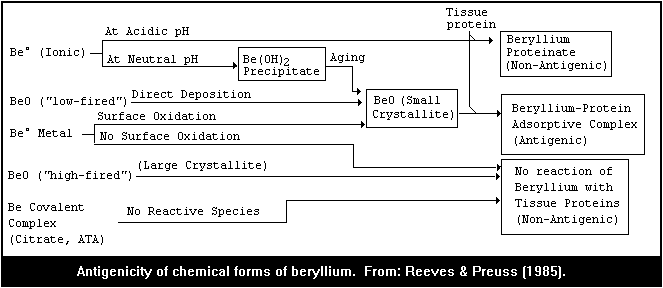 (c) Diagnosis
Drury et al. (1978) and Reeves (1986) have summarized the
diagnostic criteria. Since some kind of exposure to beryllium must
have preceded the disease, the establishment of exposure by history
taking and tissue analysis should serve as a basis for the
recognition of chronic beryllium disease, though the presence of
beryllium in biological material does not prove disease.
Clinical criteria that indicate beryllium disease include
scattered opacities on chest X rays, impaired lung function,
interstitial pneumonitis, and systemic toxicity. However, other
types of interstitial lung disease show similar pathophysiological
and radiological features. Differentiation between chronic
beryllium disease and sarcoidosis is most difficult.
The patch test developed by Curtis (1951) is not recommended for
the diagnosis of beryllium disease, because it can give false
positives and negatives. Moreover, it may itself induce a skin
sensitivity reaction or flare-ups in dormant pulmonary lesions.
The macrophage migration inhibition assay and the lymphoblast
transformation test are useful indicators of beryllium
hypersensitivity (Reeves & Preuss, 1985). Both in vitro tests are
gaining importance as useful methods for the diagnosis of beryllium
disease. Using the lymphocyte transformation test, Deodhar et al.
(1973) and Preuss et al. (1980) reported positive results in about
70% of beryllium disease patients. Jones Williams & Williams (1983)
found a 100% positive response in 16 patients with chronic beryllium
disease, and a negative response in 10 subjects who were suspected
of having chronic beryllium disease. Only 2 out of 117 healthy
beryllium workers had a positive response.
The lymphocyte transformation test was also 100% positive,
independent of steroid therapy, and reproducible in 7 patients
(Williams & Jones Williams, 1982). In contrast, the macrophage
migration inhibition test was only positive in 4 patients (57%) who
were not on steroids, and was not reproducible.
Bargon et al. (1986) suggested that lymphocyte transformation
test results should only be considered as evidence of beryllium
disease if there were positive test results over a wide range of
concentrations. Of 23 foundry workers, 3 showed clear positive
results. Two of these workers were diagnosed as having diffuse
granulomatous lung disease; the other worker did not show any signs
of an interstitial lung disease. In the other exposed workers and
20 non-exposed controls, lymphocyte transformation test results were
either negative or only positive at one or two concentrations.
Rossman et al. (1988) have reported the development of a fairly
reliable test for chronic beryllium disease. The test measures the
proliferative response of bronchoalveolar lymphocytes to beryllium.
In 14 patients diagnosed with chronic beryllium disease, the
bronchoalveolar lymphocytes showed a positive dose-related
proliferative response to beryllium sulfate. This response was not
observed in 6 normal volunteers, 16 patients with sarcoidosis, or 4
beryllium workers proved not to have chronic beryllium disease.
Rossman et al. (1988), Newman et al. (1989), and Saltini et al.
(1989), confirmed that the lymphocyte transformation test is
generally more sensitive and specific using lymphocytes from
bronchoalveolar lavage than using peripheral blood lymphocytes.
Based on the findings of beryllium-related pathological and
immunological alterations in the absence of radiographic or
physiological impairment, Newman et al. (1989) suggested the
following classification:
- Beryllium-sensitization: persons with a positive blood and/or
lung lymphocyte transformation test;
- Subclinical beryllium disease: persons with additional
pathological alterations on biopsy, but who are asymptomatic;
- Clinical beryllium disease: persons who meet all the diagnostic
criteria and have clinical symptoms or measurable impairment.
The lymphocyte transformation test, especially if performed on
bronchoalveolar lavage, appears to be the method of choice for the
detection of beryllium hypersensitivity. Workers with positive
results should be considered for removal from further exposure (see
section 11).
9.3 Carcinogenicity
9.3.1 Epidemiological studies
Hardy et al. (1967) reviewed the mortality and morbidity data of
the US Beryllium Case Registry for the period 1952 - 66. They did
not find any evidence that beryllium caused cancer in human beings.
Likewise, Stoeckle et al. (1969) reviewing the clinical findings and
course in 60 patients with chronic beryllium disease noted 17
deaths, but none due to cancer. Mancuso & El-Attar (1969)
introduced an epidemiological approach in the study of the mortality
pattern of beryllium workers at 2 separate companies. The study was
based on the social security files of 3685 white males employed from
1937 to 1948. From 729 deaths up to the year 1966, 31 were due to
lung cancer. Because of several principal limitations, particularly
the small numbers in the 160 subcategories into which the 729 deaths
were distributed, it was not possible to make any trend statements
or statistical tests, leaving open the question of carcinogenic
risk.
In the study by Mancuso (1970), a subgroup of individuals at the
Ohio plant, who had clinical case histories of beryllium-induced
acute bronchitis or pneumonitis, had been identified between
1940 - 48 and were followed-up until 1967. A higher rate of lung
cancer was noted among the 145 workers previously diagnosed with
acute bronchitis or pneumonitis compared with the rate among those
without acute illness. Six out of 8 (75%) of the lung cancer cases
identified in the Ohio cohort up to 1967 came from the group of 145
workers diagnosed with acute pneumonitis, which represented less
than 15% of the cohort.
Bayliss et al. (1971) studied workers in the beryllium-
processing industry in Ohio and Pennsylvania. They observed a
slightly elevated risk of lung cancer, though the results were not
statistically significant.
Between 1979 and 1980, reports of these cohorts were updated by
Mancuso (1979; 1980) and by Wagoner et al. (1980). A formal
epidemiological study of individuals entered in the US Beryllium
Case Registry (BCR) was reported by Infante et al. (1980). These
investigations serve as the basis for the analysis of the mortality
patterns of workers exposed to beryllium.
Criticisms have been raised (US EPA, 1987) about the
interpretation of the excess lung cancer risk observed in the
studies by Mancuso (1979; 1980), Wagoner et al. (1980), and Infante
et al. (1980). The major concerns relate to selection bias,
confounding from cigarette smoking, and underestimation of the
expected number of lung cancer deaths reported in the original
studies. These issues will be dealt with in the following review.
In particular, it should be noted that the data presented here are
based on the ratios of observed versus expected deaths, as
recalculated by Saracci (1985), taking into consideration the
increased incidence of lung cancer between 1968 and 1975 in the
total US population.
Mancuso (1979) studied all white males employed at some time
between 1 January 1942 and 31 December 1948 at the Ohio and
Pennsylvania facilities. Cohort members were identified by payroll
records submitted quarterly by the employer to the US Social
Security Administration. These cohorts were followed up to 1974 for
Ohio and up to 1975 for Pennsylvania. Observed deaths from lung
cancer were compared with the number of deaths using United States
national mortality rates adjusted for age and calendar time periods.
However, rates for 1965 - 67 were also used to estimate expected
mortality for the years 1968 - 75. This procedure resulted in an
underestimation of expected lung cancer mortality by about 10%
(Saracci, 1985). Thus, the expected mortality from lung cancer
reported in Mancuso (1979) has been increased by 10%. The observed
(O) deaths from lung cancer together with the "adjusted" expected
(E) number of lung cancer deaths for the Ohio and Pennsylvania
facilities are shown in Table 18. Among the Ohio workers, the
overall risk ratio of lung cancer was 1.8 (95% confidence interval
(CI) is 1.2 - 2.7). (When the lower number of the CI is 1.0 or
more, the risk ratio is significantly elevated). The significantly
elevated overall risk of lung cancer is confined to individuals who
were employed for less than one year and 1 - 4 years and were
followed for more than 15 years from initial employment. For those
followed for more than 15 years, the risk ratio is 2.0 (95% CI = 1.3
- 3.1).
As shown in Table 18, the cohort of Pennsylvania employees had
an overall risk of 1.2 (95% CI = 0.9-1.7). However, for individuals
followed for more than 15 years, the risk ratio was 1.5
(95% CI =1.0 - 2.1). Consistent with the observations from the Ohio
employees, the Pennsylvania beryllium workers' elevated risk of lung
cancer was confined to individuals, employed for less than one year
or for 1 - 4 years, who had been followed for 15 or more years since
initial employment.
Table 18. Observed (O) and expected (E) deaths due to lung cancer and their ratios with 95% confidence interval (CI)
according to duration of employment and time since onset of employment in two US beryllium production facilites at some time
between 1 January 1942 and 31 December 1948, followed through 31 December 1974a
-----------------------------------------------------------------------------------------------------------------------------
Interval Duration of employment (years)
since <1 1-4 >5 Total
onset of -------------------------- --------------------------- ------------------------ --------------------------
employment O/E Ratio CI O/E Ratio CI O/E Ratio CI O/E Ratio CI
(years)
-----------------------------------------------------------------------------------------------------------------------------
(i) Ohio facility
< 15 3/1.96 1.5 0.3-4.5 0/0.70 0 0-5.3 0/0.26 0 0-14.2 3/2.92 1.0 0.2-3.0
> 15 14/7.14 2.0 1.1-3.3 5/1.91 2.6 0.8-6.1 3/1.79 1.7 0.3-4.9 22/10.84 2.0 1.3-3.1
------------------------------------------------------------------------------------------------------------------------------
Total 17/9.10 1.9 1.1-3.0 5/2.61 1.9 0.6-4.4 3/2.05 1.5 0.3-4.3 25/13.76 1.8 1.2-2.7
------------------------------------------------------------------------------------------------------------------------------
(ii) Pennsylvania facility
< 15 3/4.70 0.6 0.1-1.9 1/2.11 0.5 0.1-2.6 0/0.98 0 0-4.1 4/7.79 0.5 0.1-1.3
> 15 23/14.12 1.6 1.0-2.4 10.5/5.80 1.7 0.8-3.2 3/4.30 0.7 0.1-2.0 36/24.22 1.5 1.0-2.1
-------------------------------------------------------------------------------------------------------------------------------
Total 26/18.82 1.4 0.9-2.0 11/7.91 1.4 0.7-2.5 3/5.28 0.6 0.1-1.7 40/32.01 1.2 0.9-1.7
-------------------------------------------------------------------------------------------------------------------------------
a Adapted from: Saracii (1985); original study from Mancusco (1979).
Mancuso (1980) followed both the Ohio and Pennsylvania cohorts
up to 1976 and pooled the data from both cohorts. He compared their
expected lung cancer mortality with that expected on the basis of
the mortality rates of other industrial workers who were employed in
the same geographical area and for similar periods of time and were
followed for a similar calendar time period. As shown in Table 19,
the risk ratios for lung cancer were significantly elevated whether
the expected was based on "all viscose rayon" employees or on those
who had never transferred from their department of initial
employment. The lung cancer risk ratios range from 1.4 to 1.6 and
are statistically significant. If the data shown in Table 18 are
combined, the overall risk of lung cancer is 1.4 with expected
mortality based on the US general population rates. Thus, the risk
range of 1.4 - 1.6 with expected mortality based on the viscose
rayon employees is similar. Mancuso (1980) did not present data on
cigarette smoking among his beryllium cohort members. However, an
indirect indication that cigarette smoking may not have played a
major role in the increased lung cancer risk among beryllium
employees can be derived from the observation that, when a
population of industrial workers was used to compute expected
mortality, the elevated lung cancer risk remained about the same.
It could be presumed that blue collar workers, employed in the same
geographical area over the same calendar time period, who had
similar length of employment patterns, would have similar smoking
habits. Thus, it is considered unlikely that cigarette smoking
played a major role in the excess lung cancer risk.
Wagoner et al. (1980) conducted a cohort study on beryllium
production workers employed at the Pennsylvania facility that was
studied by Mancuso (1979, 1980). However, Wagoner et al. (1980)
identified their cohort members through company records and a
medical survey conducted at the facility in 1968. The cohort
consisted of 3055 white males who were employed for some time during
the period from January 1942 to September 1968. The cohort was
followed through 1975. Observed mortality was compared to the
expected, based on the US white male general population, adjusted
for age and calendar time period. However, lung cancer rates for
1965 - 67 were also used to estimate expected mortality for the
years 1968 - 75. Therefore, the expected lung cancer mortality, as
reported in the Wagoner et al. (1980) paper, has been increased by
10%. The results for lung cancer are shown in Table 20. For the
total group, 47 lung cancer deaths were observed compared with 37.72
expected. The risk ratio was 1.2 (95% CI = 0.9 - 1.7). For those
followed for 25 or more years since initial employment, the ratio
was significantly elevated, O/E = 1.7 (95% CI = 1.0 - 2.6). The
risk of lung cancer also increased with an increase in latency, but
not with duration of employment. NIOSH re-analysed the data using
updated lung cancer rates (Foege, Personal communication, 1981).
The results demonstrated a significant increase in lung cancer
deaths for those with more than 15 years of latency (39 observed
versus 13.36 expected, P = 0.035).
Table 19. Observed (O) deaths due to lung cancer among 35 to 74-year-
old workers of two US beryllium production facilities as contrasted
with those expected (E) on the basis of two cohorts of workers in the
viscose rayon industry employed for similar durations of time and
followed over the same period of timea
-----------------------------------------------------------------------
Duration of Lung cancer mortalityb
employment ---------------------------------------------------------
(months) O/Ec Ratio CI O/Ed Ratio CI
-----------------------------------------------------------------------
< 12 52/37.60 1.4 0.9-2.1 52/31.67 1.6 1.1-2.6
13-48 14/13.26 1.1 0.5-2.2 14/10.82 1.3 0.6-2.9
49 14/6.32 2.2 0.9-5.7 14/8.14 1.7 0.7-4.1
Total 80/57.18 1.4 1.0-2.0 80/50.63 1.6 1.1-2.2
-----------------------------------------------------------------------
a Adapted from: Saracci (1985); original study from Mancuso (1980).
b CI = 95% confidence interval.
c All viscose rayon employees.
d Viscose rayon employees who had never transferred from department of
inital employment.
Table 20 provides data for mortality from non-malignant lung
disease (excluding influenza and pneumonia). Overall, the risk
ratio was 1.6 (95% CI = 1.1 - 2.3). The excess appears to be
restricted to those employed for less than 5 years, O/E = 1.9 (95%
CI = 1.2 - 2.7). A significant excess of mortality was seen for
heart diseases. There were 396 deaths observed compared with 349.32
expected. The risk ratio was 1.1 (95% CI = 1.0-1.2). A large
number of these individuals died from right-sided heart failure (cor
pulmonale) as a consequence of beryllium lung disease. These data
are not shown in tabular form.
Concern has arisen that this study may have bias in the
selection of cohort members for study. However, the results for
lung cancer in the Wagoner et al. (1980) study of the Pennsylvania
cohort, as shown in Table 20, are virtually the same as those
reported in Mancuso's study of the same facility, using records on
employment derived from the social security administration.
With regard to the effect of cigarette smoking on the increased
lung cancer risk, it has been estimated that difference in smoking
habits between the cohort members and the general population may
account for about 4% of the increased risk (Saracci, 1985).
Table 20. Observed (O) and expected (E) deaths and their ratios with 95% confidence interval
(CI) due to (i) lung cancer and (ii) non-neoplastic respiratory disease, according to
duration of employment and time since onset of employment in a US beryllium production facility
(Pennsylvania) at some time between January 1942 and September 1968, followed through 1975a
-----------------------------------------------------------------------------------------------
Interval Duration of employment (years)b
since ----------------------------------------------------------------------------------
onset of < 1 14 Total
employment -------------------------- ------------------------ --------------------------
(years) O/E Ratio CI O/E Ratio CI O/E Ratio CI
-----------------------------------------------------------------------------------------------
(i) Deaths due to lung cancer
< 15 8/8.74 0.9 0.4-1.8 1/1.63 0.6 0.1-3.8 9/10.37 0.9 0.4-1.6
15-24 16/12.72 1.2 0.7-1.9 3/2.76 1.1 0.2-3.5 18/15.48 1.2 0.7-1.8
> 25 17/9.98 1.7 1.0-2.7 3/1.89 1.6 0.4-5.1 20/11.87 1.7 1.0-2.6
------------------------------------------------------------------------------------------------
Total 41/31.44 1.3 0.9-1.7 7/6.28 1.1 0.4-2.3 47/37.72 1.2 0.9-1.7
------------------------------------------------------------------------------------------------
(ii) Deaths due to non-neoplastic respiratory disease
< 15 6/3.57 1.7 0.6-3.7 1/0.66 1.5 0.1-8.4 7/4.23 1.7 0.7-3.4
15-24 11/6.36 1.7 0.9-3.1 1/1.41 0.7 0.1-4.0 12/7.77 1.6 0.8-2.7
> 25 12/5.62 2.1 1.1-3.7 0/1.15 0 0-3.2 12/6.77 1.8 0.9-3.1
------------------------------------------------------------------------------------------------
Total 29/15.55 1.9 1.2-2.7 2/3.22 0.6 0.1-2.2 31/18.77 1.6 1.1-2.3
------------------------------------------------------------------------------------------------
a Adapted from: Saracci (1985), original study from Wagoner et al. (1980).
b Employment histories ascertained only for 1967-68.
Infante et al. (1980) studied a group of 421 white males who had
been entered with the US Beryllium Case Registry, while alive,
between 1 July 1952 and 31 December 1975. The cohort was followed
through 1975. The NIOSH modified life-table method was used to
calculate expected mortality. Again, because of the problem of
underestimation of expected lung cancer mortality, the expected
numbers of deaths have been increased by 10%. The results for lung
cancer and for death from non-malignant respiratory disease are
shown in Table 21. A significantly elevated risk ratio for lung
cancer (6 observed versus 2.10 expected, 95% CI = 1.0 - 6.2) was
observed among those who were entered in the Registry with a
diagnosis of beryllium-induced acute pneumonitis or bronchitis. No
excess of lung cancer was observed among those entered with chronic
respiratory disease (1 observed death versus 1.52 expected, 95% CI =
0.7 - 3.7). However, the overwhelming excess of mortality due to
non-neoplastic respiratory disease (42 observed deaths, 0.65
expected, 95% CI = 46.6-87.3) may have limited the ability to detect
an excess of lung cancer in this latter group. Another interesting
observation is that those who were entered in the Registry with a
diagnosis of acute respiratory illness had a 10-fold increased risk
of dying from chronic non-neoplastic respiratory disease. The risk
ratio is 10.3 (95% CI = 4.9-18.9) as shown in Table 21.
Table 21. Observed (O) and expected (E) deaths and their ratios with
95% confidence interval (CI) due to lung cancer and non-neoplastic
respiratory disease among white males enrolled in the US Beryllium Case
Registry, while alive, between 1 July 1952 and 31 December 1975a
----------------------------------------------------------------------
Interval Lung cancer Non-neoplastic respiratory
since disease
initial
beryllium O/E Ratio CI O/E Ratio CI
exposure
(years)
----------------------------------------------------------------------
(i) Acute respiratory illness group (N = 223)
< 15 1/0.38 2.6 0.1-14.7 1/0.14 7.1 0.2-39.8
> 15 5/1.72 2.9 0.9-6.8 9/0.83 10.8 5.0-20.6
----------------------------------------------------------------------
Total 6/2.10 2.9 1.0-6.2 10/0.97 10.3 4.9-18.9
----------------------------------------------------------------------
(ii) Chronic respiratory disease group (N = 198)
< 15 0/0.155 0 0-24.6 9/0.05 180.0 82.3-341.7
> 15 1/1.36 0.7 0.1-4.1 33/0.60 55.0 37.9-77.2
----------------------------------------------------------------------
Total 1/1.52 0.7 0.1-3.7 42/0.65 64.4 46.6-87.3
----------------------------------------------------------------------
a Adapted from: Saracci (1985); original study from Infante et al. (1980).
b Excluded influenza and pneumonia.
10. EVALUATION OF HUMAN HEALTH RISKS AND EFFECTS ON THE
ENVIRONMENT
10.1 Evaluation of human health risks
Beryllium is widely distributed in the environment, generally
occurring in trace quantities. The growing use of this element in
high technology applications increases the potential for exposure
to beryllium in its various forms, particularly beryllium metal,
beryllium oxide, and beryllium-containing alloys. Inhalation
exposure is the most significant route in terms of risk of adverse
health effects. Skin contact with beryllium metal and its
compounds is also of concern.
Provided that control measures in the beryllium industry are
adequate, general population exposure today is mainly confined to
low levels of airborne beryllium from the combustion of fossil
fuels, especially coal. In more exceptional cases, where the
beryllium content of the coal being burned is unusually high and no
adequate control measures are applied, this source could pose
health problems. Tobacco smoking probably contributes to
inhalation exposure but, at present, there are only limited data.
The use of beryllium for dental protheses must also be taken into
consideration, in view of its high sensitization potential. There
is a small intake from water and food; from a toxicological point
of view, the ingestion of beryllium is of minor importance.
However, the present data base is insufficient for a quantitative
assessment of beryllium intake via air, food, drinking-water, and
tobacco smoke.
Depending on individual susceptibility, direct contact with
soluble beryllium salts can cause delayed (contact) dermatitis,
occasionally associated with conjunctivitis. When beryllium
compounds are retained in, or beneath, the skin, chronic
granulomatous ulcerations develop.
Acute effects on the respiratory tract including
nasopharyngitis, bronchitis, and severe chemical pneumonitis have
been reported as an occupational disease among beryllium workers
exposed to high concentrations of fumes or dust, usually exceeding
100 µg Be/m3. In particular, beryllium fluoride and sulfate, but
also the low-fired oxide, have produced acute poisoning, while the
less soluble high-fired oxide has not caused acute beryllium
disease. Usually, complete recovery has occurred after removal
from the exposure, but in severe cases, patients have died of
pneumonitis. After the implementation of preventive measures,
cases of acute beryllium disease have drastically decreased and,
today, may only occur as a consequence of failures in control
systems.
Inhalation of beryllium can also produce chronic beryllium
disease, either years after recovery from the acute form or, more
commonly, independently, after a latent period varying from several
weeks to more than 20 years and, frequently, several years after
termination of exposure. The clinical, radiological, functional,
and pathological features of chronic beryllium disease resemble
those of sarcoidosis, though the interstitial inflammatory reaction
tends to be more prominent in chronic beryllium disease.
Primarily, the lung is affected. Pulmonary disease associated with
dyspnoea on exertion, cough, chest pain, weight loss, and general
weakness is the most familiar and striking feature. Effects on
other organs may be secondary rather than systemic effects.
Epithelioid granulomas with varying amounts of interstitial
inflammation form the characteristic microscopic picture. The
highest morbidity rates have been found in patients who developed
the disease after a latency period of less than one year. No
correlation has been found between the intensity of exposure and
the severity of the disease. The great variability in latency and
the lack of dose-response relationships in chronic beryllium
disease may be explained by immunological sensitization. Pregnancy
seems to be a precipitating "stress factor". The adoption of
exposure standards has clearly decreased the incidence of chronic
beryllium disease. However, this disease may still occur among
sensitized individuals who have been exposed to concentrations of
around 2 µg/m3.
The available data from genotoxicity tests indicate that
beryllium interacts with DNA and causes gene mutations, chromosomal
aberrations, and sister chromatid exchange in cultured mammalian
somatic cells, though it has been found not to be mutagenic in
bacterial test systems.
Intravenous and intrameduallary injection of beryllium metal
and various compounds produced bone cancer in rabbits, but not in
guinea-pigs, rats, and mice. Inhalation or intratracheal exposure
to soluble and insoluble beryllium compounds, beryllium metal,
various beryllium alloys, or beryl induced lung tumours in rats.
No pulmonary tumours have been observed in rabbits, hamsters, or
guinea-pigs. On the whole, the carcinogenic activity of beryllium
in different animals has been confirmed, though study design and
laboratory practice at the time these studies were conducted were
mostly not in compliance with the current approaches used in
carcinogenicity tests. In particular, the reported exposure data
should be considered with caution.
Several epidemiological studies have provided data indicating
an excess lung cancer incidence in populations occupationally
exposed to beryllium. These data were derived from studies of two
United States working populations and a registry of clinical
cases partially covering these same populations as well as other
occupations. The question pending is whether chance, bias, or
confounding, rather than exposure to beryllium, can explain the
association (Saracci, 1985).
The cohorts of beryllium workers employed at both the Ohio and
Pennsylvania production facilities indicate a statistically
significant excess risk of lung cancer after long intervals from
initial exposure (15 - 25 years) among workers with less than 5
years' duration of employment. The data base from one of the
studies of the Pennsylvania cohort has been scrutinized closely.
The fact that two different approaches to cohort selection (use of
social security data by Mancuso (1979) and the use of company
records by Wagoner et al. (1980)) result in essentially concordant
findings is evidence against the role of major bias in subject
selection or response assessment. Another fact against selection
bias is that the elevated lung cancer risk ratios were similar in
the Mancuso (1980) study when an industrial reference population,
selected in a manner similar to the beryllium cohort, was used for
comparison rather than the United States white male population
(Saracci, 1985).
After chance and bias, confounding from cigarette smoking needs
to be considered. The distribution of cigarette smoking was
determined from a morbidity survey conducted at the Pennsylvania
facility in 1968 and was reported by Wagoner et al. (1980). On the
basis of these data, Saracci (1985) estimated that the difference
in smoking habits between the beryllium workers and the general
population was such as to increase the risk of lung cancer by 4%
over the risk in the general population. Other evidence against
smoking playing a major role in the elevated lung cancer risk was
provided indirectly by Mancuso (1980), who observed a significant
increase in lung cancer in the beryllium workers compared with an
industrial population from the same geographical area. (Smoking
habits and other socioeconomic factors are assumed to be similar in
these two groups of blue collar workers). Thus, the observed
increase in lung cancer could hardly be accounted for by smoking
alone.
If the increased risk of lung cancer is partially or totally
related to beryllium exposure, it would be expected that the
greater the exposure, the higher the risk. Subjects entered in the
Beryllium Case Registry with a diagnosis of beryllium-induced acute
pneumonitis or bronchitis had often experienced high exposures. In
fact, the Registry data indicate a 3-fold increased risk of lung
cancer for these subjects (Infante et al., 1980). Mancuso (1970)
also reported an elevated frequency of lung cancer in a subgroup of
the Ohio cohort that was identified as having acute beryllium
disease.
In the cohort studies on production workers, the increased lung
cancer risk appeared to be localized among workers with less than 5
years or less than one year of employment. As exposure in the
past, particularly before 1950, was substantially higher, length of
employment would be a distorted indicator of the actual exposure
accumulated by a worker. This explanation for the elevated risk in
these workers appears to be more likely than an alternative one
that workers with relatively short employment are a selected group
who experience higher mortality from lung cancer. This explanation
is further supported by the observation of an increased risk of
lung cancer among beryllium workers compared with other industrial
workers employed for similar periods of time.
10.2 Evaluation of effects on the environment
Data on the fate of beryllium in the environment are limited.
Atmospheric beryllium oxide particles (combustion processes) return
to earth by wet and dry deposition. Within the environmental pH
range, beryllium is absorbed by finely-dispersed sedimentary
minerals preventing release to ground water. Therefore, beryllium
concentrations in surface waters (µg/litre range) and soils (mg/kg
dry weight range) are usually low and probably do not affect the
environment.
Little is known about the effects of beryllium on
microorganisms. At high pH, beryllium salts have growth-
stimulating effects on algae and on crop plants. There is evidence
that beryllium is able to substitute for magnesium in the growth
process of crop plants, thus reducing their magnesium requirement.
At or below pH 7, beryllium is toxic for aquatic and terrestrial
plants, because of its inhibitory effects on enzyme activity and
the uptake of essential mineral ions. Most plants take up
beryllium in small amounts, but very little is translocated within
the plant.
The toxicity of beryllium for aquatic animals increases with
decreasing water hardness. In acute toxicity studies on different
freshwater fish species, LC50 values ranged between 0.15 and 32 mg
Be/litre.
No data are available on the effects of beryllium on domestic
or wild terrestrial animals.
There is no evidence that beryllium biomagnifies within food
chains.
10.3 Conclusions
The health hazards of beryllium are almost exclusively confined
to inhalation exposure and skin contact. Except for the accidental
release of beryllium into the environment, the general population is
only exposed to very low levels of airborne beryllium, which do not
pose a health hazard. Because of the high sensitization and
allergenic potential of ionic beryllium, the use of beryllium for
dental protheses should be reconsidered.
10.3.1. Acute beryllium disease
Occupational exposure to beryllium poses a health hazard that
may result in skin lesions and adverse effects on the respiratory
tract. Of the latter, acute beryllium disease can be encountered
after exposure to relatively high concentrations of beryllium in
fumes and dust (>100 µg/m3). Because of improved control
measures, such high concentrations are not expected to occur in
today's occupational settings.
10.3.2 Chronic beryllium disease
Hundreds of cases of chronic beryllium disease have been
diagnosed in various countries throughout the world. The vast
majority of these cases have been the result of previous exposure
to high concentrations of beryllium in the extraction and smelting
of beryllium, fluorescent tube production (no longer a source of
beryllium exposure), and in beryllium metal production.
More recently, cases of beryllium disease have been diagnosed
following low-level exposure (around 2 µg/m3). The results of
recent studies suggest that some degree of immunological
responsiveness to beryllium may be common among workers exposed for
more than 10 years. Thus, current occupational exposure standards
may not exclude the development of chronic beryllium disease in
beryllium-sensitized individuals.
10.3.3 Cancer
Multiple studies on experimental animals have provided
sufficient evidence that beryllium is carcinogenic. The available
epidemiological data lead to the conclusion that beryllium is the
most likely single explanation for the excess lung cancer observed
in exposed workers.a
-------------------------------------------------------------------
a Professor A.L. Reeves dissented from this statement.
11. RECOMMENDATIONS
1. There is a need for well conducted inhalation toxicity studies
on experimental animals, focused on the species- and compound-
specifity of beryllium carcinogenicity.
2. Mechanistic studies on the immunotoxicity of beryllium are
needed.
3. Mechanisms of carcinogenesis should be investigated, including
the molecular mechanisms of beryllium transport and binding in
cells and cell nuclei.
4. Improvement of analytical methods and the application of
quality control are necessary.
5. Reliable data on the beryllium contents of food, drinking-
water, and tobacco originating from different parts of the world,
are required.
6. In the work-place, regular monitoring of air concentrations of
beryllium should be performed.
7. The use of the lymphocyte transformation test (LTT) should be
considered for identifying sensitized individuals. These should be
permanently removed from further exposure to beryllium.
8. Human data on bioavailability, tissue levels, and body burden
are required.
9. Selected human subpopulations should be monitored to determine
beryllium exposure and body burden.
10. The contribution of beryllium released from solid rocket
propellants and in space technology should be established.
11. Individuals suspected of having sarcoidosis, employed in any
occupation, should be evaluated for immunological sensitivity to
beryllium, because of the possible unknown exposure to beryllium.
12. The use of beryllium for dental protheses should be
reconsidered, because of the high sensitization and allergenic
potential of ionic beryllium.
12. PREVIOUS EVALUATIONS BY INTERNATIONAL BODIES
An International Agency for Research on Cancer Working Group
(IARC, 1987) evaluated the carcinogenicity of beryllium and
assigned beryllium and beryllium compounds to Group 2A, concluding
that they are probably carcinogenic to human beings. The
evaluation was reported as follows:
"A. Evidence for carcinogenicity to humans (limited)
Observations, reviewed elsewhere on beryllium-exposed subjects
cover two industrial populations and a registry of berylliosis
cases. Workers at beryllium extraction, production and fabrication
facilities in the USA were followed up and their causes of
mortality compared with those of both the general population and a
cohort of viscose-rayon workers. Ratios of observed to expected
deaths for lung cancer in the two industrial populations (65
observed) were found to be elevated in both comparisons (1.4 in
respect of both the general population [95% confidence interval
(CI), 1.1 - 1.8] and the viscose-rayon workers [1.0 - 2.0]) and
tended to be concentrated in workers who had been employed for less
than five years. Data from the US Beryllium Case Registry, in
which cases of beryllium-related lung diseases were collected from
a wide variety of sources (including the two facilities previously
mentioned), indicate an approximately three-fold (six deaths
observed, 2.1 expected; ratio of observed: expected, 2.9 [95% CI,
1.0 - 6.2]) increase in mortality from lung cancer among subjects
who had suffered from acute berylliosis, which usually follows
heavy exposure to beryllium, but not among those who had had
chronic berylliosis (one death observed, 1.4 expected; ratio of
observed:expected, 0.7; 95% CI, 0.1 - 3.7).
B. Evidence for carcinogenicity to animals (sufficient)
Beryllium metal, beryllium-aluminium alloy, beryl, ore,
beryllium chloride, beryllium fluoride, beryllium hydroxide,
beryllium sulphate (and its tetrahydrate) and beryllium oxide all
produced lung tumours in rats exposed by inhalation or
intratracheally. Single intratracheal instillations or one-hour
inhalation exposures were effective. Beryllium oxide and beryllium
sulphate produced lung tumours in monkeys after intrabronchial
implantation or inhalation. Beryllium metal, beryllium carbonate,
beryllium oxide, beryllium phosphate, beryllium silicate and zinc
beryllium silicate all produced osteosarcomas in rabbits following
their intravenous and/or intramedullary administration.
C. Other relevant data
No data were available on the genetic and related effects of
beryllium and beryllium compounds in humans.
All of the available experimental studies considered by the
Working Group were carried out with water-soluble beryllium salts.
In one study, beryllium sulphate increased the frequency of
chromosomal aberrations and sister chromatid exchanges in human
lymphocytes and in Syrian hamster cells in vitro; in another
study, chromosomal aberrations were not seen in human lymphocytes.
It caused transformation of cultured rodent cells in several test
systems. In one study, beryllium chloride induced mutation in
cultured Chinese hamster cells. Beryllium sulphate did not induce
unscheduled DNA synthesis in rat hepatocytes in vitro, mitotic
recombination in yeast or mutation in bacteria. Beryllium chloride
was mutagenic to bacteria."
REFERENCES
ACGIH (1988) Threshold limit values and biological exposure
indices for 1988-1989. Cincinnati, Ohio, American Conference of
Governmental Industrial Hygienists Inc., p.12.
ALDRIDGE, W.N. (1950) Beryllium and alkaline phosphatase. Nature
(Lond.), 165: 772.
ALDRIDGE, W.N., BARNES, J.M., & DENZ, F.A. (1949) Experimental
beryllium poisoning. Brit. J. exp. Pathol., 30: 375-388.
ALEKSEEVA, O.G. (1966) Ability of beryllium compounds to cause
allergy of the delayed type. Fed. Proc. (Trans. Suppl.), 25:
843-846.
ANDRE, S., METIVIER, H., LANTENOIS, G., BOYER, M., NOBILE, D., &
MASSE, R. (1987) Beryllium metal solubility in the lung,
comparison of metal and hot-pressed forms by in vivo and
in vitro dissolution bioassays. Human Toxicol., 6: 233-240.
ANDREWS, J.L., KAZEMI, H., & HARDY, H.L. (1969) Patterns of lung
dysfunction in chronic beryllium disease. Am. Rev. respir. Dis.,
100: 791-800.
APHA (1971) Standard methods for the examination of water and
wastewater. 13th ed. Washington, DC, American Public Health
Association, pp. 66-67.
ASAMI, T. & FUKAZAWA, F. (1985) Beryllium contents of
uncontaminated soil and sediments in Japan. Soil Sci. plant Nutr.,
31: 43-54.
ATSDR (1987) Toxicological profile for beryllium. Atlanta,
Georgia, Agency for Toxic Substances and Disease Registry (ATSDR),
US Public Health Service, Department of Health & Human Services, 96
pp.
AWADALLAH, R.M., SHERIF, M.K., AMRALLAH, A.H., & GRASS, F. (1986)
Determination of trace elements of some Egyptian crops by
instrumental neutron activation, inductively coupled plasma-atomic
emission spectrometric and flameless atomic absorption
spectrophotometric analysis. J. radioanal. nucl. Chem., 98(2):
235-246.
BALLANCE, J., STONEHOUSE, A.J., SWEENEY, R., & WALSH, K. (1978)
Beryllium and beryllium alloys. In: Kirk, R.E. & Othmer, D.F.,
ed. Encyclopedia of chemical technology, 3rd ed., New York, John
Wiley & Sons, Vol. 3, pp. 803-823.
BARGON, J., KRONENBERGER, H., BERGMANN, L., BUHL, R., MEIER-SYDOW,
J., & MITROU, P. (1986) Lymphocyte transformation test in a group
of foundry workers exposed to beryllium and non-exposed controls.
Eur. J. respir. Dis., 69: 211-215.
BARNA, B.P., DEODHAR, S.D., CHIANG, T., GAUTAM, S., & EDINGER, M.
(1984) Experimental beryllium-induced lung disease. I.
Differences in immunologic responses to beryllium compounds in
strains 2 and 13 guinea pigs. Int. Arch. Allergy appl. Immunol.,
73(1): 42-48.
BARNES, J.M., DENZ, F.A., & SISSONS, H.A. (1950) Beryllium bone
sarcomata in rabbits. Br. J. Cancer, 4: 212-222.
BAUMGARDT, B., JACKWERTH, E., OTTO, H., & TOELG, G. (1986) Trace
analysis to determine heavy metal load in lung tissue. Int. Arch.
occup. environ. Health, 58: 27-34.
BAYLISS, D.L., LAINHART, W.S., CRALLY, L.J., LIGO, R., AYER, H., &
HUNTER, F. (1971) Mortality patterns in a group of former
beryllium workers. In: Transactions of the 33rd Annual Meeting of
the American Conference of Governmental Industrial Hygienists,
Toronto,, Canada, 24-28 May 1971, pp. 94-107.
BELMAN, S. (1969) Beryllium binding of epidermal constituents. J.
occup. Med., 11: 175-183.
BENCKO, V. (in press) Health risk of human exposure to beryllium
and nickel. Int. J. Biosoc. Med. Res., 11:
BENCKO, V. & VASILYEVA, E.V. (1983) Hygienic and toxicological
aspects of occupational and environmental exposure to beryllium.
J. Hyg. Epidemiol. Microbiol. Immunol., 27: 403-417.
BENCKO, V., BREZINA, M., BENES, B., & CIKRT, M. (1979a)
Penetration of beryllium through the placenta and its distribution
in the mouse. J. Hyg. Epidemiol. Microbiol. Immunol., 23: 361-367.
BENCKO, V., PEKAREK, J., SVEJCAR, J., BENES, B., HOLUSA, R.,
HURYCH, J., & SYMON, K. (1979b) [A contribution to the diagnosis of
experimental berylliosis in the rat.] Cesk. Hyg., 24: 109-115 (in
Czech, with English summary).
BENCKO, V., VASILYEVA, E.V., & SYMON, K. (1980) Immunological
aspects of exposure to emissions from burning coal of high
beryllium content. Environ. Res., 22: 439-449.
BERKOVITZ, M. & ISRAEL, B. (1940) [Changes in the lungs in
fluorine beryllium poisoning.] Klin. Med. (Moscow), 18: 117-122 (in
Russian).
BEUS, A.A. (1966) Geochemistry of beryllium and genetic types of
beryllium deposits. San Francisco, California, W.H. Freeman and
Co., 401 pp.
BIANVENU, P.K., NOFRE, C., & CIER, A. (1963) Toxicité générale
comparée des ions métalliques. Relation avec la classification
périodique. C. R. Séances Acad. Sci., 256: 1043.
BOBRISCHEV-PUSHKIN, D.M., NAUMOVA, L.A., & SURIKOVA, S.P. (1973)
[Possible pollution of the industrial atmosphere with beryllium
compounds in smelting BEB-2 bronze.] Gig. Tr. prof. Zabol., 6: 8-10
(in Russian, with English summary).
BOBRISCHEV-PUSHKIN, D.M., NAUMOVA, L.A., GRINBERG, A.A. &
KHELKOVSKY-SERGEYEV, N.A. (1975) [Detection of different beryllium
compounds at different types of welding.] Gig. Tr. prof. Zabol., 2:
41-43 (in Russian, with English summary).
BOBRISCHEV-PUSHKIN, D.M., NAUMOVA, L.A., KHELKOVSKY- SERGEYEV,
N.A., & GRINBERG, A.A. (1976) [Health measures in improving
conditions of work and environmental protection in production of
metal beryllium articles.] Gig. Tr. prof. Zabol., 11: 6-9 (in Russian,
with English summary).
BOIANO, J.M. (1980) Technical assistance report: Industrial hygiene
report on a dental laboratory. Cincinnati, Ohio, National
Institute for Occupational Safety and Health, Center for Disease
Control (NIOSH Report No. 80-60-756).
BOKOWSKI, D.L. (1968) Rapid determination of beryllium by a
direct-reading atomic absorption spectrophotometer. Am. Ind. Hyg.
Assoc. J., 29: 474-481.
BOLAND, L.F. (1958) Beryllium. Present and potential uses. J.
Met., June: 401-404.
BOWEN, H.J.M. (1966) Trace elements in biochemistry. London, New
York, Academic Press, pp. 150-176.
BRESLIN, A.J. & HARRIS, W.B. (1959) Health protection in
beryllium facilities. Arch. ind. Health, 19: 596-648.
BRINGMANN, V.G. & KUEHN, R. (1977) [Results of toxic action of
water pollutants on Daphnia magna.] Z. Wasser Abwasser-Forsch.,
10: 161-166 (in German).
BRINGMANN, V. G. & KUEHN, R. (1981) [Comparison of the effect of
harmful substances on flagellates and ciliates as well as on
bacteriovorous and saprozoic protozoans.] GWC-Wasser/Abwasser, 122:
308-310 (in German).
BRUMSACK, H., HEINRICHS, H., & LANGE, H. (1984) West German coal
power plants as sources of potentially toxic emissions. Environ.
Technol. Lett., 5: 7-22.
BUGRYSHEV, P.F., MOSKALEV, Y.I., KUZNETSOV, A.V., & NAZAROVA, A.A.
(1976) [Beryllium distribution in rats.] Farmakol. Toksikol., 39:
615-618 (in Russian).
BURESCH, F.E. (1983) [Beryllia, thoria and zirconia ceramics.]
Radex-Rundsch., 1/2: 133-145 (in German).
BURNAZIAN, A.I., ed. (1983) [Clinical picture of acute and chronic
beryllium disorders.] Moscow, Meditsina, 176 pp. (in Russian).
BUSSY, M. (1828) Section de pharmacie: Glucinium. J. Chim. méd.
Pharm. Toxicol., 4: 453-456.
BYRNE, C.J., BALASUBRAMANIAN, R., OVERTON, E.B., & ALBERT, T.F.
(1985) Concentrations of trace metals in the bowhead whale. Mar.
Pollut. Bull., 16: 497- 498.
BYRNE, C.J. & DELEON, L.R. (1986) Trace metal residues in biota
and sediments from Lake Pontchartrain, Louisiana. Bull. environ.
Contam. Toxicol., 37(1): 151-158.
CAMNER, P., LUNDBORG, M., & HELLSTROM, P.A. (1974) Alveolar
macrophages and 5 µm particles coated with different metals. Arch.
environ. Health, 29(4): 211-213.
CAMNER, P., HELLSTROM, P.A., LUNDBORG, M., & PHILIPSON, K. (1977)
Lung clearance of 4 µm particles coated with silver, carbon or
beryllium. Arch. environ. Health, 32: 58-62.
CARDWELL, R.D., FOREMAN, D.G., PAYNE, T.R., & WILBUR, D.J. (1976)
Acute toxicity of selected toxicants to six species of fish. Duluth
Minnesota, US Environmental Protection Agency (Report No. 600/3-
76-008).
CAROLI, S., CONI, E., ALIMONTI, A., BECCALONI, E., SABBIONI, E., &
PIETRA, R. (1988) Determination of trace elements in human lungs by
ICP-AES and NAA. Analusis., 16: 656- 661.
CHAMBERS, L.S., FOTER, M.S., & CHOLAK, J. (1955) A comparison of
particulate readings in the atmospheres of certain cities. In:
Proceedings of the 3rd National Air Pollution Symposium, Pasadena,
18-20 April, 1955, pp. 24-32.
CHERNIACK, M.G. & KOMINSKY, J.R. (1984) Health hazard evaluation
report. Chemetco, Incorporated, Alton, Illinois, Cincinnati, Ohio,
National Institute for Occupational Safety and Health (NIOSH Report
No. 82-024-1428).
CHEVREMONT, M. & FIRKET, H. (1951) Action of beryllium on cells
cultivated in vitro; effect on mitosis. Nature (Lond.), 16: 772.
CHIAPPINO, G., CIVLA, A., & VIGLIANI, E.C. (1969) Delayed-type
hypersensitivity reactions to beryllium compounds. Arch. Pathol.,
87: 131-140.
CHOLAK, J., SCHAFER, L., & YEAGER, D. (1967) Exposures to
beryllium in a beryllium alloying plant. Am. Ind. Hyg. Assoc. J.,
28: 399-407.
CIKRT, M. & BENCKO, V. (1975) Biliary excretion of 7Be and its
distribution after intravenous administration of 7BeCl2 in rats.
Arch. Toxicol., 34: 53-60.
CLARY, J.J., HOPPER, C.R., & STOKINGER, H.E. (1972) Altered
adrenal function as an inducer of latent chronic beryllium disease.
Toxicol. appl. Pharmacol., 23: 365-375.
CLOUDMAN, A.M., VINNING, D., BARKULIS, S., & NICKSON, J.J. (1949)
Bone changes observed following intravenous injections of
beryllium. Am. J. Pathol., 25: 810-811.
COCHRAN, K.W., ZERWIC, M.M., & DU BOIS, K.P. (1951) Studies on the
mechanism of acute beryllium poisoning. J. Pharmacol. exp. Ther.,
102: 165-178.
CONRADI, C., BURRI, P.H., KAPANCI, Y., ROBINSON, C.F.R., & WEIBEL,
E.R. (1971) Lung changes after beryllium inhalation. Arch.
environ. Health, 23: 348-358.
CONSTANTINIDIS, K. (1978) Acute and chronic beryllium disease.
Br. J. clin. Pract., 32: 127-136, 153.
COTES, J.E., GILSON, J.C., MCKERROW, C.B., & OLDHAM, P.D. (1983) A
long-term follow-up of workers exposed to beryllium. Br. J. ind.
Med., 40(1): 13-21.
COVINGTON, J.S., MCBRIDE, M.A., SLAGLE, W.F., & DISNEY, A.L.
(1985a) Beryllium localization in base metal dental casting alloys.
J. biomed. Mater. Res., 19(7): 747-750.
COVINGTON, J.S., MCBRIDE, M.A., SLAGLE, W.F., & DISNEY, A.L.
(1985b) Quantization of nickel and beryllium leakage from base
metal casting alloys. J. Prostet. Dent., 5: 127-136.
CREMERS, D.A. & RADZIEMSKI, L.J. (1985) Direct detection of
beryllium on filters using the laser spark. Appl. Spectrosc.,
39(1): 57-63.
CROSSMON, G.C. & VANDEMARK, W.C. (1954) Microscopic observations
correlating toxicity of beryllium oxide with crystal structure.
Arch. ind. Health, 9: 481-487.
CROWLEY, J.F., HAMILTON, J.G., & SCOTT, K.G. (1949) The metabolism
of carrier-free radioberyllium in the rat. J. biol. Chem., 177:
975-984.
CULLEN, M.R., CHERNIACK, M.G., & KOMINSKY, J.R. (1986) Chronic
beryllium disease in the United States. Semin. respir. Med., 7: 203-
209.
CULLEN, M.R., KOMINSKY, J.R., ROSSMAN, M.D., CHERNIACK, M.G.,
RANKIN, J.A., BALMES, J.R., KERN, J.A., DANIELE, R.P., PALMER, L.,
NAEGEL, G.P., McMAGNUS, K., & CRUZ, R. (1987) Chronic beryllium
disease in a precious metal refinery. Clinical epidemiologic and
immunologic evidence for continuing risk from exposure to low level
beryllium fume. Am Rev. respir. Dis., 135: 201-208.
CUMMINGS, B., KASER, M.R., WIGGINS, G., ORD, M.G., & STOCKEN, L.A.
(1982) Beryllium toxicity. The selective inhibition of casein
kinase 1. Biochem. J., 208: 141-146.
CURTIN, G.C., KING, H.D., & MOSIER, E.L. (1974) Movement of
elements into the atmosphere from coniferous trees in subalpine
forests of Colorado and Idaho. J. geochem. Explor., 3: 245-263.
CURTIS, G.H. (1951) Cutaneous hypersensitivity due to beryllium.
Arch. Dermatol. Syphilol., 64: 470-482.
CURTIS, G.H. (1959) The diagnosis of beryllium disease with
special reference to the patch test. Arch. ind. Health, 19: 150-
153.
DAVIS, R.D., BECKETT, P.H.T., & WOLLAN, E. (1978) Critical levels
of twenty potentially toxic elements in young spring barley. Plant
Soil, 49: 395-408.
DELVES, H.T. (1981) The analysis of biological and clinical
materials. Prog. anal. at. Spectrosc., 4: 1-48.
DE NARDI, J.M., VAN ORDSTRAND, H.S., CURTIS, C.H., & ZIELINSKI, J.
(1953) Berylliosis, summary and survey of all clinical types
observed in a twelve-year period. Arch. ind. Hyg. occup. Med.,
8(1): 10-24.
DENHAM, S. & HALL, J.G. (1988) Studies on the adjuvant action of
beryllium. III. The activity in the plasma of lymph efferent from
nodes stimulated with beryllium. Immunology, 64: 341-344.
DEODHAR, S.D., BARNA, B., & VAN ORDSTRAND, H.S. (1973) A study of
the immunologic aspects of chronic berylliosis. Chest, 63: 309-313.
DFG (1988) [Maximum concentrations at the workplace and biological
tolerance values for working materials 1988.] DFG, Deutsche
Forschungsgemeinschaft, Weinheim, VCH Publishers, 99 pp. (Report
No. 24 of the Commission for the investigation of health hazards
of chemical compounds in the work area) (in German).
DILLING, W.J. & HEALEY, C.W. (1926) Influence of lead and the
metallic ions of copper, zinc, thorium, beryllium, and thallium on
the germination of frogs' spawn and on the growth of tadpoles.
Ann. appl. Biol., 13: 177-188.
DITTMANN, J., HOFFEL, I., MULLER, P., & NEUHOEFFER, O. (1984) Use
of poplar leaves for the monitoring of environmental beryllium.
Naturwissenschaften, 71: 378.
DONALDSON, H.M. (1971) Results of air sampling of Kawechi Berlco
plant. Cincinnati, Ohio, National Institute for Occupational Safety
and Health, 30 pp (Unpublished report).
DONALDSON, H.M. & SHULER, P.J. (1972) Industrial hygiene survey of
the Brush-Wellman plant, June 12-16, 1972, August 21-25, 1972.
Cincinnati, Ohio, National Institute for Occupational Safety and
Health, 65 pp (Unpublished report).
DREHER, G.B., MUCHMORE, C.B., & STOVER, D.W. (1977) Major, minor,
and trace elements of bottom sediments in lake Du Quoin, Johnston
City Lake, and Little Grassy Lake in Southern Illinois. Urbana,
Illinois State Geological Survey, 38 pp (Environmental Geology
Notes No. 82).
DRURY, J.S., SHRINER, C.R., LEWIS, E.G., TOWILL, L.E., & HAMMONS,
A.S. (1978) Reviews of the environmental effects of pollutants:
VI. Beryllium. Cincinatti, Ohio, US Environmental Protection
Agency, 198 pp (Report No. EPA- 600/1-78-028).
DUBOIS, K.P., COCHRAN, K.W., & MAZUR, M. (1949) Inhibition of
phosphatases by beryllium and antagonism of the inhibition by
manganese. Science, 110: 420-422.
DUDLEY, R.H. (1959) The pathologic changes of chronic beryllium
disease. Arch. ind. Health, 19: 184-187.
DURUM, W.H. & HAFFTY, J. (1961) Occurrence of minor elements in
water, Washington, DC, 11 pp (US Geological Survey Circular
No.445).
DUTRA, F.R. (1948) Pneumonitis and granulomatosis peculiar to
beryllium workers. Am. J. Pathol., 24: 1137-1165.
DUTRA, F.R. (1951) Experimental beryllium granulomas of the skin.
Arch. ind. Hyg. occup. Med., 3: 81-89.
DUTRA, F.R. & LARGENT, E.J. (1950) Osteosarcoma induced by
beryllium oxide. Am. J. Pathol., 26: 197-209.
DUTRA, F.R., LARGENT, E.J., & ROTH, J.L. (1951) Osteogenic sarcoma
after inhalation of beryllium oxide. Arch. Pathol., 51: 473-479.
DVIVEDI, N. & SHEN, G. (1983) Beryllium toxicity in the
laboratory processing of dental alloy. J. dent. Res., 62: 232.
EISENBUD, M. (1982) Origins of the standards for control of
beryllium disease (1947-1949). Environ. Res., 27: 79-88.
EISENBUD, M. & LISSON, J. (1983) Epidemiological aspects of
beryllium-induced nonmalignant lung disease: a 30-year update. J.
occup. Med., 25(3): 196-202.
EISENBUD, M., BERGHOUT, C.F., & STEADMAN, L.T. (1948)
Environmental studies in plants and laboratories using beryllium;
the acute disease. J. ind. Hyg. Toxicol., 30: 281-285.
EISENBUD, M., WANTA, R.C., DASTAN, C., STEADMAN, L.T., HARRIS,
W.B., & WOLFE, B.S. (1949) Non-occupational berylliosis. J. ind.
Hyg. Toxicol., 31: 282-294.
ENCINA, C.L. & BECERRA, J. (1986) Inhibition of plant cytokinesis
by beryllium and its revision by calcium. Environ. exp. Bot., 26:
75-80.
EPSTEIN, M.S., REINS, T.C., BRADY, T.J., MOODY, J.R., & BARNES,
I.L. (1978) Determination of several trace metals in simulated
fresh water by graphite furnace atomic emission spectrometry.
Anal. Chem., 50: 874-880.
EPSTEIN, W.L. (1967) Granulomatous hypersensitivity. Prog.
Allergy, 11: 36-88.
ERBACH, G. (1984a) The incineration plant for special wastes in
Biebesheim: Documentation. In: Proceedings of the 6th European
Sewage and Refuse Symposium, Munich, 21-25 May, 1984. London,
International Solid Wastes and Public Cleansing Association, pp.
629-642.
ERBACH, G. (1984b) [Industrial refuse disposal plant in Hesse
(HIM) - experiences of the first year of operation.] VGB
Kraftwerkstech., 64(11): 1015-1019 (in German).
FARKAS, M.S. (1977) Beryllium - demand returns to normal levels in
'76. Eng. Min. J., 178: 169.
FINCH, G.L., MEWHINNEY, J.A., HOOVER, M.D., EIDSON, S.F., HALEY,
P.J., & BICE, D.E. (1986) Toxicokinetics of beryllium following
acute inhalation of BeO by beagle dogs. In: Muggenburg, B.A. & Sun,
J.D., ed. Annual report. Inhalation Toxicology Research Institute,
Albuquerque, Lovelace Biomedical and Environmental Research
Institute, pp. 146-153.
FISHBEIN, L. (1981) Sources transport and alterations of metal
compounds: an overview. 1. Arsenic, beryllium, cadmium, chromium,
and nickel. Environ. Health Perspect., 40: 43-64.
FISHBEIN, L. (1984) Overview of analysis of carcinogenic and/or
mutagenic metals in biological and environmental samples. I.
Arsenic, beryllium, cadmium, chromium and selenium. Int. J.
environ. anal. Chem., 17: 113-170.
FRANKE, W. (1985) [Useful plants.] Stuttgart, Thieme Verlag, 470
pp (in German).
FREIMAN, D.G. (1959) Pathologic changes of beryllium disease. Am.
Med. Assoc. Arch. ind. Health, 19: 188-189.
FREIMAN, D.G. & HARDY, H.L. (1970) Beryllium disease: The
relation to pulmonary pathology to clinical course and prognosis
based on a study of 130 cases from the U.S. Beryllium Case
Registry. Hum. Pathol., 1(1): 25-44.
FREISE, R. & ISRAEL, G.W. (1987) [Investigations into the suspended
dust load in Berlin (West)]. Berlin (West), Institut für
technischen Umweltschutz, Technische Universität Berlin (in
German).
FURCHNER, J.E., RICHMOND, C.R., & LONDON, J.E. (1973) Comparative
metabolism of radionuclides in mammals. Part 8: Retention of
beryllium in the mouse, rat, monkey and dog. Health Phys., 24(3):
293-300.
GARDNER, L.U. & HESLINGTON, H.F. (1946) Osteosarcoma from
intravenous beryllium compounds in rabbits. Fed. Proc., 5: 221.
GELMAN, I. (1936) Poisoning by vapors of beryllium oxyfluoride.
J. ind Hyg. Toxicol., 18: 371-379.
GELMAN, I. (1938) Beryllium (glucinium).In: ILO occupation and
health (Suppl.). Geneva, International Labour Office, pp.1-6.
GILLES, D. (1976) Health hazard evaluation determination. Hardric
Laboratories, Waltham, Massachusetts, Cincinnati, Ohio, National
Institute for Occupational Safety and Health (NIOSH Report No. 76-
103-349).
GORMLEY, C.J. & LONDON, S.A. (1973) Effect of beryllium on soil
microorganisms. In: Proceedings of the 4th Annual Conference on
Environmental Toxicology, Fairborn, Ohio, 16-18 October 1973, Ohio,
Wright-Patterson AFB, Aerospace Medical Research Laboratory, pp.
401-416 (AMRL-TR-73-125, Paper No. 29).
GREENFIELD, P. (1971) Engineering applications of beryllium.
London, Mills & Boon Ltd, 52 pp (M. & B. Monograph ME/7).
GREWAL, D.S. & KEARNS, F.X. (1977) A simple and rapid
determination of small amounts of beryllium in urine by flameless
atomic absorption. At. Absorpt. Newsl., 16: 131-132.
GRIFFITTS, W.R., ALLAWAY, W.H., & GROTH, D.H. (1977) Beryllium.
In: Geochemistry and the environment. Vol. II. The relation of
other selected trace elements to health and disease. Washington,
DC, National Academy of Sciences, US National Committee for
Geochemistry, pp. 7-10.
GRIGGS, K. (1973) Toxic metal fumes from mantle-type camp
lanterns. Science, 181(4102): 842-843.
GROTH, D.H. (1980) Carcinogenicity of beryllium: Review of the
literature. Environ. Res., 21: 56-62.
GROTH, D.H., KOMMINENI, C., & MACKAY, G.R. (1980) Carcinogenicity
of beryllium hydroxide and alloys. Environ. Res., 21: 63-84.
GUNTER, B.J. & THOBURN, T.W. (1986) Health hazard evaluation
report. Rockwell International, Rocky Flats Plant, Golden,
Colorado, Cincinnati, Ohio, National Institute for Occupational
Safety and Health, Center for Disease Control (NIOSH Report No. 84-
510-l691).
GUYATT, B.L., KAY, H.D., & BRANION, H.D. (1933) Beryllium
"rickets". J. Nutr., 6: 313-324.
HALL, J.G. (1988) Studies on the adjuvant action of beryllium. IV.
The preparation of beryllium containing macromolecules that induce
immunoblast responses in vivo. Immunology, 64: 345-351.
HALL, R.H., SCOTT, J.K., LASKIN, S., STROUD, C.A., & STOKINGER,
H.E. (1950) Acute toxicity of inhaled beryllium. III.
Observations correlating toxicity with the physicochemical
properties of beryllium oxide dust. Arch. ind. Hyg. occup. Med.,
2: 25-33.
HALL, T.C., WOOD, C.H., STOECKLE, J.D., & TEPPER, L.B. (1959) Case
data from the beryllium registry. Am. Med. Assoc. Arch. ind.
Health, 19: 100-103.
HAMILTON, E.I. & MINSKY, M.J. (1973) Abundance of the chemical
elements in man's diet and possible relations with environmental
factors. Sci. total Environ., 1: 375-394.
HARA, T., SONODA, Y., & IWAI, I. (1977) Growth response of cabbage
plants to beryllium and strontium under water culture conditions.
Soil Sci. plant Nutr., 23: 373-380.
HARDY, H.L. (1948) Delayed chemical pneumonitis in workers exposed
to beryllium compounds. Am. Rev. Tuberc., 57: 547-556.
HARDY, H.L. (1965) Beryllium poisoning - lessons in control of
man-made disease. New Engl. J. Med., 273: 1188-1199.
HARDY, H.L. (1980) Beryllium disease: A clinical perspective.
Environ. Res., 21: 1-9.
HARDY, H.L. & CHAMBERLIN, R.I. (1972) Beryllium disease. In:
Tabershaw, I.R., ed. The toxicology of beryllium. Washington, DC,
US Department of Health Education and Welfare, Public Health
Service, pp. 5-16 (Publication No. 82-214230).
HARDY, H.L. & STOECKLE, J.D. (1959) Beryllium disease. J. chron.
Dis., 9: 152-160.
HARDY, H.L. & TABERSHAW, I.R. (1946) Delayed chemical pneumonitis
occurring in workers exposed to beryllium compounds. J. ind. Hyg.,
28: 197-211.
HARDY, H.L., RABE, E.W., & LURCH, S. (1967) United States
beryllium case registry (1952-1966): Review of its methods and
utility. J. occup. Med., 9: 271-276.
HART, B.A. & PITTMAN, D.G. (1980) The uptake of beryllium by the
alveolar macrophage. J. Reticuloendothel. Soc., 27: 49-58.
HART, B.A., HARMSEN, A.G., LOW, R.B., & EMERSON, R. (1984)
Biochemical, cytological, and histological alterations in rat lung
following acute beryllium aerosol exposure. Toxicol. appl.
Pharmacol., 75: 454-465.
HILDEBRAND, S.G. & CUSHMAN, R.M. (1978) Toxicity of gallium and
beryllium to developing carp eggs ( Cyprinus carpio)
utilizing copper as a reference. Toxicol. Lett., 2(2): 91-95.
HOAGLAND, M.B. (1952a) Beryllium and growth. II. The effect of
beryllium on plant growth. Arch. Biochem. Biophys., 35: 249-258.
HOAGLAND, M.B. (1952b) Beryllium and growth. III. The effect of
beryllium on plant phosphatase. Arch. Biochem. Biophys., 35: 259-
267.
HOAGLAND, M.B., GRIER, R.S., & HOOD, M.B. (1950) Beryllium-induced
osteogenic sarcomata. Cancer Res., 10: 629-635.
HOGBERG, T. & RAJS, J. (1980) Two cases of sudden death due to
granulomatous myocarditis among beryllium exposed workers.
Toxicol. Lett., 5: 203.
HOKIN, L.E., HOKIN, M.R., & MATHISON, D. (1963) Phosphatidic acid
phosphatase in the erythrocyte membrane. Biochim. biophys. Acta,
67: 485-497.
HOOPER, W.F. (1981) Acute beryllium lung disease. North Carolina
med. J., 42: 551- 553.
HSIE, A.W., O'NEILL, J.P., SAN SABASTIAN, J.R., COUCH, D.B.,
BRIMER, P.A., SUN, W.N.C., FUSCOE, J.C., FORBES, N.L., MACHANOFF,
R., RIDDLE, J.C., & HSIE, M.H. (1979a) Quantitative mammalian cell
genetic mutagenicity of seventy individual environmental agents
related to energy technology and three subfractions of crude
synthetic oil in the CHO/HGPRT system. Environ. Sci. Res., 15: 291-315.
HSIE, A.W., JOHNSON, M.P., COUCH, D.B., SAN SABASTIAN, J.R.,
O'NEILL, J.P., HOESCHELE, J.D., RAHN, R.O., & FORBES, N.L. (1979b)
Quantitative mammalian cell mutagenesis and a preliminary study of
the mutagenic potential of metallic compounds. In: Kharsch, N., ed.
Trace metals in health and disease. New York, Raven Press, pp. 55-
69.
HURLBUT, J.A. (1978) Determination of beryllium in biological
tissues and fluids by flameless atomic absorption spectroscopy.
At. Absorpt. Newsl., 17: 121-124.
HYSLOP, F., PALMES, E.D., ALFORD, W.C., MONACO, A.R., & FAIRHALL,
L.T. (1943) The toxicology of beryllium. Natl. Inst. Health
Bull., 181: 1-56.
IARC (1972) Beryllium and beryllium compounds. In: Inorganic
substances. Lyon, International Agency for Research on Cancer, pp.
17-28 (Monographs on the Evaluation of the Carcinogenic Risk of
Chemicals to Humans, Vol. 1).
IARC (1980) Beryllium and beryllium compounds. In: Some metals and
metallic compounds. Lyon, International Agency for Research on
Cancer, pp. 143-204 (Monographs on the Evaluation of the
Carcinogenic Risk of Chemicals to Humans, Vol. 23).
IARC (1986) Determination of beryllium in air by graphite-furnace
atomic absorption spectrophotometry. In: O'Neill, I.K., Schuller,
P., & Fishbein, L., ed. Environmental carcinogens: Selected methods
of analysis. Lyon, International Agency for Research on Cancer, pp.
283-288 (IARC Scientific Publications No. 71).
IARC (1987) Overall evaluations of carcinogenicity: An updating
of IARC Monographs, Volumes 1 to 42. Lyon, International Agency
for Research on Cancer, pp. 127-128 (Supplement 7 to IARC
Monographs on the Evaluation of Carcinogenic Risks to Humans).
IAWR (1986) [Report of the international working group of the
water works in the Rhine River area 1983-1985. ] Amsterdam,
International Arbeitsgemeinschaft der Wasserwerke im
Rheineinzubsgebiet, 84 pp (in German).
ICRP (1960) Report of ICRP Committee II on Permissible Dose for
Internal Radiation. Health Phys., 3: 154-155.
IKEBE, K., TANAKA, R., KUZUHARA, Y., SUENAGA, S., & TAKABATAKE, E.
(1986) Studies on the behavior of beryllium in environment.
Behavior of beryllium and strontium in atmospheric air. Eisei
Kagaku, 32: 159-166.
INFANTE, P.F., WAGONER, J.K., & SPRINCE, N.L. (1980) Mortality
patterns from lung cancer and nonneoplastic respiratory disease
among white males in the beryllium case registry. Environ. Res.,
21: 35-43.
ISHINISHI, N., MIZUNOE, M., INAMASU, T., & HISANAGA, A. (1980)
[Experimental study of the carcinogenicity of beryllium oxide and
arsenic trioxide to the lung of the rat by intratracheal
instillation.] Fukuoka Igaku Zasshi, 71(1): 19-26 (in Japanese).
IZMEROV, N.F. (ed.) (1985) Beryllium. Series "Scientific Reviews
of Soviet Literature on Toxicity and Hazards of Chemicals",
International Register of Potentially Toxic Chemicals and Centre of
International Projects, Moscow, GKNT, 49 pp.
IZUMI, T., KOBARA, Y., INUI, S., TOKUNAGA, R., ORITA, Y., KITANO,
M., & JONES WILLIAMS, W. (1976) The first seven cases of chronic
beryllium disease in ceramic factory workers in Japan. Ann. NY
Acad. Sci., 278: 636-653.
JANES, J.M., HIGGINS, G.M., & HERRICK, G.F. (1954) Beryllium-
induced osteogenic sarcoma in rabbits. J. Bone Joint Surg. Br.,
36B: 543-552.
JANES, J.M., HIGGINS, G.M., & HERRICK, G.F. (1956) The influence
of splenectomy on the induction of osteogenic sarcoma in rabbits.
J. Bone Joint Surg. Am., 38A: 809-816.
JIRELE, V., NECHYBA, L. & PACHNER, P. (1966) [A contribution on
the elucidation of beryllium hygienic importance in some sorts of
Sokolov Basin coal.] Cesk. Hyg., 11: 329-339 (in Czech, with English
summary).
JONES WILLIAMS, W. (1958) A histological study of the lungs in 52
cases of chronic beryllium disease. Br. J. ind. Med., 15: 84-91.
JONES WILLIAMS, W. (1977) Beryllium disease, pathology and
diagnosis. J. occup. Med., 27: 93-96.
JONES WILLIAMS, W. (1985) UK beryllium registry 1945-1985. J.
Pathol., 146: 284.
JONES WILLIAMS, W. (1988) Beryllium disease. Postgrad. med. J.,
64: 511-516.
JONES WILLIAMS, W. & KELLAND, D. (1986) New aid for diagnosing
chronic beryllium disease: Laser ion mass analysis. J. clin.
Pathol., 39: 900-901.
JONES WILLIAMS, W. & WILLIAMS, W.R. (1974) Cutaneous and pulmonary
manifestations of chronic beryllium disease. In: Iwai, K. &
Hosoda, Y., ed. Proceedings of the VI International Conference on
Sarcoidosis, Tokyo. Tokyo, University of Tokyo Press, pp. 141-145.
JONES WILLIAMS, W. & WILLIAMS, W.R. (1983) Value of beryllium
lymphocyte transformation tests in chronic beryllium disease and in
potentially exposed workers. Thorax, 38(1): 41-44.
JONES WILLIAMS, W., FRY, E., & JAMES, E.M.V. (1972) The fine
structure of beryllium granulomas. Acta Pathol. Microbiol. Scand.
(Suppl.), 233: 195-202.
JONES WILLIAMS, W., WILLIAMS, W.R., KELLAND, D., & HOLT, P.J.A.
(1988) Beryllium skin disease. In: Grassi, C., Rizzato, G., &
Pozzi, E., ed., Sarcoidosis and other granulomatous disorders.
Amsterdam, Oxford, New york, Elsevier Science Publishers, pp. 689-
690.
KAISER, G., GRALLATH, E., TSCHOPEL, P., & TOLG, G. (1972)
[Contribution to the optimization of the chelate gas-
chromatographic determination of beryllium in limited amounts of
organic materials.] Z. anal. Chem., 259: 257-264 (in German).
KANAREK D.J., WAINER R.A., CHAMBERLIN, R.I., WEBER, A.L., & KAZEMI,
H. (1973) Respiratory illness in a population exposed to
beryllium. Am. Rev. respir. Dis., 108(6): 1295-1302.
KANEMATSU, N., HARA, M., & KADA, T. (1980) Rec assay and
mutagenicity studies on metal compounds. Mutat. Res., 77: 109-116.
KARLANDER, E.P. & KRAUSS, R.W. (1972) Absorption and toxicity of
beryllium and lithium in Chlorella vannielii Shihira and Krauss.
Chesapeake Sci., 13: 245-253.
KATZ, S.A. (1985) Collection and preparation of biological tissues
and fluids for trace element analysis. Int. Biotechnol. Lab., 3:
10-16.
KEENAN, R.C. & HOLTZ, J.L. (1964) Spectrographic determination of
beryllium in air, biological materials, and ores using the
sustaining A.C. arc. Am. Ind. Hyg. Assoc. J., 25: 254-263.
KELLEY, W.N., GOLDFINGER, S.E., & HARDY, H.L. (1969) Hyperuricemia
in chronic beryllium disease. Ann. int. Med., 70: 977-983.
KELLY, P.J., JANES, J.A., & PETERSON, L.F.A. (1961) The effect of
beryllium on bone. J. Bone Joint Surg. Am., 43A: 829-844.
KICK, H., BURGER, H., & SOMMER, K. (1980) [Plant experiments on the
uptake of beryllium and thallium by barley and rape.] Landwirtsch.
Forsch., 37:186-190 (in German).
KIMMERLE, G. (1966) [Beryllium.] In: [Handbook of experimental
pharmacology.] Berlin, New york, Springer-Verlag, Vol. XXI, 80 pp.
(in German).
KINGSTON, H.M. & JASSIE, L.B. (1986) Microwave energy for acid
decomposition at elevated temperatures and pressures using
biological and botanical samples. Anal. Chem., 58: 2534-2541.
KJELLSTROM, T. & KENNEDY, P. (1984) Criteria document for Swedish
occupational standards: Beryllium. Solna, Sweden,
Arbetarskyddsstyrelsen, Publikationsservice, 60 pp.
KLOKE, A., SAUERBECK, D.R., & VETTER, H. (1984) The contamination
of plants and soils with heavy metals and the transport of metals
in terrestrial food chains. In. Nriagu, J.O., ed. Changing metal
cycles and human health. Report of the Dahlem Workshop, Berlin
(FRG), 20-25 March, 1983. Berlin, New York, Springer-Verlag, pp.
113-141.
KOMITOWSKI, D. (1967) [Experimental beryllium conducted bone
tumours as a model of osteogenic sarcoma.] Chir. Narzadow Ruchu
Ortop. Pol., 33: 237-242 (in Polish).
KRAMPITZ, G. (1980) [Beryllium.] Bild Wiss., 11: 154-161 (in
German).
KRAMPITZ, G., HATJIPANAGIOTOU, A., LESUR, E., HARDEBECK, H., &
GREUEL, E. (1978) [Effects of beryllium compounds on the hen.
Part. 1. Toxicity of beryllium sulfate in the hen.] Arch.
Geflügelkd., 43: 225-228 (in German).
KREISS, K., NEWMAN, L.S., MROZ, M.M. & CAMPELL, P.A. (1989)
Screening blood test identifies subclinical beryllium disease. J.
occup. Med., 31: 603-608.
KREJCI, L.E. & SCHEEL, L.D. (1966) The chemistry of beryllium.
In: Stokinger, H.E., ed. Beryllium - its industrial hygiene
aspects. New York, London, Academic Press, pp. 45-131.
KRESS, J.E. & CRISPELL, K.R. (1944) Chemical pneumonitis in men
working with fluorescent powders containing beryllium. Guthrie
clin. Bull., 13: 91-95.
KRIEBEL, D., SPRINCE, N.L., EISEN, E.A., GREAVES, I.A., FELDMAN,
H.A., & GREENE, R.E. (1988) Beryllium exposure and pulmonary
function: a cross sectional study of beryllium workers. Br. J.
ind. Med., 45: 167-173
KRIVANEK, N.D. & REEVES, A.L. (1972) The effect of chemical forms
of beryllium on the production of the immunologic response. Am
Ind. Hyg. Assoc. J., 33: 45-52.
KRIVORUTCHKO, F.D. (1966) [Photometric method of beryllium
detecting in the air with phosphon-azo R.] Gig. i Sanit., 4: 57-60
(in Russian).
KUBINSKI, H., GUTZKE, G.E., & KUBINSKIE, Z.O. (1981) DNA-cell-
binding (DCS) assay for suspected carcinogens and mutagens. Mutat.
Res., 89: 95-136.
KUBINSKI, P.E., ZELDIN, P.E., & MORIN, N.R. (1977) Survey of
tumor-producing agents for their ability to induce macromolecular
complexes. Proc. Am. Assoc. Cancer Res., 18: 16.
KUSCHNER, M. (1981) The carcinogenicity of beryllium. Environ.
Health Perspect., 40: 101-106.
KUZNETSOV, A.V., MATVEER, O.G., & SUNTSOC, G.D. (1974)
[Differences in the distribution of labelled beryllium chloride
with or without carrier in rats following intratracheal
administration.] Gig. i Sanit., 10: 113-114 (in Russian).
KWAPULINSKI, J. & PASTUSZKA, J. (1983) Application of the mass
balance equation in the estimation of beryllium and radium
concentrations in the lower atmosphere. Sci. total Environ., 26: 203-
207.
LANGHANS, D. (1984) [The influence of beryllium on the germination
of garden cress ( Lepidium sativum L.).] Angew. Bot., 58: 295-
299 (in German).
LARRAMENDY, M.L., POPESCU, N.C., & DIPAOLO, J.A. (1981) Induction
by inorganic metal salts of sister chromatid exchanges and
chromosome aberrations in human and Syrian hamster cell strains.
Environ. Mutagen., 3: 597-606.
LASKIN, S.R., TURNER, A.N., & STOKINGER, H.E. (1950) An analysis
of dust and fume hazards in a beryllium plant. In: Vorwald, A.J.,
ed. Pneumoconiosis: Beryllium and bauxite fumes. New York, Hoeber
Inc., pp. 360-386.
LEBEDENA, G.D. (1960) [Effect of beryllium chloride on aquatic
organisms.] Zool. a. Zh., 39: 1779-1782 (in Russian).
LEDERER, H. & SAVAGE, J. (1954) Beryllium granuloma of the skin.
Br. J. ind. Med., 11: 45-51.
LEWIS, F.A. (1980) Health hazard evaluation determination report.
Bertoia Studio, Bally, Pennsylvania, Cincinnati, Ohio, National
Institute for Occupational Safety and Health (NIOSH Report No. 79-
78-655).
LIEBEN, J. & WILLIAMS, R.R. (1969) Respiratory disease associated
with beryllium refining and alloy fabrication: 1968 follow-up. J.
occup. Med., 11: 480-485.
LIEBEN, J., DATTOLI, J.A., & VOUGHT, V.M. (1966) The significance
of beryllium concentrations in urine. Arch. environ. Health, 12:
331-334.
LITVINOV, N.N., POPOV, V.A., VOROZHEIKINA, T.V., KAZENASHEV, V.F.,
& BUGRYSHEV, P.F. (1984) [Data for more precise determination for
the MAC for beryllium in the air of the workplace.] Gig. Tr. prof.
Sanit., 1: 34-37 (in Russian, with English summary).
LOVBLAD, G. (1977) Trace elements concentrations in some coal
samples and possible emissions from coal combustion in Sweden.
Gothenburg, Swedish Water and Air Pollution Research Laboratory,
20 pp.
LUKE, M.Z., HAMILTON, L., & HOLLOCHER, T.C. (1975) Beryllium-
induced misincorporation by a DNA polymerase. Possible factor in
beryllium toxicity. Biochem. biophys. Res. Commun., 62(2): 497-501.
LUNDBORG, M., LIND, B., & CAMNER, P. (1984) Ability of rabbit
alveolar macrophages to dissolve metals. Exp. lung Res., 7: 11-22.
LUPTON, D. & ALDINGER, F. (1983) [Beryllium - a light metal with
special properties - and its handling.] Radex-Rundsch., 1/2: 43-51
(in German).
McCANN, J.E., CHOI, E., YAMASAKI, E., & AMES, B.N. (1975)
Detection of carcinogens as mutagens in the Salmonella/microsome
test: Assay of 300 chemicals. Proc. Natl Acad. Sci. (USA), 72:
5135-5139.
McCORD, C.P. (1951) Beryllium as a sensitizing agent. Ind. Med.
Surg., 20: 336.
MACCORDICK, J., YOUNINOU, M.-TH., & WURTZ, B. (1976) Effect of
potassium dioxalatoberyllate, K2[Be(C204)2], on the growth of
Pseudomonas aeruginosa. Naturwissenschaften, 63: 90-91.
MACMAHON, H.E. & OLKEN, H.G. (1950) Chronic pulmonary berylliosis
in workers using fluorescent powders containing beryllium. Arch.
ind. Hyg. occup. Med., 1: 195-214.
McMANUS, K.P., KOMINSKY, J.R., CHERNIACK, M.G., MCCONNELL, R., &
HANDKE, J. (1986) Health hazard evaluation report. Handy and
Harman, Incorporated, Fairfield, Connecticut, Cincinnati, Ohio,
National Institute for Occupational Safety and Health, Center for
Disease Control (NIOSH Report No. 83-162-1746).
MAINIGI, K.D. & BRESNICK, E. (1969) Inhibition of deoxythymidine
kinase by beryllium. Biochem. Pharmacol., 18: 2003-2007.
MANCUSO, T.F. (1970) Relation of duration of employment and prior
repiratory illness to respiratory cancer among beryllium workers.
Environ. Res., 3: 251-275.
MANCUSO, T.F. (1979) Occupational lung cancer among beryllium
workers: Dusts and disease. In: Lemen, R. & Dement, J., ed.
Proceedings of the Conference on Occupational Exposure to Fibrous
and Particulate Dust and their Extension into the Environment. Park
Forest South, Illinois, Pathotox Publishers, pp. 463-471.
MANCUSO, T.F. (1980) Mortality study of beryllium industry workers
occupational lung cancer. Environ. Res., 21: 48-55.
MANCUSO, T.F. & EL-ATTAR, A.A. (1969) Epidemiologic study of the
beryllium industry: Cohort methodology and mortality studies. J.
occup. Med., 11: 422-434.
MARRADI-FABRONI, S.M. (1935) Pulmonary pathology of beryllium
powders. Med. Lav., 26: 277-303.
MARSHALL, A.T. & CARDE, D. (1984) Beryllium coating for
biological X-ray microanalysis. J. Microsc., 134: 113-116.
MASON, B. (1952) Principles of geochemistry. Chichester, New
York, John Wiley and Sons, 276 pp.
MATHUR, R., SHARMA, S., MATHUR, S., & PRAKASH, A.O. (1987) Effect
of beryllium nitrate on early and late pregnancy in rats. Bull.
environ. Contam. Toxicol., 38: 73-77.
MEASURES, C.I. & EDMOND, J.M. (1982) Beryllium in the water column
of the central North Pacific. Nature (Lond.), 297: 51-53.
MEEHAN, W.R. & SMYTHE, L.E. (1967) Occurrence of beryllium as a
trace element in environmental materials. Environ. Sci. Technol.,
1: 839-844.
MELNIKOV, V.V. (1959) [Materials on the toxicology of beryllium
acetate.] Farmakol. Toksikol., 22: 261-269 (in Russian).
MENESINI, G. (1938) [Biological action of beryllium carbonate.]
Rass. Med. Lav. ind., 8: 317-340 (in Italian).
MERRIL, J.R., LYDEN, E.F.X., HONDA, M., & ARNOLD, J.R. (1960)
Sedimentary geochemistry of the beryllium isotopes. Geochim.
cosmochim. Acta, 18: 108-129.
MEYER, H.E. (1942) [On beryllium-caused lung diseases.] Beitr.
klin. Tuberk., 98: 388-395 (in German).
MINKWITZ, R., FROHLICH, N., & LEHMANN, E., (1983) [Examination of
charges of harmful substances at work places during the production
and processing of metals: beryllium, cobalt and their alloys.]
Dortmund, Bundesanstalt für Arbeitsschutz, 107 pp
(Forschungsbericht No. 367) (in German).
MIYAKI, M., AKAMATSU, N., ONO, T., & KOYAMA, H. (1979)
Mutagenicity of metal cations in cultured cells from Chinese
hamsters. Mutat. Res., 68: 259-263.
MORGAREIDGE, K., COX, G.E., BAYLEY, D.E., & GALLO, M. (1977)
Chronic oral toxicity of beryllium in the rat. Toxicol. appl.
Pharmacol., 41: 204-205.
MORIMOTO, F. (1959) [An experimental study of toxicosis by
beryllium.] Fukuoka Acta med., 50: 4398-4430 (in Japanese).
MOSELEY, C.L. & DONOHUE, M.T. (1983) Health hazard evaluation
report: International Brotherhood of Painters and Allied Trades,
Electric Boat Division of General Dynamic Corporation, Cincinnati,
Ohio, National Institute for Occupational Safety and Health (NIOSH
Report No. 78-135-1333).
MUELLER, J. (1979) Beryllium, cobalt, chromium and nickel in
particulate matter of ambient air. In: Proceedings of the
International Conference of Heavy Metals in the Environment,
London, September 1979. Edinburgh, CEP Consultants Ltd., pp. 300-
303.
MUELLER, P., DMOWSKI, K., GAST, F., HAHN, E., & WAGNER, G. (1984)
[Problem of bird feathers as location-specific bioindicators for
heavy-metal loadings.] Wiss. Umwelt, 3: 139-144 (in German).
MUELLER, P., FLACKE, W., & HOEFFEL, I. (1986) [Development of a
biomonitoring system for the Hoecherberg area.] Saarbrücken,
Federal Republic of Germany, Institute for Biogeography.
Umweltforschungs plan des Bundesministers des Innern (Research
Report No. 109.02.001) (in German).
MUKHINA, S.T. (1967) [Effect of magnesium on oxidative processes
in rat liver and lung homogenates as a result of experimental
beryllium intoxication.] Gig. Tr. prof. Zabol., 11: 43-46 (in Russian).
MULLEN, A.L., STANLEY, R.E., LLOYD, S.R., & MOGHISSI, A.A. (1972)
Radioberyllium metabolism by the dairy cow. Health Phys., 22(1):
17-22.
MULWANI, H.R. & SATHE, R.M. (1977) Spectrophotometric
determination of beryllium in air by a sensitised chrome Azurol S
reaction. Analyst, 102: 137-139.
NATIONAL ACADEMY OF SCIENCES (1977) Drinking water and health.
Washington, DC, National Academy of Sciences, Safe Drinking Water
Committee.
NAUMOVA, L.A. (1967) [Hygienic evaluation of the process producing
aluminium-beryllium alloys,] Moscow, Institute of Labour, Hygiene
and Professional Diseases, pp. 36-38 (in Russian).
NAUMOVA, L.A. & GRINBERG, A.A. (1974) [Detecting beryllium in the
air.] Saf. Meas. Purif. sewage Syst. chem. Ind. (Moscow), 10: 15-19
(in Russian).
NEWMAN, L.S., KREISS, K., KING, T.E., SEAY, S., & CAMPBELL, P.A.
(1988) Pathologic and immunologic alterations in early stages of
beryllium disease. Am. Rev. respir. Dis., 139: 1479-1486
NEWLAND, L.W. (1982) Arsenic, beryllium, selenium and vanadium.
In: Hutzinger, O., ed. The handbook of environmental chemistry.
Berlin, New York, Springer-Verlag, Vol. 3, Part B, pp. 27-67.
NIKONOVA, N.N. (1967) [On the accumulation of beryllium,
molybdenum, zirconium, yttrium, and other rare elements in plants
of South Ural.] Izv. Sib. Akad. Nauk. SSSR Ser. Biol. Med., 3: 25-29
(in Russian).
NILSEN, A., NYBERG, M, K., & CAMNER, P. (1988) Intraphagosomal pH
in alveolar macrophages after phagocytosis in vivo and in vitro of
fluorescein-labelled yeast particles. Exp. lung Res., 14: 197-207.
NIOSH (1972) Criteria document: Recommendations for an occupational
exposure standard for beryllium. Rockville, Maryland, National
Institute for Occupational Safety and Health, 128 pp (NIOSH Report
No. TR-003-72: HSM 72-10268).
NIOSH (1977) Manual of analytical methods. 2nd ed. Cincinnati,
Ohio, National Institute for Occupational Safety and Health, Vol.
3, p. 339.
NIOSH (1984) Manual of analytical methods. 3rd ed. Cincinnati,
Ohio, National Institute for Occupational Safety and Health, Vol.
1, pp. 71021-71023.
NISHIMURA, A. (1966) Clinical and experimental studies on acute
beryllium disease. Nagoya J. med. Sci., 28: 17-44.
NISHIOKA, H. (1975) Mutagenic activities of metal compounds in
bacteria. Mutat. Res., 31: 185-189.
OSHA (1975) Occupational exposure to beryllium. Notice of proposed
rulemaking. Fed. Reg., 40(202): 48814-48827.
PARFENOV, Y.D. (1988) [Calculation of the maximal allowable
concentration of beryllium in the air on the basis of carcinogenic
effects.] Gig. i Sanit., 6: 59-62 (in Russian).
PARKER, V.H. & STEVENS, C. (1979) Binding of beryllium to nuclear
acidic proteins. Chem. biol. Interact., 26: 167-177.
PATON, G.R. & ALLISON, A.C. (1972) Chromosome damage in human
cell cultures induced by metal salts. Mutat. Res., 16: 332-336.
PETZOW, G. & ALDINGER, F. (1974) [Beryllium and beryllium
compounds.] In: Bartholomé, E., Bickert, E., Hellmann, H., &
Ley, H. ed. [Ullmanns encyclopedia of technical chemistry.]
Weinheim, Verlag Chemie, pp. 442-458 (in German).
PETZOW, G. & ZORN, H. (1974) [Toxicology of beryllium containing
materials.] Chem. Ztg, 98: 236-241 (in German).
PIRSCHLE, K. (1935) [Comparative experiments on physiological
effects of the elements on Aspergillus niger (stimulation and
toxicity).] Planta med., 23: 177-224 (in German).
POLICARD, A. (1948) Etude expérimentale sur l'action pulmonaire de
poussières renfermant des composés de glucinium (beryllium). Bull.
Acad. nat. Méd., 132: 449-451.
POLICARD, A. (1949a) Experimental research on the action of dust
of beryllium compounds on the lung. In: Proceedings of the Ninth
International Congress on Industrial Medicine, London, England, 13-
17 September, 1948. Bristol, John Wright & Sons, pp.796-797.
POLICARD, A. (1949b) La bérylliose pulmonaire expérimentale chez
la rat et ses mécanismes pathogéniques . J. fr. Méd. Chir. thorax,
6: 501-517.
POLICARD, A. (1950a) Importance des éléments fluorée dans la
pathogénie des pneumopathies par poussières des composés
bérylliques. Bull. Acad. nat. Méd., 134: 289-290.
POLICARD, A. (1950b) Histological studies of the effects of
beryllium oxide (glucine) on animal tissues. Br. J. ind. Med., 7:
117-121.
POWERS, P.W. (1976) How to dispose of toxic substances and
industrial wastes. Park Ridge, New Jersey, Noyes Data Corporation.
PREUSS, O.P. (1975) Toxicity of beryllium and its compounds.
Proceedings of the Symposium on the Toxicicity of Metals,
Pittsburgh, 5-6 June, 1974. Pittsburgh, Pennsylvania Industrial
Health Foundation, pp. 31-43.
PREUSS, O.P. (1985) Long term follow up of workers exposed to
beryllium. Br. J. ind. Med., 42: 69-72.
PREUSS, O.P. & OSTER, H. (1980) [Health risk from beryllium.]
Arbeitsmed., Sozialmed., Präventivmed., 15: 270-275 (in German).
PREUSS, O.P., DEODHAR, S.D., & VAN ORDSTRAND, H.S. (1980)
Lymphoblast transformation in beryllium workers. In: Williams,
W.J. & Davies, B.H., ed. Sarcoidosis and other granulomatous
diseases. Cardiff, Alpha-Omega Publications, pp. 711-714.
PUGLIESE, P.T., WHITLOCK, L.M., ERNEST, B., & WILLIAMS, R.R.
(1968) Serological reactions of berylliosis patients to extracts of
lung tissue. Arch. environ. Health, 16: 374-379.
PUZANOVA, L., DOSKOCIL, M., & DOUBKOVA, A. (1978) Distribution of
the development of chick embryos after the administration of
beryllium chloride at early stages of embryogenesis. Folia
morphol. (Prague), 26: 228-231.
REEVES, A.L. (1965) The absorption of beryllium from the
gastrointestinal tract. Arch. environ Health, 11: 209-214.
REEVES, A.L. (1968) [Retention of inhaled beryllium sulfate
aerosol in rat lungs.] Int. Arch. Gewerbepath. Gewerbehyg., 24: 226-
237 (in German).
REEVES, A.L. (1977) Beryllium in the environment. Clin. Toxicol.,
10(1): 37-48.
REEVES, A.L. (1978) Beryllium carcinogenesis. In: Schranzer, G.N.,
ed. Inorganic and nutritional aspect of cancer. New York, London,
Plenum Press, pp. 13-27.
REEVES, A.L. (1986) Beryllium. In: Friberg, L., Nordberg, G.F., &
Vouk, V., ed. Handbook on the toxicology of metals. 2nd ed.
Amsterdam, New York, Oxford, Elsevier, Science Publishers, Vol. II,
pp. 95-116.
REEVES, A.L. & DEITCH, D. (1969) Influence of age on the
carcinogenic response to beryllium inhalation. In: Harishima, S.,
ed. Proceedings of the 16th International Congress on Occupational
Health, Tokyo. Tokyo, Japan Industrial Safety Association, pp.
651-652.
REEVES, A.L. & PREUSS, O.P. (1985) The immunotoxicity of
beryllium. In: Dean, J. Luster, M.I., Munson, A.E., & Amos, H.,
ed. Immunotoxicity and immunopharmacology. New York, Raven Press,
pp. 441- 455.
REEVES, A.L. & PREUSS, O.P. (in press) The immunological
diagnosis of chronic beryllium disease in humans and animals. In:
Proceedings of the International Workshop on Immunotoxicity and
Immunotoxicology of Metals, Hanover, Federal Republic of Germany,
6-10 November 1989. New York, London, Plenum Press.
REEVES, A.L. & VORWALD, A.J. (1967) Beryllium carcinogenesis.
II. Pulmonary deposition and clearance of inhaled beryllium
sulfate in the rat. Cancer Res., 27: 446-451.
REEVES, A.L., DEITCH, D., & VORWALD, A.J. (1967) Beryllium
carcinogenesis. I. Inhalation exposure of rats to beryllium sulfate
aerosol. Cancer Res., 27: 439-445.
REEVES, A.L., KRIVANEK, N.D., & BUSBY, E.K. (1972) Immunity to
pulmonary berylliosis in guinea pigs. Int. Arch. Arbeitsmed.,29
(3): 209-220.
REICHERT, J.K. (1974) [Beryllium: A toxic element in the human
environment with special regard to its occurrence in water.] Vom
Wasser, 41: 209-216 (in German).
REINER, E. (1971) Binding of beryllium to proteins. In: Aldridge,
W.N., ed. Symposium on Mechanisms of Toxicity, London, 13-14
April, 1970. London, Macmillan Press Ltd, pp. 111-125.
RESNICK, H., ROCHE, M., & MORGAN, W.K.C. (1970) Immunoglobulin
concentration in berylliosis. Am. Rev. resp. Dis., 101: 504-510.
RHOADS, K. & SANDERS, C.L. (1985) Lung clearance, translocation,
and acute toxicity of arsenic, beryllium, cadmium, cobalt, lead,
selenium, vanadium, and ytterbium oxides following deposition in
rat lung. Environ. Res., 36: 359-378.
ROMNEY, E.M. & CHILDRESS, J.D. (1965) Effects of beryllium in
plants and soils. Soil Sci., 100: 210-217.
ROMNEY, E.M., CHILDRESS, J.D., & ALEXANDER, G.V. (1962) Beryllium
and the growth of bush beans. Science, 135: 786-787.
ROMNEY, E.M., WALLACE, A., ALEXANDER, G.V., & LUNT, O.R. (1980)
Effect of beryllium on mineral element composition of bush beans.
J. Plant Nutr., 2: 103-106.
ROSENKRANZ, H.S. & POIRIER, L.A. (1979) Evaluation of the
mutagenicity and DNA-modifying activity of carcinogens and
noncarcinogens in microbial systems. J. Natl Cancer Inst., 62:
873-892.
ROSKILL INFORMATION SERVICE (1980) The economics of beryllium,
London, Roskill Information Services Ltd, 116 pp.
ROSS, W.D. & SIEVERS, R.E. (1972) Environmental air analysis for
ultratrace concentrations of beryllium by gas chromatography.
Environ. Sci. Technol, 6: 155-160.
ROSS, W.D., PYLE, J.L., & SIEVERS, R.E. (1977) Analysis for
beryllium in ambient air particulates by gas chromatography.
Environ. Sci Technol., 11: 467-471.
ROSSMAN, M.D., KERN, J.A., ELIAS, J.A., CULLEN, M.R., EPSTEIN,
P.E., PREUSS, O.P., MARKHAM, T.N., & DANIELE, R.P. (1988)
Proliferative response of bronchoalveolar lymphocytes to beryllium.
A test for chronic beryllium disease. Ann. intern. Med., 108:
687-693.
SAINSBURY, C.L., HAMILTON, J.C., & HUFFMANN, C. (1968) Geochemical
cycle of selected trace elements in the tin-tungsten-beryllium
district, Western Seward Peninsula, Alaska - A reconnaissance
study. Washington, DC, US Government Printing Office, 71 pp (US
Geological Survey Bulletin 1242-F).
SALTINI, C., WINESTOCK, K., KIRBY, M., PINKSTON, P., & CRYSTAL,
R.G. (1989) Maintainance of alveolitis in patients with chronic
beryllium disease by beryllium-specific helper T cells. N. Engl. J.
Med., 320: 1103-1109.
SANDERS, C.L., CANNON, W.C., POWERS, G.J., ADU, R.R., & MEIER, D.M.
(1975) Toxicology of high-fired beryllium oxide inhaled by rodents.
I. Metabolism and early effects. Arch. environ. Health, 30: 546-551.
SARACCI, R. (1985) Beryllium. In: Wald, N.J. & Doll, R., ed.
Interpretation of negative epidemiological evidence for
carcinogenicity. Lyon, International Agency for Research on Cancer,
pp. 203- 219. (IARC Scientific Publications No. 65).
SAUER, C. & LIESER, K.H. (1986) [Determination of trace elements in
a raw water and in a drinking water.] Vom Wasser, 66: 277-284 (in
German).
SCHEPERS, G.W.H. (1961) Neoplasia experimentally induced by
beryllium compounds. Progr. exp. Tumor Res., 2: 203-244.
SCHEPERS, G.W.H. (1964) Biological action of beryllium. Reaction of
the monkey to inhaled aerosols. Ind. Med. Surg., 33: 1-16.
SCHEPERS, G.W.H., DURKAN, T.M., DELAHANT, A.B., & CREEDON, F.T.
(1957) The biological action of inhaled beryllium sulfate. Arch.
ind. Health, 15: 32-58.
SCHONHERR, S. & PEVNY, I. (1985) [Beryllium allergy.] Arbeitsmed.
Sozialmed. Präventivmed., 20: 281-286 (in German).
SCHORMULLER, J. & STAN, H.J. (1965) [Inhibition of various enzymes
by beryllium salts.] Nahrung, 9: 435-444 (in German).
SCHRAMEL, P. & LI-QIANG, X. (1982) Determination of beryllium in
the parts-per-billion range in three standard reference materials
by inductively coupled plasma atomic emission spectrometry. Anal.
Chem., 54: 1333-1336.
SCHROEDER, H.A. & MITCHENER, M. (1975a) Life-term studies in rats -
effects of aluminium, barium, beryllium, and tungsten. J. Nutr.,
105: 421-427.
SCHROEDER, H.A. & MITCHENER, M. (1975b) Life-term effects of
mercury, methyl mercury, and nine other trace metals on mice. J.
Nutr., 105(4): 452-458.
SCHUBERT, J. (1958) Beryllium and berylliosis. Sci. Am., 199: 27-33.
SCOTT, D.R., LOSEKE, W.A., HOLBOKE, L.E., & THOMPSON, R.J. (1976)
Analysis of atmospheric particulates for trace elements by optical
emission spectrometry. Appl. Spectrosc., 30: 392-405.
SCOTT, J.K. (1948) Pathologic anatomy of acute experimental
beryllium poisoning. Arch. Pathol., 45: 354.
SCOTT, J.K., NEUMANN, W.F., & ALLEN, R. (1950) The effect of added
carrier on the distribution and excretion of soluble beryllium. J.
biol. Chem., 182: 291-298.
SENDELBACH, L.E., WITSCHI, H.P., & TRYKA, A.F. (1986) Acute
pulmonary toxicity of beryllium sulfate inhalation in rats and
mice: cell kinetics and histopathology. Toxicol. appl. Pharmacol.,
85: 248-256.
SHACKLETTE, H.T., HAMILTON, J.G., BOERNGEN, J.G., & BOWLES, J.M.
(1971) Elemental composition of surficial materials in the
conterminous United States. Washington, DC, US Government Printing
Office, 71 pp (US Geological Survey, Professional Paper 574-D).
SIEM, P. (1886) [On the effects of beryllium and aluminium in
animals.] Inaugural Dissertation, Dorpat (in German).
SIMMON, V.F. (1979a) In vitro mutagenicity assays of chemical
carcinogens and related compounds with Salmonella typhimurium. J.
Natl Cancer Inst., 62: 893-899.
SIMMON, V.F. (1979b) In vitro assays for recombinogenic activity of
chemical carcinogens and related compounds with Saccharomyces
cerevisiae D3. J. Natl Cancer Inst., 62: 901-909.
SIMMON, V.F., ROSENKRANZ, H.S., ZEIGER, E., & POIRIER, L.A. (1979)
Mutagenic activity of chemical carcinogens and related compounds in
the intraperitoneal host-mediated assay. J. Natl Cancer Inst., 62:
911-918.
SIROVER, M.A. & LOEB, L.A. (1976) Metal-induced infidelity during
DNA synthesis. Proc. Natl Acad. Sci. (USA) 73(7): 2331-2335.
SKILLETER, D.N. (1984) Biochemical properties of beryllium
potentially relevant to its carcinogenicity. Toxicol. Environ.
Chem., 7: 213-228
SKILLETER, D.N. (1986) Selective cellular and molecular effects of
beryllium on lymphocytes. Toxicol. environ. Chem., 11: 301-312.
SKILLETER, D.N. (1987) Beryllium. In: Fishbein, L., Furst, A., &
Mehlman, M.A., ed. Genotoxic and carcinogenic metals:
environmental and occupational occurrence and exposure. Princeton,
New Jersey, Princeton Scientific Publishing Co., pp. 61-86
(Advances in Modern Environmental Toxicology, Vol. 11).
SKILLETER, D.N. & PRICE, R.J. (1984) Lymphocyte beryllium binding:
Relationship to development of delayed beryllium hypersensitivity.
Int. Arch. Allergy appl. Immunol., 73(2): 181-183.
SLONIM, A.R. & RAY, E.E. (1975) Acute toxicity of beryllium sulfate
to salamander larvae ( Ambystoma spp.). Bull. environ.
Contam. Toxicol., 13: 307-312.
SLONIM, C.B. & SLONIM, A.R. (1973) Effect of water hardness on the
tolerance of the guppy to beryllium sulfate. Bull. environ. Contam.
Toxicol., 10: 295-301.
SPENCER, H.C., JONES, J.C., SADEK, S.E., DODSON, K.B., & MORGAN,
A.H. (1965) Toxicological studies on beryllium oxides. Toxicol.
appl. Pharmacol., 7: 498.
SPENCER, H.C., HOCK, R.H., BLUMENSHINE, J.V., MCCOLLISTER, S.B.,
SADEK, S.E., & JONES, J.C. (1968) Toxicological studies on
beryllium oxides and beryllium containing exhaust products.
Fairborn, Ohio, Wright Patterson Air Force Base, Aerospace Medical
Research Laboratory (AMRL-TR-68-148).
SPENCER, H.C., MCCOLLISTER, S.B., KOCIBA, R.J., & HUMISTON, C.G.
(1972) Toxicological studies on a beryllium-containing exhaust
product. In: Proceedings of the 3rd Annual Conference on
Environmental Toxicology, Ohio, Wright-Patterson Air Force Base,
Aerospace Medical Research Laboratory, pp. 303-317 (AMRL-TR-72-
130).
SPRINCE, N.L., KAZEMI, H., & HARDY, H.L. (1976) Current (1975)
problem of differentiating between beryllium disease and
sarcoidosis. Ann. N.Y. Acad. Sci., 278: 654-664.
SPRINCE, N.L., KANAREK, D.J., & WEBER, A.L. (1978) Reversible
respiratory disease in beryllium workers. Am. Rev. resp. Dis., 117:
1011-1017.
STERNER, J.H. & EISENBUD, M. (1951) Epidemiology of beryllium
intoxication. Arch. ind. Hyg., 4: 123-151.
STIEFEL, T., SCHULZE, K., TOLG, G., & ZORN, H. (1976) [A combined
method for the determination of beryllium in biological matrices by
flameless atomic adsorption spectrometry.] Anal. Chim. Acta, 87:
67-78 (in German).
STIEFEL, T., SCHULZE, K., ZORN, H., & TOLG, G. (1980a)
Toxicokinetic and toxicodynamic studies of beryllium. Arch.
Toxicol., 45: 81-92.
STIEFEL, T., SCHULZE, K., TOLG, G., & ZORN, H. (1980b) Analysis of
trace elements distributed in blood. Fresenius Z. anal. Chem., 300:
189-196.
STOECKLE, J.D., HARDY, H.L., & WEBER, A.L. (1969) Chronic beryllium
disease. Long-term follow-up of sixty cases and selective review
of the literature. Am. J. Med., 46: 545-561.
STOKINGER, H.E. (1981) The Metals: 5. Beryllium. In: Clayton, G.D.
& Clayton, F.E., ed. Patty's industrial hygiene and toxicology, New
York, John Wiley & Sons, Vol. 2A, pp. 1493-2060.
STOKINGER, H.E., SPRAGUE, G.F., HALL, R.H., ASHENBURG, N.J., SCOTT,
J.K., & STEADMAN, L.T. (1950a) Acute inhalation toxicity of
beryllium. I. Four definitive studies of beryllium sulfate at
exposure concentrations of 100, 50, 10 and 1 mg per cubic meter.
Arch. ind. Hyg. occup. Med., 1: 379-397.
STOKINGER, H.E., ASHENBURG, N.J., DE VOLDRE, J., SCOTT, J.K., &
SMITH, F.A. (1950b) Acute inhalation toxicity of beryllium. II. The
enhancing effect of the inhalation of hydrogen fluoride vapor on
beryllium sulfate poisoning in animals. Arch. ind. Hyg. occup.
Med., 1: 398-410.
STOKINGER, H.E., SPIEGL, C.J., ROOT, R.E., HALL, R.H., STEADMAN,
L.T., STROUD, C.A., SCOTT, J.K., SMITH, E.A., & GARDNER, D.E.
(1953) Acute inhalation toxicity of beryllium. IV: Beryllium
fluoride at exposure concentrations of one and ten milligrams per
cubic meter. Arch. ind. Hyg. occup. Med., 8: 493-506.
SUSSMAN, V.H., LIEBEN, J., & CLELAND, J.G. (1959) An air pollution
study of a community surrounding a beryllium plant. Am. Ind. Hyg.
Assoc. J., 20: 504-508.
SUTTON, W.R. (1939) Some changes produced in growth, reproduction,
blood and urine of rats by salts of zinc with certain observations
on the effects of cadmium and beryllium salts. Iowa State Coll. J.
Sci., 14: 89.
TALLURI, M.V. & GUIGGIANI, V. (1967) Action of beryllium ions on
primary cultures of swine cells. Caryologia, 20: 355-367.
TAPP, E. (1969) Beryllium-induced sarcomas of the rabbit tibia. Br.
J. Cancer, 20: 778-783.
TARZWELL, C.M. & HENDERSON, C. (1960) Toxicity of less common
metals to fishes. Ind. Wastes, 5: 12.
TAYLOR, M.L. & ARNOLD, E.L. (1971) Ultratrace determination of
metals in biological specimens: quantitative determination of
beryllium by gas chromatography. Anal. Chem., 43(10): 1328-1331.
TEPPER, L.B. (1972) Beryllium. CRC crit. Rev. Toxicol., 2: 235-259.
TEPPER, L.B., HARDY, H.L., & CHAMBERLIN, R.I. (1961) Toxicity of
beryllium compounds, Amsterdam, Oxford, New York, Elsevier Science
Publishers.
THOMAS, M. & ALDRIDGE, W.N. (1966) The inhibition of enzymes by
beryllium. Biochem. J, 98: 94-99.
TOLLE, D.A., ARTHUR, M.F., & VAN VORIS, P. (1983) Microcosm/field
comparison of trace element uptake in crops grown in fly ash-
amended soil. Sci. total Environ., 31(3): 243-261.
TRUHAUT, R., FESTY, B., & LE TALAER, J.Y. (1968) Modalités de
l'interaction du béryllium avec l'acide désoxiribonucléique et son
incidence sur quelques systèmes enzymatiques. C.R. Acad. Sci. Sér.
D, 266: 1192-1195.
TSUJII, H. & HOSHISHIMA, K. (1979) The effect of the
administration of trace amounts of metals to pregnant mice upon the
behaviour and learning of their offspring. Shinshu Daigaku Nogakubu
Kiyo, 16: 13-27.
TURK, J.L. & POLAK, L. (1969) Experimental studies on metal
dermatitis in guinea pigs. Int. Arch. Allergy, 36: 76-81.
US BUREAU OF MINES (1982) Minerals yearbook, 1981. Vol. I. Metals
and minerals: beryllium. Washington, DC, US Department of the
Interior, pp. 135-138.
US BUREAU OF MINES (1985a) Minerals yearbook, 1984, Vol. I. Metals
and minerals: beryllium. Washington, DC, US Department of the
Interior, pp. 153-157.
US BUREAU OF MINES (1985b) Beryllium - a chapter from mineral facts
and problems. 1985 ed. Washington, DC, US Department of the
Interior, 8 pp.
US BUREAU OF MINES (1986) Mineral commodity summaries 1986.
Washington, DC, US Department of the Interior, pp. 20-21.
US EPA (1971) National inventory of sources and emissions:
beryllium-1968,.Washington, DC, US Environmental Protection Agency,
56 pp (Publication No. APTD-1508).
US EPA (1973) Control techniques for beryllium air pollutants.
Research Triangle Park, North Carolina, US Environmental Protection
Agency, Office of Air and Water Programs, 75 pp (Report No. AP
116).
US EPA (1978a) National emission standard for beryllium. In: US
code of Federal Regulations. Washington DC, US Government Printing
Office, Title 40, Parts 61.30-61.32, pp. 276-277.
US EPA (1978b) In-depth studies on health and environmental
impacts of selected water pollutants. Washington, DC, US
Environmental Protection Agency (Contract No. 68-01- 4646).
US EPA (1980) Ambient water quality criteria for beryllium.
Washington, DC, US Environmental Protection Agency, Division of
Water Planning and Standards (EPA Report 440/5-80-024).
US EPA (1987) Health assessment document for beryllium. Research
Triangle Park, North Carolina, US Environmental Protection Agency,
Office of Research and Development (EPA Report No. 600/8-84-026F).
VACHER, J. (1972) Immunological responses of guinea pigs to
beryllium salts. J. med. Microbiol., 5(1): 91-108.
VAN CLEAVE, C.D. & KAYLOR, C.T. (1955) Distribution retention, and
elimination of Be in the rat after intratracheal injection. Arch.
ind. Health, 11: 375-392.
VAN ORDSTRAND, H.S., HUGHES, R., DE NARDI, J.M., & CARMODY, M.G.
(1945) Beryllium poisoning. J. Am. Med. Assoc., 129: 1084-1090.
VASILYEVA, E.V., NIKITINA, L.S., & ORLOVA, A.A. (1977)
Concentration of immunoglobulins in berylliosis. J. Hyg.
Epidemiol. Microbiol. Immunol., 21: 254-260.
VENUGOPAL, B. & LUCKEY, T.D. (1978) Metal toxicity in mammals.
Volume 2: Chemical toxicity of metals and metalloids. New York,
London, Plenum Press, pp. 43-50.
VOISIN, G.A., COLLET, A., MARTIN, J.C., DANIEL-MOUSSARD, H., &
TOULLET, F. (1964) Propriétés immunologiques de silice et de
composés du béryllium: les formes solubles comparées aux formes
insolubles. Rév. fr. Etud. clin. biol., 9: 819-828.
VORWALD, A.J., ed. (1950) Animal methods. In: Pneumoconiosis -
beryllium, bauxite fumes, compensation. New York, Hoeber, pp. 393-
425.
VORWALD, A.J. (1953) Adenocarcinoma in the lung of albino rats
exposed to compounds of beryllium. In: Cancer of the lung, an
evaluation of the problem. Proceedings of the Scientific Session,
Annual Meeting of the American Cancer Society, New York, November
1953. New York, American Cancer Society Inc., pp. 103-109.
VORWALD, A.J. (1962) Progress Report of the American Cancer
Society. (unpublished report) (Grant No. E-253-C).
VORWALD, A.J. (1968) Biologic manifestations of toxic inhalants in
monkeys. In: Vagtberg, H., ed. Use of nonhuman primates in drug
evaluation. Austin, Texas, University of Texas Press, pp. 222-228.
VORWALD, A.J. & REEVES, A.L. (1959) Pathologic changes induced by
beryllium compounds. Arch. ind. Health, 19: 190-199.
VORWALD, A.J., PRATT, P.C., & URBAN, E.C.J. (1955) The production
of pulmonary cancer in albino rats exposed by inhalation to an
aerosol of beryllium sulfate (Abstract). Acta Union Int. Contra
Cancrum, 11: 735.
VORWALD, A.J., REEVES, A.L., & URBAN, E.C.J. (1966) Experimental
beryllium toxicology. In: Stokinger, H.E., ed. Beryllium, its
industrial hygiene aspects. New York, London, Academic Press, pp.
201-234.
WAGNER, W.D., GROTH, D.H., HOLTZ, J.L., MADDEN, G.E., & STOKINGER,
H.E. (1969) Comparative chronic inhalation toxicity of beryllium
ores, bertrandite, and beryl, with production of pulmonary tumors
by beryl. Toxicol. appl. Pharmacol., 15: 10-29.
WAGONER, J.K., INFANTE, P.F., & BAYLISS, D.L. (1980) Beryllium: An
etiologic agent in the induction of lung cancer, nonneoplastic
respiratory disease, and heart disease among industrially exposed
workers. Environ. Res., 21: 15-34.
WALSH, K. & REES, G.H. (1978) Beryllium compounds. In: Kirk, R.E. &
Othmer, D.F., ed. Encyclopedia of chemical technology. 3rd ed. New
York, Chichester, John Wiley & Sons, Vol. 3, pp. 824-829.
WEBER, H. & ENGELHARDT, W.E. (1933) [On a dust-generating device of
high accurancy and a method for the microgravimetric determination
of dust. Application for the investigation of dusts from beryllium
production.] Gewerbehyg. Unfallverhüt., 10: 41-47 (in German).
WEDEPOHL, K.H., ed. (1966) Handbook of geochemistry. Vol. II-I,
Section 4: Beryllium. New York, Heidelberg, Berlin, Springer-
Verlag.
WHITE, M.R., FINKEL, A.J., & SCHUBERT, J. (1951) Protection against
experimental beryllium poisoning by aurintricarboxylic acid. J.
Pharmacol. exp. Ther., 102: 88-93.
WHO (1984) Guidelines for drinking-water quality. Vol. 2. Health
criteria and other supporting information. Geneva, World Health
Organization, pp. 80-83.
WHO (1985) Environmental health criteria 51: Guide to short-term
tests for detecting mutagenic and carcinogenic chemicals. 208 pp.,
Geneva, World Health Organization.
WHO (1990) Health and safety guide no. 44: Beryllium. Geneva, World
Health Organization.
WICKS, S.A. & BURKE, R.W. (1977) Determination of beryllium by
fluorescence spectrometry. In: Mavrodineanu, R., ed. Procedures
used at the National Bureau of Standards to determine selected
trace elements in biological and botanical materials. Washington,
DC, US Department of Commerce, pp. 85-89 (NBS Special Publication
No. 492).
WILKE, B.-M. (1987) [Effects of inorganic pollutants on microbial
processes], Berlin (West), Umweltbundesamt (Research Report No.
10701006) (in German).
WILLIAMS, D., JONES WILLIAMS, W., & WILLIAMS, J.E. (1969) Enzyme
histochemistry of epitheloid cells in sarcoidosis and sarcoid like
granulomas. J. Pathol., 97: 705-709.
WILLIAMS, G.M., LASPIA, M.F., & DUNKEL, V.C. (1982) Reliability of
the hepatocyte primary culture/DNA repair test in testing of coded
carcinogens and noncarcinogens. Mutat. Res., 97: 359-370.
WILLIAMS, R.J.B. & LE RICHE, H.H. (1968) The effect of traces of
beryllium on the growth of kale, grass and mustard. Plant Soil, 29:
317-326.
WILLIAMS, W.R. & JONES WILLIAMS, W. (1982) Comparison of
lymphocyte transformation and macrophage migration inhibition tests
in the detection of beryllium hypersensitivity. J. clin. Pathol.,
35: 684-687.
WINDHOLZ, M., ed. (1976) The Merck index. 9th ed. Rahway, New
Jersey, Merck & Co., pp. 153-155.
WITSCHI, H.P. (1970) Effects of beryllium on deoxyribonucleic acid-
synthesizing enzymes in regenerating rat liver. Biochem. J., 120: 623-
634.
WITSCHI, H.P. & ALDRIDGE, W.N. (1968) Uptake, distribution, and
binding of beryllium to organelles of the rat liver cell. Biochem.
J., 106: 811-820.
WITSCHI, H.P. & MARCHAND, P. (1971) Interference of beryllium with
enzyme induction in rat liver. Toxicol. appl. Pharmacol., 20(4): 565-
572.
WOHLER, F. (1828) [On beryllium and yttrium.] Pogg. Ann., 13: 577-582
(in German).
WOLF, W.R., TAYLOR, M.I., HUGHES, B.M., TIERNAN, T.O., & SIEVERS,
R.E. (1972) Determination of chromium and beryllium at the picogram
level by gas chromatography-mass spectrometry. Anal. Chem., 44:
616-618.
WOLNIK, K.A., FRICKE, F.L., & GASTON, C.M. (1984) Quality
assurance in the elemental analysis of foods by inductively coupled
plasma spectroscopy. Spectrochim. Acta Part B, 398: 649-655.
WOOD, J.M. & WANG, H.K. (1983) Microbial resistance to heavy
metals. Environ. Sci. Technol., 17: 582A-590A.
WURM, H. & RUGER, H. (1942) [Experiments concerning the question of
beryllium dust pneumonia.] Beitr. klin. Tuberk., 98: 396-404 (in
German).
YAMAGUCHI, S. (1963) Studies on osteogenic sarcoma induced
experimentally by beryllium. Nagasaki Igakkai Zasshi, 38: 127-139.
YAVOROVSKAYA, S.F. & GRINBERG, K.M. (1974) [Detecting aerosol
metals (beryllium, chromium, aluminium) in the air by gas
chromatography.] Gig. i Sanit., 11: 54-57 (in Russian, with
English summary).
ZAKOUR, R.A., TKESHVILI, L.K., SHERMAN, C.W., KOPLITZ, R.M., &
LOEB, L.A. (1981) Metal-induced infidelity of DNA synthesis. J.
cancer Res. clin. Oncol., 99: 187-196.
ZDROJEWSKI, A., DUBOIS, L., & QUICKERT, N. (1976) Reference method
for the determination of beryllium in airborne particulates. Sci.
Total Environ., 6: 165-173.
ZIELINSKI, J.F. (1961) A summary of the results of seven years of
experience in investigating the dispersion of beryllium in the air
of a modern alloy foundry. Workshop on beryllium, 1961.
Cincinnati, Ohio, The Kettering Laboratory, Univ. of Cincinnati,
pp. 84-102.
ZORN, H. & DIEM, H. (1974) [Importance of beryllium and its
compounds in occupational medicine.] Zentralbl. Arbeitsmed.
Arbeitsschutz, 24: 3-8 (in German)
ZORN, H., STIEFEL, T., & DIEM, H. (1977) [Importance of beryllium
and its compounds in occupational medicine, 2nd report.] Zbl.
Arbeitsmed., 27: 83-88 (in German).
RESUME ET CONCLUSIONS
1. Identité, propriétés physiques et chimiques, méthodes d'analyse
Le béryllium est un métal gris acier, fragile, qui n'existe à
l'état naturel que sous la forme d'un seul isotope, le 9Be. Ses
composés sont bivalents. C'est un élément unique par certaines de
ses propriétés. Ainsi il est le plus léger de tous les corps
solides et chimiquement stables, avec un point de fusion, une
chaleur spécifique, une chaleur de fusion, une charge de rupture
exceptionnellement élevés. Il possède une excellente conductivité
électrique et thermique. Du fait de son faible numéro atomique, le
béryllium est très perméable aux rayons X. Parmi ses propriétés
nucléaires on peut citer la rupture, la diffusion et la réflection
de neutrons ainsi que l'émission de neutrons par bombardement alpha.
Le béryllium partage un certain nombre de propriétés chimiques
avec l'aluminium, en particulier sa forte affinité pour l'oxygène.
Par suite, il se forme à la surface du métal et de ses alliages,
une péllicule très stable d'oxyde de béryllium (BeO), qui leur
confère une très grande résistance à la corrosion, à l'eau et aux
acides oxydants à froid. A l'état pulvérulent, le béryllium brûle
dans l'oxygène à une température de 4500 °C. L'oxyde de béryllium
fritté est très stable et possède les propriétés d'une céramique.
Les sels dans lesquels il se trouve à l'état cationique
s'hydrolisent dans l'eau et réagissent pour former des hydroxydes
insolubles ou des complexes hydratés, aux valeurs du pH comprises
entre 5 et 8 et des béryllates au-dessus de pH 8.
Aux alliages, le béryllium apporte un ensemble de propriétés
remarquables, en particulier: résistance à la corrosion, module
élevé d'élasticité, amagnétisme, propriétés antiétincelantes, forte
conductivité électrique et thermique et meilleure résistance à la
rupture que l'acier.
On utilise diverses méthodes d'analyse pour la recherche et le
dosage du béryllium dans les différents milieux. Parmi les
méthodes anciennes on peut citer la spectroscopie, la fluorimétrie
et la spectrophotométrie. Les méthodes de choix sont la
spectrométrie d'absorption atomique sans flamme ainsi que la
chromatographie en phase gazeuse; les limites de détection sont de
0,5 ng/échantillon (absorption atomique sans flamme) et de 0,04
pg/échantillon (chromatographie en phase gazeuse avec détection par
capture d'électrons). En outre, la spectrométrie d'émission
atomique à plasma avec couplage par induction s'utilise de plus en
plus.
2. Sources d'exposition humaine et environnementale
Le béryllium se situe au trente-cinquième rang des éléments par
ordre d'abondance dans la croûte terrestre avec une teneur moyenne
d'environ 6 mg/kg. Exception faite des pierres précieuses, de
l'émeraude (béryl contenant du chrome) et de l'aigue-marine (béryl
contenant du fer), il n'existe que deux minéraux qui présentent une
importance économique. Le béryl contient jusqu'à 4% de béryllium
et il est extrait en Argentine, au Brésil, en Chine, en Inde, au
Portugal, en URSS et dans plusieurs pays d'Afrique australe et
centrale. La bertrandite, dont la teneur en béryllium est
inférieure à 1%, est cependant devenue la principale source de ce
métal aux Etats-Unis d'Amérique.
La production annuelle mondiale de minerais de béryllium au
cours de la période 1980 - 84 a été évaluée à environ 10000 tonnes,
ce qui correspond approximativement à 400 tonnes de béryllium.
Malgré les fluctuations considérables de l'offre et de la demande
de béryllium qui résultent de programmes sporadiques de la part des
gouvernements dans le domaine des armements, de l'énergie nucléaire
et des activités aérospatiales, on a estimé, en 1986, que la
demande de béryllium allait vraisemblablement augmenter de 4% par
an en moyenne jusqu'en 1990.
D'une façon générale, les émissions de béryllium au cours de la
production et de l'utilisation de ce métal sont peu importantes par
rapport à celles qui se produisent lors de la combustion du charbon
et du mazout, qui contiennent respectivement 1,8 à 2,2 mg de
béryllium/kg de poids à sec et jusqu'à 100 µg de béryllium/litre.
Les émissions de béryllium résultant de la combustion des
combustibles fossiles correspond aux Etats-Unis, l'un des
principaux pays producteurs, à environ 93% de l'ensemble des
émissions de béryllium. Des mesures de contrôle plus efficaces
peuvent réduire notablement les émissions de béryllium par les
centrales thermiques.
La concentration de fond en béryllium dans l'air ambiant dépend
essentiellement de la combustion des combustibles fossiles, mais
les émissions provenant d'unités de production peuvent conduire
localement à des concentrations élevées en particulier lorsque les
mesures antipollution sont insuffisantes. De même, des émissions
locales non négligeables peuvent se produire lors de l'essai et de
l'utilisation de fusées utilisant des propergols à base de
béryllium. Dans l'industrie, l'exposition se produit
principalement lors du traitement des minerais de béryllium, du
béryllium métallique, des alliages à base de béryllium et de
l'oxyde de béryllium. Le béryllium n'est produit qu'au Japon, aux
Etats-Unis et en URSS. D'autres pays importent le métal, son oxyde
ou des alliages aux fins de transformations ultérieures.
La plupart des déchets de béryllium font l'objet de mesures de
lutte antipollution et sont recyclés ou enfouis dans le sol. La
plupart des produits de transformation ne peuvent pas être recyclés
car leur faible volume et leur basse teneur en béryllium font que
cette opération n'est pas rentable.
Environ 72% de la production mondiale de béryllium est utilisée
sous la forme de cupro-béryllium et d'autres alliages dans les
industries aérospatiales, électroniques et mécaniques. Le reste
est utilisé sous forme d'oxyde de béryllium pour la fabrication de
céramiques utilisées principalement en électronique et en
microélectronique.
3. Transport, distribution et transformation dans l'environnement
On ne dispose que de données limitées sur la destinée du
béryllium dans l'environnement. Les particules d'oxyde de
béryllium en suspension dans l'atmosphère retombent au sol soit à
sec, soit avec les précipitations. Dans l'environnement, où le pH
varie de 4 à 8, le béryllium est fortement absorbé par les minéraux
sédimentaires finement dispersés, ce qui en empêche le passage dans
les eaux souterraines.
On ne pense pas que le béryllium subisse une bioamplification
par l'intermédiaire de la chaîne alimentaire. La plupart des
plantes fixent le béryllium présent dans le sol en petites
quantités et la proportion qui parvient jusqu'aux racines ou en
d'autres parties de la plante reste extrêmement faible.
4. Niveaux dans l'environnement et exposition humaine
La concentration du béryllium dans les eaux de surface et les
eaux de consommation est généralement de l'ordre du µg/litre. Dans
le sol, ces concentrationns se situent entre 1 et 7 mg/kg. Les
plantes terrestres en contiennent généralement moins de 1 mg/kg de
poids à sec. On a trouvé dans divers organismes marins des
quantités allant jusqu'à 100 µg/kg de poids frais.
En zone rurale aux Etats-Unis on a relevé des concentrations
atmosphériques allant de 0,03 à 0,06 ng/m3. Dans les pays où on
utilise moins de combustibles fossiles, les concentrations de fond
devraient être plus faibles. Aux Etats-Unis, les concentrations
moyennes annuelles dans l'air des villes vont de moins de 0,1 à 6,7
ng/m3. Dans des villes japonaises, on a trouvé une moyenne de 0,04
ng/m3 avec des valeurs maximales (0,2 ng/m3) dans les zones
industrielles.
Avant la mise en place de mesures antipollution dans les années
1950, les concentrations atmosphériques de béryllium étaient très
fortes au voisinage des unités de production et de transformation
de ce métal. En outre, on notait une exposition "para-
professionnelle" dans les familles des travailleurs que l'on
qualifiait de "cas de voisinage" et qui était due soit à un contact
avec les vêtements des travailleurs, soit à une exposition
atmosphérique, soit aux deux. Aujourd'hui, ce type d'exposition
est négligeable pour la population dans son ensemble. La
principale source d'exposition environnementale impliquant la
population dans son ensemble est due à la présence de béryllium
atmosphérique résultant de l'utilisation de combustibles fossiles.
Il peut se produire des expositions exceptionnellement élevées au
voisinage de centrales thermiques où l'on brûle du charbon à forte
teneur en béryllium et où les mesures antipollution ne sont pas
suffisamment strictes. La fumée de tabac constitue probablement
aussi une importante source d'exposition au béryllium.
L'utilisation croissante de béryllium en art dentaire pour la
confection d'appareils pourrait également jouer un certain rôle
dans l'exposition de la population générale du fait que le
béryllium a une forte tendance à provoquer des allergies de
contact.
Avant 1950, l'exposition professionnelle au béryllium était
généralement très importante et il n'était pas rare de rencontrer
des concentrations dépassant 1 mg/m3. Les mesures mises en place
dans divers pays pour satisfaire aux normes d'exposition
professionnelle fixées à 1 - 5 µg de Be/m3 (en moyenne pondérée par
rapport au temps) ont considérablement réduit la concentration du
béryllium sur les lieux de travail, encore que ces valeurs ne
soient pas partout respectées.
La teneur des tissus ou des liquides biologiques en béryllium
peut être l'indice d'une exposition antérieure. Chez des personnes
qui ne sont pas particulièrement exposées, les concentrations
urinaires dont d'environ 1 µg/litre et les concentrations dans le
tissu pulmonaire de moins de 20 µg/kg (de poids à sec). Les
quelques données dont on dispose permettent pas d'établir une
relation bien nette entre l'exposition et la charge de l'organisme,
encore que l'on trouve indiscutablement des teneurs élevées
(supérieures à 20 µg/kg) dans les tissus pulmonaires de patients
atteints de bérylliose.
5. Cinétique et métabolisme
On ne dispose d'aucune donnée sur le dépot et l'absorption du
béryllium après inhalation. Les études sur les animaux de
laboratoire ont montré qu'après dépot dans les poumons, le
béryllium demeure en place et passe peu à peu dans le sang.
L'élimination pulmonaire est biphasique, avec une phase
d'élimination rapide au cours de la première et de la deuxième
semaine suivant l'arrêt de l'exposition.
La majeure partie du béryllium circulant dans le courant
sanguin s'y trouve sous forme de phosphate colloïdal. Une part non
négligeable de la dose inhalée est incorporée au squelette qui
constitue la site final d'accumulation du béryllium. En général,
l'exposition par voie respiratoire entraîne également une
accumulation prolongée de quantités importantes de béryllium dans
le tissu pulmonaire, plus particulièrement dans les ganglions
lymphatiques. Les dérivés plus solubles vont également se fixer
dans d'autres tissus ou organes: foie, ganglions lymphatiques
abdominaux, rate, coeur, muscles, peau et reins. Après
administration de béryllium par voie orale, une faible part de
celui-ci (moins de 1% de la dose) passe en général dans le sang et
aboutit au squelette. On en trouve également de petites quantités
dans les voies digestives et le foie.
La résorption du béryllium par la peau intacte est négligeable
car le béryllium se lie aux constituants de l'épiderme.
Une fois absorbé, le béryllium est en très grande partie
rapidement éliminé dans les urines et en plus faible quantité dans
les matières fécales. Le béryllium rejeté par la voie fécale
provient probablement de l'ingestion des particules éliminées des
voies respiratoires.
Du fait de la rétention du béryllium au niveau sequelettique et
pulmonaire, sa demi-vie biologique est extrêmement longue. On
estime par exemple que chez l'homme elle est de 450 jours dans le
squelette.
6. Effets sur les êtres vivant dans leur milieu naturel
Les microorganismes terricoles, cultivés dans un milieu pauvre
en magnésium, se développent mieux en présence de béryllium en
raison de la substitution partielle du béryllium au magnésium dans
le métabolisme de ces microorganismes. Des effets stimulants de ce
genre ont également été observés chez des algues et des plantes
cultivées. Le phénomène semble dépendre du pH car il ne se produit
qu'à pH élevé. A pH inférieur ou égal à 7, le béryllium est
toxique pour les plantes aquatiques et terrestres, quelle que soit
la teneur en magnésium du milieu de culture.
En général, la croissance végétale est inhibée par la présence
de composés solubles du béryllium à des concentrations de l'ordre
du mg/litre. Par exemple dans le cas du haricot commun (Phaseolus
vulgaris) cultivé dans une solution nutritive à pH 5,3, on observe
une réduction de 88% du rendement pour une concentration de 5 mg
Be/litre. Les effets s'observent d'abord au niveau des racines qui
virent au brun et ne reprennent pas leur croissance normale. C'est
à ce niveau que la majeure partie du béryllium s'accumule, les
quantités qui passent dans les parties supérieures de la plante
étant très faibles. On estime à 3000 mg Be/kg au niveau des
racines et à 6 mg Be/kg au niveau des feuilles extérieures du chou
(Brassica oleracea) en poids à sec, la teneur en béryllium qui
entraîne une diminution de 50% du rendement.
Un rabougrissement des racines et des feuilles a été noté dans
des cultures de haricots, de blé et de trèfle ladino, mais sans
chlorose ni tavelure des feuilles.
Dans les cultures en pleine terre, la phytotoxicité du
béryllium dépend de la nature du sol, en particulier de sa capacité
à échanger les cations et de son pH. A côté de l'effet de
substitution au magnésium, la réduction de la phytotoxicité en
milieu alcalin résulte également de la précipitation de béryllium
sous forme de phosphate non utilisable.
Le mécanisme qui est à la base de la phytotoxicité du béryllium
repose probablement sur l'inhibition de certaines enzymes
spécifiques de la plante, en particulier des phosphatases. Le
béryllium inhibe également la fixation de certains ions minéraux
essentiels.
Les études de toxicité aiguë effectuées sur diverses espèces de
poissons d'eau douce ont montré que la CL50 allait de 0,15 à 2 mg
Be/litre selon l'espèce et les conditions expérimentales. La
toxicité pour les poissons augmente en raison inverse de la dureté
de l'eau; le sulfate de béryllium est dix à cent fois plus toxique
pour les vairons et pour Lepomis macrochirus dans l'eau douce que
dans l'eau dure. Les larves de salamandre et la daphnie (Daphnia
magna) présentent une sensibilité analogue.
On ne dispose d'aucune donnée validée sur la toxicité chronique
du béryllium pour les animaux aquatiques encore qu'une étude non
publiée ait montré que la daphnie pouvait souffrir de
concentrations beaucoup plus faibles de béryllium (5 µg Be/litre),
lors d'études de reproduction à long terme que lors d'études de
toxicité aiguë (CE50 = 2500 µg Be/litre).
7. Effets sur les animaux d'expérience et les systèmes d'epreuves
in vitro
Chez l'animal d'expérience, les symptômes d'une intoxication
aiguë par le béryllium se caractérisent par des troubles
respiratoires, des spasmes, un choc hypoglycémique et une paralysie
respiratoire.
L'implantation de dérivés du béryllium et de béryllium
métallique dans les tissus sous cutanés peut produire des
granulomes analogues à ceux que l'on observe chez l'homme. On a pu
faire apparaître une hypersensibilité cutanée chez des cobayes par
injection intradermique de composés solubles du béryllium.
Administré à des ratons, le carbonate de béryllium détermine
indirectement un rachitisme chez ces animaux, en effet la
précipitation intestinale du phosphate de béryllium entraîne une
carence en phosphate.
On a observé chez diverses espèces animales l'apparition d'une
pneumonie chimique aiguë après inhalation de béryllium métallique
ou de divers composés du béryllium, notamment de dérivés
insolubles. Une exposition quotidienne répétée à une nébulisation
de sulfate de béryllium à la concentration moyenne de 2 mg/m3 s'est
révélée mortelle pour des rats (mortalité de 90%), des chiens
(80%), des chats (80%), des lapins (10%), des cobayes (60%), des
singes (100%), des chèvres (100%), des hamsters (50%) et des souris
(10%). En raison de l'effet synergisant de l'ion fluorure, les
effets du fluorure de béryllium ont été à peu près deux fois plus
intense que ceux du sulfate. Certaines de lésions observées dans
les poumons ressemblaient à celles qu'on voit chez l'homme mais les
granulomes n'étaient pas identiques.
La toxicité de l'oxyde de béryllium insoluble par la voie
respiratoire dépend en grande partie de ses propriétés physiques et
chimiques, lesquelles peuvent beaucoup varier selon les conditions
de production. Du fait de la granulométrie plus fine de l'oxyde de
béryllium produit à basse température (400 °C), qui entraîne une
moindre agrégation, une dose de 3,6 mg Be/m3 pendant 40 jours a
provoqué une certaine mortalité chez des rats et des lésions
pulmonaires marquées chez des chiens. En revanche l'administration
de deux qualités d'oxyde de béryllium produits à haute température
(1350 °C et 1150 °C, respectivement) n'a pas produit de lésions
pulmonaires malgré une exposition totale plus forte (32 mg Be/m3
pendant 360 heures).
La réaction non maligne caractéristique à une exposition
prolongée par voie respiratoire à de faibles concentrations de
dérivés du béryllium solubles ou insolubles, est une pneumonie
chronique avec granulomes, qui ne correspond que partiellement à la
maladie chronique observée chez l'homme.
Les épreuves de génotoxicité effectuées sur cultures de
cellules somatiques de mammifères montrent que le béryllium réagit
sur l'ADN et provoque de mutations géniques, des aberrations
chromosomiques et des échanges entre chromatides soeurs; en
revanche il n'est pas mutagène dans les systèmes d'épreuves
bactériens.
L'injection de béryllium à des lapins par voie intraveineuse
(3,7 à 700 mg Be) et intramédullaire (0,144 - 216 mg Be), soit sous
forme métallique soit sous la forme de dérivés, a entraîné
l'apparition d'ostéosarcomes et de chondrosarcomes avec, chez 40 à
100% des animaux, des métastases siégeant le plus souvent dans les
poumons.
Chez des rats, l'inhalation (0,8 - 9000 µg Be/m3) ou
l'intubation trachéenne (0,3-9 mg Be) de béryllium métallique, de
dérivés solubles et insolubles, et de divers alliages à base de
béryllium, a provoqué l'apparition de tumeurs pulmonaires de type
adénome ou adénocarcinome, dont certains donnaient lieu à des
métastases. Le béryl (620 µg Be/m3) a été au cours de cette étude
le seul minerai de béryllium capable de provoquer l'apparition de
cancers du poumon (ce n'était pas le cas en revanche de la
bertrandite à 210 µg Be/m3). L'oxyde de béryllium s'est révélé
cancérogène pour le rat, mais l'incidence des adénocarcénomes
pulmonaires était beaucoup plus forte après administration
intratrachéenne (9 mg Be) d'une qualité d'oxyde produite à basse
température (51%) qu'avec des oxides produits à haute température
(11 à 16%). A l'époque où ces études ont été réalisées, elles
n'étaient pas conçues ni menées selon les critères actuels et les
données correspondantes doivent donc être considérées avec beaucoup
de prudence.
L'induction de cancers pulmonaires par le béryllium est très
spécifique d'espèce. Alors que les rats et éventuellement les
singes sont très réceptifs à cet égard, on n'a pas observé de
tumeurs du poumon chez les lapins, les hamsters ni les cobayes.
Trois théories ont été avancées pour expliquer la toxicité du
béryllium: 1) le béryllium affecterait le métabolisme du phosphate
en inhibant des enzymes clés, en particulier les phosphatases
alcalines; 2) le béryllium inhiberait le réplication et la
prolifération cellulaires en bloquant les enzymes du métabolisme
des acides nucléiques; enfin 3) la toxicité du béryllium serait due
à un mécanisme immunitaire, comme le montre l'apparition d'une
hypersensibilité cutanée à médiation cellulaire chez le cobaye.
8. Effets sur l'homme
Seule l'exposition au béryllium sur les lieux de travail
présente un intérêt toxicologique. Avant que ne soient prises dans
les unités de production de béryllium des mesures de limitations
des émissions et autres mesures d'hygiène, plusieurs cas de
"bérylliose de voisinage" avaient été signalés. En 1966 on avait
ainsi fait état de 60 cas aux Etats-Unis d'Amérique dont certains
avaient pu être imputés à des contacts avec les vêtements de
travailleurs affectés à ces unités de production (exposition
paraprofessionnelle) ou à une exposition atmosphérique au voisinage
des unités de production. Aucun cas de ce type n'a été signalé au
cours des dernières années.
Récemment, on a signalé plusieurs cas de stomatites allergiques
dus probablement à des prothèses dentaires à base de béryllium.
Au cours des années 1930 et 1940, plusieurs centaines de cas de
bérylliose aiguë se sont déclarés, en particulier chez des
travailleurs employés dans des unités d'extraction du béryllium en
Allemagne, en Italie, aux Etats-Unis et en URSS. L'inhalation de
sels solubles de béryllium, en particulier le fluorure et le
sulfate à des concentrations supérieures à 100 µg Be/m3, produisait
systématiquement des symptômes aigus chez presque tous les
travailleurs exposés, alors qu'aux concentrations inférieures ou
égales à 15 µg/m3 (déterminées avec des méthodes d'analyse
aujourd'hui périmées) aucun cas n'était enregistré. Après
l'adoption, au début des années 1950, d'une limite maximale
d'exposition de 25 µg/m3, on a constaté une diminution très marquée
des cas de bérylliose aiguë.
La symptomatologie le la bérylliose aiguë comporte des
manifestations qui vont de la simple inflammation des muqueuses
nasales et pharyngées à la trachéobronchite et à la pneumonie
chimique grave. Dans les cas graves, les malades peuvent mourir de
pneumonie aiguë mais la plupart du temps, la guérison est totale
une à quatre semaines après cessation de l'exposition. Dans
quelques rares cas, une bérylliose chronique peut se manifester
plusieurs années après guérison de la forme aiguë.
Un contact direct avec des composés solubles entraîne une
dermatite de contact et éventuellement une conjonctivite. Les
individus sensibles réagissent beaucoup plus rapidement et à des
concentrations plus faibles. Introduit dans ou sous l'épiderme,
les composés solubles ou insolubles du béryllium produisent des
ulcérations chroniques avec apparation fréquente de granulomes au
bout de plusieurs années.
La bérylliose chronique se distingue de la forme aiguë par sa
période de latence qui peut aller de quelques semaines à plus de 20
ans; elle est longue et de gravité progressive. Le US Beryllium
Case Registry (Registre des cas de bérylliose des Etats-Unis
d'Amérique) constitue un fichier central où sont enregistrés les
cas de bérylliose. Il a été créé en 1952 et 888 cas y ont été
consignés entre cette date et 1983. Parmi ces cas, 622 ont été
classés comme chroniques, dont 557 attribuables à une exposition
professionnelle, soit dans l'industrie des lampes à fluorescence
(319 cas) soit dans des unités d'extraction du béryllium (101 cas).
Après l'abandon en 1949 de l'utilisation de silicate double de zinc
et de béryllium et d'oxyde de béryllium pour la production de
phosphores destinés aux tubes à fluorescence et la fixation d'une
limite d'exposition professionnelle (TWA = 2 µg Be/m3), les cas de
bérylliose chronique ont diminué de façon spectaculaire, mais on a
en revanche enregistré de nouveaux cas qui résultaient d'une
exposition à du béryllium présent dans l'atmosphère à la
concentration d'environ 2 µg/m3.
Il est préférable de parler d'ailleurs de "maladie chronique du
béryllium" plutôt que de "bérylliose" car il s'agit d'une maladie
différente d'une pneumoconiose typique. Les caractéristiques
principales en sont une inflammation granulomateuse du poumon,
associée à une dyspnée d'effort, à de la toux, des douleurs
thoraciques, une fatigue et une faiblesse générales. On peut
également observer une hypertrophie ventriculaire droite avec
insuffisance cardiaque, une hépatomégalie, une splénomégalie, une
cyanose et un hippocratisme digital. On a également constaté que
la maladie s'accompagnait de modifications des protéines sériques
et de la fonction hépatique, de calculs rénaux et d'ostéosclérose.
L'évolution n'est pas uniforme; quelques fois il y a rémission
spontanée pendant des semaines ou des années, puis exacerbation.
Dans la majorité des cas, on observe une pneumopathie progressive
avec risque accru de décès par insuffisance cardiaque ou
respiratoire. Le taux de morbidité chez les ouvriers de
l'industrie du béryllium varie de 0,3 à 7,5%. Chez les patients
atteints de la maladie chronique, la mortalité peut monter jusqu'à
37%.
L'examen macroscopique des poumons révèle des altérations
diffuses avec fibrose interstitielle et envahissement du parenchyme
par de petits nodules disséminés. Du point du vue histologique, on
observe de granulomes de type sarcoïde avec une inflammation
interstitielle de degré variable; ces aspects ne se distinguent
généralement pas de ceux qu'offrent les autres granulomatoses
telles que la sarcoïdose ou la tuberculose.
L'anamnèse et l'analyse des tissus sont utiles au diagnostic de
la bérylliose encore que la présence de béryllium dans les
prélèvements ne soit pas une preuve de la maladie. La cuti-
réaction n'est pas recommandée car il s'agit là d'une méthode peu
fiable et très sensibilisante. Les examens de laboratoire les plus
utilisés sont l'épreuve d'inhibition de la migration des
macrophages et le test de transformation lymphoblastique.
Ces méthodes de mesure de l'hypersensibilité reposent sur un
mécanisme immunitaire qui est probablement à la base de la
bérylliose chronique et de l'hypersensibilité cutanée et
granulomateuse retardées.
Les variations considérables du temps de latence et l'absence
de relation dose-réponse dans la bérylliose chronique peuvent
s'expliquer par une sensibilisation immunologique. Il semble que
la grossesse joue le rôle d'un "facteur de stress" précipitant car
66% des 95 femmes figurant parmi les cas mortels de bérylliose
enregistrés dans le US Beryllium Case Registry, étaient
effectivement enceintes.
A l'origine de l'exposition des malades, on peut citer
également la production d'alliages à base de béryllium, l'usinage
de pièces en béryllium, l'industrie des céramiques (production et
recherche), la recherche et la production d'énergie. Les normes
actuelles d'exposition professionnelle ne protègent pas
véritablement les individus sensibles contre la bérylliose
chronique.
Lors d'un certain nombre d'études épidémiologiques, on a
examiné la cancérogénicité du béryllium chez les ouvriers de deux
unités de production aux Etats-Unis d'Amérique et l'on a également
compulsé un registre de cas de bérylliose pulmonaire, où figuraient
des employés de ces unités et d'autres branches d'activité. Les
résultats de ces études ont été discutés en raison de la
possibilité d'un biais sélectif, de l'existence de facteurs de
confusion dus au tabagisme et de la sous estimation du nombre
attendu de décès par cancer du poumon, étant donné que les taux de
mortalité pour la période 1965 - 67 avaient été utilisés pour
calculer la mortalité prévue en 1968 - 75. Il est peu probable que
les deux premiers points aient pu contribuer de façon importante à
accroître le risque de cancer du poumon; en revanche, les données
qui figurent dans ce document sont fondées sur des prévisions
"corrigées" du nombre de décès par cancer du poumon. Toutes les
études effectuées ont fait ressortir une augmentation significative
du risque de cancer du poumon.
9. Evaluation des risques pour la santé humaine et des effets sur
l'environnement
9.1 Risques pour la santé humaine
Dans la mesure où l'industrie du béryllium applique des mesures
antipollution convenables, l'exposition de la population générale
se limite actuellement à de faibles concentrations de béryllium
atmosphérique résultant de l'utilisation de combustibles fossiles.
Dans certains cas exceptionnels, où l'on utilise un charbon
excessivement riche en béryllium, il pourrait se poser des
problèmes de santé. L'utilisation du béryllium pour la confection
de prothèses dentaires est à revoir du fait du pouvoir
sensibilisateur très important de cette substance.
Les cas de bérylliose aiguë se manifestant sous la forme de
rhinopharyngites, de bronchites et de pneumonies chimiques graves
se sont réduits de façon spectaculaire et aujourd'hui, ils ne
pourraient se produire qu'en cas de panne des systèmes
antipollution. La bérylliose chronique se distingue de la forme
aiguë par sa très longue période de latence qui peut aller de
quelques semaines à plus de 20 ans et par sa gravité progressive.
C'est essentiellement les poumons qui sont touchés. Cette
affection se caractérise par une inflammation granulomateuse du
tissu pulmonaire avec dyspnée d'effort, toux, douleurs thoraciques,
perte de poids et faiblesse générale. Les effets sur les autres
organes sont probablement dus à des causes indirectes. Cette
affection peut encore s'observer chez des individus sensibilisés
exposés à des concentrations d'environ 2 µg/m3; elle se caractérise
par de grandes variations dans le temps de latence et l'absence de
relation dose-réponse.
Malgré un certain nombre d'insuffisances dans la conception des
études et les pratiques de laboratoire, l'activité cancérogène du
béryllium chez diverses espèces animales est confirmée.
Un certain nombre d'études épidémiologiques ont montré que
l'exposition professionnelle au béryllium comportait un risque
accru de cancer du poumon. L'interprétation des résultats obtenus
a fait l'objet d'un certain nombre de critiques mais les données
disponibles permettent de conclure que c'est très vraisemblablement
le béryllium qui est à l'origine de l'accroissement du risque de
cancer pulmonaire observé chez les travailleurs exposés.
9.2 Effets sur l'environnement
On ne dispose que de données limitées sur la destiné du béryllium
dans l'environnement et notamment au sujet des effets qu'il exerce
sur les organismes aquatiques et terrestres. Les concentrations en
béryllium dans les eaux superficielles (de l'ordre du µg/litre) et
dans les sols (de l'ordre du µg/kg de poids sec) sont généralement
faibles et n'ont probablement pas d'effets nocifs sur
l'environnement.
RESUMEN Y CONCLUSIONES
1. Identidad, propiedades fisicas y químicas, métodos de análisis
El berilio es un metal quebradizo de color gris acero, cuyo
único isótopo natural es el 9Be. Sus compuestos son bivalentes.
El berilio posee varias propiedades excepcionales. Es la más
liviana de todas las sustancias sólidas y químicamente estables y
tiene una temperatura de fusión, un calor específico, un calor de
fusión y una resistencia por relación al peso excepcionalmente
elevados. Posee excelentes propiedades de conductividad y
conductibilidad. Debido a su pequeño número atómico, el berilio es
muy permeable a los rayos X. Sus propiedades nucleares incluyen la
ruptura, dispersión y reflexión de neutrones, así como la emisión
de neutrones por bombardeo-alpha.
El berilio tiene una serie de propiedades químicas en común con
el aluminio, especialmente su gran afinidad por el oxígeno. Esta
hace que en la superficie del berilio metálico y de las aleaciones
de berilio se forme una película muy estable de óxido de berilio
(BeO) que los hace muy resistentes a la corrosión, el agua y los
ácidos oxidantes en frío. Cuando se inflama en oxígeno, el polvo
de berilio arde a una temperatura de 4500 °C. El óxido de berilio
sinterizado ("berilia") es muy estable y posee propiedades
cerámicas. Las sales catiónicas de berilio se hidrolizan en agua y
reaccionan formando hidróxidos insolubles o complejos hidratados,
cuando los valores de pH varían entre 5 y 8, y berilatos cuando el
pH es superior a 8.
El berilio, como aditivo para aleaciones, confiere una
combinación de propiedades notables a otros metales, especialmente
la resistencia a la corrosión, un gran módulo de elasticidad,
características no magnéticas y no pirofóricas, mayor conductividad
y conductibilidad, además de una resistencia superior a la del
acero.
Se han utilizado diversos métodos analíticos para determinar la
presencia de berilio en diferentes medios. Los métodos más antiguos
incluyen técnicas de espectroscopia, fluorimetría y
espectrofotometría. La espectrometría de absorción atómica sin
llama y la cromatografía de gases son los métodos de elección; los
límites de detección son de 0,5 ng/muestra (absorción atómica sin
llama) y de 0,04 pg/muestra (cromatografía de gases con detección
por captura de electrones). Además, cada vez se emplea más la
espectrometría de emisión atómica de plasma acoplado por inducción.
2. Fuentes de exposicion humana y ambiental
El berilio es el 35° elemento más abundante en la corteza
terrestre, con un contenido medio de unos 6 mg/kg. Aparte de las
gemas, la esmeralda (berilo que contiene cromo) y la aguamarina
(berilo que contiene hierro), sólo 2 minerales de berilio tienen
importancia económica. El berilo contiene hasta un 4% de berilio y
se extrae en la Argentina, el Brasil, la India, China, Portugal, la
URSS y en varios países de Africa meridional y central. La
bertrandita se ha convertido en la principal fuente de este metal
en los EE.UU., pese a que contiene menos del 1% de berilio.
La producción mundial anual de minerales de berilio en 1980 -
1984 fue de aproximadamente 10 000 toneladas, lo que corresponde a
unas 400 toneladas de berilio. Pese a las considerables
fluctuaciones en la oferta y la demanda de berilio debidas a
esporádicos programas gubernamentales en armamento, energía nuclear
e industrias aeroespaciales, se prevía, en 1986, que la demanda dé
berilio aumentaría en un promedio anual de un 4% hasta 1990.
Por lo general, las emisiones de berilio durante su producción
y utilización son poco importantes comparadas a las emisiones que
ocurren durante la combustión de carbón y el fuel, que poseen un
contenido natural medio de 1,8 - 2,2 mg Be/kg de peso seco y hasta
100 µg Be/litro, respectivamente. La emisión de berilio por
utilización de combustibles fósiles representó aproximadamente el
93% de la emisión total de berilio en los EE.UU., uno de los
principales países productores. Si se mejoran las medidas de
control de las emisiones, podrá reducirse considerablemente la
emisión de berilio de las centrales termoeléctricas.
Si bien la utilización de combustibles fósiles determina la
concentración general de berilio en la atmósfera, las fuentes
relacionadas con la producción pueden dar lugar a concentraciones
ambientales localmente elevadas, especialmente donde las medidas de
control son insuficientes. Igualmente, las emisiones producidas
por la experimentación y el uso de cohetes impulsados por berilio
podrían tener gran importancia a nivel local. La exposición
ocupacional ocurre sobre todo durante el procesado de minerales de
berilio, berilio metálico, aleaciones con berilio y óxido de
berilio. Los únicos países con industrias productivas son el
Japón, los EE.UU. y la URSS. En otros países, el metal puro, las
aleaciones o el óxido de berilio cerámico importados son
transformados en productos finales.
La mayor parte de los desechos del berilio provienen de medidas
anticontaminantes y son reciclados o enterrados. El reciclado de
la mayoría de los productos finales no es rentable debido a su
pequeño volumen y bajo contenido en berilio.
Aproximadamente el 72% de la producción mundial de berilio se
utiliza en forma berilio-cobre y otras aleaciones en las industrias
aeroespacial, electrónica y mecánica. Alrededor de un 20% se
utiliza como metal libre sobre todo en las industrias aeroespacial,
de armamento y nuclear. El resto se emplea como óxido de berilio
para aplicaciones cerámicas, principalmente en electrónica y
microelectrónica.
3. Transporte, distribucion y transformación en el medio ambiente
Los datos sobre la suerte que corre el berilio en el medio
ambiente son limitados. Las partículas de óxido de berilio
atmosférico regresan a la tierra por sedimentación húmeda y seca.
Dentro de los valores del pH ambiental, entre 4 y 8, los minerales
sedimentarios finamente dispersos fijan el berilio, evitando así
que pase a las aguas subterráneas.
Parece que el berilio no se biomultiplica en absoluto en las
cadenas alimentarias. La mayoría de las plantas absorben berilio
del suelo en pequeñas cantidades, y sólo una parte ínfima pasa de
las raíces a otras partes de la planta.
4. Concentraciones ambientales y exposición humana
Las concentraciones de berilio en las aguas superficiales y de
bebida suelen ser de unos pocos µg/litro. Las concentraciones en
los suelos varían entre 1 y 7 mg/kg. Por lo general, las plantas
terrestres contienen menos de 1 mg de berilio por kg de peso seco.
En diversos organismos marinos se han encontrado concen-traciones
de aproximadamente 100 µg/kg de peso en fresco.
Se observaron variaciones de la concentración de berilio
atmosférico en zonas rurales de los EE.UU. de 0,03 a 0,06 ng/m3.
En los países donde se queman menos combustibles fósiles es
probable que las concentraciones ambientales sean inferiores. Se
observó que las concentraciones medias anuales de berilio en el
aire urbano de los EE.UU. variaban entre <0,1 y 6,7 ng/m3. En
las ciudades japonesas se encontró un promedio de 0,04 ng/m3, con
valores máximos (0,2 ng/m3) en las zonas industriales.
Antes de que se establecieran las medidas de control en los
años cincuenta, las concentraciones de berilio en la atmósfera eran
sumamente elevadas en las cercanías de las plantas de producción y
procesamiento. Además, se daban frecuentes casos de exposición
"paraocupacional" en las familias de los trabajadores, denominados
casos de vecindad, debidos al contacto con la ropa del trabajador,
o a la exposición atmosférica, o a ambos. Hoy en día, esas fuentes
de exposición suelen ser insignificantes para la población en
general. La fuente principal de exposición ambiental de la
población general al berilio atmosférico es el empleo de
combustibles fósiles. Excepcionalmente, también puede haber una
exposición elevada en las cercanías de centrales eléctricas donde
se queme carbón con altas concentraciones de berilio y no se
apliquen las medidas de control adecuadas. Probablemente, fumar
tabaco también sea una fuente importante de exposición al berilio.
El creciente uso del berilio en la base de aleaciones para
piezas dentales podría tener cierta importancia para la población
general, debido al gran potencial del berilio de provocar
reacciones alérgicas por contacto.
Antes de 1950, la exposición al berilio en los lugares de
trabajo era a menudo muy elevada; no era raro encontrar
concentraciones superiores a 1 mg/m3. Las medidas de control
establecidas en distintos países para responder a las normas
ocupacionales de 1 - 5 µg Be/m3 (promedio ponderado por el tiempo)
redujeron drásticamente dichas concentraciones, aunque todavía no
se han alcanzado estos valores en todas partes.
La presencia de berilio en tejidos y líquidos orgánicos puede
ser indicativa de una exposición anterior. Las personas sin
exposición específica presentan valores en la orina de alrededor de
1 g/litro y en el tejido pulmonar inferiores a 20 g/kg (peso seco).
Los datos limitados de que se dispone no permiten establecer una
clara relación entre exposición y concentración en el cuerpo, si
bien se han encontrado valores elevados (20 g/kg) en muestras de
tejido pulmonar de pacientes con la enfermedad del berilio.
5. Cinética y metabolismo
No se dispone de datos sobre el depósito o la absorción del
berilio inhalado en el hombre. Los estudios en animales han
demostrado que, tras depositarse en los pulmones, el berilio
permanece en ellos y es absorbido lentamente en la sangre. La
capacidad de autodepuración pulmonar es bifásica, con una fase de
eliminación rápida durante las primeras 1 - 2 semanas después de
haber cesado la exposición.
La mayor parte del berilio que circula en la sangre es
transportado en forma de fosfato coloidal. Una parte importante de
la dosis inhalada se incorpora en el esqueleto, siendo éste el
lugar final donde se almacena el berilio. Generalmente, la
exposición por inhalación tiene como consecuencia un almacenamiento
a largo plazo de cantidades apreciables de berilio en el tejido
pulmonar, particularmente en los nódulos linfáticos pulmonares.
Los compuestos más solubles de berilio son también transportados al
hígado, los nódulos linfáticos abdominales, el bazo, el corazón, el
músculo, la piel y el riñón.
Por lo común, tras la administración oral de berilio, una
pequeña cantidad (menos del 1%) era absorbida en la sangre y
almacenada en el esqueleto. También se encontraron pequeñas
cantidades en el tracto gastrointestinal y en el hígado.
La absorción de berilio por la piel intacta es insignificante,
puesto que los constituyentes de la epidermis fijan el berilio.
Una proporción considerable del berilio absorbido se elimina
rápidamente, sobre todo por la orina y, en cierta medida, por las
heces. Una parte del berilio inhalado se elimina en las heces,
probablemente como resultado de la capacidad de autodepuración del
tracto respiratorio y la ingestión de berilio por vía oral.
Debido al prolongado almacenamiento del berilio en el esqueleto
y los pulmones, su semivida biológica es sumamente larga. En el
caso del hombre se ha calculado que la semivida permanece 450 días
en el esqueleto.
6. Efectos en los organismos del medio ambiente
Los microorganismos del suelo cultivados en un medio deficiente
en magnesio crecen mejor en presencia de berilio, debido a la
sustitución parcial del magnesio por el berilio en el metabolismo
de los organismos. Se observaron efectos similares de estimulación
del crecimiento en algas y en plantas cultivadas. Al parecer este
fenómeno depende del pH, ya que ocurre únicamente cuando el pH es
elevado. Cuando el pH es igual o inferior a 7, el berilio es
tóxico para las plantas acuáticas y terrestres, sean cuales sean
las concentraciones de magnesio en el medio de crecimiento.
En general, los compuestos de berilio solubles inhiben el
crecimiento de las plantas en concentraciones de mg/litro. Por
ejemplo, en habichuelas (Phaseolus vulgaris) cultivadas en una
solución nutritiva con un pH 5,3, se observó una reducción del
rendimiento del 88% con una concentración de 5 mg Be/litro. Los
efectos se observaron en primer lugar en las raíces, que se
oscurecieron y dejaron de elongarse normalmente. Las raíces
acumulan la mayor parte del berilio absorbido y sólo una pequeña
cantidad es transportada a las partes superiores de la planta. Se
estimó que el contenido crítico de berilio que reduce un 50% el
rendimiento es de unos 3000 mg Be/kg en las raíces y de unos 6 mg
Be/kg en las hojas externas de las plantas de col (Brassica
oleracea) en base al peso seco.
En alubias, trigo y trébol ladino cultivados en tierra se
observó atrofia radicular y foliar, pero no clorosis ni manchas en
las hojas.
En los cultivos en tierra, la fitotoxicidad del berilio está
regida por las características del suelo, en particular su
capacidad de intercambio catiónico y el pH de la solución del
suelo. Aparte del efecto de sustitución del magnesio, la
disminución de la fitotoxicidad en condiciones alcalinas también se
debe a la precipitación del berilio en forma no disponible como sal
de fosfato.
El mecanismo responsable de la fitotoxicidad del berilio se
basa probablemente en la inhibición de enzimas específicas,
especialmente las fosfatasas vegetales. El berilio también inhibe
la absorción de iones minerales esenciales.
En estudios de toxicidad aguda con diferentes especies de peces
de agua dulce, se observaron valores de CL50 de 0,15 a 2 mg
Be/litro, según la especie y las condiciones experimentales. La
toxicidad para los peces aumentaba cuando disminuía la dureza del
agua; el sulfato de berilio era más tóxico en uno o dos órdenes de
magnitud para Pinephales promelas y Leponis macrochirus en agua
blanda que en agua dura. Las larvas de salamandra y la pulga de
agua Daphnia magna mostraron una sensibilidad similar.
No existen datos validados sobre la toxicidad crónica del
berilio en animales acuáticos, si bien en un estudio inédito se
observó que Daphnia magna se veía afectada adversamente por
concentraciones de berilio bastante menores (5 µg Be/litro) en las
pruebas de reproducción a largo plazo que en las pruebas de
toxicidad aguda (CE50 2500 µg Be/litro).
7. Efectos en animales de experimentación y en sistemas de ensayo
in vitro
Los síntomas de envenenamiento agudo con berilio que se
manifestaron en los animales de experimentación fueron trastornos
respiratorios, espasmos, choque hipoglucémico y parálisis
respiratoria.
La implantación de compuestos de berilio y de berilio metálico
en los tejidos subcutáneos puede producir granulomas similares a
los observados en el ser humano. En el cobayo apareció
hipersensibilidad tras la inyección de compuestos solubles de
berilio por vía intradérmica.
Como efecto secundario, el carbonato de berilio produjo
raquitismo en ratas jóvenes por la precipitación intestinal de
fosfato de berilio y la correspondiente privación de fósforo.
Varias especies animales presentaron neumonitis químicas agudas
tras la inhalación de metal de berilio o de diferentes compuestos
de berilio, incluso las formas insolubles. Las exposiciones
diarias repetidas a vahos de sulfato de berilio, de una
concentración media de 2 mg Be/m3, fueron letales para la rata (90%
de muertes), el perro (80%), el conejo (10%), el cobayo (60%), el
mono (100%), la cabra (100%), el hámster (50%) y el ratón (10%).
Debido al efecto sinérgico del ion fluoruro, los efectos del
fluoruro de berilio fueron unas dos veces superiores a los de los
sulfatos. Algunas de las lesiones en los pulmones eran parecidas a
las observadas en el hombre, pero los granulomas no eran idénticos.
La toxicidad de la inhalación de óxido de berilio insoluble
depende en gran parte de sus propiedades físicas y químicas, que
pueden variar considerablemente según las condiciones de
producción. Debido a que el tamaño mínimo de las partículas es más
pequeño y la agregación es menor, la exposición a BeO caldeado a
baja temperatura (400 °C) a 3,6 mg Be/m3 durante 40 días fue causa
de mortalidad en ratas y de graves lesiones pulmonares en perros.
El BeO caldeado a dos temperaturas elevadas distintas (1350 °C y
1150 °C) no causó lesiones pulmonares, pese a que la exposición
total fue mayor (32 mg Be/m3, 360 h).
La respuesta no maligna característica a la exposición a largo
plazo por inhalación de concentraciones menores de compuestos de
berilio solubles e insolubles es una neumonitis crónica asociada a
granulomas, que sólo corresponde en parte a la enfermedad crónica
en el ser humano.
Los resultados de las pruebas de genotoxicidad indican que el
berilio interacciona con el ADN y causa mutaciones de genes,
aberraciones cromosómicas y un intercambio de cromátidas hermanas
en cultivos de células somáticas de mamíferos, aunque no presenta
efectos mutagénicos en sistemas bacterianos de ensayo.
La inyección intravenosa (3,7 - 700 mg Be) e intramedular
(0,144 - 216 mg Be) de berilio metálico y de diversos compuestos
produjo osteosarcomas y condrosarcomas en conejos, con la aparición
de metástasis en un 40 - 100% de los animales, especialmente en el
pulmón.
En ratas, la inhalación (0,8 - 9000 µg Be/m3) o la exposición
intratraqueal (0,3 - 9 mg Be) a compuestos solubles o insolubles de
berilio, berilio metálico, y diversas aleaciones de berilio indujo
tumores pulmonares del tipo del adenoma o del adenocarcinoma,
parcialmente metastatizante. El berilio (620 µg Be/m3) fue el
único mineral de berilio que produjo carcinomas pulmonares (no así
la bertrandita a 210 µg Be/m3). El óxido de berilio resultó ser
carcinogénico para la rata, pero la incidencia de adenocarcinomas
pulmonares fue mucho mayor tras la administración intratraqueal (9
mg Be) de una especificación caldeada a baja temperatura (51%), en
comparación con la de óxidos caldeados a alta temperatura (11 -
16%). En la época en que se realizaron muchos de estos estudios, la
concepción de los estudios y las prácticas de laboratorio no solían
ajustarse a las prácticas actuales, por lo que conviene considerar
con especial precaución los datos comunicados sobre inhalación.
La inducción de cáncer del pulmón por el berilio varía mucho de
unas especies a otras. Mientras que la rata y quizá el mono son
muy susceptibles a este respecto, no se han observado tumores
pulmonares en el conejo, el hámster ni el cobayo.
Existen tres teorías en cuanto a los mecanismos de toxicidad
del berilio: 1) el berilio incide en el metabolismo del fosfato ya
que inhibe enzimas cruciales, en particular la fosfatasa alcalina;
2) el berilio inhibe la replicación y la proliferación celular ya
que afecta a las enzimas del metabolismo de los ácidos nucleicos; y
3) en la toxicidad del berilio interviene un mecanismo
inmunológico, como se ha observado en el cobayo, que desarrolla una
hipersensibilidad cutánea de mediación celular.
8. Efectos en el hombre
La exposición al berilio de importancia toxicológica se limita
casi exclusivamente al lugar de trabajo. Antes de la introducción
de medidas mejores de control de la emisión y de higiene en las
plantas de berilio, se registraron varios casos de "vecindad" de la
enfermedad crónica del berilio. Hasta 1966 se habían registrado un
total de 60 casos en los EE.UU., algunos de ellos por contacto con
la ropa de los trabajadores (exposición "paraocupacional") o
exposición a la atmósfera en las cercanías de las plantas de
berilio. En los últimos años no se ha notificado ningún caso.
Recientemente, se han notificado varios casos de estomatitis
alérgica por contacto, ocasionada probablemente por prótesis
dentales que contienen berilio.
En los años treinta y cuarenta hubo varios centenares de casos
de enfermedad aguda del berilio, sobre todo entre los trabajadores
de las plantas de extracción de berilio en Alemania, Italia, los
EE.UU. y la URSS. La inhalación de sales solubles de berilio,
especialmente el fluoruro y el sulfato, en concentraciones
superiores a 100 µg Be/m3, produjo síntomas agudos en casi todos
los trabajadores expuestos, mientras que con concentraciones
iguales o menores a 15 µg/m3 (determinadas por métodos analíticos
anticuados), no se registró ningún caso. Tras la adopción a
principios de los años cincuenta de la concentración máxima de
exposición de 25 µg/m3, hubo una disminución drástica de los casos
de la enfermedad aguda del berilio.
Los signos y síntomas de la enfermedad aguda del berilio varían
desde una leve inflamación de las mucosas nasales y la faringe
hasta una traqueobronquitis y neumonitis química grave. En los
casos graves, los pacientes fallecieron de neumonitis aguda, pero
en la mayoría de los casos, al cesar la exposición se produjo una
recuperación total en el lapso de 1 - 4 semanas. En algunos casos,
la enfermedad crónica del berilio se desarrolló años después de la
recuperación de la forma aguda de la enfermedad.
El contacto directo con compuestos solubles de berilio produce
dermatitis por contacto y posiblemente conjuntivitis. Los
individuos sensibilizados reaccionan mucho antes y a cantidades
menores de berilio. La introducción cutánea o subcutánea de
compuestos de berilio solubles o insolubles produce ulceraciones
crónicas; a menudo aparecen granulomas al cabo de varios años.
La enfermedad crónica del berilio difiere de la forma aguda en
que tiene un periodo de latencia que varía desde unas semanas hasta
más de 20 años; es además de larga duración y de gravedad
progresiva. En el registro oficial central de casos de enfermedad
del berilio de los EE.UU., creado en 1952, se habían registrado 888
casos hasta 1983. Seiscientos veintidós se clasificaron como
crónicos, de los cuales 557 se debían a la exposición ocupacional,
sobre todo en la industria de lámparas fluorescentes (319 casos) o
en las plantas de extracción de berilio (101 casos). A partir de
1949, cuando se abandonó el uso del silicato de berilio y zinc y
del óxido de berilio en los fósforos de tubos fluorescentes y se
adoptó un límite de exposición ocupacional (TWA, 2 µg Be/m3), el
número de casos de enfermedad crónica del berilio disminuyó
ostensiblemente, si bien se han registrado nuevos casos como
consecuencia de la exposición a una concentración en el aire de
unos 2 µg/m3.
El término "enfermedad crónica del berilio" se prefiere al de
"beriliosis" debido a que esta enfermedad difiere de la típica
neumoconiosis. Las características más típicas son la inflamación
granulomatosa del pulmón, asociada a una disnea tras un esfuerzo,
tos, dolor de pecho, pérdida de peso, fatiga y debilidad general;
también puede darse una hipertrofia del corazón derecho con el
consiguiente fallo cardiaco, hepatomegalia, esplenomegalia,
cianosis y dedos en palillo de tambor. Asimismo, se han observado,
asociados a la enfermedad crónica del berilio, cambios en las
proteínas séricas y la función hepática, cálculos renales y
osteoesclerosis. La evolución de la enfermedad crónica del berilio
no es uniforme; en algunos casos se observa una remisión espontánea
durante semanas o años, seguida de exacerbaciones. En la mayoría
de los casos, se observa una enfermedad pulmonar progresiva con un
mayor riesgo de muerte por fallo cardiaco o respiratorio. Se han
notificado tasas de morbilidad entre los trabajadores del berilio
que varían entre 0,3 y 7,5%. En los pacientes con enfermedad
crónica del berilio las tasas de mortalidad alcanzan hasta el 37%.
A nivel macroscópico los pulmones pueden presentar cambios
difusos, con pequeños nódulos muy dispersos y fibrosis
intersticial. A nivel microscópico, existen granulomas de tipo
sarcoide con diferentes grados de inflamación intersticial, que
generalmente no pueden diferenciarse de los observados en otras
granulomatosis como la sarcoidosis o la tuberculosis.
Para diagnosticar la enfermedad crónica del berilio, son de
gran utilidad el historial y un análisis de tejido, aunque la
presencia de berilio en el material biológico no constituye una
prueba de que haya enfermedad. Las pruebas alérgicas no son
recomendables, dado que no son muy fiables y ellas mismas producen
una alta sensibilización. Los elementos más útiles para el
diagnóstico son el ensayo de inhibición de la migración de
macrófagos y la prueba de transformación de linfocito-blastos.
Estos métodos que miden la hipersensibilidad se basan en un
mecanismo inmune que probablemente es subyacente a la enfermedad
crónica del berilio y la tardía hispersensibilidad cutánea y
granulomatosa.
En la enfermedad crónica del berilio, la sensibilización
inmunológica podría explicar la gran variabilidad de la latencia y
la falta de relación entre la dosis y la respuesta. El embarazo
parece ser un "factor de estrés" desencadenante, puesto que el 66%
de las 95 mujeres registradas entre los casos mortales del registro
de casos de enfermedad del berilio en los EE.UU. estaban
embarazadas.
Las fuentes de exposición de los pacientes con la enfermedad
del berilio incluyen la producción de aleaciones metálicas de
berilio, maquinarias, la investigación y producción de cerámicas, y
la producción de energía. Es posible que las actuales normas de
exposición ocupacional no basten para impedir la aparición de la
enfermedad crónica del berilio en individuos sensibilizados.
La carcinogenicidad del berilio ha sido examinada en varios
estudios realizados sobre los trabajadores empleados en dos
instalaciones de producción de berilio en los EE.UU. y en un
registro de casos clínicos de afecciones pulmonares relacionadas
con el berilio; el registro procedía de estas instalaciones y de
otras ocupaciones. Los resultados de estos estudios fueron puestos
en tela de juicio debido al sesgo en la selección, a la confusión
con los efectos de fumar cigarrillos y a que se subestimó el número
de muertes previstas por cáncer del pulmón, dado que se utilizaron
las tasas de mortalidad correspondientes al periodo 1965 - 1967
para hacer una estimación de la mortalidad prevista para los años
1968 - 1975. Si bien es poco probable que los dos primeros
factores desempeñen un papel importante en el exceso de riesgo de
cáncer del pulmón, los datos que se dan en este documento se basan
en un "ajuste" del número de muertes previstas por cáncer del
pulmón. Todos los estudios realizados señalaban riesgos
significativamente elevados de cáncer del pulmón.
9. Evaluacion de los riesgos para la salud humana y los efectos en
el medio ambiente
9.1 Riesgos para la salud humana
Siempre y cuando las medidas de control en la industria del
berilio sean adecuadas, la exposición de la población general hoy
en día se limita a pequeñas concentraciones de berilio en la
atmósfera, procedente de la utilización de combustibles fósiles.
En casos excepcionales, cuando se quema carbón con un contenido de
berilio desusadamente alto, pueden surgir problemas de salud.
Habría que examinar nuevamente el uso de berilio en las prótesis
dentales debido a su alto potencial de sensibilización.
Los casos de enfermedad aguda del berilio que producen
nasofaringitis, bronquitis y neumonitis química grave han
disminuido notablemente, y hoy en día sólo podrían producirse a
consecuencia de errores en los sistemas de medidas de control. La
enfermedad crónica del berilio se diferencia de la forma aguda en
que tiene un periodo de latencia que varía entre unas semanas y más
de 20 años, es de larga duración y de gravedad progresiva.
Principalmente afecta al pulmón. La característica típica es la
inflamación granulomatosa del pulmón asociada a disnea por esfuerzo
excesivo, tos, dolor de pecho, pérdida de peso y debilidad general.
Los efectos en los otros órganos pueden ser secundarios en lugar de
sistémicos. La gran variabilidad de la latencia y la falta de
relación dosis-respuesta pueden observarse aún hoy en día en
individuos sensibilizados que han estado expuestos a una
concentración de unos 2 µg/m3.
Pese a algunas deficiencias en la concepción de los estudios y
las prácticas de laboratorio, la actividad carcinogénica del
berilio en diferentes especies animales ha sido confirmada.
Varios estudios epidemiológicos han demostrado que existe un
riesgo excesivo de cáncer del pulmón debido a la exposición
ocupacional al berilio. Pese a las críticas sobre la
interpretación de estos resultados, con los datos disponibles se
llega a la conclusión de que el berilio es la explicación única más
probable del exceso de cáncer del pulmón en los trabajadores
expuestos.
9.2 Efectos en el medio ambiente
Los datos sobre la suerte que corre el berilio en el medio
ambiente, incluso sus efectos en organismos acuáticos y terrestres,
son limitados. La concentración de berilio en las aguas
superficiales (orden de g/litro) y los suelos (orden de mg/kg de
peso seco) es generalmente pequeña y es probable que no afecte
negativamente al medio ambiente.
(c) Diagnosis
Drury et al. (1978) and Reeves (1986) have summarized the
diagnostic criteria. Since some kind of exposure to beryllium must
have preceded the disease, the establishment of exposure by history
taking and tissue analysis should serve as a basis for the
recognition of chronic beryllium disease, though the presence of
beryllium in biological material does not prove disease.
Clinical criteria that indicate beryllium disease include
scattered opacities on chest X rays, impaired lung function,
interstitial pneumonitis, and systemic toxicity. However, other
types of interstitial lung disease show similar pathophysiological
and radiological features. Differentiation between chronic
beryllium disease and sarcoidosis is most difficult.
The patch test developed by Curtis (1951) is not recommended for
the diagnosis of beryllium disease, because it can give false
positives and negatives. Moreover, it may itself induce a skin
sensitivity reaction or flare-ups in dormant pulmonary lesions.
The macrophage migration inhibition assay and the lymphoblast
transformation test are useful indicators of beryllium
hypersensitivity (Reeves & Preuss, 1985). Both in vitro tests are
gaining importance as useful methods for the diagnosis of beryllium
disease. Using the lymphocyte transformation test, Deodhar et al.
(1973) and Preuss et al. (1980) reported positive results in about
70% of beryllium disease patients. Jones Williams & Williams (1983)
found a 100% positive response in 16 patients with chronic beryllium
disease, and a negative response in 10 subjects who were suspected
of having chronic beryllium disease. Only 2 out of 117 healthy
beryllium workers had a positive response.
The lymphocyte transformation test was also 100% positive,
independent of steroid therapy, and reproducible in 7 patients
(Williams & Jones Williams, 1982). In contrast, the macrophage
migration inhibition test was only positive in 4 patients (57%) who
were not on steroids, and was not reproducible.
Bargon et al. (1986) suggested that lymphocyte transformation
test results should only be considered as evidence of beryllium
disease if there were positive test results over a wide range of
concentrations. Of 23 foundry workers, 3 showed clear positive
results. Two of these workers were diagnosed as having diffuse
granulomatous lung disease; the other worker did not show any signs
of an interstitial lung disease. In the other exposed workers and
20 non-exposed controls, lymphocyte transformation test results were
either negative or only positive at one or two concentrations.
Rossman et al. (1988) have reported the development of a fairly
reliable test for chronic beryllium disease. The test measures the
proliferative response of bronchoalveolar lymphocytes to beryllium.
In 14 patients diagnosed with chronic beryllium disease, the
bronchoalveolar lymphocytes showed a positive dose-related
proliferative response to beryllium sulfate. This response was not
observed in 6 normal volunteers, 16 patients with sarcoidosis, or 4
beryllium workers proved not to have chronic beryllium disease.
Rossman et al. (1988), Newman et al. (1989), and Saltini et al.
(1989), confirmed that the lymphocyte transformation test is
generally more sensitive and specific using lymphocytes from
bronchoalveolar lavage than using peripheral blood lymphocytes.
Based on the findings of beryllium-related pathological and
immunological alterations in the absence of radiographic or
physiological impairment, Newman et al. (1989) suggested the
following classification:
- Beryllium-sensitization: persons with a positive blood and/or
lung lymphocyte transformation test;
- Subclinical beryllium disease: persons with additional
pathological alterations on biopsy, but who are asymptomatic;
- Clinical beryllium disease: persons who meet all the diagnostic
criteria and have clinical symptoms or measurable impairment.
The lymphocyte transformation test, especially if performed on
bronchoalveolar lavage, appears to be the method of choice for the
detection of beryllium hypersensitivity. Workers with positive
results should be considered for removal from further exposure (see
section 11).
9.3 Carcinogenicity
9.3.1 Epidemiological studies
Hardy et al. (1967) reviewed the mortality and morbidity data of
the US Beryllium Case Registry for the period 1952 - 66. They did
not find any evidence that beryllium caused cancer in human beings.
Likewise, Stoeckle et al. (1969) reviewing the clinical findings and
course in 60 patients with chronic beryllium disease noted 17
deaths, but none due to cancer. Mancuso & El-Attar (1969)
introduced an epidemiological approach in the study of the mortality
pattern of beryllium workers at 2 separate companies. The study was
based on the social security files of 3685 white males employed from
1937 to 1948. From 729 deaths up to the year 1966, 31 were due to
lung cancer. Because of several principal limitations, particularly
the small numbers in the 160 subcategories into which the 729 deaths
were distributed, it was not possible to make any trend statements
or statistical tests, leaving open the question of carcinogenic
risk.
In the study by Mancuso (1970), a subgroup of individuals at the
Ohio plant, who had clinical case histories of beryllium-induced
acute bronchitis or pneumonitis, had been identified between
1940 - 48 and were followed-up until 1967. A higher rate of lung
cancer was noted among the 145 workers previously diagnosed with
acute bronchitis or pneumonitis compared with the rate among those
without acute illness. Six out of 8 (75%) of the lung cancer cases
identified in the Ohio cohort up to 1967 came from the group of 145
workers diagnosed with acute pneumonitis, which represented less
than 15% of the cohort.
Bayliss et al. (1971) studied workers in the beryllium-
processing industry in Ohio and Pennsylvania. They observed a
slightly elevated risk of lung cancer, though the results were not
statistically significant.
Between 1979 and 1980, reports of these cohorts were updated by
Mancuso (1979; 1980) and by Wagoner et al. (1980). A formal
epidemiological study of individuals entered in the US Beryllium
Case Registry (BCR) was reported by Infante et al. (1980). These
investigations serve as the basis for the analysis of the mortality
patterns of workers exposed to beryllium.
Criticisms have been raised (US EPA, 1987) about the
interpretation of the excess lung cancer risk observed in the
studies by Mancuso (1979; 1980), Wagoner et al. (1980), and Infante
et al. (1980). The major concerns relate to selection bias,
confounding from cigarette smoking, and underestimation of the
expected number of lung cancer deaths reported in the original
studies. These issues will be dealt with in the following review.
In particular, it should be noted that the data presented here are
based on the ratios of observed versus expected deaths, as
recalculated by Saracci (1985), taking into consideration the
increased incidence of lung cancer between 1968 and 1975 in the
total US population.
Mancuso (1979) studied all white males employed at some time
between 1 January 1942 and 31 December 1948 at the Ohio and
Pennsylvania facilities. Cohort members were identified by payroll
records submitted quarterly by the employer to the US Social
Security Administration. These cohorts were followed up to 1974 for
Ohio and up to 1975 for Pennsylvania. Observed deaths from lung
cancer were compared with the number of deaths using United States
national mortality rates adjusted for age and calendar time periods.
However, rates for 1965 - 67 were also used to estimate expected
mortality for the years 1968 - 75. This procedure resulted in an
underestimation of expected lung cancer mortality by about 10%
(Saracci, 1985). Thus, the expected mortality from lung cancer
reported in Mancuso (1979) has been increased by 10%. The observed
(O) deaths from lung cancer together with the "adjusted" expected
(E) number of lung cancer deaths for the Ohio and Pennsylvania
facilities are shown in Table 18. Among the Ohio workers, the
overall risk ratio of lung cancer was 1.8 (95% confidence interval
(CI) is 1.2 - 2.7). (When the lower number of the CI is 1.0 or
more, the risk ratio is significantly elevated). The significantly
elevated overall risk of lung cancer is confined to individuals who
were employed for less than one year and 1 - 4 years and were
followed for more than 15 years from initial employment. For those
followed for more than 15 years, the risk ratio is 2.0 (95% CI = 1.3
- 3.1).
As shown in Table 18, the cohort of Pennsylvania employees had
an overall risk of 1.2 (95% CI = 0.9-1.7). However, for individuals
followed for more than 15 years, the risk ratio was 1.5
(95% CI =1.0 - 2.1). Consistent with the observations from the Ohio
employees, the Pennsylvania beryllium workers' elevated risk of lung
cancer was confined to individuals, employed for less than one year
or for 1 - 4 years, who had been followed for 15 or more years since
initial employment.
Table 18. Observed (O) and expected (E) deaths due to lung cancer and their ratios with 95% confidence interval (CI)
according to duration of employment and time since onset of employment in two US beryllium production facilites at some time
between 1 January 1942 and 31 December 1948, followed through 31 December 1974a
-----------------------------------------------------------------------------------------------------------------------------
Interval Duration of employment (years)
since <1 1-4 >5 Total
onset of -------------------------- --------------------------- ------------------------ --------------------------
employment O/E Ratio CI O/E Ratio CI O/E Ratio CI O/E Ratio CI
(years)
-----------------------------------------------------------------------------------------------------------------------------
(i) Ohio facility
< 15 3/1.96 1.5 0.3-4.5 0/0.70 0 0-5.3 0/0.26 0 0-14.2 3/2.92 1.0 0.2-3.0
> 15 14/7.14 2.0 1.1-3.3 5/1.91 2.6 0.8-6.1 3/1.79 1.7 0.3-4.9 22/10.84 2.0 1.3-3.1
------------------------------------------------------------------------------------------------------------------------------
Total 17/9.10 1.9 1.1-3.0 5/2.61 1.9 0.6-4.4 3/2.05 1.5 0.3-4.3 25/13.76 1.8 1.2-2.7
------------------------------------------------------------------------------------------------------------------------------
(ii) Pennsylvania facility
< 15 3/4.70 0.6 0.1-1.9 1/2.11 0.5 0.1-2.6 0/0.98 0 0-4.1 4/7.79 0.5 0.1-1.3
> 15 23/14.12 1.6 1.0-2.4 10.5/5.80 1.7 0.8-3.2 3/4.30 0.7 0.1-2.0 36/24.22 1.5 1.0-2.1
-------------------------------------------------------------------------------------------------------------------------------
Total 26/18.82 1.4 0.9-2.0 11/7.91 1.4 0.7-2.5 3/5.28 0.6 0.1-1.7 40/32.01 1.2 0.9-1.7
-------------------------------------------------------------------------------------------------------------------------------
a Adapted from: Saracii (1985); original study from Mancusco (1979).
Mancuso (1980) followed both the Ohio and Pennsylvania cohorts
up to 1976 and pooled the data from both cohorts. He compared their
expected lung cancer mortality with that expected on the basis of
the mortality rates of other industrial workers who were employed in
the same geographical area and for similar periods of time and were
followed for a similar calendar time period. As shown in Table 19,
the risk ratios for lung cancer were significantly elevated whether
the expected was based on "all viscose rayon" employees or on those
who had never transferred from their department of initial
employment. The lung cancer risk ratios range from 1.4 to 1.6 and
are statistically significant. If the data shown in Table 18 are
combined, the overall risk of lung cancer is 1.4 with expected
mortality based on the US general population rates. Thus, the risk
range of 1.4 - 1.6 with expected mortality based on the viscose
rayon employees is similar. Mancuso (1980) did not present data on
cigarette smoking among his beryllium cohort members. However, an
indirect indication that cigarette smoking may not have played a
major role in the increased lung cancer risk among beryllium
employees can be derived from the observation that, when a
population of industrial workers was used to compute expected
mortality, the elevated lung cancer risk remained about the same.
It could be presumed that blue collar workers, employed in the same
geographical area over the same calendar time period, who had
similar length of employment patterns, would have similar smoking
habits. Thus, it is considered unlikely that cigarette smoking
played a major role in the excess lung cancer risk.
Wagoner et al. (1980) conducted a cohort study on beryllium
production workers employed at the Pennsylvania facility that was
studied by Mancuso (1979, 1980). However, Wagoner et al. (1980)
identified their cohort members through company records and a
medical survey conducted at the facility in 1968. The cohort
consisted of 3055 white males who were employed for some time during
the period from January 1942 to September 1968. The cohort was
followed through 1975. Observed mortality was compared to the
expected, based on the US white male general population, adjusted
for age and calendar time period. However, lung cancer rates for
1965 - 67 were also used to estimate expected mortality for the
years 1968 - 75. Therefore, the expected lung cancer mortality, as
reported in the Wagoner et al. (1980) paper, has been increased by
10%. The results for lung cancer are shown in Table 20. For the
total group, 47 lung cancer deaths were observed compared with 37.72
expected. The risk ratio was 1.2 (95% CI = 0.9 - 1.7). For those
followed for 25 or more years since initial employment, the ratio
was significantly elevated, O/E = 1.7 (95% CI = 1.0 - 2.6). The
risk of lung cancer also increased with an increase in latency, but
not with duration of employment. NIOSH re-analysed the data using
updated lung cancer rates (Foege, Personal communication, 1981).
The results demonstrated a significant increase in lung cancer
deaths for those with more than 15 years of latency (39 observed
versus 13.36 expected, P = 0.035).
Table 19. Observed (O) deaths due to lung cancer among 35 to 74-year-
old workers of two US beryllium production facilities as contrasted
with those expected (E) on the basis of two cohorts of workers in the
viscose rayon industry employed for similar durations of time and
followed over the same period of timea
-----------------------------------------------------------------------
Duration of Lung cancer mortalityb
employment ---------------------------------------------------------
(months) O/Ec Ratio CI O/Ed Ratio CI
-----------------------------------------------------------------------
< 12 52/37.60 1.4 0.9-2.1 52/31.67 1.6 1.1-2.6
13-48 14/13.26 1.1 0.5-2.2 14/10.82 1.3 0.6-2.9
49 14/6.32 2.2 0.9-5.7 14/8.14 1.7 0.7-4.1
Total 80/57.18 1.4 1.0-2.0 80/50.63 1.6 1.1-2.2
-----------------------------------------------------------------------
a Adapted from: Saracci (1985); original study from Mancuso (1980).
b CI = 95% confidence interval.
c All viscose rayon employees.
d Viscose rayon employees who had never transferred from department of
inital employment.
Table 20 provides data for mortality from non-malignant lung
disease (excluding influenza and pneumonia). Overall, the risk
ratio was 1.6 (95% CI = 1.1 - 2.3). The excess appears to be
restricted to those employed for less than 5 years, O/E = 1.9 (95%
CI = 1.2 - 2.7). A significant excess of mortality was seen for
heart diseases. There were 396 deaths observed compared with 349.32
expected. The risk ratio was 1.1 (95% CI = 1.0-1.2). A large
number of these individuals died from right-sided heart failure (cor
pulmonale) as a consequence of beryllium lung disease. These data
are not shown in tabular form.
Concern has arisen that this study may have bias in the
selection of cohort members for study. However, the results for
lung cancer in the Wagoner et al. (1980) study of the Pennsylvania
cohort, as shown in Table 20, are virtually the same as those
reported in Mancuso's study of the same facility, using records on
employment derived from the social security administration.
With regard to the effect of cigarette smoking on the increased
lung cancer risk, it has been estimated that difference in smoking
habits between the cohort members and the general population may
account for about 4% of the increased risk (Saracci, 1985).
Table 20. Observed (O) and expected (E) deaths and their ratios with 95% confidence interval
(CI) due to (i) lung cancer and (ii) non-neoplastic respiratory disease, according to
duration of employment and time since onset of employment in a US beryllium production facility
(Pennsylvania) at some time between January 1942 and September 1968, followed through 1975a
-----------------------------------------------------------------------------------------------
Interval Duration of employment (years)b
since ----------------------------------------------------------------------------------
onset of < 1 14 Total
employment -------------------------- ------------------------ --------------------------
(years) O/E Ratio CI O/E Ratio CI O/E Ratio CI
-----------------------------------------------------------------------------------------------
(i) Deaths due to lung cancer
< 15 8/8.74 0.9 0.4-1.8 1/1.63 0.6 0.1-3.8 9/10.37 0.9 0.4-1.6
15-24 16/12.72 1.2 0.7-1.9 3/2.76 1.1 0.2-3.5 18/15.48 1.2 0.7-1.8
> 25 17/9.98 1.7 1.0-2.7 3/1.89 1.6 0.4-5.1 20/11.87 1.7 1.0-2.6
------------------------------------------------------------------------------------------------
Total 41/31.44 1.3 0.9-1.7 7/6.28 1.1 0.4-2.3 47/37.72 1.2 0.9-1.7
------------------------------------------------------------------------------------------------
(ii) Deaths due to non-neoplastic respiratory disease
< 15 6/3.57 1.7 0.6-3.7 1/0.66 1.5 0.1-8.4 7/4.23 1.7 0.7-3.4
15-24 11/6.36 1.7 0.9-3.1 1/1.41 0.7 0.1-4.0 12/7.77 1.6 0.8-2.7
> 25 12/5.62 2.1 1.1-3.7 0/1.15 0 0-3.2 12/6.77 1.8 0.9-3.1
------------------------------------------------------------------------------------------------
Total 29/15.55 1.9 1.2-2.7 2/3.22 0.6 0.1-2.2 31/18.77 1.6 1.1-2.3
------------------------------------------------------------------------------------------------
a Adapted from: Saracci (1985), original study from Wagoner et al. (1980).
b Employment histories ascertained only for 1967-68.
Infante et al. (1980) studied a group of 421 white males who had
been entered with the US Beryllium Case Registry, while alive,
between 1 July 1952 and 31 December 1975. The cohort was followed
through 1975. The NIOSH modified life-table method was used to
calculate expected mortality. Again, because of the problem of
underestimation of expected lung cancer mortality, the expected
numbers of deaths have been increased by 10%. The results for lung
cancer and for death from non-malignant respiratory disease are
shown in Table 21. A significantly elevated risk ratio for lung
cancer (6 observed versus 2.10 expected, 95% CI = 1.0 - 6.2) was
observed among those who were entered in the Registry with a
diagnosis of beryllium-induced acute pneumonitis or bronchitis. No
excess of lung cancer was observed among those entered with chronic
respiratory disease (1 observed death versus 1.52 expected, 95% CI =
0.7 - 3.7). However, the overwhelming excess of mortality due to
non-neoplastic respiratory disease (42 observed deaths, 0.65
expected, 95% CI = 46.6-87.3) may have limited the ability to detect
an excess of lung cancer in this latter group. Another interesting
observation is that those who were entered in the Registry with a
diagnosis of acute respiratory illness had a 10-fold increased risk
of dying from chronic non-neoplastic respiratory disease. The risk
ratio is 10.3 (95% CI = 4.9-18.9) as shown in Table 21.
Table 21. Observed (O) and expected (E) deaths and their ratios with
95% confidence interval (CI) due to lung cancer and non-neoplastic
respiratory disease among white males enrolled in the US Beryllium Case
Registry, while alive, between 1 July 1952 and 31 December 1975a
----------------------------------------------------------------------
Interval Lung cancer Non-neoplastic respiratory
since disease
initial
beryllium O/E Ratio CI O/E Ratio CI
exposure
(years)
----------------------------------------------------------------------
(i) Acute respiratory illness group (N = 223)
< 15 1/0.38 2.6 0.1-14.7 1/0.14 7.1 0.2-39.8
> 15 5/1.72 2.9 0.9-6.8 9/0.83 10.8 5.0-20.6
----------------------------------------------------------------------
Total 6/2.10 2.9 1.0-6.2 10/0.97 10.3 4.9-18.9
----------------------------------------------------------------------
(ii) Chronic respiratory disease group (N = 198)
< 15 0/0.155 0 0-24.6 9/0.05 180.0 82.3-341.7
> 15 1/1.36 0.7 0.1-4.1 33/0.60 55.0 37.9-77.2
----------------------------------------------------------------------
Total 1/1.52 0.7 0.1-3.7 42/0.65 64.4 46.6-87.3
----------------------------------------------------------------------
a Adapted from: Saracci (1985); original study from Infante et al. (1980).
b Excluded influenza and pneumonia.
10. EVALUATION OF HUMAN HEALTH RISKS AND EFFECTS ON THE
ENVIRONMENT
10.1 Evaluation of human health risks
Beryllium is widely distributed in the environment, generally
occurring in trace quantities. The growing use of this element in
high technology applications increases the potential for exposure
to beryllium in its various forms, particularly beryllium metal,
beryllium oxide, and beryllium-containing alloys. Inhalation
exposure is the most significant route in terms of risk of adverse
health effects. Skin contact with beryllium metal and its
compounds is also of concern.
Provided that control measures in the beryllium industry are
adequate, general population exposure today is mainly confined to
low levels of airborne beryllium from the combustion of fossil
fuels, especially coal. In more exceptional cases, where the
beryllium content of the coal being burned is unusually high and no
adequate control measures are applied, this source could pose
health problems. Tobacco smoking probably contributes to
inhalation exposure but, at present, there are only limited data.
The use of beryllium for dental protheses must also be taken into
consideration, in view of its high sensitization potential. There
is a small intake from water and food; from a toxicological point
of view, the ingestion of beryllium is of minor importance.
However, the present data base is insufficient for a quantitative
assessment of beryllium intake via air, food, drinking-water, and
tobacco smoke.
Depending on individual susceptibility, direct contact with
soluble beryllium salts can cause delayed (contact) dermatitis,
occasionally associated with conjunctivitis. When beryllium
compounds are retained in, or beneath, the skin, chronic
granulomatous ulcerations develop.
Acute effects on the respiratory tract including
nasopharyngitis, bronchitis, and severe chemical pneumonitis have
been reported as an occupational disease among beryllium workers
exposed to high concentrations of fumes or dust, usually exceeding
100 µg Be/m3. In particular, beryllium fluoride and sulfate, but
also the low-fired oxide, have produced acute poisoning, while the
less soluble high-fired oxide has not caused acute beryllium
disease. Usually, complete recovery has occurred after removal
from the exposure, but in severe cases, patients have died of
pneumonitis. After the implementation of preventive measures,
cases of acute beryllium disease have drastically decreased and,
today, may only occur as a consequence of failures in control
systems.
Inhalation of beryllium can also produce chronic beryllium
disease, either years after recovery from the acute form or, more
commonly, independently, after a latent period varying from several
weeks to more than 20 years and, frequently, several years after
termination of exposure. The clinical, radiological, functional,
and pathological features of chronic beryllium disease resemble
those of sarcoidosis, though the interstitial inflammatory reaction
tends to be more prominent in chronic beryllium disease.
Primarily, the lung is affected. Pulmonary disease associated with
dyspnoea on exertion, cough, chest pain, weight loss, and general
weakness is the most familiar and striking feature. Effects on
other organs may be secondary rather than systemic effects.
Epithelioid granulomas with varying amounts of interstitial
inflammation form the characteristic microscopic picture. The
highest morbidity rates have been found in patients who developed
the disease after a latency period of less than one year. No
correlation has been found between the intensity of exposure and
the severity of the disease. The great variability in latency and
the lack of dose-response relationships in chronic beryllium
disease may be explained by immunological sensitization. Pregnancy
seems to be a precipitating "stress factor". The adoption of
exposure standards has clearly decreased the incidence of chronic
beryllium disease. However, this disease may still occur among
sensitized individuals who have been exposed to concentrations of
around 2 µg/m3.
The available data from genotoxicity tests indicate that
beryllium interacts with DNA and causes gene mutations, chromosomal
aberrations, and sister chromatid exchange in cultured mammalian
somatic cells, though it has been found not to be mutagenic in
bacterial test systems.
Intravenous and intrameduallary injection of beryllium metal
and various compounds produced bone cancer in rabbits, but not in
guinea-pigs, rats, and mice. Inhalation or intratracheal exposure
to soluble and insoluble beryllium compounds, beryllium metal,
various beryllium alloys, or beryl induced lung tumours in rats.
No pulmonary tumours have been observed in rabbits, hamsters, or
guinea-pigs. On the whole, the carcinogenic activity of beryllium
in different animals has been confirmed, though study design and
laboratory practice at the time these studies were conducted were
mostly not in compliance with the current approaches used in
carcinogenicity tests. In particular, the reported exposure data
should be considered with caution.
Several epidemiological studies have provided data indicating
an excess lung cancer incidence in populations occupationally
exposed to beryllium. These data were derived from studies of two
United States working populations and a registry of clinical
cases partially covering these same populations as well as other
occupations. The question pending is whether chance, bias, or
confounding, rather than exposure to beryllium, can explain the
association (Saracci, 1985).
The cohorts of beryllium workers employed at both the Ohio and
Pennsylvania production facilities indicate a statistically
significant excess risk of lung cancer after long intervals from
initial exposure (15 - 25 years) among workers with less than 5
years' duration of employment. The data base from one of the
studies of the Pennsylvania cohort has been scrutinized closely.
The fact that two different approaches to cohort selection (use of
social security data by Mancuso (1979) and the use of company
records by Wagoner et al. (1980)) result in essentially concordant
findings is evidence against the role of major bias in subject
selection or response assessment. Another fact against selection
bias is that the elevated lung cancer risk ratios were similar in
the Mancuso (1980) study when an industrial reference population,
selected in a manner similar to the beryllium cohort, was used for
comparison rather than the United States white male population
(Saracci, 1985).
After chance and bias, confounding from cigarette smoking needs
to be considered. The distribution of cigarette smoking was
determined from a morbidity survey conducted at the Pennsylvania
facility in 1968 and was reported by Wagoner et al. (1980). On the
basis of these data, Saracci (1985) estimated that the difference
in smoking habits between the beryllium workers and the general
population was such as to increase the risk of lung cancer by 4%
over the risk in the general population. Other evidence against
smoking playing a major role in the elevated lung cancer risk was
provided indirectly by Mancuso (1980), who observed a significant
increase in lung cancer in the beryllium workers compared with an
industrial population from the same geographical area. (Smoking
habits and other socioeconomic factors are assumed to be similar in
these two groups of blue collar workers). Thus, the observed
increase in lung cancer could hardly be accounted for by smoking
alone.
If the increased risk of lung cancer is partially or totally
related to beryllium exposure, it would be expected that the
greater the exposure, the higher the risk. Subjects entered in the
Beryllium Case Registry with a diagnosis of beryllium-induced acute
pneumonitis or bronchitis had often experienced high exposures. In
fact, the Registry data indicate a 3-fold increased risk of lung
cancer for these subjects (Infante et al., 1980). Mancuso (1970)
also reported an elevated frequency of lung cancer in a subgroup of
the Ohio cohort that was identified as having acute beryllium
disease.
In the cohort studies on production workers, the increased lung
cancer risk appeared to be localized among workers with less than 5
years or less than one year of employment. As exposure in the
past, particularly before 1950, was substantially higher, length of
employment would be a distorted indicator of the actual exposure
accumulated by a worker. This explanation for the elevated risk in
these workers appears to be more likely than an alternative one
that workers with relatively short employment are a selected group
who experience higher mortality from lung cancer. This explanation
is further supported by the observation of an increased risk of
lung cancer among beryllium workers compared with other industrial
workers employed for similar periods of time.
10.2 Evaluation of effects on the environment
Data on the fate of beryllium in the environment are limited.
Atmospheric beryllium oxide particles (combustion processes) return
to earth by wet and dry deposition. Within the environmental pH
range, beryllium is absorbed by finely-dispersed sedimentary
minerals preventing release to ground water. Therefore, beryllium
concentrations in surface waters (µg/litre range) and soils (mg/kg
dry weight range) are usually low and probably do not affect the
environment.
Little is known about the effects of beryllium on
microorganisms. At high pH, beryllium salts have growth-
stimulating effects on algae and on crop plants. There is evidence
that beryllium is able to substitute for magnesium in the growth
process of crop plants, thus reducing their magnesium requirement.
At or below pH 7, beryllium is toxic for aquatic and terrestrial
plants, because of its inhibitory effects on enzyme activity and
the uptake of essential mineral ions. Most plants take up
beryllium in small amounts, but very little is translocated within
the plant.
The toxicity of beryllium for aquatic animals increases with
decreasing water hardness. In acute toxicity studies on different
freshwater fish species, LC50 values ranged between 0.15 and 32 mg
Be/litre.
No data are available on the effects of beryllium on domestic
or wild terrestrial animals.
There is no evidence that beryllium biomagnifies within food
chains.
10.3 Conclusions
The health hazards of beryllium are almost exclusively confined
to inhalation exposure and skin contact. Except for the accidental
release of beryllium into the environment, the general population is
only exposed to very low levels of airborne beryllium, which do not
pose a health hazard. Because of the high sensitization and
allergenic potential of ionic beryllium, the use of beryllium for
dental protheses should be reconsidered.
10.3.1. Acute beryllium disease
Occupational exposure to beryllium poses a health hazard that
may result in skin lesions and adverse effects on the respiratory
tract. Of the latter, acute beryllium disease can be encountered
after exposure to relatively high concentrations of beryllium in
fumes and dust (>100 µg/m3). Because of improved control
measures, such high concentrations are not expected to occur in
today's occupational settings.
10.3.2 Chronic beryllium disease
Hundreds of cases of chronic beryllium disease have been
diagnosed in various countries throughout the world. The vast
majority of these cases have been the result of previous exposure
to high concentrations of beryllium in the extraction and smelting
of beryllium, fluorescent tube production (no longer a source of
beryllium exposure), and in beryllium metal production.
More recently, cases of beryllium disease have been diagnosed
following low-level exposure (around 2 µg/m3). The results of
recent studies suggest that some degree of immunological
responsiveness to beryllium may be common among workers exposed for
more than 10 years. Thus, current occupational exposure standards
may not exclude the development of chronic beryllium disease in
beryllium-sensitized individuals.
10.3.3 Cancer
Multiple studies on experimental animals have provided
sufficient evidence that beryllium is carcinogenic. The available
epidemiological data lead to the conclusion that beryllium is the
most likely single explanation for the excess lung cancer observed
in exposed workers.a
-------------------------------------------------------------------
a Professor A.L. Reeves dissented from this statement.
11. RECOMMENDATIONS
1. There is a need for well conducted inhalation toxicity studies
on experimental animals, focused on the species- and compound-
specifity of beryllium carcinogenicity.
2. Mechanistic studies on the immunotoxicity of beryllium are
needed.
3. Mechanisms of carcinogenesis should be investigated, including
the molecular mechanisms of beryllium transport and binding in
cells and cell nuclei.
4. Improvement of analytical methods and the application of
quality control are necessary.
5. Reliable data on the beryllium contents of food, drinking-
water, and tobacco originating from different parts of the world,
are required.
6. In the work-place, regular monitoring of air concentrations of
beryllium should be performed.
7. The use of the lymphocyte transformation test (LTT) should be
considered for identifying sensitized individuals. These should be
permanently removed from further exposure to beryllium.
8. Human data on bioavailability, tissue levels, and body burden
are required.
9. Selected human subpopulations should be monitored to determine
beryllium exposure and body burden.
10. The contribution of beryllium released from solid rocket
propellants and in space technology should be established.
11. Individuals suspected of having sarcoidosis, employed in any
occupation, should be evaluated for immunological sensitivity to
beryllium, because of the possible unknown exposure to beryllium.
12. The use of beryllium for dental protheses should be
reconsidered, because of the high sensitization and allergenic
potential of ionic beryllium.
12. PREVIOUS EVALUATIONS BY INTERNATIONAL BODIES
An International Agency for Research on Cancer Working Group
(IARC, 1987) evaluated the carcinogenicity of beryllium and
assigned beryllium and beryllium compounds to Group 2A, concluding
that they are probably carcinogenic to human beings. The
evaluation was reported as follows:
"A. Evidence for carcinogenicity to humans (limited)
Observations, reviewed elsewhere on beryllium-exposed subjects
cover two industrial populations and a registry of berylliosis
cases. Workers at beryllium extraction, production and fabrication
facilities in the USA were followed up and their causes of
mortality compared with those of both the general population and a
cohort of viscose-rayon workers. Ratios of observed to expected
deaths for lung cancer in the two industrial populations (65
observed) were found to be elevated in both comparisons (1.4 in
respect of both the general population [95% confidence interval
(CI), 1.1 - 1.8] and the viscose-rayon workers [1.0 - 2.0]) and
tended to be concentrated in workers who had been employed for less
than five years. Data from the US Beryllium Case Registry, in
which cases of beryllium-related lung diseases were collected from
a wide variety of sources (including the two facilities previously
mentioned), indicate an approximately three-fold (six deaths
observed, 2.1 expected; ratio of observed: expected, 2.9 [95% CI,
1.0 - 6.2]) increase in mortality from lung cancer among subjects
who had suffered from acute berylliosis, which usually follows
heavy exposure to beryllium, but not among those who had had
chronic berylliosis (one death observed, 1.4 expected; ratio of
observed:expected, 0.7; 95% CI, 0.1 - 3.7).
B. Evidence for carcinogenicity to animals (sufficient)
Beryllium metal, beryllium-aluminium alloy, beryl, ore,
beryllium chloride, beryllium fluoride, beryllium hydroxide,
beryllium sulphate (and its tetrahydrate) and beryllium oxide all
produced lung tumours in rats exposed by inhalation or
intratracheally. Single intratracheal instillations or one-hour
inhalation exposures were effective. Beryllium oxide and beryllium
sulphate produced lung tumours in monkeys after intrabronchial
implantation or inhalation. Beryllium metal, beryllium carbonate,
beryllium oxide, beryllium phosphate, beryllium silicate and zinc
beryllium silicate all produced osteosarcomas in rabbits following
their intravenous and/or intramedullary administration.
C. Other relevant data
No data were available on the genetic and related effects of
beryllium and beryllium compounds in humans.
All of the available experimental studies considered by the
Working Group were carried out with water-soluble beryllium salts.
In one study, beryllium sulphate increased the frequency of
chromosomal aberrations and sister chromatid exchanges in human
lymphocytes and in Syrian hamster cells in vitro; in another
study, chromosomal aberrations were not seen in human lymphocytes.
It caused transformation of cultured rodent cells in several test
systems. In one study, beryllium chloride induced mutation in
cultured Chinese hamster cells. Beryllium sulphate did not induce
unscheduled DNA synthesis in rat hepatocytes in vitro, mitotic
recombination in yeast or mutation in bacteria. Beryllium chloride
was mutagenic to bacteria."
REFERENCES
ACGIH (1988) Threshold limit values and biological exposure
indices for 1988-1989. Cincinnati, Ohio, American Conference of
Governmental Industrial Hygienists Inc., p.12.
ALDRIDGE, W.N. (1950) Beryllium and alkaline phosphatase. Nature
(Lond.), 165: 772.
ALDRIDGE, W.N., BARNES, J.M., & DENZ, F.A. (1949) Experimental
beryllium poisoning. Brit. J. exp. Pathol., 30: 375-388.
ALEKSEEVA, O.G. (1966) Ability of beryllium compounds to cause
allergy of the delayed type. Fed. Proc. (Trans. Suppl.), 25:
843-846.
ANDRE, S., METIVIER, H., LANTENOIS, G., BOYER, M., NOBILE, D., &
MASSE, R. (1987) Beryllium metal solubility in the lung,
comparison of metal and hot-pressed forms by in vivo and
in vitro dissolution bioassays. Human Toxicol., 6: 233-240.
ANDREWS, J.L., KAZEMI, H., & HARDY, H.L. (1969) Patterns of lung
dysfunction in chronic beryllium disease. Am. Rev. respir. Dis.,
100: 791-800.
APHA (1971) Standard methods for the examination of water and
wastewater. 13th ed. Washington, DC, American Public Health
Association, pp. 66-67.
ASAMI, T. & FUKAZAWA, F. (1985) Beryllium contents of
uncontaminated soil and sediments in Japan. Soil Sci. plant Nutr.,
31: 43-54.
ATSDR (1987) Toxicological profile for beryllium. Atlanta,
Georgia, Agency for Toxic Substances and Disease Registry (ATSDR),
US Public Health Service, Department of Health & Human Services, 96
pp.
AWADALLAH, R.M., SHERIF, M.K., AMRALLAH, A.H., & GRASS, F. (1986)
Determination of trace elements of some Egyptian crops by
instrumental neutron activation, inductively coupled plasma-atomic
emission spectrometric and flameless atomic absorption
spectrophotometric analysis. J. radioanal. nucl. Chem., 98(2):
235-246.
BALLANCE, J., STONEHOUSE, A.J., SWEENEY, R., & WALSH, K. (1978)
Beryllium and beryllium alloys. In: Kirk, R.E. & Othmer, D.F.,
ed. Encyclopedia of chemical technology, 3rd ed., New York, John
Wiley & Sons, Vol. 3, pp. 803-823.
BARGON, J., KRONENBERGER, H., BERGMANN, L., BUHL, R., MEIER-SYDOW,
J., & MITROU, P. (1986) Lymphocyte transformation test in a group
of foundry workers exposed to beryllium and non-exposed controls.
Eur. J. respir. Dis., 69: 211-215.
BARNA, B.P., DEODHAR, S.D., CHIANG, T., GAUTAM, S., & EDINGER, M.
(1984) Experimental beryllium-induced lung disease. I.
Differences in immunologic responses to beryllium compounds in
strains 2 and 13 guinea pigs. Int. Arch. Allergy appl. Immunol.,
73(1): 42-48.
BARNES, J.M., DENZ, F.A., & SISSONS, H.A. (1950) Beryllium bone
sarcomata in rabbits. Br. J. Cancer, 4: 212-222.
BAUMGARDT, B., JACKWERTH, E., OTTO, H., & TOELG, G. (1986) Trace
analysis to determine heavy metal load in lung tissue. Int. Arch.
occup. environ. Health, 58: 27-34.
BAYLISS, D.L., LAINHART, W.S., CRALLY, L.J., LIGO, R., AYER, H., &
HUNTER, F. (1971) Mortality patterns in a group of former
beryllium workers. In: Transactions of the 33rd Annual Meeting of
the American Conference of Governmental Industrial Hygienists,
Toronto,, Canada, 24-28 May 1971, pp. 94-107.
BELMAN, S. (1969) Beryllium binding of epidermal constituents. J.
occup. Med., 11: 175-183.
BENCKO, V. (in press) Health risk of human exposure to beryllium
and nickel. Int. J. Biosoc. Med. Res., 11:
BENCKO, V. & VASILYEVA, E.V. (1983) Hygienic and toxicological
aspects of occupational and environmental exposure to beryllium.
J. Hyg. Epidemiol. Microbiol. Immunol., 27: 403-417.
BENCKO, V., BREZINA, M., BENES, B., & CIKRT, M. (1979a)
Penetration of beryllium through the placenta and its distribution
in the mouse. J. Hyg. Epidemiol. Microbiol. Immunol., 23: 361-367.
BENCKO, V., PEKAREK, J., SVEJCAR, J., BENES, B., HOLUSA, R.,
HURYCH, J., & SYMON, K. (1979b) [A contribution to the diagnosis of
experimental berylliosis in the rat.] Cesk. Hyg., 24: 109-115 (in
Czech, with English summary).
BENCKO, V., VASILYEVA, E.V., & SYMON, K. (1980) Immunological
aspects of exposure to emissions from burning coal of high
beryllium content. Environ. Res., 22: 439-449.
BERKOVITZ, M. & ISRAEL, B. (1940) [Changes in the lungs in
fluorine beryllium poisoning.] Klin. Med. (Moscow), 18: 117-122 (in
Russian).
BEUS, A.A. (1966) Geochemistry of beryllium and genetic types of
beryllium deposits. San Francisco, California, W.H. Freeman and
Co., 401 pp.
BIANVENU, P.K., NOFRE, C., & CIER, A. (1963) Toxicité générale
comparée des ions métalliques. Relation avec la classification
périodique. C. R. Séances Acad. Sci., 256: 1043.
BOBRISCHEV-PUSHKIN, D.M., NAUMOVA, L.A., & SURIKOVA, S.P. (1973)
[Possible pollution of the industrial atmosphere with beryllium
compounds in smelting BEB-2 bronze.] Gig. Tr. prof. Zabol., 6: 8-10
(in Russian, with English summary).
BOBRISCHEV-PUSHKIN, D.M., NAUMOVA, L.A., GRINBERG, A.A. &
KHELKOVSKY-SERGEYEV, N.A. (1975) [Detection of different beryllium
compounds at different types of welding.] Gig. Tr. prof. Zabol., 2:
41-43 (in Russian, with English summary).
BOBRISCHEV-PUSHKIN, D.M., NAUMOVA, L.A., KHELKOVSKY- SERGEYEV,
N.A., & GRINBERG, A.A. (1976) [Health measures in improving
conditions of work and environmental protection in production of
metal beryllium articles.] Gig. Tr. prof. Zabol., 11: 6-9 (in Russian,
with English summary).
BOIANO, J.M. (1980) Technical assistance report: Industrial hygiene
report on a dental laboratory. Cincinnati, Ohio, National
Institute for Occupational Safety and Health, Center for Disease
Control (NIOSH Report No. 80-60-756).
BOKOWSKI, D.L. (1968) Rapid determination of beryllium by a
direct-reading atomic absorption spectrophotometer. Am. Ind. Hyg.
Assoc. J., 29: 474-481.
BOLAND, L.F. (1958) Beryllium. Present and potential uses. J.
Met., June: 401-404.
BOWEN, H.J.M. (1966) Trace elements in biochemistry. London, New
York, Academic Press, pp. 150-176.
BRESLIN, A.J. & HARRIS, W.B. (1959) Health protection in
beryllium facilities. Arch. ind. Health, 19: 596-648.
BRINGMANN, V.G. & KUEHN, R. (1977) [Results of toxic action of
water pollutants on Daphnia magna.] Z. Wasser Abwasser-Forsch.,
10: 161-166 (in German).
BRINGMANN, V. G. & KUEHN, R. (1981) [Comparison of the effect of
harmful substances on flagellates and ciliates as well as on
bacteriovorous and saprozoic protozoans.] GWC-Wasser/Abwasser, 122:
308-310 (in German).
BRUMSACK, H., HEINRICHS, H., & LANGE, H. (1984) West German coal
power plants as sources of potentially toxic emissions. Environ.
Technol. Lett., 5: 7-22.
BUGRYSHEV, P.F., MOSKALEV, Y.I., KUZNETSOV, A.V., & NAZAROVA, A.A.
(1976) [Beryllium distribution in rats.] Farmakol. Toksikol., 39:
615-618 (in Russian).
BURESCH, F.E. (1983) [Beryllia, thoria and zirconia ceramics.]
Radex-Rundsch., 1/2: 133-145 (in German).
BURNAZIAN, A.I., ed. (1983) [Clinical picture of acute and chronic
beryllium disorders.] Moscow, Meditsina, 176 pp. (in Russian).
BUSSY, M. (1828) Section de pharmacie: Glucinium. J. Chim. méd.
Pharm. Toxicol., 4: 453-456.
BYRNE, C.J., BALASUBRAMANIAN, R., OVERTON, E.B., & ALBERT, T.F.
(1985) Concentrations of trace metals in the bowhead whale. Mar.
Pollut. Bull., 16: 497- 498.
BYRNE, C.J. & DELEON, L.R. (1986) Trace metal residues in biota
and sediments from Lake Pontchartrain, Louisiana. Bull. environ.
Contam. Toxicol., 37(1): 151-158.
CAMNER, P., LUNDBORG, M., & HELLSTROM, P.A. (1974) Alveolar
macrophages and 5 µm particles coated with different metals. Arch.
environ. Health, 29(4): 211-213.
CAMNER, P., HELLSTROM, P.A., LUNDBORG, M., & PHILIPSON, K. (1977)
Lung clearance of 4 µm particles coated with silver, carbon or
beryllium. Arch. environ. Health, 32: 58-62.
CARDWELL, R.D., FOREMAN, D.G., PAYNE, T.R., & WILBUR, D.J. (1976)
Acute toxicity of selected toxicants to six species of fish. Duluth
Minnesota, US Environmental Protection Agency (Report No. 600/3-
76-008).
CAROLI, S., CONI, E., ALIMONTI, A., BECCALONI, E., SABBIONI, E., &
PIETRA, R. (1988) Determination of trace elements in human lungs by
ICP-AES and NAA. Analusis., 16: 656- 661.
CHAMBERS, L.S., FOTER, M.S., & CHOLAK, J. (1955) A comparison of
particulate readings in the atmospheres of certain cities. In:
Proceedings of the 3rd National Air Pollution Symposium, Pasadena,
18-20 April, 1955, pp. 24-32.
CHERNIACK, M.G. & KOMINSKY, J.R. (1984) Health hazard evaluation
report. Chemetco, Incorporated, Alton, Illinois, Cincinnati, Ohio,
National Institute for Occupational Safety and Health (NIOSH Report
No. 82-024-1428).
CHEVREMONT, M. & FIRKET, H. (1951) Action of beryllium on cells
cultivated in vitro; effect on mitosis. Nature (Lond.), 16: 772.
CHIAPPINO, G., CIVLA, A., & VIGLIANI, E.C. (1969) Delayed-type
hypersensitivity reactions to beryllium compounds. Arch. Pathol.,
87: 131-140.
CHOLAK, J., SCHAFER, L., & YEAGER, D. (1967) Exposures to
beryllium in a beryllium alloying plant. Am. Ind. Hyg. Assoc. J.,
28: 399-407.
CIKRT, M. & BENCKO, V. (1975) Biliary excretion of 7Be and its
distribution after intravenous administration of 7BeCl2 in rats.
Arch. Toxicol., 34: 53-60.
CLARY, J.J., HOPPER, C.R., & STOKINGER, H.E. (1972) Altered
adrenal function as an inducer of latent chronic beryllium disease.
Toxicol. appl. Pharmacol., 23: 365-375.
CLOUDMAN, A.M., VINNING, D., BARKULIS, S., & NICKSON, J.J. (1949)
Bone changes observed following intravenous injections of
beryllium. Am. J. Pathol., 25: 810-811.
COCHRAN, K.W., ZERWIC, M.M., & DU BOIS, K.P. (1951) Studies on the
mechanism of acute beryllium poisoning. J. Pharmacol. exp. Ther.,
102: 165-178.
CONRADI, C., BURRI, P.H., KAPANCI, Y., ROBINSON, C.F.R., & WEIBEL,
E.R. (1971) Lung changes after beryllium inhalation. Arch.
environ. Health, 23: 348-358.
CONSTANTINIDIS, K. (1978) Acute and chronic beryllium disease.
Br. J. clin. Pract., 32: 127-136, 153.
COTES, J.E., GILSON, J.C., MCKERROW, C.B., & OLDHAM, P.D. (1983) A
long-term follow-up of workers exposed to beryllium. Br. J. ind.
Med., 40(1): 13-21.
COVINGTON, J.S., MCBRIDE, M.A., SLAGLE, W.F., & DISNEY, A.L.
(1985a) Beryllium localization in base metal dental casting alloys.
J. biomed. Mater. Res., 19(7): 747-750.
COVINGTON, J.S., MCBRIDE, M.A., SLAGLE, W.F., & DISNEY, A.L.
(1985b) Quantization of nickel and beryllium leakage from base
metal casting alloys. J. Prostet. Dent., 5: 127-136.
CREMERS, D.A. & RADZIEMSKI, L.J. (1985) Direct detection of
beryllium on filters using the laser spark. Appl. Spectrosc.,
39(1): 57-63.
CROSSMON, G.C. & VANDEMARK, W.C. (1954) Microscopic observations
correlating toxicity of beryllium oxide with crystal structure.
Arch. ind. Health, 9: 481-487.
CROWLEY, J.F., HAMILTON, J.G., & SCOTT, K.G. (1949) The metabolism
of carrier-free radioberyllium in the rat. J. biol. Chem., 177:
975-984.
CULLEN, M.R., CHERNIACK, M.G., & KOMINSKY, J.R. (1986) Chronic
beryllium disease in the United States. Semin. respir. Med., 7: 203-
209.
CULLEN, M.R., KOMINSKY, J.R., ROSSMAN, M.D., CHERNIACK, M.G.,
RANKIN, J.A., BALMES, J.R., KERN, J.A., DANIELE, R.P., PALMER, L.,
NAEGEL, G.P., McMAGNUS, K., & CRUZ, R. (1987) Chronic beryllium
disease in a precious metal refinery. Clinical epidemiologic and
immunologic evidence for continuing risk from exposure to low level
beryllium fume. Am Rev. respir. Dis., 135: 201-208.
CUMMINGS, B., KASER, M.R., WIGGINS, G., ORD, M.G., & STOCKEN, L.A.
(1982) Beryllium toxicity. The selective inhibition of casein
kinase 1. Biochem. J., 208: 141-146.
CURTIN, G.C., KING, H.D., & MOSIER, E.L. (1974) Movement of
elements into the atmosphere from coniferous trees in subalpine
forests of Colorado and Idaho. J. geochem. Explor., 3: 245-263.
CURTIS, G.H. (1951) Cutaneous hypersensitivity due to beryllium.
Arch. Dermatol. Syphilol., 64: 470-482.
CURTIS, G.H. (1959) The diagnosis of beryllium disease with
special reference to the patch test. Arch. ind. Health, 19: 150-
153.
DAVIS, R.D., BECKETT, P.H.T., & WOLLAN, E. (1978) Critical levels
of twenty potentially toxic elements in young spring barley. Plant
Soil, 49: 395-408.
DELVES, H.T. (1981) The analysis of biological and clinical
materials. Prog. anal. at. Spectrosc., 4: 1-48.
DE NARDI, J.M., VAN ORDSTRAND, H.S., CURTIS, C.H., & ZIELINSKI, J.
(1953) Berylliosis, summary and survey of all clinical types
observed in a twelve-year period. Arch. ind. Hyg. occup. Med.,
8(1): 10-24.
DENHAM, S. & HALL, J.G. (1988) Studies on the adjuvant action of
beryllium. III. The activity in the plasma of lymph efferent from
nodes stimulated with beryllium. Immunology, 64: 341-344.
DEODHAR, S.D., BARNA, B., & VAN ORDSTRAND, H.S. (1973) A study of
the immunologic aspects of chronic berylliosis. Chest, 63: 309-313.
DFG (1988) [Maximum concentrations at the workplace and biological
tolerance values for working materials 1988.] DFG, Deutsche
Forschungsgemeinschaft, Weinheim, VCH Publishers, 99 pp. (Report
No. 24 of the Commission for the investigation of health hazards
of chemical compounds in the work area) (in German).
DILLING, W.J. & HEALEY, C.W. (1926) Influence of lead and the
metallic ions of copper, zinc, thorium, beryllium, and thallium on
the germination of frogs' spawn and on the growth of tadpoles.
Ann. appl. Biol., 13: 177-188.
DITTMANN, J., HOFFEL, I., MULLER, P., & NEUHOEFFER, O. (1984) Use
of poplar leaves for the monitoring of environmental beryllium.
Naturwissenschaften, 71: 378.
DONALDSON, H.M. (1971) Results of air sampling of Kawechi Berlco
plant. Cincinnati, Ohio, National Institute for Occupational Safety
and Health, 30 pp (Unpublished report).
DONALDSON, H.M. & SHULER, P.J. (1972) Industrial hygiene survey of
the Brush-Wellman plant, June 12-16, 1972, August 21-25, 1972.
Cincinnati, Ohio, National Institute for Occupational Safety and
Health, 65 pp (Unpublished report).
DREHER, G.B., MUCHMORE, C.B., & STOVER, D.W. (1977) Major, minor,
and trace elements of bottom sediments in lake Du Quoin, Johnston
City Lake, and Little Grassy Lake in Southern Illinois. Urbana,
Illinois State Geological Survey, 38 pp (Environmental Geology
Notes No. 82).
DRURY, J.S., SHRINER, C.R., LEWIS, E.G., TOWILL, L.E., & HAMMONS,
A.S. (1978) Reviews of the environmental effects of pollutants:
VI. Beryllium. Cincinatti, Ohio, US Environmental Protection
Agency, 198 pp (Report No. EPA- 600/1-78-028).
DUBOIS, K.P., COCHRAN, K.W., & MAZUR, M. (1949) Inhibition of
phosphatases by beryllium and antagonism of the inhibition by
manganese. Science, 110: 420-422.
DUDLEY, R.H. (1959) The pathologic changes of chronic beryllium
disease. Arch. ind. Health, 19: 184-187.
DURUM, W.H. & HAFFTY, J. (1961) Occurrence of minor elements in
water, Washington, DC, 11 pp (US Geological Survey Circular
No.445).
DUTRA, F.R. (1948) Pneumonitis and granulomatosis peculiar to
beryllium workers. Am. J. Pathol., 24: 1137-1165.
DUTRA, F.R. (1951) Experimental beryllium granulomas of the skin.
Arch. ind. Hyg. occup. Med., 3: 81-89.
DUTRA, F.R. & LARGENT, E.J. (1950) Osteosarcoma induced by
beryllium oxide. Am. J. Pathol., 26: 197-209.
DUTRA, F.R., LARGENT, E.J., & ROTH, J.L. (1951) Osteogenic sarcoma
after inhalation of beryllium oxide. Arch. Pathol., 51: 473-479.
DVIVEDI, N. & SHEN, G. (1983) Beryllium toxicity in the
laboratory processing of dental alloy. J. dent. Res., 62: 232.
EISENBUD, M. (1982) Origins of the standards for control of
beryllium disease (1947-1949). Environ. Res., 27: 79-88.
EISENBUD, M. & LISSON, J. (1983) Epidemiological aspects of
beryllium-induced nonmalignant lung disease: a 30-year update. J.
occup. Med., 25(3): 196-202.
EISENBUD, M., BERGHOUT, C.F., & STEADMAN, L.T. (1948)
Environmental studies in plants and laboratories using beryllium;
the acute disease. J. ind. Hyg. Toxicol., 30: 281-285.
EISENBUD, M., WANTA, R.C., DASTAN, C., STEADMAN, L.T., HARRIS,
W.B., & WOLFE, B.S. (1949) Non-occupational berylliosis. J. ind.
Hyg. Toxicol., 31: 282-294.
ENCINA, C.L. & BECERRA, J. (1986) Inhibition of plant cytokinesis
by beryllium and its revision by calcium. Environ. exp. Bot., 26:
75-80.
EPSTEIN, M.S., REINS, T.C., BRADY, T.J., MOODY, J.R., & BARNES,
I.L. (1978) Determination of several trace metals in simulated
fresh water by graphite furnace atomic emission spectrometry.
Anal. Chem., 50: 874-880.
EPSTEIN, W.L. (1967) Granulomatous hypersensitivity. Prog.
Allergy, 11: 36-88.
ERBACH, G. (1984a) The incineration plant for special wastes in
Biebesheim: Documentation. In: Proceedings of the 6th European
Sewage and Refuse Symposium, Munich, 21-25 May, 1984. London,
International Solid Wastes and Public Cleansing Association, pp.
629-642.
ERBACH, G. (1984b) [Industrial refuse disposal plant in Hesse
(HIM) - experiences of the first year of operation.] VGB
Kraftwerkstech., 64(11): 1015-1019 (in German).
FARKAS, M.S. (1977) Beryllium - demand returns to normal levels in
'76. Eng. Min. J., 178: 169.
FINCH, G.L., MEWHINNEY, J.A., HOOVER, M.D., EIDSON, S.F., HALEY,
P.J., & BICE, D.E. (1986) Toxicokinetics of beryllium following
acute inhalation of BeO by beagle dogs. In: Muggenburg, B.A. & Sun,
J.D., ed. Annual report. Inhalation Toxicology Research Institute,
Albuquerque, Lovelace Biomedical and Environmental Research
Institute, pp. 146-153.
FISHBEIN, L. (1981) Sources transport and alterations of metal
compounds: an overview. 1. Arsenic, beryllium, cadmium, chromium,
and nickel. Environ. Health Perspect., 40: 43-64.
FISHBEIN, L. (1984) Overview of analysis of carcinogenic and/or
mutagenic metals in biological and environmental samples. I.
Arsenic, beryllium, cadmium, chromium and selenium. Int. J.
environ. anal. Chem., 17: 113-170.
FRANKE, W. (1985) [Useful plants.] Stuttgart, Thieme Verlag, 470
pp (in German).
FREIMAN, D.G. (1959) Pathologic changes of beryllium disease. Am.
Med. Assoc. Arch. ind. Health, 19: 188-189.
FREIMAN, D.G. & HARDY, H.L. (1970) Beryllium disease: The
relation to pulmonary pathology to clinical course and prognosis
based on a study of 130 cases from the U.S. Beryllium Case
Registry. Hum. Pathol., 1(1): 25-44.
FREISE, R. & ISRAEL, G.W. (1987) [Investigations into the suspended
dust load in Berlin (West)]. Berlin (West), Institut für
technischen Umweltschutz, Technische Universität Berlin (in
German).
FURCHNER, J.E., RICHMOND, C.R., & LONDON, J.E. (1973) Comparative
metabolism of radionuclides in mammals. Part 8: Retention of
beryllium in the mouse, rat, monkey and dog. Health Phys., 24(3):
293-300.
GARDNER, L.U. & HESLINGTON, H.F. (1946) Osteosarcoma from
intravenous beryllium compounds in rabbits. Fed. Proc., 5: 221.
GELMAN, I. (1936) Poisoning by vapors of beryllium oxyfluoride.
J. ind Hyg. Toxicol., 18: 371-379.
GELMAN, I. (1938) Beryllium (glucinium).In: ILO occupation and
health (Suppl.). Geneva, International Labour Office, pp.1-6.
GILLES, D. (1976) Health hazard evaluation determination. Hardric
Laboratories, Waltham, Massachusetts, Cincinnati, Ohio, National
Institute for Occupational Safety and Health (NIOSH Report No. 76-
103-349).
GORMLEY, C.J. & LONDON, S.A. (1973) Effect of beryllium on soil
microorganisms. In: Proceedings of the 4th Annual Conference on
Environmental Toxicology, Fairborn, Ohio, 16-18 October 1973, Ohio,
Wright-Patterson AFB, Aerospace Medical Research Laboratory, pp.
401-416 (AMRL-TR-73-125, Paper No. 29).
GREENFIELD, P. (1971) Engineering applications of beryllium.
London, Mills & Boon Ltd, 52 pp (M. & B. Monograph ME/7).
GREWAL, D.S. & KEARNS, F.X. (1977) A simple and rapid
determination of small amounts of beryllium in urine by flameless
atomic absorption. At. Absorpt. Newsl., 16: 131-132.
GRIFFITTS, W.R., ALLAWAY, W.H., & GROTH, D.H. (1977) Beryllium.
In: Geochemistry and the environment. Vol. II. The relation of
other selected trace elements to health and disease. Washington,
DC, National Academy of Sciences, US National Committee for
Geochemistry, pp. 7-10.
GRIGGS, K. (1973) Toxic metal fumes from mantle-type camp
lanterns. Science, 181(4102): 842-843.
GROTH, D.H. (1980) Carcinogenicity of beryllium: Review of the
literature. Environ. Res., 21: 56-62.
GROTH, D.H., KOMMINENI, C., & MACKAY, G.R. (1980) Carcinogenicity
of beryllium hydroxide and alloys. Environ. Res., 21: 63-84.
GUNTER, B.J. & THOBURN, T.W. (1986) Health hazard evaluation
report. Rockwell International, Rocky Flats Plant, Golden,
Colorado, Cincinnati, Ohio, National Institute for Occupational
Safety and Health, Center for Disease Control (NIOSH Report No. 84-
510-l691).
GUYATT, B.L., KAY, H.D., & BRANION, H.D. (1933) Beryllium
"rickets". J. Nutr., 6: 313-324.
HALL, J.G. (1988) Studies on the adjuvant action of beryllium. IV.
The preparation of beryllium containing macromolecules that induce
immunoblast responses in vivo. Immunology, 64: 345-351.
HALL, R.H., SCOTT, J.K., LASKIN, S., STROUD, C.A., & STOKINGER,
H.E. (1950) Acute toxicity of inhaled beryllium. III.
Observations correlating toxicity with the physicochemical
properties of beryllium oxide dust. Arch. ind. Hyg. occup. Med.,
2: 25-33.
HALL, T.C., WOOD, C.H., STOECKLE, J.D., & TEPPER, L.B. (1959) Case
data from the beryllium registry. Am. Med. Assoc. Arch. ind.
Health, 19: 100-103.
HAMILTON, E.I. & MINSKY, M.J. (1973) Abundance of the chemical
elements in man's diet and possible relations with environmental
factors. Sci. total Environ., 1: 375-394.
HARA, T., SONODA, Y., & IWAI, I. (1977) Growth response of cabbage
plants to beryllium and strontium under water culture conditions.
Soil Sci. plant Nutr., 23: 373-380.
HARDY, H.L. (1948) Delayed chemical pneumonitis in workers exposed
to beryllium compounds. Am. Rev. Tuberc., 57: 547-556.
HARDY, H.L. (1965) Beryllium poisoning - lessons in control of
man-made disease. New Engl. J. Med., 273: 1188-1199.
HARDY, H.L. (1980) Beryllium disease: A clinical perspective.
Environ. Res., 21: 1-9.
HARDY, H.L. & CHAMBERLIN, R.I. (1972) Beryllium disease. In:
Tabershaw, I.R., ed. The toxicology of beryllium. Washington, DC,
US Department of Health Education and Welfare, Public Health
Service, pp. 5-16 (Publication No. 82-214230).
HARDY, H.L. & STOECKLE, J.D. (1959) Beryllium disease. J. chron.
Dis., 9: 152-160.
HARDY, H.L. & TABERSHAW, I.R. (1946) Delayed chemical pneumonitis
occurring in workers exposed to beryllium compounds. J. ind. Hyg.,
28: 197-211.
HARDY, H.L., RABE, E.W., & LURCH, S. (1967) United States
beryllium case registry (1952-1966): Review of its methods and
utility. J. occup. Med., 9: 271-276.
HART, B.A. & PITTMAN, D.G. (1980) The uptake of beryllium by the
alveolar macrophage. J. Reticuloendothel. Soc., 27: 49-58.
HART, B.A., HARMSEN, A.G., LOW, R.B., & EMERSON, R. (1984)
Biochemical, cytological, and histological alterations in rat lung
following acute beryllium aerosol exposure. Toxicol. appl.
Pharmacol., 75: 454-465.
HILDEBRAND, S.G. & CUSHMAN, R.M. (1978) Toxicity of gallium and
beryllium to developing carp eggs ( Cyprinus carpio)
utilizing copper as a reference. Toxicol. Lett., 2(2): 91-95.
HOAGLAND, M.B. (1952a) Beryllium and growth. II. The effect of
beryllium on plant growth. Arch. Biochem. Biophys., 35: 249-258.
HOAGLAND, M.B. (1952b) Beryllium and growth. III. The effect of
beryllium on plant phosphatase. Arch. Biochem. Biophys., 35: 259-
267.
HOAGLAND, M.B., GRIER, R.S., & HOOD, M.B. (1950) Beryllium-induced
osteogenic sarcomata. Cancer Res., 10: 629-635.
HOGBERG, T. & RAJS, J. (1980) Two cases of sudden death due to
granulomatous myocarditis among beryllium exposed workers.
Toxicol. Lett., 5: 203.
HOKIN, L.E., HOKIN, M.R., & MATHISON, D. (1963) Phosphatidic acid
phosphatase in the erythrocyte membrane. Biochim. biophys. Acta,
67: 485-497.
HOOPER, W.F. (1981) Acute beryllium lung disease. North Carolina
med. J., 42: 551- 553.
HSIE, A.W., O'NEILL, J.P., SAN SABASTIAN, J.R., COUCH, D.B.,
BRIMER, P.A., SUN, W.N.C., FUSCOE, J.C., FORBES, N.L., MACHANOFF,
R., RIDDLE, J.C., & HSIE, M.H. (1979a) Quantitative mammalian cell
genetic mutagenicity of seventy individual environmental agents
related to energy technology and three subfractions of crude
synthetic oil in the CHO/HGPRT system. Environ. Sci. Res., 15: 291-315.
HSIE, A.W., JOHNSON, M.P., COUCH, D.B., SAN SABASTIAN, J.R.,
O'NEILL, J.P., HOESCHELE, J.D., RAHN, R.O., & FORBES, N.L. (1979b)
Quantitative mammalian cell mutagenesis and a preliminary study of
the mutagenic potential of metallic compounds. In: Kharsch, N., ed.
Trace metals in health and disease. New York, Raven Press, pp. 55-
69.
HURLBUT, J.A. (1978) Determination of beryllium in biological
tissues and fluids by flameless atomic absorption spectroscopy.
At. Absorpt. Newsl., 17: 121-124.
HYSLOP, F., PALMES, E.D., ALFORD, W.C., MONACO, A.R., & FAIRHALL,
L.T. (1943) The toxicology of beryllium. Natl. Inst. Health
Bull., 181: 1-56.
IARC (1972) Beryllium and beryllium compounds. In: Inorganic
substances. Lyon, International Agency for Research on Cancer, pp.
17-28 (Monographs on the Evaluation of the Carcinogenic Risk of
Chemicals to Humans, Vol. 1).
IARC (1980) Beryllium and beryllium compounds. In: Some metals and
metallic compounds. Lyon, International Agency for Research on
Cancer, pp. 143-204 (Monographs on the Evaluation of the
Carcinogenic Risk of Chemicals to Humans, Vol. 23).
IARC (1986) Determination of beryllium in air by graphite-furnace
atomic absorption spectrophotometry. In: O'Neill, I.K., Schuller,
P., & Fishbein, L., ed. Environmental carcinogens: Selected methods
of analysis. Lyon, International Agency for Research on Cancer, pp.
283-288 (IARC Scientific Publications No. 71).
IARC (1987) Overall evaluations of carcinogenicity: An updating
of IARC Monographs, Volumes 1 to 42. Lyon, International Agency
for Research on Cancer, pp. 127-128 (Supplement 7 to IARC
Monographs on the Evaluation of Carcinogenic Risks to Humans).
IAWR (1986) [Report of the international working group of the
water works in the Rhine River area 1983-1985. ] Amsterdam,
International Arbeitsgemeinschaft der Wasserwerke im
Rheineinzubsgebiet, 84 pp (in German).
ICRP (1960) Report of ICRP Committee II on Permissible Dose for
Internal Radiation. Health Phys., 3: 154-155.
IKEBE, K., TANAKA, R., KUZUHARA, Y., SUENAGA, S., & TAKABATAKE, E.
(1986) Studies on the behavior of beryllium in environment.
Behavior of beryllium and strontium in atmospheric air. Eisei
Kagaku, 32: 159-166.
INFANTE, P.F., WAGONER, J.K., & SPRINCE, N.L. (1980) Mortality
patterns from lung cancer and nonneoplastic respiratory disease
among white males in the beryllium case registry. Environ. Res.,
21: 35-43.
ISHINISHI, N., MIZUNOE, M., INAMASU, T., & HISANAGA, A. (1980)
[Experimental study of the carcinogenicity of beryllium oxide and
arsenic trioxide to the lung of the rat by intratracheal
instillation.] Fukuoka Igaku Zasshi, 71(1): 19-26 (in Japanese).
IZMEROV, N.F. (ed.) (1985) Beryllium. Series "Scientific Reviews
of Soviet Literature on Toxicity and Hazards of Chemicals",
International Register of Potentially Toxic Chemicals and Centre of
International Projects, Moscow, GKNT, 49 pp.
IZUMI, T., KOBARA, Y., INUI, S., TOKUNAGA, R., ORITA, Y., KITANO,
M., & JONES WILLIAMS, W. (1976) The first seven cases of chronic
beryllium disease in ceramic factory workers in Japan. Ann. NY
Acad. Sci., 278: 636-653.
JANES, J.M., HIGGINS, G.M., & HERRICK, G.F. (1954) Beryllium-
induced osteogenic sarcoma in rabbits. J. Bone Joint Surg. Br.,
36B: 543-552.
JANES, J.M., HIGGINS, G.M., & HERRICK, G.F. (1956) The influence
of splenectomy on the induction of osteogenic sarcoma in rabbits.
J. Bone Joint Surg. Am., 38A: 809-816.
JIRELE, V., NECHYBA, L. & PACHNER, P. (1966) [A contribution on
the elucidation of beryllium hygienic importance in some sorts of
Sokolov Basin coal.] Cesk. Hyg., 11: 329-339 (in Czech, with English
summary).
JONES WILLIAMS, W. (1958) A histological study of the lungs in 52
cases of chronic beryllium disease. Br. J. ind. Med., 15: 84-91.
JONES WILLIAMS, W. (1977) Beryllium disease, pathology and
diagnosis. J. occup. Med., 27: 93-96.
JONES WILLIAMS, W. (1985) UK beryllium registry 1945-1985. J.
Pathol., 146: 284.
JONES WILLIAMS, W. (1988) Beryllium disease. Postgrad. med. J.,
64: 511-516.
JONES WILLIAMS, W. & KELLAND, D. (1986) New aid for diagnosing
chronic beryllium disease: Laser ion mass analysis. J. clin.
Pathol., 39: 900-901.
JONES WILLIAMS, W. & WILLIAMS, W.R. (1974) Cutaneous and pulmonary
manifestations of chronic beryllium disease. In: Iwai, K. &
Hosoda, Y., ed. Proceedings of the VI International Conference on
Sarcoidosis, Tokyo. Tokyo, University of Tokyo Press, pp. 141-145.
JONES WILLIAMS, W. & WILLIAMS, W.R. (1983) Value of beryllium
lymphocyte transformation tests in chronic beryllium disease and in
potentially exposed workers. Thorax, 38(1): 41-44.
JONES WILLIAMS, W., FRY, E., & JAMES, E.M.V. (1972) The fine
structure of beryllium granulomas. Acta Pathol. Microbiol. Scand.
(Suppl.), 233: 195-202.
JONES WILLIAMS, W., WILLIAMS, W.R., KELLAND, D., & HOLT, P.J.A.
(1988) Beryllium skin disease. In: Grassi, C., Rizzato, G., &
Pozzi, E., ed., Sarcoidosis and other granulomatous disorders.
Amsterdam, Oxford, New york, Elsevier Science Publishers, pp. 689-
690.
KAISER, G., GRALLATH, E., TSCHOPEL, P., & TOLG, G. (1972)
[Contribution to the optimization of the chelate gas-
chromatographic determination of beryllium in limited amounts of
organic materials.] Z. anal. Chem., 259: 257-264 (in German).
KANAREK D.J., WAINER R.A., CHAMBERLIN, R.I., WEBER, A.L., & KAZEMI,
H. (1973) Respiratory illness in a population exposed to
beryllium. Am. Rev. respir. Dis., 108(6): 1295-1302.
KANEMATSU, N., HARA, M., & KADA, T. (1980) Rec assay and
mutagenicity studies on metal compounds. Mutat. Res., 77: 109-116.
KARLANDER, E.P. & KRAUSS, R.W. (1972) Absorption and toxicity of
beryllium and lithium in Chlorella vannielii Shihira and Krauss.
Chesapeake Sci., 13: 245-253.
KATZ, S.A. (1985) Collection and preparation of biological tissues
and fluids for trace element analysis. Int. Biotechnol. Lab., 3:
10-16.
KEENAN, R.C. & HOLTZ, J.L. (1964) Spectrographic determination of
beryllium in air, biological materials, and ores using the
sustaining A.C. arc. Am. Ind. Hyg. Assoc. J., 25: 254-263.
KELLEY, W.N., GOLDFINGER, S.E., & HARDY, H.L. (1969) Hyperuricemia
in chronic beryllium disease. Ann. int. Med., 70: 977-983.
KELLY, P.J., JANES, J.A., & PETERSON, L.F.A. (1961) The effect of
beryllium on bone. J. Bone Joint Surg. Am., 43A: 829-844.
KICK, H., BURGER, H., & SOMMER, K. (1980) [Plant experiments on the
uptake of beryllium and thallium by barley and rape.] Landwirtsch.
Forsch., 37:186-190 (in German).
KIMMERLE, G. (1966) [Beryllium.] In: [Handbook of experimental
pharmacology.] Berlin, New york, Springer-Verlag, Vol. XXI, 80 pp.
(in German).
KINGSTON, H.M. & JASSIE, L.B. (1986) Microwave energy for acid
decomposition at elevated temperatures and pressures using
biological and botanical samples. Anal. Chem., 58: 2534-2541.
KJELLSTROM, T. & KENNEDY, P. (1984) Criteria document for Swedish
occupational standards: Beryllium. Solna, Sweden,
Arbetarskyddsstyrelsen, Publikationsservice, 60 pp.
KLOKE, A., SAUERBECK, D.R., & VETTER, H. (1984) The contamination
of plants and soils with heavy metals and the transport of metals
in terrestrial food chains. In. Nriagu, J.O., ed. Changing metal
cycles and human health. Report of the Dahlem Workshop, Berlin
(FRG), 20-25 March, 1983. Berlin, New York, Springer-Verlag, pp.
113-141.
KOMITOWSKI, D. (1967) [Experimental beryllium conducted bone
tumours as a model of osteogenic sarcoma.] Chir. Narzadow Ruchu
Ortop. Pol., 33: 237-242 (in Polish).
KRAMPITZ, G. (1980) [Beryllium.] Bild Wiss., 11: 154-161 (in
German).
KRAMPITZ, G., HATJIPANAGIOTOU, A., LESUR, E., HARDEBECK, H., &
GREUEL, E. (1978) [Effects of beryllium compounds on the hen.
Part. 1. Toxicity of beryllium sulfate in the hen.] Arch.
Geflügelkd., 43: 225-228 (in German).
KREISS, K., NEWMAN, L.S., MROZ, M.M. & CAMPELL, P.A. (1989)
Screening blood test identifies subclinical beryllium disease. J.
occup. Med., 31: 603-608.
KREJCI, L.E. & SCHEEL, L.D. (1966) The chemistry of beryllium.
In: Stokinger, H.E., ed. Beryllium - its industrial hygiene
aspects. New York, London, Academic Press, pp. 45-131.
KRESS, J.E. & CRISPELL, K.R. (1944) Chemical pneumonitis in men
working with fluorescent powders containing beryllium. Guthrie
clin. Bull., 13: 91-95.
KRIEBEL, D., SPRINCE, N.L., EISEN, E.A., GREAVES, I.A., FELDMAN,
H.A., & GREENE, R.E. (1988) Beryllium exposure and pulmonary
function: a cross sectional study of beryllium workers. Br. J.
ind. Med., 45: 167-173
KRIVANEK, N.D. & REEVES, A.L. (1972) The effect of chemical forms
of beryllium on the production of the immunologic response. Am
Ind. Hyg. Assoc. J., 33: 45-52.
KRIVORUTCHKO, F.D. (1966) [Photometric method of beryllium
detecting in the air with phosphon-azo R.] Gig. i Sanit., 4: 57-60
(in Russian).
KUBINSKI, H., GUTZKE, G.E., & KUBINSKIE, Z.O. (1981) DNA-cell-
binding (DCS) assay for suspected carcinogens and mutagens. Mutat.
Res., 89: 95-136.
KUBINSKI, P.E., ZELDIN, P.E., & MORIN, N.R. (1977) Survey of
tumor-producing agents for their ability to induce macromolecular
complexes. Proc. Am. Assoc. Cancer Res., 18: 16.
KUSCHNER, M. (1981) The carcinogenicity of beryllium. Environ.
Health Perspect., 40: 101-106.
KUZNETSOV, A.V., MATVEER, O.G., & SUNTSOC, G.D. (1974)
[Differences in the distribution of labelled beryllium chloride
with or without carrier in rats following intratracheal
administration.] Gig. i Sanit., 10: 113-114 (in Russian).
KWAPULINSKI, J. & PASTUSZKA, J. (1983) Application of the mass
balance equation in the estimation of beryllium and radium
concentrations in the lower atmosphere. Sci. total Environ., 26: 203-
207.
LANGHANS, D. (1984) [The influence of beryllium on the germination
of garden cress ( Lepidium sativum L.).] Angew. Bot., 58: 295-
299 (in German).
LARRAMENDY, M.L., POPESCU, N.C., & DIPAOLO, J.A. (1981) Induction
by inorganic metal salts of sister chromatid exchanges and
chromosome aberrations in human and Syrian hamster cell strains.
Environ. Mutagen., 3: 597-606.
LASKIN, S.R., TURNER, A.N., & STOKINGER, H.E. (1950) An analysis
of dust and fume hazards in a beryllium plant. In: Vorwald, A.J.,
ed. Pneumoconiosis: Beryllium and bauxite fumes. New York, Hoeber
Inc., pp. 360-386.
LEBEDENA, G.D. (1960) [Effect of beryllium chloride on aquatic
organisms.] Zool. a. Zh., 39: 1779-1782 (in Russian).
LEDERER, H. & SAVAGE, J. (1954) Beryllium granuloma of the skin.
Br. J. ind. Med., 11: 45-51.
LEWIS, F.A. (1980) Health hazard evaluation determination report.
Bertoia Studio, Bally, Pennsylvania, Cincinnati, Ohio, National
Institute for Occupational Safety and Health (NIOSH Report No. 79-
78-655).
LIEBEN, J. & WILLIAMS, R.R. (1969) Respiratory disease associated
with beryllium refining and alloy fabrication: 1968 follow-up. J.
occup. Med., 11: 480-485.
LIEBEN, J., DATTOLI, J.A., & VOUGHT, V.M. (1966) The significance
of beryllium concentrations in urine. Arch. environ. Health, 12:
331-334.
LITVINOV, N.N., POPOV, V.A., VOROZHEIKINA, T.V., KAZENASHEV, V.F.,
& BUGRYSHEV, P.F. (1984) [Data for more precise determination for
the MAC for beryllium in the air of the workplace.] Gig. Tr. prof.
Sanit., 1: 34-37 (in Russian, with English summary).
LOVBLAD, G. (1977) Trace elements concentrations in some coal
samples and possible emissions from coal combustion in Sweden.
Gothenburg, Swedish Water and Air Pollution Research Laboratory,
20 pp.
LUKE, M.Z., HAMILTON, L., & HOLLOCHER, T.C. (1975) Beryllium-
induced misincorporation by a DNA polymerase. Possible factor in
beryllium toxicity. Biochem. biophys. Res. Commun., 62(2): 497-501.
LUNDBORG, M., LIND, B., & CAMNER, P. (1984) Ability of rabbit
alveolar macrophages to dissolve metals. Exp. lung Res., 7: 11-22.
LUPTON, D. & ALDINGER, F. (1983) [Beryllium - a light metal with
special properties - and its handling.] Radex-Rundsch., 1/2: 43-51
(in German).
McCANN, J.E., CHOI, E., YAMASAKI, E., & AMES, B.N. (1975)
Detection of carcinogens as mutagens in the Salmonella/microsome
test: Assay of 300 chemicals. Proc. Natl Acad. Sci. (USA), 72:
5135-5139.
McCORD, C.P. (1951) Beryllium as a sensitizing agent. Ind. Med.
Surg., 20: 336.
MACCORDICK, J., YOUNINOU, M.-TH., & WURTZ, B. (1976) Effect of
potassium dioxalatoberyllate, K2[Be(C204)2], on the growth of
Pseudomonas aeruginosa. Naturwissenschaften, 63: 90-91.
MACMAHON, H.E. & OLKEN, H.G. (1950) Chronic pulmonary berylliosis
in workers using fluorescent powders containing beryllium. Arch.
ind. Hyg. occup. Med., 1: 195-214.
McMANUS, K.P., KOMINSKY, J.R., CHERNIACK, M.G., MCCONNELL, R., &
HANDKE, J. (1986) Health hazard evaluation report. Handy and
Harman, Incorporated, Fairfield, Connecticut, Cincinnati, Ohio,
National Institute for Occupational Safety and Health, Center for
Disease Control (NIOSH Report No. 83-162-1746).
MAINIGI, K.D. & BRESNICK, E. (1969) Inhibition of deoxythymidine
kinase by beryllium. Biochem. Pharmacol., 18: 2003-2007.
MANCUSO, T.F. (1970) Relation of duration of employment and prior
repiratory illness to respiratory cancer among beryllium workers.
Environ. Res., 3: 251-275.
MANCUSO, T.F. (1979) Occupational lung cancer among beryllium
workers: Dusts and disease. In: Lemen, R. & Dement, J., ed.
Proceedings of the Conference on Occupational Exposure to Fibrous
and Particulate Dust and their Extension into the Environment. Park
Forest South, Illinois, Pathotox Publishers, pp. 463-471.
MANCUSO, T.F. (1980) Mortality study of beryllium industry workers
occupational lung cancer. Environ. Res., 21: 48-55.
MANCUSO, T.F. & EL-ATTAR, A.A. (1969) Epidemiologic study of the
beryllium industry: Cohort methodology and mortality studies. J.
occup. Med., 11: 422-434.
MARRADI-FABRONI, S.M. (1935) Pulmonary pathology of beryllium
powders. Med. Lav., 26: 277-303.
MARSHALL, A.T. & CARDE, D. (1984) Beryllium coating for
biological X-ray microanalysis. J. Microsc., 134: 113-116.
MASON, B. (1952) Principles of geochemistry. Chichester, New
York, John Wiley and Sons, 276 pp.
MATHUR, R., SHARMA, S., MATHUR, S., & PRAKASH, A.O. (1987) Effect
of beryllium nitrate on early and late pregnancy in rats. Bull.
environ. Contam. Toxicol., 38: 73-77.
MEASURES, C.I. & EDMOND, J.M. (1982) Beryllium in the water column
of the central North Pacific. Nature (Lond.), 297: 51-53.
MEEHAN, W.R. & SMYTHE, L.E. (1967) Occurrence of beryllium as a
trace element in environmental materials. Environ. Sci. Technol.,
1: 839-844.
MELNIKOV, V.V. (1959) [Materials on the toxicology of beryllium
acetate.] Farmakol. Toksikol., 22: 261-269 (in Russian).
MENESINI, G. (1938) [Biological action of beryllium carbonate.]
Rass. Med. Lav. ind., 8: 317-340 (in Italian).
MERRIL, J.R., LYDEN, E.F.X., HONDA, M., & ARNOLD, J.R. (1960)
Sedimentary geochemistry of the beryllium isotopes. Geochim.
cosmochim. Acta, 18: 108-129.
MEYER, H.E. (1942) [On beryllium-caused lung diseases.] Beitr.
klin. Tuberk., 98: 388-395 (in German).
MINKWITZ, R., FROHLICH, N., & LEHMANN, E., (1983) [Examination of
charges of harmful substances at work places during the production
and processing of metals: beryllium, cobalt and their alloys.]
Dortmund, Bundesanstalt für Arbeitsschutz, 107 pp
(Forschungsbericht No. 367) (in German).
MIYAKI, M., AKAMATSU, N., ONO, T., & KOYAMA, H. (1979)
Mutagenicity of metal cations in cultured cells from Chinese
hamsters. Mutat. Res., 68: 259-263.
MORGAREIDGE, K., COX, G.E., BAYLEY, D.E., & GALLO, M. (1977)
Chronic oral toxicity of beryllium in the rat. Toxicol. appl.
Pharmacol., 41: 204-205.
MORIMOTO, F. (1959) [An experimental study of toxicosis by
beryllium.] Fukuoka Acta med., 50: 4398-4430 (in Japanese).
MOSELEY, C.L. & DONOHUE, M.T. (1983) Health hazard evaluation
report: International Brotherhood of Painters and Allied Trades,
Electric Boat Division of General Dynamic Corporation, Cincinnati,
Ohio, National Institute for Occupational Safety and Health (NIOSH
Report No. 78-135-1333).
MUELLER, J. (1979) Beryllium, cobalt, chromium and nickel in
particulate matter of ambient air. In: Proceedings of the
International Conference of Heavy Metals in the Environment,
London, September 1979. Edinburgh, CEP Consultants Ltd., pp. 300-
303.
MUELLER, P., DMOWSKI, K., GAST, F., HAHN, E., & WAGNER, G. (1984)
[Problem of bird feathers as location-specific bioindicators for
heavy-metal loadings.] Wiss. Umwelt, 3: 139-144 (in German).
MUELLER, P., FLACKE, W., & HOEFFEL, I. (1986) [Development of a
biomonitoring system for the Hoecherberg area.] Saarbrücken,
Federal Republic of Germany, Institute for Biogeography.
Umweltforschungs plan des Bundesministers des Innern (Research
Report No. 109.02.001) (in German).
MUKHINA, S.T. (1967) [Effect of magnesium on oxidative processes
in rat liver and lung homogenates as a result of experimental
beryllium intoxication.] Gig. Tr. prof. Zabol., 11: 43-46 (in Russian).
MULLEN, A.L., STANLEY, R.E., LLOYD, S.R., & MOGHISSI, A.A. (1972)
Radioberyllium metabolism by the dairy cow. Health Phys., 22(1):
17-22.
MULWANI, H.R. & SATHE, R.M. (1977) Spectrophotometric
determination of beryllium in air by a sensitised chrome Azurol S
reaction. Analyst, 102: 137-139.
NATIONAL ACADEMY OF SCIENCES (1977) Drinking water and health.
Washington, DC, National Academy of Sciences, Safe Drinking Water
Committee.
NAUMOVA, L.A. (1967) [Hygienic evaluation of the process producing
aluminium-beryllium alloys,] Moscow, Institute of Labour, Hygiene
and Professional Diseases, pp. 36-38 (in Russian).
NAUMOVA, L.A. & GRINBERG, A.A. (1974) [Detecting beryllium in the
air.] Saf. Meas. Purif. sewage Syst. chem. Ind. (Moscow), 10: 15-19
(in Russian).
NEWMAN, L.S., KREISS, K., KING, T.E., SEAY, S., & CAMPBELL, P.A.
(1988) Pathologic and immunologic alterations in early stages of
beryllium disease. Am. Rev. respir. Dis., 139: 1479-1486
NEWLAND, L.W. (1982) Arsenic, beryllium, selenium and vanadium.
In: Hutzinger, O., ed. The handbook of environmental chemistry.
Berlin, New York, Springer-Verlag, Vol. 3, Part B, pp. 27-67.
NIKONOVA, N.N. (1967) [On the accumulation of beryllium,
molybdenum, zirconium, yttrium, and other rare elements in plants
of South Ural.] Izv. Sib. Akad. Nauk. SSSR Ser. Biol. Med., 3: 25-29
(in Russian).
NILSEN, A., NYBERG, M, K., & CAMNER, P. (1988) Intraphagosomal pH
in alveolar macrophages after phagocytosis in vivo and in vitro of
fluorescein-labelled yeast particles. Exp. lung Res., 14: 197-207.
NIOSH (1972) Criteria document: Recommendations for an occupational
exposure standard for beryllium. Rockville, Maryland, National
Institute for Occupational Safety and Health, 128 pp (NIOSH Report
No. TR-003-72: HSM 72-10268).
NIOSH (1977) Manual of analytical methods. 2nd ed. Cincinnati,
Ohio, National Institute for Occupational Safety and Health, Vol.
3, p. 339.
NIOSH (1984) Manual of analytical methods. 3rd ed. Cincinnati,
Ohio, National Institute for Occupational Safety and Health, Vol.
1, pp. 71021-71023.
NISHIMURA, A. (1966) Clinical and experimental studies on acute
beryllium disease. Nagoya J. med. Sci., 28: 17-44.
NISHIOKA, H. (1975) Mutagenic activities of metal compounds in
bacteria. Mutat. Res., 31: 185-189.
OSHA (1975) Occupational exposure to beryllium. Notice of proposed
rulemaking. Fed. Reg., 40(202): 48814-48827.
PARFENOV, Y.D. (1988) [Calculation of the maximal allowable
concentration of beryllium in the air on the basis of carcinogenic
effects.] Gig. i Sanit., 6: 59-62 (in Russian).
PARKER, V.H. & STEVENS, C. (1979) Binding of beryllium to nuclear
acidic proteins. Chem. biol. Interact., 26: 167-177.
PATON, G.R. & ALLISON, A.C. (1972) Chromosome damage in human
cell cultures induced by metal salts. Mutat. Res., 16: 332-336.
PETZOW, G. & ALDINGER, F. (1974) [Beryllium and beryllium
compounds.] In: Bartholomé, E., Bickert, E., Hellmann, H., &
Ley, H. ed. [Ullmanns encyclopedia of technical chemistry.]
Weinheim, Verlag Chemie, pp. 442-458 (in German).
PETZOW, G. & ZORN, H. (1974) [Toxicology of beryllium containing
materials.] Chem. Ztg, 98: 236-241 (in German).
PIRSCHLE, K. (1935) [Comparative experiments on physiological
effects of the elements on Aspergillus niger (stimulation and
toxicity).] Planta med., 23: 177-224 (in German).
POLICARD, A. (1948) Etude expérimentale sur l'action pulmonaire de
poussières renfermant des composés de glucinium (beryllium). Bull.
Acad. nat. Méd., 132: 449-451.
POLICARD, A. (1949a) Experimental research on the action of dust
of beryllium compounds on the lung. In: Proceedings of the Ninth
International Congress on Industrial Medicine, London, England, 13-
17 September, 1948. Bristol, John Wright & Sons, pp.796-797.
POLICARD, A. (1949b) La bérylliose pulmonaire expérimentale chez
la rat et ses mécanismes pathogéniques . J. fr. Méd. Chir. thorax,
6: 501-517.
POLICARD, A. (1950a) Importance des éléments fluorée dans la
pathogénie des pneumopathies par poussières des composés
bérylliques. Bull. Acad. nat. Méd., 134: 289-290.
POLICARD, A. (1950b) Histological studies of the effects of
beryllium oxide (glucine) on animal tissues. Br. J. ind. Med., 7:
117-121.
POWERS, P.W. (1976) How to dispose of toxic substances and
industrial wastes. Park Ridge, New Jersey, Noyes Data Corporation.
PREUSS, O.P. (1975) Toxicity of beryllium and its compounds.
Proceedings of the Symposium on the Toxicicity of Metals,
Pittsburgh, 5-6 June, 1974. Pittsburgh, Pennsylvania Industrial
Health Foundation, pp. 31-43.
PREUSS, O.P. (1985) Long term follow up of workers exposed to
beryllium. Br. J. ind. Med., 42: 69-72.
PREUSS, O.P. & OSTER, H. (1980) [Health risk from beryllium.]
Arbeitsmed., Sozialmed., Präventivmed., 15: 270-275 (in German).
PREUSS, O.P., DEODHAR, S.D., & VAN ORDSTRAND, H.S. (1980)
Lymphoblast transformation in beryllium workers. In: Williams,
W.J. & Davies, B.H., ed. Sarcoidosis and other granulomatous
diseases. Cardiff, Alpha-Omega Publications, pp. 711-714.
PUGLIESE, P.T., WHITLOCK, L.M., ERNEST, B., & WILLIAMS, R.R.
(1968) Serological reactions of berylliosis patients to extracts of
lung tissue. Arch. environ. Health, 16: 374-379.
PUZANOVA, L., DOSKOCIL, M., & DOUBKOVA, A. (1978) Distribution of
the development of chick embryos after the administration of
beryllium chloride at early stages of embryogenesis. Folia
morphol. (Prague), 26: 228-231.
REEVES, A.L. (1965) The absorption of beryllium from the
gastrointestinal tract. Arch. environ Health, 11: 209-214.
REEVES, A.L. (1968) [Retention of inhaled beryllium sulfate
aerosol in rat lungs.] Int. Arch. Gewerbepath. Gewerbehyg., 24: 226-
237 (in German).
REEVES, A.L. (1977) Beryllium in the environment. Clin. Toxicol.,
10(1): 37-48.
REEVES, A.L. (1978) Beryllium carcinogenesis. In: Schranzer, G.N.,
ed. Inorganic and nutritional aspect of cancer. New York, London,
Plenum Press, pp. 13-27.
REEVES, A.L. (1986) Beryllium. In: Friberg, L., Nordberg, G.F., &
Vouk, V., ed. Handbook on the toxicology of metals. 2nd ed.
Amsterdam, New York, Oxford, Elsevier, Science Publishers, Vol. II,
pp. 95-116.
REEVES, A.L. & DEITCH, D. (1969) Influence of age on the
carcinogenic response to beryllium inhalation. In: Harishima, S.,
ed. Proceedings of the 16th International Congress on Occupational
Health, Tokyo. Tokyo, Japan Industrial Safety Association, pp.
651-652.
REEVES, A.L. & PREUSS, O.P. (1985) The immunotoxicity of
beryllium. In: Dean, J. Luster, M.I., Munson, A.E., & Amos, H.,
ed. Immunotoxicity and immunopharmacology. New York, Raven Press,
pp. 441- 455.
REEVES, A.L. & PREUSS, O.P. (in press) The immunological
diagnosis of chronic beryllium disease in humans and animals. In:
Proceedings of the International Workshop on Immunotoxicity and
Immunotoxicology of Metals, Hanover, Federal Republic of Germany,
6-10 November 1989. New York, London, Plenum Press.
REEVES, A.L. & VORWALD, A.J. (1967) Beryllium carcinogenesis.
II. Pulmonary deposition and clearance of inhaled beryllium
sulfate in the rat. Cancer Res., 27: 446-451.
REEVES, A.L., DEITCH, D., & VORWALD, A.J. (1967) Beryllium
carcinogenesis. I. Inhalation exposure of rats to beryllium sulfate
aerosol. Cancer Res., 27: 439-445.
REEVES, A.L., KRIVANEK, N.D., & BUSBY, E.K. (1972) Immunity to
pulmonary berylliosis in guinea pigs. Int. Arch. Arbeitsmed.,29
(3): 209-220.
REICHERT, J.K. (1974) [Beryllium: A toxic element in the human
environment with special regard to its occurrence in water.] Vom
Wasser, 41: 209-216 (in German).
REINER, E. (1971) Binding of beryllium to proteins. In: Aldridge,
W.N., ed. Symposium on Mechanisms of Toxicity, London, 13-14
April, 1970. London, Macmillan Press Ltd, pp. 111-125.
RESNICK, H., ROCHE, M., & MORGAN, W.K.C. (1970) Immunoglobulin
concentration in berylliosis. Am. Rev. resp. Dis., 101: 504-510.
RHOADS, K. & SANDERS, C.L. (1985) Lung clearance, translocation,
and acute toxicity of arsenic, beryllium, cadmium, cobalt, lead,
selenium, vanadium, and ytterbium oxides following deposition in
rat lung. Environ. Res., 36: 359-378.
ROMNEY, E.M. & CHILDRESS, J.D. (1965) Effects of beryllium in
plants and soils. Soil Sci., 100: 210-217.
ROMNEY, E.M., CHILDRESS, J.D., & ALEXANDER, G.V. (1962) Beryllium
and the growth of bush beans. Science, 135: 786-787.
ROMNEY, E.M., WALLACE, A., ALEXANDER, G.V., & LUNT, O.R. (1980)
Effect of beryllium on mineral element composition of bush beans.
J. Plant Nutr., 2: 103-106.
ROSENKRANZ, H.S. & POIRIER, L.A. (1979) Evaluation of the
mutagenicity and DNA-modifying activity of carcinogens and
noncarcinogens in microbial systems. J. Natl Cancer Inst., 62:
873-892.
ROSKILL INFORMATION SERVICE (1980) The economics of beryllium,
London, Roskill Information Services Ltd, 116 pp.
ROSS, W.D. & SIEVERS, R.E. (1972) Environmental air analysis for
ultratrace concentrations of beryllium by gas chromatography.
Environ. Sci. Technol, 6: 155-160.
ROSS, W.D., PYLE, J.L., & SIEVERS, R.E. (1977) Analysis for
beryllium in ambient air particulates by gas chromatography.
Environ. Sci Technol., 11: 467-471.
ROSSMAN, M.D., KERN, J.A., ELIAS, J.A., CULLEN, M.R., EPSTEIN,
P.E., PREUSS, O.P., MARKHAM, T.N., & DANIELE, R.P. (1988)
Proliferative response of bronchoalveolar lymphocytes to beryllium.
A test for chronic beryllium disease. Ann. intern. Med., 108:
687-693.
SAINSBURY, C.L., HAMILTON, J.C., & HUFFMANN, C. (1968) Geochemical
cycle of selected trace elements in the tin-tungsten-beryllium
district, Western Seward Peninsula, Alaska - A reconnaissance
study. Washington, DC, US Government Printing Office, 71 pp (US
Geological Survey Bulletin 1242-F).
SALTINI, C., WINESTOCK, K., KIRBY, M., PINKSTON, P., & CRYSTAL,
R.G. (1989) Maintainance of alveolitis in patients with chronic
beryllium disease by beryllium-specific helper T cells. N. Engl. J.
Med., 320: 1103-1109.
SANDERS, C.L., CANNON, W.C., POWERS, G.J., ADU, R.R., & MEIER, D.M.
(1975) Toxicology of high-fired beryllium oxide inhaled by rodents.
I. Metabolism and early effects. Arch. environ. Health, 30: 546-551.
SARACCI, R. (1985) Beryllium. In: Wald, N.J. & Doll, R., ed.
Interpretation of negative epidemiological evidence for
carcinogenicity. Lyon, International Agency for Research on Cancer,
pp. 203- 219. (IARC Scientific Publications No. 65).
SAUER, C. & LIESER, K.H. (1986) [Determination of trace elements in
a raw water and in a drinking water.] Vom Wasser, 66: 277-284 (in
German).
SCHEPERS, G.W.H. (1961) Neoplasia experimentally induced by
beryllium compounds. Progr. exp. Tumor Res., 2: 203-244.
SCHEPERS, G.W.H. (1964) Biological action of beryllium. Reaction of
the monkey to inhaled aerosols. Ind. Med. Surg., 33: 1-16.
SCHEPERS, G.W.H., DURKAN, T.M., DELAHANT, A.B., & CREEDON, F.T.
(1957) The biological action of inhaled beryllium sulfate. Arch.
ind. Health, 15: 32-58.
SCHONHERR, S. & PEVNY, I. (1985) [Beryllium allergy.] Arbeitsmed.
Sozialmed. Präventivmed., 20: 281-286 (in German).
SCHORMULLER, J. & STAN, H.J. (1965) [Inhibition of various enzymes
by beryllium salts.] Nahrung, 9: 435-444 (in German).
SCHRAMEL, P. & LI-QIANG, X. (1982) Determination of beryllium in
the parts-per-billion range in three standard reference materials
by inductively coupled plasma atomic emission spectrometry. Anal.
Chem., 54: 1333-1336.
SCHROEDER, H.A. & MITCHENER, M. (1975a) Life-term studies in rats -
effects of aluminium, barium, beryllium, and tungsten. J. Nutr.,
105: 421-427.
SCHROEDER, H.A. & MITCHENER, M. (1975b) Life-term effects of
mercury, methyl mercury, and nine other trace metals on mice. J.
Nutr., 105(4): 452-458.
SCHUBERT, J. (1958) Beryllium and berylliosis. Sci. Am., 199: 27-33.
SCOTT, D.R., LOSEKE, W.A., HOLBOKE, L.E., & THOMPSON, R.J. (1976)
Analysis of atmospheric particulates for trace elements by optical
emission spectrometry. Appl. Spectrosc., 30: 392-405.
SCOTT, J.K. (1948) Pathologic anatomy of acute experimental
beryllium poisoning. Arch. Pathol., 45: 354.
SCOTT, J.K., NEUMANN, W.F., & ALLEN, R. (1950) The effect of added
carrier on the distribution and excretion of soluble beryllium. J.
biol. Chem., 182: 291-298.
SENDELBACH, L.E., WITSCHI, H.P., & TRYKA, A.F. (1986) Acute
pulmonary toxicity of beryllium sulfate inhalation in rats and
mice: cell kinetics and histopathology. Toxicol. appl. Pharmacol.,
85: 248-256.
SHACKLETTE, H.T., HAMILTON, J.G., BOERNGEN, J.G., & BOWLES, J.M.
(1971) Elemental composition of surficial materials in the
conterminous United States. Washington, DC, US Government Printing
Office, 71 pp (US Geological Survey, Professional Paper 574-D).
SIEM, P. (1886) [On the effects of beryllium and aluminium in
animals.] Inaugural Dissertation, Dorpat (in German).
SIMMON, V.F. (1979a) In vitro mutagenicity assays of chemical
carcinogens and related compounds with Salmonella typhimurium. J.
Natl Cancer Inst., 62: 893-899.
SIMMON, V.F. (1979b) In vitro assays for recombinogenic activity of
chemical carcinogens and related compounds with Saccharomyces
cerevisiae D3. J. Natl Cancer Inst., 62: 901-909.
SIMMON, V.F., ROSENKRANZ, H.S., ZEIGER, E., & POIRIER, L.A. (1979)
Mutagenic activity of chemical carcinogens and related compounds in
the intraperitoneal host-mediated assay. J. Natl Cancer Inst., 62:
911-918.
SIROVER, M.A. & LOEB, L.A. (1976) Metal-induced infidelity during
DNA synthesis. Proc. Natl Acad. Sci. (USA) 73(7): 2331-2335.
SKILLETER, D.N. (1984) Biochemical properties of beryllium
potentially relevant to its carcinogenicity. Toxicol. Environ.
Chem., 7: 213-228
SKILLETER, D.N. (1986) Selective cellular and molecular effects of
beryllium on lymphocytes. Toxicol. environ. Chem., 11: 301-312.
SKILLETER, D.N. (1987) Beryllium. In: Fishbein, L., Furst, A., &
Mehlman, M.A., ed. Genotoxic and carcinogenic metals:
environmental and occupational occurrence and exposure. Princeton,
New Jersey, Princeton Scientific Publishing Co., pp. 61-86
(Advances in Modern Environmental Toxicology, Vol. 11).
SKILLETER, D.N. & PRICE, R.J. (1984) Lymphocyte beryllium binding:
Relationship to development of delayed beryllium hypersensitivity.
Int. Arch. Allergy appl. Immunol., 73(2): 181-183.
SLONIM, A.R. & RAY, E.E. (1975) Acute toxicity of beryllium sulfate
to salamander larvae ( Ambystoma spp.). Bull. environ.
Contam. Toxicol., 13: 307-312.
SLONIM, C.B. & SLONIM, A.R. (1973) Effect of water hardness on the
tolerance of the guppy to beryllium sulfate. Bull. environ. Contam.
Toxicol., 10: 295-301.
SPENCER, H.C., JONES, J.C., SADEK, S.E., DODSON, K.B., & MORGAN,
A.H. (1965) Toxicological studies on beryllium oxides. Toxicol.
appl. Pharmacol., 7: 498.
SPENCER, H.C., HOCK, R.H., BLUMENSHINE, J.V., MCCOLLISTER, S.B.,
SADEK, S.E., & JONES, J.C. (1968) Toxicological studies on
beryllium oxides and beryllium containing exhaust products.
Fairborn, Ohio, Wright Patterson Air Force Base, Aerospace Medical
Research Laboratory (AMRL-TR-68-148).
SPENCER, H.C., MCCOLLISTER, S.B., KOCIBA, R.J., & HUMISTON, C.G.
(1972) Toxicological studies on a beryllium-containing exhaust
product. In: Proceedings of the 3rd Annual Conference on
Environmental Toxicology, Ohio, Wright-Patterson Air Force Base,
Aerospace Medical Research Laboratory, pp. 303-317 (AMRL-TR-72-
130).
SPRINCE, N.L., KAZEMI, H., & HARDY, H.L. (1976) Current (1975)
problem of differentiating between beryllium disease and
sarcoidosis. Ann. N.Y. Acad. Sci., 278: 654-664.
SPRINCE, N.L., KANAREK, D.J., & WEBER, A.L. (1978) Reversible
respiratory disease in beryllium workers. Am. Rev. resp. Dis., 117:
1011-1017.
STERNER, J.H. & EISENBUD, M. (1951) Epidemiology of beryllium
intoxication. Arch. ind. Hyg., 4: 123-151.
STIEFEL, T., SCHULZE, K., TOLG, G., & ZORN, H. (1976) [A combined
method for the determination of beryllium in biological matrices by
flameless atomic adsorption spectrometry.] Anal. Chim. Acta, 87:
67-78 (in German).
STIEFEL, T., SCHULZE, K., ZORN, H., & TOLG, G. (1980a)
Toxicokinetic and toxicodynamic studies of beryllium. Arch.
Toxicol., 45: 81-92.
STIEFEL, T., SCHULZE, K., TOLG, G., & ZORN, H. (1980b) Analysis of
trace elements distributed in blood. Fresenius Z. anal. Chem., 300:
189-196.
STOECKLE, J.D., HARDY, H.L., & WEBER, A.L. (1969) Chronic beryllium
disease. Long-term follow-up of sixty cases and selective review
of the literature. Am. J. Med., 46: 545-561.
STOKINGER, H.E. (1981) The Metals: 5. Beryllium. In: Clayton, G.D.
& Clayton, F.E., ed. Patty's industrial hygiene and toxicology, New
York, John Wiley & Sons, Vol. 2A, pp. 1493-2060.
STOKINGER, H.E., SPRAGUE, G.F., HALL, R.H., ASHENBURG, N.J., SCOTT,
J.K., & STEADMAN, L.T. (1950a) Acute inhalation toxicity of
beryllium. I. Four definitive studies of beryllium sulfate at
exposure concentrations of 100, 50, 10 and 1 mg per cubic meter.
Arch. ind. Hyg. occup. Med., 1: 379-397.
STOKINGER, H.E., ASHENBURG, N.J., DE VOLDRE, J., SCOTT, J.K., &
SMITH, F.A. (1950b) Acute inhalation toxicity of beryllium. II. The
enhancing effect of the inhalation of hydrogen fluoride vapor on
beryllium sulfate poisoning in animals. Arch. ind. Hyg. occup.
Med., 1: 398-410.
STOKINGER, H.E., SPIEGL, C.J., ROOT, R.E., HALL, R.H., STEADMAN,
L.T., STROUD, C.A., SCOTT, J.K., SMITH, E.A., & GARDNER, D.E.
(1953) Acute inhalation toxicity of beryllium. IV: Beryllium
fluoride at exposure concentrations of one and ten milligrams per
cubic meter. Arch. ind. Hyg. occup. Med., 8: 493-506.
SUSSMAN, V.H., LIEBEN, J., & CLELAND, J.G. (1959) An air pollution
study of a community surrounding a beryllium plant. Am. Ind. Hyg.
Assoc. J., 20: 504-508.
SUTTON, W.R. (1939) Some changes produced in growth, reproduction,
blood and urine of rats by salts of zinc with certain observations
on the effects of cadmium and beryllium salts. Iowa State Coll. J.
Sci., 14: 89.
TALLURI, M.V. & GUIGGIANI, V. (1967) Action of beryllium ions on
primary cultures of swine cells. Caryologia, 20: 355-367.
TAPP, E. (1969) Beryllium-induced sarcomas of the rabbit tibia. Br.
J. Cancer, 20: 778-783.
TARZWELL, C.M. & HENDERSON, C. (1960) Toxicity of less common
metals to fishes. Ind. Wastes, 5: 12.
TAYLOR, M.L. & ARNOLD, E.L. (1971) Ultratrace determination of
metals in biological specimens: quantitative determination of
beryllium by gas chromatography. Anal. Chem., 43(10): 1328-1331.
TEPPER, L.B. (1972) Beryllium. CRC crit. Rev. Toxicol., 2: 235-259.
TEPPER, L.B., HARDY, H.L., & CHAMBERLIN, R.I. (1961) Toxicity of
beryllium compounds, Amsterdam, Oxford, New York, Elsevier Science
Publishers.
THOMAS, M. & ALDRIDGE, W.N. (1966) The inhibition of enzymes by
beryllium. Biochem. J, 98: 94-99.
TOLLE, D.A., ARTHUR, M.F., & VAN VORIS, P. (1983) Microcosm/field
comparison of trace element uptake in crops grown in fly ash-
amended soil. Sci. total Environ., 31(3): 243-261.
TRUHAUT, R., FESTY, B., & LE TALAER, J.Y. (1968) Modalités de
l'interaction du béryllium avec l'acide désoxiribonucléique et son
incidence sur quelques systèmes enzymatiques. C.R. Acad. Sci. Sér.
D, 266: 1192-1195.
TSUJII, H. & HOSHISHIMA, K. (1979) The effect of the
administration of trace amounts of metals to pregnant mice upon the
behaviour and learning of their offspring. Shinshu Daigaku Nogakubu
Kiyo, 16: 13-27.
TURK, J.L. & POLAK, L. (1969) Experimental studies on metal
dermatitis in guinea pigs. Int. Arch. Allergy, 36: 76-81.
US BUREAU OF MINES (1982) Minerals yearbook, 1981. Vol. I. Metals
and minerals: beryllium. Washington, DC, US Department of the
Interior, pp. 135-138.
US BUREAU OF MINES (1985a) Minerals yearbook, 1984, Vol. I. Metals
and minerals: beryllium. Washington, DC, US Department of the
Interior, pp. 153-157.
US BUREAU OF MINES (1985b) Beryllium - a chapter from mineral facts
and problems. 1985 ed. Washington, DC, US Department of the
Interior, 8 pp.
US BUREAU OF MINES (1986) Mineral commodity summaries 1986.
Washington, DC, US Department of the Interior, pp. 20-21.
US EPA (1971) National inventory of sources and emissions:
beryllium-1968,.Washington, DC, US Environmental Protection Agency,
56 pp (Publication No. APTD-1508).
US EPA (1973) Control techniques for beryllium air pollutants.
Research Triangle Park, North Carolina, US Environmental Protection
Agency, Office of Air and Water Programs, 75 pp (Report No. AP
116).
US EPA (1978a) National emission standard for beryllium. In: US
code of Federal Regulations. Washington DC, US Government Printing
Office, Title 40, Parts 61.30-61.32, pp. 276-277.
US EPA (1978b) In-depth studies on health and environmental
impacts of selected water pollutants. Washington, DC, US
Environmental Protection Agency (Contract No. 68-01- 4646).
US EPA (1980) Ambient water quality criteria for beryllium.
Washington, DC, US Environmental Protection Agency, Division of
Water Planning and Standards (EPA Report 440/5-80-024).
US EPA (1987) Health assessment document for beryllium. Research
Triangle Park, North Carolina, US Environmental Protection Agency,
Office of Research and Development (EPA Report No. 600/8-84-026F).
VACHER, J. (1972) Immunological responses of guinea pigs to
beryllium salts. J. med. Microbiol., 5(1): 91-108.
VAN CLEAVE, C.D. & KAYLOR, C.T. (1955) Distribution retention, and
elimination of Be in the rat after intratracheal injection. Arch.
ind. Health, 11: 375-392.
VAN ORDSTRAND, H.S., HUGHES, R., DE NARDI, J.M., & CARMODY, M.G.
(1945) Beryllium poisoning. J. Am. Med. Assoc., 129: 1084-1090.
VASILYEVA, E.V., NIKITINA, L.S., & ORLOVA, A.A. (1977)
Concentration of immunoglobulins in berylliosis. J. Hyg.
Epidemiol. Microbiol. Immunol., 21: 254-260.
VENUGOPAL, B. & LUCKEY, T.D. (1978) Metal toxicity in mammals.
Volume 2: Chemical toxicity of metals and metalloids. New York,
London, Plenum Press, pp. 43-50.
VOISIN, G.A., COLLET, A., MARTIN, J.C., DANIEL-MOUSSARD, H., &
TOULLET, F. (1964) Propriétés immunologiques de silice et de
composés du béryllium: les formes solubles comparées aux formes
insolubles. Rév. fr. Etud. clin. biol., 9: 819-828.
VORWALD, A.J., ed. (1950) Animal methods. In: Pneumoconiosis -
beryllium, bauxite fumes, compensation. New York, Hoeber, pp. 393-
425.
VORWALD, A.J. (1953) Adenocarcinoma in the lung of albino rats
exposed to compounds of beryllium. In: Cancer of the lung, an
evaluation of the problem. Proceedings of the Scientific Session,
Annual Meeting of the American Cancer Society, New York, November
1953. New York, American Cancer Society Inc., pp. 103-109.
VORWALD, A.J. (1962) Progress Report of the American Cancer
Society. (unpublished report) (Grant No. E-253-C).
VORWALD, A.J. (1968) Biologic manifestations of toxic inhalants in
monkeys. In: Vagtberg, H., ed. Use of nonhuman primates in drug
evaluation. Austin, Texas, University of Texas Press, pp. 222-228.
VORWALD, A.J. & REEVES, A.L. (1959) Pathologic changes induced by
beryllium compounds. Arch. ind. Health, 19: 190-199.
VORWALD, A.J., PRATT, P.C., & URBAN, E.C.J. (1955) The production
of pulmonary cancer in albino rats exposed by inhalation to an
aerosol of beryllium sulfate (Abstract). Acta Union Int. Contra
Cancrum, 11: 735.
VORWALD, A.J., REEVES, A.L., & URBAN, E.C.J. (1966) Experimental
beryllium toxicology. In: Stokinger, H.E., ed. Beryllium, its
industrial hygiene aspects. New York, London, Academic Press, pp.
201-234.
WAGNER, W.D., GROTH, D.H., HOLTZ, J.L., MADDEN, G.E., & STOKINGER,
H.E. (1969) Comparative chronic inhalation toxicity of beryllium
ores, bertrandite, and beryl, with production of pulmonary tumors
by beryl. Toxicol. appl. Pharmacol., 15: 10-29.
WAGONER, J.K., INFANTE, P.F., & BAYLISS, D.L. (1980) Beryllium: An
etiologic agent in the induction of lung cancer, nonneoplastic
respiratory disease, and heart disease among industrially exposed
workers. Environ. Res., 21: 15-34.
WALSH, K. & REES, G.H. (1978) Beryllium compounds. In: Kirk, R.E. &
Othmer, D.F., ed. Encyclopedia of chemical technology. 3rd ed. New
York, Chichester, John Wiley & Sons, Vol. 3, pp. 824-829.
WEBER, H. & ENGELHARDT, W.E. (1933) [On a dust-generating device of
high accurancy and a method for the microgravimetric determination
of dust. Application for the investigation of dusts from beryllium
production.] Gewerbehyg. Unfallverhüt., 10: 41-47 (in German).
WEDEPOHL, K.H., ed. (1966) Handbook of geochemistry. Vol. II-I,
Section 4: Beryllium. New York, Heidelberg, Berlin, Springer-
Verlag.
WHITE, M.R., FINKEL, A.J., & SCHUBERT, J. (1951) Protection against
experimental beryllium poisoning by aurintricarboxylic acid. J.
Pharmacol. exp. Ther., 102: 88-93.
WHO (1984) Guidelines for drinking-water quality. Vol. 2. Health
criteria and other supporting information. Geneva, World Health
Organization, pp. 80-83.
WHO (1985) Environmental health criteria 51: Guide to short-term
tests for detecting mutagenic and carcinogenic chemicals. 208 pp.,
Geneva, World Health Organization.
WHO (1990) Health and safety guide no. 44: Beryllium. Geneva, World
Health Organization.
WICKS, S.A. & BURKE, R.W. (1977) Determination of beryllium by
fluorescence spectrometry. In: Mavrodineanu, R., ed. Procedures
used at the National Bureau of Standards to determine selected
trace elements in biological and botanical materials. Washington,
DC, US Department of Commerce, pp. 85-89 (NBS Special Publication
No. 492).
WILKE, B.-M. (1987) [Effects of inorganic pollutants on microbial
processes], Berlin (West), Umweltbundesamt (Research Report No.
10701006) (in German).
WILLIAMS, D., JONES WILLIAMS, W., & WILLIAMS, J.E. (1969) Enzyme
histochemistry of epitheloid cells in sarcoidosis and sarcoid like
granulomas. J. Pathol., 97: 705-709.
WILLIAMS, G.M., LASPIA, M.F., & DUNKEL, V.C. (1982) Reliability of
the hepatocyte primary culture/DNA repair test in testing of coded
carcinogens and noncarcinogens. Mutat. Res., 97: 359-370.
WILLIAMS, R.J.B. & LE RICHE, H.H. (1968) The effect of traces of
beryllium on the growth of kale, grass and mustard. Plant Soil, 29:
317-326.
WILLIAMS, W.R. & JONES WILLIAMS, W. (1982) Comparison of
lymphocyte transformation and macrophage migration inhibition tests
in the detection of beryllium hypersensitivity. J. clin. Pathol.,
35: 684-687.
WINDHOLZ, M., ed. (1976) The Merck index. 9th ed. Rahway, New
Jersey, Merck & Co., pp. 153-155.
WITSCHI, H.P. (1970) Effects of beryllium on deoxyribonucleic acid-
synthesizing enzymes in regenerating rat liver. Biochem. J., 120: 623-
634.
WITSCHI, H.P. & ALDRIDGE, W.N. (1968) Uptake, distribution, and
binding of beryllium to organelles of the rat liver cell. Biochem.
J., 106: 811-820.
WITSCHI, H.P. & MARCHAND, P. (1971) Interference of beryllium with
enzyme induction in rat liver. Toxicol. appl. Pharmacol., 20(4): 565-
572.
WOHLER, F. (1828) [On beryllium and yttrium.] Pogg. Ann., 13: 577-582
(in German).
WOLF, W.R., TAYLOR, M.I., HUGHES, B.M., TIERNAN, T.O., & SIEVERS,
R.E. (1972) Determination of chromium and beryllium at the picogram
level by gas chromatography-mass spectrometry. Anal. Chem., 44:
616-618.
WOLNIK, K.A., FRICKE, F.L., & GASTON, C.M. (1984) Quality
assurance in the elemental analysis of foods by inductively coupled
plasma spectroscopy. Spectrochim. Acta Part B, 398: 649-655.
WOOD, J.M. & WANG, H.K. (1983) Microbial resistance to heavy
metals. Environ. Sci. Technol., 17: 582A-590A.
WURM, H. & RUGER, H. (1942) [Experiments concerning the question of
beryllium dust pneumonia.] Beitr. klin. Tuberk., 98: 396-404 (in
German).
YAMAGUCHI, S. (1963) Studies on osteogenic sarcoma induced
experimentally by beryllium. Nagasaki Igakkai Zasshi, 38: 127-139.
YAVOROVSKAYA, S.F. & GRINBERG, K.M. (1974) [Detecting aerosol
metals (beryllium, chromium, aluminium) in the air by gas
chromatography.] Gig. i Sanit., 11: 54-57 (in Russian, with
English summary).
ZAKOUR, R.A., TKESHVILI, L.K., SHERMAN, C.W., KOPLITZ, R.M., &
LOEB, L.A. (1981) Metal-induced infidelity of DNA synthesis. J.
cancer Res. clin. Oncol., 99: 187-196.
ZDROJEWSKI, A., DUBOIS, L., & QUICKERT, N. (1976) Reference method
for the determination of beryllium in airborne particulates. Sci.
Total Environ., 6: 165-173.
ZIELINSKI, J.F. (1961) A summary of the results of seven years of
experience in investigating the dispersion of beryllium in the air
of a modern alloy foundry. Workshop on beryllium, 1961.
Cincinnati, Ohio, The Kettering Laboratory, Univ. of Cincinnati,
pp. 84-102.
ZORN, H. & DIEM, H. (1974) [Importance of beryllium and its
compounds in occupational medicine.] Zentralbl. Arbeitsmed.
Arbeitsschutz, 24: 3-8 (in German)
ZORN, H., STIEFEL, T., & DIEM, H. (1977) [Importance of beryllium
and its compounds in occupational medicine, 2nd report.] Zbl.
Arbeitsmed., 27: 83-88 (in German).
RESUME ET CONCLUSIONS
1. Identité, propriétés physiques et chimiques, méthodes d'analyse
Le béryllium est un métal gris acier, fragile, qui n'existe à
l'état naturel que sous la forme d'un seul isotope, le 9Be. Ses
composés sont bivalents. C'est un élément unique par certaines de
ses propriétés. Ainsi il est le plus léger de tous les corps
solides et chimiquement stables, avec un point de fusion, une
chaleur spécifique, une chaleur de fusion, une charge de rupture
exceptionnellement élevés. Il possède une excellente conductivité
électrique et thermique. Du fait de son faible numéro atomique, le
béryllium est très perméable aux rayons X. Parmi ses propriétés
nucléaires on peut citer la rupture, la diffusion et la réflection
de neutrons ainsi que l'émission de neutrons par bombardement alpha.
Le béryllium partage un certain nombre de propriétés chimiques
avec l'aluminium, en particulier sa forte affinité pour l'oxygène.
Par suite, il se forme à la surface du métal et de ses alliages,
une péllicule très stable d'oxyde de béryllium (BeO), qui leur
confère une très grande résistance à la corrosion, à l'eau et aux
acides oxydants à froid. A l'état pulvérulent, le béryllium brûle
dans l'oxygène à une température de 4500 °C. L'oxyde de béryllium
fritté est très stable et possède les propriétés d'une céramique.
Les sels dans lesquels il se trouve à l'état cationique
s'hydrolisent dans l'eau et réagissent pour former des hydroxydes
insolubles ou des complexes hydratés, aux valeurs du pH comprises
entre 5 et 8 et des béryllates au-dessus de pH 8.
Aux alliages, le béryllium apporte un ensemble de propriétés
remarquables, en particulier: résistance à la corrosion, module
élevé d'élasticité, amagnétisme, propriétés antiétincelantes, forte
conductivité électrique et thermique et meilleure résistance à la
rupture que l'acier.
On utilise diverses méthodes d'analyse pour la recherche et le
dosage du béryllium dans les différents milieux. Parmi les
méthodes anciennes on peut citer la spectroscopie, la fluorimétrie
et la spectrophotométrie. Les méthodes de choix sont la
spectrométrie d'absorption atomique sans flamme ainsi que la
chromatographie en phase gazeuse; les limites de détection sont de
0,5 ng/échantillon (absorption atomique sans flamme) et de 0,04
pg/échantillon (chromatographie en phase gazeuse avec détection par
capture d'électrons). En outre, la spectrométrie d'émission
atomique à plasma avec couplage par induction s'utilise de plus en
plus.
2. Sources d'exposition humaine et environnementale
Le béryllium se situe au trente-cinquième rang des éléments par
ordre d'abondance dans la croûte terrestre avec une teneur moyenne
d'environ 6 mg/kg. Exception faite des pierres précieuses, de
l'émeraude (béryl contenant du chrome) et de l'aigue-marine (béryl
contenant du fer), il n'existe que deux minéraux qui présentent une
importance économique. Le béryl contient jusqu'à 4% de béryllium
et il est extrait en Argentine, au Brésil, en Chine, en Inde, au
Portugal, en URSS et dans plusieurs pays d'Afrique australe et
centrale. La bertrandite, dont la teneur en béryllium est
inférieure à 1%, est cependant devenue la principale source de ce
métal aux Etats-Unis d'Amérique.
La production annuelle mondiale de minerais de béryllium au
cours de la période 1980 - 84 a été évaluée à environ 10000 tonnes,
ce qui correspond approximativement à 400 tonnes de béryllium.
Malgré les fluctuations considérables de l'offre et de la demande
de béryllium qui résultent de programmes sporadiques de la part des
gouvernements dans le domaine des armements, de l'énergie nucléaire
et des activités aérospatiales, on a estimé, en 1986, que la
demande de béryllium allait vraisemblablement augmenter de 4% par
an en moyenne jusqu'en 1990.
D'une façon générale, les émissions de béryllium au cours de la
production et de l'utilisation de ce métal sont peu importantes par
rapport à celles qui se produisent lors de la combustion du charbon
et du mazout, qui contiennent respectivement 1,8 à 2,2 mg de
béryllium/kg de poids à sec et jusqu'à 100 µg de béryllium/litre.
Les émissions de béryllium résultant de la combustion des
combustibles fossiles correspond aux Etats-Unis, l'un des
principaux pays producteurs, à environ 93% de l'ensemble des
émissions de béryllium. Des mesures de contrôle plus efficaces
peuvent réduire notablement les émissions de béryllium par les
centrales thermiques.
La concentration de fond en béryllium dans l'air ambiant dépend
essentiellement de la combustion des combustibles fossiles, mais
les émissions provenant d'unités de production peuvent conduire
localement à des concentrations élevées en particulier lorsque les
mesures antipollution sont insuffisantes. De même, des émissions
locales non négligeables peuvent se produire lors de l'essai et de
l'utilisation de fusées utilisant des propergols à base de
béryllium. Dans l'industrie, l'exposition se produit
principalement lors du traitement des minerais de béryllium, du
béryllium métallique, des alliages à base de béryllium et de
l'oxyde de béryllium. Le béryllium n'est produit qu'au Japon, aux
Etats-Unis et en URSS. D'autres pays importent le métal, son oxyde
ou des alliages aux fins de transformations ultérieures.
La plupart des déchets de béryllium font l'objet de mesures de
lutte antipollution et sont recyclés ou enfouis dans le sol. La
plupart des produits de transformation ne peuvent pas être recyclés
car leur faible volume et leur basse teneur en béryllium font que
cette opération n'est pas rentable.
Environ 72% de la production mondiale de béryllium est utilisée
sous la forme de cupro-béryllium et d'autres alliages dans les
industries aérospatiales, électroniques et mécaniques. Le reste
est utilisé sous forme d'oxyde de béryllium pour la fabrication de
céramiques utilisées principalement en électronique et en
microélectronique.
3. Transport, distribution et transformation dans l'environnement
On ne dispose que de données limitées sur la destinée du
béryllium dans l'environnement. Les particules d'oxyde de
béryllium en suspension dans l'atmosphère retombent au sol soit à
sec, soit avec les précipitations. Dans l'environnement, où le pH
varie de 4 à 8, le béryllium est fortement absorbé par les minéraux
sédimentaires finement dispersés, ce qui en empêche le passage dans
les eaux souterraines.
On ne pense pas que le béryllium subisse une bioamplification
par l'intermédiaire de la chaîne alimentaire. La plupart des
plantes fixent le béryllium présent dans le sol en petites
quantités et la proportion qui parvient jusqu'aux racines ou en
d'autres parties de la plante reste extrêmement faible.
4. Niveaux dans l'environnement et exposition humaine
La concentration du béryllium dans les eaux de surface et les
eaux de consommation est généralement de l'ordre du µg/litre. Dans
le sol, ces concentrationns se situent entre 1 et 7 mg/kg. Les
plantes terrestres en contiennent généralement moins de 1 mg/kg de
poids à sec. On a trouvé dans divers organismes marins des
quantités allant jusqu'à 100 µg/kg de poids frais.
En zone rurale aux Etats-Unis on a relevé des concentrations
atmosphériques allant de 0,03 à 0,06 ng/m3. Dans les pays où on
utilise moins de combustibles fossiles, les concentrations de fond
devraient être plus faibles. Aux Etats-Unis, les concentrations
moyennes annuelles dans l'air des villes vont de moins de 0,1 à 6,7
ng/m3. Dans des villes japonaises, on a trouvé une moyenne de 0,04
ng/m3 avec des valeurs maximales (0,2 ng/m3) dans les zones
industrielles.
Avant la mise en place de mesures antipollution dans les années
1950, les concentrations atmosphériques de béryllium étaient très
fortes au voisinage des unités de production et de transformation
de ce métal. En outre, on notait une exposition "para-
professionnelle" dans les familles des travailleurs que l'on
qualifiait de "cas de voisinage" et qui était due soit à un contact
avec les vêtements des travailleurs, soit à une exposition
atmosphérique, soit aux deux. Aujourd'hui, ce type d'exposition
est négligeable pour la population dans son ensemble. La
principale source d'exposition environnementale impliquant la
population dans son ensemble est due à la présence de béryllium
atmosphérique résultant de l'utilisation de combustibles fossiles.
Il peut se produire des expositions exceptionnellement élevées au
voisinage de centrales thermiques où l'on brûle du charbon à forte
teneur en béryllium et où les mesures antipollution ne sont pas
suffisamment strictes. La fumée de tabac constitue probablement
aussi une importante source d'exposition au béryllium.
L'utilisation croissante de béryllium en art dentaire pour la
confection d'appareils pourrait également jouer un certain rôle
dans l'exposition de la population générale du fait que le
béryllium a une forte tendance à provoquer des allergies de
contact.
Avant 1950, l'exposition professionnelle au béryllium était
généralement très importante et il n'était pas rare de rencontrer
des concentrations dépassant 1 mg/m3. Les mesures mises en place
dans divers pays pour satisfaire aux normes d'exposition
professionnelle fixées à 1 - 5 µg de Be/m3 (en moyenne pondérée par
rapport au temps) ont considérablement réduit la concentration du
béryllium sur les lieux de travail, encore que ces valeurs ne
soient pas partout respectées.
La teneur des tissus ou des liquides biologiques en béryllium
peut être l'indice d'une exposition antérieure. Chez des personnes
qui ne sont pas particulièrement exposées, les concentrations
urinaires dont d'environ 1 µg/litre et les concentrations dans le
tissu pulmonaire de moins de 20 µg/kg (de poids à sec). Les
quelques données dont on dispose permettent pas d'établir une
relation bien nette entre l'exposition et la charge de l'organisme,
encore que l'on trouve indiscutablement des teneurs élevées
(supérieures à 20 µg/kg) dans les tissus pulmonaires de patients
atteints de bérylliose.
5. Cinétique et métabolisme
On ne dispose d'aucune donnée sur le dépot et l'absorption du
béryllium après inhalation. Les études sur les animaux de
laboratoire ont montré qu'après dépot dans les poumons, le
béryllium demeure en place et passe peu à peu dans le sang.
L'élimination pulmonaire est biphasique, avec une phase
d'élimination rapide au cours de la première et de la deuxième
semaine suivant l'arrêt de l'exposition.
La majeure partie du béryllium circulant dans le courant
sanguin s'y trouve sous forme de phosphate colloïdal. Une part non
négligeable de la dose inhalée est incorporée au squelette qui
constitue la site final d'accumulation du béryllium. En général,
l'exposition par voie respiratoire entraîne également une
accumulation prolongée de quantités importantes de béryllium dans
le tissu pulmonaire, plus particulièrement dans les ganglions
lymphatiques. Les dérivés plus solubles vont également se fixer
dans d'autres tissus ou organes: foie, ganglions lymphatiques
abdominaux, rate, coeur, muscles, peau et reins. Après
administration de béryllium par voie orale, une faible part de
celui-ci (moins de 1% de la dose) passe en général dans le sang et
aboutit au squelette. On en trouve également de petites quantités
dans les voies digestives et le foie.
La résorption du béryllium par la peau intacte est négligeable
car le béryllium se lie aux constituants de l'épiderme.
Une fois absorbé, le béryllium est en très grande partie
rapidement éliminé dans les urines et en plus faible quantité dans
les matières fécales. Le béryllium rejeté par la voie fécale
provient probablement de l'ingestion des particules éliminées des
voies respiratoires.
Du fait de la rétention du béryllium au niveau sequelettique et
pulmonaire, sa demi-vie biologique est extrêmement longue. On
estime par exemple que chez l'homme elle est de 450 jours dans le
squelette.
6. Effets sur les êtres vivant dans leur milieu naturel
Les microorganismes terricoles, cultivés dans un milieu pauvre
en magnésium, se développent mieux en présence de béryllium en
raison de la substitution partielle du béryllium au magnésium dans
le métabolisme de ces microorganismes. Des effets stimulants de ce
genre ont également été observés chez des algues et des plantes
cultivées. Le phénomène semble dépendre du pH car il ne se produit
qu'à pH élevé. A pH inférieur ou égal à 7, le béryllium est
toxique pour les plantes aquatiques et terrestres, quelle que soit
la teneur en magnésium du milieu de culture.
En général, la croissance végétale est inhibée par la présence
de composés solubles du béryllium à des concentrations de l'ordre
du mg/litre. Par exemple dans le cas du haricot commun (Phaseolus
vulgaris) cultivé dans une solution nutritive à pH 5,3, on observe
une réduction de 88% du rendement pour une concentration de 5 mg
Be/litre. Les effets s'observent d'abord au niveau des racines qui
virent au brun et ne reprennent pas leur croissance normale. C'est
à ce niveau que la majeure partie du béryllium s'accumule, les
quantités qui passent dans les parties supérieures de la plante
étant très faibles. On estime à 3000 mg Be/kg au niveau des
racines et à 6 mg Be/kg au niveau des feuilles extérieures du chou
(Brassica oleracea) en poids à sec, la teneur en béryllium qui
entraîne une diminution de 50% du rendement.
Un rabougrissement des racines et des feuilles a été noté dans
des cultures de haricots, de blé et de trèfle ladino, mais sans
chlorose ni tavelure des feuilles.
Dans les cultures en pleine terre, la phytotoxicité du
béryllium dépend de la nature du sol, en particulier de sa capacité
à échanger les cations et de son pH. A côté de l'effet de
substitution au magnésium, la réduction de la phytotoxicité en
milieu alcalin résulte également de la précipitation de béryllium
sous forme de phosphate non utilisable.
Le mécanisme qui est à la base de la phytotoxicité du béryllium
repose probablement sur l'inhibition de certaines enzymes
spécifiques de la plante, en particulier des phosphatases. Le
béryllium inhibe également la fixation de certains ions minéraux
essentiels.
Les études de toxicité aiguë effectuées sur diverses espèces de
poissons d'eau douce ont montré que la CL50 allait de 0,15 à 2 mg
Be/litre selon l'espèce et les conditions expérimentales. La
toxicité pour les poissons augmente en raison inverse de la dureté
de l'eau; le sulfate de béryllium est dix à cent fois plus toxique
pour les vairons et pour Lepomis macrochirus dans l'eau douce que
dans l'eau dure. Les larves de salamandre et la daphnie (Daphnia
magna) présentent une sensibilité analogue.
On ne dispose d'aucune donnée validée sur la toxicité chronique
du béryllium pour les animaux aquatiques encore qu'une étude non
publiée ait montré que la daphnie pouvait souffrir de
concentrations beaucoup plus faibles de béryllium (5 µg Be/litre),
lors d'études de reproduction à long terme que lors d'études de
toxicité aiguë (CE50 = 2500 µg Be/litre).
7. Effets sur les animaux d'expérience et les systèmes d'epreuves
in vitro
Chez l'animal d'expérience, les symptômes d'une intoxication
aiguë par le béryllium se caractérisent par des troubles
respiratoires, des spasmes, un choc hypoglycémique et une paralysie
respiratoire.
L'implantation de dérivés du béryllium et de béryllium
métallique dans les tissus sous cutanés peut produire des
granulomes analogues à ceux que l'on observe chez l'homme. On a pu
faire apparaître une hypersensibilité cutanée chez des cobayes par
injection intradermique de composés solubles du béryllium.
Administré à des ratons, le carbonate de béryllium détermine
indirectement un rachitisme chez ces animaux, en effet la
précipitation intestinale du phosphate de béryllium entraîne une
carence en phosphate.
On a observé chez diverses espèces animales l'apparition d'une
pneumonie chimique aiguë après inhalation de béryllium métallique
ou de divers composés du béryllium, notamment de dérivés
insolubles. Une exposition quotidienne répétée à une nébulisation
de sulfate de béryllium à la concentration moyenne de 2 mg/m3 s'est
révélée mortelle pour des rats (mortalité de 90%), des chiens
(80%), des chats (80%), des lapins (10%), des cobayes (60%), des
singes (100%), des chèvres (100%), des hamsters (50%) et des souris
(10%). En raison de l'effet synergisant de l'ion fluorure, les
effets du fluorure de béryllium ont été à peu près deux fois plus
intense que ceux du sulfate. Certaines de lésions observées dans
les poumons ressemblaient à celles qu'on voit chez l'homme mais les
granulomes n'étaient pas identiques.
La toxicité de l'oxyde de béryllium insoluble par la voie
respiratoire dépend en grande partie de ses propriétés physiques et
chimiques, lesquelles peuvent beaucoup varier selon les conditions
de production. Du fait de la granulométrie plus fine de l'oxyde de
béryllium produit à basse température (400 °C), qui entraîne une
moindre agrégation, une dose de 3,6 mg Be/m3 pendant 40 jours a
provoqué une certaine mortalité chez des rats et des lésions
pulmonaires marquées chez des chiens. En revanche l'administration
de deux qualités d'oxyde de béryllium produits à haute température
(1350 °C et 1150 °C, respectivement) n'a pas produit de lésions
pulmonaires malgré une exposition totale plus forte (32 mg Be/m3
pendant 360 heures).
La réaction non maligne caractéristique à une exposition
prolongée par voie respiratoire à de faibles concentrations de
dérivés du béryllium solubles ou insolubles, est une pneumonie
chronique avec granulomes, qui ne correspond que partiellement à la
maladie chronique observée chez l'homme.
Les épreuves de génotoxicité effectuées sur cultures de
cellules somatiques de mammifères montrent que le béryllium réagit
sur l'ADN et provoque de mutations géniques, des aberrations
chromosomiques et des échanges entre chromatides soeurs; en
revanche il n'est pas mutagène dans les systèmes d'épreuves
bactériens.
L'injection de béryllium à des lapins par voie intraveineuse
(3,7 à 700 mg Be) et intramédullaire (0,144 - 216 mg Be), soit sous
forme métallique soit sous la forme de dérivés, a entraîné
l'apparition d'ostéosarcomes et de chondrosarcomes avec, chez 40 à
100% des animaux, des métastases siégeant le plus souvent dans les
poumons.
Chez des rats, l'inhalation (0,8 - 9000 µg Be/m3) ou
l'intubation trachéenne (0,3-9 mg Be) de béryllium métallique, de
dérivés solubles et insolubles, et de divers alliages à base de
béryllium, a provoqué l'apparition de tumeurs pulmonaires de type
adénome ou adénocarcinome, dont certains donnaient lieu à des
métastases. Le béryl (620 µg Be/m3) a été au cours de cette étude
le seul minerai de béryllium capable de provoquer l'apparition de
cancers du poumon (ce n'était pas le cas en revanche de la
bertrandite à 210 µg Be/m3). L'oxyde de béryllium s'est révélé
cancérogène pour le rat, mais l'incidence des adénocarcénomes
pulmonaires était beaucoup plus forte après administration
intratrachéenne (9 mg Be) d'une qualité d'oxyde produite à basse
température (51%) qu'avec des oxides produits à haute température
(11 à 16%). A l'époque où ces études ont été réalisées, elles
n'étaient pas conçues ni menées selon les critères actuels et les
données correspondantes doivent donc être considérées avec beaucoup
de prudence.
L'induction de cancers pulmonaires par le béryllium est très
spécifique d'espèce. Alors que les rats et éventuellement les
singes sont très réceptifs à cet égard, on n'a pas observé de
tumeurs du poumon chez les lapins, les hamsters ni les cobayes.
Trois théories ont été avancées pour expliquer la toxicité du
béryllium: 1) le béryllium affecterait le métabolisme du phosphate
en inhibant des enzymes clés, en particulier les phosphatases
alcalines; 2) le béryllium inhiberait le réplication et la
prolifération cellulaires en bloquant les enzymes du métabolisme
des acides nucléiques; enfin 3) la toxicité du béryllium serait due
à un mécanisme immunitaire, comme le montre l'apparition d'une
hypersensibilité cutanée à médiation cellulaire chez le cobaye.
8. Effets sur l'homme
Seule l'exposition au béryllium sur les lieux de travail
présente un intérêt toxicologique. Avant que ne soient prises dans
les unités de production de béryllium des mesures de limitations
des émissions et autres mesures d'hygiène, plusieurs cas de
"bérylliose de voisinage" avaient été signalés. En 1966 on avait
ainsi fait état de 60 cas aux Etats-Unis d'Amérique dont certains
avaient pu être imputés à des contacts avec les vêtements de
travailleurs affectés à ces unités de production (exposition
paraprofessionnelle) ou à une exposition atmosphérique au voisinage
des unités de production. Aucun cas de ce type n'a été signalé au
cours des dernières années.
Récemment, on a signalé plusieurs cas de stomatites allergiques
dus probablement à des prothèses dentaires à base de béryllium.
Au cours des années 1930 et 1940, plusieurs centaines de cas de
bérylliose aiguë se sont déclarés, en particulier chez des
travailleurs employés dans des unités d'extraction du béryllium en
Allemagne, en Italie, aux Etats-Unis et en URSS. L'inhalation de
sels solubles de béryllium, en particulier le fluorure et le
sulfate à des concentrations supérieures à 100 µg Be/m3, produisait
systématiquement des symptômes aigus chez presque tous les
travailleurs exposés, alors qu'aux concentrations inférieures ou
égales à 15 µg/m3 (déterminées avec des méthodes d'analyse
aujourd'hui périmées) aucun cas n'était enregistré. Après
l'adoption, au début des années 1950, d'une limite maximale
d'exposition de 25 µg/m3, on a constaté une diminution très marquée
des cas de bérylliose aiguë.
La symptomatologie le la bérylliose aiguë comporte des
manifestations qui vont de la simple inflammation des muqueuses
nasales et pharyngées à la trachéobronchite et à la pneumonie
chimique grave. Dans les cas graves, les malades peuvent mourir de
pneumonie aiguë mais la plupart du temps, la guérison est totale
une à quatre semaines après cessation de l'exposition. Dans
quelques rares cas, une bérylliose chronique peut se manifester
plusieurs années après guérison de la forme aiguë.
Un contact direct avec des composés solubles entraîne une
dermatite de contact et éventuellement une conjonctivite. Les
individus sensibles réagissent beaucoup plus rapidement et à des
concentrations plus faibles. Introduit dans ou sous l'épiderme,
les composés solubles ou insolubles du béryllium produisent des
ulcérations chroniques avec apparation fréquente de granulomes au
bout de plusieurs années.
La bérylliose chronique se distingue de la forme aiguë par sa
période de latence qui peut aller de quelques semaines à plus de 20
ans; elle est longue et de gravité progressive. Le US Beryllium
Case Registry (Registre des cas de bérylliose des Etats-Unis
d'Amérique) constitue un fichier central où sont enregistrés les
cas de bérylliose. Il a été créé en 1952 et 888 cas y ont été
consignés entre cette date et 1983. Parmi ces cas, 622 ont été
classés comme chroniques, dont 557 attribuables à une exposition
professionnelle, soit dans l'industrie des lampes à fluorescence
(319 cas) soit dans des unités d'extraction du béryllium (101 cas).
Après l'abandon en 1949 de l'utilisation de silicate double de zinc
et de béryllium et d'oxyde de béryllium pour la production de
phosphores destinés aux tubes à fluorescence et la fixation d'une
limite d'exposition professionnelle (TWA = 2 µg Be/m3), les cas de
bérylliose chronique ont diminué de façon spectaculaire, mais on a
en revanche enregistré de nouveaux cas qui résultaient d'une
exposition à du béryllium présent dans l'atmosphère à la
concentration d'environ 2 µg/m3.
Il est préférable de parler d'ailleurs de "maladie chronique du
béryllium" plutôt que de "bérylliose" car il s'agit d'une maladie
différente d'une pneumoconiose typique. Les caractéristiques
principales en sont une inflammation granulomateuse du poumon,
associée à une dyspnée d'effort, à de la toux, des douleurs
thoraciques, une fatigue et une faiblesse générales. On peut
également observer une hypertrophie ventriculaire droite avec
insuffisance cardiaque, une hépatomégalie, une splénomégalie, une
cyanose et un hippocratisme digital. On a également constaté que
la maladie s'accompagnait de modifications des protéines sériques
et de la fonction hépatique, de calculs rénaux et d'ostéosclérose.
L'évolution n'est pas uniforme; quelques fois il y a rémission
spontanée pendant des semaines ou des années, puis exacerbation.
Dans la majorité des cas, on observe une pneumopathie progressive
avec risque accru de décès par insuffisance cardiaque ou
respiratoire. Le taux de morbidité chez les ouvriers de
l'industrie du béryllium varie de 0,3 à 7,5%. Chez les patients
atteints de la maladie chronique, la mortalité peut monter jusqu'à
37%.
L'examen macroscopique des poumons révèle des altérations
diffuses avec fibrose interstitielle et envahissement du parenchyme
par de petits nodules disséminés. Du point du vue histologique, on
observe de granulomes de type sarcoïde avec une inflammation
interstitielle de degré variable; ces aspects ne se distinguent
généralement pas de ceux qu'offrent les autres granulomatoses
telles que la sarcoïdose ou la tuberculose.
L'anamnèse et l'analyse des tissus sont utiles au diagnostic de
la bérylliose encore que la présence de béryllium dans les
prélèvements ne soit pas une preuve de la maladie. La cuti-
réaction n'est pas recommandée car il s'agit là d'une méthode peu
fiable et très sensibilisante. Les examens de laboratoire les plus
utilisés sont l'épreuve d'inhibition de la migration des
macrophages et le test de transformation lymphoblastique.
Ces méthodes de mesure de l'hypersensibilité reposent sur un
mécanisme immunitaire qui est probablement à la base de la
bérylliose chronique et de l'hypersensibilité cutanée et
granulomateuse retardées.
Les variations considérables du temps de latence et l'absence
de relation dose-réponse dans la bérylliose chronique peuvent
s'expliquer par une sensibilisation immunologique. Il semble que
la grossesse joue le rôle d'un "facteur de stress" précipitant car
66% des 95 femmes figurant parmi les cas mortels de bérylliose
enregistrés dans le US Beryllium Case Registry, étaient
effectivement enceintes.
A l'origine de l'exposition des malades, on peut citer
également la production d'alliages à base de béryllium, l'usinage
de pièces en béryllium, l'industrie des céramiques (production et
recherche), la recherche et la production d'énergie. Les normes
actuelles d'exposition professionnelle ne protègent pas
véritablement les individus sensibles contre la bérylliose
chronique.
Lors d'un certain nombre d'études épidémiologiques, on a
examiné la cancérogénicité du béryllium chez les ouvriers de deux
unités de production aux Etats-Unis d'Amérique et l'on a également
compulsé un registre de cas de bérylliose pulmonaire, où figuraient
des employés de ces unités et d'autres branches d'activité. Les
résultats de ces études ont été discutés en raison de la
possibilité d'un biais sélectif, de l'existence de facteurs de
confusion dus au tabagisme et de la sous estimation du nombre
attendu de décès par cancer du poumon, étant donné que les taux de
mortalité pour la période 1965 - 67 avaient été utilisés pour
calculer la mortalité prévue en 1968 - 75. Il est peu probable que
les deux premiers points aient pu contribuer de façon importante à
accroître le risque de cancer du poumon; en revanche, les données
qui figurent dans ce document sont fondées sur des prévisions
"corrigées" du nombre de décès par cancer du poumon. Toutes les
études effectuées ont fait ressortir une augmentation significative
du risque de cancer du poumon.
9. Evaluation des risques pour la santé humaine et des effets sur
l'environnement
9.1 Risques pour la santé humaine
Dans la mesure où l'industrie du béryllium applique des mesures
antipollution convenables, l'exposition de la population générale
se limite actuellement à de faibles concentrations de béryllium
atmosphérique résultant de l'utilisation de combustibles fossiles.
Dans certains cas exceptionnels, où l'on utilise un charbon
excessivement riche en béryllium, il pourrait se poser des
problèmes de santé. L'utilisation du béryllium pour la confection
de prothèses dentaires est à revoir du fait du pouvoir
sensibilisateur très important de cette substance.
Les cas de bérylliose aiguë se manifestant sous la forme de
rhinopharyngites, de bronchites et de pneumonies chimiques graves
se sont réduits de façon spectaculaire et aujourd'hui, ils ne
pourraient se produire qu'en cas de panne des systèmes
antipollution. La bérylliose chronique se distingue de la forme
aiguë par sa très longue période de latence qui peut aller de
quelques semaines à plus de 20 ans et par sa gravité progressive.
C'est essentiellement les poumons qui sont touchés. Cette
affection se caractérise par une inflammation granulomateuse du
tissu pulmonaire avec dyspnée d'effort, toux, douleurs thoraciques,
perte de poids et faiblesse générale. Les effets sur les autres
organes sont probablement dus à des causes indirectes. Cette
affection peut encore s'observer chez des individus sensibilisés
exposés à des concentrations d'environ 2 µg/m3; elle se caractérise
par de grandes variations dans le temps de latence et l'absence de
relation dose-réponse.
Malgré un certain nombre d'insuffisances dans la conception des
études et les pratiques de laboratoire, l'activité cancérogène du
béryllium chez diverses espèces animales est confirmée.
Un certain nombre d'études épidémiologiques ont montré que
l'exposition professionnelle au béryllium comportait un risque
accru de cancer du poumon. L'interprétation des résultats obtenus
a fait l'objet d'un certain nombre de critiques mais les données
disponibles permettent de conclure que c'est très vraisemblablement
le béryllium qui est à l'origine de l'accroissement du risque de
cancer pulmonaire observé chez les travailleurs exposés.
9.2 Effets sur l'environnement
On ne dispose que de données limitées sur la destiné du béryllium
dans l'environnement et notamment au sujet des effets qu'il exerce
sur les organismes aquatiques et terrestres. Les concentrations en
béryllium dans les eaux superficielles (de l'ordre du µg/litre) et
dans les sols (de l'ordre du µg/kg de poids sec) sont généralement
faibles et n'ont probablement pas d'effets nocifs sur
l'environnement.
RESUMEN Y CONCLUSIONES
1. Identidad, propiedades fisicas y químicas, métodos de análisis
El berilio es un metal quebradizo de color gris acero, cuyo
único isótopo natural es el 9Be. Sus compuestos son bivalentes.
El berilio posee varias propiedades excepcionales. Es la más
liviana de todas las sustancias sólidas y químicamente estables y
tiene una temperatura de fusión, un calor específico, un calor de
fusión y una resistencia por relación al peso excepcionalmente
elevados. Posee excelentes propiedades de conductividad y
conductibilidad. Debido a su pequeño número atómico, el berilio es
muy permeable a los rayos X. Sus propiedades nucleares incluyen la
ruptura, dispersión y reflexión de neutrones, así como la emisión
de neutrones por bombardeo-alpha.
El berilio tiene una serie de propiedades químicas en común con
el aluminio, especialmente su gran afinidad por el oxígeno. Esta
hace que en la superficie del berilio metálico y de las aleaciones
de berilio se forme una película muy estable de óxido de berilio
(BeO) que los hace muy resistentes a la corrosión, el agua y los
ácidos oxidantes en frío. Cuando se inflama en oxígeno, el polvo
de berilio arde a una temperatura de 4500 °C. El óxido de berilio
sinterizado ("berilia") es muy estable y posee propiedades
cerámicas. Las sales catiónicas de berilio se hidrolizan en agua y
reaccionan formando hidróxidos insolubles o complejos hidratados,
cuando los valores de pH varían entre 5 y 8, y berilatos cuando el
pH es superior a 8.
El berilio, como aditivo para aleaciones, confiere una
combinación de propiedades notables a otros metales, especialmente
la resistencia a la corrosión, un gran módulo de elasticidad,
características no magnéticas y no pirofóricas, mayor conductividad
y conductibilidad, además de una resistencia superior a la del
acero.
Se han utilizado diversos métodos analíticos para determinar la
presencia de berilio en diferentes medios. Los métodos más antiguos
incluyen técnicas de espectroscopia, fluorimetría y
espectrofotometría. La espectrometría de absorción atómica sin
llama y la cromatografía de gases son los métodos de elección; los
límites de detección son de 0,5 ng/muestra (absorción atómica sin
llama) y de 0,04 pg/muestra (cromatografía de gases con detección
por captura de electrones). Además, cada vez se emplea más la
espectrometría de emisión atómica de plasma acoplado por inducción.
2. Fuentes de exposicion humana y ambiental
El berilio es el 35° elemento más abundante en la corteza
terrestre, con un contenido medio de unos 6 mg/kg. Aparte de las
gemas, la esmeralda (berilo que contiene cromo) y la aguamarina
(berilo que contiene hierro), sólo 2 minerales de berilio tienen
importancia económica. El berilo contiene hasta un 4% de berilio y
se extrae en la Argentina, el Brasil, la India, China, Portugal, la
URSS y en varios países de Africa meridional y central. La
bertrandita se ha convertido en la principal fuente de este metal
en los EE.UU., pese a que contiene menos del 1% de berilio.
La producción mundial anual de minerales de berilio en 1980 -
1984 fue de aproximadamente 10 000 toneladas, lo que corresponde a
unas 400 toneladas de berilio. Pese a las considerables
fluctuaciones en la oferta y la demanda de berilio debidas a
esporádicos programas gubernamentales en armamento, energía nuclear
e industrias aeroespaciales, se prevía, en 1986, que la demanda dé
berilio aumentaría en un promedio anual de un 4% hasta 1990.
Por lo general, las emisiones de berilio durante su producción
y utilización son poco importantes comparadas a las emisiones que
ocurren durante la combustión de carbón y el fuel, que poseen un
contenido natural medio de 1,8 - 2,2 mg Be/kg de peso seco y hasta
100 µg Be/litro, respectivamente. La emisión de berilio por
utilización de combustibles fósiles representó aproximadamente el
93% de la emisión total de berilio en los EE.UU., uno de los
principales países productores. Si se mejoran las medidas de
control de las emisiones, podrá reducirse considerablemente la
emisión de berilio de las centrales termoeléctricas.
Si bien la utilización de combustibles fósiles determina la
concentración general de berilio en la atmósfera, las fuentes
relacionadas con la producción pueden dar lugar a concentraciones
ambientales localmente elevadas, especialmente donde las medidas de
control son insuficientes. Igualmente, las emisiones producidas
por la experimentación y el uso de cohetes impulsados por berilio
podrían tener gran importancia a nivel local. La exposición
ocupacional ocurre sobre todo durante el procesado de minerales de
berilio, berilio metálico, aleaciones con berilio y óxido de
berilio. Los únicos países con industrias productivas son el
Japón, los EE.UU. y la URSS. En otros países, el metal puro, las
aleaciones o el óxido de berilio cerámico importados son
transformados en productos finales.
La mayor parte de los desechos del berilio provienen de medidas
anticontaminantes y son reciclados o enterrados. El reciclado de
la mayoría de los productos finales no es rentable debido a su
pequeño volumen y bajo contenido en berilio.
Aproximadamente el 72% de la producción mundial de berilio se
utiliza en forma berilio-cobre y otras aleaciones en las industrias
aeroespacial, electrónica y mecánica. Alrededor de un 20% se
utiliza como metal libre sobre todo en las industrias aeroespacial,
de armamento y nuclear. El resto se emplea como óxido de berilio
para aplicaciones cerámicas, principalmente en electrónica y
microelectrónica.
3. Transporte, distribucion y transformación en el medio ambiente
Los datos sobre la suerte que corre el berilio en el medio
ambiente son limitados. Las partículas de óxido de berilio
atmosférico regresan a la tierra por sedimentación húmeda y seca.
Dentro de los valores del pH ambiental, entre 4 y 8, los minerales
sedimentarios finamente dispersos fijan el berilio, evitando así
que pase a las aguas subterráneas.
Parece que el berilio no se biomultiplica en absoluto en las
cadenas alimentarias. La mayoría de las plantas absorben berilio
del suelo en pequeñas cantidades, y sólo una parte ínfima pasa de
las raíces a otras partes de la planta.
4. Concentraciones ambientales y exposición humana
Las concentraciones de berilio en las aguas superficiales y de
bebida suelen ser de unos pocos µg/litro. Las concentraciones en
los suelos varían entre 1 y 7 mg/kg. Por lo general, las plantas
terrestres contienen menos de 1 mg de berilio por kg de peso seco.
En diversos organismos marinos se han encontrado concen-traciones
de aproximadamente 100 µg/kg de peso en fresco.
Se observaron variaciones de la concentración de berilio
atmosférico en zonas rurales de los EE.UU. de 0,03 a 0,06 ng/m3.
En los países donde se queman menos combustibles fósiles es
probable que las concentraciones ambientales sean inferiores. Se
observó que las concentraciones medias anuales de berilio en el
aire urbano de los EE.UU. variaban entre <0,1 y 6,7 ng/m3. En
las ciudades japonesas se encontró un promedio de 0,04 ng/m3, con
valores máximos (0,2 ng/m3) en las zonas industriales.
Antes de que se establecieran las medidas de control en los
años cincuenta, las concentraciones de berilio en la atmósfera eran
sumamente elevadas en las cercanías de las plantas de producción y
procesamiento. Además, se daban frecuentes casos de exposición
"paraocupacional" en las familias de los trabajadores, denominados
casos de vecindad, debidos al contacto con la ropa del trabajador,
o a la exposición atmosférica, o a ambos. Hoy en día, esas fuentes
de exposición suelen ser insignificantes para la población en
general. La fuente principal de exposición ambiental de la
población general al berilio atmosférico es el empleo de
combustibles fósiles. Excepcionalmente, también puede haber una
exposición elevada en las cercanías de centrales eléctricas donde
se queme carbón con altas concentraciones de berilio y no se
apliquen las medidas de control adecuadas. Probablemente, fumar
tabaco también sea una fuente importante de exposición al berilio.
El creciente uso del berilio en la base de aleaciones para
piezas dentales podría tener cierta importancia para la población
general, debido al gran potencial del berilio de provocar
reacciones alérgicas por contacto.
Antes de 1950, la exposición al berilio en los lugares de
trabajo era a menudo muy elevada; no era raro encontrar
concentraciones superiores a 1 mg/m3. Las medidas de control
establecidas en distintos países para responder a las normas
ocupacionales de 1 - 5 µg Be/m3 (promedio ponderado por el tiempo)
redujeron drásticamente dichas concentraciones, aunque todavía no
se han alcanzado estos valores en todas partes.
La presencia de berilio en tejidos y líquidos orgánicos puede
ser indicativa de una exposición anterior. Las personas sin
exposición específica presentan valores en la orina de alrededor de
1 g/litro y en el tejido pulmonar inferiores a 20 g/kg (peso seco).
Los datos limitados de que se dispone no permiten establecer una
clara relación entre exposición y concentración en el cuerpo, si
bien se han encontrado valores elevados (20 g/kg) en muestras de
tejido pulmonar de pacientes con la enfermedad del berilio.
5. Cinética y metabolismo
No se dispone de datos sobre el depósito o la absorción del
berilio inhalado en el hombre. Los estudios en animales han
demostrado que, tras depositarse en los pulmones, el berilio
permanece en ellos y es absorbido lentamente en la sangre. La
capacidad de autodepuración pulmonar es bifásica, con una fase de
eliminación rápida durante las primeras 1 - 2 semanas después de
haber cesado la exposición.
La mayor parte del berilio que circula en la sangre es
transportado en forma de fosfato coloidal. Una parte importante de
la dosis inhalada se incorpora en el esqueleto, siendo éste el
lugar final donde se almacena el berilio. Generalmente, la
exposición por inhalación tiene como consecuencia un almacenamiento
a largo plazo de cantidades apreciables de berilio en el tejido
pulmonar, particularmente en los nódulos linfáticos pulmonares.
Los compuestos más solubles de berilio son también transportados al
hígado, los nódulos linfáticos abdominales, el bazo, el corazón, el
músculo, la piel y el riñón.
Por lo común, tras la administración oral de berilio, una
pequeña cantidad (menos del 1%) era absorbida en la sangre y
almacenada en el esqueleto. También se encontraron pequeñas
cantidades en el tracto gastrointestinal y en el hígado.
La absorción de berilio por la piel intacta es insignificante,
puesto que los constituyentes de la epidermis fijan el berilio.
Una proporción considerable del berilio absorbido se elimina
rápidamente, sobre todo por la orina y, en cierta medida, por las
heces. Una parte del berilio inhalado se elimina en las heces,
probablemente como resultado de la capacidad de autodepuración del
tracto respiratorio y la ingestión de berilio por vía oral.
Debido al prolongado almacenamiento del berilio en el esqueleto
y los pulmones, su semivida biológica es sumamente larga. En el
caso del hombre se ha calculado que la semivida permanece 450 días
en el esqueleto.
6. Efectos en los organismos del medio ambiente
Los microorganismos del suelo cultivados en un medio deficiente
en magnesio crecen mejor en presencia de berilio, debido a la
sustitución parcial del magnesio por el berilio en el metabolismo
de los organismos. Se observaron efectos similares de estimulación
del crecimiento en algas y en plantas cultivadas. Al parecer este
fenómeno depende del pH, ya que ocurre únicamente cuando el pH es
elevado. Cuando el pH es igual o inferior a 7, el berilio es
tóxico para las plantas acuáticas y terrestres, sean cuales sean
las concentraciones de magnesio en el medio de crecimiento.
En general, los compuestos de berilio solubles inhiben el
crecimiento de las plantas en concentraciones de mg/litro. Por
ejemplo, en habichuelas (Phaseolus vulgaris) cultivadas en una
solución nutritiva con un pH 5,3, se observó una reducción del
rendimiento del 88% con una concentración de 5 mg Be/litro. Los
efectos se observaron en primer lugar en las raíces, que se
oscurecieron y dejaron de elongarse normalmente. Las raíces
acumulan la mayor parte del berilio absorbido y sólo una pequeña
cantidad es transportada a las partes superiores de la planta. Se
estimó que el contenido crítico de berilio que reduce un 50% el
rendimiento es de unos 3000 mg Be/kg en las raíces y de unos 6 mg
Be/kg en las hojas externas de las plantas de col (Brassica
oleracea) en base al peso seco.
En alubias, trigo y trébol ladino cultivados en tierra se
observó atrofia radicular y foliar, pero no clorosis ni manchas en
las hojas.
En los cultivos en tierra, la fitotoxicidad del berilio está
regida por las características del suelo, en particular su
capacidad de intercambio catiónico y el pH de la solución del
suelo. Aparte del efecto de sustitución del magnesio, la
disminución de la fitotoxicidad en condiciones alcalinas también se
debe a la precipitación del berilio en forma no disponible como sal
de fosfato.
El mecanismo responsable de la fitotoxicidad del berilio se
basa probablemente en la inhibición de enzimas específicas,
especialmente las fosfatasas vegetales. El berilio también inhibe
la absorción de iones minerales esenciales.
En estudios de toxicidad aguda con diferentes especies de peces
de agua dulce, se observaron valores de CL50 de 0,15 a 2 mg
Be/litro, según la especie y las condiciones experimentales. La
toxicidad para los peces aumentaba cuando disminuía la dureza del
agua; el sulfato de berilio era más tóxico en uno o dos órdenes de
magnitud para Pinephales promelas y Leponis macrochirus en agua
blanda que en agua dura. Las larvas de salamandra y la pulga de
agua Daphnia magna mostraron una sensibilidad similar.
No existen datos validados sobre la toxicidad crónica del
berilio en animales acuáticos, si bien en un estudio inédito se
observó que Daphnia magna se veía afectada adversamente por
concentraciones de berilio bastante menores (5 µg Be/litro) en las
pruebas de reproducción a largo plazo que en las pruebas de
toxicidad aguda (CE50 2500 µg Be/litro).
7. Efectos en animales de experimentación y en sistemas de ensayo
in vitro
Los síntomas de envenenamiento agudo con berilio que se
manifestaron en los animales de experimentación fueron trastornos
respiratorios, espasmos, choque hipoglucémico y parálisis
respiratoria.
La implantación de compuestos de berilio y de berilio metálico
en los tejidos subcutáneos puede producir granulomas similares a
los observados en el ser humano. En el cobayo apareció
hipersensibilidad tras la inyección de compuestos solubles de
berilio por vía intradérmica.
Como efecto secundario, el carbonato de berilio produjo
raquitismo en ratas jóvenes por la precipitación intestinal de
fosfato de berilio y la correspondiente privación de fósforo.
Varias especies animales presentaron neumonitis químicas agudas
tras la inhalación de metal de berilio o de diferentes compuestos
de berilio, incluso las formas insolubles. Las exposiciones
diarias repetidas a vahos de sulfato de berilio, de una
concentración media de 2 mg Be/m3, fueron letales para la rata (90%
de muertes), el perro (80%), el conejo (10%), el cobayo (60%), el
mono (100%), la cabra (100%), el hámster (50%) y el ratón (10%).
Debido al efecto sinérgico del ion fluoruro, los efectos del
fluoruro de berilio fueron unas dos veces superiores a los de los
sulfatos. Algunas de las lesiones en los pulmones eran parecidas a
las observadas en el hombre, pero los granulomas no eran idénticos.
La toxicidad de la inhalación de óxido de berilio insoluble
depende en gran parte de sus propiedades físicas y químicas, que
pueden variar considerablemente según las condiciones de
producción. Debido a que el tamaño mínimo de las partículas es más
pequeño y la agregación es menor, la exposición a BeO caldeado a
baja temperatura (400 °C) a 3,6 mg Be/m3 durante 40 días fue causa
de mortalidad en ratas y de graves lesiones pulmonares en perros.
El BeO caldeado a dos temperaturas elevadas distintas (1350 °C y
1150 °C) no causó lesiones pulmonares, pese a que la exposición
total fue mayor (32 mg Be/m3, 360 h).
La respuesta no maligna característica a la exposición a largo
plazo por inhalación de concentraciones menores de compuestos de
berilio solubles e insolubles es una neumonitis crónica asociada a
granulomas, que sólo corresponde en parte a la enfermedad crónica
en el ser humano.
Los resultados de las pruebas de genotoxicidad indican que el
berilio interacciona con el ADN y causa mutaciones de genes,
aberraciones cromosómicas y un intercambio de cromátidas hermanas
en cultivos de células somáticas de mamíferos, aunque no presenta
efectos mutagénicos en sistemas bacterianos de ensayo.
La inyección intravenosa (3,7 - 700 mg Be) e intramedular
(0,144 - 216 mg Be) de berilio metálico y de diversos compuestos
produjo osteosarcomas y condrosarcomas en conejos, con la aparición
de metástasis en un 40 - 100% de los animales, especialmente en el
pulmón.
En ratas, la inhalación (0,8 - 9000 µg Be/m3) o la exposición
intratraqueal (0,3 - 9 mg Be) a compuestos solubles o insolubles de
berilio, berilio metálico, y diversas aleaciones de berilio indujo
tumores pulmonares del tipo del adenoma o del adenocarcinoma,
parcialmente metastatizante. El berilio (620 µg Be/m3) fue el
único mineral de berilio que produjo carcinomas pulmonares (no así
la bertrandita a 210 µg Be/m3). El óxido de berilio resultó ser
carcinogénico para la rata, pero la incidencia de adenocarcinomas
pulmonares fue mucho mayor tras la administración intratraqueal (9
mg Be) de una especificación caldeada a baja temperatura (51%), en
comparación con la de óxidos caldeados a alta temperatura (11 -
16%). En la época en que se realizaron muchos de estos estudios, la
concepción de los estudios y las prácticas de laboratorio no solían
ajustarse a las prácticas actuales, por lo que conviene considerar
con especial precaución los datos comunicados sobre inhalación.
La inducción de cáncer del pulmón por el berilio varía mucho de
unas especies a otras. Mientras que la rata y quizá el mono son
muy susceptibles a este respecto, no se han observado tumores
pulmonares en el conejo, el hámster ni el cobayo.
Existen tres teorías en cuanto a los mecanismos de toxicidad
del berilio: 1) el berilio incide en el metabolismo del fosfato ya
que inhibe enzimas cruciales, en particular la fosfatasa alcalina;
2) el berilio inhibe la replicación y la proliferación celular ya
que afecta a las enzimas del metabolismo de los ácidos nucleicos; y
3) en la toxicidad del berilio interviene un mecanismo
inmunológico, como se ha observado en el cobayo, que desarrolla una
hipersensibilidad cutánea de mediación celular.
8. Efectos en el hombre
La exposición al berilio de importancia toxicológica se limita
casi exclusivamente al lugar de trabajo. Antes de la introducción
de medidas mejores de control de la emisión y de higiene en las
plantas de berilio, se registraron varios casos de "vecindad" de la
enfermedad crónica del berilio. Hasta 1966 se habían registrado un
total de 60 casos en los EE.UU., algunos de ellos por contacto con
la ropa de los trabajadores (exposición "paraocupacional") o
exposición a la atmósfera en las cercanías de las plantas de
berilio. En los últimos años no se ha notificado ningún caso.
Recientemente, se han notificado varios casos de estomatitis
alérgica por contacto, ocasionada probablemente por prótesis
dentales que contienen berilio.
En los años treinta y cuarenta hubo varios centenares de casos
de enfermedad aguda del berilio, sobre todo entre los trabajadores
de las plantas de extracción de berilio en Alemania, Italia, los
EE.UU. y la URSS. La inhalación de sales solubles de berilio,
especialmente el fluoruro y el sulfato, en concentraciones
superiores a 100 µg Be/m3, produjo síntomas agudos en casi todos
los trabajadores expuestos, mientras que con concentraciones
iguales o menores a 15 µg/m3 (determinadas por métodos analíticos
anticuados), no se registró ningún caso. Tras la adopción a
principios de los años cincuenta de la concentración máxima de
exposición de 25 µg/m3, hubo una disminución drástica de los casos
de la enfermedad aguda del berilio.
Los signos y síntomas de la enfermedad aguda del berilio varían
desde una leve inflamación de las mucosas nasales y la faringe
hasta una traqueobronquitis y neumonitis química grave. En los
casos graves, los pacientes fallecieron de neumonitis aguda, pero
en la mayoría de los casos, al cesar la exposición se produjo una
recuperación total en el lapso de 1 - 4 semanas. En algunos casos,
la enfermedad crónica del berilio se desarrolló años después de la
recuperación de la forma aguda de la enfermedad.
El contacto directo con compuestos solubles de berilio produce
dermatitis por contacto y posiblemente conjuntivitis. Los
individuos sensibilizados reaccionan mucho antes y a cantidades
menores de berilio. La introducción cutánea o subcutánea de
compuestos de berilio solubles o insolubles produce ulceraciones
crónicas; a menudo aparecen granulomas al cabo de varios años.
La enfermedad crónica del berilio difiere de la forma aguda en
que tiene un periodo de latencia que varía desde unas semanas hasta
más de 20 años; es además de larga duración y de gravedad
progresiva. En el registro oficial central de casos de enfermedad
del berilio de los EE.UU., creado en 1952, se habían registrado 888
casos hasta 1983. Seiscientos veintidós se clasificaron como
crónicos, de los cuales 557 se debían a la exposición ocupacional,
sobre todo en la industria de lámparas fluorescentes (319 casos) o
en las plantas de extracción de berilio (101 casos). A partir de
1949, cuando se abandonó el uso del silicato de berilio y zinc y
del óxido de berilio en los fósforos de tubos fluorescentes y se
adoptó un límite de exposición ocupacional (TWA, 2 µg Be/m3), el
número de casos de enfermedad crónica del berilio disminuyó
ostensiblemente, si bien se han registrado nuevos casos como
consecuencia de la exposición a una concentración en el aire de
unos 2 µg/m3.
El término "enfermedad crónica del berilio" se prefiere al de
"beriliosis" debido a que esta enfermedad difiere de la típica
neumoconiosis. Las características más típicas son la inflamación
granulomatosa del pulmón, asociada a una disnea tras un esfuerzo,
tos, dolor de pecho, pérdida de peso, fatiga y debilidad general;
también puede darse una hipertrofia del corazón derecho con el
consiguiente fallo cardiaco, hepatomegalia, esplenomegalia,
cianosis y dedos en palillo de tambor. Asimismo, se han observado,
asociados a la enfermedad crónica del berilio, cambios en las
proteínas séricas y la función hepática, cálculos renales y
osteoesclerosis. La evolución de la enfermedad crónica del berilio
no es uniforme; en algunos casos se observa una remisión espontánea
durante semanas o años, seguida de exacerbaciones. En la mayoría
de los casos, se observa una enfermedad pulmonar progresiva con un
mayor riesgo de muerte por fallo cardiaco o respiratorio. Se han
notificado tasas de morbilidad entre los trabajadores del berilio
que varían entre 0,3 y 7,5%. En los pacientes con enfermedad
crónica del berilio las tasas de mortalidad alcanzan hasta el 37%.
A nivel macroscópico los pulmones pueden presentar cambios
difusos, con pequeños nódulos muy dispersos y fibrosis
intersticial. A nivel microscópico, existen granulomas de tipo
sarcoide con diferentes grados de inflamación intersticial, que
generalmente no pueden diferenciarse de los observados en otras
granulomatosis como la sarcoidosis o la tuberculosis.
Para diagnosticar la enfermedad crónica del berilio, son de
gran utilidad el historial y un análisis de tejido, aunque la
presencia de berilio en el material biológico no constituye una
prueba de que haya enfermedad. Las pruebas alérgicas no son
recomendables, dado que no son muy fiables y ellas mismas producen
una alta sensibilización. Los elementos más útiles para el
diagnóstico son el ensayo de inhibición de la migración de
macrófagos y la prueba de transformación de linfocito-blastos.
Estos métodos que miden la hipersensibilidad se basan en un
mecanismo inmune que probablemente es subyacente a la enfermedad
crónica del berilio y la tardía hispersensibilidad cutánea y
granulomatosa.
En la enfermedad crónica del berilio, la sensibilización
inmunológica podría explicar la gran variabilidad de la latencia y
la falta de relación entre la dosis y la respuesta. El embarazo
parece ser un "factor de estrés" desencadenante, puesto que el 66%
de las 95 mujeres registradas entre los casos mortales del registro
de casos de enfermedad del berilio en los EE.UU. estaban
embarazadas.
Las fuentes de exposición de los pacientes con la enfermedad
del berilio incluyen la producción de aleaciones metálicas de
berilio, maquinarias, la investigación y producción de cerámicas, y
la producción de energía. Es posible que las actuales normas de
exposición ocupacional no basten para impedir la aparición de la
enfermedad crónica del berilio en individuos sensibilizados.
La carcinogenicidad del berilio ha sido examinada en varios
estudios realizados sobre los trabajadores empleados en dos
instalaciones de producción de berilio en los EE.UU. y en un
registro de casos clínicos de afecciones pulmonares relacionadas
con el berilio; el registro procedía de estas instalaciones y de
otras ocupaciones. Los resultados de estos estudios fueron puestos
en tela de juicio debido al sesgo en la selección, a la confusión
con los efectos de fumar cigarrillos y a que se subestimó el número
de muertes previstas por cáncer del pulmón, dado que se utilizaron
las tasas de mortalidad correspondientes al periodo 1965 - 1967
para hacer una estimación de la mortalidad prevista para los años
1968 - 1975. Si bien es poco probable que los dos primeros
factores desempeñen un papel importante en el exceso de riesgo de
cáncer del pulmón, los datos que se dan en este documento se basan
en un "ajuste" del número de muertes previstas por cáncer del
pulmón. Todos los estudios realizados señalaban riesgos
significativamente elevados de cáncer del pulmón.
9. Evaluacion de los riesgos para la salud humana y los efectos en
el medio ambiente
9.1 Riesgos para la salud humana
Siempre y cuando las medidas de control en la industria del
berilio sean adecuadas, la exposición de la población general hoy
en día se limita a pequeñas concentraciones de berilio en la
atmósfera, procedente de la utilización de combustibles fósiles.
En casos excepcionales, cuando se quema carbón con un contenido de
berilio desusadamente alto, pueden surgir problemas de salud.
Habría que examinar nuevamente el uso de berilio en las prótesis
dentales debido a su alto potencial de sensibilización.
Los casos de enfermedad aguda del berilio que producen
nasofaringitis, bronquitis y neumonitis química grave han
disminuido notablemente, y hoy en día sólo podrían producirse a
consecuencia de errores en los sistemas de medidas de control. La
enfermedad crónica del berilio se diferencia de la forma aguda en
que tiene un periodo de latencia que varía entre unas semanas y más
de 20 años, es de larga duración y de gravedad progresiva.
Principalmente afecta al pulmón. La característica típica es la
inflamación granulomatosa del pulmón asociada a disnea por esfuerzo
excesivo, tos, dolor de pecho, pérdida de peso y debilidad general.
Los efectos en los otros órganos pueden ser secundarios en lugar de
sistémicos. La gran variabilidad de la latencia y la falta de
relación dosis-respuesta pueden observarse aún hoy en día en
individuos sensibilizados que han estado expuestos a una
concentración de unos 2 µg/m3.
Pese a algunas deficiencias en la concepción de los estudios y
las prácticas de laboratorio, la actividad carcinogénica del
berilio en diferentes especies animales ha sido confirmada.
Varios estudios epidemiológicos han demostrado que existe un
riesgo excesivo de cáncer del pulmón debido a la exposición
ocupacional al berilio. Pese a las críticas sobre la
interpretación de estos resultados, con los datos disponibles se
llega a la conclusión de que el berilio es la explicación única más
probable del exceso de cáncer del pulmón en los trabajadores
expuestos.
9.2 Efectos en el medio ambiente
Los datos sobre la suerte que corre el berilio en el medio
ambiente, incluso sus efectos en organismos acuáticos y terrestres,
son limitados. La concentración de berilio en las aguas
superficiales (orden de g/litro) y los suelos (orden de mg/kg de
peso seco) es generalmente pequeña y es probable que no afecte
negativamente al medio ambiente.