
UNITED NATIONS ENVIRONMENT PROGRAMME
INTERNATIONAL LABOUR ORGANISATION
WORLD HEALTH ORGANIZATION
INTERNATIONAL PROGRAMME ON CHEMICAL SAFETY
ENVIRONMENTAL HEALTH CRITERIA 203
CHRYSOTILE ASBESTOS
This report contains the collective views of an international group of
experts and does not necessarily represent the decisions or the stated
policy of the United Nations Environment Programme, the International
Labour Organisation, or the World Health Organization.
First draft prepared by Dr G. Gibbs, Canada (Chapter 2), Mr B.J. Pigg,
USA (Chapter 3), Professor W.J. Nicholson, USA (Chapter 4),
Dr A. Morgan, UK and Professor M. Lippmann, USA (Chapter 5),
Dr J.M.G. Davis, UK and Professor B.T. Mossman, USA (Chapter 6),
Professor J.C. McDonald, UK, Professor P.J. Landrigan, USA and
Professor W.J. Nicholson, USA (Chapter 7), Professor H. Schreier,
Canada (Chapter 8).
Published under the joint sponsorship of the United Nations
Environment Programme, the International Labour Organisation, and the
World Health Organization, and produced within the framework of the
Inter-Organization Programme for the Sound Management of Chemicals.
World Health Organization Geneva, 1998
The International Programme on Chemical Safety (IPCS),
established in 1980, is a joint venture of the United Nations
Environment Programme (UNEP), the International Labour Organisation
(ILO), and the World Health Organization (WHO). The overall
objectives of the IPCS are to establish the scientific basis for
assessment of the risk to human health and the environment from
exposure to chemicals, through international peer review processes, as
a prerequisite for the promotion of chemical safety, and to provide
technical assistance in strengthening national capacities for the
sound management of chemicals.
The Inter-Organization Programme for the Sound Management of
Chemicals (IOMC) was established in 1995 by UNEP, ILO, the Food and
Agriculture Organization of the United Nations, WHO, the United
Nations Industrial Development Organization, the United Nations
Institute for Training and Research, and the Organisation for Economic
Co-operation and Development (Participating Organizations), following
recommendations made by the 1992 UN Conference on Environment and
Development to strengthen cooperation and increase coordination in the
field of chemical safety. The purpose of the IOMC is to promote
coordination of the policies and activities pursued by the
Participating Organizations, jointly or separately, to achieve the
sound management of chemicals in relation to human health and the
environment.
WHO Library Cataloguing in Publication Data
Chrysotile Asbestos.
(Environmental health criteria ; 203)
1.Asbestos, Serpentine - adverse effects
2.Asbestos, Serpentine - toxicity
3.Environmental exposure 4.Occupational exposure
I.International Programme on Chemical Safety II.Series
ISBN 92 4 157203 5 (NLM Classification: WA 754)
ISSN 0250-863X
The World Health Organization welcomes requests for permission to
reproduce or translate its publications, in part or in full.
Applications and enquiries should be addressed to the Office of
Publications, World Health Organization, Geneva, Switzerland, which
will be glad to provide the latest information on any changes made to
the text, plans for new editions, and reprints and translations
already available.
(c) World Health Organization 1998
Publications of the World Health Organization enjoy copyright
protection in accordance with the provisions of Protocol 2 of the
Universal Copyright Convention. All rights reserved.
The designations employed and the presentation of the material in
this publication do not imply the expression of any opinion whatsoever
on the part of the Secretariat of the World Health Organization
concerning the legal status of any country, territory, city, or area
or of its authorities, or concerning the delimitation of its frontiers
or boundaries.
The mention of specific companies or of certain manufacturers'
products does not imply that they are endorsed or recommended by the
World Health Organization in preference to others of a similar nature
that are not mentioned. Errors and omissions excepted, the names of
proprietary products are distinguished by initial capital letters.
CONTENTS
ENVIRONMENTAL HEALTH CRITERIA FOR CHRYSOTILE ASBESTOS
PREAMBLE
ABBREVIATIONS
INTRODUCTION
1. SUMMARY
1.1. Identity, physical and chemical properties, sampling and
analysis
1.2. Sources of occupational and environmental exposure
1.3. Occupational and environmental exposure levels
1.4. Uptake, clearance, retention and translocation
1.5. Effects on animals and cells
1.6. Effects on humans
1.7. Environmental fate and effects on biota
2. IDENTITY, PHYSICAL AND CHEMICAL PROPERTIES, SAMPLING AND ANALYSIS
2.1. Identity
2.1.1. Chemical composition
2.1.2. Structure
2.1.3. Fibre forms in the ore
2.1.4. Fibre properties
2.1.5. UICC samples
2.1.6. Associated minerals in chrysotile ore
2.2. Physical and chemical properties
2.2.1. Physical properties
2.2.2. Chemical properties
2.3. Sampling and analytical methods
2.3.1. Workplace sampling
2.3.2. Sampling in the general environment
2.3.3. Analytical methods
2.3.3.1 Fibre identification
2.3.3.2 Measurement of airborne fibre
concentrations
2.3.3.3 Lung tissue analysis
2.3.3.4 Gravimetric analysis
2.4. Conversion factors
2.4.1. Conversion from airborne particle to
fibre concentrations
2.4.2. Conversion from total mass to fibre
number concentrations
3. SOURCES OF OCCUPATIONAL AND ENVIRONMENTAL EXPOSURE
3.1. Natural occurrence
3.2. Anthropogenic sources
3.2.1. Production
3.2.2. Manufacture of products
3.2.3. Use of products
4. OCCUPATIONAL AND ENVIRONMENTAL EXPOSURE LEVELS
4.1. Occupational exposure
4.1.1. Mining and milling
4.1.2. Textile production
4.1.3. Asbestos-cement
4.1.4. Friction products
4.1.5. Exposure of building maintenance personnel
4.1.6. Various industries
4.2. Non-occupational exposure
4.2.1. Ambient air
4.2.2. Indoor air
5. UPTAKE, CLEARANCE, RETENTION AND TRANSLOCATION
5.1. Inhalation
5.1.1. General principles
5.1.2. Fibre deposition
5.1.3. Fibre clearance and retention
5.1.3.1 Fibre clearance and retention in humans
5.1.3.2 Fibre clearance and retention in
laboratory animals
5.1.4. Fibre translocation
5.1.4.1 Fibre translocation in humans
5.1.4.2 Fibre translocation in animal models
5.1.5. Mechanisms of fibre clearance
5.2. Ingestion
6. EFFECTS ON LABORATORY MAMMALS AND IN VITRO TEST SYSTEMS
6.1. Introduction
6.2. Effects on laboratory mammals
6.2.1. Summary of previous studies
6.2.2. Recent long-term inhalation studies
6.2.3. Intratracheal and intrabronchial injection studies
6.2.4. Intraperitoneal and intrapleural injection studies
6.2.5. Ingestion studies
6.3. Studies on cells
6.3.1. Genotoxicity and interactions with DNA
6.3.2. Cell proliferation
6.3.3. Inflammation
6.3.4. Cell death and cytotoxicity
6.3.5. Liberation of growth factors and other response of
cells of the immune system
7. EFFECTS ON HUMANS
7.1. Occupational exposure
7.1.1. Pneumoconiosis and other non-malignant respiratory
effects
7.1.2. Lung cancer and mesothelioma
7.1.2.1 Critical occupational cohort studies -
chrysotile
7.1.2.2 Comparisons of lung cancer
exposure-response - critical studies
7.1.2.3 Other relevant studies
7.1.3. Other malignant diseases
7.1.3.1 Critical occupational cohort studies
involving chrysotile
7.1.3.2 Other relevant studies
7.2. Non-occupational exposure
8. ENVIRONMENTAL FATE AND EFFECTS ON BIOTA
8.1. Environmental transport and distribution
8.1.1. Chrysotile fibres in water
8.1.2. Chrysotile fibres in soil
8.2. Effects on biota
8.2.1. Impact on plants
8.2.2. Impact on terrestrial life-forms
8.2.3. Impact on aquatic biota
9. EVALUATION OF HEALTH RISKS OF EXPOSURE TO CHRYSOTILE ASBESTOS
9.1. Introduction
9.2. Exposure
9.2.1. Occupational exposure
9.2.1.1 Production
9.2.1.2 Use
9.2.2. General population exposure
9.3. Health effects
9.3.1. Occupational exposure
9.3.1.1 Fibrosis
9.3.1.2 Lung cancer
9.3.1.3 Mesothelioma
9.3.2. General environment
9.4. Effects on the environment
10. CONCLUSIONS AND RECOMMENDATIONS FOR PROTECTION OF HUMAN HEALTH
11. FURTHER RESEARCH
REFERENCES
RÉSUMÉ
RESUMEN
NOTE TO READERS OF THE CRITERIA MONOGRAPHS
Every effort has been made to present information in the criteria
monographs as accurately as possible without unduly delaying their
publication. In the interest of all users of the Environmental Health
Criteria monographs, readers are requested to communicate any errors
that may have occurred to the Director of the International Programme
on Chemical Safety, World Health Organization, Geneva, Switzerland, in
order that they may be included in corrigenda.
* * *
A detailed data profile and a legal file can be obtained from the
International Register of Potentially Toxic Chemicals, Case postale
356, 1219 Châtelaine, Geneva, Switzerland (telephone no. + 41 22 -
9799111, fax no. + 41 22 - 7973460, E-mail irptc@unep.ch).
* * *
This publication was made possible by grant number 5 U01 ES02617-
15 from the National Institute of Environmental Health Sciences,
National Institutes of Health, USA, and by financial support from the
European Commission.
Environmental Health Criteria
PREAMBLE
Objectives
In 1973 the WHO Environmental Health Criteria Programme was
initiated with the following objectives:
(i) to assess information on the relationship between exposure to
environmental pollutants and human health, and to provide
guidelines for setting exposure limits;
(ii) to identify new or potential pollutants;
(iii) to identify gaps in knowledge concerning the health effects of
pollutants;
(iv) to promote the harmonization of toxicological and
epidemiological methods in order to have internationally
comparable results.
The first Environmental Health Criteria (EHC) monograph, on
mercury, was published in 1976 and since that time an ever-increasing
number of assessments of chemicals and of physical effects have been
produced. In addition, many EHC monographs have been devoted to
evaluating toxicological methodology, e.g., for genetic, neurotoxic,
teratogenic and nephrotoxic effects. Other publications have been
concerned with epidemiological guidelines, evaluation of short-term
tests for carcinogens, biomarkers, effects on the elderly and so
forth.
Since its inauguration the EHC Programme has widened its scope,
and the importance of environmental effects, in addition to health
effects, has been increasingly emphasized in the total evaluation of
chemicals.
The original impetus for the Programme came from World Health
Assembly resolutions and the recommendations of the 1972 UN Conference
on the Human Environment. Subsequently the work became an integral
part of the International Programme on Chemical Safety (IPCS), a
cooperative programme of UNEP, ILO and WHO. In this manner, with the
strong support of the new partners, the importance of occupational
health and environmental effects was fully recognized. The EHC
monographs have become widely established, used and recognized
throughout the world.
The recommendations of the 1992 UN Conference on Environment and
Development and the subsequent establishment of the Intergovernmental
Forum on Chemical Safety with the priorities for action in the six
programme areas of Chapter 19, Agenda 21, all lend further weight to
the need for EHC assessments of the risks of chemicals.
Scope
The criteria monographs are intended to provide critical reviews
on the effect on human health and the environment of chemicals and of
combinations of chemicals and physical and biological agents. As
such, they include and review studies that are of direct relevance for
the evaluation. However, they do not describe every study carried
out. Worldwide data are used and are quoted from original studies,
not from abstracts or reviews. Both published and unpublished reports
are considered and it is incumbent on the authors to assess all the
articles cited in the references. Preference is always given to
published data. Unpublished data are only used when relevant
published data are absent or when they are pivotal to the risk
assessment. A detailed policy statement is available that describes
the procedures used for unpublished proprietary data so that this
information can be used in the evaluation without compromising its
confidential nature (WHO (1990) Revised Guidelines for the Preparation
of Environmental Health Criteria Monographs. PCS/90.69, Geneva, World
Health Organization).
In the evaluation of human health risks, sound human data,
whenever available, are preferred to animal data. Animal and
in vitro studies provide support and are used mainly to supply
evidence missing from human studies. It is mandatory that research on
human subjects is conducted in full accord with ethical principles,
including the provisions of the Helsinki Declaration.
The EHC monographs are intended to assist national and
international authorities in making risk assessments and subsequent
risk management decisions. They represent a thorough evaluation of
risks and are not, in any sense, recommendations for regulation or
standard setting. These latter are the exclusive purview of national
and regional governments.
Content
The layout of EHC monographs for chemicals is outlined below.
* Summary -- a review of the salient facts and the risk evaluation
of the chemical
* Identity -- physical and chemical properties, analytical methods
* Sources of exposure
* Environmental transport, distribution and transformation
* Environmental levels and human exposure
* Kinetics and metabolism in laboratory animals and humans
* Effects on laboratory mammals and in vitro test systems
* Effects on humans
* Effects on other organisms in the laboratory and field
* Evaluation of human health risks and effects on the environment
* Conclusions and recommendations for protection of human health
and the environment
* Further research
* Previous evaluations by international bodies, e.g., IARC, JECFA,
JMPR
Selection of chemicals
Since the inception of the EHC Programme, the IPCS has organized
meetings of scientists to establish lists of priority chemicals for
subsequent evaluation. Such meetings have been held in: Ispra, Italy,
1980; Oxford, United Kingdom, 1984; Berlin, Germany, 1987; and North
Carolina, USA, 1995. The selection of chemicals has been based on the
following criteria: the existence of scientific evidence that the
substance presents a hazard to human health and/or the environment;
the possible use, persistence, accumulation or degradation of the
substance shows that there may be significant human or environmental
exposure; the size and nature of populations at risk (both human and
other species) and risks for environment; international concern, i.e.
the substance is of major interest to several countries; adequate data
on the hazards are available.
If an EHC monograph is proposed for a chemical not on the
priority list, the IPCS Secretariat consults with the Cooperating
Organizations and all the Participating Institutions before embarking
on the preparation of the monograph.
Procedures
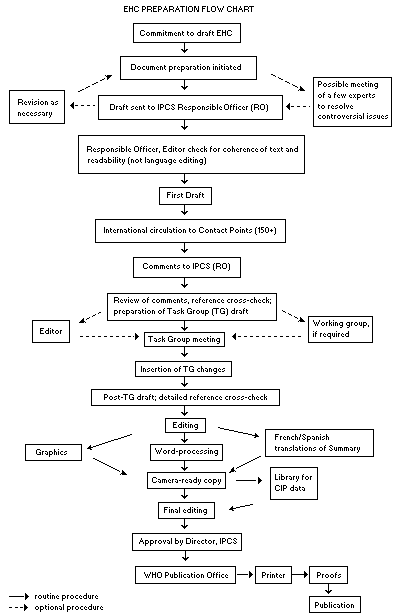
The order of procedures that result in the publication of an EHC
monograph is shown in the flow chart. A designated staff member of
IPCS, responsible for the scientific quality of the document, serves
as Responsible Officer (RO). The IPCS Editor is responsible for
layout and language. The first draft, prepared by consultants or,
more usually, staff from an IPCS Participating Institution, is based
initially on data provided from the International Register of
Potentially Toxic Chemicals, and reference data bases such as Medline
and Toxline.
The draft document, when received by the RO, may require an
initial review by a small panel of experts to determine its scientific
quality and objectivity. Once the RO finds the document acceptable as
a first draft, it is distributed, in its unedited form, to well over
150 EHC contact points throughout the world who are asked to comment
on its completeness and accuracy and, where necessary, provide
additional material. The contact points, usually designated by
governments, may be Participating Institutions, IPCS Focal Points, or
individual scientists known for their particular expertise. Generally
some four months are allowed before the comments are considered by the
RO and author(s). A second draft incorporating comments received and
approved by the Director, IPCS, is then distributed to Task Group
members, who carry out the peer review, at least six weeks before
their meeting.
The Task Group members serve as individual scientists, not as
representatives of any organization, government or industry. Their
function is to evaluate the accuracy, significance and relevance of
the information in the document and to assess the health and
environmental risks from exposure to the chemical. A summary and
recommendations for further research and improved safety aspects are
also required. The composition of the Task Group is dictated by the
range of expertise required for the subject of the meeting and by the
need for a balanced geographical distribution.
The three cooperating organizations of the IPCS recognize the
important role played by nongovernmental organizations.
Representatives from relevant national and international associations
may be invited to join the Task Group as observers. While observers
may provide a valuable contribution to the process, they can only
speak at the invitation of the Chairperson. Observers do not
participate in the final evaluation of the chemical; this is the sole
responsibility of the Task Group members. When the Task Group
considers it to be appropriate, it may meet in camera.
All individuals who as authors, consultants or advisers
participate in the preparation of the EHC monograph must, in addition
to serving in their personal capacity as scientists, inform the RO if
at any time a conflict of interest, whether actual or potential, could
be perceived in their work. They are required to sign a conflict of
interest statement. Such a procedure ensures the transparency and
probity of the process.
When the Task Group has completed its review and the RO is
satisfied as to the scientific correctness and completeness of the
document, it then goes for language editing, reference checking, and
preparation of camera-ready copy. After approval by the Director,
IPCS, the monograph is submitted to the WHO Office of Publications for
printing. At this time a copy of the final draft is sent to the
Chairperson and Rapporteur of the Task Group to check for any errors.
It is accepted that the following criteria should initiate the
updating of an EHC monograph: new data are available that would
substantially change the evaluation; there is public concern for
health or environmental effects of the agent because of greater
exposure; an appreciable time period has elapsed since the last
evaluation.
All Participating Institutions are informed, through the EHC
progress report, of the authors and institutions proposed for the
drafting of the documents. A comprehensive file of all comments
received on drafts of each EHC monograph is maintained and is
available on request. The Chairpersons of Task Groups are briefed
before each meeting on their role and responsibility in ensuring that
these rules are followed.
 WHO TASK GROUP ON ENVIRONMENTAL HEALTH CRITERIA FOR CHRYSOTILE
ASBESTOS
Members
Professor J.M. Dement, Duke Occupational Health Services, Duke
University, Durham, NC, USA (Vice-Chairperson)a
Professor J.Q. Huang, Shanghai Medical University, Shanghai,
China
Professor M.S. Huuskonen, Institute of Occupational Health,
Helsinki, Finlandb
Professor G. Kimizuka, Department of Pathobiology, School of
Nursing, Chiba University, Chiba, Japan
Professor A. Langer, Environmental Sciences Laboratories,
Brooklyn College of the City University of New York, Brooklyn,
New York, USA (Co-Rapporteur)
Ms M.E. Meek, Priority Substances Section, Environmental Health
Directorate, Health Protection Branch, Health Canada, Ottawa,
Ontario, Canada (Chairperson)c
Ms M. Meldrum, Health and Safety Executive, Toxicology Unit,
Bootle, United Kingdom (Co-Rapporteur)
Dr H. Muhle, Fraunhofer Institute for Toxicology and Aerosol
Research, Hanover, Germany
Professor M. Neuberger, Institute of Environmental Hygiene,
University of Vienna, Vienna, Austria
Professor J. Peto, Section of Epidemiology, Institute of Cancer
Research, Royal Cancer Hospital, Sutton, Surrey, United Kingdom
Dr L. Stayner, Risk Analysis and Document Development Branch,
Education and Information Division, National Institute for
Occupational Safety and Health, Morgantown, West Virginia, USA
a Professor J.M. Dement chaired the meeting sessions when
discussions on Chapters 9, 10 and 11 were held. These sessions were
held in camera without the presence of observers. He also chaired
the final session when the whole document was adopted.
b Not present at the last session
c Not present at the discussions on Chapter 10.
Dr V. Vu, Health and Environmental Review Division, US
Environmental Protection Agency, Washington, D.C., USA
Observers
Mr D. Bouige, Asbestos International Association (AIA), Paris,
Francea
Dr G.W. Gibbs, Committee on Fibres, International Commission on
Occupational Health, Spruce Grove, Alberta, Canadab
Secretariat
Dr Paolo Boffetta, Unit of Environmental Cancer Epidemiology,
International Agency for Research on Cancer, Lyon, France
Dr I. Fedotov, Occupational Safety and Health Branch, International
Labour Office, Geneva, Switzerland
Mr Salem Milad, International Registry of Potentially Toxic
Chemicals, United Nations Environment Programme, Geneva,
Switzerland
Professor F. Valic, IPCS Scientific Adviser, Andrija œtampar
School of Public Health, Zagreb University, Zagreb, Croatia
(Responsible Officer and Secretary of Meeting)
Resource persons
Professor J. Corbett McDonald, Department of Occupational and
Environmental Medicine, National Heart and Lung Institute,
London, United Kingdomb
Professor W.J. Nicholson, Department of Community Medicine,
Mount Sinai School of Medicine, New York, NY, USA
a Present only during first two days of the meeting (i.e. before the
discussions on Chapters 9, 10 and 11 were held)
b Not present during the discussions on Chapters 9, 10 and 11, which
were held in camera
IPCS TASK GROUP ON ENVIRONMENTAL HEALTH CRITERIA FOR CHRYSOTILE
ASBESTOS
A Task Group on Environmental Health Criteria for Chrysotile
Asbestos met at WHO Headquarters, Geneva, Switzerland, from 1 to 6
July 1996. Dr M. Mercier, Director IPCS, opened the Meeting and
welcomed the participants on behalf of the heads of the three
cooperating organizations of the IPCS (UNEP/ILO/WHO). The Task Group
reviewed and revised the third draft of the monograph, made an
evaluation of the risks for human health and the environment from
exposure to chrysotile asbestos, and made recommendations for health
protection and further research.
The first drafts were prepared by Dr G. Gibbs, Canada
(Chapter 2), Mr B.J. Pigg, USA (Chapter 3), Professor W.J. Nicholson,
USA (Chapter 4), Dr A. Morgan, UK and Professor M. Lippmann, USA
(Chapter 5), Dr J.M.G. Davis, UK and Professor B.T. Mossman, USA
(Chapter 6), Professor J.C. McDonald, UK, Professor P.J. Landrigan,
USA and Professor W.J. Nicholson, USA (Chapter 7), Professor H.
Schreier, Canada (Chapter 8).
In the light of international comments, the second draft was
prepared under the coordination of Professor F. Valiœ, Croatia.
Chapter 8 was modified by a group of experts in risk assessment
(Professors J. Hughes, USA, J. Peto, UK, and J. Siemiatycki, Canada).
Professor F. Valiœ was responsible for the overall scientific
content of the monograph and for the organization of the meeting, and
Dr P.G. Jenkins, IPCS Central Unit, for the technical editing of the
monograph.
The efforts of all who helped in the preparation and finalization
of the monograph are gratefully acknowledged.
ABBREVIATIONS
ACM asbestos-containing material
AOS activated oxygen species
ATEM analytical transmission electron microscopy
BAL bronchoalveolar lavage
BP benzo (a)pyrene
CI confidence interval
EDXA energy-dispersive X-ray analyser
f fibre
FGF fibroblast growth factor
LDH lactate dehydrogenase
mpcf millions of particles per cubic foot
mpcm millions of particles per cubic metre
NHMI N-nitrosoheptamethyleneimine
OR odds ratio
p particle
PCOM phase contrast optical microscopy
PDGF platelet-derived growth factor
PMR proportional mortality ratio
RR relative risk
SAED selected area electron diffraction
SEM scanning electron microscopy
SMR standardized mortality ratio
TEM transmission electron microscopy
TPA 12-O-tetradecanoylphorbol-13-acetate
TWA time-weighted average
UICC Union Internationale Contre le Cancer (reference
asbestos samples)
INTRODUCTION
As early as 1986 the International Programme on Chemical Safety
(IPCS) published the Environmental Health Criteria (EHC 53) on the
health effects of natural mineral fibres with particular emphasis on
asbestos (IPCS, 1986). During the next 7 years, efforts were focused
on possible reduction of environmental asbestos exposure (IPCS, 1989;
WHO/OCH, 1989), including the evaluation of a number of possible
substitute fibres such as man-made mineral fibres (IPCS, 1988), and
selected organic synthetic fibres (IPCS, 1993).
In 1992, four WHO Member States invited the Director-General of
WHO to request the IPCS to update that part of EHC 53 concerning the
health effects of chrysotile asbestos. The Director-General accepted
the request and instructed the IPCS to develop an EHC specifically for
chrysotile asbestos taking into consideration that (a) the
International Labour Organisation had recommended the discontinuation
of the use of crocidolite asbestos; (b) amosite asbestos was, for all
practical purposes, no longer exploited; and (c) there was still
wide-spread production and use of chrysotile asbestos in the world.
A number of reputable scientists (selected solely on the basis of
their contributions to the open scientific literature) were approached
with the request to develop individual scientific chapters for the
first draft. Chapters 5, 6 and 7 were drafted by two or three authors
independently. On the basis of these texts a coherent draft was
prepared by the IPCS.
The drafts of chapters 5, 6 and 7 were sent for preliminary
review to a limited number of recognized experts proposed by IPCS
participating institutions. The full draft of the document was
submitted to the standard IPCS worldwide evaluation procedure by
circulating it for comments to more than 140 IPCS Contact Points.
Taking into account all the relevant comments, a second draft was
developed by the IPCS. Chapter 7, drafted independently by three
authors, was modified by a working group of experts and focuses on
lung cancer and mesothelioma risks in populations exposed almost
exclusively to chrysotile. The discussion in this chapter has been
restricted primarily to direct observation from epidemiological
studies.
The third draft was submitted for evaluation, modification and
finalization to a Task Group of experts appointed by WHO. None of the
primary authors was appointed to be a member of the Task Group.
1. SUMMARY
1.1 Identity, physical and chemical properties, sampling and analysis
Chrysotile is a fibrous hydrated magnesium silicate mineral that
has been used in many commercial products. It is widely used in global
commerce today. Its physical and chemical properties as a mineral are
observed to vary among the exploited geological deposits. The minerals
that accompany the fibre in ores are many, and among these may be some
varieties of fibrous amphibole. Tremolite is thought to be especially
important in this respect; its form and concentration range greatly.
Analysis of chrysotile in the workplace currently entails the use
of light and electron microscopes. Various instruments and devices
have been previously used to monitor environments for the presence and
concentration of both total dust and fibres. The membrane filter
technique and phase contrast optical microscopy are commonly used
today for workplace assay (expressed as fibres per ml air); and the
transmission electron microscopy is also employed. Environmental
assays require the use of transmission electron microscopy. Tissue
burden studies have been employed to improve information regarding
exposures. Depending on the degree of attention to detail in these
studies, inferences regarding mechanisms and etiology have been drawn.
Gravimetric and thermal precipitator and midget impinger
techniques were previously used for workplace characterization, and
these dust (not fibre) values are the only early exposure indices
available for gauging exposure-response relationships. There have been
many attempts to convert these values to fibres per volume of air, but
these conversions have had very limited success. Conversion factors
have been found to be industry-specific and even operation-specific;
universal conversion factors carry high variances.
1.2 Sources of occupational and environmental exposure
Low concentrations of chrysotile are found throughout the crustal
environment (air, water, ice caps and soil). Both natural and human
activities contribute to fibre aerosolization and distribution.
Anthropogenic sources include dusts from occupational activities,
which cover ore recovery and processing, manufacturing, application,
usage and, ultimately disposal.
Production occurs in 25 countries, and there are seven major
producers. Annual world production of asbestos peaked at over 5
million tonnes in the mid-1970s but has since declined to a current
level of about 3 million tonnes. Manufacturing of chrysotile products
is undertaken in more than 100 countries, and Japan is the leading
consumer country. The current main activities resulting in potential
chrysotile exposure are: (a) mining and milling; (b) processing into
products (friction materials, cement pipes and sheets, gaskets and
seals, paper and textiles); (c) construction, repair and demolition;
(d) transportation and disposal. The asbestos-cement industry is by
far the largest user of chrysotile fibres, accounting for about 85% of
all use.
Fibres are released during processing, installation and disposal
of asbestos-containing products, as well as through normal wear of
products in some instances. Manipulation of friable products may be an
important source of chrysotile emission.
1.3 Occupational and environmental exposure levels
Based on data mainly from North America, Europe and Japan, in
most production sectors workplace exposures in the early 1930s were
very high. Levels dropped considerably to the late 1970s and have
declined substantially to present day values. In the mining and
milling industry in Quebec, the average fibre concentrations in air
often exceeded 20 fibres/ml (f/ml) in the 1970s, while they are now
generally well below 1 f/ml. In the production of asbestos-cement in
Japan, typical mean concentrations were 2.5-9.5 f/ml in 1970s, while
mean concentrations of 0.05-0.45 f/ml were reported in 1992. In
asbestos textile manufacture in Japan, mean concentrations were
between 2.6 and 12.8 f/ml in the period between 1970 and 1975, and
0.1-0.2 f/ml in the period between 1984 and 1986. Trends have been
similar in the production of friction materials: based on data
available from the same country, mean concentrations of 10-35 f/ml
were measured in the period between 1970 and 1975, while levels
0.2-5.5 f/ml were reported in the period between 1984 and 1986. In a
plant in the United Kingdom in which a large mortality study was
conducted, concentrations were generally above 20 f/ml in the period
before 1931 and generally below 1 f/ml during 1970-1979.
Few data on concentrations of fibres associated with the
installation and use of chrysotile-containing products are available,
although this is easily the most likely place for workers to be
exposed. In the maintenance of vehicles, peak concentrations of up to
16 f/ml were reported in the 1970s, while practically all measured
levels after 1987 were less than 0.2 f/ml. Time-weighted average
exposures during passenger vehicle repair in the 1980s were generally
less than 0.05 f/ml. However, with no controls, blowing off debris
from drums resulted in short-term high concentrations of dust.
There is potential for exposure of maintenance personnel to mixed
asbestos fibre types due to large quantities of friable asbestos in
place. In buildings with control plans, personal exposure of building
maintenance personnel in the USA, expressed as 8-h time-weighted
averages, was between 0.002 and 0.02 f/ml. These values are of the
same order of magnitude as typical exposures during telecommunication
switchwork (0.009 f/ml) and above-ceiling work (0.037 f/ml), although
higher concentrations were reported in utility space work (0.5 f/ml).
Concentrations may be considerably higher where no control plans have
been introduced. In one case, short-term episodic concentrations were
1.6 f/ml during sweeping and 15.5 f/ml during dusting of library books
in a building with a very friable chrysotile-containing surface
formulation. Most other 8-h time-weighted averages are about two
orders of magnitude less.
Based on surveys conducted before 1986, fibre concentrations
(fibres > 5 µm in length) in outdoor air, measured in Austria,
Canada, Germany, South Africa and the USA, ranged between 0.0001 and
about 0.01 f/ml, levels in most samples being less than 0.001 f/ml.
Means or medians were between 0.00005 and 0.02 f/ml, based on more
recent determinations in Canada, Italy, Japan, the Slovak Republic,
Switzerland, United Kingdom and USA.
Fibre concentrations in public buildings, even those with friable
asbestos-containing materials, are within the range of those measured
in ambient air. Concentrations (fibres > 5 µm in length) in buildings
in Germany and Canada reported before 1986 were generally less than
0.002 f/ml. In more recent surveys in Belgium, Canada, the Slovak
Republic, United Kingdom and USA, mean values were between 0.00005 and
0.0045 f/ml. Only 0.67% of chrysotile fibres were longer than 5 µm.
1.4 Uptake, clearance, retention and translocation
The deposition of inhaled chrysotile asbestos is dependent upon
the aerodynamic diameter, the length and the morphology of the fibre.
Most airborne chrysotile fibres are considered respirable because
their fibre diameters are less than 3 µm, equal to an aerodynamic
diameter of about 10 µm. In laboratory rats, chrysotile fibres are
deposited primarily at alveolar duct bifurcations.
In the nasopharyngeal and tracheobronchial regions, chrysotile
fibres are cleared via mucocilliary clearance. At the alveolar duct
bifurcations the fibres are taken up by epithelial cells. Fibre length
is an important determinant of alveolar clearance of chrysotile
fibres. There is extensive evidence from animal studies that short
fibres (less than 5 µm long) are cleared more rapidly than long fibres
(longer than 5 µm). The mechanisms of the relatively more rapid
clearance of chrysotile fibres compared to those of amphiboles are not
completely known. It has been hypothesized that short chrysotile
fibres are cleared through phagocytosis by alveolar macrophages, while
long chrysotile fibres are cleared mainly by breakage and/or
dissolution. To what extent chrysotile fibres are translocated to the
interstitium, pleural tissue and other extrathoracic tissues is not
fully understood.
Analyses of human lungs of workers exposed to chrysotile asbestos
indicate much greater retention of tremolite, an amphibole asbestos
commonly associated with commercial chrysotile in small proportions,
than of chrysotile. The more rapid removal of chrysotile fibres from
the human lung is further supported by findings from animal studies
showing that chrysotile is more rapidly cleared from the lung than are
amphiboles including crocidolite and amosite.
Available data from studies in humans and animals are
insufficient to evaluate the possible uptake, distribution and
excretion of chrysotile fibres from ingestion. Available evidence
indicates that, if penetration of chrysotile fibres across the gut
wall does occur, it is extremely limited. One study indicated an
increased level of chrysotile fibres in the urine of workers
occupationally exposed to chrysotile.
1.5 Effects on animals and cells
Various experimental samples of chrysotile fibres have been shown
in numerous long-term inhalation studies to cause fibrogenic and
carcinogenic effects in laboratory rats. These effects include
interstitial fibrosis and cancer of the lung and pleura. In most
cases, there appears to be an association between fibrosis and tumours
in the rat lung. Fibrogenic and carcinogenic effects have also been
found in long-term animal studies (mainly in rats) using other modes
of administration (e.g., intratracheal instillation and intrapleural
or intraperitoneal injection).
Exposure/dose-response relationships for chrysotile-induced
pulmonary fibrosis, lung cancer and mesothelioma have not been
adequately investigated in long-term animal inhalation studies.
Inhalation studies conducted to date, mainly using a single exposure
concentration, show fibrogenic and carcinogenic responses at airborne
fibre concentrations ranging from 100 to a few thousand fibres/ml.
When data from various studies are combined, there appears to be a
relationship between airborne fibre concentrations and lung cancer
incidence. This type of analysis, however, may not be scientifically
sound as different experimental conditions were used in available
studies.
In non-inhalation experiments (intrapleural and intraperitoneal
injection studies), dose-response relationships for mesothelioma have
been demonstrated for chrysotile fibres. Data from these types of
studies, however, may not be suitable for the evaluations of human
risk from inhalation exposure to fibres.
Tremolite asbestos, a minor component mineral of commercial
chrysotile, has also been shown to be carcinogenic and fibrogenic in a
single inhalation experiment and an intraperitoneal injection study in
rats. Exposure/dose-response data are not available to allow direct
comparison of the cancer potency of tremolite and chrysotile.
The ability of fibres to induce fibrogenic and carcinogenic
effects appears to be dependent on their individual characteristics,
including fibre dimension and durability (i.e. biopersistence in
target tissues), which are determined in part by the physico-chemical
properties. It has been well documented in experimental studies that
short fibres (shorter than 5 µm) are less biologically active than
long fibres (longer than 5 µm). It is still uncertain, however,
whether short fibres have any significant biological activity.
Furthermore, it is not known how long a fibre needs to remain in the
lung in order to induce preneoplastic effects, since the appearance of
asbestos-related cancer generally occurs later in the animal's life.
The mechanisms by which chrysotile and other fibres cause
fibrogenic and carcinogenic effects are not completely understood.
Possible mechanisms of fibrogenic effects of fibres include chronic
inflammation process mediated by production of growth factors (e.g.,
TNF-alpha) and reactive oxygen species. With regard to fibre-induced
carcinogenicity, several hypotheses have been proposed. These include:
DNA damage by reactive oxygen species induced by fibres; direct DNA
damage by physical interactions between fibres and target cells;
enhancement of cell proliferation by fibres; fibre-provoked chronic
inflammatory reactions leading to prolonged release of lysozymal
enzymes, reactive oxygen species, cytokines and growth factors; and
action by fibres as co-carcinogens or carriers of chemical carcinogens
to the target tissues. It is likely, however, that all these
mechanisms contribute to the carcinogenicity of chrysotile fibres, as
such effects have been observed in various in vitro systems of human
and mammalian cells.
Overall, the available toxicological data provide clear evidence
that chrysotile fibres can cause fibrogenic and carcinogenic hazard to
humans. The data, however, are not adequate for providing quantitative
estimates of the risk to humans. This is because there are inadequate
exposure-response data from inhalation studies, and there are
uncertainties concerning the sensitivities of the animal studies for
predicting human risk.
Chrysotile fibres have been tested in several oral
carcinogenicity studies. Carcinogenic effects have not been reported
in available studies.
1.6 Effects on humans
Commercial grades of chrysotile have been associated with an
increased risk of pneumoconiosis, lung cancer and mesothelioma in
numerous epidemiological studies of exposed workers.
The non-malignant diseases associated with exposure to chrysotile
comprise a somewhat complex mixture of clinical and pathological
syndromes not readily definable for epidemiological study. The prime
concern has been asbestosis, generally implying a disease associated
with diffuse interstitial pulmonary fibrosis accompanied by varying
degrees of pleural involvement.
Studies of workers exposed to chrysotile in different sectors
have broadly demonstrated exposure-response or exposure-effect
relationships for chrysotile-induced asbestosis, in so far as
increasing levels of exposure have produced increases in the incidence
and severity of disease. However, there are difficulties in defining
this relationship, due to factors such as uncertainties in diagnosis
and the possibility of disease progression on cessation of exposure.
Furthermore, some variation in risk estimates are evident among
the available studies. The reasons for the variations are not entirely
clear, but may relate to uncertainties in exposure estimates, airborne
fibre size distributions in the various industry sectors and
statistical models. Asbestotic changes are common following prolonged
exposures of 5 to 20 f/ml.
The overall relative risks for lung cancer are generally not
elevated in the studies of workers in asbestos-cement production and
in some of the cohorts of asbestos-cement production workers. The
exposure-response relationship between chrysotile and lung cancer risk
appears to be 10-30 times higher in studies of textile workers than in
studies of workers in mining and milling industries. The relative
risks of lung cancer in the textile manufacturing sector in relation
to estimated cumulative exposure are, therefore, some 10-30 times
greater than those observed in chrysotile mining. The reasons for this
variation in risk are not clear, so several hypotheses, including
variations in fibre size distribution, have been proposed.
Estimation of the risk of mesothelioma is complicated in
epidemiological studies by factors such as the rarity of the disease,
the lack of mortality rates in the populations used as reference, and
problems in diagnosis and reporting. In many cases, therefore, risks
have not been calculated, and cruder indicators have been used, such
as absolute numbers of cases and deaths, and ratios of mesothelioma
over lung cancers or total deaths.
Based on data reviewed in this monograph, the largest number of
mesotheliomas has occurred in the chrysotile mining and milling
sector. All the observed 38 cases were pleural with the exception of
one of low diagnostic probability, which was pleuro-peritoneal. None
occurred in workers exposed for less than 2 years. There was a clear
dose-response relationship, with crude rates of mesotheliomas
(cases/ 1000 person-years) ranging from 0.15 for those with cumulative
exposure less than 3530 million particles per m3 (mpcm)-years
(< 100 million particles per cubic foot (mpcf)-years) to 0.97 for
those with exposures of more than 10 590 mpcm-years (> 300
mpcf-years).
Proportions of deaths attributable to mesotheliomas in cohort
studies in the various mining and production sectors range from 0 to
0.8%. Caution should be exercised in interpreting these proportions as
studies do not provide comparable data stratifying deaths by exposure
intensity, duration of exposure or time since first exposure.
There is evidence that fibrous tremolite causes mesothelioma in
humans. Since commercial chrysotile may contain fibrous tremolite, it
has been hypothesized that the latter may contribute to the induction
of mesotheliomas in some populations exposed primarily to chrysotile.
The extent to which the observed excesses of mesothelioma might be
attributed to the fibrous tremolite content has not been resolved.
The epidemiological evidence that chrysotile exposure is
associated with an increased risk for cancer sites other than the lung
or pleura is inconclusive. There is limited information on this issue
for chrysotile per se, although there is some inconsistent evidence
for an association between asbestos exposure (all forms) and
laryngeal, kidney and gastrointestinal tract cancers. A significant
excess of stomach cancer has been observed in a study of Quebec
chrysotile miners and millers, but possible confounding by diet,
infections or other risk factors has not been addressed.
It should be recognized that although the epidemiological studies
of chrysotile-exposed workers have been primarily limited to the
mining and milling, and manufacturing sector, there is evidence, based
on the historical pattern of disease associated with exposure to mixed
fibre types in western countries, that risks are likely to be greater
among workers in construction and possibly other user industries.
1.7 Environmental fate and effects on biota
Serpentine outcroppings occur world-wide. Mineral components,
including chrysotile, are eroded through crustal processes and are
transported to become a component of the water cycle, sediment
population and soil profile. Chrysotile presence and concentrations
have been measured in water, air and other units of the crust.
Chrysotile and its associated serpentine minerals chemically
degrade at the surface. This produces profound changes in soil pH and
introduces a variety of trace metals into the environment. This has in
turn produced measurable effects on plant growth, soil biota
(including microbes and insects), fish and invertebrates. Some data
indicate that grazing animals (sheep and cattle) undergo changes in
blood chemistry following ingestion of grasses grown on serpentine
outcrops.
2. IDENTITY, PHYSICAL AND CHEMICAL PROPERTIES, SAMPLING AND
ANALYSIS
2.1 Identity
2.1.1 Chemical composition
Chrysotile, referred to as white asbestos, is a naturally
occurring fibrous hydrated magnesium silicate belonging to the
serpentine group of minerals. The chemical composition, crystal
structure and polytypic forms of the serpentine minerals have been
described by Langer & Nolan (1994).
The composition of chrysotile is close to the ideal unit cell
formula (Mg3Si2O5(OH)4); substitution by other elements in the
crystal structure is possible. According to Skinner et al. (1988)
substitution possibilities are:
(Mg3-x-y Rx+2 Ry+3)(Si2-y Ry+3)O5 (OH)4,
where R2+ = Fe2+, Mn2+ or Ni2+ and R3+=Al3+ or Fe3+.
Results of a typical chemical analysis are shown in Table 1 of
Environmental Health Criteria 53 (IPCS, 1986).
Trace amounts of some other elements, such as Na, Ca and K, are
probably due to the presence of other minerals admixed in the ore (see
section 2.1.6).
2.1.2 Structure
Chrysotile is a sheet silicate with a basic building block of
(Si2O5)n in which three of the oxygen atoms in each tetrahedron
base are shared with adjacent tetrahedra in the same layer. The apical
oxygens of the tetrahedra in the silica sheet become a component
member of the overlying brucite layer (Mg(OH)2) (Speil & Leineweber,
1969). As the dimensions of the cations in the silica and brucite
sheets are different, strain is produced, which is accommodated by the
formation of a scroll structure. Yada (1967) produced transmission
electron micrographs that permitted visualization of this
morphological feature. The curvature occurs with the brucite layer on
the outer surface. The resulting capillaries are common to most
specimens although solid cores have been found.
When more than one structure occurs, they are called polytypes:
orthochrysotile (orthorhombic structure), clinochrysotile (monoclinic
structure) and parachrysotile (cylindrical or polygonal Povlen-type
structures) (Wicks, 1979). Most chrysotile is a mixture of the ortho-
and clino-polytypes in various proportions (Speil & Leineweber, 1969).
2.1.3 Fibre forms in the ore
Chrysotile can occur in the host rock as "cross-fibre" (fibre
axes at right angles to the seam or vein), "slip-fibre" (fibre axes
parallel to the seam) or massive fibre (in which there is no
recognizable fibre orientation, as in the New Idria deposit in USA).
2.1.4 Fibre properties
Depending on the relative flexibility, fibres may be "harsh" or
"soft". Chrysotile fibres generally occur with properties between
these end-types (Badollet, 1948). While amphibole fibres are generally
harsh, most chrysotile fibres are soft, although fibres displaying
intermediate properties also occur. Harshness has been reported to be
related to the water content of the fibre, i.e. the higher the water
content the "softer" the fibre (Woodroofe, 1956), relative contents of
clino- and ortho-chrysotile, and the presence of fine mineral
intergrowth ( Speil & Leineweber, 1969).
Harsh chrysotile fibres tend to be straighter and less flexible
than the soft fibres. Inhalation of respirable straight fibres is
reported to be associated with greater penetration to the terminal
bronchioles than in the case of "curly" fibres (Timbrell, 1965, 1970).
The fibres can be classified into crude chrysotile (hand-selected
fibres in essentially native or unfiberized form) and milled fibres
(after mechanical treatment of the ore). Fibre grades used for
different products vary from country to country. The Canadian system
has been described by Cossette & Delvaux (1979). The Canadian grading
system is widely used internationally.
At the turn of this century, the fibres of major commercial
importance were several centimetres long. With time, as new
applications developed, shorter fibres became important. This change
is likely to have altered the nature of exposure in some
circumstances.
2.1.5 UICC samples
Two UICC (Union Internationale Contre le Cancer) standard
reference samples of chrysotile asbestos were available for use in
experimental work. One was from Zimbabwe (Chrysotile A) and the other
was a composite sample of fibres from Canadian mines in the eastern
townships of Quebec (Chrysotile B). The physico-chemical properties of
these samples are well characterized and details of their composition
and properties have been reported (Timbrell et al., 1968; Rendall,
1970). These mixtures were artificial and did not reflect any one
commercially available fibre.
2.1.6 Associated minerals in chrysotile ore
The mineral dusts to which miners or millers might be exposed are
determined by the minerals associated with each of the chrysotile ore
deposits. These depend on the composition of the original rock types
and on the materials added or removed during geological events,
surface weathering processes, etc. The spacial relationships among
these components within ore bodies vary significantly from deposit to
deposit.
Iron is ubiquitous in chrysotile deposits derived from ultramafic
rocks. In some of these, magnetite occurs in intimate association with
the fibres (e.g., in Quebec). In other deposits types, e.g., in
carbonate rocks, the iron content is low (e.g., in Arizona). Brucite,
or nemalite (the fibrous form of brucite), is found in some deposits.
Micas, feldspars, altered feldspars, talc and carbonate minerals may
be present. Langer & Nolan (1994) listed minerals likely to be
associated with ultramafic rocks in which chrysotile is found, and
Gibbs (1971a) listed more than 70 minerals occurring in the Quebec
chrysotile mining region. Minerals such as magnetite, calcite and
zeolites may also occur in a fibrous form.
Amphiboles may also be encountered, some in fibrous form. These
latter minerals have been found in studies of lung tissues of exposed
workers. Tremolite, ferro-tremolite, actinolite, anthophyllite and
other amphibole minerals have been described. Their occurrence in ore
bodies is both heterogeneous in distribution and variable in
concentration. Addison & Davies (1990) found tremolite in 28 out of 81
ore samples (34.6%) at concentrations (when detected) from 0.01 to
about 0.6%. The average concentration was about 0.09%. The form of the
amphibole, whether asbestos or massive, was not given. This
information may be crucial in considering the mineral type as an agent
of disease, especially for mesothelioma.
Trace metals have been described in association with fibres,
particularly chromium, cobalt, nickel, iron and manganese (Cralley et
al., 1967; Gibbs, 1971a; Morgan & Cralley, 1973; Oberdörster et al.,
1980). Concentrations in mills in the late 1960s were several times
higher than those measured at textile plants at that time (Gibbs,
1971a).
Naturally occurring chrysotile has been shown to contain trace
quantities of organic compounds, predominantly straight-chain alkanes
(Gibbs, 1971b). Processed fibres may also contain organic compounds
including polycyclic aromatic hydrocarbons (Gibbs, 1971a; Gibbs & Hui,
1971). Concentrations of polycyclic aromatic hydrocarbons in the air
of chrysotile mills were found to be lower than levels in urban areas
(Gibbs, 1971a). Fibres can also be contaminated by alkanes and by
antioxidants from storage in polyethylene bags (Commins & Gibbs, 1969;
Gibbs & Hui, 1971).
Radon concentrations in the Quebec chrysotile mines were reported
to be below 0.3 Standard Working Level (Gibbs, 1971a). This has been
rejected as an agent of disease among miners, especially for lung
cancer.
2.2 Physical and chemical properties
The mineralogy and properties of chrysotile have been summarized
by Wicks (1979), Pooley (1987), and Langer & Nolan (1994).
2.2.1 Physical properties
The physical properties of chrysotile, as they affect human
health, have been described in Langer & Nolan (1986, 1994) and IPCS
(1986).
Harshness has been discussed in section 2.1.4.
Heating of chrysotile fibre at 700°C for an hour converts it to
an amorphous, anhydrous magnesium silicate material (Speil &
Leineweber, 1969). Intensive dry grinding also destroys the structure
of chrysotile. Analysis of wear debris from brake linings made with
asbestos has shown that virtually all of the chrysotile fibre is
converted to amorphous material, in association with the mineral
forsterite (a recrystallization product). The conversion is explained
by localized temperatures above 1000°C at the point of contact between
the brake lining and the drum (Lynch, 1968; Rowson, 1978; Williams &
Muhlbaier, 1982). The fibres found in the brake wear debris are
predominantly (99%) less than 0.4 µm in length (Rohl et al., 1977;
Williams & Muhlbaier, 1982). Rodelsperger et al. (1986) found less
than 1% of fibres longer than 5 µm.
Size and shape are the most important characteristics for
defining the respirability of fibres. For workplace regulatory
purposes a fibre has been defined most frequently as having an aspect
ratio (ratio of fibre length to fibre diameter) of at least 3:1.
Regulatory definitions usually impose a length of 5 µm or greater for
workplace assay.
Chrysotile bundles may be split longitudinally to form thinner
fibres. The ultimate fibre is called a fibril. Yada (1967), by means
of high resolution transmission electron microscopy, showed that basic
spiral elements of chrysotile consist of 5 silica-magnesia units with
approximately 10 silica-magnesia units forming the 0.007 µm wall of a
single fibril. The diameter of the ultimate fibril is about 0.03 µm.
The fibres of significance in health risk evaluation are those
that can be inhaled. Timbrell (1970, 1973) showed that chrysotile
fibres less than about 3.5 µm in diameter can enter the conducting
airways of the lung. The radius of curvature of the chrysotile fibre
may play a role in the ability of a fibre to penetrate to distant
sites along the conducting airways.
As it is possible to have long narrow fibres and short narrow
fibres, descriptions of fibrous aerosols by "mean or median diameter",
or "mean or median length" do not provide sufficient information.
Comparisons of fibrous aerosols to which subjects are exposed may
therefore be limited. The measurements of dimensions are
time-consuming and complete data sets are scant.
Results of most distributions reported are incomplete. Unless
specific steps have been taken to evaluate very long fibres,
transmission electron microscopy (TEM) will understate the number of
long fibres (>20 µm). Because the proportion of very long fibres is
low, random scanning rarely encounters them. Scanning electron
microscopy (SEM) usually requires coating of the specimen. Most
preparation techniques obscure single chrysotile fibrils. In addition,
if chemical analysis of individual fibres is not made, other fibres
may be erroneously reported as chrysotile.
It has been noted that the vast majority of airborne chrysotile
fibres are short, the percentage of fibres more than 5 µm long in
mining and milling being about 1.3 and 4.1%, respectively (Gibbs &
Hwang, 1980), while data show that up to 24% of fibres may be longer
than 5 µm in certain textile spinning operations (Gibbs, 1994).
Virtually all airborne fibres have a diameter of less than 3 µm and
are thus respirable.
The cross-section of a chrysotile fibril is approximately
circular (see figure in Yada, 1967). This is important in calculating
the mass of individual fibres. Generally, the surface area depends on
the degree of fibre openness. The New Idria (Coalinga) material has a
surface area of about 78 m2/g and an average fibril diameter of
0.0275 µm, while the Canadian 7R has a surface area of about 50 m2/g
and an average fibril diameter of 0.0375 µm (Speil & Leineweber,
1969). It has been suggested that surface area plays a role in
imparting biological potential.
Timbrell (1975) reported the magnetic properties of fibres.
Chrysotile showed no preferred orientation in magnetic fields.
It has been observed that industrial processing of fibres from
different sources may affect total airborne dust concentrations.
2.2.2 Chemical properties
Chrysotile exhibits significant solubility in aqueous neutral or
acidic environments (Langer & Pooley, 1973; Jaurand et al., 1977;
Spurny, 1982). In contact with dilute acids or aqueous medium at pH
less than 10, magnesium leaches from the outer brucite layer (Nagy &
Bates, 1952; Atkinson, 1973; Morgan & Cralley, 1973). Magnesium loss
has also been demonstrated in vivo. The surface area of leached
chrysotile is greatly increased (Badollet & Gannt, 1965). The
solubility of the outer brucite layer of chrysotile in body fluids
greatly affects bioaccumulation in lung tissues. The role of chemical
properties in the biological behaviour of chrysotile has been recently
discussed (Langer & Nolan, 1986, 1994).
The adsorption of polar organic agents on the surface of
chrysotile is reported to be higher than that of less polar or non-
polar agents (Speil & Leineweber, 1969; Gorski & Stettler, 1974). The
binding of carcinogens such as benzo (a)pyrene, nitrosonornicotine
and N-acetyl-2-aminofluorene to chrysotile has been studied by
Harvey et al. (1984). Adsorption of components of cigarette smoke onto
the surface of chrysotile fibres has been suggested to play a role in
the etiology of lung cancer in fibre-exposed cigarette smokers. The
fibre may act as a vehicle which transports polycyclic aromatic
hydrocarbons across membranes of the target cells (Gerde & Scholander,
1989).
2.3 Sampling and analytical methods
The collection of samples from air, water, biological specimens,
soils or sediments must follow an appropriate sampling strategy. A
review of methods for sampling asbestos fibres has been published
(IPCS, 1986).
The most commonly used analytical methods involve phase-contrast
optical microscopy (PCOM) (in the workplace) and transmission electron
microscopy (TEM) (in the general environment). PCOM is
resolution-limited and non-specific for fibre characterization. TEM
overcomes both limitations (Dement & Wallingford, 1990).
2.3.1 Workplace sampling
The most widely used method for the last 20 years has been the
membrane filter method. Several attempts have been made to standardize
the method (CEC, 1983; ILO, 1984; AIA, 1988; NIOSH, 1989a; ISO, 1993).
A recommended method for the determination of airborne fibre
concentration by PCOM (membrane filter method) has been published
(WHO, 1997).
A known volume of air is drawn through a membrane filter on which
the number of fibres is determined using a phase contrast microscope
(see section 2.3.3.2). Special attention should be given to flow
rates, sampling time, face velocity through the filter, and where,
when and how to sample. Preference should be given to assessing
individual exposure by personal sampling. The sampling strategy should
be selected to yield the best estimate of an 8-h time-weighted average
concentration. Excursions may be evaluated for regulatory purposes. If
the purpose of the measurement is evaluation of control measures,
other methods may also be used.
2.3.2 Sampling in the general environment
Methods for sampling ambient air depend on the method of
analysis, but generally involve filtering airborne particles from
relatively large volumes of air using membrane filters. Strategies and
sampling methods have been described by Rood (1991) and reviewed in
detail in the Health Effects Institute study of asbestos in public
buildings (HEI, 1991).
For analysis of water, sample specimens are collected and
filtered through polycarbonate filters. If there is much organic
debris, this must be removed to improve particle detection. The fibres
must be re-prepared before analysis. The instrumental method is the
same as that used for air samples.
2.3.3 Analytical methods
Analyses are performed to identify the fibre or fibres present
and to determine their concentrations.
2.3.3.1 Fibre identification
Several methods have been developed to identify chrysotile
asbestos using dispersion staining methods and polarization microscopy
(Julian & McCrone, 1970; McCrone, 1978; Churchyard & Copeland, 1988;
NIOSH, 1989a). NIOSH (1989b) described the procedure specifically for
the analysis of asbestos bulk samples.
The limit of visibility of fibres, depending on the microscope
and light source used, is in the range 0.2-0.3 µm. With most high
quality research microscopes, chrysotile fibres of 0.22 µm are
generally reported as being observable. The experience and expertise
of the microscopist and the quality of the laboratory set-up both
influence the outcome.
Fibres with diameters less than about 0.22 µm cannot be seen with
a light optical microscope. When fibres with diameters less than this
value need to be analysed, TEM is used. This method is generally
applied to the identification and characterization of fibres in water
and in ambient air (Chatfield, 1979, 1987; Rood, 1991; ISO, 1991; HEI,
1991). The most reliable method of identifying chrysotile fibres is
the combination of morphology, chemistry and electron diffraction
(Skikne et al., 1971; Langer & Pooley, 1973). Several methods for the
determination of amphibole fibres in chrysotile have been described
(Addison & Davies, 1990).
Analytical methods using scanning electron microscopy (SEM) have
also been developed (AIA, 1984; WHO, 1985; ISO, 1992).
2.3.3.2 Measurement of airborne fibre concentrations
a) Workplace
In the PCOM method, the membrane filter is dissolved or collapsed
using a solvent with a refractive index which matches the refractive
index of the filter medium, rendering it invisible. Fibres entrained
on the filter are made readily visible.
The number of fibres of specified length and diameter in a known
area of the filter is counted at magnifications of 400 to 500. A
graticule has been designed for this purpose. Development of the
HSE/NPL slide (LeGuen et al., 1984), which permits laboratories to
standardize the limit of visibility of their microscopes and
microscopists, has improved the potential for interlaboratory
agreement in counts.
Improvements in the mounting techniques and counting strategy has
resulted in higher fibre counts than those found using the same
techniques in the early 1970s (HSE, 1979; Gibbs, 1994). This change
was estimated in the United Kingdom to cause a two-fold increase in
the reported fibre concentrations (HSE, 1979).
Instrumentation for automatic counting has been developed (e.g.,
Kenny, 1984) but has failed to receive wide international recognition.
b) Ambient air
The diameter of most chrysotile fibres found in the
non-occupational environment is below the resolution of the light
optical microscope (Rooker et al., 1982).
The most reliable method for determining the concentration of
chrysotile fibres in ambient air is TEM. Most currently available
transmission electron microscopes have a resolution of about 0.2 nm;
in combination with an energy-dispersive X-ray analyser (EDXA), TEM
can chemically characterize fibres down to a diameter of 0.01 µm. The
disadvantage of TEM is the small area that can be scanned when
employing very high magnifications. This makes analysis of the long
fibres (>5 µm) more limited in accuracy (Coin et al., 1992). A review
of the use of TEM and a comparison of direct and indirect methods of
filter preparation have been published recently (HEI, 1991).
SEM has been used in the measurement of chrysotile. Most SEMs
have a resolution intermediate between that of TEM and PCOM.
2.3.3.3 Lung tissue analysis
Several methods have been described (Langer & Pooley, 1973;
Gaudichet et al., 1980; Rogers et al., 1991a,b). All methods use
ashing or digestion of tissues, TEM, SAED and EDXA. International
standardization of these methods has not as yet been carried out. For
this reason comparison of results from different laboratories is often
difficult to make.
2.3.3.4 Gravimetric analysis
Gravimetric methods have been applied in some countries for the
evaluation of workplace conditions and emissions (Rickards, 1973;
Middleton, 1982). Relatively large samples of dust are needed and the
methods do not distinguish between the fibres and non-fibrous dusts
nor among mineral components of each group. In view of this and the
current belief that counts of fibres better define the health risk,
gravimetric methods are limited in application. However, it must also
be recognized that bulk dust assay is a useful index for control
evaluation and should be used if membrane filter techniques are
unavailable.
2.4 Conversion factors
The concentrations of airborne chrysotile fibres in the workplace
are expressed as the number of fibres per millilitre (f/ml) of air,
fibres per litre (f/litre) of air or fibres per cubic metre (f/m3) of
air, or in milligrams per cubic metre (mg/m3) of air. Concentrations
are expressed as number of fibres per cubic metre or nanograms per
cubic metre (ng/m3) in the general environment.
The number of fibres per millilitre, obtained by the method of
membrane filtration and PCOM, is currently used by regulatory agencies
in most countries for the workplace. It is for this reason that the
conversion of results obtained by different methods into membrane
filter equivalents has been performed. Critiques of such conversions
have been published (Walton, 1982; Valiœ, 1993; Gibbs, 1994).
2.4.1 Conversion from airborne particle to fibre concentrations
In almost all epidemiological studies in which health effects
have been related to exposure, concentration measurements were made
using methods quite different from the membrane filter technique. The
early instruments employed were the thermal precipitator in the United
Kingdom, and the midget impinger in North America. Gravimetric
measurements have also been used.
Attempts to convert the midget impinger count to an equivalent
membrane filter fibre count have shown that no single conversion
factor applies. Large variations in the ratios of midget impinger to
membrane filter counts occur in different industries, between jobs
within a single industry, or at a single plant site (Ayer et al.,
1965; Gibbs & Lachance, 1974). Similar conversion problems were
encountered in other countries where attempts were made to convert
konimeter or thermal precipitator results to membrane filter
equivalents (DuToit & Gilfillan, 1979; DuToit et al., 1983; Valiœ &
Cigula, 1992).
Side-by-side study of conversion factors has shown the
correlation between particle and fibre counts to be limited. Both
industry and operation-specific correlations have been made but are
only site-specific. Although some comparisons made for epidemiological
studies have yielded valuable data, no universal factor has ever been
found. High variance exists. Temporal change in dust conditions in
plants may have also affected conversion factors (Dagbert, 1976). The
range of conversion ratios between work sites has been large (Doll &
Peto, 1985). For purposes of exposure-response studies, conversions
based on industry- and operation-specific data have proven valuable in
some instances.
2.4.2 Conversion from total mass to fibre number concentrations
The conversions from total mass concentrations of dust determined
gravimetrically into the fibre number concentrations may also be
generally subject to great errors (Pott, 1978; IPCS, 1986). However,
in some specific industries a good correlation has been achieved (Fei
& Huang, 1989; Huang, 1990).
When measurements of airborne fibre concentrations are made using
transmission electron microscopy, determination of fibre lengths and
diameters are necessary. If chrysotile is split into fibrils,
approximate mass can be calculated by determining the fibre dimensions
and using fibre density in the calculation.
3. SOURCES OF OCCUPATIONAL AND ENVIRONMENTAL EXPOSURE
3.1 Natural occurrence
Chrysotile is present in most serpentine rock formations. As a
result, chrysotile originating from serpentine rock is often found in
air and water due to natural weathering (Nicholson & Pundsack, 1973;
Neuberger et al., 1996).
Workable deposits are present in over 40 countries. Twenty-five
of these currently produce chrysotile. Canada, South Africa, Russia
and Zimbabwe have 90% of the established world reserves (Shride,
1973).
Chrysotile is emitted from both natural and industrial sources.
No measurements concerning the extent of release of airborne fibres
through natural weathering processes are available. A study of the
mineral content of the Greenland ice cap showed that airborne
chrysotile existed long before it was used commercially on a large
scale. Ice core dating showed the presence of chrysotile as early as
1750 (Bowes et al., 1977).
Chrysotile is introduced into water by the weathering of
chrysotile-containing rocks and ores, in addition to the effects of
industrial effluents and atmospheric pollution (Canada Environmental
Health Directorate, 1979). The largest concentrations of asbestos in
drinking-water generally occur from erosion of asbestos deposits
(Polissar, 1993; Neuberger et al., 1996). Millette JR ed. (1983) has
attributed chrysotile in water supplies to erosion from natural
sources in areas such as San Francisco, Sherbrooke and Seattle.
Millette et al. (1980) have shown that in the USA asbestos in
drinking-water is primarily chrysotile.
3.2 Anthropogenic sources
Chrysotile was at one time used in many applications, which
included both friable and non-friable products (Shride, 1973).
Currently, the human activities resulting in potential chrysotile
exposure can be divided into broad categories: (a) mining and milling,
(b) processing of asbestos into products (such as friction materials,
cement pipe and sheet, gaskets and seals, paper and textiles), (c)
construction and repair activities, and (d) transportation and,
especially, disposal of chrysotile-containing waste products.
Chrysotile is by far the predominant asbestos fibre consumed
today, e.g., in the USA 98.5% asbestos consumption in 1992 was
chrysotile (Pigg, 1994).
3.2.1 Production
Although there are 25 countries currently producing chrysotile,
seven countries account for the major part of world production
(Brazil, Canada, China, Kazakhstan, Russia, South Africa and Zimbabwe)
(US Department of Interior, 1993).
World production of asbestos increased 50% between 1964 and 1973
when it reached 5 million tonnes (US Department of Interior, 1991),
but production has generally declined since the mid-1970s to its
current level of 3.1 million tonnes. Table 1 shows the yearly
production levels by countries between 1988 and l992.
Table 2 shows the decline in major asbestos uses in the USA
during the period 1977-1991 (US Department of Interior, 1986, 1991).
Chrysotile ore is usually mined in open-pit operations. Possible
sources of emissions are drilling, blasting, loading broken rock and
transporting ore to the primary crusher or waste sites. Subsequently,
the ore is crushed and emissions may result during unloading, primary
crushing, screening, secondary crushing, conveying and stockpiling. A
drying step follows, involving conveying the ore to the dryer
building, screening, drying, tertiary crushing, conveying ore to dry
rock storage building and dry rock storage. The next step is the
milling of the ore. In well-controlled mills, this is largely confined
in the mill building, and presents low emissions because the mill air
is collected and ducted through control devices (US EPA, 1986). In
poorly controlled mills the emissions may be high.
3.2.2 Manufacture of products
Chrysotile use today mainly involves products where it is
incorporated into matrices. The asbestos-cement industry is by far the
largest user of asbestos fibres world-wide, accounting for some 85% of
all use. Asbestos-cement production facilities exist in more than 100
countries and produce 27 to 30 million tonnes annually (Pigg, 1994).
Asbestos-cement products contain 10-15% of asbestos, mostly
chrysotile, although limited amounts of crocidolite have been used in
large diameter, high-pressure pipes.
There are five major asbestos-cement products: (a) corrugated
sheets; (b) flat sheets and building boards; (c) slates; (d) moulded
goods, including low-pressure pipes; and (e) high-pressure water pipes
(Pigg, 1994).
Possible emission sources are: (a) feeding of asbestos fibres
into the mix; (b) blending the mix; and (c) cutting or machining
end-products. Emissions may vary according to the dust control
measures and technology.
Although declining in the North American and Western European
markets, asbestos-cement product manufacturing continues to grow in
South America, South-East Asia, the eastern Mediterranean region and
eastern Europe (Pigg, 1994). Japan, Thailand, Malaysia, Korea and
Taiwan imported 430 000 tonnes, well over 30% of world-wide imports in
1989 (Industrial Minerals, 1990). It has been reported that "asbestos
use" (the generic term used by the author) in Japan has reached
proportions which indicate that it leads the world in consumption of
fibres (Frank, 1995).
Table 1. World production, of asbestos (tonnes)a (from: US Department of Interior, 1993)
Countryb 1988 1989 1990 1991 1992
Argentina 2328 225 300e 250e 50
Bosnia & Herzegovinac -- -- -- -- 1000
Brazil 227 653 206 195 232 332r 233 100r 233 000
Bulgaria 300 300 500r 500e,r 500
Canada 710 357 701 227 685 627 689 000r 585 000
Chinae 150 000r 181 000r 221 000r 230 000 240 000
Columbiae, d 7600 7900 8000 8000 8000
Cyprus 14 585 -- -- --- --
Egypt 166 312 369 450r 450
Greece 71 114 73 300r 65 993r 5500e,r --
India 31 123 36 502 26 053r 24 094r 25 000
Irane 3410r,g 3300 2800r 3000r 3000
Italy 94 549 44 348 3862 3000e,r 1500
Japane 5000 5000 5000 5000 5000
Kazakhstanf -- -- -- -- 300 000
Korea 2428 2361 1534 1500e 1600
Russia -- -- -- -- 1 400 000
Serbia & Montenegroc -- -- -- -- 1700
South Africa 145 678 156 594 145 791 148 525r 123 951g
Swaziland 22 804 27 291 35 938 13 888r 35 000
Turkey 50e -- -- -- --
Former-USSRe 2 600 000 2 600 000 2 400 000 2 000 000 --
Table 1. (continued)
Countryb 1988 1989 1990 1991 1992
USA
(sold or used by producers) 18 233 17 427 W 20 061 15 573
Former-Yugoslavia 17 030 9111 6578 5500e --
Zimbabwe 186 581 187 006r 160 861r 141 697r 140 000
Total 4 310 989r 4 259 399 4 002 538r 3 533 065r 3 120 524
a Marketable fibre production. Table includes data available until 19 April 1993
b In addition to the countries listed, Afghanistan, Czechoslovakia, North Korea and Romania also
produce asbestos, but output is not officially reported, and available general information is
inadequate for the formulation of reliable estimates of output levels.
c Formerly part of Yugoslavia; data were not reported separately until 1992.
d Estimated fibre production (in tonnes), based on reported crude production, was as follows:
1988: 152 896; 1989:-158 149; 1990: 159 600; 1991: 160 332; 1992: 160 000 (estimated).
e Estimated
f Formerly part of the USSR; data were not reported separately until 1992.
g Reported figure.
r Revised
W Withheld to avoid disclosing proprietary data; excluded from "total"
Table 2. Demand for asbestos in the USA
(Thousand tonnes) (US Department of Interior, 1986, 1991)
1977 1984 1991
Asbestos-cement pipe 115 37 4
Asbestos-cement sheet 27 12 2
Coating and compounds 36 22 1
Flooring products 150 46 -
Friction products 57 48 10
Installation: electrical 4 1 -
Installation: thermal 17 2 -
Packing and gaskets 28 13 3
Paper products 7 2 -
Plastics 8 1 -
Roofing products 70 7 15
Textiles 10 2 -
Other 143 33 1
Totala 672 226 34
a The totals given are not the exact sums of the values for
individual products, owing to independent rounding.
Other asbestos products consume smaller quantities of chrysotile
asbestos. Friction products, gaskets and asbestos paper are among
them. Production of shipboard and building insulation, roofing and,
particularly, flooring felts and other flooring materials, such as
vinyl asbestos tiles, has declined considerably, some of them having
disappeared completely from the market place. Friable asbestos
materials in building construction have been phased out in many
countries due to international recommendations.
Moulded brake linings on disc- and drum-type car brakes are among
the chrysotile products that are still manufactured. Woven brake
linings and clutch facings for heavy vehicle use are made from
high-strength chrysotile yarn and fabric reinforced with wire; this
material is dried and impregnated with resin. In the moulding process,
the fibres are combined with the resin, which is then thermoset. Final
treatment involves curing by baking and grinding to customer
specifications.
3.2.3 Use of products
Many chrysotile-containing products have entered global commerce.
The nature of the product and local work practices determine dust
emissions. Non-friable products and appropriate technological controls
greatly reduce fibre release. Manipulation of friable products without
controls may release high levels of airborne dust. However, some
conditions may produce chrysotile aerosols even with non-friable
products, e.g., the use of high-speed power tools without controls.
Concern about the possible exposure of inhabitants of buildings
with asbestos-containing materials has led to extensive monitoring
(HEI, 1991). In this respect the exposure of custodian and maintenance
staff is still being studied (see Chapter 4).
Manufacturing data are not available from individual countries
concerning specific chrysotile-containing products.
4. OCCUPATIONAL AND ENVIRONMENTAL EXPOSURE LEVELS
Few recent reports of occupational and environmental exposure
levels are available, particularly those that differentiate among the
forms of asbestos. Workplace concentrations were very high when
monitoring first began (in the 1930s). In countries where controls
were implemented, the levels generally reduced considerably with time
and continue to decline. In contrast, there is less difference between
the early results of measurements in both outdoor and indoor
non-occupational environments (1970s) and recent data.
Environmental Health Criteria 53 (IPCS, 1986) reported that 58.5%
of samples had fibre concentrations of < 0.5 f/ml and 80.7% < 1.0
f/ml in textile industries in the United Kingdom over the period
1972-1978. Corresponding measurements in France in 1984 were 65.3% with
< 0.5 f/ml and 85.4% with < 1.0 f/ml. It also reported 86.5% of
samples with < 0.5 f/ml and 95.0% with < 1 f/ml in asbestos-cement
industries in the United Kingdom during the period 1972-1978.
Corresponding measurements in France in 1984 were 93.5% with < 0.5
f/ml and 97.4% with < 1.0 f/ml. In industries manufacturing friction
products, 71.0% of samples had < 0.5 f/ml and 85.5% < 1.0 f/ml in
the United Kingdom during 1972-1978, while the corresponding results
in France in 1984 were 62.8% with < 0.5 f/ml and 85.0% with < 1.0
f/ml. Typical concentrations (fibres > 5 µm in length) in outdoor air
measured in various locations in Austria, Canada, Germany, South
Africa and the USA ranged from < 0.0001 to about 0.01 f/ml,
concentrations in most samples being less than 0.001 f/ml.
Concentrations (fibres > 5 µm in length) measured in various
buildings in Canada and Germany ranged from values below the limit of
detection to 0.01 f/ml. The highest concentrations were found in
buildings with sprayed-on friable asbestos.
4.1 Occupational exposure
This section focuses mainly on exposures found in industries
where only commercial chrysotile was used. Emphasis is placed on data
obtained directly by the membrane filter method, but, in the case of
some older studies, data are conversions from original particle
counts. In the latter case, fibre concentrations are subject to the
limitations discussed in sections 2.4.1 and 2.4.2.
4.1.1 Mining and milling
Several sets of data have been published concerning the exposure
levels of mine and mill workers employed in the production facilities
of Thetford Mines and Asbestos, Quebec, Canada. A substantial body of
exposure data was collected by using midget impingers and enumerating
all dust particles (Gibbs & Lachance, 1972). Table 3 lists mean
concentrations of dust in the mills in millions of particles per m3
(mpcm) and per cubic foot (mpcf) of air during the period 1949 to
1965. The mill with the highest dust concentrations had more than
twice the mean values given in Table 3, and that with the lowest
concentrations had less than one half.
Table 3. Mean dust concentrations in asbestos mills of Quebec, Canada
(from Gibbs & Lachance, 1972)
Concentration 1949 1951 1953 1955 1957 1959 1961 1963 1965
mpcm 2650 1940 1770 1130 1060 570 350 530 180
mpcf 75 55 50 32 30 16 10 15 5
Studies of the relationships between particle counts and fibre
concentrations have shown poor correlation (Gibbs & Lachance, 1974;
Dagbert, 1976). Gibbs & Lachance (1974) stated that no single
conversion factor could be applied to all mines and mills. Assuming a
conversion factor of roughly 106 f/ml for each mpcm (3 f/ml for each
mpcf), it can be calculated that mean fibre concentrations in the
Quebec mills before mid-1955 were well above 150 f/ml (see discussions
in section 2.4).
Nicholson et al. (1979) reported fibre concentrations obtained by
the membrane filter method in five mines and mills of Thetford Mines,
Quebec, Canada during the period October 1973 to October 1975 (Table
4).
In Zimbabwe, Cullen et al. (1991) reported estimates of fibre
levels prior to 1980. After 1980, the measured concentrations were
below 10 f/ml in all facilities. In India, the concentrations measured
in four mills in 1989 by Mukherjee et al. (1992) are presented in
Table 5.
Parsons et al. (1986) reported that the concentrations in
refining and bagging areas in a Newfoundland mill were generally less
than 0.5 f/ml, but concentrations in the screening area ranged up to
13.9 f/ml.
Average concentrations of asbestos fibres (length > 5 µm) in the
Quebec mining industry during the period 1973-1993 are presented in
Fig. 1. The average concentrations in Quebec chrysotile mining towns
are shown in Fig. 2.
4.1.2 Textile production
Nine textile plants in the USA were studied in 1964 and 1965 by
Lynch & Ayer (1966). The results of the membrane filter analysis are
presented in Table 6. The presence of small amounts of amosite or
crocidolite fibres cannot be excluded due to the non-specificity of
the assay instrument (PCOM).
Table 4. Asbestos fibre concentrationsa in five chrysotile mines and mills at
Thetford Mines, Quebec, Canada (from Nicholson et al., 1979)
Location Five mines and mills
1 2 3 4 5
General mill air Number of samples 14 37 5 6 7
mean 35 12 15 18 9
range 14-57 7-27 7-27 12-29 5-12
Bagging asbestos Number of samples 2 6 2 2
mean 16 16 9 16
range 12-20 10-24 4-13 14-17
Quality control Number of samples 2 1 1
mean 22 20 9
range 21-22 - -
Crusher Number of samples 4
mean 26
range 8-47
Dryer Number of samples 2
mean 36
range 27-45
Shops Number of samples 3
mean 10
range 6-15
Non-work location Number of samples 1 2
mean 0.8 1.3
range - 1-1.7
a The concentration of fibres (> 5 µm) is given in f/ml.
Table 5. Average personal sample fibre concentrations in four
mills in India (from Mukherjee et al., 1992)
Process Fibre concentration (f/ml)
Average Range
Jaw crusher 1.7 1.3-2.1
Pulverizer 8.9 2.3-15.4
Lime mixer 2.6 2.5-2.6
Huller 12.7 8.9-16.4
Primary eccentric screen 12.9 1.8-25.8
Decorticator 8.8 1.3-18.4
WHO TASK GROUP ON ENVIRONMENTAL HEALTH CRITERIA FOR CHRYSOTILE
ASBESTOS
Members
Professor J.M. Dement, Duke Occupational Health Services, Duke
University, Durham, NC, USA (Vice-Chairperson)a
Professor J.Q. Huang, Shanghai Medical University, Shanghai,
China
Professor M.S. Huuskonen, Institute of Occupational Health,
Helsinki, Finlandb
Professor G. Kimizuka, Department of Pathobiology, School of
Nursing, Chiba University, Chiba, Japan
Professor A. Langer, Environmental Sciences Laboratories,
Brooklyn College of the City University of New York, Brooklyn,
New York, USA (Co-Rapporteur)
Ms M.E. Meek, Priority Substances Section, Environmental Health
Directorate, Health Protection Branch, Health Canada, Ottawa,
Ontario, Canada (Chairperson)c
Ms M. Meldrum, Health and Safety Executive, Toxicology Unit,
Bootle, United Kingdom (Co-Rapporteur)
Dr H. Muhle, Fraunhofer Institute for Toxicology and Aerosol
Research, Hanover, Germany
Professor M. Neuberger, Institute of Environmental Hygiene,
University of Vienna, Vienna, Austria
Professor J. Peto, Section of Epidemiology, Institute of Cancer
Research, Royal Cancer Hospital, Sutton, Surrey, United Kingdom
Dr L. Stayner, Risk Analysis and Document Development Branch,
Education and Information Division, National Institute for
Occupational Safety and Health, Morgantown, West Virginia, USA
a Professor J.M. Dement chaired the meeting sessions when
discussions on Chapters 9, 10 and 11 were held. These sessions were
held in camera without the presence of observers. He also chaired
the final session when the whole document was adopted.
b Not present at the last session
c Not present at the discussions on Chapter 10.
Dr V. Vu, Health and Environmental Review Division, US
Environmental Protection Agency, Washington, D.C., USA
Observers
Mr D. Bouige, Asbestos International Association (AIA), Paris,
Francea
Dr G.W. Gibbs, Committee on Fibres, International Commission on
Occupational Health, Spruce Grove, Alberta, Canadab
Secretariat
Dr Paolo Boffetta, Unit of Environmental Cancer Epidemiology,
International Agency for Research on Cancer, Lyon, France
Dr I. Fedotov, Occupational Safety and Health Branch, International
Labour Office, Geneva, Switzerland
Mr Salem Milad, International Registry of Potentially Toxic
Chemicals, United Nations Environment Programme, Geneva,
Switzerland
Professor F. Valic, IPCS Scientific Adviser, Andrija œtampar
School of Public Health, Zagreb University, Zagreb, Croatia
(Responsible Officer and Secretary of Meeting)
Resource persons
Professor J. Corbett McDonald, Department of Occupational and
Environmental Medicine, National Heart and Lung Institute,
London, United Kingdomb
Professor W.J. Nicholson, Department of Community Medicine,
Mount Sinai School of Medicine, New York, NY, USA
a Present only during first two days of the meeting (i.e. before the
discussions on Chapters 9, 10 and 11 were held)
b Not present during the discussions on Chapters 9, 10 and 11, which
were held in camera
IPCS TASK GROUP ON ENVIRONMENTAL HEALTH CRITERIA FOR CHRYSOTILE
ASBESTOS
A Task Group on Environmental Health Criteria for Chrysotile
Asbestos met at WHO Headquarters, Geneva, Switzerland, from 1 to 6
July 1996. Dr M. Mercier, Director IPCS, opened the Meeting and
welcomed the participants on behalf of the heads of the three
cooperating organizations of the IPCS (UNEP/ILO/WHO). The Task Group
reviewed and revised the third draft of the monograph, made an
evaluation of the risks for human health and the environment from
exposure to chrysotile asbestos, and made recommendations for health
protection and further research.
The first drafts were prepared by Dr G. Gibbs, Canada
(Chapter 2), Mr B.J. Pigg, USA (Chapter 3), Professor W.J. Nicholson,
USA (Chapter 4), Dr A. Morgan, UK and Professor M. Lippmann, USA
(Chapter 5), Dr J.M.G. Davis, UK and Professor B.T. Mossman, USA
(Chapter 6), Professor J.C. McDonald, UK, Professor P.J. Landrigan,
USA and Professor W.J. Nicholson, USA (Chapter 7), Professor H.
Schreier, Canada (Chapter 8).
In the light of international comments, the second draft was
prepared under the coordination of Professor F. Valiœ, Croatia.
Chapter 8 was modified by a group of experts in risk assessment
(Professors J. Hughes, USA, J. Peto, UK, and J. Siemiatycki, Canada).
Professor F. Valiœ was responsible for the overall scientific
content of the monograph and for the organization of the meeting, and
Dr P.G. Jenkins, IPCS Central Unit, for the technical editing of the
monograph.
The efforts of all who helped in the preparation and finalization
of the monograph are gratefully acknowledged.
ABBREVIATIONS
ACM asbestos-containing material
AOS activated oxygen species
ATEM analytical transmission electron microscopy
BAL bronchoalveolar lavage
BP benzo (a)pyrene
CI confidence interval
EDXA energy-dispersive X-ray analyser
f fibre
FGF fibroblast growth factor
LDH lactate dehydrogenase
mpcf millions of particles per cubic foot
mpcm millions of particles per cubic metre
NHMI N-nitrosoheptamethyleneimine
OR odds ratio
p particle
PCOM phase contrast optical microscopy
PDGF platelet-derived growth factor
PMR proportional mortality ratio
RR relative risk
SAED selected area electron diffraction
SEM scanning electron microscopy
SMR standardized mortality ratio
TEM transmission electron microscopy
TPA 12-O-tetradecanoylphorbol-13-acetate
TWA time-weighted average
UICC Union Internationale Contre le Cancer (reference
asbestos samples)
INTRODUCTION
As early as 1986 the International Programme on Chemical Safety
(IPCS) published the Environmental Health Criteria (EHC 53) on the
health effects of natural mineral fibres with particular emphasis on
asbestos (IPCS, 1986). During the next 7 years, efforts were focused
on possible reduction of environmental asbestos exposure (IPCS, 1989;
WHO/OCH, 1989), including the evaluation of a number of possible
substitute fibres such as man-made mineral fibres (IPCS, 1988), and
selected organic synthetic fibres (IPCS, 1993).
In 1992, four WHO Member States invited the Director-General of
WHO to request the IPCS to update that part of EHC 53 concerning the
health effects of chrysotile asbestos. The Director-General accepted
the request and instructed the IPCS to develop an EHC specifically for
chrysotile asbestos taking into consideration that (a) the
International Labour Organisation had recommended the discontinuation
of the use of crocidolite asbestos; (b) amosite asbestos was, for all
practical purposes, no longer exploited; and (c) there was still
wide-spread production and use of chrysotile asbestos in the world.
A number of reputable scientists (selected solely on the basis of
their contributions to the open scientific literature) were approached
with the request to develop individual scientific chapters for the
first draft. Chapters 5, 6 and 7 were drafted by two or three authors
independently. On the basis of these texts a coherent draft was
prepared by the IPCS.
The drafts of chapters 5, 6 and 7 were sent for preliminary
review to a limited number of recognized experts proposed by IPCS
participating institutions. The full draft of the document was
submitted to the standard IPCS worldwide evaluation procedure by
circulating it for comments to more than 140 IPCS Contact Points.
Taking into account all the relevant comments, a second draft was
developed by the IPCS. Chapter 7, drafted independently by three
authors, was modified by a working group of experts and focuses on
lung cancer and mesothelioma risks in populations exposed almost
exclusively to chrysotile. The discussion in this chapter has been
restricted primarily to direct observation from epidemiological
studies.
The third draft was submitted for evaluation, modification and
finalization to a Task Group of experts appointed by WHO. None of the
primary authors was appointed to be a member of the Task Group.
1. SUMMARY
1.1 Identity, physical and chemical properties, sampling and analysis
Chrysotile is a fibrous hydrated magnesium silicate mineral that
has been used in many commercial products. It is widely used in global
commerce today. Its physical and chemical properties as a mineral are
observed to vary among the exploited geological deposits. The minerals
that accompany the fibre in ores are many, and among these may be some
varieties of fibrous amphibole. Tremolite is thought to be especially
important in this respect; its form and concentration range greatly.
Analysis of chrysotile in the workplace currently entails the use
of light and electron microscopes. Various instruments and devices
have been previously used to monitor environments for the presence and
concentration of both total dust and fibres. The membrane filter
technique and phase contrast optical microscopy are commonly used
today for workplace assay (expressed as fibres per ml air); and the
transmission electron microscopy is also employed. Environmental
assays require the use of transmission electron microscopy. Tissue
burden studies have been employed to improve information regarding
exposures. Depending on the degree of attention to detail in these
studies, inferences regarding mechanisms and etiology have been drawn.
Gravimetric and thermal precipitator and midget impinger
techniques were previously used for workplace characterization, and
these dust (not fibre) values are the only early exposure indices
available for gauging exposure-response relationships. There have been
many attempts to convert these values to fibres per volume of air, but
these conversions have had very limited success. Conversion factors
have been found to be industry-specific and even operation-specific;
universal conversion factors carry high variances.
1.2 Sources of occupational and environmental exposure
Low concentrations of chrysotile are found throughout the crustal
environment (air, water, ice caps and soil). Both natural and human
activities contribute to fibre aerosolization and distribution.
Anthropogenic sources include dusts from occupational activities,
which cover ore recovery and processing, manufacturing, application,
usage and, ultimately disposal.
Production occurs in 25 countries, and there are seven major
producers. Annual world production of asbestos peaked at over 5
million tonnes in the mid-1970s but has since declined to a current
level of about 3 million tonnes. Manufacturing of chrysotile products
is undertaken in more than 100 countries, and Japan is the leading
consumer country. The current main activities resulting in potential
chrysotile exposure are: (a) mining and milling; (b) processing into
products (friction materials, cement pipes and sheets, gaskets and
seals, paper and textiles); (c) construction, repair and demolition;
(d) transportation and disposal. The asbestos-cement industry is by
far the largest user of chrysotile fibres, accounting for about 85% of
all use.
Fibres are released during processing, installation and disposal
of asbestos-containing products, as well as through normal wear of
products in some instances. Manipulation of friable products may be an
important source of chrysotile emission.
1.3 Occupational and environmental exposure levels
Based on data mainly from North America, Europe and Japan, in
most production sectors workplace exposures in the early 1930s were
very high. Levels dropped considerably to the late 1970s and have
declined substantially to present day values. In the mining and
milling industry in Quebec, the average fibre concentrations in air
often exceeded 20 fibres/ml (f/ml) in the 1970s, while they are now
generally well below 1 f/ml. In the production of asbestos-cement in
Japan, typical mean concentrations were 2.5-9.5 f/ml in 1970s, while
mean concentrations of 0.05-0.45 f/ml were reported in 1992. In
asbestos textile manufacture in Japan, mean concentrations were
between 2.6 and 12.8 f/ml in the period between 1970 and 1975, and
0.1-0.2 f/ml in the period between 1984 and 1986. Trends have been
similar in the production of friction materials: based on data
available from the same country, mean concentrations of 10-35 f/ml
were measured in the period between 1970 and 1975, while levels
0.2-5.5 f/ml were reported in the period between 1984 and 1986. In a
plant in the United Kingdom in which a large mortality study was
conducted, concentrations were generally above 20 f/ml in the period
before 1931 and generally below 1 f/ml during 1970-1979.
Few data on concentrations of fibres associated with the
installation and use of chrysotile-containing products are available,
although this is easily the most likely place for workers to be
exposed. In the maintenance of vehicles, peak concentrations of up to
16 f/ml were reported in the 1970s, while practically all measured
levels after 1987 were less than 0.2 f/ml. Time-weighted average
exposures during passenger vehicle repair in the 1980s were generally
less than 0.05 f/ml. However, with no controls, blowing off debris
from drums resulted in short-term high concentrations of dust.
There is potential for exposure of maintenance personnel to mixed
asbestos fibre types due to large quantities of friable asbestos in
place. In buildings with control plans, personal exposure of building
maintenance personnel in the USA, expressed as 8-h time-weighted
averages, was between 0.002 and 0.02 f/ml. These values are of the
same order of magnitude as typical exposures during telecommunication
switchwork (0.009 f/ml) and above-ceiling work (0.037 f/ml), although
higher concentrations were reported in utility space work (0.5 f/ml).
Concentrations may be considerably higher where no control plans have
been introduced. In one case, short-term episodic concentrations were
1.6 f/ml during sweeping and 15.5 f/ml during dusting of library books
in a building with a very friable chrysotile-containing surface
formulation. Most other 8-h time-weighted averages are about two
orders of magnitude less.
Based on surveys conducted before 1986, fibre concentrations
(fibres > 5 µm in length) in outdoor air, measured in Austria,
Canada, Germany, South Africa and the USA, ranged between 0.0001 and
about 0.01 f/ml, levels in most samples being less than 0.001 f/ml.
Means or medians were between 0.00005 and 0.02 f/ml, based on more
recent determinations in Canada, Italy, Japan, the Slovak Republic,
Switzerland, United Kingdom and USA.
Fibre concentrations in public buildings, even those with friable
asbestos-containing materials, are within the range of those measured
in ambient air. Concentrations (fibres > 5 µm in length) in buildings
in Germany and Canada reported before 1986 were generally less than
0.002 f/ml. In more recent surveys in Belgium, Canada, the Slovak
Republic, United Kingdom and USA, mean values were between 0.00005 and
0.0045 f/ml. Only 0.67% of chrysotile fibres were longer than 5 µm.
1.4 Uptake, clearance, retention and translocation
The deposition of inhaled chrysotile asbestos is dependent upon
the aerodynamic diameter, the length and the morphology of the fibre.
Most airborne chrysotile fibres are considered respirable because
their fibre diameters are less than 3 µm, equal to an aerodynamic
diameter of about 10 µm. In laboratory rats, chrysotile fibres are
deposited primarily at alveolar duct bifurcations.
In the nasopharyngeal and tracheobronchial regions, chrysotile
fibres are cleared via mucocilliary clearance. At the alveolar duct
bifurcations the fibres are taken up by epithelial cells. Fibre length
is an important determinant of alveolar clearance of chrysotile
fibres. There is extensive evidence from animal studies that short
fibres (less than 5 µm long) are cleared more rapidly than long fibres
(longer than 5 µm). The mechanisms of the relatively more rapid
clearance of chrysotile fibres compared to those of amphiboles are not
completely known. It has been hypothesized that short chrysotile
fibres are cleared through phagocytosis by alveolar macrophages, while
long chrysotile fibres are cleared mainly by breakage and/or
dissolution. To what extent chrysotile fibres are translocated to the
interstitium, pleural tissue and other extrathoracic tissues is not
fully understood.
Analyses of human lungs of workers exposed to chrysotile asbestos
indicate much greater retention of tremolite, an amphibole asbestos
commonly associated with commercial chrysotile in small proportions,
than of chrysotile. The more rapid removal of chrysotile fibres from
the human lung is further supported by findings from animal studies
showing that chrysotile is more rapidly cleared from the lung than are
amphiboles including crocidolite and amosite.
Available data from studies in humans and animals are
insufficient to evaluate the possible uptake, distribution and
excretion of chrysotile fibres from ingestion. Available evidence
indicates that, if penetration of chrysotile fibres across the gut
wall does occur, it is extremely limited. One study indicated an
increased level of chrysotile fibres in the urine of workers
occupationally exposed to chrysotile.
1.5 Effects on animals and cells
Various experimental samples of chrysotile fibres have been shown
in numerous long-term inhalation studies to cause fibrogenic and
carcinogenic effects in laboratory rats. These effects include
interstitial fibrosis and cancer of the lung and pleura. In most
cases, there appears to be an association between fibrosis and tumours
in the rat lung. Fibrogenic and carcinogenic effects have also been
found in long-term animal studies (mainly in rats) using other modes
of administration (e.g., intratracheal instillation and intrapleural
or intraperitoneal injection).
Exposure/dose-response relationships for chrysotile-induced
pulmonary fibrosis, lung cancer and mesothelioma have not been
adequately investigated in long-term animal inhalation studies.
Inhalation studies conducted to date, mainly using a single exposure
concentration, show fibrogenic and carcinogenic responses at airborne
fibre concentrations ranging from 100 to a few thousand fibres/ml.
When data from various studies are combined, there appears to be a
relationship between airborne fibre concentrations and lung cancer
incidence. This type of analysis, however, may not be scientifically
sound as different experimental conditions were used in available
studies.
In non-inhalation experiments (intrapleural and intraperitoneal
injection studies), dose-response relationships for mesothelioma have
been demonstrated for chrysotile fibres. Data from these types of
studies, however, may not be suitable for the evaluations of human
risk from inhalation exposure to fibres.
Tremolite asbestos, a minor component mineral of commercial
chrysotile, has also been shown to be carcinogenic and fibrogenic in a
single inhalation experiment and an intraperitoneal injection study in
rats. Exposure/dose-response data are not available to allow direct
comparison of the cancer potency of tremolite and chrysotile.
The ability of fibres to induce fibrogenic and carcinogenic
effects appears to be dependent on their individual characteristics,
including fibre dimension and durability (i.e. biopersistence in
target tissues), which are determined in part by the physico-chemical
properties. It has been well documented in experimental studies that
short fibres (shorter than 5 µm) are less biologically active than
long fibres (longer than 5 µm). It is still uncertain, however,
whether short fibres have any significant biological activity.
Furthermore, it is not known how long a fibre needs to remain in the
lung in order to induce preneoplastic effects, since the appearance of
asbestos-related cancer generally occurs later in the animal's life.
The mechanisms by which chrysotile and other fibres cause
fibrogenic and carcinogenic effects are not completely understood.
Possible mechanisms of fibrogenic effects of fibres include chronic
inflammation process mediated by production of growth factors (e.g.,
TNF-alpha) and reactive oxygen species. With regard to fibre-induced
carcinogenicity, several hypotheses have been proposed. These include:
DNA damage by reactive oxygen species induced by fibres; direct DNA
damage by physical interactions between fibres and target cells;
enhancement of cell proliferation by fibres; fibre-provoked chronic
inflammatory reactions leading to prolonged release of lysozymal
enzymes, reactive oxygen species, cytokines and growth factors; and
action by fibres as co-carcinogens or carriers of chemical carcinogens
to the target tissues. It is likely, however, that all these
mechanisms contribute to the carcinogenicity of chrysotile fibres, as
such effects have been observed in various in vitro systems of human
and mammalian cells.
Overall, the available toxicological data provide clear evidence
that chrysotile fibres can cause fibrogenic and carcinogenic hazard to
humans. The data, however, are not adequate for providing quantitative
estimates of the risk to humans. This is because there are inadequate
exposure-response data from inhalation studies, and there are
uncertainties concerning the sensitivities of the animal studies for
predicting human risk.
Chrysotile fibres have been tested in several oral
carcinogenicity studies. Carcinogenic effects have not been reported
in available studies.
1.6 Effects on humans
Commercial grades of chrysotile have been associated with an
increased risk of pneumoconiosis, lung cancer and mesothelioma in
numerous epidemiological studies of exposed workers.
The non-malignant diseases associated with exposure to chrysotile
comprise a somewhat complex mixture of clinical and pathological
syndromes not readily definable for epidemiological study. The prime
concern has been asbestosis, generally implying a disease associated
with diffuse interstitial pulmonary fibrosis accompanied by varying
degrees of pleural involvement.
Studies of workers exposed to chrysotile in different sectors
have broadly demonstrated exposure-response or exposure-effect
relationships for chrysotile-induced asbestosis, in so far as
increasing levels of exposure have produced increases in the incidence
and severity of disease. However, there are difficulties in defining
this relationship, due to factors such as uncertainties in diagnosis
and the possibility of disease progression on cessation of exposure.
Furthermore, some variation in risk estimates are evident among
the available studies. The reasons for the variations are not entirely
clear, but may relate to uncertainties in exposure estimates, airborne
fibre size distributions in the various industry sectors and
statistical models. Asbestotic changes are common following prolonged
exposures of 5 to 20 f/ml.
The overall relative risks for lung cancer are generally not
elevated in the studies of workers in asbestos-cement production and
in some of the cohorts of asbestos-cement production workers. The
exposure-response relationship between chrysotile and lung cancer risk
appears to be 10-30 times higher in studies of textile workers than in
studies of workers in mining and milling industries. The relative
risks of lung cancer in the textile manufacturing sector in relation
to estimated cumulative exposure are, therefore, some 10-30 times
greater than those observed in chrysotile mining. The reasons for this
variation in risk are not clear, so several hypotheses, including
variations in fibre size distribution, have been proposed.
Estimation of the risk of mesothelioma is complicated in
epidemiological studies by factors such as the rarity of the disease,
the lack of mortality rates in the populations used as reference, and
problems in diagnosis and reporting. In many cases, therefore, risks
have not been calculated, and cruder indicators have been used, such
as absolute numbers of cases and deaths, and ratios of mesothelioma
over lung cancers or total deaths.
Based on data reviewed in this monograph, the largest number of
mesotheliomas has occurred in the chrysotile mining and milling
sector. All the observed 38 cases were pleural with the exception of
one of low diagnostic probability, which was pleuro-peritoneal. None
occurred in workers exposed for less than 2 years. There was a clear
dose-response relationship, with crude rates of mesotheliomas
(cases/ 1000 person-years) ranging from 0.15 for those with cumulative
exposure less than 3530 million particles per m3 (mpcm)-years
(< 100 million particles per cubic foot (mpcf)-years) to 0.97 for
those with exposures of more than 10 590 mpcm-years (> 300
mpcf-years).
Proportions of deaths attributable to mesotheliomas in cohort
studies in the various mining and production sectors range from 0 to
0.8%. Caution should be exercised in interpreting these proportions as
studies do not provide comparable data stratifying deaths by exposure
intensity, duration of exposure or time since first exposure.
There is evidence that fibrous tremolite causes mesothelioma in
humans. Since commercial chrysotile may contain fibrous tremolite, it
has been hypothesized that the latter may contribute to the induction
of mesotheliomas in some populations exposed primarily to chrysotile.
The extent to which the observed excesses of mesothelioma might be
attributed to the fibrous tremolite content has not been resolved.
The epidemiological evidence that chrysotile exposure is
associated with an increased risk for cancer sites other than the lung
or pleura is inconclusive. There is limited information on this issue
for chrysotile per se, although there is some inconsistent evidence
for an association between asbestos exposure (all forms) and
laryngeal, kidney and gastrointestinal tract cancers. A significant
excess of stomach cancer has been observed in a study of Quebec
chrysotile miners and millers, but possible confounding by diet,
infections or other risk factors has not been addressed.
It should be recognized that although the epidemiological studies
of chrysotile-exposed workers have been primarily limited to the
mining and milling, and manufacturing sector, there is evidence, based
on the historical pattern of disease associated with exposure to mixed
fibre types in western countries, that risks are likely to be greater
among workers in construction and possibly other user industries.
1.7 Environmental fate and effects on biota
Serpentine outcroppings occur world-wide. Mineral components,
including chrysotile, are eroded through crustal processes and are
transported to become a component of the water cycle, sediment
population and soil profile. Chrysotile presence and concentrations
have been measured in water, air and other units of the crust.
Chrysotile and its associated serpentine minerals chemically
degrade at the surface. This produces profound changes in soil pH and
introduces a variety of trace metals into the environment. This has in
turn produced measurable effects on plant growth, soil biota
(including microbes and insects), fish and invertebrates. Some data
indicate that grazing animals (sheep and cattle) undergo changes in
blood chemistry following ingestion of grasses grown on serpentine
outcrops.
2. IDENTITY, PHYSICAL AND CHEMICAL PROPERTIES, SAMPLING AND
ANALYSIS
2.1 Identity
2.1.1 Chemical composition
Chrysotile, referred to as white asbestos, is a naturally
occurring fibrous hydrated magnesium silicate belonging to the
serpentine group of minerals. The chemical composition, crystal
structure and polytypic forms of the serpentine minerals have been
described by Langer & Nolan (1994).
The composition of chrysotile is close to the ideal unit cell
formula (Mg3Si2O5(OH)4); substitution by other elements in the
crystal structure is possible. According to Skinner et al. (1988)
substitution possibilities are:
(Mg3-x-y Rx+2 Ry+3)(Si2-y Ry+3)O5 (OH)4,
where R2+ = Fe2+, Mn2+ or Ni2+ and R3+=Al3+ or Fe3+.
Results of a typical chemical analysis are shown in Table 1 of
Environmental Health Criteria 53 (IPCS, 1986).
Trace amounts of some other elements, such as Na, Ca and K, are
probably due to the presence of other minerals admixed in the ore (see
section 2.1.6).
2.1.2 Structure
Chrysotile is a sheet silicate with a basic building block of
(Si2O5)n in which three of the oxygen atoms in each tetrahedron
base are shared with adjacent tetrahedra in the same layer. The apical
oxygens of the tetrahedra in the silica sheet become a component
member of the overlying brucite layer (Mg(OH)2) (Speil & Leineweber,
1969). As the dimensions of the cations in the silica and brucite
sheets are different, strain is produced, which is accommodated by the
formation of a scroll structure. Yada (1967) produced transmission
electron micrographs that permitted visualization of this
morphological feature. The curvature occurs with the brucite layer on
the outer surface. The resulting capillaries are common to most
specimens although solid cores have been found.
When more than one structure occurs, they are called polytypes:
orthochrysotile (orthorhombic structure), clinochrysotile (monoclinic
structure) and parachrysotile (cylindrical or polygonal Povlen-type
structures) (Wicks, 1979). Most chrysotile is a mixture of the ortho-
and clino-polytypes in various proportions (Speil & Leineweber, 1969).
2.1.3 Fibre forms in the ore
Chrysotile can occur in the host rock as "cross-fibre" (fibre
axes at right angles to the seam or vein), "slip-fibre" (fibre axes
parallel to the seam) or massive fibre (in which there is no
recognizable fibre orientation, as in the New Idria deposit in USA).
2.1.4 Fibre properties
Depending on the relative flexibility, fibres may be "harsh" or
"soft". Chrysotile fibres generally occur with properties between
these end-types (Badollet, 1948). While amphibole fibres are generally
harsh, most chrysotile fibres are soft, although fibres displaying
intermediate properties also occur. Harshness has been reported to be
related to the water content of the fibre, i.e. the higher the water
content the "softer" the fibre (Woodroofe, 1956), relative contents of
clino- and ortho-chrysotile, and the presence of fine mineral
intergrowth ( Speil & Leineweber, 1969).
Harsh chrysotile fibres tend to be straighter and less flexible
than the soft fibres. Inhalation of respirable straight fibres is
reported to be associated with greater penetration to the terminal
bronchioles than in the case of "curly" fibres (Timbrell, 1965, 1970).
The fibres can be classified into crude chrysotile (hand-selected
fibres in essentially native or unfiberized form) and milled fibres
(after mechanical treatment of the ore). Fibre grades used for
different products vary from country to country. The Canadian system
has been described by Cossette & Delvaux (1979). The Canadian grading
system is widely used internationally.
At the turn of this century, the fibres of major commercial
importance were several centimetres long. With time, as new
applications developed, shorter fibres became important. This change
is likely to have altered the nature of exposure in some
circumstances.
2.1.5 UICC samples
Two UICC (Union Internationale Contre le Cancer) standard
reference samples of chrysotile asbestos were available for use in
experimental work. One was from Zimbabwe (Chrysotile A) and the other
was a composite sample of fibres from Canadian mines in the eastern
townships of Quebec (Chrysotile B). The physico-chemical properties of
these samples are well characterized and details of their composition
and properties have been reported (Timbrell et al., 1968; Rendall,
1970). These mixtures were artificial and did not reflect any one
commercially available fibre.
2.1.6 Associated minerals in chrysotile ore
The mineral dusts to which miners or millers might be exposed are
determined by the minerals associated with each of the chrysotile ore
deposits. These depend on the composition of the original rock types
and on the materials added or removed during geological events,
surface weathering processes, etc. The spacial relationships among
these components within ore bodies vary significantly from deposit to
deposit.
Iron is ubiquitous in chrysotile deposits derived from ultramafic
rocks. In some of these, magnetite occurs in intimate association with
the fibres (e.g., in Quebec). In other deposits types, e.g., in
carbonate rocks, the iron content is low (e.g., in Arizona). Brucite,
or nemalite (the fibrous form of brucite), is found in some deposits.
Micas, feldspars, altered feldspars, talc and carbonate minerals may
be present. Langer & Nolan (1994) listed minerals likely to be
associated with ultramafic rocks in which chrysotile is found, and
Gibbs (1971a) listed more than 70 minerals occurring in the Quebec
chrysotile mining region. Minerals such as magnetite, calcite and
zeolites may also occur in a fibrous form.
Amphiboles may also be encountered, some in fibrous form. These
latter minerals have been found in studies of lung tissues of exposed
workers. Tremolite, ferro-tremolite, actinolite, anthophyllite and
other amphibole minerals have been described. Their occurrence in ore
bodies is both heterogeneous in distribution and variable in
concentration. Addison & Davies (1990) found tremolite in 28 out of 81
ore samples (34.6%) at concentrations (when detected) from 0.01 to
about 0.6%. The average concentration was about 0.09%. The form of the
amphibole, whether asbestos or massive, was not given. This
information may be crucial in considering the mineral type as an agent
of disease, especially for mesothelioma.
Trace metals have been described in association with fibres,
particularly chromium, cobalt, nickel, iron and manganese (Cralley et
al., 1967; Gibbs, 1971a; Morgan & Cralley, 1973; Oberdörster et al.,
1980). Concentrations in mills in the late 1960s were several times
higher than those measured at textile plants at that time (Gibbs,
1971a).
Naturally occurring chrysotile has been shown to contain trace
quantities of organic compounds, predominantly straight-chain alkanes
(Gibbs, 1971b). Processed fibres may also contain organic compounds
including polycyclic aromatic hydrocarbons (Gibbs, 1971a; Gibbs & Hui,
1971). Concentrations of polycyclic aromatic hydrocarbons in the air
of chrysotile mills were found to be lower than levels in urban areas
(Gibbs, 1971a). Fibres can also be contaminated by alkanes and by
antioxidants from storage in polyethylene bags (Commins & Gibbs, 1969;
Gibbs & Hui, 1971).
Radon concentrations in the Quebec chrysotile mines were reported
to be below 0.3 Standard Working Level (Gibbs, 1971a). This has been
rejected as an agent of disease among miners, especially for lung
cancer.
2.2 Physical and chemical properties
The mineralogy and properties of chrysotile have been summarized
by Wicks (1979), Pooley (1987), and Langer & Nolan (1994).
2.2.1 Physical properties
The physical properties of chrysotile, as they affect human
health, have been described in Langer & Nolan (1986, 1994) and IPCS
(1986).
Harshness has been discussed in section 2.1.4.
Heating of chrysotile fibre at 700°C for an hour converts it to
an amorphous, anhydrous magnesium silicate material (Speil &
Leineweber, 1969). Intensive dry grinding also destroys the structure
of chrysotile. Analysis of wear debris from brake linings made with
asbestos has shown that virtually all of the chrysotile fibre is
converted to amorphous material, in association with the mineral
forsterite (a recrystallization product). The conversion is explained
by localized temperatures above 1000°C at the point of contact between
the brake lining and the drum (Lynch, 1968; Rowson, 1978; Williams &
Muhlbaier, 1982). The fibres found in the brake wear debris are
predominantly (99%) less than 0.4 µm in length (Rohl et al., 1977;
Williams & Muhlbaier, 1982). Rodelsperger et al. (1986) found less
than 1% of fibres longer than 5 µm.
Size and shape are the most important characteristics for
defining the respirability of fibres. For workplace regulatory
purposes a fibre has been defined most frequently as having an aspect
ratio (ratio of fibre length to fibre diameter) of at least 3:1.
Regulatory definitions usually impose a length of 5 µm or greater for
workplace assay.
Chrysotile bundles may be split longitudinally to form thinner
fibres. The ultimate fibre is called a fibril. Yada (1967), by means
of high resolution transmission electron microscopy, showed that basic
spiral elements of chrysotile consist of 5 silica-magnesia units with
approximately 10 silica-magnesia units forming the 0.007 µm wall of a
single fibril. The diameter of the ultimate fibril is about 0.03 µm.
The fibres of significance in health risk evaluation are those
that can be inhaled. Timbrell (1970, 1973) showed that chrysotile
fibres less than about 3.5 µm in diameter can enter the conducting
airways of the lung. The radius of curvature of the chrysotile fibre
may play a role in the ability of a fibre to penetrate to distant
sites along the conducting airways.
As it is possible to have long narrow fibres and short narrow
fibres, descriptions of fibrous aerosols by "mean or median diameter",
or "mean or median length" do not provide sufficient information.
Comparisons of fibrous aerosols to which subjects are exposed may
therefore be limited. The measurements of dimensions are
time-consuming and complete data sets are scant.
Results of most distributions reported are incomplete. Unless
specific steps have been taken to evaluate very long fibres,
transmission electron microscopy (TEM) will understate the number of
long fibres (>20 µm). Because the proportion of very long fibres is
low, random scanning rarely encounters them. Scanning electron
microscopy (SEM) usually requires coating of the specimen. Most
preparation techniques obscure single chrysotile fibrils. In addition,
if chemical analysis of individual fibres is not made, other fibres
may be erroneously reported as chrysotile.
It has been noted that the vast majority of airborne chrysotile
fibres are short, the percentage of fibres more than 5 µm long in
mining and milling being about 1.3 and 4.1%, respectively (Gibbs &
Hwang, 1980), while data show that up to 24% of fibres may be longer
than 5 µm in certain textile spinning operations (Gibbs, 1994).
Virtually all airborne fibres have a diameter of less than 3 µm and
are thus respirable.
The cross-section of a chrysotile fibril is approximately
circular (see figure in Yada, 1967). This is important in calculating
the mass of individual fibres. Generally, the surface area depends on
the degree of fibre openness. The New Idria (Coalinga) material has a
surface area of about 78 m2/g and an average fibril diameter of
0.0275 µm, while the Canadian 7R has a surface area of about 50 m2/g
and an average fibril diameter of 0.0375 µm (Speil & Leineweber,
1969). It has been suggested that surface area plays a role in
imparting biological potential.
Timbrell (1975) reported the magnetic properties of fibres.
Chrysotile showed no preferred orientation in magnetic fields.
It has been observed that industrial processing of fibres from
different sources may affect total airborne dust concentrations.
2.2.2 Chemical properties
Chrysotile exhibits significant solubility in aqueous neutral or
acidic environments (Langer & Pooley, 1973; Jaurand et al., 1977;
Spurny, 1982). In contact with dilute acids or aqueous medium at pH
less than 10, magnesium leaches from the outer brucite layer (Nagy &
Bates, 1952; Atkinson, 1973; Morgan & Cralley, 1973). Magnesium loss
has also been demonstrated in vivo. The surface area of leached
chrysotile is greatly increased (Badollet & Gannt, 1965). The
solubility of the outer brucite layer of chrysotile in body fluids
greatly affects bioaccumulation in lung tissues. The role of chemical
properties in the biological behaviour of chrysotile has been recently
discussed (Langer & Nolan, 1986, 1994).
The adsorption of polar organic agents on the surface of
chrysotile is reported to be higher than that of less polar or non-
polar agents (Speil & Leineweber, 1969; Gorski & Stettler, 1974). The
binding of carcinogens such as benzo (a)pyrene, nitrosonornicotine
and N-acetyl-2-aminofluorene to chrysotile has been studied by
Harvey et al. (1984). Adsorption of components of cigarette smoke onto
the surface of chrysotile fibres has been suggested to play a role in
the etiology of lung cancer in fibre-exposed cigarette smokers. The
fibre may act as a vehicle which transports polycyclic aromatic
hydrocarbons across membranes of the target cells (Gerde & Scholander,
1989).
2.3 Sampling and analytical methods
The collection of samples from air, water, biological specimens,
soils or sediments must follow an appropriate sampling strategy. A
review of methods for sampling asbestos fibres has been published
(IPCS, 1986).
The most commonly used analytical methods involve phase-contrast
optical microscopy (PCOM) (in the workplace) and transmission electron
microscopy (TEM) (in the general environment). PCOM is
resolution-limited and non-specific for fibre characterization. TEM
overcomes both limitations (Dement & Wallingford, 1990).
2.3.1 Workplace sampling
The most widely used method for the last 20 years has been the
membrane filter method. Several attempts have been made to standardize
the method (CEC, 1983; ILO, 1984; AIA, 1988; NIOSH, 1989a; ISO, 1993).
A recommended method for the determination of airborne fibre
concentration by PCOM (membrane filter method) has been published
(WHO, 1997).
A known volume of air is drawn through a membrane filter on which
the number of fibres is determined using a phase contrast microscope
(see section 2.3.3.2). Special attention should be given to flow
rates, sampling time, face velocity through the filter, and where,
when and how to sample. Preference should be given to assessing
individual exposure by personal sampling. The sampling strategy should
be selected to yield the best estimate of an 8-h time-weighted average
concentration. Excursions may be evaluated for regulatory purposes. If
the purpose of the measurement is evaluation of control measures,
other methods may also be used.
2.3.2 Sampling in the general environment
Methods for sampling ambient air depend on the method of
analysis, but generally involve filtering airborne particles from
relatively large volumes of air using membrane filters. Strategies and
sampling methods have been described by Rood (1991) and reviewed in
detail in the Health Effects Institute study of asbestos in public
buildings (HEI, 1991).
For analysis of water, sample specimens are collected and
filtered through polycarbonate filters. If there is much organic
debris, this must be removed to improve particle detection. The fibres
must be re-prepared before analysis. The instrumental method is the
same as that used for air samples.
2.3.3 Analytical methods
Analyses are performed to identify the fibre or fibres present
and to determine their concentrations.
2.3.3.1 Fibre identification
Several methods have been developed to identify chrysotile
asbestos using dispersion staining methods and polarization microscopy
(Julian & McCrone, 1970; McCrone, 1978; Churchyard & Copeland, 1988;
NIOSH, 1989a). NIOSH (1989b) described the procedure specifically for
the analysis of asbestos bulk samples.
The limit of visibility of fibres, depending on the microscope
and light source used, is in the range 0.2-0.3 µm. With most high
quality research microscopes, chrysotile fibres of 0.22 µm are
generally reported as being observable. The experience and expertise
of the microscopist and the quality of the laboratory set-up both
influence the outcome.
Fibres with diameters less than about 0.22 µm cannot be seen with
a light optical microscope. When fibres with diameters less than this
value need to be analysed, TEM is used. This method is generally
applied to the identification and characterization of fibres in water
and in ambient air (Chatfield, 1979, 1987; Rood, 1991; ISO, 1991; HEI,
1991). The most reliable method of identifying chrysotile fibres is
the combination of morphology, chemistry and electron diffraction
(Skikne et al., 1971; Langer & Pooley, 1973). Several methods for the
determination of amphibole fibres in chrysotile have been described
(Addison & Davies, 1990).
Analytical methods using scanning electron microscopy (SEM) have
also been developed (AIA, 1984; WHO, 1985; ISO, 1992).
2.3.3.2 Measurement of airborne fibre concentrations
a) Workplace
In the PCOM method, the membrane filter is dissolved or collapsed
using a solvent with a refractive index which matches the refractive
index of the filter medium, rendering it invisible. Fibres entrained
on the filter are made readily visible.
The number of fibres of specified length and diameter in a known
area of the filter is counted at magnifications of 400 to 500. A
graticule has been designed for this purpose. Development of the
HSE/NPL slide (LeGuen et al., 1984), which permits laboratories to
standardize the limit of visibility of their microscopes and
microscopists, has improved the potential for interlaboratory
agreement in counts.
Improvements in the mounting techniques and counting strategy has
resulted in higher fibre counts than those found using the same
techniques in the early 1970s (HSE, 1979; Gibbs, 1994). This change
was estimated in the United Kingdom to cause a two-fold increase in
the reported fibre concentrations (HSE, 1979).
Instrumentation for automatic counting has been developed (e.g.,
Kenny, 1984) but has failed to receive wide international recognition.
b) Ambient air
The diameter of most chrysotile fibres found in the
non-occupational environment is below the resolution of the light
optical microscope (Rooker et al., 1982).
The most reliable method for determining the concentration of
chrysotile fibres in ambient air is TEM. Most currently available
transmission electron microscopes have a resolution of about 0.2 nm;
in combination with an energy-dispersive X-ray analyser (EDXA), TEM
can chemically characterize fibres down to a diameter of 0.01 µm. The
disadvantage of TEM is the small area that can be scanned when
employing very high magnifications. This makes analysis of the long
fibres (>5 µm) more limited in accuracy (Coin et al., 1992). A review
of the use of TEM and a comparison of direct and indirect methods of
filter preparation have been published recently (HEI, 1991).
SEM has been used in the measurement of chrysotile. Most SEMs
have a resolution intermediate between that of TEM and PCOM.
2.3.3.3 Lung tissue analysis
Several methods have been described (Langer & Pooley, 1973;
Gaudichet et al., 1980; Rogers et al., 1991a,b). All methods use
ashing or digestion of tissues, TEM, SAED and EDXA. International
standardization of these methods has not as yet been carried out. For
this reason comparison of results from different laboratories is often
difficult to make.
2.3.3.4 Gravimetric analysis
Gravimetric methods have been applied in some countries for the
evaluation of workplace conditions and emissions (Rickards, 1973;
Middleton, 1982). Relatively large samples of dust are needed and the
methods do not distinguish between the fibres and non-fibrous dusts
nor among mineral components of each group. In view of this and the
current belief that counts of fibres better define the health risk,
gravimetric methods are limited in application. However, it must also
be recognized that bulk dust assay is a useful index for control
evaluation and should be used if membrane filter techniques are
unavailable.
2.4 Conversion factors
The concentrations of airborne chrysotile fibres in the workplace
are expressed as the number of fibres per millilitre (f/ml) of air,
fibres per litre (f/litre) of air or fibres per cubic metre (f/m3) of
air, or in milligrams per cubic metre (mg/m3) of air. Concentrations
are expressed as number of fibres per cubic metre or nanograms per
cubic metre (ng/m3) in the general environment.
The number of fibres per millilitre, obtained by the method of
membrane filtration and PCOM, is currently used by regulatory agencies
in most countries for the workplace. It is for this reason that the
conversion of results obtained by different methods into membrane
filter equivalents has been performed. Critiques of such conversions
have been published (Walton, 1982; Valiœ, 1993; Gibbs, 1994).
2.4.1 Conversion from airborne particle to fibre concentrations
In almost all epidemiological studies in which health effects
have been related to exposure, concentration measurements were made
using methods quite different from the membrane filter technique. The
early instruments employed were the thermal precipitator in the United
Kingdom, and the midget impinger in North America. Gravimetric
measurements have also been used.
Attempts to convert the midget impinger count to an equivalent
membrane filter fibre count have shown that no single conversion
factor applies. Large variations in the ratios of midget impinger to
membrane filter counts occur in different industries, between jobs
within a single industry, or at a single plant site (Ayer et al.,
1965; Gibbs & Lachance, 1974). Similar conversion problems were
encountered in other countries where attempts were made to convert
konimeter or thermal precipitator results to membrane filter
equivalents (DuToit & Gilfillan, 1979; DuToit et al., 1983; Valiœ &
Cigula, 1992).
Side-by-side study of conversion factors has shown the
correlation between particle and fibre counts to be limited. Both
industry and operation-specific correlations have been made but are
only site-specific. Although some comparisons made for epidemiological
studies have yielded valuable data, no universal factor has ever been
found. High variance exists. Temporal change in dust conditions in
plants may have also affected conversion factors (Dagbert, 1976). The
range of conversion ratios between work sites has been large (Doll &
Peto, 1985). For purposes of exposure-response studies, conversions
based on industry- and operation-specific data have proven valuable in
some instances.
2.4.2 Conversion from total mass to fibre number concentrations
The conversions from total mass concentrations of dust determined
gravimetrically into the fibre number concentrations may also be
generally subject to great errors (Pott, 1978; IPCS, 1986). However,
in some specific industries a good correlation has been achieved (Fei
& Huang, 1989; Huang, 1990).
When measurements of airborne fibre concentrations are made using
transmission electron microscopy, determination of fibre lengths and
diameters are necessary. If chrysotile is split into fibrils,
approximate mass can be calculated by determining the fibre dimensions
and using fibre density in the calculation.
3. SOURCES OF OCCUPATIONAL AND ENVIRONMENTAL EXPOSURE
3.1 Natural occurrence
Chrysotile is present in most serpentine rock formations. As a
result, chrysotile originating from serpentine rock is often found in
air and water due to natural weathering (Nicholson & Pundsack, 1973;
Neuberger et al., 1996).
Workable deposits are present in over 40 countries. Twenty-five
of these currently produce chrysotile. Canada, South Africa, Russia
and Zimbabwe have 90% of the established world reserves (Shride,
1973).
Chrysotile is emitted from both natural and industrial sources.
No measurements concerning the extent of release of airborne fibres
through natural weathering processes are available. A study of the
mineral content of the Greenland ice cap showed that airborne
chrysotile existed long before it was used commercially on a large
scale. Ice core dating showed the presence of chrysotile as early as
1750 (Bowes et al., 1977).
Chrysotile is introduced into water by the weathering of
chrysotile-containing rocks and ores, in addition to the effects of
industrial effluents and atmospheric pollution (Canada Environmental
Health Directorate, 1979). The largest concentrations of asbestos in
drinking-water generally occur from erosion of asbestos deposits
(Polissar, 1993; Neuberger et al., 1996). Millette JR ed. (1983) has
attributed chrysotile in water supplies to erosion from natural
sources in areas such as San Francisco, Sherbrooke and Seattle.
Millette et al. (1980) have shown that in the USA asbestos in
drinking-water is primarily chrysotile.
3.2 Anthropogenic sources
Chrysotile was at one time used in many applications, which
included both friable and non-friable products (Shride, 1973).
Currently, the human activities resulting in potential chrysotile
exposure can be divided into broad categories: (a) mining and milling,
(b) processing of asbestos into products (such as friction materials,
cement pipe and sheet, gaskets and seals, paper and textiles), (c)
construction and repair activities, and (d) transportation and,
especially, disposal of chrysotile-containing waste products.
Chrysotile is by far the predominant asbestos fibre consumed
today, e.g., in the USA 98.5% asbestos consumption in 1992 was
chrysotile (Pigg, 1994).
3.2.1 Production
Although there are 25 countries currently producing chrysotile,
seven countries account for the major part of world production
(Brazil, Canada, China, Kazakhstan, Russia, South Africa and Zimbabwe)
(US Department of Interior, 1993).
World production of asbestos increased 50% between 1964 and 1973
when it reached 5 million tonnes (US Department of Interior, 1991),
but production has generally declined since the mid-1970s to its
current level of 3.1 million tonnes. Table 1 shows the yearly
production levels by countries between 1988 and l992.
Table 2 shows the decline in major asbestos uses in the USA
during the period 1977-1991 (US Department of Interior, 1986, 1991).
Chrysotile ore is usually mined in open-pit operations. Possible
sources of emissions are drilling, blasting, loading broken rock and
transporting ore to the primary crusher or waste sites. Subsequently,
the ore is crushed and emissions may result during unloading, primary
crushing, screening, secondary crushing, conveying and stockpiling. A
drying step follows, involving conveying the ore to the dryer
building, screening, drying, tertiary crushing, conveying ore to dry
rock storage building and dry rock storage. The next step is the
milling of the ore. In well-controlled mills, this is largely confined
in the mill building, and presents low emissions because the mill air
is collected and ducted through control devices (US EPA, 1986). In
poorly controlled mills the emissions may be high.
3.2.2 Manufacture of products
Chrysotile use today mainly involves products where it is
incorporated into matrices. The asbestos-cement industry is by far the
largest user of asbestos fibres world-wide, accounting for some 85% of
all use. Asbestos-cement production facilities exist in more than 100
countries and produce 27 to 30 million tonnes annually (Pigg, 1994).
Asbestos-cement products contain 10-15% of asbestos, mostly
chrysotile, although limited amounts of crocidolite have been used in
large diameter, high-pressure pipes.
There are five major asbestos-cement products: (a) corrugated
sheets; (b) flat sheets and building boards; (c) slates; (d) moulded
goods, including low-pressure pipes; and (e) high-pressure water pipes
(Pigg, 1994).
Possible emission sources are: (a) feeding of asbestos fibres
into the mix; (b) blending the mix; and (c) cutting or machining
end-products. Emissions may vary according to the dust control
measures and technology.
Although declining in the North American and Western European
markets, asbestos-cement product manufacturing continues to grow in
South America, South-East Asia, the eastern Mediterranean region and
eastern Europe (Pigg, 1994). Japan, Thailand, Malaysia, Korea and
Taiwan imported 430 000 tonnes, well over 30% of world-wide imports in
1989 (Industrial Minerals, 1990). It has been reported that "asbestos
use" (the generic term used by the author) in Japan has reached
proportions which indicate that it leads the world in consumption of
fibres (Frank, 1995).
Table 1. World production, of asbestos (tonnes)a (from: US Department of Interior, 1993)
Countryb 1988 1989 1990 1991 1992
Argentina 2328 225 300e 250e 50
Bosnia & Herzegovinac -- -- -- -- 1000
Brazil 227 653 206 195 232 332r 233 100r 233 000
Bulgaria 300 300 500r 500e,r 500
Canada 710 357 701 227 685 627 689 000r 585 000
Chinae 150 000r 181 000r 221 000r 230 000 240 000
Columbiae, d 7600 7900 8000 8000 8000
Cyprus 14 585 -- -- --- --
Egypt 166 312 369 450r 450
Greece 71 114 73 300r 65 993r 5500e,r --
India 31 123 36 502 26 053r 24 094r 25 000
Irane 3410r,g 3300 2800r 3000r 3000
Italy 94 549 44 348 3862 3000e,r 1500
Japane 5000 5000 5000 5000 5000
Kazakhstanf -- -- -- -- 300 000
Korea 2428 2361 1534 1500e 1600
Russia -- -- -- -- 1 400 000
Serbia & Montenegroc -- -- -- -- 1700
South Africa 145 678 156 594 145 791 148 525r 123 951g
Swaziland 22 804 27 291 35 938 13 888r 35 000
Turkey 50e -- -- -- --
Former-USSRe 2 600 000 2 600 000 2 400 000 2 000 000 --
Table 1. (continued)
Countryb 1988 1989 1990 1991 1992
USA
(sold or used by producers) 18 233 17 427 W 20 061 15 573
Former-Yugoslavia 17 030 9111 6578 5500e --
Zimbabwe 186 581 187 006r 160 861r 141 697r 140 000
Total 4 310 989r 4 259 399 4 002 538r 3 533 065r 3 120 524
a Marketable fibre production. Table includes data available until 19 April 1993
b In addition to the countries listed, Afghanistan, Czechoslovakia, North Korea and Romania also
produce asbestos, but output is not officially reported, and available general information is
inadequate for the formulation of reliable estimates of output levels.
c Formerly part of Yugoslavia; data were not reported separately until 1992.
d Estimated fibre production (in tonnes), based on reported crude production, was as follows:
1988: 152 896; 1989:-158 149; 1990: 159 600; 1991: 160 332; 1992: 160 000 (estimated).
e Estimated
f Formerly part of the USSR; data were not reported separately until 1992.
g Reported figure.
r Revised
W Withheld to avoid disclosing proprietary data; excluded from "total"
Table 2. Demand for asbestos in the USA
(Thousand tonnes) (US Department of Interior, 1986, 1991)
1977 1984 1991
Asbestos-cement pipe 115 37 4
Asbestos-cement sheet 27 12 2
Coating and compounds 36 22 1
Flooring products 150 46 -
Friction products 57 48 10
Installation: electrical 4 1 -
Installation: thermal 17 2 -
Packing and gaskets 28 13 3
Paper products 7 2 -
Plastics 8 1 -
Roofing products 70 7 15
Textiles 10 2 -
Other 143 33 1
Totala 672 226 34
a The totals given are not the exact sums of the values for
individual products, owing to independent rounding.
Other asbestos products consume smaller quantities of chrysotile
asbestos. Friction products, gaskets and asbestos paper are among
them. Production of shipboard and building insulation, roofing and,
particularly, flooring felts and other flooring materials, such as
vinyl asbestos tiles, has declined considerably, some of them having
disappeared completely from the market place. Friable asbestos
materials in building construction have been phased out in many
countries due to international recommendations.
Moulded brake linings on disc- and drum-type car brakes are among
the chrysotile products that are still manufactured. Woven brake
linings and clutch facings for heavy vehicle use are made from
high-strength chrysotile yarn and fabric reinforced with wire; this
material is dried and impregnated with resin. In the moulding process,
the fibres are combined with the resin, which is then thermoset. Final
treatment involves curing by baking and grinding to customer
specifications.
3.2.3 Use of products
Many chrysotile-containing products have entered global commerce.
The nature of the product and local work practices determine dust
emissions. Non-friable products and appropriate technological controls
greatly reduce fibre release. Manipulation of friable products without
controls may release high levels of airborne dust. However, some
conditions may produce chrysotile aerosols even with non-friable
products, e.g., the use of high-speed power tools without controls.
Concern about the possible exposure of inhabitants of buildings
with asbestos-containing materials has led to extensive monitoring
(HEI, 1991). In this respect the exposure of custodian and maintenance
staff is still being studied (see Chapter 4).
Manufacturing data are not available from individual countries
concerning specific chrysotile-containing products.
4. OCCUPATIONAL AND ENVIRONMENTAL EXPOSURE LEVELS
Few recent reports of occupational and environmental exposure
levels are available, particularly those that differentiate among the
forms of asbestos. Workplace concentrations were very high when
monitoring first began (in the 1930s). In countries where controls
were implemented, the levels generally reduced considerably with time
and continue to decline. In contrast, there is less difference between
the early results of measurements in both outdoor and indoor
non-occupational environments (1970s) and recent data.
Environmental Health Criteria 53 (IPCS, 1986) reported that 58.5%
of samples had fibre concentrations of < 0.5 f/ml and 80.7% < 1.0
f/ml in textile industries in the United Kingdom over the period
1972-1978. Corresponding measurements in France in 1984 were 65.3% with
< 0.5 f/ml and 85.4% with < 1.0 f/ml. It also reported 86.5% of
samples with < 0.5 f/ml and 95.0% with < 1 f/ml in asbestos-cement
industries in the United Kingdom during the period 1972-1978.
Corresponding measurements in France in 1984 were 93.5% with < 0.5
f/ml and 97.4% with < 1.0 f/ml. In industries manufacturing friction
products, 71.0% of samples had < 0.5 f/ml and 85.5% < 1.0 f/ml in
the United Kingdom during 1972-1978, while the corresponding results
in France in 1984 were 62.8% with < 0.5 f/ml and 85.0% with < 1.0
f/ml. Typical concentrations (fibres > 5 µm in length) in outdoor air
measured in various locations in Austria, Canada, Germany, South
Africa and the USA ranged from < 0.0001 to about 0.01 f/ml,
concentrations in most samples being less than 0.001 f/ml.
Concentrations (fibres > 5 µm in length) measured in various
buildings in Canada and Germany ranged from values below the limit of
detection to 0.01 f/ml. The highest concentrations were found in
buildings with sprayed-on friable asbestos.
4.1 Occupational exposure
This section focuses mainly on exposures found in industries
where only commercial chrysotile was used. Emphasis is placed on data
obtained directly by the membrane filter method, but, in the case of
some older studies, data are conversions from original particle
counts. In the latter case, fibre concentrations are subject to the
limitations discussed in sections 2.4.1 and 2.4.2.
4.1.1 Mining and milling
Several sets of data have been published concerning the exposure
levels of mine and mill workers employed in the production facilities
of Thetford Mines and Asbestos, Quebec, Canada. A substantial body of
exposure data was collected by using midget impingers and enumerating
all dust particles (Gibbs & Lachance, 1972). Table 3 lists mean
concentrations of dust in the mills in millions of particles per m3
(mpcm) and per cubic foot (mpcf) of air during the period 1949 to
1965. The mill with the highest dust concentrations had more than
twice the mean values given in Table 3, and that with the lowest
concentrations had less than one half.
Table 3. Mean dust concentrations in asbestos mills of Quebec, Canada
(from Gibbs & Lachance, 1972)
Concentration 1949 1951 1953 1955 1957 1959 1961 1963 1965
mpcm 2650 1940 1770 1130 1060 570 350 530 180
mpcf 75 55 50 32 30 16 10 15 5
Studies of the relationships between particle counts and fibre
concentrations have shown poor correlation (Gibbs & Lachance, 1974;
Dagbert, 1976). Gibbs & Lachance (1974) stated that no single
conversion factor could be applied to all mines and mills. Assuming a
conversion factor of roughly 106 f/ml for each mpcm (3 f/ml for each
mpcf), it can be calculated that mean fibre concentrations in the
Quebec mills before mid-1955 were well above 150 f/ml (see discussions
in section 2.4).
Nicholson et al. (1979) reported fibre concentrations obtained by
the membrane filter method in five mines and mills of Thetford Mines,
Quebec, Canada during the period October 1973 to October 1975 (Table
4).
In Zimbabwe, Cullen et al. (1991) reported estimates of fibre
levels prior to 1980. After 1980, the measured concentrations were
below 10 f/ml in all facilities. In India, the concentrations measured
in four mills in 1989 by Mukherjee et al. (1992) are presented in
Table 5.
Parsons et al. (1986) reported that the concentrations in
refining and bagging areas in a Newfoundland mill were generally less
than 0.5 f/ml, but concentrations in the screening area ranged up to
13.9 f/ml.
Average concentrations of asbestos fibres (length > 5 µm) in the
Quebec mining industry during the period 1973-1993 are presented in
Fig. 1. The average concentrations in Quebec chrysotile mining towns
are shown in Fig. 2.
4.1.2 Textile production
Nine textile plants in the USA were studied in 1964 and 1965 by
Lynch & Ayer (1966). The results of the membrane filter analysis are
presented in Table 6. The presence of small amounts of amosite or
crocidolite fibres cannot be excluded due to the non-specificity of
the assay instrument (PCOM).
Table 4. Asbestos fibre concentrationsa in five chrysotile mines and mills at
Thetford Mines, Quebec, Canada (from Nicholson et al., 1979)
Location Five mines and mills
1 2 3 4 5
General mill air Number of samples 14 37 5 6 7
mean 35 12 15 18 9
range 14-57 7-27 7-27 12-29 5-12
Bagging asbestos Number of samples 2 6 2 2
mean 16 16 9 16
range 12-20 10-24 4-13 14-17
Quality control Number of samples 2 1 1
mean 22 20 9
range 21-22 - -
Crusher Number of samples 4
mean 26
range 8-47
Dryer Number of samples 2
mean 36
range 27-45
Shops Number of samples 3
mean 10
range 6-15
Non-work location Number of samples 1 2
mean 0.8 1.3
range - 1-1.7
a The concentration of fibres (> 5 µm) is given in f/ml.
Table 5. Average personal sample fibre concentrations in four
mills in India (from Mukherjee et al., 1992)
Process Fibre concentration (f/ml)
Average Range
Jaw crusher 1.7 1.3-2.1
Pulverizer 8.9 2.3-15.4
Lime mixer 2.6 2.5-2.6
Huller 12.7 8.9-16.4
Primary eccentric screen 12.9 1.8-25.8
Decorticator 8.8 1.3-18.4
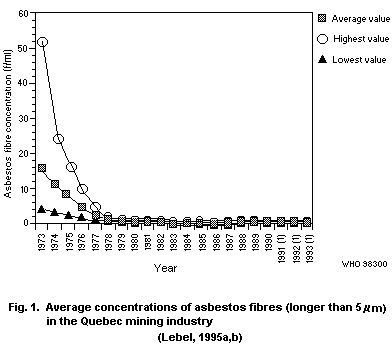
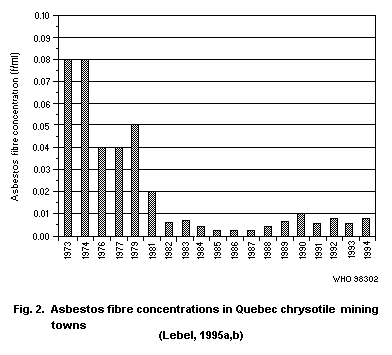 Table 6. Mean dust concentrations (f/ml) by plant and operation in nine textile plants in the USA
during the period 1964/1965 (from Lynch & Ayer, 1966)
Operation Fibresa Textile plants
1 2 3 4 5 6 7 8 9
Fibre preparation A 38.1 12.3 23.3 34.0 - 8.1 7.6 35.5 11.8
B 15.0 10.0 13.3 18.3 - 3.0 4.5 17.0 2.6
Carding A 18.1 13.6 20.6 32.9 - 6.0 17.2 28.2 8.3
B 10.2 9.21 3.3 15.2 - 3.5 8.1 13.4 2.0
Spinning A 9.6 4.1 20.2 29.8 - 5.1 24.8 20.8 7.4
B 6.6 3.2 18.9 15.7 - 3.5 10.8 10.5 1.8
Twisting A 9.3 6.9 15.8 51.4 - 4.8 25.9 16.7 3.1
B 6.4 5.2 7.5 22.4 - 3.3 12.9 7.2 1.1
Winding A 11.7 4.4 9.6 28.6 - 4.5 25.7 7.9 3.6
B 7.5 3.9 8.9 17.5 - 3.2 11.7 2.7 1.3
Weaving A 7.7 7.0 2.9 33.8 4.5 2.9 9.5 8.1 2.9
B 4.8 3.1 2.3 17.8 3.9 2.2 5.7 3.0 1.5
a A = total fibres, B = fibres longer than 5 µm
The exposure estimates (1930-1975) in an extensively studied
textile plant in South Carolina, USA, in which chrysotile was the
predominant fibre used, are presented in Table 7 (Dement et al.,
1983a).
Table 7. Exposure estimates in a chrysotile textile plant (1930-1975)
(estimated mean exposure to fibres longer than 5 µm in f/ml)a
Operation Without controls With controls
Fibre preparation 26.2-78.0 5.8-17.2
Carding 10.8-22.1 4.3-9.0
Spinning 4.8-8.2 4.8-6.7
Twisting 24.6-36.0 5.4-7.9
Winding 4.1-20.9 4.1-8.4
Weaving 5.3-30.6 1.4-8.2
a From: Dement et al. (1983a)
Application of controls in the dusty processes at the South
Carolina plant led to significant reduction of exposure. Currently
available control technology allows much lower levels to be attained.
Table 8 shows a summary of exposure classifications in an English
textile plant in the period 1951-1974 (Peto et al., 1985). The early
particle count data in this report were based on fibre collection with
a thermal precipitator. The conversion factor used, therefore,
reflects only a precipitator-membrane filter relationship. Comments on
the validity of such conversions have been discussed by Walton (1982).
Kimura (1987) reported geometric mean concentrations of 2.6-12.8
f/ml in the period 1970-1975 and 0.1-0.2 f/ml in the period 1984-1986
in asbestos spinning in Japan.
4.1.3 Asbestos-cement
As mentioned in section 3.2.2, the principal use of chrysotile in
the world today is in asbestos-cement products. In the production of
asbestos-cement pipes, some crocidolite is still used with chrysotile
in certain plants.
Table 9 summarizes the results of the analysis of personal
samples, collected in the late 1970s when reportedly only chrysotile
was used, in an asbestos-cement facility in the USA (Hammad et al.,
1979). In 80% of the samples the concentrations were less than 2 f/ml,
and in about 60% they were less than 0.5 f/ml.
Table 8. Mean concentrations of airborne asbestos fibres in a textile planta
Period Very high High Medium Low
1951-1955b unloading, stacking roving, spinning, carding doubling, rope spinning other areas
28 f/ml l4 f/ml 8 f/ml 4.5 f/ml
1956-1960b unloading, stacking carding roving, spinning, mixing other areas
28 f/ml 16 f/ml 9 f/ml 4.5 f/ml
1961-1965 unloading, stacking carding carding, roving, other areas
winding, beaming
20 f/ml 15 f/ml 7.5 f/ml 2.5 f/ml
1966-1970 unloading, stacking carding carding, roving, other areas
rope cards
20 f/ml 15 f/ml 7.5 f/ml 2.5 f/ml
1971-1974 none none carding, roving other areas
7.5 f/ml 2.5 f/ml
a Peto et al. (1985)
b Results of particle measurements were converted to fibre concentrations using the relationship 35 p/ml = 1 f/ml
Table 9. Chrysotile fibre concentrations (fibres longer than 5 µm)
in selected dust zones of an asbestos-cement production facilitya
Location Number Fibre concentration (f/ml)
of samples range mean
Regrinding 4 0.44-l.2 0.86
Mixing 9 0.51-8.9 2.8
Forming 20 0.12-5.0 0.52
Siding and shingle
finishing 14 0.14-4.9 0.68
Panel finishing 11 0.33-12.0 2.8
Flat and corrugated
finishing 12 0.33-8.0 2.6
Warehouse 5 0.13-2.5 0.63
Maintenance 7 0.20-2.7 0.58
a From: Hammad et al. (1979)
Exposure estimates in a Canadian plant (Finkelstein, 1983) for
the years 1949, 1969 and 1979 were 40, 20 and 0.2 f/ml, respectively,
for willow operators, 16, 8 and 0.5 f/ml for forming machine
operators, and 8, 4 and 0.3 f/ml for lathe operators. In Japan, Kimura
(1987) reported geometric mean concentrations in bag opening and
mixing of 4.5-9.5 f/ml in 1970-1975 and 0.03-1.6 f/ml in 1984-1986,
whilst in cement cutting and grinding the mean concentrations were
2.5-3.5 f/ml in 1970-1975 and 0.17-0.57 in 1984-1986. Albin et al.
(1990) reported fibre concentrations, based on estimates, in a Swedish
asbestos-cement plant of 1.5-6.3 f/ml during 1956. Later, based on
direct measurements, values were 0.3-5.0 f/ml in 1969 and 0.9-1.7 f/ml
in 1975. Higashi et al. (1994) reported geometric average
concentrations of 0.05-0.45 f/ml measured in area samples and
0.05-0.78 f/ml in personal samples of an asbestos-cement plant.
Few data are available in the open literature on exposures
encountered during installation of asbestos-cement products. It would
be expected that cutting, sanding, drilling or otherwise abrading
asbestos-cement without efficient ventilation controls would give rise
to high exposures (Nicholson, 1978).
Weiner et al. (1994) reported concentrations in a South African
workshop in which chrysotile asbestos-cement sheets were cut into
components for insulation. The sheets were cut manually, sanded and
subsequently assembled. Initial sampling showed personal sample mean
concentrations of 1.9 f/ml for assembling, 5.7 f/ml for sweeping, 8.6
f/ml for drilling and 27.5 f/ml for sanding. After improvements and
clean-up of the work environment, the concentrations were 0.5-1.7
f/ml.
Nicholson (1978) reported concentrations of 0.33-1.47 f/ml in a
room during and after sawing and hammering of an asbestos-cement
panel.
4.1.4 Friction products
Skidmore & Dufficy (1983), based on simulated past conditions
(Table 10), and McDonald et al. (1984) reported data on workplace
exposures during friction product manufacturing.
McDonald et al. (1984) reported that in the 1930s estimated
average dust levels were 35-180 mpcm (1-5 mpcf) in 67% of analysed
locations, while in the 1960s average dust levels were below 7 mpcm
(0.2 mpcf) at 38% of locations and below 18 mpcm (0.5 mpcf) at 67% of
locations in which measurements were obtained.
Table 10. Average concentrations of chrysotile fibres (f/ml) longer > 5 µm from woven
asbestos products during various periods
Pre-1931 1932-1950 1951-1969 1970-1979
Storage/distribution >20 2-5 2-5 0.5-1
Preparation >20 0-20 2-5 1-2
Impregnation/forming >20 2-5 1-2 0.5-1
Grinding >20 5-10 2-5 0.5-1
Drilling, boring >20 2-5 1-2 1-2
Inspection >20 2-5 1-2 0.5-1
Packing >20 1-2 0.5-1 <0.5
Office/laboratory 10-20 <0.5 <0.5 <0.5
* Skidmore & Dufficy (1983)
Kimura (1987) reported geometric mean fibre concentrations of
10.2-35.5 f/ml in 1970-1975, and 0.24-5.5 f/ml in 1984-1986 in
spinning and grinding of friction products in Japan.
A considerable number of reports have included airborne asbestos
concentrations during maintenance and replacement of vehicle brakes.
In the early period, poor or no engineering control measures were
utilized, resulting in high total dust exposure. This was particularly
so during grinding of brakes and compressed air blowing off dust, both
operations of very short duration. Significantly lower levels were
measured when engineering controls were introduced.
An overview of air concentrations measured during maintenance and
replacement of asbestos-containing vehicle brakes is presented in
Table 11.
Table 11. Asbestos air concentrations measured during maintenance and replacement of vehicle brakes
Mean concentration Comment Reference
(f/ml)
3.8a grinding truck brakes Lorimer et al., 1976
15.9a blowing off Lorimer et al., 1976
3.8a grinding Rohl et al., 1976
16.0a blowing off Rohl et al., 1976
2.5a dry brushing Rohl et al., 1976
> 1a 17 of 19 operations Menichini & Marconi, 1982
> 2a 11 of 19 operations Menichini & Marconi, 1982
0.09b fibres longer than 5 µm Jahn et al., 1985
6.2a blowing off, grinding Jahn et al., 1985
0.03b fibres longer than 5 µm Elliehausen, 1985
0.06b Ruhe & Lipscomb, 1985
< 0.5 TWA Cheng & O'Kelly, 1986
0.13 maximum Cheng & O'Kelly, 1986
4-5a fibres longer than 5 µm, blowing off, grinding Rodelsperger et al., 1986
5-10a fibres longer than 5 µm, blowing off, grinding, trucks Rodelsperger et al., 1986
< 0.05b Kauppinen & Korhonen, 1987
0.01-0.2b trucks and buses Kauppinen & Korhonen, 1987
> 1a blowing off Kauppinen & Korhonen, 1987
< 0.004 Sheehy et al., 1987
< 0.004b Godbey et al., 1987
0.09-0.12 Van Wagenen, 1987
0.046b Cooper et al., 1988
0.03b TWA < 0.002 f/ml Moore, 1988
a These results are mean personal samples obtained by PCOM; fibres > 5 µm; these represent episodic
releases and not time-weighted averages; operation specific.
b Mean personal air samples (8-h time-weighted average)
4.1.5 Exposure of building maintenance personnel
The subject of asbestos exposure of maintenance personnel in
buildings has been raised recently and particularly by US OSHA (1994).
Price et al. (1992) estimated the time-weighted averages (TWAs),
of asbestos exposures experienced by maintenance personnel, on the
basis of 1227 air samples. The TWAs, obtained by PCOM, were 0.009 f/ml
for telecommunication switch work, 0.037 f/ml for above-ceiling
maintenance work, and 0.51 f/ml for work in utility spaces. Median
concentrations ranged from 0.01 to 0.02 f/ml.
The Health Effects Institute (1991) evaluated an operation and
maintenance programme in a hospital on the basis of 394 air samples
obtained during 106 on-site activities. The mean asbestos
concentration (PCOM) was about 0.11 f/ml for personal samples and
about 0.012 f/ml for area samples. Eight-hour TWA concentrations
showed that 99% of the personal samples were below 0.2 f/ml, and 95%
were below 0.1 f/ml.
Corn et al. (1994) evaluated exposures of building maintenance
personnel on the basis of about 500 personal samples collected during
maintenance work. However, the building personnel were being monitored
during an asbestos "operations and management" programme, so that
these values may reflect special work practices and environment
conditions. Typical personal exposures are presented in Table 12.
Table 12. Personal asbestos exposures of building maintenance
personnel (fibres longer than 5 µm)a
Activity Concentration during work 8-h TWA
(f/ml)
Electrical/plumbing work 0-0.035 0.0149
Cable running 0.001-0.228 0.0167
HVAC work 0-0.077 0.0023
a From: Corn (1994)
Published data for custodial workers, as they exist, reflect
unusual circumstances. Sawyer (1977) studied fibre release from a
friable chrysotile-containing surface formulation during routine
custodial activities performed in the Yale Art and Architecture
Building. The fibre levels, determined by PCOM, ranged from 1.6 f/ml,
obtained during sweeping, to 15.5 f/ml, obtained during dusting of
library books. These values were obtained as short-term episodes. Most
other values, presented as 8-h TWAs, were about two orders of
magnitude lower (HEI, 1991).
4.1.6 Various industries
Higashi et al. (1994) reported the results of their environmental
evaluations at 510 workplaces in 1985 (roofing materials,
asbestos-cement sheets, friction materials, construction materials)
and 430 workplaces in 1992. The percentage of workplaces in which
exposure concentrations were less than 0.3 f/ml was 70% in 1985 and
98% in 1992. All concentrations in a modernized asbestos-cement plant
were less than 0.1 f/ml.
Rickards (1991, 1994) reported the results of the measurement of
asbestos fibre concentrations covering exposures of over 39 900
workers in 27 countries in 1989 and over 26 500 workers in 28
countries in 1991 and 1992. His modified results are presented in
Table 13. The 1993 data, by industry sector, is shown in Fig. 3 (AIA,
1995). Kogevinas et al. (1994) summarized exposure data obtained from
chrysotile-exposed workers in 11 countries. The exposure levels ranged
considerably, reflecting industry and other factors.
Table 13. Percentages of over 26 500 workers in 28 countries exposed
to various asbestos fibre concentrations in the workplace
(members of Asbestos International Association)a
Asbestos fibre concentration (f/ml)
< 0.5 0.5-1 1-2 > 2
Percentage of workers
1989 83.5 11.1 4.5 0.9
1991 84.4 9.4 4.2 2.1
1992 89.1 6.3 3.9 0.8
a Rickards (1991, 1994)
Fei & Huang (1989) reported fibre concentrations in an asbestos
paper factory utilizing chrysotile in the Sichuan Province of west
China. The concentration of 135 fibre measurements ranged between 0.6
f/ml and 55.1 f/ml, the latter value being the average of 6 assays in
a pulp-reducing area.
4.2 Non-occupational exposure
4.2.1 Ambient air
There are some data concerning fibre levels in the air close to
chrysotile mines. Baloyi (1989) found fibre levels around the Shabani
Mine (Zimbabwe) to range from below the limit of detection of the
method (< 0.01 f/ml) to 0.02 f/ml of air, assayed by PCOM.
Table 6. Mean dust concentrations (f/ml) by plant and operation in nine textile plants in the USA
during the period 1964/1965 (from Lynch & Ayer, 1966)
Operation Fibresa Textile plants
1 2 3 4 5 6 7 8 9
Fibre preparation A 38.1 12.3 23.3 34.0 - 8.1 7.6 35.5 11.8
B 15.0 10.0 13.3 18.3 - 3.0 4.5 17.0 2.6
Carding A 18.1 13.6 20.6 32.9 - 6.0 17.2 28.2 8.3
B 10.2 9.21 3.3 15.2 - 3.5 8.1 13.4 2.0
Spinning A 9.6 4.1 20.2 29.8 - 5.1 24.8 20.8 7.4
B 6.6 3.2 18.9 15.7 - 3.5 10.8 10.5 1.8
Twisting A 9.3 6.9 15.8 51.4 - 4.8 25.9 16.7 3.1
B 6.4 5.2 7.5 22.4 - 3.3 12.9 7.2 1.1
Winding A 11.7 4.4 9.6 28.6 - 4.5 25.7 7.9 3.6
B 7.5 3.9 8.9 17.5 - 3.2 11.7 2.7 1.3
Weaving A 7.7 7.0 2.9 33.8 4.5 2.9 9.5 8.1 2.9
B 4.8 3.1 2.3 17.8 3.9 2.2 5.7 3.0 1.5
a A = total fibres, B = fibres longer than 5 µm
The exposure estimates (1930-1975) in an extensively studied
textile plant in South Carolina, USA, in which chrysotile was the
predominant fibre used, are presented in Table 7 (Dement et al.,
1983a).
Table 7. Exposure estimates in a chrysotile textile plant (1930-1975)
(estimated mean exposure to fibres longer than 5 µm in f/ml)a
Operation Without controls With controls
Fibre preparation 26.2-78.0 5.8-17.2
Carding 10.8-22.1 4.3-9.0
Spinning 4.8-8.2 4.8-6.7
Twisting 24.6-36.0 5.4-7.9
Winding 4.1-20.9 4.1-8.4
Weaving 5.3-30.6 1.4-8.2
a From: Dement et al. (1983a)
Application of controls in the dusty processes at the South
Carolina plant led to significant reduction of exposure. Currently
available control technology allows much lower levels to be attained.
Table 8 shows a summary of exposure classifications in an English
textile plant in the period 1951-1974 (Peto et al., 1985). The early
particle count data in this report were based on fibre collection with
a thermal precipitator. The conversion factor used, therefore,
reflects only a precipitator-membrane filter relationship. Comments on
the validity of such conversions have been discussed by Walton (1982).
Kimura (1987) reported geometric mean concentrations of 2.6-12.8
f/ml in the period 1970-1975 and 0.1-0.2 f/ml in the period 1984-1986
in asbestos spinning in Japan.
4.1.3 Asbestos-cement
As mentioned in section 3.2.2, the principal use of chrysotile in
the world today is in asbestos-cement products. In the production of
asbestos-cement pipes, some crocidolite is still used with chrysotile
in certain plants.
Table 9 summarizes the results of the analysis of personal
samples, collected in the late 1970s when reportedly only chrysotile
was used, in an asbestos-cement facility in the USA (Hammad et al.,
1979). In 80% of the samples the concentrations were less than 2 f/ml,
and in about 60% they were less than 0.5 f/ml.
Table 8. Mean concentrations of airborne asbestos fibres in a textile planta
Period Very high High Medium Low
1951-1955b unloading, stacking roving, spinning, carding doubling, rope spinning other areas
28 f/ml l4 f/ml 8 f/ml 4.5 f/ml
1956-1960b unloading, stacking carding roving, spinning, mixing other areas
28 f/ml 16 f/ml 9 f/ml 4.5 f/ml
1961-1965 unloading, stacking carding carding, roving, other areas
winding, beaming
20 f/ml 15 f/ml 7.5 f/ml 2.5 f/ml
1966-1970 unloading, stacking carding carding, roving, other areas
rope cards
20 f/ml 15 f/ml 7.5 f/ml 2.5 f/ml
1971-1974 none none carding, roving other areas
7.5 f/ml 2.5 f/ml
a Peto et al. (1985)
b Results of particle measurements were converted to fibre concentrations using the relationship 35 p/ml = 1 f/ml
Table 9. Chrysotile fibre concentrations (fibres longer than 5 µm)
in selected dust zones of an asbestos-cement production facilitya
Location Number Fibre concentration (f/ml)
of samples range mean
Regrinding 4 0.44-l.2 0.86
Mixing 9 0.51-8.9 2.8
Forming 20 0.12-5.0 0.52
Siding and shingle
finishing 14 0.14-4.9 0.68
Panel finishing 11 0.33-12.0 2.8
Flat and corrugated
finishing 12 0.33-8.0 2.6
Warehouse 5 0.13-2.5 0.63
Maintenance 7 0.20-2.7 0.58
a From: Hammad et al. (1979)
Exposure estimates in a Canadian plant (Finkelstein, 1983) for
the years 1949, 1969 and 1979 were 40, 20 and 0.2 f/ml, respectively,
for willow operators, 16, 8 and 0.5 f/ml for forming machine
operators, and 8, 4 and 0.3 f/ml for lathe operators. In Japan, Kimura
(1987) reported geometric mean concentrations in bag opening and
mixing of 4.5-9.5 f/ml in 1970-1975 and 0.03-1.6 f/ml in 1984-1986,
whilst in cement cutting and grinding the mean concentrations were
2.5-3.5 f/ml in 1970-1975 and 0.17-0.57 in 1984-1986. Albin et al.
(1990) reported fibre concentrations, based on estimates, in a Swedish
asbestos-cement plant of 1.5-6.3 f/ml during 1956. Later, based on
direct measurements, values were 0.3-5.0 f/ml in 1969 and 0.9-1.7 f/ml
in 1975. Higashi et al. (1994) reported geometric average
concentrations of 0.05-0.45 f/ml measured in area samples and
0.05-0.78 f/ml in personal samples of an asbestos-cement plant.
Few data are available in the open literature on exposures
encountered during installation of asbestos-cement products. It would
be expected that cutting, sanding, drilling or otherwise abrading
asbestos-cement without efficient ventilation controls would give rise
to high exposures (Nicholson, 1978).
Weiner et al. (1994) reported concentrations in a South African
workshop in which chrysotile asbestos-cement sheets were cut into
components for insulation. The sheets were cut manually, sanded and
subsequently assembled. Initial sampling showed personal sample mean
concentrations of 1.9 f/ml for assembling, 5.7 f/ml for sweeping, 8.6
f/ml for drilling and 27.5 f/ml for sanding. After improvements and
clean-up of the work environment, the concentrations were 0.5-1.7
f/ml.
Nicholson (1978) reported concentrations of 0.33-1.47 f/ml in a
room during and after sawing and hammering of an asbestos-cement
panel.
4.1.4 Friction products
Skidmore & Dufficy (1983), based on simulated past conditions
(Table 10), and McDonald et al. (1984) reported data on workplace
exposures during friction product manufacturing.
McDonald et al. (1984) reported that in the 1930s estimated
average dust levels were 35-180 mpcm (1-5 mpcf) in 67% of analysed
locations, while in the 1960s average dust levels were below 7 mpcm
(0.2 mpcf) at 38% of locations and below 18 mpcm (0.5 mpcf) at 67% of
locations in which measurements were obtained.
Table 10. Average concentrations of chrysotile fibres (f/ml) longer > 5 µm from woven
asbestos products during various periods
Pre-1931 1932-1950 1951-1969 1970-1979
Storage/distribution >20 2-5 2-5 0.5-1
Preparation >20 0-20 2-5 1-2
Impregnation/forming >20 2-5 1-2 0.5-1
Grinding >20 5-10 2-5 0.5-1
Drilling, boring >20 2-5 1-2 1-2
Inspection >20 2-5 1-2 0.5-1
Packing >20 1-2 0.5-1 <0.5
Office/laboratory 10-20 <0.5 <0.5 <0.5
* Skidmore & Dufficy (1983)
Kimura (1987) reported geometric mean fibre concentrations of
10.2-35.5 f/ml in 1970-1975, and 0.24-5.5 f/ml in 1984-1986 in
spinning and grinding of friction products in Japan.
A considerable number of reports have included airborne asbestos
concentrations during maintenance and replacement of vehicle brakes.
In the early period, poor or no engineering control measures were
utilized, resulting in high total dust exposure. This was particularly
so during grinding of brakes and compressed air blowing off dust, both
operations of very short duration. Significantly lower levels were
measured when engineering controls were introduced.
An overview of air concentrations measured during maintenance and
replacement of asbestos-containing vehicle brakes is presented in
Table 11.
Table 11. Asbestos air concentrations measured during maintenance and replacement of vehicle brakes
Mean concentration Comment Reference
(f/ml)
3.8a grinding truck brakes Lorimer et al., 1976
15.9a blowing off Lorimer et al., 1976
3.8a grinding Rohl et al., 1976
16.0a blowing off Rohl et al., 1976
2.5a dry brushing Rohl et al., 1976
> 1a 17 of 19 operations Menichini & Marconi, 1982
> 2a 11 of 19 operations Menichini & Marconi, 1982
0.09b fibres longer than 5 µm Jahn et al., 1985
6.2a blowing off, grinding Jahn et al., 1985
0.03b fibres longer than 5 µm Elliehausen, 1985
0.06b Ruhe & Lipscomb, 1985
< 0.5 TWA Cheng & O'Kelly, 1986
0.13 maximum Cheng & O'Kelly, 1986
4-5a fibres longer than 5 µm, blowing off, grinding Rodelsperger et al., 1986
5-10a fibres longer than 5 µm, blowing off, grinding, trucks Rodelsperger et al., 1986
< 0.05b Kauppinen & Korhonen, 1987
0.01-0.2b trucks and buses Kauppinen & Korhonen, 1987
> 1a blowing off Kauppinen & Korhonen, 1987
< 0.004 Sheehy et al., 1987
< 0.004b Godbey et al., 1987
0.09-0.12 Van Wagenen, 1987
0.046b Cooper et al., 1988
0.03b TWA < 0.002 f/ml Moore, 1988
a These results are mean personal samples obtained by PCOM; fibres > 5 µm; these represent episodic
releases and not time-weighted averages; operation specific.
b Mean personal air samples (8-h time-weighted average)
4.1.5 Exposure of building maintenance personnel
The subject of asbestos exposure of maintenance personnel in
buildings has been raised recently and particularly by US OSHA (1994).
Price et al. (1992) estimated the time-weighted averages (TWAs),
of asbestos exposures experienced by maintenance personnel, on the
basis of 1227 air samples. The TWAs, obtained by PCOM, were 0.009 f/ml
for telecommunication switch work, 0.037 f/ml for above-ceiling
maintenance work, and 0.51 f/ml for work in utility spaces. Median
concentrations ranged from 0.01 to 0.02 f/ml.
The Health Effects Institute (1991) evaluated an operation and
maintenance programme in a hospital on the basis of 394 air samples
obtained during 106 on-site activities. The mean asbestos
concentration (PCOM) was about 0.11 f/ml for personal samples and
about 0.012 f/ml for area samples. Eight-hour TWA concentrations
showed that 99% of the personal samples were below 0.2 f/ml, and 95%
were below 0.1 f/ml.
Corn et al. (1994) evaluated exposures of building maintenance
personnel on the basis of about 500 personal samples collected during
maintenance work. However, the building personnel were being monitored
during an asbestos "operations and management" programme, so that
these values may reflect special work practices and environment
conditions. Typical personal exposures are presented in Table 12.
Table 12. Personal asbestos exposures of building maintenance
personnel (fibres longer than 5 µm)a
Activity Concentration during work 8-h TWA
(f/ml)
Electrical/plumbing work 0-0.035 0.0149
Cable running 0.001-0.228 0.0167
HVAC work 0-0.077 0.0023
a From: Corn (1994)
Published data for custodial workers, as they exist, reflect
unusual circumstances. Sawyer (1977) studied fibre release from a
friable chrysotile-containing surface formulation during routine
custodial activities performed in the Yale Art and Architecture
Building. The fibre levels, determined by PCOM, ranged from 1.6 f/ml,
obtained during sweeping, to 15.5 f/ml, obtained during dusting of
library books. These values were obtained as short-term episodes. Most
other values, presented as 8-h TWAs, were about two orders of
magnitude lower (HEI, 1991).
4.1.6 Various industries
Higashi et al. (1994) reported the results of their environmental
evaluations at 510 workplaces in 1985 (roofing materials,
asbestos-cement sheets, friction materials, construction materials)
and 430 workplaces in 1992. The percentage of workplaces in which
exposure concentrations were less than 0.3 f/ml was 70% in 1985 and
98% in 1992. All concentrations in a modernized asbestos-cement plant
were less than 0.1 f/ml.
Rickards (1991, 1994) reported the results of the measurement of
asbestos fibre concentrations covering exposures of over 39 900
workers in 27 countries in 1989 and over 26 500 workers in 28
countries in 1991 and 1992. His modified results are presented in
Table 13. The 1993 data, by industry sector, is shown in Fig. 3 (AIA,
1995). Kogevinas et al. (1994) summarized exposure data obtained from
chrysotile-exposed workers in 11 countries. The exposure levels ranged
considerably, reflecting industry and other factors.
Table 13. Percentages of over 26 500 workers in 28 countries exposed
to various asbestos fibre concentrations in the workplace
(members of Asbestos International Association)a
Asbestos fibre concentration (f/ml)
< 0.5 0.5-1 1-2 > 2
Percentage of workers
1989 83.5 11.1 4.5 0.9
1991 84.4 9.4 4.2 2.1
1992 89.1 6.3 3.9 0.8
a Rickards (1991, 1994)
Fei & Huang (1989) reported fibre concentrations in an asbestos
paper factory utilizing chrysotile in the Sichuan Province of west
China. The concentration of 135 fibre measurements ranged between 0.6
f/ml and 55.1 f/ml, the latter value being the average of 6 assays in
a pulp-reducing area.
4.2 Non-occupational exposure
4.2.1 Ambient air
There are some data concerning fibre levels in the air close to
chrysotile mines. Baloyi (1989) found fibre levels around the Shabani
Mine (Zimbabwe) to range from below the limit of detection of the
method (< 0.01 f/ml) to 0.02 f/ml of air, assayed by PCOM.
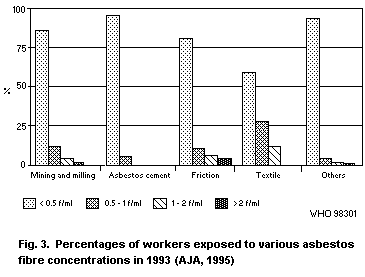 Asbestos concentrations in the outdoor air have been measured in
many studies. Chrysotile is the predominant fibre found.
Concentrations measured at various locations in Austria, Canada,
Germany, South Africa and the USA were reported in Environmental
Health Criteria 53 (IPCS, 1986; Table 14). Typical concentrations of
fibres longer than 5 µm ranged from less than 0.0001 f/ml to about
0.01 f/ml, most samples having concentrations less than 0.001 f/ml.
Results of some more recent studies are presented in Table 14. Almost
all analyses were made by TEM. A review of available data was given in
HEI (1991).
Corn (1994) estimated that outdoor air concentrations, expressed
as PCOM equivalent fibres (longer than 5 µm), in remote locations in
the USA are generally less than 0.0005 f/ml, in urban areas they are
up to 0.002 f/ml, and in suburban locations they are considerably
lower.
4.2.2 Indoor air
Concentrations measured in various buildings in Canada and
Germany were presented in Environmental Health Criteria 53 (IPCS,
1986, Table 12). Concentration of fibres longer than 5 µm ranged from
below the detectable level of the method to 0.01 f/ml. The highest
concentrations were found in buildings with sprayed-on asbestos.
The results of some more recent studies are presented in Table
15.
The average airborne fibre concentrations in outdoor air, 71
schools and 49 public buildings in the USA are presented in Table 16.
Corn (1994) estimated an average level of PCOM equivalent fibres
(> 0.2 µm width) of 0.00017 f/ml in 71 schools in the USA. Five per
cent of the school indoor concentrations exceeded 0.0014 f/ml, the
highest value being 0.0023 f/ml.
Lee et al. (1992) found that only 0.67% of chrysotile fibres in
indoor air are longer than 5 µm.
Table 14. Asbestos fibre concentrations in outdoor air (f/ml PCOM equivalent fibresa - TEM)
Environment Median Mean Rangef Reference
Rural
Japan 0.0218 0.007-0.047 Kohyama, 1989
Urban
Switzerland <0.0004b Litistorf et al., 1985
USA 0.0003c ND-0.008 Chesson et al., 1985
Canada 0.0007 0.0006-0.0009 Sebastien et al., 1986a
USA 0.00005c Tuckfield et al., 1988
Canada 0.0001b ND-0.003 Nicholson, 1988
Japan 0.0198e <0.004-0.111 Kohyama, 1989
England 0.00016b ND-0.00016 Jaffrey, 1988
England 0.0004b Jaffrey, 1990
Slovak Republic 0.002d 0.001-0.02 Juck et al., 1991
Italy 0.0001-0.012 Chiappino et al., 1993
a PCOM equivalent fibre: >5 µm long; > 0.25 µm wide; aspect ratio > 3:1
b total structures >5 µm
c PCOM analysis
d near to an asbestos-cement plant
e residential area
f ND - not detected
Table 15. Asbestos fibre concentrations (f/ml) in buildings (fibres longer than 5 µm)
Sitea Meanb Rangeb Reference
Canada
High-rise office 0.0034 0.0002-0.0065 Chatfield,1986
Schools 0.0006 ND-0.0014 Chatfield,1986
United Kingdom
Buildings with ACM ND-0.0017 Burdett & Jaffrey, 1986
Buildings without ACM ND-0.0007 Burdett & Jaffrey, 1986
Residences with ACM 0.0003 ND-0.0025 Gazzi & Crockford, 1987
Residences without ACM ND ND Gazzi & Crockford, 1987
USA
Residences with ACM 0.0001 ND-0.002 CPSC, 1987
Buildings with ACM 0.00005 ND-0.00056 Hatfield et al., 1988;
Crump & Farrar, 1989;
Chesson et al., 1990
Buildings without ACM ND ND Hatfield et al., 1988;
Crump & Farrar, 1989;
Chesson et al., 1990
Schools 0.00024 ND-0.0023 Corn et al.,1991
Schools with ACM 0.0002 ND-0.0016 McCrone, 1991
Slovak Republic
Buildings 0.0045 0.00085-0.024 Juck et al.,1991
Belgium
Public buildings 0.0045-0.0061 Minne et al.,1991
a ACM = asbestos-containing material
b ND = not detected
Table 16. Mean concentrations of asbestos fibres longer than 5 µma
Sample size Mean concentration
(f/ml)
Outdoor air 48 0.00039
Schools 71 0.00024
Public buildings (no ACM) 6 0.00099
Public buildings (with ACM in
good condition) 6 0.00059
Public buildings (with damaged ACM) 37 0.00073
a Modified from Mossman et al. (1990)
5. UPTAKE, CLEARANCE, RETENTION AND TRANSLOCATION
5.1 Inhalation
5.1.1 General principles
Factors affecting the inhalation, deposition, clearance and
translocation of asbestos and other fibres were discussed in
Environmental Health Criteria monographs 53 (IPCS, 1986), 77 (IPCS,
1988) and 151 (IPCS, 1993). The main principles are summarized in this
subsection.
It is considered that the potential respiratory health effects
related to exposure to fibre aerosols are a function of the internal
dose to the target tissue, which is determined by airborne
concentrations, patterns of exposure, fibre shape, diameter and length
(which affect lung deposition and clearance) and biopersistence. The
potential responses to fibres, once they are deposited in the lungs,
are a function of their individual characteristics.
Because of the tendency of fibres to align parallel to the
direction of airflow, the deposition of fibrous particles in the
respiratory tract is largely a function of fibre length. In addition,
the shape of the fibres as well as their electrostatic charge may have
an effect on deposition (Davis et al., 1988). Fibres of various shapes
are more likely than spherical particles to be deposited by
interception, mainly at bifurcations.
Since most of the data on deposition have been obtained in
studies on rodents, it is important to consider comparative
differences between rats and humans in this respect; these differences
are best evaluated on the basis of the aerodynamic diameter. The ratio
of fibre diameter to aerodynamic diameter is approximately 1:3. Thus,
a fibre measured microscopically to have a diameter of 1 µm would have
a corresponding aerodynamic diameter of approximately 3 µm. A
comparative review of the regional deposition of particles in humans
and rodents (rats and hamsters) has been presented by US EPA (1980).
The relative distribution between the tracheobronchial and pulmonary
regions of the lung in rodents follows a pattern similar to human
regional deposition during nose breathing for insoluble particles with
a mass median aerodynamic diameter of less than 3 µm. Fig. 4 and 5
illustrate these comparative differences. As can be seen, particularly
for pulmonary deposition of particles, the percentage deposition in
rodents is considerably less, even within the overlapping region of
respiratory tract deposition, than in humans. These data indicate
that, although particles with an aerodynamic diameter of 5 µm or more
may have significant deposition efficiencies in man, the same
particles will have extremely small deposition efficiencies in the
rodent.
Asbestos concentrations in the outdoor air have been measured in
many studies. Chrysotile is the predominant fibre found.
Concentrations measured at various locations in Austria, Canada,
Germany, South Africa and the USA were reported in Environmental
Health Criteria 53 (IPCS, 1986; Table 14). Typical concentrations of
fibres longer than 5 µm ranged from less than 0.0001 f/ml to about
0.01 f/ml, most samples having concentrations less than 0.001 f/ml.
Results of some more recent studies are presented in Table 14. Almost
all analyses were made by TEM. A review of available data was given in
HEI (1991).
Corn (1994) estimated that outdoor air concentrations, expressed
as PCOM equivalent fibres (longer than 5 µm), in remote locations in
the USA are generally less than 0.0005 f/ml, in urban areas they are
up to 0.002 f/ml, and in suburban locations they are considerably
lower.
4.2.2 Indoor air
Concentrations measured in various buildings in Canada and
Germany were presented in Environmental Health Criteria 53 (IPCS,
1986, Table 12). Concentration of fibres longer than 5 µm ranged from
below the detectable level of the method to 0.01 f/ml. The highest
concentrations were found in buildings with sprayed-on asbestos.
The results of some more recent studies are presented in Table
15.
The average airborne fibre concentrations in outdoor air, 71
schools and 49 public buildings in the USA are presented in Table 16.
Corn (1994) estimated an average level of PCOM equivalent fibres
(> 0.2 µm width) of 0.00017 f/ml in 71 schools in the USA. Five per
cent of the school indoor concentrations exceeded 0.0014 f/ml, the
highest value being 0.0023 f/ml.
Lee et al. (1992) found that only 0.67% of chrysotile fibres in
indoor air are longer than 5 µm.
Table 14. Asbestos fibre concentrations in outdoor air (f/ml PCOM equivalent fibresa - TEM)
Environment Median Mean Rangef Reference
Rural
Japan 0.0218 0.007-0.047 Kohyama, 1989
Urban
Switzerland <0.0004b Litistorf et al., 1985
USA 0.0003c ND-0.008 Chesson et al., 1985
Canada 0.0007 0.0006-0.0009 Sebastien et al., 1986a
USA 0.00005c Tuckfield et al., 1988
Canada 0.0001b ND-0.003 Nicholson, 1988
Japan 0.0198e <0.004-0.111 Kohyama, 1989
England 0.00016b ND-0.00016 Jaffrey, 1988
England 0.0004b Jaffrey, 1990
Slovak Republic 0.002d 0.001-0.02 Juck et al., 1991
Italy 0.0001-0.012 Chiappino et al., 1993
a PCOM equivalent fibre: >5 µm long; > 0.25 µm wide; aspect ratio > 3:1
b total structures >5 µm
c PCOM analysis
d near to an asbestos-cement plant
e residential area
f ND - not detected
Table 15. Asbestos fibre concentrations (f/ml) in buildings (fibres longer than 5 µm)
Sitea Meanb Rangeb Reference
Canada
High-rise office 0.0034 0.0002-0.0065 Chatfield,1986
Schools 0.0006 ND-0.0014 Chatfield,1986
United Kingdom
Buildings with ACM ND-0.0017 Burdett & Jaffrey, 1986
Buildings without ACM ND-0.0007 Burdett & Jaffrey, 1986
Residences with ACM 0.0003 ND-0.0025 Gazzi & Crockford, 1987
Residences without ACM ND ND Gazzi & Crockford, 1987
USA
Residences with ACM 0.0001 ND-0.002 CPSC, 1987
Buildings with ACM 0.00005 ND-0.00056 Hatfield et al., 1988;
Crump & Farrar, 1989;
Chesson et al., 1990
Buildings without ACM ND ND Hatfield et al., 1988;
Crump & Farrar, 1989;
Chesson et al., 1990
Schools 0.00024 ND-0.0023 Corn et al.,1991
Schools with ACM 0.0002 ND-0.0016 McCrone, 1991
Slovak Republic
Buildings 0.0045 0.00085-0.024 Juck et al.,1991
Belgium
Public buildings 0.0045-0.0061 Minne et al.,1991
a ACM = asbestos-containing material
b ND = not detected
Table 16. Mean concentrations of asbestos fibres longer than 5 µma
Sample size Mean concentration
(f/ml)
Outdoor air 48 0.00039
Schools 71 0.00024
Public buildings (no ACM) 6 0.00099
Public buildings (with ACM in
good condition) 6 0.00059
Public buildings (with damaged ACM) 37 0.00073
a Modified from Mossman et al. (1990)
5. UPTAKE, CLEARANCE, RETENTION AND TRANSLOCATION
5.1 Inhalation
5.1.1 General principles
Factors affecting the inhalation, deposition, clearance and
translocation of asbestos and other fibres were discussed in
Environmental Health Criteria monographs 53 (IPCS, 1986), 77 (IPCS,
1988) and 151 (IPCS, 1993). The main principles are summarized in this
subsection.
It is considered that the potential respiratory health effects
related to exposure to fibre aerosols are a function of the internal
dose to the target tissue, which is determined by airborne
concentrations, patterns of exposure, fibre shape, diameter and length
(which affect lung deposition and clearance) and biopersistence. The
potential responses to fibres, once they are deposited in the lungs,
are a function of their individual characteristics.
Because of the tendency of fibres to align parallel to the
direction of airflow, the deposition of fibrous particles in the
respiratory tract is largely a function of fibre length. In addition,
the shape of the fibres as well as their electrostatic charge may have
an effect on deposition (Davis et al., 1988). Fibres of various shapes
are more likely than spherical particles to be deposited by
interception, mainly at bifurcations.
Since most of the data on deposition have been obtained in
studies on rodents, it is important to consider comparative
differences between rats and humans in this respect; these differences
are best evaluated on the basis of the aerodynamic diameter. The ratio
of fibre diameter to aerodynamic diameter is approximately 1:3. Thus,
a fibre measured microscopically to have a diameter of 1 µm would have
a corresponding aerodynamic diameter of approximately 3 µm. A
comparative review of the regional deposition of particles in humans
and rodents (rats and hamsters) has been presented by US EPA (1980).
The relative distribution between the tracheobronchial and pulmonary
regions of the lung in rodents follows a pattern similar to human
regional deposition during nose breathing for insoluble particles with
a mass median aerodynamic diameter of less than 3 µm. Fig. 4 and 5
illustrate these comparative differences. As can be seen, particularly
for pulmonary deposition of particles, the percentage deposition in
rodents is considerably less, even within the overlapping region of
respiratory tract deposition, than in humans. These data indicate
that, although particles with an aerodynamic diameter of 5 µm or more
may have significant deposition efficiencies in man, the same
particles will have extremely small deposition efficiencies in the
rodent.
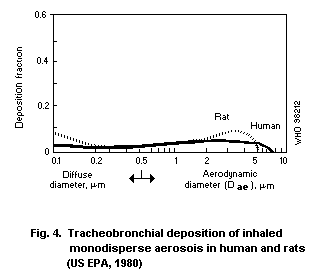
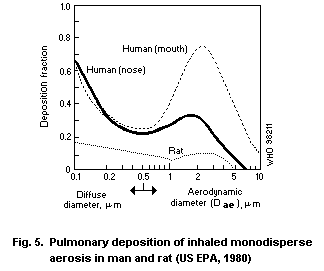 In the nasopharyngeal and tracheobronchial regions, fibres are
generally cleared fairly rapidly via mucociliary clearance, whereas
fibres deposited in the alveolar space appear to be cleared more
slowly, primarily by phagocytosis and to a lesser extent via
translocation and by dissolution. Translocation refers to the movement
of the intact fibre after initial deposition at foci in the alveolar
ducts and on the ciliated epithelium at the terminal bronchioles.
These fibres may be translocated via ciliated mucous movement up the
bronchial tree and removed from the lung, or may be moved through the
epithelium with subsequent migration to interstitial storage sites or
along lymphatic drainage pathways or transport to pleural regions.
Fibres short enough to be fully ingested are thought to be removed
mainly through phagocytosis by macrophages, whereas longer fibres may
be partially cleared at a slower rate either by translocation to
interstitial sites, breakage or by dissolution. A higher proportion of
longer fibres is, therefore, retained in the lung.
5.1.2 Fibre deposition
The deposition of chrysotile asbestos in the peripheral lung
airways of rats exposed in vivo for 1 h to 4.3 mg respirable
chrysotile/m3 was studied by Brody et al. (1981). In rats killed
immediately after exposure, chrysotile fibres were rarely seen by
scanning electron microscopy in alveolar spaces or on alveolar duct
surfaces, except at alveolar duct bifurcations. Most were less than 10
µm in length and 0.4 µm in diameter, indicating that longer fibres
present in the dust cloud had been deposited in the upper airways.
Concentrations were relatively high at bifurcations nearest the
terminal bronchioles, and lower at the bifurcations of more distal
ducts. In rats killed after 5 h the patterns were similar, but the
concentrations were reduced. The relative importance of interception,
impaction, diffusion and sedimentation on the deposition pattern of
chrysotile fibres was considered by Brody & Roe (1983) who concluded
that the high deposition observed at alveolar duct bifurcations of
rats can be attributed to the high breathing frequency and small
airway size of these rodents. They pointed out that the enhanced
deposition at alveolar duct bifurcations observed in the rat may not
occur in all species.
Coin et al. (1992) examined the patterns of deposition and
retention of chrysotile asbestos in the central and peripheral regions
of the rat lung in the first month following a single 3-h inhalation
exposure. They found that pulmonary deposition did not differ between
peripheral and central regions.
Pinkerton & Yu (1988) exposed rats to airborne chrysotile fibres
for 7 h/day, 5 days/week for 12 months, and investigated the numbers
and lengths of chrysotile fibres found in anatomically distinct
regions of the lung parenchyma. The fibre concentration was greatest
in the dorsal region and least in the costolateral and caudal regions,
in agreement with calculations based on the deposition model for rat
lung of Asgharian & Yu (1988). With the exception of the dorsal
region, parenchymal changes correlated well with the fibre
concentration. There were differences in the length distributions of
fibres in the various regions, fibres in the dorsal region having the
greatest proportion of fibres longer than 10 µm. The proportion of
fibres longer than 20 µm was greatest in the cranial and lateral
regions.
5.1.3 Fibre clearance and retention
5.1.3.1 Fibre clearance and retention in humans
Available data obtained from lung burden studies show that
chrysotile fibres deposited in the lung are cleared more rapidly than
tremolite fibres, so that the tremolite/chrysotile ratio increases
with time after exposure. It has been shown by Sebastien et al. (1989)
and Churg et al. (1993) that on average about 75% of the fibres in the
lungs of long-term chrysotile miners and millers from the Thetford
Mines region of Quebec were tremolite and only about 25% chrysotile,
despite the fact that tremolite accounted for only a few percent of
the fibres in the chrysotile ambient dust (Sebastien et al., 1986a).
Rowlands et al. (1982) found similar quantities of tremolite fibres,
compared with chrysotile, in the lung samples of Quebec miners and
millers. Limitations of retention data in lungs with respect to
chrysotile exposure have been discussed in a review by Case et al.
(1994).
5.1.3.2 Fibre clearance and retention in laboratory animals
Several studies on laboratory animals, mainly rats, have
investigated the lung clearance of chrysotile as measured by changes
in the lung retention of fibres following acute, short-term and
long-term inhalation or single dose via intratracheal exposure.
Results of these studies are summarized in Table 17.
Morgan et al. (1977) used a radiotracer technique to study the
lung clearance of chrysotile A, chrysotile B, amosite, crocidolite and
anthophyllite asbestos following short nose-only inhalation exposures
(3 h). There was a rapid decline in fibre lung content followed by a
slow phase. The initial decline was assumed to represent mucocilliary
clearance of fibres deposited in the smaller conducting airways, and
the slow phase to alveolar clearance. Half-times of alveolar
clearance, measured over a period of several months following
exposure, were in the range of 60-90 days. No significant difference
was observed between amphibole and chrysotile asbestos.
Middleton et al. (1979), using UICC samples, exposed rats via
inhalation over a 6-week period to concentrations of 1, 5 and 10
mg/m3 and then estimated the amount of asbestos in lung by infrared
spectrophotometry after lung ashing. The fractional deposition of
chrysotile was lower than for amosite and crocidolite, but the
alveolar clearance rates of chrysotile and amphibole fibres were
similar. The lower deposition rate of chrysotile was believed to be
related to differences in airborne asbestos concentration during
exposure and to the curly nature of chrysotile fibres.
Table 17. Studies of chrysotile clearance in experimental animals
Species Number of animals Protocola Resultsa Reference
Rats (SPF Wistar) Groups exposed to 9.7-14.7 Linear increase in lung Wagner et al., 1974
total of 1013 mg/m3 of UICC amos, anthophyl, burden of amphiboles with
rats: group size croc, chrys A & chrys B for time. Much less chrys found
of 19-58 periods of 1 day, 3,6,12 or in lung and no clear
24 months. increase with dose.
Rats total of 56 rats: Groups exposed nose-only Half-time clearance about Morgan et al., 1977
(Albino male) group size of 8 to neutron-activated UICC 3 months. Fibres translocated
amos, anthophyl, croc, to subpleural sites.
chrys A & chrys B for 1 h.
Deposition measured
radiometrically.
Rats not specified Groups exposed to 1, 5 and 10 Deposition rate of chrys 25% Middleton et al., 1979
(SPF Wistar mg/m3 of UICC amos, croc and of that of amphiboles but
AF/HAN strain) chrys A 7 h/day, 5 days/week clearance rate independent
for 6 weeks. Asbestos in lung of fibre type.
measured by ashing and
infrared spectrophotometry.
Rats total of 15 rats: Groups exposed nose-only to 4.3 Most fibres deposited at Brody et al., 1981
(CD-1 strain male) group size of 3 mg/m3 chrys for 1 h. Distribution bifurcations of alveolar ducts.
of fibres in lung measured by SEM Fibres taken up by Type 1
and TEM at times from 1 h to 8 epithelial cells.
days.
Rats unspecified Groups instilled intratracheally Number of chrys fibres Bellmann et al., 1987
(Wistar female) with 2 mg UICC chrys A. Rats killed increased with time and also
at 1 day, 1, 6, 12, 18 and 24 their mean length.
months after instillation. Fibre
numbers and composition determined
after low-temperature ashing of
lung using TEM and ATEM.
Table 17. (continued)
Species Number of animals Protocola Resultsa Reference
Guinea-pigs total of 18 animals Animals instilled intratracheally Chrys fibre concentration Churg et al., 1989
(Hartley strain with a mixture of UICC chrys B declined more rapidly than
female) and amos. Sub-groups of 6 animals that of amos. Concentration
killed at 1 day, 1 week and 1 ratio declined from 8:1 to
month after administration. Fibre 2:1.
concentration in lung tissue
determined using hypochlorite
digests of tissue with TEM and
EDXA.
Rats total of 23 animals Animals exposed to 10 mg/m3 Deposition similar in central Coin et al., 1994
(SPF chrys for 3 h. Subgroups were and peripheral regions.
Sprague-Dawley killed immediately after Average diameter of fibres
male) exposure and after 1, 8, 15 decreased with time and
and 29 days. Peripheral and length increased.
central regions of the left
lung digested and fibres
characterized by SEM.
Rats not specified Exposures nose-only to In lungs of chrys- and croc- Abraham et al., 1988
(Fischer 344 10-15 mg/m3. Chrys: 7 h/day, exposed rats longer and
male) 5 days/week for 6 weeks Croc: narrower fibres than in
6 h/day, 5 days/week for 90 airborne dust. 90 days
days Animals sacrificed 90 post-exposure 95% clearance
days after exposure. of chrys, no clearance of
croc (by fibre numbers).
Rats total of 48 rats: Groups exposed to 5 mg/m3 Progressive increase in mean Kauffer et al., 1987
(Sprague-Dawley group size of 8 UICC Canadian chrys for 5 h. length, decrease in mean
male) Subgroups killed at the end diameter of fibres in lungs.
of exposure and after 1, 7, Decrease in mean length and
28 and 90 days. TEM analysis diameter in BAL.
of fibres in lung and BAL.
Table 17. (continued)
Species Number of animals Protocola Resultsa Reference
Hamsters not specified Animals instilled with one Ratio of short chrys fibres Kimizuka et al., 1987
(Syrian golden, intratracheal dose of 1 mg UICC 30% to 13% in the lung; 2 years
sex not Canadian chrys or amos in 0.1 after instillation increased
specified) ml saline, killed at 4 and 56 again to 56% (diameter
weeks, and 2 years (chrys), < 0.05 µm). Short amos fibres
2 years (amos). SEM analysis (< 5 µm) decreased from 41%
with EDXA. initially to 4% after 2 years.
Rats not specified Rats instilled intratracheally Apparent increase in number Coffin et al., 1992
(Barrier derived with chrys, croc and erionite of chrys fibres between 1 and
Fischer 344) at weekly intervals for 21 weeks. 10 days followed by gradual
Instilled dose of chrys 32 mg. decline.
Rats killed at 1 h, 1 day, 1, 4,
8, 12 and 24 months following
final instillation. Fibres
recovered from lung by
low-temperature ashing and
analysed by TEM.
Rats not specified Rats exposed to 10 mg/m3 Splitting chrys fibres lead to Jones et al., 1994
(SPF Wistar UICC chrys A for 7 h/day, increasing number of long thin
AF/HAN strain 5 days/week for up to 18 fibres with time; after 150 days
male) months. Groups removed from of exposure lung burden no
exposure after exposures of longer increased.
1 day, 4, 13, 26, 52, 65 and
95 weeks, and subgroups
killed at 3 and 38 days after
removal. Numbers and
dimensions of fibres
recovered from lung measured
by SEM. Fibres with dia > 0.3
µm analysed by EDXA.
a amos = amosite; croc = crocidolite; chrys = chrysotile; anthophyl = anthophyllite.
In contrast, Abraham et al. (1988) found that the alveolar
clearance of chrysotile was faster than that of crocidolite. In their
study, rats were exposed by inhalation to 10-15 mg/m3 of either
chrysotile (6 weeks) or crocidolite (90 days). At the end of exposure,
lung fibre concentrations and size distributions were similar for both
types of fibres. However, during the subsequent 90 days, 95% of
chrysotile (by fibre number) was removed, whereas there was no
measurable clearance of crocidolite. Similar findings were reported by
Bérubé et al. (1996). The fibre retention of chrysotile in the rat
lung after 5 and 20 days of inhalation exposure to 8 mg/m3 was
considerably lower than the fibre lung retention of crocidolite
asbestos.
Wagner & Skidmore (1965), in a 6-week inhalation exposure study
on rats using about 30 mg/m3, reported that, over a period of 2
months, the rate of clearance for chrysotile was higher by a factor of
3 than that for amosite or crocidolite. In addition, the retention of
chrysotile, as measured a few days after the end of the 6-week
exposure period, was only about one third that of the amphiboles.
In a subsequent study by the same group (Wagner et al., 1974), it
was found that, while the lung burden of amphibole fibres increased
steadily with time, that of chrysotile appeared to reach a plateau
after 3 months of exposure and at a much lower level compared to the
simultaneous amphibole level. The difference was attributed to the
enhanced clearance rate of chrysotile. This difference in the lung
clearance of chrysotile and amphibole fibres has been confirmed by
several studies (Davies et al., 1978, 1986a; Davis & Jones, 1988) with
amphibole levels at the end of a one-year inhalation period in rats
being approximately 10 times those of chrysotile administered at the
same mass dose. In their inhalation study of the retention of UICC
chrysotile fibres in rat lung (10 mg/m3, 7 h/day, 5 days/week, for up
to 18 months), Jones et al. (1994) also found that the mass of
chrysotile in the lungs increased for several months and then appeared
to decline, although exposure continued, in agreement with the Wagner
et al. study (1974). Oberdörster (1994), using various types of
published data, including a 30-month exposure of baboons (Oberdörster
& Lehnert, 1991), calculated that the chrysotile clearance half-times
in monkeys are in the order of 90-100 days.
Limited information exists concerning the effect of cigarette
smoke on the lung clearance of asbestos fibre. Muhle et al. (1983)
investigated the effect of cigarette smoke on the retention of UICC
chrysotile A and UICC crocidolite in rats. Results showed a doubling
of crocidolite fibres in the lungs of the groups exposed to cigarette
smoke compared with animals not exposed to cigarette smoke. A plateau
was found for chrysotile, as in the study of Wagner et al. (1974), but
this was not influenced by cigarette smoke. This difference between
the two fibre types can be explained by a higher deposition rate of
chrysotile in the upper airways by interception compared with
crocidolite and a decrease in deep lung clearance induced by cigarette
smoke. Lippmann et al. (1980) showed that tracheobronchial clearance
in humans is influenced by cigarette smoke and Cohen et al. (1979) and
Bohning et al. (1982) showed that long-term smoking reduces long-term
deep lung clearance.
Several studies have shown that short fibres are generally
cleared at faster rates than long fibres. In their inhalation
experiment, Kauffer et al. (1987) exposed rats to UICC Canadian
chrysotile for 5 h at 5 mg/m3. Animals were killed at different
intervals over the subsequent 90 days and their lungs lavaged. In the
lung tissue, the prevalence of fibres less than 5 µm in length
decreased while that of fibres longer than 5 µm increased with
post-exposure time. An opposite pattern of distribution was observed
in the bronchoalveolar lavage (BAL) fluids. This indicates that fibres
greater than 5 µm in length are cleared less efficiently from the rat
lung than fibres less than 5 µm in length.
Davis (1989) also found that short fibres (< 10 µm in length)
are cleared more rapidly than long fibres (> 10 µm in length). In his
study, rats were exposed by inhalation to chrysotile or amosite fibres
at 10 mg/m3 for 12 months. The lung clearance percentages over a
6-month period after exposure were 55 and 90% for long and short
chrysotile fibres, respectively. The lung clearance percentages for
long and short amosite fibres were 14 and 20%, respectively.
In the study by Abraham et al. (1988), referred to previously in
this section, the mean length of chrysotile fibres increased during
the 90 days from 5 to 13 µm with a reduction in fibre diameter from
0.13 to 0.09 µm due to fibre splitting. Crocidolite fibres remained
practically unchanged (mean length 6.2 to 5.7 µm and mean diameter
0.12 to 0.10 µm). These findings indicate that shorter chrysotile
fibres will be preferentially cleared and that with time the
proportion of thinner fibres increases due to fibre splitting.
The observation that chrysotile fibres undergo longitudinal
splitting is supported by many other studies. In a study of the number
and dimensions of chrysotile fibres in rat lungs following short
inhalation exposures, Roggli & Brody (1984) found that the Mg:Si ratio
of chrysotile fibres did not differ significantly from that of the
original material. Over a period of 1 month there was a decline both
in the numbers of fibres in lung and in the estimated total mass of
chrysotile remaining. The mean length of the residual fibres appeared
to increase. The mean fibre diameter decreased, which suggests that
chrysotile fibres were splitting longitudinally into smaller groups of
fibrils.
Coin et al. (1992, 1994) found that chrysotile fibres > 16 µm in
length were not cleared at a significant rate from the rat lung over a
30-day period following a 3-h inhalation exposure. They found that the
average diameter of retained fibres decreased over time, consistent
with longitudinal splitting, and that the average length of retained
fibres increased over time, consistent with slower clearance of longer
fibres. The authors attributed the failure of these long fibres to be
cleared from the lung to the inability of pulmonary macrophages to
engulf them.
Le Bouffant et al. (1987) exposed rats to 5 mg/m3 of chrysotile
B for 24 months. They found that most of the fibres had undergone
splitting by the end of the inhalation period and that chrysotile
fibre numbers rapidly declined following inhalation.
Kimizuka et al. (1987), who administered chrysotile and amosite
fibres by intratracheal instillation to hamsters, found initially a
rapid reduction in the ratio of short to long chrysotile fibres,
indicating faster clearance of short fibres. At 2 years, however, the
proportion of short fibres had increased again to more than 50%. This
is most likely due to breaking up of the longer and thicker fibres in
the lungs. This notion was supported by the decrease in diameter of
chrysotile with time. Amosite showed progressive reduction in the
proportion of short fibres in the lung tissue, which was not reversed
with time.
The numbers of chrysotile fibres remaining in the lung over a
2-year period, following their administration by intratracheal
instillation, were measured by Bellmann et al. (1987). Virgin UICC
chrysotile A was used, as well as the same material from which the
magnesium had been removed by leaching with oxalic acid in vitro. As
shown in Fig. 6,
In the nasopharyngeal and tracheobronchial regions, fibres are
generally cleared fairly rapidly via mucociliary clearance, whereas
fibres deposited in the alveolar space appear to be cleared more
slowly, primarily by phagocytosis and to a lesser extent via
translocation and by dissolution. Translocation refers to the movement
of the intact fibre after initial deposition at foci in the alveolar
ducts and on the ciliated epithelium at the terminal bronchioles.
These fibres may be translocated via ciliated mucous movement up the
bronchial tree and removed from the lung, or may be moved through the
epithelium with subsequent migration to interstitial storage sites or
along lymphatic drainage pathways or transport to pleural regions.
Fibres short enough to be fully ingested are thought to be removed
mainly through phagocytosis by macrophages, whereas longer fibres may
be partially cleared at a slower rate either by translocation to
interstitial sites, breakage or by dissolution. A higher proportion of
longer fibres is, therefore, retained in the lung.
5.1.2 Fibre deposition
The deposition of chrysotile asbestos in the peripheral lung
airways of rats exposed in vivo for 1 h to 4.3 mg respirable
chrysotile/m3 was studied by Brody et al. (1981). In rats killed
immediately after exposure, chrysotile fibres were rarely seen by
scanning electron microscopy in alveolar spaces or on alveolar duct
surfaces, except at alveolar duct bifurcations. Most were less than 10
µm in length and 0.4 µm in diameter, indicating that longer fibres
present in the dust cloud had been deposited in the upper airways.
Concentrations were relatively high at bifurcations nearest the
terminal bronchioles, and lower at the bifurcations of more distal
ducts. In rats killed after 5 h the patterns were similar, but the
concentrations were reduced. The relative importance of interception,
impaction, diffusion and sedimentation on the deposition pattern of
chrysotile fibres was considered by Brody & Roe (1983) who concluded
that the high deposition observed at alveolar duct bifurcations of
rats can be attributed to the high breathing frequency and small
airway size of these rodents. They pointed out that the enhanced
deposition at alveolar duct bifurcations observed in the rat may not
occur in all species.
Coin et al. (1992) examined the patterns of deposition and
retention of chrysotile asbestos in the central and peripheral regions
of the rat lung in the first month following a single 3-h inhalation
exposure. They found that pulmonary deposition did not differ between
peripheral and central regions.
Pinkerton & Yu (1988) exposed rats to airborne chrysotile fibres
for 7 h/day, 5 days/week for 12 months, and investigated the numbers
and lengths of chrysotile fibres found in anatomically distinct
regions of the lung parenchyma. The fibre concentration was greatest
in the dorsal region and least in the costolateral and caudal regions,
in agreement with calculations based on the deposition model for rat
lung of Asgharian & Yu (1988). With the exception of the dorsal
region, parenchymal changes correlated well with the fibre
concentration. There were differences in the length distributions of
fibres in the various regions, fibres in the dorsal region having the
greatest proportion of fibres longer than 10 µm. The proportion of
fibres longer than 20 µm was greatest in the cranial and lateral
regions.
5.1.3 Fibre clearance and retention
5.1.3.1 Fibre clearance and retention in humans
Available data obtained from lung burden studies show that
chrysotile fibres deposited in the lung are cleared more rapidly than
tremolite fibres, so that the tremolite/chrysotile ratio increases
with time after exposure. It has been shown by Sebastien et al. (1989)
and Churg et al. (1993) that on average about 75% of the fibres in the
lungs of long-term chrysotile miners and millers from the Thetford
Mines region of Quebec were tremolite and only about 25% chrysotile,
despite the fact that tremolite accounted for only a few percent of
the fibres in the chrysotile ambient dust (Sebastien et al., 1986a).
Rowlands et al. (1982) found similar quantities of tremolite fibres,
compared with chrysotile, in the lung samples of Quebec miners and
millers. Limitations of retention data in lungs with respect to
chrysotile exposure have been discussed in a review by Case et al.
(1994).
5.1.3.2 Fibre clearance and retention in laboratory animals
Several studies on laboratory animals, mainly rats, have
investigated the lung clearance of chrysotile as measured by changes
in the lung retention of fibres following acute, short-term and
long-term inhalation or single dose via intratracheal exposure.
Results of these studies are summarized in Table 17.
Morgan et al. (1977) used a radiotracer technique to study the
lung clearance of chrysotile A, chrysotile B, amosite, crocidolite and
anthophyllite asbestos following short nose-only inhalation exposures
(3 h). There was a rapid decline in fibre lung content followed by a
slow phase. The initial decline was assumed to represent mucocilliary
clearance of fibres deposited in the smaller conducting airways, and
the slow phase to alveolar clearance. Half-times of alveolar
clearance, measured over a period of several months following
exposure, were in the range of 60-90 days. No significant difference
was observed between amphibole and chrysotile asbestos.
Middleton et al. (1979), using UICC samples, exposed rats via
inhalation over a 6-week period to concentrations of 1, 5 and 10
mg/m3 and then estimated the amount of asbestos in lung by infrared
spectrophotometry after lung ashing. The fractional deposition of
chrysotile was lower than for amosite and crocidolite, but the
alveolar clearance rates of chrysotile and amphibole fibres were
similar. The lower deposition rate of chrysotile was believed to be
related to differences in airborne asbestos concentration during
exposure and to the curly nature of chrysotile fibres.
Table 17. Studies of chrysotile clearance in experimental animals
Species Number of animals Protocola Resultsa Reference
Rats (SPF Wistar) Groups exposed to 9.7-14.7 Linear increase in lung Wagner et al., 1974
total of 1013 mg/m3 of UICC amos, anthophyl, burden of amphiboles with
rats: group size croc, chrys A & chrys B for time. Much less chrys found
of 19-58 periods of 1 day, 3,6,12 or in lung and no clear
24 months. increase with dose.
Rats total of 56 rats: Groups exposed nose-only Half-time clearance about Morgan et al., 1977
(Albino male) group size of 8 to neutron-activated UICC 3 months. Fibres translocated
amos, anthophyl, croc, to subpleural sites.
chrys A & chrys B for 1 h.
Deposition measured
radiometrically.
Rats not specified Groups exposed to 1, 5 and 10 Deposition rate of chrys 25% Middleton et al., 1979
(SPF Wistar mg/m3 of UICC amos, croc and of that of amphiboles but
AF/HAN strain) chrys A 7 h/day, 5 days/week clearance rate independent
for 6 weeks. Asbestos in lung of fibre type.
measured by ashing and
infrared spectrophotometry.
Rats total of 15 rats: Groups exposed nose-only to 4.3 Most fibres deposited at Brody et al., 1981
(CD-1 strain male) group size of 3 mg/m3 chrys for 1 h. Distribution bifurcations of alveolar ducts.
of fibres in lung measured by SEM Fibres taken up by Type 1
and TEM at times from 1 h to 8 epithelial cells.
days.
Rats unspecified Groups instilled intratracheally Number of chrys fibres Bellmann et al., 1987
(Wistar female) with 2 mg UICC chrys A. Rats killed increased with time and also
at 1 day, 1, 6, 12, 18 and 24 their mean length.
months after instillation. Fibre
numbers and composition determined
after low-temperature ashing of
lung using TEM and ATEM.
Table 17. (continued)
Species Number of animals Protocola Resultsa Reference
Guinea-pigs total of 18 animals Animals instilled intratracheally Chrys fibre concentration Churg et al., 1989
(Hartley strain with a mixture of UICC chrys B declined more rapidly than
female) and amos. Sub-groups of 6 animals that of amos. Concentration
killed at 1 day, 1 week and 1 ratio declined from 8:1 to
month after administration. Fibre 2:1.
concentration in lung tissue
determined using hypochlorite
digests of tissue with TEM and
EDXA.
Rats total of 23 animals Animals exposed to 10 mg/m3 Deposition similar in central Coin et al., 1994
(SPF chrys for 3 h. Subgroups were and peripheral regions.
Sprague-Dawley killed immediately after Average diameter of fibres
male) exposure and after 1, 8, 15 decreased with time and
and 29 days. Peripheral and length increased.
central regions of the left
lung digested and fibres
characterized by SEM.
Rats not specified Exposures nose-only to In lungs of chrys- and croc- Abraham et al., 1988
(Fischer 344 10-15 mg/m3. Chrys: 7 h/day, exposed rats longer and
male) 5 days/week for 6 weeks Croc: narrower fibres than in
6 h/day, 5 days/week for 90 airborne dust. 90 days
days Animals sacrificed 90 post-exposure 95% clearance
days after exposure. of chrys, no clearance of
croc (by fibre numbers).
Rats total of 48 rats: Groups exposed to 5 mg/m3 Progressive increase in mean Kauffer et al., 1987
(Sprague-Dawley group size of 8 UICC Canadian chrys for 5 h. length, decrease in mean
male) Subgroups killed at the end diameter of fibres in lungs.
of exposure and after 1, 7, Decrease in mean length and
28 and 90 days. TEM analysis diameter in BAL.
of fibres in lung and BAL.
Table 17. (continued)
Species Number of animals Protocola Resultsa Reference
Hamsters not specified Animals instilled with one Ratio of short chrys fibres Kimizuka et al., 1987
(Syrian golden, intratracheal dose of 1 mg UICC 30% to 13% in the lung; 2 years
sex not Canadian chrys or amos in 0.1 after instillation increased
specified) ml saline, killed at 4 and 56 again to 56% (diameter
weeks, and 2 years (chrys), < 0.05 µm). Short amos fibres
2 years (amos). SEM analysis (< 5 µm) decreased from 41%
with EDXA. initially to 4% after 2 years.
Rats not specified Rats instilled intratracheally Apparent increase in number Coffin et al., 1992
(Barrier derived with chrys, croc and erionite of chrys fibres between 1 and
Fischer 344) at weekly intervals for 21 weeks. 10 days followed by gradual
Instilled dose of chrys 32 mg. decline.
Rats killed at 1 h, 1 day, 1, 4,
8, 12 and 24 months following
final instillation. Fibres
recovered from lung by
low-temperature ashing and
analysed by TEM.
Rats not specified Rats exposed to 10 mg/m3 Splitting chrys fibres lead to Jones et al., 1994
(SPF Wistar UICC chrys A for 7 h/day, increasing number of long thin
AF/HAN strain 5 days/week for up to 18 fibres with time; after 150 days
male) months. Groups removed from of exposure lung burden no
exposure after exposures of longer increased.
1 day, 4, 13, 26, 52, 65 and
95 weeks, and subgroups
killed at 3 and 38 days after
removal. Numbers and
dimensions of fibres
recovered from lung measured
by SEM. Fibres with dia > 0.3
µm analysed by EDXA.
a amos = amosite; croc = crocidolite; chrys = chrysotile; anthophyl = anthophyllite.
In contrast, Abraham et al. (1988) found that the alveolar
clearance of chrysotile was faster than that of crocidolite. In their
study, rats were exposed by inhalation to 10-15 mg/m3 of either
chrysotile (6 weeks) or crocidolite (90 days). At the end of exposure,
lung fibre concentrations and size distributions were similar for both
types of fibres. However, during the subsequent 90 days, 95% of
chrysotile (by fibre number) was removed, whereas there was no
measurable clearance of crocidolite. Similar findings were reported by
Bérubé et al. (1996). The fibre retention of chrysotile in the rat
lung after 5 and 20 days of inhalation exposure to 8 mg/m3 was
considerably lower than the fibre lung retention of crocidolite
asbestos.
Wagner & Skidmore (1965), in a 6-week inhalation exposure study
on rats using about 30 mg/m3, reported that, over a period of 2
months, the rate of clearance for chrysotile was higher by a factor of
3 than that for amosite or crocidolite. In addition, the retention of
chrysotile, as measured a few days after the end of the 6-week
exposure period, was only about one third that of the amphiboles.
In a subsequent study by the same group (Wagner et al., 1974), it
was found that, while the lung burden of amphibole fibres increased
steadily with time, that of chrysotile appeared to reach a plateau
after 3 months of exposure and at a much lower level compared to the
simultaneous amphibole level. The difference was attributed to the
enhanced clearance rate of chrysotile. This difference in the lung
clearance of chrysotile and amphibole fibres has been confirmed by
several studies (Davies et al., 1978, 1986a; Davis & Jones, 1988) with
amphibole levels at the end of a one-year inhalation period in rats
being approximately 10 times those of chrysotile administered at the
same mass dose. In their inhalation study of the retention of UICC
chrysotile fibres in rat lung (10 mg/m3, 7 h/day, 5 days/week, for up
to 18 months), Jones et al. (1994) also found that the mass of
chrysotile in the lungs increased for several months and then appeared
to decline, although exposure continued, in agreement with the Wagner
et al. study (1974). Oberdörster (1994), using various types of
published data, including a 30-month exposure of baboons (Oberdörster
& Lehnert, 1991), calculated that the chrysotile clearance half-times
in monkeys are in the order of 90-100 days.
Limited information exists concerning the effect of cigarette
smoke on the lung clearance of asbestos fibre. Muhle et al. (1983)
investigated the effect of cigarette smoke on the retention of UICC
chrysotile A and UICC crocidolite in rats. Results showed a doubling
of crocidolite fibres in the lungs of the groups exposed to cigarette
smoke compared with animals not exposed to cigarette smoke. A plateau
was found for chrysotile, as in the study of Wagner et al. (1974), but
this was not influenced by cigarette smoke. This difference between
the two fibre types can be explained by a higher deposition rate of
chrysotile in the upper airways by interception compared with
crocidolite and a decrease in deep lung clearance induced by cigarette
smoke. Lippmann et al. (1980) showed that tracheobronchial clearance
in humans is influenced by cigarette smoke and Cohen et al. (1979) and
Bohning et al. (1982) showed that long-term smoking reduces long-term
deep lung clearance.
Several studies have shown that short fibres are generally
cleared at faster rates than long fibres. In their inhalation
experiment, Kauffer et al. (1987) exposed rats to UICC Canadian
chrysotile for 5 h at 5 mg/m3. Animals were killed at different
intervals over the subsequent 90 days and their lungs lavaged. In the
lung tissue, the prevalence of fibres less than 5 µm in length
decreased while that of fibres longer than 5 µm increased with
post-exposure time. An opposite pattern of distribution was observed
in the bronchoalveolar lavage (BAL) fluids. This indicates that fibres
greater than 5 µm in length are cleared less efficiently from the rat
lung than fibres less than 5 µm in length.
Davis (1989) also found that short fibres (< 10 µm in length)
are cleared more rapidly than long fibres (> 10 µm in length). In his
study, rats were exposed by inhalation to chrysotile or amosite fibres
at 10 mg/m3 for 12 months. The lung clearance percentages over a
6-month period after exposure were 55 and 90% for long and short
chrysotile fibres, respectively. The lung clearance percentages for
long and short amosite fibres were 14 and 20%, respectively.
In the study by Abraham et al. (1988), referred to previously in
this section, the mean length of chrysotile fibres increased during
the 90 days from 5 to 13 µm with a reduction in fibre diameter from
0.13 to 0.09 µm due to fibre splitting. Crocidolite fibres remained
practically unchanged (mean length 6.2 to 5.7 µm and mean diameter
0.12 to 0.10 µm). These findings indicate that shorter chrysotile
fibres will be preferentially cleared and that with time the
proportion of thinner fibres increases due to fibre splitting.
The observation that chrysotile fibres undergo longitudinal
splitting is supported by many other studies. In a study of the number
and dimensions of chrysotile fibres in rat lungs following short
inhalation exposures, Roggli & Brody (1984) found that the Mg:Si ratio
of chrysotile fibres did not differ significantly from that of the
original material. Over a period of 1 month there was a decline both
in the numbers of fibres in lung and in the estimated total mass of
chrysotile remaining. The mean length of the residual fibres appeared
to increase. The mean fibre diameter decreased, which suggests that
chrysotile fibres were splitting longitudinally into smaller groups of
fibrils.
Coin et al. (1992, 1994) found that chrysotile fibres > 16 µm in
length were not cleared at a significant rate from the rat lung over a
30-day period following a 3-h inhalation exposure. They found that the
average diameter of retained fibres decreased over time, consistent
with longitudinal splitting, and that the average length of retained
fibres increased over time, consistent with slower clearance of longer
fibres. The authors attributed the failure of these long fibres to be
cleared from the lung to the inability of pulmonary macrophages to
engulf them.
Le Bouffant et al. (1987) exposed rats to 5 mg/m3 of chrysotile
B for 24 months. They found that most of the fibres had undergone
splitting by the end of the inhalation period and that chrysotile
fibre numbers rapidly declined following inhalation.
Kimizuka et al. (1987), who administered chrysotile and amosite
fibres by intratracheal instillation to hamsters, found initially a
rapid reduction in the ratio of short to long chrysotile fibres,
indicating faster clearance of short fibres. At 2 years, however, the
proportion of short fibres had increased again to more than 50%. This
is most likely due to breaking up of the longer and thicker fibres in
the lungs. This notion was supported by the decrease in diameter of
chrysotile with time. Amosite showed progressive reduction in the
proportion of short fibres in the lung tissue, which was not reversed
with time.
The numbers of chrysotile fibres remaining in the lung over a
2-year period, following their administration by intratracheal
instillation, were measured by Bellmann et al. (1987). Virgin UICC
chrysotile A was used, as well as the same material from which the
magnesium had been removed by leaching with oxalic acid in vitro. As
shown in Fig. 6,
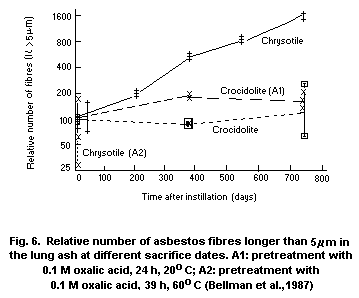 the number of intact chrysotile fibres longer than 5 µm increased by a
factor of about 15 over the 2-year duration of the study. A
significant reduction in the mean diameter of fibres > 5 µm in length
was observed, which provides evidence of fibre splitting. The
magnesium-leached fibres were removed from the rat lung with a
half-time of only 2 days.
Coffin et al. (1992) administered large amounts of chrysotile
fibres (6-32 mg) to the rat by intratracheal instillation and measured
retention. There was an apparent increase in fibre numbers between 1
and 10 days after instillation, which the authors attributed to the
splitting of fibre bundles. After this initial period there was no
significant further change in the numbers of Stanton fibres (equal to
or greater than 8 µm in length and equal to or less than 0.25 µm in
diameter). However, the doses administered may well have been
sufficient to overload macrophage-mediated clearance of fibres from
the alveolar region of the lung.
5.1.4 Fibre translocation
Available experimental evidence indicates that chrysotile fibres
can be transported through the epithelium with subsequent migration to
the interstitium. Information on the movement of chrysotile fibres
from the lung parenchyma to either the parietal or visceral pleura is
conflicting. While chrysotile fibres have been detected in pleural
tissues of workers who died of asbestos-related diseases in several
studies, other studies did not show this. Additionally, chrysotile
fibres were not found in the rat pleura in an acute inhalation study.
5.1.4.1 Fibre translocation in humans
In a study of asbestos fibres in the lung parenchyma and the
parietal pleura of 29 asbestos workers, Sebastien et al. (1980) found
that chrysotile fibres predominated in the pleura and that amphibole
fibres could not be detected. A similar result was reported by Dodson
et al. (1990). Kohyama & Suzuki (1991) found short chrysotile fibres
in pleural plaques and in mesothelial tumours. In contrast, Boutin et
al. (1993) found 0.21 × 10⁶ fibres per g of parietal pleura and 1.96
× 106 in samples of lung parenchyma. Fibre concentrations were higher
in subjects with a history of asbestos exposure and most of the fibres
were amphiboles. Churg (1994) reported detection of chrysotile fibres
in the subpleural parenchyma in chrysotile miners and millers.
Kobayashi et al. (1987) reported the detection of few asbestos fibres
as asbestos bodies in the extrathoracic organs (pancreas, spleen,
etc.) of human subjects exposed to chrysotile.
5.1.4.2 Fibre translocation in animal models
In the inhalation study of Brody et al. (1981), the examination
of tissues by electron microscopy revealed that chrysotile fibres
deposited at the bifurcations of the alveolar ducts were taken up not
only by alveolar macrophages but also by type I epithelial cells
during the 1-h inhalation exposure. Some days after exposure, fibres
were found in interstitial macrophages and fibroblasts. These
observations suggest that there may be direct fibre penetration of the
epithelial surface and that chrysotile fibrils can be transported to
the interstitium through type I epithelial cells.
Oghiso et al. (1984) exposed rats by intermittent inhalation to
chrysotile fibres (95% < 6 µm in length, no fibre > 0.5 µm diameter)
or crocidolite fibres (98.7% < 5 µm in length, 4.2% > 0.5 µm
diameter) for 3 months and then killed them after 2-16 months.
Electron microscopy revealed some similarities, but also distinct
differences in the pulmonary distribution of the two types of fibre.
Thickened alveolar duct bifurcations, associated with aggregates of
macrophages, were seen long after exposure ceased, but crocidolite-
exposed rats also had subpleural collections of alveolar macrophages,
many of which contained crocidolite fibres.
Coin et al. (1992) exposed rats to chrysotile fibres by
inhalation for 3 h (see section 5.1.2) killing them at times up to 29
days following exposure. The authors found no evidence of
translocation of chrysotile fibres to the pleura. They did find,
however, substantial numbers of inhaled fibres deposited within 1-2 mm
of the visceral pleura of the rat.
The fate of chrysotile (mean length 3.6 µm, mean diameter 0.05
µm), crocidolite (mean length 2.5 µm, mean diameter 0.14 µm) and glass
fibres, following injection into the pleural cavity of rats, was
studied by Bignon et al. (1979). By 90 days after injection, fibres
were found at similar concentrations in lung, liver, kidney and brain,
while in the thoracic lymph nodes the concentrations were higher. The
authors concluded that the majority of fibres can migrate rapidly from
the site of administration, principally via the pulmonary lymphatics.
In the case of chrysotile, particularly, the mean length of fibres
found in the lung parenchyma was greater than that of the administered
material. In view of the way the fibres were administered in this
study, the relevance of the results to prediction of the behaviour of
fibres following inhalation may be limited.
5.1.5 Mechanisms of fibre clearance
There is considerable uncertainty about the mechanisms
responsible for the more rapid removal of chrysotile fibres from the
lung than in the case of amphibole asbestos fibres. It is uncertain
whether the more effective removal of chrysotile fibres is due to more
rapid fibre dissolution or to more rapid clearance of shorter fibres
as a result of breakage. Another explanation may be movement and
dispersion in the watery atmosphere in the lung.
Most of the evidence for the preferential dissolution of
magnesium from chrysotile is derived from measurement of the
magnesium/silicon ratio of fibres recovered from lung using analytical
electron microscopy. A reduction in the Mg/Si ratio measured in fibres
recovered from human lung was first reported by Langer et al. (1970).
Subsequently, Jaurand et al. (1977) found that the extent of magnesium
depletion varied from one fibre to another and even along the axis of
the same fibre. Sebastien et al. (1986b) examined chrysotile fibres
longer than 5 µm and thicker than 0.1 µm and found magnesium depletion
as high as 50%. On the other hand, Churg & DePaoli (1988) found only
slight magnesium depletion in fibres recovered from the lung of
chrysotile miners many years after their last exposure.
One possible explanation for the diversity of results is the
impossibility of measuring Mg:Si ratios at a resolution applicable to
individual chrysotile fibrils. In relatively thick chrysotile fibres,
only the fibrils near the surface of a bundle will be subjected to
leaching and those in the interior may remain intact. Another factor
is that, once leaching occurs, the unsupported silica structure on the
outside of a fibril may disintegrate and this may impose an upper
limit to estimates of magnesium depletion based on Mg:Si ratios
(Morgan, 1994). Hume & Rimstidt (1992) have proposed that the brucite
layer of chrysotile dissolves in the lung leaving the silica layer
exposed; this then dissolves at a slower rate and it is suggested that
this is the rate-controlling step. These authors developed a
"shrinking-fibre model", which predicts that a chrysotile fibre 1 µm
in diameter will dissolve completely in 9 ± 4.5 months.
Results of available experimental studies also gave conflicting
evidence with regard to magnesium depletion. For example, Jones et al.
(1994) obtained values for magnesium depletion ranging from 10 to 40%.
Kimizuka et al. (1987) reported magnesium depletion in the lung of
hamsters. On the other hand, Coin et al. (1994) found no significant
leaching of magnesium over a period of 30 days following
administration of chrysotile to rats by inhalation, and Churg et al.
(1989) reported a similar result with guinea-pigs following
intratracheal instillation.
Bellman et al. (1987) showed that magnesium is removed from
chrysotile fibres following their administration to rats by
intratracheal instillation and that leaching rates are much greater
during the first month than subsequently. These authors also showed
that chrysotile fibres, from which the magnesium had been removed by
prior treatment with oxalic acid in vitro, were removed from the
lung with a half-time of only a few days. This explains the
observation that the carcinogenic potency of magnesium-leached
chrysotile is much reduced, or eliminated completely, compared with
that of the untreated fibre (Morgan et al., 1977; Monchaux et al.,
1981).
Limited information is available in support of the fibre
fragment-ation hypothesis. Churg et al. (1993) showed that short
chrysotile fibres are present in considerably larger numbers than long
fibres in the lungs of chrysotile miners and millers even years after
exposure has ceased. While this finding may reflect fragmentation of
long inhaled fibres into shorter fibres, it might also reflect
retention of some portion of the fibre burden in a sequestration
compartment with no change in size distribution.
In summary, available data indicates that both fibre breakage and
dissolution are likely mechanisms for the rapid removal of chrysotile
fibres from the lung.
5.2 Ingestion
An important question in the evaluation of the possible risks
associated with the ingestion of chrysotile asbestos is whether fibres
can migrate from the lumen into and through the walls of the
gastro-intestinal tract to be distributed within the body and
subsequently cleared.
Review of the available data has been published in Environmental
Health Criteria 53 (IPCS, 1986). The main conclusions were:
(a) It is not possible to conclude with certainty that chrysotile
fibres do not cross the gastrointestinal wall. However, available
evidence indicates that, if penetration does occur, it is
extremely limited (Cook, 1983).
(b) There is no available information on bioaccumulation/retention of
ingested chrysotile fibres. Simulated gastric juice has been
shown to alter the physical and chemical properties of chrysotile
fibres (Seshan, 1983).
(c) There was no difference in the level of urinary chrysotile
between subjects drinking water with high compared to those
drinking water with much lower natural chrysotile contamination
(Boatman et al., 1983).
Finn & Hallenbeck (1985) investigated the number of chrysotile
fibres in the urine of six workers occupationally exposed to
chrysotile. The levels of chrysotile fibres in the urine of exposed
workers were significantly higher than in a control group.
6. EFFECTS ON LABORATORY MAMMALS AND IN VITRO TEST SYSTEMS
6.1 Introduction
Several caveats are important in the interpretation of results of
inhalation studies in laboratory animals and in cells in vitro. A
search of the literature on the effects of chrysotile in experimental
in vivo and in vitro models reveals few dose-response studies with
appropriate positive and negative "control" dusts. Concentrations of
chrysotile and other dusts used in inhalation experiments are several
magnitudes higher than concentrations encountered in the workplace and
environment today. Moreover, preparations of chrysotile and other
dusts used in many experiments are poorly characterized. In the
majority of studies before 1980, concentrations are expressed on a
mass basis rather than on a fibre number basis. This may be misleading
when comparing samples of chrysotile and amphibole asbestos, because
the former may contain more than 10 times more fibres per unit weight.
There has been a great deal of debate concerning the relevance of
various routes of exposure in experimental animals to risk assessment
in humans (McClellan et al., 1992; IPCS, 1993). The general consensus
is that all routes of administration should be considered, but that
they should be given different weightings in relation to assessment of
potential hazard to humans.
Positive results in an inhalation study on animals have important
significance for the hazard evaluation of exposure to airborne fibres
in humans. Strong arguments would need to be made against the
relevance for humans of such a finding. However, the lack of a
response in an inhalation study on animals does not mean that the
material is not hazardous for humans. For instance, rats, being
obligate nose-breathers, have a greater filtering capacity than
humans.
As discussed by IPCS (1988), a negative result in a properly
conducted intratracheal study would suggest that a given type of fibre
may not be hazardous for parenchymal lung tissue. A positive result,
however, would require further study since the normal filtering
capacity of the respiratory tract has been bypassed. However,
pulmonary clearance mechanisms are intact. The results of studies
involving intrapleural injection or implantation and intraperitoneal
injection should be viewed in a similar way to intratracheal
instillation studies. With these methods, both filtering and clearance
mechanisms are compromised. Such studies may be more sensitive than
inhalation studies because a higher number of fibres can be
introduced. Therefore, a negative result would be highly relevant, but
a positive result should be confirmed by further investigation.
6.2 Effects on laboratory mammals
6.2.1 Summary of previous studies
The results of early inhalation experiments were presented in
Environmental Health Criteria 53 (IPCS, 1986). Fibrosis has been
observed in many species following inhalation of chrysotile. In
several studies there was progression of fibrosis following cessation
of exposure (Wagner et al., 1974, 1980; Wehner et al., 1979). In the
majority of the studies only the airborne mass concentrations were
measured; the numbers and size distributions were not considered.
Shorter fibres were found to be less fibrogenic (Davis et al., 1980).
Unlike fibrosis, which has been observed in several animal
species following inhalation of chrysotile, a consistently increased
incidence of lung tumours or pleural mesothelioma has been observed
only in the rat. Rats with lung tumours had significantly more
fibrosis than those without (Wagner et al., 1974). In a study with
exposure to approximately 10 mg/m3 of three amphibole and two
chrysotile asbestos types, Wagner et al. (1974) found 11
mesotheliomas, 4 of which occurred following exposure to Canadian but
none following exposure to Rhodesian chrysotile. Davis et al. (1978)
compared amosite, crocidolite and Rhodesian chrysotile at 10 mg/m3 as
well as at equal fibre numbers (fibres > 5 µm in length). Both by
mass and by fibre number, chrysotile proved the most fibrogenic and
carcinogenic, but the authors pointed out that, while numbers of
fibres longer than 5 µm were roughly equal, the chrysotile dust cloud
had many more very long fibres (> 20 µm in length).
Since it became obvious that relatively few mesotheliomas
developed in rats following asbestos inhalation and since Wagner
(1962) had shown that they could be induced by direct dust injection
into body cavities, the injection technique has been frequently used.
The results of such early experiments were summarized by IPCS (1986).
The major finding from these studies is that, following injection,
short fibres are less fibrogenic (Burger & Engelbrecht, 1970; Davis,
1972) and that the most carcinogenic fibres are > 8 µm in length and
< 0.25 µm in diameter (Stanton & Wrench, 1972; Pott & Friedrichs,
1972; Pott et al., 1972, 1976; Stanton et al., 1977). Short fibres
show little carcinogenicity. The numbers of mesotheliomas produced in
these studies were high (up to 90% of animals). Several authors
reported a clear dose-response effect (Smith et al., 1968; Stanton &
Wrench, 1972; Wagner et al., 1973).
The ability of asbestos to cause gastrointestinal cancer
following ingestion has been examined in many experimental studies
reviewed extensively by Condie (1983) and Toft et al. (1984). Early
studies on ingested asbestos were reviewed by IPCS (1986). There was
no conclusive evidence of either histopathological or biochemical
effects on the gastrointestinal wall, or of carcinogenicity in the
animal species studied.
6.2.2 Recent long-term inhalation studies
The results of the more recent inhalation studies in various
animal species are presented in Table 18.
In an inhalation study on rats (10 mg/m3 UICC chrysotile B for
up to 12 months), Wagner et al. (1984) observed a mean fibrosis grade
4.1 and a 25% incidence of adenomas and carcinomas. Le Bouffant et al.
(1987), using Canadian chrysotile as a positive control in experiments
with MMM(V)Fs in rats (5 mg/m3 chrysotile B, 5 h/day, 5 days/week for
24 months), reported unquantified fibrosis and pulmonary tumours in
21% of male and 17% of female rats. Muhle et al. (1987), exposing rats
to 6 mg/m3 Calidria chrysotile 5 h/day, four times each week for 12
months, reported the presence of pulmonary fibrosis in 42% of rats,
but found no pulmonary tumours.
Davis et al. (1985) examined the effects on rats of tremolite and
brucite, two materials frequently found as contaminants of
commercially produced chrysotile (10 mg/m3, 7 h/day, 5 days/week, for
12 months). A sample of asbestiform tremolite from Korea was highly
fibrogenic and carcinogenic, while brucite was less hazardous.
However, it was demonstrated that the sample which was supposedly
brucite was contaminated with chrysotile fibres, and it was not
possible to determine the relative pathogenicity of these two
minerals.
The same group (Davis et al., 1986a) examined the long-term
effects of dust from samples of wet dispersed chrysotile (WDC) in
rats. WDC is a preparation used to produce textile yarn. Raw
chrysotile is first separated into individual fibrils by treatment
with detergents and then rebound with electrolytes while the slurry is
extruded from a narrow nozzle. Handling this material liberates much
less dust than standard chrysotile textile yarn. In the experimental
studies, however, where respirable dust was produced by milling, both
specimens of WDC dust and the parent chrysotile material (5 mg/m3, 7
h/day, 5 days/week for 12 months) produced widespread fibrosis and
pulmonary tumours in up to 50% of animals. One experimental WDC sample
with relatively thick fibres produced as much disease at a dose level
of only approximately 100 fibres/ml (> 5 µm in length, measured by
PCOM) as was found in the other groups treated with WDC or standard
chrysotile where dose levels were 500-650 fibres/ml. The authors
concluded that WDC separates into fibrils in lung tissue more rapidly
than standard chrysotile. The relatively few thick WDC fibres could
generate as many long thin subunits as clouds of similar mass that
originally contained more thin fibres.
Platek et al. (1985) treated rats and monkeys with a specially
prepared short fibre sample of chrysotile for 18 months (the mass dose
level was only 1 mg/m3, of which < 1 fibre/ml was longer than 5 µm
as measured by PCOM). After a total follow-up of 24 months the rats
had developed neither fibrosis nor pulmonary tumours. No fibrosis was
found in monkeys by open lung biopsies after 24 months. Davis et al.
(1986b), exposing rats to amosite asbestos fibres (all fibres were
< 5 µm in length), found no pulmonary carcinomas, while numbers of
benign tumours and levels of pulmonary fibrosis were similar to those
in control animals. In contrast, a dust cloud generated from raw
amosite with many very long fibres was extremely fibrogenic and
carcinogenic. Similar studies examined the importance of fibre length
with inhaled Canadian chrysotile (Davis & Jones, 1988). Unfortunately,
in this case, the "short" fibre chrysotile preparation did have a
small proportion of long fibres, and fibrosis and pulmonary tumours
did develop. However, a comparison cloud generated from the same
original chrysotile sample, to maximize the number of long fibres,
produced 5 times more fibrosis and 3 times more tumours for the same
mass dose.
Airborne chrysotile asbestos is able to hold a high electrostatic
charge, and there have been reports that this may effect fibre
deposition in the lower pulmonary tract (Vincent et al., 1981; Jones
et al., 1983). Consequently, Davis et al. (1988) treated rats with
equal clouds of UICC Rhodesian chrysotile, either carrying the normal
electrostatic charge or discharged by exposure to ionizing radiation
from a thallium-204 source. Rats treated with discharged chrysotile
had less fibrosis, tumours and retained chrysotile in their lung
tissue, but not all these differences were statistically significant.
Davis et al. (1991a) examined the effect on rats of inhaling
chrysotile or amosite asbestos (10 mg/m3, 7 h/day, 5 days/week for 12
months) simultaneously with either titanium dioxide (10 mg/m3) or
quartz (2 mg/m3). Increased levels of pulmonary fibrosis above levels
produced by chrysotile or amosite alone were observed in combination
with quartz, but not with addition of titanium dioxide. Tumour
production was also increased, but in this case a combination of
asbestos and titanium dioxide was as carcinogenic as a combination of
asbestos and quartz. Of particular interest in this study was the
finding of granulomas on the visceral pleural surface that contained
both particles and asbestos fibres in animals treated with asbestos
and quartz. Similar granulomas have not been reported in previous
experiments with pure asbestos where fibres accumulated beneath the
external elastic lamina of the lung and seldom penetrated to the
pleural surface. The increased pleural penetration of asbestos fibres
in coexposures with quartz dust was associated with increased
production of mesotheliomas. The recorded proportions of mesotheliomas
were higher than those previously reported in any experiments with
commercial varieties of asbestos. Evidence of interspecies differences
in response to asbestos and other mineral fibres has been reported.
Hamsters treated with respirable refractory ceramic fibre developed no
pulmonary carcinomas but 43% developed mesotheliomas. Chrysotile
produced neither type of tumour in this species. The mass dose levels
were 29 mg/m3 for ceramic fibres and 11 mg/m3 for chrysotile
(6 h/day, 5 days/week for 18 months) (Hesterberg et al., 1991).
Twenty-one percent of rats treated with Canadian chrysotile (10
mg/m3, 6 h/day, 5 days/week for 24 months) developed both lung
tumours (19% of animals) and mesothelioma (one rat)( Bunn et al.,
1993; Hesterberg et al., 1993).
Table 18. Long-term inhalation studies
Species Group size Protocola Resultsa Reference
Rat 24 male, Exposure: 10 mg/m3 UICC chrys B Mean fibrosis grade 4.1 (Wagner Wagner et al., 1984
24 female for up to 12 months. Used as a scale). Adenomas and carcinomas
positive control in experiments 12/48 (25%).
with MMM(V)F.
Rat 150 male Exposure: 1.0 mg/m3 chrys 7 h/day, No fibrosis or tumours at 24 months. Platek et al., 1985
(Sprague-Dawley) 5 days/week, for 18 months. Ball
milled. Concentration of airborne
fibres >5 µm in length was 0.79
f/cm3.
Monkey 10 Exposure: 1.0 mg/m3 chrys 7 h/day, No fibrosis (estimated by biopsy) Platek et al., 1985
5 days/week,for 18 months. Ball at 28 months.
milled. Concentration of airborne
fibres >5 µm in length was 0.79
f/cm3.
Rat 24 male, Exposure: 5 mg/m3 chrys B 5 h/day, Fibrosis reported in chrys group Le Bouffant et al., 1987
23 female 5 days/week for 24 months. Used but not quantified. Pulmonary
as a positive control in tumours in 5/24 (21%) male rats
experiments with MMM(V)F. and in 4/23 (17%) female rats.
Rat (Wistar) 48 male Exposure: 10 mg/m3 tremolite or Tremolite very fibrogenic. Davis et al., 1985
brucite 7 h/day, 5 days/week for Pulmonary tumours and
12 months. mesotheliomas in 20/39 (51%)
rats. Brucite caused mild
fibrosis. Pulmonary tumours
in 5/38 (13%) rats.
Rat (Wistar) 48 male Exposure: 7 h/day, 5 days/week All chrys samples very fibrogenic. Davis et al., 1986a
for 12 months; mean conc. of WDC Pulmonary tumours and mesotheliomas
samples 5 mg/m3, concentration in 16/42 (38%) for standard chrys,
of chrys yarn 4.3 mg/m3. 18/41 (44%), 18/37 (49%), 21/43
(49%), 21/44 (48%) for WDC
preparations.
Table 18. (continued)
Species Group size Protocola Resultsa Reference
Rat (Wistar) 48 male Exposure: 10 mg/m3 of respirable Long amos extremely fibrogenic. Davis et al., 1986b
dust 7 h/day, 5 days/week for 12 Pulmonary tumours and
months. Long fibre amos: cloud mesotheliomas in 13/40 (33%).
generated from raw material. Short Short amos no fibrosis. No
fibre amos: very few fibres > 5 µm pulmonary tumours or mesotheliomas.
in length.
Rat (Wistar) 50 female Exposure: 6 mg/m3 of Calidria Some septal fibrosis in 21/50 Muhle et al., 1987
chrys 5 h/day, 4 times each week (42%) rats. No pulmonary tumours.
for 12 months. Used as a positive
control in experiments with MMM(V)F.
Rat (Wistar) 48 male Exposure: 10 mg/m3 7 h/day, 5 Long fibre chrys very fibrogenic. Davis & Jones, 1988
days/week for 12 months. Long fibre Pulmonary tumours and mesotheliomas
chrys: cloud generated from raw in 23/40 (58%) rats.
chrys. Short fibre chrys: fibres
>5 µm reduced 5 times; fibres >30 µm
reduced 80 times.
Rat (Wistar) 48 male Exposure: 10 mg/m3 7 h/day, 5 Interstitial fibrosis reduced by Davis et al., 1988
days/week for 12 months. Two clouds 38% in "discharged" group compared
of UICC chrys A, one of which had to standard chrys. Pulmonary
reduced electrostatic charge by tumours and mesotheliomas in
exposure to ionizing radiation from 11/39 (28%) rats in "discharged"
a thallium-204 source of beta group; 14/36 (11%) rats in
particles. standard chrys group.
Table 18. (continued)
Species Group size Protocola Resultsa Reference
Rat (Wistar) 48 male Exposure: 10 mg/m3 7 h/day, 5 Advanced fibrosis increased for Davis et al., 1991a
days/week for 12 months. Six both asbestos types by addition
treatment groups, UICC chrys A of quartz but not by titanium
or UICC amosite alone or mixed dioxide. Pulmonary tumours and
with either 10 mg/m3 of titanium mesotheliomas: chrys 13/37 (35%)
dioxide or 2 mg/m3 of quartz. rats, chrys + TiO2 26/41 (51%)
rats, chrys + quartz 22/38 (58%)
rats; amos 14/40 (35%) rats,
amos + TiO2 20/40 (50%) rats,
amos + quartz 26/39 (67%) rats.
Rat (Fisher 344) 63 Exposure: 10 mg/m3 chrys A 6 Mean fibrosis grade 4.0 (Wagner Bunn et al., 1993
h/day, 5 days/week for 24 months. scale). Pulmonary tumours and
Used as a positive control in mesotheliomas 13/63 (21%) rats.
experiments with MMM(V)F.
Hamster 100 male Exposure: 11 mg/m3 chrys B 6 Mean fibrosis grade 4.3 (Wagner Hesterberg et al., 1991
h/day, 5 days/week for 18 months. scale) at 3 months. No pulmonary
Used as a positive control in tumours or mesotheliomas.
experiments with MMM(V)F.
Baboon Exposure: 6 h/day, 5 days/week Goldstein & Coetzee, 1990
for up to 4 years
21 1) UICC chrysotile A, exposure 1) No mesotheliomas
not specified
18 2) UICC amosite 1100 f/cm3, 2) 1/18 (5.6%) animals with
exposure for 4 years mesothelioma
78 3) UICC crocidolite 1130-14 000 3) 3/78 (3.8%) animals with
f/cm3, exposure for 1.5-3 years mesothelioma
Table 18. (continued)
Species Group size Protocola Resultsa Reference
Baboon Exposure: 6 h/day, 5 days/week Hiroshima et al., 1993
4 1) UICC chrysotile A 106,074-368,772 1) No mesothelioma
f/cm3 for 8.5-24 months
5 2) UICC amosite 997,678 f/cm3 for 2) 2/5 animals with
49 months (dose that produced mesothelioma
mesothelioma)
5 3) crocidolite (Transvaal or UICC) 3) 2/5 animals with
432,291 f/cm3 for 15 months mesothelioma
769,784 f/cm3 for 35 months
(dose that produced mesothelioma)
a chrys = chrysotile; MMM(V)F = man-made mineral (vitreous) fibres; WDC = wet dispersed chrysotile; amos = amosite.
Studies in baboons suggest that chrysotile is less apt to cause
mesothelioma in comparison to crocidolite and amosite asbestos. In two
reports (Goldstein & Coetzee, 1990; Hiroshima et al., 1993), no
mesotheliomas nor lung carcinomas were reported after exposure to
chrysotile, although mesotheliomas were observed in amosite- and
crocidolite-exposed baboons. However, the chrysotile exposure levels
were lower than those of amosite or crocidolite in the latter study,
while the level of chrysotile in the former study was not specified.
Studies in baboons indicate that fibrosis is observed with UICC
samples of chrysotile, amosite and crocidolite asbestos (Hiroshima et
al., 1993). In all cases, the severity of fibrosis was directly
related to cumulative dose.
In experimental inhalation studies with different fibre types it
has been an almost universal finding that fibres that are very
fibrogenic are also carcinogenic. Davis & Cowie (1990) emphasized this
by reporting on advanced fibrosis in 144 rats, aged 2.5 years or more,
that had been exposed to a number of different asbestos types,
including Rhodesian and Canadian chrysotile. The 85 animals that had
pulmonary tumours showed almost twice the level of advanced pulmonary
fibrosis as the 59 animals that had not developed tumours.
6.2.3 Intratracheal and intrabronchial injection studies
Table 19 shows the results of intratracheal injection studies
with chrysotile documenting fibrosis in sheep, rats and mice.
At high doses (100 mg) of chrysotile administered via
intratracheal instillation in sheep, fibrosis appeared to be more
marked with chrysotile than with crocidolite (Sebastien et al., 1990).
However, the development of fibrosis exhibited evidence of an apparent
threshold in this model, as fibrosis was not observed in sheep after
injection of 1, 10 or 50 mg of chrysotile (Begin et al., 1987).
Repeated instillations of 100 mg chrysotile over a 2-year period in
sheep resulted in progression of fibrosis and lung infections (Begin
et al., 1991).
Use of an intratracheal injection model in rats has yielded
additional data suggesting the decreased fibrogenicity of short-fibre
chrysotile (Lemaire, 1985, 1991; Lemaire et al., 1985, 1989). No
fibrogenicity was observed with injections of short chrysotile at 1, 5
and 10 mg; however, UICC chrysotile B caused peribronchiolar fibrosis
at all concentrations.
Intratracheal studies in mice indicated focal collagen deposition
in mice exposed to chrysotile, but more severe fibrosis after exposure
to quartz (Bissonnette et al., 1989). Collagen and elastin deposition
per unit lung weight was greater after instillation of UICC chrysotile
in comparison to UICC crocidolite (injected rats kept for a 12-month
period after a single 1.6 mg injection) (Hirano et al., 1988).
Table 19. Intratracheal injection studies (fibrogenicity)
Species Dose and group size Protocol Results Reference
Rats UICC chrysotile B, short Single exposure. Severe peribronchiolar Lemaire, 1985, 1991;
(Wistar, male) chrysotile (4T30) (1, 5, Histopathology at 1-60 fibrosis at all conc. with Lemaire et al., 1985,
10 mg) N = 5/group days and 8 months chrysotile B. No fibrosis 1989
with short chrysotile.
Mouse UICC chrysotile A (0.5 mg) Single exposure. No severe fibrosis until Bissonnette et al., 1989
(Balb/c, sex number not specified Histopathology at 0.5, 9 months.
not specified) 1, 2, 3, 6 and 9
months.
Sheep (male) UICC Canadian chrysotile B Single exposure. Fibrosis only in 100 mg Begin et al., 1987
(1, 10, 50, 100 mg) N = Histopathology at 60 days group.
6/group
Sheep (male) UICC chrysotile A, Single exposure. Histological score for Sebastien et al., 1990
UICC crocidolite, latex Histopathology at 8 fibrosis = 1.9 ± 0.3
beads (100 mg) N = 15/group months. in crocidolite and
2.8 ± 1 in chrysotile
groups.
The rat and sheep intratracheal injection models of fibrosis have
also been used to elucidate the time frame of appearance of bombesin
and vasoactive intestinal peptide (Day et al., 1985, 1987),
populations of cells in bronchoalveolar lavage (BAL) (Lemaire, 1985),
pulmonary function and alveolitis (Begin et al., 1985, 1986), and
cytokines or inflammatory mediators (Lemaire et al., 1986a; Keith et
al., 1987) in relationship to the development of fibrotic disease. The
rat intratracheal injection model has also been used to assess the
inflammatory and fibrogenic potential of other fibre types (xonotlite,
Fibrefrax, attapulgite) in comparison to UICC chrysotile B and short
chrysotile 4T30 (Lemaire et al., 1989). Overall, the order of
reactivity was xonotlite < attapulgite < short chrysotile 4T30 <
Fibrefrax < UICC chrysotile B.
Intratracheal and intrabronchial injection studies on
carcinogenicity are presented in Table 20. Studies by Coffin et al.
(1992) evaluated UICC chrysotile A in comparison to UICC crocidolite
and erionite. Large differences in the incidence of mesothelioma in
intratracheal injection studies were demonstrated on the basis of
tumour-to-fibre ratios based on lung burdens of fibres averaged from 1
day to 1 year. Erionite was 500-800 times more tumorigenic and
crocidolite 30-60 times more tumorigenic than chrysotile on fibre
number basis.
Other studies have examined the co-carcinogenic effects on rats
of chrysotile in combination with benzo (a)pyrene (BP) (Fasske, 1988)
or the systemic carcinogen N-nitrosoheptamethyleneimine (NHMI) and
cadmium (Harrison & Heath, 1988). In the former study, BP appeared to
be a weaker lung carcinogen than chrysotile. Synergistic effects of BP
and chrysotile were not observed in comparison to chrysotile alone. In
the latter study, the lung tumorigenic effects of chrysotile and NHMI
appeared to be more than additive in comparison to those observed with
NHMI or chrysotile alone.
Kimizuka et al. (1993) explored the co-carcinogenicity of
chrysotile and amosite asbestos with BP in hamster lungs. Although
tumours were not observed with either type of asbestos or BP alone,
lung carcinomas occurred with chrysotile and BP (83%) and with amosite
and BP (67%). The incidence of lung carcinomas in rats was higher when
chrysotile was instilled repeatedly with the carcinogen
N-bis(hydroxypropyl)nitrosamine (DHPN) (23/38 rats) than it was with
chrysotile alone (1/31 rats) or chrysotile in combination with smoking
(4/29 rats) (Yoshimura & Takemoto, 1991). Mesotheliomas were not
observed with asbestos, smoking or DHPN alone, but were found in
combination groups.
6.2.4 Intraperitoneal and intrapleural injection studies
The results of the most significant intraperitoneal and
intrapleural injection studies are presented in Table 21.
Table 20. Intratracheal/intrabronchial injection studies (carcinogenicity)
Species Dose and group sizea Protocola Resultsa Reference
Rat UICC chrys A (6, 16, 32 21 weekly intratracheal At 6, 16 and 32 mg, % Coffin et al., 1992
(Fischer 344, mg)b; N = 132 for 6 and instillations. Animals mesothelioma were 8.3, 7.5
male) 16 mg, 41 for 32 mg kept for lifespan. and 9.8, % carcinoma were
27.3, 14.3 and 2.4,
respectively. No
dose-response relationship.
Rat 1) Milled UICC chrys B Single intrabronchial 1) 17/70 (24%) lung carcinomas Fasske, 1988
(Wistar, both (1 mg) dose. Rats kept for and 1/70 (1.4%) mesothelioma
sexes) 2) Benzo(a)pyrene (0.5 mg) 33 months. 2) 7/78 (9%) lung carcinomas
3) Chrys (1 mg) + BP and 3/78 (4%) mesothelioma
(0.5 mg) N = 70-80/group 3) 15/78 (19%) lung carcinomas
and 1 mesothelioma.
Rat 1) UICC chrys B (2 mg) Single intratracheal Lung tumours incidence: Harrison & Heath, 1988
(Lister hooded) 2) Chrys (2 mg) + cadmium instillation of particular 1) Chrys alone 1/86 (1.2%)
(0.18 mg) materials. 10 weekly 2) NHMI alone 2/48 (4.2%)
3) Chrys (2 mg) + NHMI subcutaneous administrations 3) Chrys + cadmium 1/94 (1.1%)
(1 mg x10, s.c.) of NHMI 4) Chrys + NHMI 8/50 (16.6%)
4) Chrys (2 mg) + NHMI 5) Chrys + NHMI + cadmium 6/44
(1 mg x10, s.c.) + (13.6%)
cadmium (0.18 mg)
5) NHMI (1 mg x10, s.c.)
Table 20. (continued)
Species Dose and group sizea Protocola Resultsa Reference
Rat 1) Chrys (15 mg), N=31 Single intratracheal dose Yoshimura & Takemoto, 1991
(Wistar) 2) DHPN (1 mg/kg bw) of chrys, DHPN 3
intraperitoneally, N=37 intraperitoneal doses,
3) DHPN + chrys, N=38 exposure to smoke of 10
4) chrys + smoke of 10 cigarettes/day, 6 days/week
cigarettes, N=29 throughout lifespan.
5) chrys + DHPN + smoke
of 10 cigarettes, N=29 Lung carcinomas:
1) 1/31 (3.2%)
2) 8/37 (21.6%)
3) 23/38 (60.5%)
4) 4/29 (13.8%)
5) 15/29 (51.7%)
Mesotheliomas:
1) 0
2) 0
3) 8/38 (21.1%)
4) 2/29 (6.9%)
5) 4/29 (13.8%)
Hamster 12/group Weekly intratracheal chrys, amos and BP alone: Kimizuka et al., 1993
1) UICC chrys (0.2 mg) application through 6 no tumours.
2) UICC amos (0.2 mg) weeks. Tumours examined 4) 16 carcinomas in 12
3) BP (0.4 mg) 18 and 24 months after (83% of animals)
4) Chrys + BP last instillation. 5) 11 carcinomas in 12
5) Amos + BP (68% of animals)
a NHMI = N-nitrosoheptamethyleneimine, a relative systemic carcinogen; BP = benzo(a)pyrene; chrys = chrysotile; amos = amosite;
DHPN = N-bis(2-hydroxypropyl) nitrosamine.
b Accumulated instilled doses. Equivalent to 6.5, 17.4 and 34.8 million fibres, respectively.
Table 21. Intrapleural and intraperitoneal injection studies
Species Group size Protocola Resultsa,b Reference
Rat (Wistar, 40 Single intrapleural injection of Mesotheliomas in 14/32 (44%) Le Bouffant et al., 1985
20 males, 20 20 mg chrys, 1% >5 µm in rats (sexes unspecified)
females) length
Rat (Wistar, 24 Single intraperitoneal injection Mesotheliomas reported in 90% Davis et al., 1986a
males) of 25 mg of 4 samples of WDC, of rats in all groups (actual
1 sample standard chrys numbers unspecified). Median
survival for WDC rats was
310-340 days, for standard
chrys rats was 400 days
Rat (Wistar, 32 Single intraperitoneal injection Mesotheliomas Median survival Muhle et al., 1987
females) of:
Calidrian chrys (0.5 mg) 2/32 (6%) 812
Canadian chrys (1.0 mg) 27/32 (84%) 357
Rat (Wistar, 24 Single intraperitoneal injection Mesotheliomas Median survival Davis et al., 1986b
male) of:
long amosite (20 mg) 20/21 520
long amosite (10 mg) 21/24 535
short amosite (25 mg) 1/24 837
short amosite (10 mg) 0/24
Rat (Wistar, 24 Single intraperitoneal injection Mesothelioma Mean induction
male) of Canadian chrysotile: period Davis & Jones, 1988
long fibre (25 mg) 23/24 (96%) 361
long fibre (2.5 mg) 22/24 (92%) 511
long fibre (0.25 mg) 16/24 (67%) 736
short fibre (25 mg) 22/24 (92%) 504
short fibre (2.5 mg) 8/24 (33%) 675
short fibre (0.25 mg) 0/24 (0%)
Table 21. (continued)
Species Group size Protocola Resultsa,b Reference
Rat (Wistar, Single intraperitoneal injection of: Mesothelioma Mean survival Pott et al., 1987
female) 34 UICC Rhodesian chrys (6 mg) 26/34 (76%) 497
34 UICC Rhodesian chrys (25 mg) 27/34 (79%) 420
34 UICC Rhodesian chrys (6 mg)
(HCl treated) 0/34 (0%)
34 UICC Rhodesian chrys (25 mg)
(HCl treated) 0/34 (0%)
39 UICC Rhodesian chrys milled (10 mg) 1/39 (2.6%)
32 UICC Canadian chrys (1.0 mg) 26/32 (81%) 392
30 UICC Canadian chrys (1.0 mg) +
separate injection of PVNO 24/30 (80%) 462
32 Calidrian chrys (0.5 mg) 2/32 (6%) 742
36 UICC Canadian chrys (0.05 mg) 7/36 (19%) 448
34 UICC Canadian chrys (0.25 mg) 21/34 (62%) 406
36 UICC Canadian chrys (1.0 mg) 31/36 (86%) 245
Rat (Wistar, Single intraperitoneal injection Mesothelioma (survival times Tilkes & Beck, 1989
female) of: not recorded)
50 UICC Rhodesian chrys (2.0 mg) 25/50 (50%)
25 UICC Rhodesian chrys
(10.0 mg) 14/25 (54%)
50 long asbestos-cement chrys (2.0 mg) 19/50 (38%)
25 long asbestos-cement chrys (10.0 mg) 8/25 (32%)
50 short asbestos-cement chrys (2.0 mg) 20/50 (40%)
25 short asbestos-cement chrys (10.0 mg) 8/25 (32%)
50 core asbestos-cement chrys (2.0 mg) 11/50 (22%)
25 core asbestos-cement chrys (10.0mg) 12/25 (48%)
Table 21. (continued)
Species Group size Protocola Resultsa,b Reference
Rat (Wistar) Yang et al., 1990
Mesothelioma Mean survival
53 Chinese chrys short (50 mg) 26/53 (49.1%) 630
52 Chinese chrys long (50 mg) 38/52 (73.1%) 647
51 Chinese croc short (50 mg) 23/51 (45.1%) 636
54 Chinese croc long (50 mg) 40/54 (74.1%) 492
3 UICC chrys (50 mg) 7/13 (53.8%) 550
13 UICC croc (50 mg) 8/13 (61.5%) 586
14 UICC glass fibre (50 mg) 10/14 (71.4%) 605
32 Saline control (2 x 1 ml) 0/32 726
Rat (Wistar, Single intraperitoneal injection of Mesothelioma Median survival Davis et al., 1991b
male) UICC Rhodesian chrysotile:
24 15.0 mg 19/24 (79%) 476
24 10.0 mg 20/24 (83%) 476
24 7.5 mg 20/24 (83%) 516
24 5.0 mg 19/24 (79%) 506
32 2.5 mg 22/32 (69%) 613
32 0.5 mg 26/32 (81%) 693
32 0.05 mg 12/32 (38%) 903
48 0.01 mg 2/48 (4%) NA
Rat (Wistar, 33 or 36 Single intraperitoneal injection of Mesothelioma Median survival Davis et al., 1991c
male) tremolite:
Californian (asbestiform) 36/36 (100%) 301
Swansea (asbestiform) 35/36 (97%) 365
Korea (asbestiform) 32/33 (97%) 428
Italy (non-asbestiform) 24/36 (67%) 755
Carr Brae (non-asbestiform) 4/33 (12%) NA
Shinness (non-asbestiform) 2/36 (6%) NA
Table 21. (continued)
Species Group size Protocola Resultsa,b Reference
Rat 40 Single intrapleural injection of: Mesothelioma Mean survival
(Sprague-Dawley, Standard Canadian chrys 11/40 (28%) 632 Van der Meeren et al., 1992
male) (20 mg)
Median survival
Phosphorylated Canadian 11/40 (28%) 612
chrys (20 mg) (3 samples) 13/40 (33%) to
16/40 (40%) 642
Rat (Fischer 50/dose Single intrapleural injection of: Mesothelioma Coffin et al., 1992
344, male)
UICC Rhodesian chrys 118/142 (83%)
UICC croc 65/142 (45%)
UICC erionite 137/144 (95%)
[NB. Number of chrys fibres
(length > 8 µm, diameter < 0.25
µm) was over 100 times higher
than for croc or erionite]
a chrys = chrysotile; PVNO = polyvinyl-pyridine- N-oxide; asb = asbestos; croc = crocidolite; NA = not assessed.
b All survival or induction periods are given in days.
When Davis et al. (1986a) treated rats by intraperitoneal
injection of a series of four wet dispersed chrysotile (WDC)
preparations (see section 6.2.2) and a standard chrysotile sample,
mesotheliomas were induced in over 90% of animals. The mean induction
period of WDC preparations was 310-340 days, shorter than that for
standard chrysotile. It was suggested by the authors that this was due
to the rapid separation of WDC fibre bundles in the tissue. Muhle et
al. (1987) included two samples of chrysotile in intraperitoneal tests
along with man-made fibres. While Canadian chrysotile produced
mesotheliomas in 84% of animals (dose of 1.0 mg), a sample of
chrysotile from Calidria produced only 6% mesotheliomas (dose of 0.5
mg). Calidrian chrysotile consists of thick and often agglomerated
bundles which are difficult to separate and size. Tilkes & Beck (1989)
examined the carcinogenicity of chrysotile fibres separated from
asbestos-cement sheeting by single intraperitoneal injection in rats.
At doses of 2.0 and 10.0 mg both weathered and unweathered chrysotile
materials produced similar number of mesotheliomas to raw chrysotile.
The incidences of mesothelioma were not dose-related.
Le Bouffant et al. (1985) examined the carcinogenicity of "short"
chrysotile fibres by intrapleural injection of 20 mg in 40 rats.
Mesotheliomas were induced in 44% of animals, but the dust sample
contained over 1% of fibres > 5 µm in length. Davis & Jones (1988)
administered to six groups of 24 rats by a single intraperitoneal
injection "long" and "short" chrysotile samples at doses of 0.25, 2.5
and 25 mg. All animals were followed practically throughout their life
span. At 25 mg, samples of long and short chrysotile produced similar
numbers of mesotheliomas (> 90%). At 2.5 mg, the long chrysotile
material produced almost the same proportion of mesotheliomas while
the short material produced tumours in only 33% of animals. At 0.25
mg, the long chrysotile still produced 67% of mesotheliomas while the
short chrysotile produced none. The mean mesothelioma induction period
was dose-dependent and significantly longer with short fibre
preparations. In fact, it is difficult to conclude whether the zero
mesothelioma incidence with short fibre exposure at the dose of 0.25
mg was an exposure threshold or the consequence of an induction period
longer than the follow-up period. While in this study samples of long
and short chrysotile fibres produced similar number of mesotheliomas
at the dose of 25 mg, the same group of authors (Davis et al., 1986b)
had previously reported that the intraperitoneal injection of 25 mg of
amosite with all fibres shorter than 5 µm produced only a single
mesothelioma in 24 rats. The authors attributed this difference to the
presence of a small but significant number of long fibres in the
"short" chrysotile sample.
Pott et al. (1987) examined the carcinogenicity of many mineral
samples, including several chrysotile preparations, in a large
intraperitoneal injection study on rats. It was reported that UICC
Canadian chrysotile exhibited a clear dose-response effect over a dose
range of 0.05 to 1.0 mg, although Rhodesian chrysotile showed no
difference between doses of 6 and 25 mg. Milled UICC Rhodesian
chrysotile produced only 2.6% mesotheliomas at a dose level of 10 mg,
and treatment with hydrochloric acid eliminated the carcinogenic
potential of Rhodesian chrysotile completely. Injecting the animals
with polyvinyl-pyridine- N-oxide (PVNO) after an injection of UICC
Canadian chrysotile had no effect on carcinogenicity. The results were
confirmed in a further study by the same group of authors (Pott et
al., 1989). These authors emphasized that the maximum carcinogenic
potency of fibres is reached at a fibre length of > 20 µm.
Davis et al. (1991b) reported detailed dose-response studies
following intraperitoneal injection of UICC Rhodesian chrysotile, UICC
crocidolite, UICC amosite and erionite in rats. Dose levels ranged
from 0.005 to 25 mg, and a clear dose-response effect was seen for all
four minerals. Only two mesotheliomas were recorded with the lowest
chrysotile dose (0.01 mg), which contained 55.8 × 10⁶ fibres of all
lengths and 872 000 fibres > 8 µm in length. When the dose-response
was considered by mass, erionite and chrysotile appeared significantly
more carcinogenic than amosite or crocidolite. When considered by
fibre number (fibres > 8 µm in length), chrysotile, amosite and
crocidolite appeared similar, but erionite showed significantly higher
carcinogenicity. In this study, fibres were sized by SEM.
In a similar comparison of fibre number and carcinogenicity by
intrapleural injection, Coffin et al. (1992) counted and sized fibres
by TEM. A dose level of 20 mg chrysotile produced similar numbers of
mesotheliomas in rats (83%) to erionite and twice the proportion of
mesotheliomas produced by crocidolite (45%). However, the chrysotile
fibre numbers ( > 8 µm in length) were reported to be 100 times
greater than in the crocidolite preparation and 500 times greater than
in erionite.
Van der Meeren et al. (1992) treated rats by intrapleural
injection of either standard chrysotile or three samples of
phosphorylated chrysotile at the same dose. There were no significant
differences in mesothelioma production but the unphosphorylated
chrysotile was reported to have at most half the number of "Stanton"
size fibres per mg compared to the phosphorylated materials.
Pott (1994) evaluated results from carcinogenicity studies in
rats and lung cancer risk data in humans. He concluded that there is
no evidence of a lower carcinogenic potency of chrysotile fibre
compared to amphibole asbestos fibres.
Because tremolite contamination of chrysotile is believed by some
to enhance its pathogenicity, an injection study by Davis et al.
(1991c) is of interest. Six tremolite samples (three of asbestiform
type and three non-asbestiform varieties) were administered to rats by
intraperitoneal injection. The three asbestiform preparations produced
mesotheliomas in over 90% of animals, while the non-asbestiform
samples produced a lower response which appeared to be related to the
number of elongated spicules in the dust. Two preparations, with
relatively few of these spicules, produced only a few mesotheliomas
similar in numbers to those found in control rats.
6.2.5 Ingestion studies
The main chrysotile-related findings, reported in the
Environmental Health Criteria 53 (IPCS, 1986), are as follows:
(a) There were no consistent pathological findings in the
gastrointestinal tract of rats that had consumed up to 250 mg
chrysotile per week for periods up to 25 months (Bolton et al.,
1982), although some evidence of cellular damage was observed in
the intestinal mucosa of rats fed 50 mg of chrysotile per day
(Jacobs et al., 1978).
(b) In six identified studies on rats with chrysotile fed in diet
(250 mg per week for up to 25 months, or 10% in diet over
lifetime, or 1% short-range or 1% intermediate-range chrysotile
fed to nursing mothers and over the lifetime of pups) (Donham et
al.,1980; Bolton et al.,1982; McConnell, 1982; NTP, 1985), there
was no significant treatment-related increase of carcinoma
incidence. Only benign tumours of the large intestine were found
in rats, fed with an intermediate range of chrysotile fibres, in
the NTP study. Of special significance is the finding that no
increase in tumour incidence was observed following
administration of short-range chrysotile fibres, composed of size
ranges similar to those found in drinking-water (McConnell, 1982;
NTP, 1985).
Since the publication of Environmental Health Criteria 53 (IPCS,
1986), there have been only a few studies in which possible harmful
effects of the ingestion of chrysotile asbestos have been examined in
experimental animals. All these studies gave negative findings.
McConnell et al. (1983) treated over 3000 hamsters (equal numbers of
males and females) with various preparations of chrysotile and amosite
in special food pellets containing 1% by weight of asbestos. Neither
the male nor the female asbestos-treated groups showed a statistically
significant increase in neoplasia in any tissue or organ compared to
control groups. A study on Swiss albino male mice, fed orally with
chrysotile asbestos suspended in water at a dosage of 20 mg/kg per day
during 60 days, did not show induction of chromosomal aberrations or
sperm abnormalities (Rita & Reddi, 1986). The most recent completed
experimental ingestion study was reported by Truhaut & Chouroulinkov
(1989). These authors fed groups of 70 rats with either chrysotile or
a mixture of chrysotile and crocidolite (75:25) in palm oil at dose
levels of 10, 60 or 360 mg per day for 2 years. No increase in tumour
incidence in the treated animals was found compared to controls.
Aberrant crypt foci were induced in rats given chrysotile by gavage at
a dosage of 70 mg/kg per day (Corpet et al., 1993).
The subject of asbestos ingestion has been reviewed by Davis
(1993), Polissar (1993) and Valiœ & Beritiœ-Stahuljak (1993).
6.3 Studies on cells
Cell cultures and cells from bronchioalveolar lavage (BAL) of
animals or humans exposed to asbestos have been used to document the
cytotoxicity and genotoxicity of asbestos preparations as well as
other effects on cells, i.e. proliferative alterations, production of
cytokines, which may be predictive of disease. Other studies have
focused on perturbations of cell organelles or cell-signalling
pathways which are traditionally activated in other experimental
models of inflammation, fibrosis and carcinogenesis. These assays have
been valuable in determining mechanisms of disease and the properties
of fibres, i.e. length and free-radical-generating properties, which
are important in cell transformation and proliferation (Mossman &
Begin, 1989).
The mechanisms of fibre-induced carcinogenicity have been
recently reviewed by IARC (1996).
6.3.1 Genotoxicity and interactions with DNA
Table 22 summarizes results of some key in vitro genotoxicity
studies.
Many studies have been performed to determine whether or not
chrysotile and other types of asbestos interact with DNA either
directly by physical association or indirectly via the production of
reactive oxygen species (ROS), which may be generated primarily by
iron-driven redox reactions on the surface of fibres. The latter
mechanism may be particularly relevant to the enhanced biological
activities of crocidolite and amosite, which contain approximately
26-36% iron, in comparison to chrysotile (generally < 2% iron by
weight), in some preparations (Lund & Aust, 1991). The importance of
iron in these reactions is illustrated by the observations that the
DNA breakage is also observed with ferric citrate (Toyokuni &
Sagripanti, 1993), and that reactivity of fibres is inhibited with
iron chelators, such as desferrioxamine (Lund & Aust, 1991). Cell-free
assays have shown that UICC samples of Canadian chrysotile, amosite
and crocidolite cause lipid peroxidation (Weitzman & Weitberg, 1985),
presumably by catalysing the formation of toxic hydroxyl radicals from
hydrogen peroxide, a reaction inhibited by desferrioxamine (Weitzman &
Graceffa, 1984; Gulumian & Van Wyk, 1987).
Chrysotile asbestos causes breakage of isolated DNA in vitro
(Kasai & Nishimura, 1984), but this phenomenon is also observed with
ferric citrate (Toyokuni & Sagripanti, 1993) and other chemical
systems that generate ROS. Oxidative damage to DNA, as indicated by
the formation of 8-hydroxydeoxyguanosine from deoxyguanosine
(Leanderson et al., 1988), or calf thymus DNA (Adachi et al., 1992)
in vitro is more potent with chrysotile in comparison to man-made
fibres on an equal weight basis. However, the hydroxyl-radical-
producing capacity attributed to this activity may be related more
directly to the surface area of the material (Leanderson et al.,
1988).
Table 22. In vitro studies on genotoxicity
Species Type of fibres End-point (change) Results Reference
(cell type)
Drosophila NIEHS samples of Aneuploidy (+) Chrysotile and amosite (+) Osgood & Sterling,
(female germ chrysotile, crocidolite, at high dose (25 mg/ml), 1991
cells) amosite, tremolite only chrysotile (+) at low
(5 mg/ml) dose. No effects
with other types of asbestos.
Rat (pleural Canadian chrysotile; Aneuploidy (+); Chrysotile caused more effects Yegles et al., 1993
mesothelial UICC crocidolite1 chromosomal aberrations on a weight basis, but
cells) (+) crocidolite more effects on
a fibre basis. NOEL in 1 of
2 experiments.
Rat (pleural Canadian chrysotile Aneuploidy (+) NOEL Jaurand et al., 1986
mesothelial
cells)
Rat (pleural UICC chrysotile Morphologic transformation Only one dose evaluated. Paterour et al., 1985
mesothelial (+)
cells)
Rat (lung NIEHS intermediate Polyploidy (+); Dose-dependent increases. Li, 1986
epithelial chrysotile chromosomal aberrations
cells) (+)
Rat (bone Indian chrysotile Chromosomal aberrations Increase in chromosomal Fatma et al., 1992
marrow cells) (+) aberrations; decrease in
mitotic index of bone
marrow cells. Only one
dose evaluated
Table 22. (continued)
Species Type of fibres End-point (change) Results Reference
(cell type)
Golden Syrian UICC chrysotile; glass Morphologic transformation Chrysotile caused the strongest Mikalsen et al., 1988
hamster fibre 100, 110; amosite; (+) effects on a weight basis. No
(embryo cells) crocidolite; synergistic effects of BP
anthophyllite;
Benzo(a)pyrene (BP)
Chinese hamster UICC chrysotile; Aneuploidy (+); chromosomal NOEL, erionite > crocidolite Palekar et al., 1987
(lung fibroblast) UICC crocidolite; aberrations (+) > chrysotile on a fibre basis
erionite
Chinese hamster 35 dusts, including Chromosomal aberrations (+) Chrysotile more active on Koshi et al., 1991
(lung fibroblasts) UICC and sized UICC a weight basis than other
chrysotile types of asbestos. No
dose-response. Shorter
preparations less active
than long fibres.
Mouse Balb/3T3 UICC chrysotile; Morphological transformation With chrysotile, dose-response Lu et al., 1988
(fibroblasts) UICC crocidolite TPAa (+) increases in transformation.
Chrysotile and TPA act
synergistically.
Hamster-human UICC chrysotile Mutations at HGPRT (-) and Dose-response mutations at Hei et al., 1992
hybrid S1 locus (+) S1 locus.
(fibroblasts)
Table 22. (continued)
Species Type of fibres End-point (change) Results Reference
(cell type)
Human (bronchial UICC chrysotile A; Chromosomal aberrations (-) No statistically significant Kodama et al., 1993
epithelial cells) UICC crocidolite binuclei and micronuclei effect of chrysotile on
(-,+) numerical or structural
chromosome changes.
Dose-dependent (NOEL) in
micronuclei and binuclei
only at 3 days.
Human (lung UICC chrysotile A; Mitotic index (-) Cytological changes with Verschaeve et al.,
fibroblasts) glass fibres chrysotile indicative of 1985
cell death (scattered
chromatin observed). No
effects of glass fibres.
Human Chrysotile (USSR); Chromosomal aberrations (+) Latex and clinoptilite also Korkina et al., 1972
(lymphocytes) Clinoptilite; + at same weight
Latex concentration as chrysotile
Human female UICC chrysotile; Chromosomal aberrations (+) Only one concentration Olofsson & Mark, 1989
(pleural, UICC crocidolite; evaluated. Numerical and
mesothelial UICC amosite structural alterations
cells) with all asbestos types,
but no breakage nor
polyploidy. Aberrations
in 2/4 untreated controls.
a TPA = 12-O-tetradecanoylphorbol-13-acetate
Chrysotile asbestos has been shown to induce chromosomal
aberrations (Sincock et al., 1982; Lechner et al., 1985; Jaurand et
al., 1986), anaphase abnormalities (Palekar et al., 1987; Pelin et
al., 1992; Jaurand et al., 1994), and sister chromatid exchange
(Livington et al., 1980; Kaplan et al., 1980) in cultured rodent and
human cells.
6.3.2 Cell proliferation
Interactions of chrysotile with the DNA of rodent cells may
result in chromosomal or mutational events indicative of the
initiation of carcinogenesis or genetic damage associated with
cytolysis and cell death. However, cell proliferation, a phenomenon
intrinsic to the long promotion and progression phases of the
carcinogenic process, may be a more important contributing factor to
both cancer and fibrosis. Sustained increases in incorporation of
tritiated thymidine have been documented in human embryonic lung
fibroblasts after exposure to UICC chrysotile at 10 µg/ml medium, but
not at 5 µg/ml (Lemaire et al., 1986b). Moreover, effects were not
observed with latex beads or titanium dioxide at up to 10-fold higher
concentrations. In hamster tracheal epithelial cells, both UICC
chrysotile and crocidolite asbestos caused increases in activity of
ornithine decarboxylase (ODC), a rate-limiting enzyme in the
biosynthesis of polyamines, which accompanied increases in labelling
by tritiated thymidine in these cells (Landesman & Mossman, 1982;
Marsh & Mossman, 1988, 1991). Elevations in ODC activity were also
observed with Code 100 fibreglass and long chrysotile (>10 µm)
fibres, but to a lesser extent with short chrysotile (<2 µm) (Marsh &
Mossman, 1988).
Both rats (Brody & Overby, 1989; McGavran et al., 1990) and mice
(McGavran et al., 1990), following a single exposure to approximately
10 mg/m3 air, exhibited rapid reversible proliferation of epithelial
and interstitial cells, as measured by incorporation of tritiated
thymidine, which was followed by increased accumulation of alveolar
macrophages and localized interstitial fibrosis using morphometric
techniques (Chang et al., 1988). In mice, endothelial and smooth
muscle cells of arterioles and venules near alveolar duct
bifurcations, the site of deposition of asbestos fibres, also
incorporate increased levels of tritiated thymidine up to 72 h after
initiation of a 5-h exposure to chrysotile (McGavran et al., 1990).
Morphometric analyses of ultrastructural changes in
chrysotile-exposed rat lungs have also been used to determine the
responses of alveolar type II epithelial cells after inhalation of
chrysotile asbestos over a 2-year period (Pinkerton et al., 1990).
During this time, type II cell number and volume increased to values
more than 4 times those seen in controls. Inhalation of chrysotile
over a one-year period resulted in regional differences in the
localization and lung burden of fibres, which were proportional to the
relative degree of tissue injury at that site (Pinkerton et al.,
1986).
The induction of protooncogenes which govern cell division has
been compared in cultures of rat pleural mesothelial cells (RPM) and
hamster tracheal epithelial cells (HTE) (Heintz et al., 1993). These
studies indicated that UICC crocidolite asbestos and UICC chrysotile
asbestos cause persistent induction of the protooncogenes c-fos and
c-jun in RPM cells in a dosage-dependent fashion. Crocidolite was much
more potent than chrysotile in stimulating gene expression of both
protooncogenes on a fibre number basis. In HTE cells, only c-fos
induction was observed, but patterns of induction by both types of
asbestos were similar to those observed in RPM cells. No increases
were documented with the use of polystyrene beads or riebeckite.
6.3.3 Inflammation
Using intratracheal injection (1, 10, 25, 50 or 100 mg of UICC
Canadian chrysotile) into the isolated tracheal lobe of the lungs of
sheep and following pulmonary lavage, Begin et al. (1986) examined the
extracted fluid and cells for evidence of inflammation by differential
cell counts and estimations of lactate dehydrogenase (LDH), alkaline
phosphatase, œ-glucuronidase and levels of fibronectin and
procollagen. Only the 100 mg dose produced any changes from control
levels, a finding which the authors suggested supported the idea of a
"tolerance threshold". Comparing UICC Canadian chrysotile to short
Canadian chrysotile and a chrysotile coated with either phosphate or
aluminium (intratracheal injection of 100 mg), the UICC chrysotile
preparation and the samples of coated chrysotile all produced evidence
of similar levels of pulmonary inflammation, but the short chrysotile
preparation produced no changes from control values. By administering
100 mg of chrysotile intratracheally at 10-day intervals, Begin et al.
(1990) found that normal sheep showed much less evidence of pulmonary
inflammation in lavage fluids than those with fibrosis, and the fibre
retention was 2.5 times greater when fibrosis was present.
Lemaire et al. (1985) administered, by a single intratracheal
injection, 5 mg of either UICC Canadian chrysotile or short fibre
preparation (all fibres < 8 µm in length) to rats. Lung morphology
was examined at intervals of up to 60 days. The UICC chrysotile
produced nodular lesions around the terminal bronchioles with
accumulation of inflammatory cells followed by collagen deposition. In
contrast, the short fibre preparation produced an accumulation of
inflammatory cells but no fibrosis. It was found that standard
chrysotile caused an influx of PMN during the first day, which
persisted for 7 days. In contrast, the short chrysotile caused only a
transient increase in PMN on day 1. Both preparations stimulated an
influx of lavageable macrophages, which were frequently binucleate,
and frequent mitotic figures were recorded. These studies were
extended to include different dose levels and to include attapulgite,
xonotlite and aluminium silicate fibres. Intratracheal dose levels
were 1, 5 and 10 mg. One month after treatment, UICC Canadian
chrysotile and aluminum silicate, which contained long fibres, had
produced fibrotic lesions at all doses, while short chrysotile and
attapulgite (a short fibre clay material) produced an accumulation of
inflammatory cells but no fibrosis. Xonotlite produced only a minimal
response.
Pulmonary lavage was used to examine the inflammatory response to
chrysotile and amosite dust in rats following short-term inhalation
(Donaldson et al., 1988a; Davis et al., 1989). UICC Rhodesian
chrysotile produced a rapid increase in both lavageable macrophages
and PMN within 2 days of the start of inhalation at a dose level of 10
mg/m3. Amosite at the same dose had little effect; the chrysotile
response was even greater than the early response stimulated by
amosite at 50 mg/m3. By 52 days of study, the 50 mg amosite dose had
elicited more macrophages than 10 mg of chrysotile, and by 75 days it
had elicited more neutrophils as well. By 75 days, the numbers of
macrophages in lavage fluids was falling in both chrysotile and
amosite treatments, perhaps because macrophages aggregated around
fibre deposits were becoming less susceptible to lavage. In contrast
to the findings with asbestos, quartz at a concentration 10 mg/m3
produced only minimal increases in macrophages and neutrophils during
the first 30 days of dusting, but subsequently a massive influx of
both cell types occurred and persisted until the end of the study. In
this report, levels of LDH and œ-glucuronidase in lavage fluids
closely mirrored the numbers of lavage cells for all dust types.
Donaldson et al. (1990) used the same experimental procedure to
examine leucocyte chemotaxis. Following inhalation for up to 75 days
of chrysotile, amosite, quartz or titanium dioxide, chemotactic
activity towards zymosan-activated serum was found to be reduced with
the first 3 dusts. In contrast, chemotaxis of cells lavaged from
animals treated with titanium dioxide showed only a small impairment
of chemotaxis. After inhalation of chrysotile (10 mg/m3) for 1 h,
cells from BAL exhibited a diminished capacity to secrete superoxide
anion, an active oxygen species implicated in bactericidal activity,
when incubated with the opsonized zymosan (Petruska et al., 1990).
6.3.4 Cell death and cytotoxicity
Several studies have documented the short-term cytotoxic effects
of chrysotile asbestos and other particulates on cells in culture
(reviewed in Mossman & Begin, 1989). These studies indicate that
geometry and size are important determinants of cytotoxicity in a
number of cell types; longer fibres are more potent than short fibres
in most of these bioassays (Wright et al., 1986; Mossman & Sesko,
1990).
6.3.5 Liberation of growth factors and other response of cells of the
immune system
Macrophages and other cell types of the immune system produce a
number of cytokines or growth factors (Rom & Paakko, 1991; Schapira et
al., 1991; Perkins et al., 1993), products of arachidonic acid and
lipoxygenase metabolism (Kouzan et al., 1985; Dubois et al., 1989),
proteolytic enzymes (Donaldson et al., 1988b), neuropeptides (Day et
al., 1987), immunomodulation factors (Bozelka et al., 1986),
chemotactic factors (Hays et al., 1990), and activated oxygen species
(Cantin et al., 1988) after exposure to chrysotile asbestos (reviewed
in part by Mossman & Begin, 1989). Whether these substances are
important causally to the induction of asbestos-associated disease or
in mitigating the disease process is unclear. For example, some of
these factors, such as platelet-derived growth factor (PDGF), are also
induced after exposure to iron spheres (Schapira et al., 1991) and
other innocuous particles used as negative controls. However, such
particles are not translocated to the interstitium, while chrysotile
fibres are readily translocated (Brody & Overby, 1989).
The initial inflammatory response to inhaled asbestos fibres and
subsequent development of fibrosis, and also possible neoplasia, is
claimed to be mediated by a number of chemical factors, most of which
are produced by pulmonary macrophages that have phagocytosed fibres.
Lemaire et al. (1986c) examined the production of fibroblast growth
factor (FGF) by pulmonary macrophages from rats given a single
intratracheal injection of either 5 or 10 mg of Canadian chrysotile.
In control rats, pulmonary macrophages secrete FGF while monocytes
from peripheral blood secrete fibroblast growth inhibitory factor
(FGIF). Subsequent to asbestos treatment, secretion of FGF by
pulmonary macrophages was significantly increased and monocyte
production of FGIF was reduced. The stimulation of fibroblast
proliferation by alveolar macrophages was further examined by
co-culturing macrophages from normal rats and rats treated by a single
intratracheal injection of 5 mg of Canadian chrysotile with long
fibroblasts (Lemaire et al., 1986d). Macrophages from
chrysotile-treated animals caused significantly more fibroblast
proliferation than controls. Bonner & Brody (1991) demonstrated that,
when rats were exposed for only 3 h to chrysotile at a dose level of
10 mg/m3, macrophages lavaged one week later stimulated 2-5 times
more production of PDGF than controls. However, exposure to iron (50
mg/m3) caused a similar increase. Cantin et al. (1989) showed that
development of asbestosis is associated with increased secretion of
plasminogen activator by pulmonary macrophages. In sheep given 100 mg
of Canadian chrysotile every 2 weeks by intratracheal injection, some
animals developed fibrosis and some did not. Lavaged macrophages from
animals developing fibrosis were found to secrete larger amounts of
plasminogen activator than those from animals that did not developed
fibrosis. Bonner et al. (1993) believe that the combination of
retention and translocation, along with release of growth factors and
other inflammatory mediators, is responsible for the fibrogenic
effects of fibres.
After exposing rats by inhalation to chrysotile or crocidolite
asbestos at a dose level of approximately 10 mg/m3 for up to 91 days,
Hartmann et al. (1984a,b) found that the expression of the Ia antigen
on macrophages lavaged from crocidolite-treated animals was increased
4-fold in male Fischer-344 rats while chrysotile produced no increase
over controls. In female ACI rats, crocidolite produced similar
effects but in these animals chrysotile also stimulated an increase in
Ia expression at approximately half the level of crocidolite.
Significantly greater thymocyte DNA synthesis was induced by
supernatants from co-cultures of alveolar macrophages and splenic
lymphocytes from asbestos-treated rats than from controls.
An effect on splenocyte mitogenesis by chrysotile treatment was
noted by Hannant et al. (1985). In these studies rats were given a
10 mg intraperitoneal injection of Rhodesian chrysotile, quartz or
titanium dioxide. After 14 days, splenocytes from animals treated with
chrysotile or quartz showed a significant reduction in mitogenic
response to phytohaemagglutinin and concanavalin A compared to
controls. Titanium dioxide produced no effect. Intraperitoneal
injection of chrysotile into mice caused impairment of subsequent
production of antibody to the protein antigen.
7. EFFECTS ON HUMANS
Studies reviewed are restricted to those that were considered by
the Task Group to be of clear relevance to characterizing the risks
associated with exposure to chrysotile. Limitations of
particle-to-fibre count conversions on which the exposure estimates in
the following studies are based are presented in Chapter 2.
7.1 Occupational exposure
7.1.1 Pneumoconiosis and other non-malignant respiratory effects
The non-malignant lung diseases resulting from exposure to
asbestos fibres comprise a somewhat complex mixture of clinical and
pathological syndromes not readily definable for epidemiological
study. Traditionally, the prime concern has been asbestosis, generally
implying a disease associated with diffuse interstitial pulmonary
fibrosis accompanied by varying degrees of pleural involvement. More
recently, as severe asbestosis has become less frequent clinically,
attention has been directed primarily to syndromes reflecting fibrosis
of the small and large airways rather than of the lung parenchyma. As
a cause of death, the pneumoconioses have never been reliably recorded
on death certificates. In investigations of mortality, therefore, all
chronic non-malignant respiratory diseases are generally considered as
one group. Additionally, mortality studies are generally not
sufficient to detect clinically significant morbidity. Equally, in
studies of morbidity, the etiological or diagnostic specificity of the
usual methods of assessment, i.e. chest radiography, physiological
testing and symptom questionnaire, is limited.
Early studies in both the United Kingdom and USA demonstrated an
extremely high prevalence of asbestosis among textile workers exposed
only to chrysotile at very high dust levels (Dreeson et al., 1938).
Extensive morbidity surveys of chrysotile workers were initiated
in the Quebec chrysotile mines and mills in the 1960s (McDonald et
al., 1974). These studies included the use by six readers of the then
newly developed UICC/Cincinnati (later ILO) radiographic
classification of nearly 7000 films, examinations by questionnaire and
lung function tests of over 1000 current employees, and detailed
assessments of cumulative dust exposure for each man. In the initial
survey, there was a fairly systematic relationship between exposure
and these measures of response. The authors concluded that exposure to
70-140 mpcm (2-4 mpcf) for a working life of 50 years was associated
with a 1% risk of acquiring clinically significant disease.
Based on additional study of radiological changes in 515 men aged
60-69 years (average 64.6 years) who had been employed for at least 20
years (average 42.3 years) at Thetford Mines, the dustier of the two
Quebec mining regions, dose-response relationships for small opacities
were essentially linear (Liddell et al., 1982). However, any increase
in prevalence in small opacities (>1/0 or >2/1) above the level of
the intercepts (which were high) only became apparent at an
accumulated exposure at age 45 of 1200 f/ml-years, equivalent to an
average concentration of about 30 f/ml (Liddell et al., 1982). In
contrast to small opacities, pleural thickening was not related to
cumulative exposure, although it was more common in men with long
service.
Becklake et al. (1979) reported a second study in Quebec of 86
men whose last chest film was taken within 12 months of leaving
employment in 1960-1961, and who were examined again in 1972. In 66
men who had been employed for at least two years, there was evidence
of an increase in small irregular parenchymal opacities in 8 men (12%)
but in none of the 20 men with shorter employment. Increase of pleural
thickening was seen in a further 13 (20%) of the 66 men and 4 (20%) of
the 20 men.
A dose-related reduction in vital capacity (p= 0.023) and
expiratory volume (p<0.001) was observed with increasing cumulative
exposure (i.e. > 8 f/ml-years) to chrysotile asbestos in miners and
millers (stratified random sample of 111 men) in Zimbabwe, exposed for
more than 10 years. The relationship between cumulative exposure and
radiographic parenchymal category demonstrated a steep increase with
each change in category (p<0.00001). Individual estimates of
cumulative exposure based on company records of employment history and
fibre concentrations (measured and estimated) ranged from 1.1 to 654
fibres/ml-years. Controls were a subset of miners (n=66) with no prior
respiratory illness, who were lifelong non-smokers with normal chest
X-ray and minimal cumulative exposure to chrysotile asbestos (<8
fibres/ml-years) (Cullen et al., 1991).
A number of other studies of radiographic and functional changes
have been conducted in occupational populations exposed primarily to
chrysotile, in some cases during mining and milling operations (Rubino
et al., 1979a; McDermott et al., 1982; Viallat et al., 1983; Cordier
et al., 1984; Enarson et al., 1988), asbestos-cement (Weill et al.,
1979; Jones et al., 1989) and asbestos textiles (Berry et al., 1979;
Becklake et al., 1980). Results were generally comparable to those
already described, the presence of small opacities increasing with
cumulative exposure (although with some variability in the shape and
steepness of these trends) and pleural changes primarily related to
time since initial exposure. As demonstrated in several of these
studies, e.g., Becklake et al., 1979; Rubino et al., 1979a; Berry et
al., 1979; Viallat et al., 1983, and as well recognized clinically,
X-ray changes can develop among workers after exposure ceases, in some
cases many years later.
Studies that correlate disease prevalence or symptoms with
cumulative exposure can underestimate disease risk due to progression
of disease after employment ceases. Although workers were exposed to
both chrysotile and crocidolite (the latter being approximately 5% of
all asbestos used), results for 379 men employed at least 10 years in
the Rochdale asbestos textile plant are informative in this regard
(Berry et al., 1979). Exposure estimated from work histories ranged
from an average of 2.9 to 14.5 f/ml. Overall, small opacities (>1/0)
were recorded in 88/379 (23%) of chest radiographs, with evidence of a
gradient seriously confounded by date of first employment and transfer
of subjects with suspected asbestosis to less dusty conditions. On the
basis of data on incidence, the authors drew conclusions on exposure-
response between cumulative exposure and prevalence or incidence of
crepitations, possible asbestosis and certified asbestosis - all three
depending on clinical opinion and judgement. The authors concluded
that possible asbestosis occurs in no more than 1% of men after 40
years of exposure to concentrations between 0.3 and 1.1 f/ml.
Mortality studies of Quebec miners and millers by McDonald et al.
(1994) have shown exposure-response relationships for
pneumoconiosis-related mortality. Crude rates of 0.23 cases per 1000
man-years were observed for those with cumulative exposures less than
3530 mpcm-years (100 mpcf-years) and a rate of 2.7 cases per 1000
man-years was reported for those with more than 10 590 mpcm-years
(> 300 mpcf-years). Dement et al. (1994) also reported mortality due
to non-malignant respiratory diseases among chrysotile textile
workers. An SMR of 1.88 was observed for those with cumulative
exposures less than 2.7 f/ml-years and rose rapidly to 12.78 with
cumulative exposures greater than 110 f/ml-years. It was noted that
cases of pneumoconioses recorded on death certificates are often
verified by pathological diagnosis.
Chest X-ray changes among textile and friction product workers in
China were reported by Huang (1990). A total of 824 workers employed
for at least 3 years in a chrysotile products factory from the
start-up of the factory in 1958 until 1980, with follow-through to
September 1982, were studied. Chest X-ray changes compatible with
asbestosis were assessed using the Chinese standard system for
interpretation of X-rays. Cases were defined as Grade I asbestosis
(approximately equivalent to ILO >1/1). Overall, 277 workers were
diagnosed with asbestosis during the follow-up period, corresponding
to a period prevalence of 31%. Exposure-response analysis, based on
gravimetric data converted to fibre counts, predicted a 1% prevalence
of Grade I asbestosis at a cumulative exposure of 22 f/ml-years.
7.1.2 Lung cancer and mesothelioma
It has been suggested that in the absence of pulmonary fibrosis,
lung cancer cannot be attributed to asbestos exposure regardless of
fibre type; however, there is also evidence to the contrary. For
example, in a recent case-control study, there was evidence of a
statistically significant increase in risk of lung cancer without
radiological signs of fibrosis (Wilkinson et al., 1995). The question
remains the subject of active controversy (Hughes & Weill, 1991;
Henderson et al., 1997).
Results of cohort studies of workers almost exclusively exposed
to chrysotile asbestos and considered by the Task Group to be most
relevant to this evaluation are summarized in Table 23 and described
in section 7.1.2.1. Studies that contribute less to our understanding
of the effects of chrysotile, due primarily to concomitant exposure to
amphiboles or to limitations of design and reporting, are presented in
section 7.1.2.2. Information most relevant to characterization of risk
(i.e. exposure-response assessment) is emphasized.
Assessment of exposure response for mesothelioma is complicated
in epidemiological studies by factors such as the rarity of the
disease, the lack of mortality rates in the populations used as
reference and problems in diagnosis and reporting. In many cases,
therefore, cruder indicators of risk have been developed, such as
absolute numbers of cases and death and ratios of mesothelioma over
lung cancers or total deaths. The mesothelioma/lung cancer ratio in
particular is highly variable depending on the industry and the nature
and intensity of asbestos exposure, in addition to a number of factors
not related to asbestos exposure. Data on mesothelioma occurrence in
occupational cohorts should, therefore, be cautiously interpreted.
For the studies reviewed here, the number of mesothelioma deaths
is reported, together with the percentage over total deaths (Table
23). It should be noted, however, that additional cases of
mesothelioma have been reported in workers from the factories included
in the studies reported in Table 23 who were not included in the
original cohort studies. However, in the absence of information on the
numbers of workers at risk, such reports do not contribute to
quantification of risk.
7.1.2.1 Critical occupational cohort studies - chrysotile
a) Mining and milling
Mortality from lung cancer and mesothelioma has been studied
extensively in miners and millers of Quebec and in a smaller operation
at Balangero in northern Italy.
In 1966, a cohort of some 11 000 men and 440 women, born between
1891 and 1920, who had worked for one month or more in chrysotile
production in Asbestos and Thetford Mines and 400 persons employed in
a small mixed asbestos products factory in Asbestos, Canada, was
identified. The cohort, which has now been followed up to 1988, was
selected from a register compiled of all workers, nearly 30 000, ever
known to have been employed in the industry. The factory workers were
included because there was frequent and often unrecorded movement
between the plant and the mine and mill. Apart from a failure to trace
9% of the cohort, most after less than 12 months' employment before
1930, losses have amounted to well under l%. The intensity of exposure
was estimated for each cohort member by year, based on many thousand
midget impinger dust particle counts and, more recently, membrane
filter fibre counts.
Table 23. Results of cohort studies of chrysotile-exposed workersa
Study No. of All causes Lung cancer Mesothelioma Mean exposure Slope of
subjects dose-responsec
No. of SMR No. of SMR 95% CIb No. of deaths f/ml f/ml
deaths deaths (percentage) -years
Mining & Milling
McDonald et al.,
1980d,e,f 10 939 3291 1.09 230 1.25 [1.09 - 1.42] 8 (0.24%) ns 90 0.0006
McDonald et al.,
1993d,e,f 5335 2800 1.07 315 1.39 [1.24 - 1.55] 25 (0.8%) ns 90 ns
Nicholson et al.,
1979d 544 178 1.11 28 2.52 [1.68 - 3.65] 1 (0.56%) ns ns 0.0017
Piolatto et al.,
1990 1094 427 1.49 22 1.1 [0.7 - 1.7] 2 (0.47%) ns ns ns
Asbestos-cement Production
Thomas et al.,
1982 1592 351 1.02 30 0.91 [0.61 - 1.30] 2 (0.57%) <2 ns ns
Ohlson & Hogstedt,
1985f 1176 220 1.03 9 1.58 0.72 - 3.00 0 (0%) 2 10-20 ns
Gardner et al., 1986 1510 384 0.94 35 0.92 0.64 - 1.27 1 (0.26%) <1 ns ns
Hughes et al., 1987
(plant 1)f 2565 477 0.91 48k 1.17 [0.86 - 1.54] 2 (0.42%) 11 40 0.0003
Hughes et al., 1987
(plant 2)f,g 2751 ns ns 70 1.32 [1.03 - 1.66] 1 (ns) 11 19 0.007
Textile Manufacture
Dement et al.,
1994h,i 3022 1258 1.28 126 1.97 [1.64 - 2.35] 2 (0.16%) 5-12 32-105 0.02-0.03
McDonald et al.,
1983af,h 2543 570 1.27 59k 1.99 [1.52 - 2.57] 1 (0.18%) ns ns 0.01
Friction Materials Production
Newhouse & Sullivan,
1989j 8812 ns ns 84k 0.93 [0.74 - 1.16] 3 (ns) 2-5 12 0.0006
McDonald et al.,
1984f 3641 803 1.09 73k 1.49 [1.17 - 1.87] 0 (0%) ns ns 0.0005
Table 23. (continued)
Study No. of All causes Lung cancer Mesothelioma Mean exposure Slope of
subjects dose-responsec
No. of SMR No. of SMR 95% CIb No. of deaths f/ml f/ml
deaths deaths (percentage) -years
Mixed products
Szeszenia-Dabrowska
et al., 1988 824 285 1.04 24 1.86 [1.19 - 2.77] 0 (0%) ns ns ns
Cheng & Kong, 1992 1172 151 1.16 21 3.15 [1.95 - 4.81] ns (ns) ns ns ns
Chen et al., 1988 551 156 ns 19k 2.34 [1.41 - 3.67] 1 (0.64%) ns ns ns
Zhu & Wang, 1993 5893 496 ns 18 5.3 [2.67 - 7.1] ns (ns) ns ns ns
a ns = not stated
b values in square brackets were calculated by Task Group
c Increase in relative lung cancer risk for 1 f/ml-year
d Partially overlapping studies
e McDonald et al. (1993) extends the follow-up of McDonald et al. (1980)
f 20+ years since first employment
g Only chrysotile-exposed workers; mean exposure refers to both chrysotile and amphibole workers
h Partially overlapping studies
I Slopes estimated based on regression of SMRs and risk ratios
j Only workers employed after 1950; 10+ years since first employment; dose-response from Berry & Newhouse (1983).
k Respiratory cancers
The most relevant analyses of this cohort are those published by
McDonald et al. (1980) and McDonald et al. (1993), and in a
preliminary fashion by Liddell (1994). In the first of these reports,
where 4463 men had died, the standardized mortality ratio (SMR) for
men 20 or more years after first employment, assessed against
provincial rates, was 1.09 for all causes and 1.25 for lung cancer.
There was no excess mortality for lung cancer in men employed for less
than 5 years, but at 5 years and above there were clear excesses.
Based on analysis by cumulative exposure up to age 45, there was a
linear relationship with lung cancer risk.
In the second paper (McDonald et al., 1993), mortality up to the
end of 1988 of the 5351 men who had survived into 1976 (of whom 16
could not be traced and 2827 had died) was followed. In this survivor
population, the SMRs 20 or more years after first employment were 1.07
for all causes and 1.39 for lung cancer. The investigators subdivided
the men into 10 groups based on cumulative exposure up to age 55. The
highest relative risk (3.04) was in the highest exposure group
(> 35 000 mpcm-years; > 1000 mpcf-years), the second highest
(1.65) was in the second highest exposure group (14 000 to 35 000
mpcm-years; 400 to 1000 mpcf-years) and the third highest (1.50) was
in the third highest exposure group (10 500 to 14 000 mpcm-years; 300
to 400 mpcf-years). In the remaining 7 groups below 10 500 mpcm-years
(300 mpcf-years), there was no indication of a trend or pattern of
exposure-response with relative risks all being above 1 and averaging
1.27. Similar results were obtained in a heavily exposed subset of the
cohort with a long duration of exposure (Nicholson et al., 1979). In
the analysis of the large Quebec cohort, the relative increase in risk
attributable to chrysotile exposure was lower for ex-smokers than
smokers and negligible for smokers of 20 or more cigarettes a day. The
authors concluded that the interaction appeared to be less than
multiplicative.
The number of deaths attributed to mesothelioma in the Quebec
cohort has increased with increasing age and time from first
employment more rapidly than total mortality (McDonald et al., 1993).
At the end of 1988, when some 75% of the cohort had died, and the
youngest survivor was aged 73, in a total of 7312 male deaths, there
were 33 suspected cases of mesothelioma, 15 coded to ICD 163 and 18 to
a variety of other diagnostic codes. After review of all available
evidence, including autopsies in 23 and biopsies in 10, the
probability of the diagnosis being correct was assessed by the authors
as high in 17, moderate in 11, and low in 5. All 33 cases were pleural
but in one of low diagnostic probability, the peritoneum was also
affected. Of the 33 cases, 20 were miners or millers from Thetford
Mines, 8 were miners or millers from Asbestos, and the remaining five
cases were observed among men employed in a small asbestos products
factory in Asbestos. The median duration of employment was 36 years
(range 2.5 to 49 years). There was no case of mesothelioma among the
4371 members of the cohort (40% of 10 925) employed for less than 2
years, eight cases among those 2396 (22%) employed for 2-10 years, and
25 mesotheliomas among the other 38% of the cohort (4158 men) with at
least 10 years of employment. Crude rates of mesothelioma by
cumulative exposure were calculated. Rates varied from 0.15 cases per
1000 man-years for those with exposures less than 3500 mpcm-years (100
mpcf-years) to 0.97 cases per 1000 man-years for those with exposure
of 10 500 mpcm-years (300 mpcf-years) or more.
The most recent account of mortality among the chrysotile miners
and millers of Balangero, Italy, was reported by Piolatto et al.
(1990) for a cohort comprising 1094 men employed for at least one year
between 1946 and 1987, with exposures estimated individually in
fibre-years. Of the total, 36 could not be traced and 427 had died.
The SMR for all causes based on national rates was 1.49, a high figure
largely explained by hepatic cirrhosis and accidents. Numbers of
deaths from all cancers (n=86) and lung cancer (n=22) were close to
expected (76.2 and 19.9) and there was no evidence that the risk for
either of these causes was related to duration of exposure,
fibre-years of cumulative exposure, or time since first or last
exposure. Little information was provided on the basis for the
estimates of cumulative exposure. The first fibre counts were taken in
1969. Earlier exposure levels were estimated by simulating working
situations occurring at various periods since 1946 in the plant, and
fibre counts were measured by PCOM (Rubino et al., 1979b).
The cohort of chrysotile production workers employed at the
Balangero mine and mill, studied by Piolatto et al. (1990), was almost
exactly one tenth the size of the Quebec cohort. At the end of 1987,
when 427 (45%) of the cohort had died, there were two deaths from
pleural mesothelioma, both in men employed for more than 20 years,
with cumulative exposure estimated respectively at 100-400 and > 400
f/ml years. One diagnosis was confirmed histopathologically, and one
was based on radiological findings and examination of pleural fluid.
Fibrous tremolite was not detected in samples of chrysotile from this
mine, but another fibrous silicate (balangeroite), the biological
effects of which are not known, was identified in low proportions by
mass (0.2-0.5%). At a comparable stage in the evolution of the Quebec
cohort, mesothelioma accounted for 10 out of 4547 deaths, a lower but
not dissimilar proportion.
b) Asbestos-cement production
Numerous studies have been conducted on asbestos-cement workers,
but only four, analysing five factories, were of groups exposed almost
only to chrysotile. In general, cumulative exposures were low, as were
the observed SMRs. In the USA, Hughes et al. (1987) studied two
asbestos-cement plants in Louisiana. Observed and expected deaths 20
years from onset of employment were provided according to exposure
category. In plant 1, which dealt predominantly with chrysotile, small
amounts of amosite were used from the early 1940s until the late 1960s
and crocidolite for 10 years beginning in 1962. In plant 2,
crocidolite was used continuously in the pipe department located in
one building. Chrysotile was only used in the remaining three
buildings, and lung cancer and mesothelioma mortality data were
supplied for workers (63% of the total) whose only employment
assignment was in these buildings. Cohort mortality analyses were
conducted for both plant 1 and plant 2 workers 20 or more years after
initial employment. There were 22 respiratory cancer deaths among 996
plant 1 employees with more than 6 months of service, which indicated
a small non-significant lung cancer risk. However, a corresponding
analysis of 42 lung cancer cases among 1414 plant 2 employees with
more than 3 months of service and no assignment in the pipe building
indicated a substantial lung cancer risk. Two deaths attributed to
mesothelioma were reported among cohort members at plant 1 (mean
exposure of 40 f/ml-years), while 1 death from mesothelioma was
reported among workers at plant 2 (mean exposure of 19 f/ml-years).
Among 1176 Swedish asbestos-cement workers who were estimated to
have used >99% chrysotile (Ohlson & Hogstedt, 1985), 11 cases of lung
cancer were observed compared to 9 expected (9 observed versus 5.7
expected for those with a 20-year latency). This non-significant
increase occurred in a plant with relatively low exposures. In a 10%
sample of the work force, all employed for more than 10 years, overall
cumulative exposure was 18 f/ml-years. Among the entire cohort, no
deaths from mesothelioma were observed. In a study conducted in the
United Kingdom (Gardner et al., 1986), the lack of lung cancer
increase (35 observed versus 38 expected) can be explained by low
cumulative exposures. Since 1970, mean levels were under 1 f/ml
throughout the factory and most were under 0.5 f/ml. Higher
concentrations of unknown magnitude would have existed prior to 1968.
The possibility of low level smoking in the workforce compared to the
general population masking lung cancer risks from chrysotile is
considered unlikely by the authors. One death from mesothelioma (0.26%
of total deaths) was reported among cohort members in this study. A
study by Thomas et al. (1982) also did not indicate an excess lung
cancer risk (30 observed versus 33.0 expected). Two deaths from
mesothelioma (0.57% of all deaths) occurred in this cohort. As with
the studies of Ohlson & Hogstedt (1985) and Gardner et al. (1986), the
exposures in this plant were very low, the vast majority from 1972 to
plant closure being consistently below 1 f/ml.
It must be noted, however, that in most of the cohort studies of
asbestos-cement workers, there was no attempt to evaluate the most
important confounder of lung cancer, i.e. smoking, or, alternatively,
smoking rates were examined only for small subcohorts shortly before
the end of follow-up.
(c) Textile manufacture
The health of employees has been studied in any detail in only
three asbestos textile plants. These comprise a factory at Rochdale,
England, originally studied by Doll (1955) and more recently by Peto
et al. (1985), another located in Mannheim, Pennsylvania, USA, studied
by McDonald et al. (1983b) and a plant in Charleston, South Carolina,
USA. Only the study in South Carolina is considered primarily relevant
for assessment of the health effects of chrysotile. Although the SMRs
for lung cancer in these plants were broadly equivalent, the rates of
mesothelioma varied considerably, which may reflect the greater
proportions of amphiboles in the Mannheim and Rochdale cohorts.
The textile workers in the South Carolina plant have been studied
in two separate but overlapping cohorts (Dement et al., 1983b;
McDonald et al., 1983a; Brown et al., 1994; Dement et al., 1994). The
only amphibole used in this plant was approximately one tonne of
imported crocidolite from the early 1950s until 1972, plus a very
small quantity of amosite for experimental purposes briefly in the
late 1950s. The crocidolite yarn was processed at a single location
only, so Charleston can be considered an almost pure chrysotile
operation. Exposure levels for workers at this plant were estimated by
Dementet al. (1983a) using nearly 6000 exposure measurements covering
the period 1930-1975 and taking into account changes in plant
processes and engineering controls (Table 7). The conversion of past
exposures measured in mpcm (mpcf) to f/ml was based on both paired
sample data (100 pairs) and concurrent samples (986 samples) by these
two methods collected in plant operations during 1968-1971.
The most recent update of the Charleston study by Dement et al.
(1994) demonstrated an overall lung cancer SMR of 1.97 (126 observed)
and an overall SMR for non-malignant respiratory diseases (ICD 470-478
and 494-519) of 3.11 (69 observed). The data for white males, for
which data were more complete, demonstrated an overall lung cancer SMR
of 2.34 for those achieving at least 15 years of latency. The risk of
lung cancer was found to increase rapidly in relation to cumulative
exposure. Data for the entire cohort demonstrated an increase in the
lung cancer risk of 2-3% for each fibre/ml-years of cumulative
chrysotile exposure. Two mesotheliomas were observed among this cohort
and an additional mesothelioma was identified among plant workers,
occurred after the study follow-up period. Analyses of an overlapping
cohort from the same factory (McDonald et al., 1983a) provided similar
results.
It can be seen in Table 23 that the regression line slopes for
relative risks of lung cancer in relation to accumulated exposure in
the Charleston plant are all some 30 times steeper than those observed
in chrysotile mining and cement product manufacture.
(d) Friction materials manufacture
There have been only two cohort studies in which the risks of
lung cancer in the manufacture of asbestos friction materials have
been examined. One of these was among employees of a plant in
Stratford, Connecticut, USA, which used only chrysotile (McDonald et
al., 1984). The other was in a large plant in the United Kingdom
where, apart from two periods before 1944 when crocidolite was needed
for one particular contract, only chrysotile was used (Berry &
Newhouse, 1983; Newhouse & Sullivan, 1989).
In the United Kingdom plant, there were no excesses in deaths due
to all causes or to lung cancer (Newhouse & Sullivan, 1989). Berry &
Newhouse (1983) carried out case-control studies on deaths from lung
cancer and gastrointestinal cancer using a detailed assessment based
on the work history for each subject and estimated levels of
chrysotile exposure. The first fibre counts were taken in 1968.
Earlier work practices were simulated using original machinery and
appropriate basic materials to estimate historical fibre counts. Fibre
counts (both personal and static sampling) were measured by PCOM
(Skidmore & Dufficy, 1983) (Table 10). There was no evidence of any
exposure- response relationship for either cancer site. For lung
cancer, an estimated relative risk of 1.06 for a cumulative exposure
of 100 f/ml-years was associated with a 95% confidence interval of 0.6
to 2.0. A total of 13 deaths from mesothelioma (0.54% of all deaths)
was observed among this cohort.
The study in Stratford, Connecticut, was complicated by the fact
that the high SMR for lung cancer, based on state death rates, was
largely explained by mortality among men employed in the plant for
less than one year. The exposure-response relationship for lung cancer
was described; however, there was in fact no significant relationship
between risk and cumulative exposure. No mesotheliomas were observed
among the cohort members in this study.
(e) Mixed products manufacture
In a study of 824 workers employed during 1946-1973 in a factory
producing various chrysotile products in Lodz, Poland, and followed-up
until 1985, there was a significant increase in lung cancer mortality,
based on 24 observed and 12.9 expected deaths (SMR 1.86, 95% CI
1.19-2.77). When workers were grouped according to cumulative asbestos
dust exposure, the SMR of lung cancer was 1.55 in the group with
exposure to up to 50 mg/m3-years and 3.11 in the group with higher
exposure (Szeszenia-Dabrowska et al., 1988). No mesotheliomas were
observed among the cohort members in this study.
In a cohort of 1172 workers in Tianjin, China, exposed to
chrysotile in the manufacture of asbestos textiles, friction materials
and asbestos-cement for at least one year, and followed from January
1972 to December 1987, Cheng & Kong (1992) reported increased risk of
mortality from lung cancer (21 observed/6.67 expected; SMR= 3.15;
p<0.05) and "other" non-malignant respiratory disease (29
observed/11.78 expected; SMR= 2.46; p<0.05). The comparison was made
with the general population of Tianjin. Based upon employment history
and monitoring data collected between 1964 and 1975, estimates of
qualitative and quantitative (i.e. low, middle or high; cumulative
exposures of <400, 400-800 or >800 mg/m3-years) exposure to
"asbestos dust" were derived for each worker. The Task Group noted
that these exposures were extremely high. Analysis of the relative
risk of lung cancer according to level, duration or latency since
first exposure indicated significant excess risk of mortality at all
levels of cumulative exposure (SMRs ranged from 2.71 to 4.85;
p <0.01), with "middle" or "high" levels of exposure (p <0.01), with
duration of exposure > 15 years (SMRs ranged from 3.02 to 6.67;
p <0.01), and with > 20 years latency (SMRs ranged from 2.97 to
3.11; p <0.05). Information on the distribution of workers across
industries or movement of workers from one industry to another was not
reported.
Chen et al. (1988) reported mortality for 1551 workers in
Shanghai, China, producing asbestos textiles, rubber, brake linings,
seal material and thermal insulation products between 1958 and 1985.
Compared to the population of Shanghai, lung cancer was increased (SMR
= 2.28, 14 observed for males; SMR = 2.17, 5 observed for females).
Zhu & Wang (1993) reported significantly increased relative risk
(RR= 5.3; 95% CI= 2.6-7.1) and attributable risk (AR= 63.6%; p<0.01)
of mortality due to lung cancer between 1972 and 1991 in a cohort of
5893 asbestos workers from eight factories in China (45 974
person-years for men and 39 445 person-years for women) exposed to
chrysotile compared to a control group of unexposed workers (number
not reported; 122 021 person-years). Quantitative data concerning the
level of exposure to chrysotile (or other compounds) were not
presented.
(f) Gas mask manufacture
In a study of a group of women who assembled civilian masks using
only chrysotile and a group of women who assembled military masks
where crocidolite was used, Acheson et al. (1982) reported one death
from mesothelioma among 177 deaths in the former group (0.6%) compared
with 5 deaths from mesothelioma among 219 deaths (2.3%) in the latter.
The experience of the chrysotile group was thus comparable with
frequencies observed both in chrysotile mining and milling and in the
manufacture of chrysotile-containing products. The authors noted that
the case of mesothelioma occurred in a woman who had transferred to
the factory that manufactured crocidolite gas masks.
7.1.2.2 Comparisons of lung cancer exposure-response - critical
studies
The slopes of the relationship between cumulative exposure to
chrysotile and the relative risk of lung cancer are summarized in
Table 23 for those studies that reported this information. These
studies all expressed this relationship using the following linear
relative risk (RR) model:
RR = 1 + B × E
where B is the slope and E is the cumulative exposure to chrysotile
asbestos expressed in f/ml-years.
The slopes from the studies of the mining and milling industries
(0.0006 to 0.0017), the latter having been estimated on a subset of
the cohort on which the former was based, and the friction production
industries (0.0005 to 0.0006) are reasonably similar. Hughes et al.
(1987) in a study of cement workers (section 7.1.2.1b) reported a
similar slope (0.0003) in one plant (plant 1) that only used
chrysotile, and a nearly 20-fold higher slope (0.007) among workers
only exposed to chrysotile in another plant (plant 2).
The slopes of 0.01 and 0.03 reported for the two studies of the
chrysotile-exposed textile workers conducted on overlapping
populations, as well as the slope of 0.007 from one of the two plants
(plant 2) of cement workers in the study of Hughes et al. (1987), were
an order of magnitude greater than those reported for the other
cohorts. It should be noted that the two textile cohorts were
identified from the same textile facility, but were based on different
cohort definitions. Hence, it is not surprising that the slopes from
these two studies were similar. The slopes in the studies of
chrysotile-exposed textile workers are also remarkably similar to
those reported in other studies of textile workers with mixed fibre
exposures (Peto, 1980; McDonald et al., 1983b; Peto et al., 1985).
This similarity in findings provides some support for the validity of
the slopes reported in the chrysotile-exposed textile cohorts.
The reason for the much higher slopes observed in studies of
textile workers is unknown, although several possible explanations
have been suggested. The first is that these differences might be
attributed to errors in the classification of exposures in these
studies. Particular concern has been raised about errors in the
exposure assessment related to conversions from mpcm (mpcf) to
fibres/ml that were performed, particularly in the mining and milling
studies (Peto, 1989). Sebastien et al. (1989) conducted a lung burden
study specifically designed to examine whether the differences in lung
cancer slopes observed in the Charleston chrysotile textile cohort and
the Quebec mining industries could be explained by differences in
errors in exposure estimates. Lung fibre concentrations were measured
in: (a) 32 paired subjects that were matched on duration of exposure
and time since last exposure; and (b) 136 subjects stratified on the
same time variables. Both analyses indicated that the
Quebec/Charleston ratios of chrysotile fibres in the lungs were even
higher than the corresponding ratios of estimated exposures. This
finding was interpreted by the author as being clearly inconsistent
with the hypothesis that exposure misclassification could explain the
large discrepancy in the lung exposure-response relationships observed
in the two cohorts.
Sebastien et al. (1989) offered a second possible explanation for
the differences, which was that observations in the Charleston textile
cohort may have been confounded by exposure to mineral oils. Dement et
al. (Dement, 1991; Dement et al., 1994) have conducted two nested
case-control studies designed to evaluate the potential for
confounding by exposure to mineral oils in the Charleston textile
cohort. Cases and controls were assigned to a qualitative mineral
exposure category as well as asbestos exposure. The relationship
between chrysotile exposure and lung cancer risk was observed to be
virtually unaffected by control for exposure to mineral oils in these
analyses. The authors concluded that confounding by machining fluids
was unlikely. It should also be noted that studies of other cohorts of
workers exposed to machining fluids (including mineral oils) have
failed to detect an increase in lung cancer risk (Tolbert et al.,
1992).
Finally, it has been suggested that the higher lung cancer risk
observed among textile workers might be explained by differences in
fibre size distributions (Dement, 1991; McDonald et al., 1993; Dement
et al., 1994). Textile operations have been shown to produce fibres
that are longer in length than in mining and other operations using
chrysotile asbestos (Dement & Wallingford, 1990). The study of
Sebastien et al. (1989) also examined the hypothesis that differences
in fibre size distribution could explain the discrepancy in lung
cancer exposure-response relationships between the Quebec mining and
Charleston textile cohorts. Although the authors concluded that
differences in fibre size distributions were an unlikely explanation,
it was noted that there was a slightly higher percentage of long
chrysotile fibres (> 20.5 µm) in the lungs of workers from the
Charleston textile facility than in the Quebec miners.
7.1.2.3 Other relevant studies
(a) Mining and milling
Kogan (1982) reported on the morbidity and mortality of
chrysotile miners and millers in the former USSR. Dust exposure levels
were reported to be extremely high in the 1950s (over 100 mg/m3) and
were substantially reduced to 3 to 6 mg/m3 in the 1960s and 1970s.
The occurrence of asbestosis was substantially reduced by 1979; SMRs
of lung cancer in male miners based on reference rates from a
neighbouring city were 3.9 during 1948 to 1967 and 2.9 during 1968-
1979. In male millers the corresponding values were 4.3 and 5.8.
Corresponding figures for women were: miners, 3.9 and 9.4; millers,
2.9 and 9.7 (observed deaths not reported).
Zou et al. (1990) conducted a retrospective cohort mortality
study of 1227 men employed at a chrysotile mine in Laiyuen, Hebei
province of China, prior to 1972. Mortality in this cohort was
compared with that from 2754 local residents of Laiyuen who had never
been exposed to asbestos. Based on follow-up of this cohort from 1972
to 1981, 67 deaths were identified (of which 6 were from lung cancer
and 3 from mesothelioma) in the asbestos cohort and 247 deaths in the
referent population. The lung cancer rate in the exposed cohort was
reported to be significantly greater (p<0.001) than the rate in the
referent group. The interpretation of this study is limited by the
poor description of the methodology used for standardization and
statistical testing.
Cullen & Baloyi (1991) reviewed the X-rays, demographic data, and
medical and occupational histories for 51 workers with
asbestos-related diseases that had been submitted for compensation to
a medical board in Zimbabwe since its independence in 1980. One
pathologically confirmed case of mesothelioma and one case that
radiologically resembled mesothelioma were identified. These cases
were associated with occupational exposures to chrysotile asbestos in
the Zimbabwe mines and/or mills.
(b) Asbestos-cement production
In other studies of asbestos-cement workers, there has been
greater exposure to commercial amphiboles. A study by Neuberger &
Kundi (1990, 1993) showed an increased lung cancer risk (SMR = 1.72),
which became a small, non-significant one (SMR = 1.04) after
adjustment for individual smoking histories. Two studies,
(Finkelstein., 1984; Magnani et al., 1987) showed high lung cancer
risks (SMRs = 4.8 and 2.68, respectively), suggesting very heavy
exposures. All other asbestos-cement worker studies (Clemmensen &
Hjalgrim-Jenson, 1981; Alies-Patin & Valleron., 1985; Raffn et al.,
1989; Albin et al., 1990) showed positive results, with SMRs up to
1.8; however, smoking was not controlled for in these studies.
(c) Mixed products manufacture
In several reported studies, workers have been exposed to
unspecified forms of asbestos in production of either unspecified or
mixed products (see, for example, Berry et al., 1985; Enterline et
al., 1987).
Epidemiological data for asbestos-exposed workers in Germany who
died between 1977 and 1988 were reported in a proportional mortality
study by Rösler et al. (1993), although diagnostic criteria were not
clearly specified nor was it possible to clearly separate exposure to
chrysotile alone from that to mixed fibre types. Among those exposed
mainly to chrysotile (464 deaths), the lung cancer proportional
mortality ratio (PMR) was 1.54 (95% CI = 1.16-2.01); 24 deaths (5.2%)
were due to pleural mesothelioma and 5 (1.1%) to peritoneal
mesothelioma. Mortality for those exposed to both chrysotile and
crocidolite (115 deaths) was similar, and there was a higher
proportion of deaths (3.5%) due to peritoneal mesothelioma. The PMR
for pleural mesothelioma was highest in textile manufacture, followed
by insulation, paper, cement and polymers, and was lowest in friction
product manufacture. Peritoneal mesotheliomas were reported in
textile, insulation and cement manufacture.
A series of 843 mesothelioma cases identified during 1960 to 1990
in the state of Saxony-Anholt, which was formerly part of the German
Democratic Republic, was reported by Sturm et al. (1994). According to
the authors, asbestos products were primarily made from chrysotile
asbestos from the Ural mountains of Russia. Only small amounts of
chrysotile from Canada and even smaller quantities of amphiboles from
Mozambique or Italy were used in manufacturing. The authors indicated
that, out of 812 cases with complete data, 67 were exposed only to
chrysotile, 331 were exposed to chrysotile and possibly amphiboles,
279 were exposed to both chrysotile and amphiboles, and 135 were
exposed only to amphiboles.
(d) Application and use of products
Cohort studies of populations of workers using only or
predominantly chrysotile-containing products in applications such as
construction have not been identified. Some relevant information is
available, however, from population-based analyses of primarily
mesothelioma in application workers exposed generally to mixed fibre
types.
Although the odds ratio for lung cancer associated with exposure
to "asbestos" has been estimated in many case-control studies, the
studies have not been in general able to distinguish between
chrysotile and amphibole exposure, and are therefore less informative
for the present evaluation (see, for example, Kjuus et al., 1986). In
a multisite case-control study from Montreal, Canada, however,
exposures to chrysotile and to amphiboles were separated, although
exposure to amphiboles was not controlled for in the analysis on
exposure to chrysotile (Siemiatycki, 1991). In this study, the
occupational history of male cases (aged 35-70) of cancer at 20 sites
and of 533 population controls was evaluated by a team of industrial
hygienists and chemists to assess exposure to 293 agents. Overall, the
lifetime prevalence of exposure to chrysotile was 17%, and that of
exposure to amphiboles, 6%. The main occupations involving exposure to
chrysotile that were considered were motor vehicle mechanics, welders
and flame cutters, and stationary engineers. When lung cancer cases
(N=857) were compared with cases of all other types of cancers, the
odds ratio (OR) of any exposure to chrysotile was 1.2 (90% CI=1.0-1.5;
175 exposed cases), and that of 10 or more years of exposure with at
least 5 years of latency ("substantial exposure") was 1.9 (90% CI
1.1-3.2; 30 exposed cases). Corresponding ORs of exposure to
amphiboles were 1.0 and 0.9. The OR of exposure to chrysotile was
higher for oat cell carcinoma than for other types of lung cancer.
Twelve cases of mesothelioma were included in this study. The OR of
any exposure to chrysotile was 4.4 (90% CI=1.6-11.9; 5 exposed cases)
and that of substantial exposure was 14.6 (90% CI=3.5-60.5; 2 cases).
Corresponding ORs of exposure to amphiboles were 7.2 (90% CI=2.6-19.9;
4 cases) and 51.6 (90% CI=12.3-99.9; 2 cases).
Based on analyses of mortality of workers with mixed exposures to
chrysotile and amphiboles in the United Kingdom, by far the greatest
proportion of mesotheliomas occurs in users of asbestos-containing
products, rather than those involved in their production. In the
United Kingdom, all death certificates that mention mesothelioma have
been recorded since 1968, and 57 000 workers subject to the 1969
Asbestos Regulation or the 1984 Asbestos (Licensing) Regulations have
been followed-up. Analyses of these data have led to the following
conclusions:
1. Asbestos exposure caused approximately equal numbers of excess
deaths from lung cancer (749 observed, 549 expected) and
mesotheliomas (183 deaths) within the occupations covered by the
1969 and 1984 regulations (OPCS/HSE, 1995).
2. Only a few (5%) of British mesothelioma deaths were among workers
in regulated occupations (Peto et al., 1995). The majority of
deaths occurred in unregulated occupations in which
asbestos-containing products are used, particularly in the
construction industry. The risk was particularly high among
electricians, plumbers and carpenters as well as among building
workers.
Extensive case-control studies of 668 cases of mesothelioma as
ascertained through pathologists were conducted by McDonald & McDonald
(1980) throughout Canada (1960-1975) and the USA (in 1972). Relative
risks were as follows: insulation work, 46.0; asbestos production and
manufacture, 6.1; heating trades (other than insulation), 4.4. Four
subjects were men who had been employed in Quebec chrysotile mines and
three were children of employees; no other subjects had lived in the
mining area. In some 12 listed occupations, there was no excess of
cases over controls, e.g., garage work, carpentry, building
maintenance.
Begin et al. (1992) analysed 120 successful claims for pleural
mesothelioma submitted to the Quebec Workman's Compensation Board
during 1967-1990. Of these, 49 cases occurred among workers in the
mining and milling industry, 50 in the manufacturing and industrial
application sector and 21 in other types of industry. The miners and
millers were thought to be primarily exposed to chrysotile, while the
rest were believed to be exposed to mixtures of amphiboles and
chrysotile. The numbers of cases ascertained by Begin et al. via the
compensation system were consistent with the numbers of incident
mesotheliomas observed in miners and millers but grossly
underestimated the recorded frequency of mesothelioma in the other
industrial sectors (McDonald & McDonald, 1993).
In other large population-based case-control studies of
mesothelioma (see, for example, Bignon & Brochard, 1995), it was not
possible to separate the effect of chrysotile from that of amphiboles.
Attempts have been made by three groups of investigators to
assess the contribution of chrysotile to mesothelioma risk by
considering the duration of its use compared with other fibres. These
analyses were based, in part, on models for the risk of mesothelioma
associated with exposure to various forms of asbestos, which have been
widely used by regulatory agencies in the USA, such as the Consumer
Product Safety Commission (1987), the Environmental Protection Agency
(1986) and the Occupational Safety and Health Administration (1986).
Formulae for these models are similar (see, for example, the HEI
report) and will not be described here in detail. The analyses include
studies of insulation workers (Nicholson & Landrigan, 1994) and
railroad machinists in the USA (Mancuso, 1988), and cement workers in
Denmark (Raffn et al., 1989). Although the authors of these studies
suggest the occurrence of mesothelioma prior to the widespread
introduction of amphiboles into industries, there is unresolved
controversy about the reliability of the data on which these
conclusions are based.
Motor mechanics who repair asbestos-containing brakes and
clutches can be exposed to chrysotile, as this is by far the
predominant fibre used in this application. Exposures can occur during
removal of wear debris from brake and clutch assemblies and during
grinding of new linings (Rohl et al., 1976; Rodelsperger et al.,
1986). Cases of mesothelioma have been reported among brake mechanics
(Langer & McCaughey, 1982; Woitowitz & Rodelsperger, 1991; Woitowitz &
Rodelsperger, 1992).
In two case-control studies of mesotheliomas, there was no excess
risk among garage workers or mechanics (Teta et al., 1983; Woitowitz &
Rodelsperger, 1994). In the latter study, there were two control
groups; one was based on hospital cases undergoing lung resection, in
most instances because of lung cancer, and the other was from the
general population. The authors noted that confounding due to asbestos
exposure in other occupations limited their ability to detect
mesothelioma risks among car mechanics.
The proportional mortality for mesothelioma among British motor
mechanics was reported to be lower than the national average (PMR =
0.40) (OPCS/HSE, 1995). The extent to which all motor mechanics were
exposed to friction products was not defined.
7.1.3 Other malignant diseases
Results of cohort studies of workers almost exclusively exposed
to chrysotile asbestos and considered by the Task Group to be most
relevant to this evaluation are summarised in Table 23 and described
in section 7.1.3.1. Studies that contribute less to our understanding
of the effects of chrysotile, due primarily to concomitant exposure to
amphiboles or to limitations of design and reporting, are presented in
section 7.1.3.2.
7.1.3.1 Critical occupational cohort studies involving chrysotile
There has been considerable unresolved controversy regarding the
possible carcinogenic effect of asbestos on the larynx, kidney and
gastrointestinal tract. Moreover, there is little evidence that
permits an assessment of chrysotile, in particular, as a risk factor
for these cancers. In four of the cohorts exposed almost exclusively
to chrysotile, data were presented on SMRs for laryngeal cancer
(Hughes et al., 1987; Piolatto et al., 1990; McDonald et al., 1993;
Dement et al., 1994). Non-significant excesses were observed in some
of the studies. It is not possible to draw conclusions about the
association with laryngeal cancer because the data are too sparse and
because confounding may play an important role in creating
associations. Where examined, laryngeal cancer was strongly associated
with cigarette smoking (McDonald et al., 1993) and alcohol consumption
(Piolatto et al., 1990).
Owing to the rarity of kidney cancer, cohort studies have limited
statistical power to detect even moderate increases of kidney cancer.
There was no overall excess of kidney cancer in the cohort of miners
and millers followed by McDonald et al. (1993), although some
increases occurred in subgroups stratified by mine and exposure;
however, the number of cases precludes meaningful interpretation. In
the study in asbestos-cement production workers, in which the SMR for
kidney cancer in plant 1 (chrysotile) was 2.25, based on only four
cases, the SMR for lung cancer was 1.17 (Hughes et al., 1987). No
other data on kidney cancer risks were presented for the other cohorts
of chrysotile workers.
In predominantly "chrysotile"-exposed cohorts, there is no
consistent evidence of excess mortality from stomach or colorectal
cancer. In the analysis of mortality in the Quebec cohort up to 1989
(McDonald et al., 1993), the SMR for gastric cancer was elevated in
the highest exposure category (SMR = 1.39); the corresponding SMR for
lung cancer was 1.85. Overall, there was no systematic relationship
with exposure.
7.1.3.2 Other relevant studies
Most case-control studies have investigated the association
between exposure to unspecified or several forms of "asbestos" and
various cancers (see, for example, Bravo et al., 1988; Parnes, 1990;
Jakobsson et al., 1994). In the multisite case-control study conducted
in Montreal (see section 7.1.2.3d), 177 cases of kidney cancer were
included (Siemiatycki, 1991). The OR of any exposure to chrysotile was
1.2 (90% CI=0.9-1.7; 31 exposed cases), and that of substantial
exposure was 1.8 (90% CI=0.9-3.7; 6 cases). Corresponding ORs of
exposure to amphiboles were 0.7 (8 cases) and 0.8 (1 case).
In this study, a total of 251 stomach, 497 colon and 257 rectal
cancer cases were included (Siemiatycki, 1991). The ORs for any and
substantial exposure to chrysotile were 1.3 and 0.7 for stomach
cancer, 1.0 and 1.6 (90% CI=1.0-2.5) for colon cancer, and 0.7 and 0.5
for rectal cancer. Exposure to amphiboles was not associated with a
significant increase in risk of any of these cancers.
7.2 Non-occupational exposure
Data available on incidence or mortality in populations exposed
in the vicinity of sources of chrysotile since Environmental Health
Criteria 53 was published have not been identified. In studies
reviewed at that time, increases in lung cancer were not observed in
four limited ecological epidemiological studies of populations in the
vicinity of natural or anthropogenic sources of chrysotile (including
the chrysotile mines and mills in Quebec) (IPCS, 1986).
Data available on incidence or mortality in household contacts of
asbestos workers were reviewed in Environmental Health Criteria 53. In
several case-control studies reviewed therein, there were more
mesothelioma cases with household exposure than in controls, after
exclusion of occupation. However for most of these investigations, it
is not possible to distinguish the form of asbestos to which household
contacts were exposed on the basis of information included in the
published reports.
Available data on effects of exposure to chrysotile asbestos
(specifically) in the general environment are restricted to those in
populations exposed to relatively high concentrations of chrysotile
asbestos in drinking-water, particularly from serpentine deposits or
asbestos-cement pipe. These include ecological studies of populations
in Connecticut, Florida, California, Utah and Quebec, and a
case-control study in Puget Sound, Washington, USA, reviewed in
Environmental Health Criteria 53. On the basis of these studies, it
was concluded that there was little convincing evidence of an
association between asbestos in public water supplies and cancer
induction. More recent identified studies do not contribute
additionally to our understanding of health risks associated with
exposure to chrysotile in drinking-water.
8. ENVIRONMENTAL FATE AND EFFECTS ON BIOTA
8.1 Environmental transport and distribution
Soils developed on chrysotile-bearing serpentinitic rocks exist
in some areas of the world. Brooks (1987) and Roberts & Proctor (1993)
have shown that this rock type forms very poor soils and gives rise to
unique plant communities. Natural distribution of chrysotile has only
become an issue in the last 25 years or so.
Because of their small size, chrysotile fibres may be transported
from their place of origin by wind and water. Wind is the primary
medium of transport, and, in areas where chrysotile is abundant, large
concentrations have been observed in rain and snow run-off (Hallenbeck
et al., 1977; Hesse et al., 1977; Bacon et al., 1986). There is
contradictory evidence concerning an increase in global
concentrations. Cossette et al. (1986) suggested that the global
distribution, estimated by chrysotile content in ice core deposits,
has been relatively constant. This is in contrast to findings by Bowes
et al. (1977), which suggested increases in asbestos deposits in the
Greenland ice core samples from the mid-1750s to the present. The
mobility of fibres from sites of asbestos-bearing strata is often due
to sparse vegetation cover because of adverse physical and chemical
conditions not conducive to plant growth.
The management of sediments deposited during flooding by streams
draining asbestos-bearing materials appears to be one of the great
concerns in relation to environmental exposure. The large water supply
system in the California aqueduct is contaminated by run-off
containing chrysotile (Hayward, 1984; Jones & McGuire, 1987).
8.1.1 Chrysotile fibres in water
Lake and stream data have been reviewed by Schreier (1989), and
chrysotile concentrations are highly variable, depending on proximity
to source areas and river flow regime. Concentrations of 1 × 10⁶ to 1
× 108 f/litre are typical in most rivers draining serpentinitic rocks
but concentrations of up to 1 × 10¹³ f/litre have been reported by
Schreier (1987) in a stream draining asbestos-bearing bedrock. There
are significant seasonal fluctuations in concentrations in most
streams and the fibres may remain in suspension for long periods of
time.
Chrysotile is very stable in alkaline water but magnesium
leaching occurs from the fibre structure under acidic conditions. Many
rivers have acidic conditions and chrysotile's surface charge changes
from positive in alkaline conditions to negative under acidic
conditions (due to the loss of Mg2+ from surface brucite layers). In
addition, suspended chrysotile fibres may adsorb organic materials,
which eventually cover the entire fibre surface (Bales & Morgan,
1985).
8.1.2 Chrysotile fibres in soils
In the absence of organic material, which when present forms
organic acids, chrysotile fibres are fairly resistant to alteration.
However, in acid soil environments magnesium and trace metals are
released and their concentrations locally increased, whereupon they
are selectively taken up by plants or soil biota, e.g., by earthworms
(Schreier & Timmenga, 1986). Fibres exposed to surface processes will
be affected by acid rain and are likely to be transformed. Most
attention has been given to the release of trace metals under acidic
weathering conditions (Schreier et al., 1987a; Gasser et al., 1995).
However, most studies have focussed primarily on the non-fibrous
serpentine minerals. While there is evidence of deficiencies and
adverse effects on plants and biota, little research has been
conducted on the fibre constituents.
8.2 Effects on biota
While the fibre size and geometry appear to be the main issues
for human health, the bulk and trace metal chemistry have been
identified as factors and agents detrimental to plant growth (Brooks,
1987; Roberts & Proctor, 1993). The chemical impact (little calcium,
excess magnesium, chromium, nickel, cobalt) has been studied in many
places under the rubric term serpentinitic rock or soil materials, but
rarely has chrysotile been identified as the key component mineral.
8.2.1 Impact on plants
The plants most frequently found in serpentinitic environments
have been characterized by Brooks (1987) as belonging to insula
(neoendemism) and depleted taxa (paleoendemism). Almost all plants on
chrysotile-enriched soils show stress symptoms, such as reduced
growth, lower frequency, low diversity and slight discoloration. Many
serpentine-endemic species have been identified, and coniferous trees
appear to be more tolerant to such soils than broadleaf species.
There is great internal variability within sites but moisture,
magnesium, low calcium:magnesium ratios, excessive nickel and cobalt,
and deficiencies in molybdenum, calcium, phosphorus and nitrogen have
all been cited as key factors responsible for poor plant growth. Since
many of these factors interact, it is impossible to single out any one
of them as the prime factor in limiting vegetation growth.
Morphological responses to these adverse conditions are: xeromorphic
foliage with different coloration; reduction in size leading to
shrubby, stunted plagiotropic appearance; and the development of an
extensive root system. Chemical responses are exclusion or restriction
of some cations, excess metal uptake and metal storage in different
compartments of the plants. There is no universal response by plants
to these adverse conditions (Brooks, 1987).
Physical stress results because most of the soils on
serpentinitic bedrock are shallow and stoney, leading to poor
water-holding capacity. All dark coloured serpentinites exhibit
elevated diurnal temperature fluctuations. The moisture stress might
be responsible for greater root development, and often such soils are
prone to instability. No investigation has thus far been made to
determine if the physical properties of fibres are relevant to hazards
to plant roots and whether these fibres penetrate into the plant cell
walls. In addition, no evidence has so far been provided to suggest
that roots are injured when expanding into fibre-rich soils.
The chemical stress is either exerted by excessive concentrations
of some elements or serious deficiencies of metals or nutrients.
Calcium deficiencies have often been cited as one of the key
indicators of stress, but excess metals are likely to be more
significant. Most chrysotile-rich soils have neutral to alkaline pH,
which reduces metal solubility. Metal accumulation by plants is a
topic of interest, and Brooks (1987) proposed the term
"hyper-accumulators" for plants that grow on asbestos-rich soils and
are enriched in nickel to levels far beyond those found in the soil
(Wither & Brooks, 1977; Brooks, 1987).
The use of seeds and plants native to serpentinitic sites is
desirable for reclaiming chrysotile-contaminated sites. In addition,
native plants on serpentinites do not grow vigorously and do not
always respond to amendments (Brooks, 1987; Roberts & Proctor, 1993).
Tree seedlings invariably have the greatest difficulties surviving the
first year after planting. Almost all plants show stress symptoms and
fertilizer amendments are necessary to maintain continuous vegetation
cover.
8.2.2 Impact on terrestrial life-forms
Few studies have examined the effect of chrysotile on soil
animals. There is a general reduction in soil animals in all such
soils, which is not surprising given the low organic matter content
and adverse plant growing conditions.
Earthworms are known to tolerate and accumulate trace metals but,
in the presence of chrysotile fibres, Lumbricus rebellus showed
reduced survival (Schreier & Timmenga, 1986) after introduction into
chrysotile-rich floodplain sediments. Mortality was attributed to the
combined effect of exposure to elevated levels of nickel and magnesium
(body burdens were 2-10 times higher in exposed animals relative to
controls), as well as the abrasive nature of the fibres.
Termites move large quantities of materials from great depths
and, in studies of Zimbabwean serpentinites, Wild (1975) and Brooks
(1987) showed increases in pH and levels of nickel, calcium and
magnesium in the mounds. The increase in pH might be responsible for
reducing the metal toxicity, but the termite soldiers, which consume
more mineral materials, were found to have higher nickel and chromium
accumulation than termites of higher social orders, which consume
different food sources provided to them by the soldiers. The termite
mounds were found to be fireproof.
Information on microorganisms is also very limited. There are
fewer nitrogen fixers in chrysotile-enriched soils (White, 1967;
Proctor & Woodall, 1975) and fewer microorganisms (Ritter-Studnicka,
1970). Fungal populations and heterotrophic bacteria are significantly
reduced (Bordeleau et al., 1977). At the same time, populations of
facultative heterotrophic and autotrophic bacteria are increased. It
is unclear what the causes are for these differences. The lack of
organic matter, moisture deficiencies, nutrient imbalances and metal
toxicities have all been claimed to be responsible for the lack of
soil microorganisms. Trace metals, such as nickel, have been found to
inhibit the growth of eubacteria, actinomycetes, cyanobacteria,
yeasts, filamentous fungi, protozoa and algae (Babich & Stotzky,
1983). In contrast, Deom (1989) showed that mycorrhizal fungi were not
adversely affected and were fully functioning in chrysotile-rich soils
in central British Columbia, Canada.
Ingested soil plays a significant part in grazing animals. As
shown by Thornton (1981), up to 15% of the dry matter intake in sheep
and 10% in grazing cattle can be soil. He also suggested that there is
a good relationship between metal levels in the soil and those found
in the blood of the grazing animals. This was confirmed in cattle
grazing in fields affected by chrysotile from flooding events
(Schreier et al., 1986). Significant increases in nickel and magnesium
were observed in the blood of the animals at the time they were
grazing on such fields. Unfortunately the animal population was too
small and genetically too diverse to be used for a long-term study.
8.2.3 Impact on aquatic biota
The effect of asbestos fibres on aquatic biota has not been
investigated in any detail.
Belanger et al. (1986a, 1987) showed that siphoning activity was
significantly reduced, and that growth and reproduction were altered
in juvenile Corbicula fluminea (Asiatic clam) when exposed to
chrysotile fibres. Siphoning activity was reduced by about 20% in
juvenile clams exposed to 102 to 108 f/litre for 30 days; shell
growth was significantly reduced at concentrations in the range of
104 to 108 f/litre (Belanger et al., 1986b). Clams were reported by
Belanger et al. (1987) to accumulate chrysotile to a greater degree
than any previously tested aquatic organism. Whole-body burdens of
clams exposed to 108 f/litre for 30 days were nearly 103 f/mg (dry
weight), while field-collected clams, exposed throughout their
lifetime (2-3 years) to about 109 chrysotile f/litre accumulated as
much as 6.5 × 10⁸ f/mg (dry weight). Graney et al. (1983) reported
that these clams also accumulated trace metals.
Lauth & Schurr (1983, 1984) suggested that positively charged
chrysotile fibres will attach to planktonic cells, inhibiting their
swimming capacity and thus removing a potentially important food
source from the water column.
Several studies have been conducted on the effect of chrysotile
on fish. Behavioural and histopathological aberrations (a few tumour
swellings) were reported in larvae of coho salmon (Oncorhynchus
kisutch) when larvae were reared in chrysotile-rich water at
concentrations of 3 × 10⁶ f/litre for up to 86 days (Belanger et al.,
1986c). Growth of larvae of juvenile Japanese medaka (Oryzias
latipes) was significantly reduced at concentrations of 106 to 108
f/litre in a 13-week exposure study, and 100% mortality occurred at
1010 f/litre after 56 days of exposure. Spawning frequency was 33%
higher in control populations of medaka compared with those exposed to
104 to 108 chrysotile f/litre. After exposure for 3 months to 108
f/litre, chrysotile was observed to accumulate in the fish tissue at a
concentration of nearly 500 f/mg dry weight (Belanger et al., 1990).
Mesothelioma has been reported in fish but no reference was made to
asbestos exposure (Herman, 1985).
Trace metal uptake in native fish, exposed to very high
chrysotile concentrations in a stream, were reported by Schreier et
al. (1987b). These fish did not show any evidence of unusual growth
but recorded significant levels of nickel in the epiaxial muscle
tissue. In contrast, rainbow trout introduced into a serpentinitic
lake with chrysotile concentrations of 2 to 100 × 106 f/litre did not
show any adverse effect 5 years after introduction (H. Schreier, 1995,
personal communication to the IPCS).
Belanger et al. (1987) have suggested that a specific species of
clam, Corbicula, may be useful as a biomonitor for chrysotile
asbestos in public water supplies.
The impact of chrysotile/serpentine presence and degradation on
the environment is difficult to gauge. Observed perturbations are many
but their long-term impact is virtually unknown.
9. EVALUATION OF HEALTH RISKS OF EXPOSURE TO CHRYSOTILE ASBESTOS
9.1 Introduction
A previous evaluation by an IPCS Task Group (IPCS, 1986)
addressed all types of asbestos, including chrysotile. At that time,
it was concluded that: "The risk of mesothelioma in chrysotile-exposed
workers is less than that in workers exposed to crocidolite or
amosite".
In this monograph (EHC 203), the evaluation is focussed, to the
extent possible, on data relevant to assessment of the health risks of
exposure to chrysotile, although it should be noted that commercial
chrysotile may contain a small proportion of amphiboles, some of which
may be fibrous. This was considered appropriate in view of the fact
that since the publication in 1986 of the Environmental Health
Criteria 53, the use of crocidolite and more recently, amosite, has
been largely discontinued. Moreover, the pattern of use of chrysotile
asbestos in many countries has changed somewhat, with the
asbestos-cement industry being by far the largest user worldwide,
accounting for some 85% of all use. Although declining in the North
American and Western European markets, asbestos-cement product
manufacturing continues to grow in areas including South America,
South-East Asia, the eastern Mediterranean region and eastern Europe.
Other chrysotile products include friction products, gaskets and
asbestos paper. Production of shipboard and building insulation,
roofing and, particularly, flooring felts, and other flooring
materials, such as vinyl asbestos tiles, has declined considerably,
with some of them disappearing from the market place. Friable
chrysotile- and/or amphibole-containing materials in building
construction have been phased out in many countries. It should be
noted, however, that there are large quantities of these materials
still in place in buildings, which will continue to give rise to
exposure to both chrysotile and the amphiboles during maintenance,
removal or demolition. Chrysotile has been used in hundreds (or even
thousands) of products that have entered global commerce. These
existing products may also give rise to exposure.
This evaluation is based on studies which the Task Group
considered contribute to our understanding of the health risks
associated with exposure to chrysotile.
Past uncontrolled mixed exposure to chrysotile and amphiboles has
caused considerable disease and mortality in Europe and North America.
Moreover, historical experience to mixed fibre types in European
countries has clearly indicated that a larger proportion of
mesotheliomas occurs in the construction trades than in production.
Far larger quantities of chrysotile than of other types of asbestos
were used in most construction applications. Epidemiological studies
that contribute to our understanding of the health effects of
chrysotile conducted to date and reviewed in this monograph have been
on populations mainly in the mining or manufacturing sectors and not
in construction or other user industries. This should be borne in mind
when considering potential risks associated with exposure to
chrysotile.
9.2 Exposure
Fibre concentrations reported below are for fibres longer than
5 µm.
9.2.1 Occupational exposure
9.2.1.1 Production
Exposure is dependent upon such factors as the extent of control,
the nature of the material being manipulated and work practices. Based
on data available to the Task Group, mainly from North America, Europe
and Japan, workplace exposure in the early 1930s was very high in most
sectors of the industry for which data are available. Levels dropped
considerably between the 1930s and the late 1970s and have continued
declining substantially to the present day, owing to the introduction
of controls. In the mining and milling industries in Quebec, Canada,
the average concentration of fibres in air often exceeded 20 fibres/ml
(f/ml) in the 1970s and is now less than 1 f/ml. In the production of
asbestos-cement, mean concentrations in the 1970s were typically below
about 1 f/ml. Mean concentrations of 0.05 to 0.45 f/ml were reported
in Japan in 1992. In asbestos textile manufacture, mean concentrations
between 2.6 and 12.8 f/ml in the period between 1970 and 1975 and 0.1
to 0.2 f/ml in the period 1984-1986 were reported in Japan. Trends
have been similar in the production of friction materials. Based on
data available from Japan, mean concentrations of 10 to 35 f/ml were
reported in production during 1970 to 1975, while levels in 1984 to
1986 were 0.2 to 5.5 f/ml. In a plant in the United Kingdom at which a
large mortality study was conducted, concentrations were above 20 f/ml
before 1931 and generally below 1 f/ml during 1970-1979.
Only limited data on concentrations of chrysotile in occupational
environments in countries other than the USA, Europe and Japan were
available to the Task Group. The data above on historical levels in
uncontrolled conditions and additional information on gravimetric
concentrations to which workers are exposed in product manufacture in
China indicate that concentrations may be very high (up to 100 f/ml)
in production facilities without adequate dust control. In a recent
survey of chrysotile mills in India, average concentrations of 2 to 13
f/ml were reported.
9.2.1.2 Use
Few data on concentrations of fibres associated with the
installation and use of chrysotile-containing products were available
to the Task Group, although this is easily the most likely place for
workers to be exposed. During maintenance of vehicles, peak
concentrations of 16 fibres/ml were reported in the 1970s in the USA.
Practically all measured levels after 1987 were less than 0.2 f/ml,
due to introduction of controls. Time-weighted average exposure during
passenger vehicle repair reported in the 1980s was less than 0.05
f/ml. However, with no controls, blowing off debris from drums results
in short-term high concentrations of dust.
Data on concentrations of airborne fibres associated with
manipulation of asbestos-cement products available to the Task Group
were sparse. In a South African workshop where asbestos-cement sheets
were cut into components for insulation, mean concentrations were 1.9
f/ml for assembling, 5.7 f/ml for sweeping, 8.6 f/ml for drilling and
27 f/ml for sanding. Following clean-up and introduction of controls,
levels were 0.5 to 1.7 f/ml.
There is potential for widespread exposure of maintenance
personnel to mixed asbestos fibre types due to the large quantities of
friable asbestos materials still in place. In buildings where there
are control plans, personal exposure of building maintenance personnel
in the USA, expressed as 8-h time-weighted averages, was between 0.002
and 0.02 f/ml. These values are the same order of magnitude as
exposures reported during telecommunication switch work (0.009 f/ml)
and above-ceiling work (0.037 f/ml), although higher concentrations
have been reported in utility space work (0.5 f/ml). Concentrations
may be considerably higher where control plans have not been
introduced. For example, in one case, short-term episodic
concentrations ranged from 1.6 f/ml during sweeping to 15.5 f/ml
during cleaning (dusting off) of library books in a building with a
very friable chrysotile-containing surface formulation. Most other
values, presented as 8-h time-weighted averages, are about two orders
of magnitude less.
Although few data on exposures among users of asbestos-containing
products in industries such as construction were identified, available
data clearly demonstrate the need for appropriate engineering controls
and work practices for minimizing exposures to chrysotile both in
production and use. It should be noted that construction and
demolition operations present special control problems.
9.2.2 General population exposure
Sources of chrysotile in ambient air are both natural and
anthropogenic. Most airborne fibres in the general environment are
short (< 5 µm).
Few recent data on concentrations of chrysotile in air in the
vicinity of point sources have been identified. Concentrations around
the Shibani chrysotile mine in Zimbabwe ranged from below the limit of
detection of the method (<0.01 f/ml) to 0.02 f/ml (fibres longer than
5 µm).
Based on surveys conducted before 1986, concentrations (fibres
> 5 µm in length) in outdoor air measured in five countries (Austria,
Canada, Germany, South Africa and USA) ranged between 0.0001 and about
0.01 f/ml, with levels in most samples being less than 0.001 f/ml.
Means or medians were between 0.00005 and 0.02 f/ml, based on more
recent determinations in seven countries (Canada, Italy, Japan, Slovak
Republic, Switzerland, United Kingdom and USA).
Fibre concentrations in public buildings during normal use where
there is no extensive repair or renovation are within the range of
those measured in ambient air, even where friable asbestos-containing
materials were extensively used. Concentrations (fibres > 5 µm in
length) in buildings in Germany and Canada reported before 1986 were
generally less than 0.002 f/ml. In more recent surveys in five
countries (Belgium, Canada, Slovak Republic, United Kingdom and USA)
mean values were between 0.00005 and 0.0045 f/ml. Only 0.67% of
chrysotile fibres were longer than 5 µm.
9.3 Health effects
9.3.1 Occupational exposure
Adverse health effects associated with occupational exposure to
chrysotile are fibrosis (asbestosis), lung cancer and mesothelioma.
These effects have also been observed in animals exposed to chrysotile
by inhalation and other routes of administration. Based on available
data in miners and millers, there is an interaction between tobacco
smoke and chrysotile in the induction of lung cancer which appears to
be less than multiplicative. Epidemiological evidence that chrysotile
asbestos is associated with an increased risk of cancer at other sites
is inconclusive.
Emphasis in this evaluation is on those studies that contribute
to our understanding of the health risks associated with exposure to
chrysotile, especially those that characterize at least to some
extent, the exposure-response relationship. It should be noted,
however, that exposure-response relationships have relied upon
reconstruction of historical exposures. This is often problematic, due
to lack of historical exposure measurements, and changes in
measurement methods that have required use of conversion factors which
are highly variable. Moreover, there are wide variations in exposure
characteristics, including fibre size distributions, which are not
well characterized in traditional measures of exposure.
The Task Group noted that there is an exposure-response
relationship for all chrysotile-related diseases. Reduction of
exposure through introduction of control measures should significantly
reduce risks. Construction and demolition operations may present
special control problems.
9.3.1.1 Fibrosis
The non-malignant lung diseases associated with exposure to
chrysotile comprise a somewhat complex mixture of clinical and
pathological syndromes not readily definable for epidemiological
study. The prime concern has been asbestosis, generally implying a
disease associated with diffuse interstitial pulmonary fibrosis
accompanied by varying degrees of pleural involvement.
Studies of workers exposed to chrysotile asbestos in different
sectors have broadly demonstrated exposure-response relationships for
chrysotile-induced asbestosis, in so far as increasing levels of
exposure have produced increases in the incidence and severity of
disease. However, there are difficulties in defining this
relationship, due to factors such as uncertainties in diagnosis, and
the possibility of disease progression on cessation of exposure.
Furthermore, some variations in risk estimates are evident among
the available studies. The reason for the variations is not entirely
clear, but may relate to uncertainties in exposure estimates, airborne
fibre size distributions in the various industry sectors and
statistical models. Asbestotic changes are common following prolonged
exposures of 5 to 20 f/ml. The risk at lower exposure levels is not
known but the Task Group found no reason to doubt that, although there
may be subclinical changes induced by chrysotile at levels of
occupational exposure under well-controlled conditions, even if
fibrotic changes in the lungs occur, they are unlikely to progress to
the point of clinical manifestation.
9.3.1.2 Lung cancer
Exposure-response relationships for lung cancer have been
estimated for chrysotile mining and milling operations and for
production of chrysotile asbestos textiles, asbestos-cement products
and asbestos friction products. Risks increased with increasing
exposure. The slopes of the linear dose-response relationships
(expressed as the increase in the lung cancer relative risk per unit
of cumulative exposure (fibre/ml-years)) were all positive (although
some not signficantly) but varied widely. Textiles produce the highest
risk (slopes 0.01 to 0.03). Risks for production of cement products
(slopes 0.0003-0.007), friction materials (slopes 0.0005-0.0006) and
chrysotile mining (0.0006-0.0017) are lower.
The relative risks of lung cancer in the textile manufacturing
sector in relation to estimated cumulative exposure are, therefore,
some 10 to 30 times greater than those observed in chrysotile mining.
The reasons for this variation in risk are not clear.
9.3.1.3 Mesothelioma
Estimation of the risk of mesothelioma is complicated in
epidemiological studies by factors such as the rarity of the disease,
the lack of mortality rates in the populations used as reference, and
problems in diagnosis and reporting. In many cases, therefore, risks
have not been calculated, and cruder indicators have been used, such
as absolute numbers of cases and death and ratios of mesothelioma over
lung cancers or total deaths.
Based on data reviewed in this monograph, the largest number of
mesotheliomas has occurred in the chrysotile mining and milling
sector. All of the observed 38 cases were pleural with the exception
of one of low diagnostic probability, which was pleuro-peritoneal.
None occurred in workers exposed for less than 2 years. There was a
clear dose-response relationship, with crude rates of mesotheliomas
(cases/1000 person-years) ranging from 0.15 for those with cumulative
exposure less than 3500 mpcm (< 100 mpcf-years) to 0.97 for those
with exposures of 10 500 mpcm (300 mpcf-years).
Proportions of deaths attributable to mesotheliomas in cohort
studies in the various mining and production sectors range from 0 to
0.8%. Caution should be exercised in interpreting these proportions,
as studies do not provide comparable data stratifying deaths by
exposure intensity, duration of exposure or time since first exposure.
There is evidence that fibrous tremolite causes mesothelioma in
humans. Since commercial chrysotile may contain fibrous tremolite, it
has been hypothesized that the latter may contribute to the induction
of mesotheliomas in some populations exposed primarily to chrysotile.
The extent to which the observed excesses of mesothelioma might be
attributed to the fibrous tremolite content has not been resolved.
Epidemiological studies of populations of workers using
chrysotile-containing products in applications such as construction
have not been identified, although for workers with mixed exposures to
chrysotile and the amphiboles, by far the greatest proportion of
mesotheliomas occurs in users of asbestos-containing products rather
than in those involved in their production.
9.3.2 General environment
Data on incidence or mortality of disease in household contacts
of chrysotile workers or in populations exposed to airborne chrysotile
in the vicinity of point sources reported since EHC 53 was published
in 1986 have not been identified. More recent studies of populations
exposed to chrysotile in drinking-water have likewise not been
identified.
9.4 Effects on the environment
The impact of chrysotile/serpentine presence and degradation on
the environment and lower life forms is difficult to gauge. Observed
perturbations are many but their long-term impact is virtually
unknown.
10. CONCLUSIONS AND RECOMMENDATIONS FOR PROTECTION OF HUMAN HEALTH
a) Exposure to chrysotile asbestos poses increased risks for
asbestosis, lung cancer and mesothelioma in a dose-dependent
manner. No threshold has been identified for carcinogenic risks.
b) Where safer substitute materials for chrysotile are available,
they should be considered for use.
c) Some asbestos-containing products pose particular concern and
chrysotile use in these circumstances is not recommended. These
uses include friable products with high exposure potential.
Construction materials are of particular concern for several
reasons. The construction industry workforce is large and
measures to control asbestos are difficult to institute. In-place
building materials may also pose risk to those carrying out
alterations, maintenance and demolition. Minerals in place have
the potential to deteriorate and create exposures.
d) Control measures, including engineering controls and work
practices, should be used in circumstances where occupational
exposure to chrysotile can occur. Data from industries where
control technologies have been applied have demonstrated the
feasibility of controlling exposure to levels generally below 0.5
fibres/ml. Personal protective equipment can further reduce
individual exposure where engineering controls and work practices
prove insufficient.
e) Asbestos exposure and cigarette smoking have been shown to
interact to increase greatly the risk of lung cancer. Those who
have been exposed to asbestos can substantially reduce their lung
cancer risk by avoiding smoking.
11. FURTHER RESEARCH
(a) Research and guidance are needed concerning the economic and
practical feasibility of substitution for chrysotile asbestos, as
well as the use of engineering controls and work practices in
developing countries for controlling asbestos exposure.
(b) Further research is needed to understand more fully the molecular
and cellular mechanisms by which asbestos causes fibrosis and
cancer. The significance of physical and chemical properties
(e.g., fibre dimension, surface properties) of fibres and their
biopersistence in the lung to their biological and pathogenic
effects needs further elucidation. Dose-response information from
animal studies for various asbestos fibre types is needed to
evaluate the differential risk of exposure to chrysotile and
tremolite.
(c) Epidemiological studies of populations exposed to pure chrysotile
(i.e. without appreciable amphiboles) are needed.
(d) The combined effects of chrysotile and other insoluble respirable
particles needs further study.
(e) More epidemiological data are needed concerning cancer risks for
populations exposed to fibre levels below 1 fibre/ml, as well as
continued surveillance of asbestos-exposed populations.
REFERENCES
Abraham JL, Smith CM, & Mossman B (1988) Chrysotile and crocidolite
asbestos pulmonary fibre concentrations and dimensions after
inhalation and clearance in Fischer 344 rats. Ann Occup Hyg, 32
(suppl.1): 203-211.
Acheson ED, Gardner MJ, Pippard EC, & Grime LP (1982) Mortality of two
groups of women who manufactured gas masks from chrysotile and
crocidolite asbestos: a 40-year follow-up. Br J Ind Med, 39: 344-348.
Adachi S, Kawamura K, Yoshida S, & Takemoto K (1992) Oxidative damage
on DNA induced by asbestos and man-made fibres in vitro. Int Arch
Occup Environ Health, 63: 553-557.
Addison J & Davies ST (1990) Analysis of amphibole asbestos in
chrysotile and other minerals. Ann Occup Hyg, 34: 159-175.
AIA (1984) Method for the determination of airborne asbestos fibres
and other inorganic fibres by scanning electron microscopy. London,
Asbestos International Association, p 16.
AIA (1988) Reference method for the determination of airborne asbestos
fibres concentrations at workplaces by light microscopy (membrane
filter method). London, Asbestos International Association.
AIA (1995) AIA Proceedings of the 9th Biennial Conference. Montreal,
29-31 May 1995.
Albin M, Jakobsson K, Attewell R, Johansson L, & Wilinder H (1990)
Mortality and cancer morbidity in cohorts of asbestos cement workers
and referents. Br J Ind Med, 47: 602-610.
Alies-Patin AM & Valleron AJ (1985) Mortality of workers in a French
asbestos cement factory 1940-1982. Br J Ind Med, 42: 219-225.
Asgharian B & Yu CP (1988) Deposition of fibres in the rat lung. J
Aerosol Med, 1: 37-50.
Atkinson RJ (1973) Chrysotile asbestos: colloidal silica surfaces in
acidified suspensions. J Colloid Interface Sci, 42: 624-628.
Ayer HE, Lynch JR, & Fanney JH (1965) A comparison of impinger and
membrane filter techniques for evaluating air samples in asbestos
plants. Ann NY Acad Sci, 132: 274-287.
Babich H & Stotzky G (1983) Toxicity of nickel to microbe:
Environmental aspects. Adv Appl Microbiol, 29: 195-266.
Bacon DW, Coomes OT, Marsan AA, & Rowlands N (1986) Assessing
potential sources of asbestos fibers in water supplies of S.E. Quebec.
Water Res Bull, 22: 29-38.
Badollet MS (1948) Research on asbestos fibers. Can Min Metal Trans,
51: 48-51.
Badollet MS & Gannt WA (1965) Preparation of asbestos fibres for
experimental use. Ann Acad Sci, 132: 451-455.
Bales RC & Morgan JJ (1985) Surface charge and adsorption properties
of chrysotile asbestos in natural water. Environ Sci Technol, 19:
1213-1219.
Baloyi R (1989) Exposure to asbestos among chrysotile miners, millers
and mine residents and asbestosis in Zimbabwe. Helsinki, Institute of
Occupational Health, University of Kuopio, pp 1-95 (Dissertation).
Becklake MR, Liddell FDK, Manfreda J, & McDonald JC (1979)
Radiological changes after withdrawal from asbestos exposure. Br J Ind
Med, 36: 23-28.
Becklake MR, Gibbs GW, Arhiri M, & Hurwitz S (1980) Respiratory
changes in relation to asbestos exposure in manufacturing processes.
Am Rev Respir Dis, 121: 223.
Begin R, Masse S, Rola-Pleszczynski M, Boctor M, & Drapeau G (1987)
Asbestos exposure dose - bronchoalveolar milieu response in asbestos
workers and the sheep model: evidences of a threshold for
chrysotile-induced fibrosis. In: Fisher GL & Gallo MA ed. Asbestos
toxicity. New York, Basel, Marcel Dekker Inc., pp 87-107.
Begin R, Masse S, Rola-Pleszczynski M, Drapeau G, & Dalle D (1985)
Selective exposure and analysis of the sheep tracheal lobe as a model
for toxicological studies of respirable particles. Environ Res, 36:
389-404.
Begin R, Masse S, Sebastien P, Bosse J, Rola-Pleszczynski M, Boctor M,
Cote Y, Fabi D, & Dalle D (1986) Asbestos exposure and retention as
determinants of airway disease and asbestos alveolitis. Am Rev Respir
Dis, 134: 1176-1181.
Begin R, Cantin A, & Sebastien P (1990) Chrysotile asbestos exposures
can produce an alveolitis with limited fibrosing activity in a subset
of high fibre retainer sheep. Eur Respir J, 3: 81-90.
Begin R, Cantin A, & Masse S (1991) Influence of continued asbestos
exposure on the outcome of asbestosis in sheep. Exp Lung Res, 17:
971-984.
Begin R, Gauthier JJ, Desmeules M, & Ostiguy G (1992) Work-related
mesothelioma in Quebec 1967-90. Am J Ind Med, 22: 531-542.
Belanger SE, Cherry DS, & Cairns J (1986a) Uptake of chrysotile
asbestos fibers alters growth and reproduction of Asiatic clams. Can J
Fish Aquat Sci, 43: 43-52.
Belanger SE, Cherry DS, & Caims J (1986b) Seasonal, behavioral and
growth changes of juvenile Corbicula fluminea exposed to chrysotile
asbestos. Water Res, 20: 1243-1250.
Belanger SE, Schurr K, Allen DJ, & Gohara AF (1986c) Effects of
chrysotile asbestos on Coho salmon and green sunfish: evidence of
behavioral and pathological stress. Environ Res, 39: 74-83.
Belanger SE, Cherry DS, Cairns J, & McGuire MJ (1987) Using Asiatic
clams as a biomonitor for chrysotile asbestos in public water
supplies. J Am Water Works Assoc, 79: 69-74.
Belanger SE, Cherry DS, & Cairns J Jr (1990) Functional and
pathological impairment of Japanese Medaka (Oryzias latipes) by
long-term asbestos exposure. Aquat Toxicol, 17: 133-154.
Bellmann B, Muhle H, Pott F, Konig H, Kloppel H, & Sourny K (1987)
Persistence of man-made mineral fibres and asbestos in rat lungs. Ann
Occup Hyg, 31: 693-709.
Berry G & Newhouse ML (1983) Mortality of workers manufacturing
friction products using asbestos. Br J Ind Med, 40: 1-7.
Berry G, Gilson JC, Holmes S, Lewinsohn HC, & Roach SA (1979)
Asbestosis: a study of dose-response relationships in an asbestos
textile factory. Br J Ind Med, 36: 98-112.
Berry G, Newhouse M, & Antonis P (1985) Combined effects of asbestos
and smoking on mortality from lung cancer and mesothelioma in factory
workers. Br J Ind Med, 42: 12-18.
Bérubé KA, Quinlan TR, Mouton G, Hemenway D, o'Shaughnessy P, Vacek P,
& Mossman BT (1996) Comparative proliferative and histopathologic
changes in rat lungs after inhalation of chrysotile or crocidolite
asbestos. Oncol Appl Pharmacol, 137: 67-74.
Bignon J & Brochard P (1995) Enquête cas-témoins multicentrique
portant sur le mésothéliome pleural: période 1987-1993. Report to the
French Ministry of Health.
Bignon J, Monchaux G, Hirsch A, Sebastien P, & Lafuma J (1979) Human
and experimental data on translocation of asbestos fibres through the
respiratory system. Ann NY Acad Sci, 330: 745-770.
Bissonnette E, Dubois C, & Rola-Pleszczynski M (1989) Changes in
lymphocyte function and lung histology during the development of
asbestosis and silicosis in the mouse. Res Commun Chem Pathol
Pharmacol, 65: 211-227.
Boatman ES, Merril T, O'Neill A, Polissar L, & Millette JR (1983) Use
of quantitative analysis of urine to assess exposure to asbestos
fibers in drinking water in the Puget Sound region. Environ Health
Pespect, 53: 131-139.
Bohning DE, Atkins HL, & Cohn SH (1982) Long-term particle clearance
in man: normal and impaired. Ann Occup Hyg, 26: 259-271.
Bolton RE, Davis JM, & Lamb D (1982) The pathological effects of
prolonged asbestos ingestion in rats. Environ Res, 29: 134-150.
Bonner JC & Brody AR (1991) Asbestos-induced alveolar injury -
evidence from macrophage-derived PDGF as a mediator of the fibrogenic
response. Chest, 99: 54-55.
Bonner JC, Goodell AL, Coin PG, & Brody AR (1993) Chrysotile asbestos
up-regulates gene expression and production of alpha-receptors for
platelet-derived growth factor (pdgf-aa) on rat lung fibroblasts. J
Clin Invest, 92: 425-430.
Bordeleau LM, LaLande R, DeKimpe CR, Zizka J, & Tabi M (1977) Effets
des poussières d'amiante sur la microflore tellurique. Plant Soil,
46: 619-627.
Boutin C, Dumortier P, Rey F, Viallat JR, & De Vuyst P (1993)
Oncogenic asbestos fibers in the parietal pleura. In: Proceedings of a
Workshop on Cellular and Molecular Effects of Minerals and Synthetic
Dusts and Fibres. Paris, Moncassin.
Bowes DR, Langer AM, & Rohl AN (1977) Nature and range of mineral
dusts in the environment. Philos Trans R Soc (Lond), A286: 593-610.
Bozelka BE, Sestini P, Hammad Y, & Salvaggio JE (1986) Effects of
asbestos fibers on alveolar macrophage-mediated lymphocyte cytostasis.
Environ Res, 40: 172-180.
Bravo M, Del Rey-Calero J, & Conde M (1988) Bladder cancer and
asbestosis in Spain. Rev Epidémiol Santé Publique, 36: 10-14.
Brody AR & Overby LH (1989) Incorporation of tritiated thymidine by
epithelial and interstitial cells in bronchiolar-alveolar regions of
asbestos exposed rats. Am J Pathol, 134: 133-140.
Brody AR & Roe MW (1983) Deposition pattern of inorganic particles at
the alveolar level in the lungs of rats and mice. Am Rev Respir Dis,
128: 724-729.
Brody AR, Hill LH, Adkins B Jr, & O'Connor RW (1981) Chrysotile
asbestos inhalation in rats: deposition pattern and reaction of
alveolar epithelium and pulmonary macrophages. Am Rev Respir Dis, 123:
670-679.
Brooks RR (1987) Serpentine and its vegetation. Portland, Oregon,
Dioscorides Press Ltd, 454 pp.
Brown LM, Dement J, & Okun A (1994) Mortality patterns among female
and male asbestos textile workers. J Occup Med, 36: 882-888.
Bunn WB, Bender JR, Hesterberg TW, Chase GR, & Konzen JL (1993) Recent
studies of man-made vitreous fibers: Chronic animals inhalation
studies. J Occup Med, 35: 101-113.
Burdett GJ & Jaffrey SAMT (1986) Airborne asbestos concentrations in
public buildings. Ann Occup Hyg, 30: 185-190.
Burger BF & Engelbrecht FM (1970) The biological effects of long and
short fibres of crocidolite and chrysotile A after intrapleural
injection into rats. S Afr Med J, 44: 1268-1278.
Canada Environmental Health Directorate (1979) A national survey for
asbestos fibres in Canadian drinking-water. Ottawa, Canada,
Environmental Health Directorate.
Cantin A, Dubois F, & Begin R (1988) Lung exposure to mineral dusts
enhances the capacity of lung inflammatory cells to release
superoxide. J Leukoc Biol, 43: 299-303.
Cantin A, Allard C, & Begin R (1989) Increased alveolar plasminogen
activator in early asbestosis. Am Rev Respir Dis, 139: 604-609.
Case BW, Kuhar M, Harrigan M, & Defresne A (1994) Lung fibre content
of American children aged 8-15: preliminary findings. In: Dodgson J &
McCallum RI ed. Proceedings of the 7th BOHS Inhaled Particles
Symposium, Edinburgh. Ann Occup Hyg, 38(4): 639-645.
CEC (1983) Council directive on the protection of workers from the
risks related to exposure to asbestos at work. Off J Eur Communities,
L263: 25.
Chang LY, Overby LH, Brody AR, & Crapo JD (1988) Progressive lung cell
reactions and extracellular matrix production after a brief exposure
to asbestos. Am J Pathol, 131: 156-169.
Chatfield E (1979) Measurement of asbestos fibres in the workplace and
in the general environment. In: Ledoux RL ed. Short course in
mineralogical techniques of asbestos determination. Ottawa,
Mineralogical Association of Canada, pp 111-163.
Chatfield E (1986) Airborne asbestos levels in Canadian public
buildings. In: Chatfield E ed. Asbestos fibres measurements in
building atmospheres - Proceedings. Mississauga, Ontario, Ontario
Research Foundation, pp 177-207.
Chatfield E (1987) Limits of detection and precision in monitoring for
asbestos fibers. In: Asbestosis - its health risks, analysis,
regulation and control. Proceeding of APCA Specialty Conference.
Atlantic City, New York, Air Pollution Control Association, pp 79-90.
Chen L, Li Q, Hu T, & Guo J (1988) [A historical prospective
investigation of malignant tumours in a Shanghai asbestos product
factory.] Labour Med, 1: 6-9 (in Chinese).
Cheng W & Kong J (1992) A retrospective mortality cohort study of
chrysotile asbestos products workers in Tianjin 1972-1987. Environ
Res, 59: 271-278.
Cheng VKI & O'Kelly FJ (1986) Asbestos exposure in the motor vehicle
repair and servicing industry in Hong Kong. J Soc Occup Med, 36:
104-106.
Chesson J, Margeson DP, Ogden J, Bauer K, Constant PC, Bergman FJ, &
Rose DP (1985) Evaluation of asbestos abatement techniques. Phase 1:
Removal. Washington, DC, US Environmental Protection Agency
(EPA-560/5-85-109).
Chesson J, Hatfield J, Schultz B, Dutrow E, & Blake J (1990) Airborne
asbestos in public buildings. Environ Res, 51: 100-107.
Chiappino G, Todaro A, & Sebastien P (1993) The levels of asbestos
fibres in Italian towns: what is the level of risk? In: Gibbs WH,
Dunnigan J, Kido M, & Higashi T ed. Health risks from exposure to
mineral fibres. North York, Captus Press Inc., pp 120-128.
Churchyard MP & Copeland GKE (1988) Is it really chrysotile? Ann Occup
Hyg, 32: 545-547
Churg A (1994) Deposition and clearance of chrysotile asbestos. Ann
Occup Hyg, 38: 625-633.
Churg A & DePaoli L (1988) Clearance of chrysotile asbestos from human
lung. Exp Lung Res, 14: 567-574.
Churg A, Wright JL, Gilks B, & DePaoli L (1989) Rapid short term
clearance of chrysotile compared to amosite asbestos in the guinea
pig. Am Rev Respir Dis, 139: 885-890.
Churg A, Wright JL, & Vedal S (1993) Fiber burden and patterns of
asbestos-related disease in chrysotile miners and millers. Am Rev
Respir Dis, 148: 25-31.
Clemmensen J & Hjalgrim-Jensen S (1981) Cancer incidence among 5686
asbestos-cement workers followed from 1943 through 1976. Ecotoxicol
Environ Saf, 5: 15-23.
Coffin DL, Cook PM, & Creason JP (1992) Relative mesothelioma
induction in rats by mineral fibres: comparison with residual
pulmonary mineral fibre number and epidemiology. Inhal Toxicol,
4: 273-300.
Cohen D, Arai S, & Brain JD (1979) Smoking impairs long-term dust
clearance from the lung. Science, 204: 97-116.
Coin PG, Roggli VL, & Brody AR (1992) Deposition, clearance and
translocation of chrysotile asbestos from peripheral and central
regions of the rat lung. Environ Res, 58: 97-116.
Coin PG, Roggli VL, & Brody AR (1994) Persistence of long thin
chrysotile asbestos fibres in the lungs of rats. Environ Health
Perspect, 102(Suppl 5): 197-199.
Commins BT & Gibbs GW (1969) Contaminating organic material in
asbestos. Br J Cancer, 23: 358-362.
Condie LW (1983) Review of published studies of orally administered
asbestos. Environ Health Perspect, 53: 3-9.
Cook PM (1983) Review of published studies on gut penetration by
ingested asbestos fibres. Environ Health Perspect, 53: 121-130.
Cooper TC, Sheehy JW, O'Brien DM, McGlothlin JD, & Todd WF (1988)
In-depth survey report: evaluation of brake drum service controls at
Cincinnati gas and electric garages. Cincinnati, Ohio, National
Institute of Occupational Safety and Health (Report CT-152-22b).
Cordier S, Theriault G, & Provencher S (1984) Radiographic changes in
a group of chrysotile miners and millers exposed to low asbestos
concentrations. Br J Ind Med, 41: 384-388.
Corn M (1994) Airborne concentrations of asbestos in nonoccupational
environments. Ann Occup Hyg, 38: 495-502.
Corn M, Crump K, Farrar DB, Lee RJ, & McFee DR (1991) Airborne
concentrations of asbestos in 71 school buildings. Regul Toxicol
Pharmacol, 13: 99-114.
Corn M, McArthur B, & Dellarco M (1994) Asbestos exposures in building
maintenance personnel. Appl Occup Environ Hyg, 9: 845-852.
Corpet DE, Perot V, & Goubet I (1993) Asbestos induces aberrant crypt
foci in the colon of rats. Cancer Lett, 74(3): 183-187.
Cossette M & Delvaux P (1979) Technical evaluation of chrysotile
asbestos ore bodies. In: Ledoux RL ed. Short course in mineralogical
techniques of asbestos determination. Ottawa, Mineralogical
Association of Canada, pp 79-110.
Cossette M, Delvaux P, VanHa T, L'Esperance C, & Belleville GG (1986)
Physiological innocuity of asbestos in water. Nordeast Environ Sci, 5:
54-62.
Cralley LJ, Keenan RG, & Lynch JR (1967) Exposure to metals and the
manufacture of asbestos textile products. Am Ind Hyg Assoc J, 28:
452-461.
Crump KS & Farrar DB (1989) Statistical analysis of data on airborne
asbestos levels collected in an EPA survey of public buildings. Regul
Toxicol Pharmacol, 10: 51-62.
CPSC (1987) Report on the first round of air sampling of asbestos in
home study. Washington, DC, US Consumer Product Safety Commission.
Cullen MR & Baloyi R (1991) Chrysotile asbestos and health in
Zimbabwe: I. Analysis of miners and millers compensated for
asbestos-related diseases since independence (1980). Am J Ind Med, 19:
161-169.
Cullen MR, Lopez-Carillo L, Alli B, Pace PE, Shlat SL, & Baloyi RS
(1991) Chrysotile asbestos and health in Zimbabwe: II. Health status
survey of active miners and millers. Am J Ind Med, 19: 171-182.
Dagbert M (1976) Etudes de corrélation de mesures d'empoussiérage dans
l'industrie de l'amiante. Montréal, Comité d'Etude sur la Salubrité
dans l'Industrie de l'Amiante, 114 pp. (Document 5).
Davis JMG (1972) The fibrogenic effects of mineral dust injected into
the pleural cavity of mice. Br J Exp Pathol, 53: 190-195.
Davis JMG (1989) Mineral fibres carcinogenesis: Experimental data
relating to the importance of fibre type, size, deposition,
dissolution and migration. In: Bignon J, Peto J, & Saracci R ed.
Non-occupational exposure to mineral fibres. Lyon, International
Agency for Research on Cancer, pp 33-45 (IARC Scientific Publications
No. 90).
Davis JMG (1993) Information from experimental studies relating to the
effects of ingestion of mineral fibres. In: Gibbs GW, Dunnigan J, Kido
M, & Higashi T ed. Health risks from exposure to mineral fibres - an
International Perspective. North York, Captus University Publications,
pp 152-163.
Davis JMG & Cowie H (1990) The relationship between fibrosis and
cancer in experimental animals exposed to asbestos and other fibers.
Environ Health Perspect, 88: 305-309.
Davis JMG & Jones AD (1988) Comparisons of the pathogenicity of long
and short fibre of chrysotile asbestos in rats. Br J Exp Pathol, 69:
717-737.
Davis JMG, Beckett ST, Bolton RE, Collings P, & Middleton AP (1978)
Mass and number of fibres in the pathogenesis of asbestos-related lung
disease in rats. Br J Cancer, 37: 673-688.
Davis JMG, Beckett ST, Bolton RE, & Donaldson K (1980) The effects of
intermittent high asbestos exposure (peak dose levels) on the lungs of
rats. Br J Exp Pathol, 61: 272-280.
Davis JMG, Addison J, Bolton RE, Donaldson K, Jones AD, & Miller BG
(1985) Inhalation studies on the effects of tremolite and brucite dust
in rats. Carcinogenesis, 5: 667-674.
Davis JMG, Addison J, Bolton RE, Donaldson K, & Jones AD (1986a)
Inhalation and injection studies in rats using dust samples from
chrysotile asbestos prepared by a wet dispersion process. Br J Exp
Pathol, 67: 113-129.
Davis JMG, Addison J, Bolton RE, Donaldson K, Jones AD, & Smith T
(1986b) The pathogenicity of long versus short fibre samples of
amosite asbestos administered to rats by inhalation and
intraperitoneal injection. Br J Exp Pathol, 67: 473-491.
Davis JMG, Bolton RE, Douglas AN, Jones AD, & Smith T (1988) The
effects of electrostatic charge on the pathogenicity of chrysotile
asbestos. Br J Ind Med, 45: 337-345.
Davis JMG, Bolton RE, Brown DM, Brown GM, Donaldson K, Jones AD,
Robertson MD, & Slight J (1989) In vitro studies of leucocytes
lavaged from the lungs of rats following the inhalation of mineral
dusts. In: Mossman BT & Begin RO ed. Effects of mineral dusts on
cells. Berlin, Heildelberg, New York, Springer- Verlag, pp 337-345.
Davis JMG, Jones AD, & Miller BG (1991a) Experimental studies in rats
on the effects of asbestos inhalation coupled with the inhalation of
titanium dioxide or quartz. Int J Exp Pathol, 72: 501-525.
Davis JMG, Bolton RE, Miller BG, & Niven K (1991b) Mesothelioma dose
response following intraperitoneal injection of mineral fibres. Int J
Exp Pathol, 72: 263-274.
Davis JMG, Addison J, McIntosh C, Miller BGM, & Niven K (1991c)
Variations in the carcinogenicity of tremolite dust samples of
different morphology. Ann NY Acad Sci, 37: 673-689.
Day R, Lemaire I, Masse S, & Lemaire S (1985) Pulmonary bombesin in
experimentally induced asbestosis in rats. Exp Lung Res, 8: 1-13.
Day R, Lemaire S, Nadeau D, Keith I, & Lemaire I (1987) Changes in
autacoid and neuropeptide contents of lung cells in asbestos-induced
pulmonary fibrosis. Am Rev Respir Dis, 136: 908-915.
Dement JM (1991) Carcinogenicity of chrysotile asbestos: a
case-control study of textile workers. Cell Biol Toxicol, 7: 59-65.
Dement JM & Wallingford KM (1990) Comparison of phase contrast and
electron microscopic methods for evaluation of occupational asbestos
exposures. Appl Occup Environ Hyg, 5(4): 242-247.
Dement JM, Harris RL, Symons MJ, & Shy CM (1983a) Exposures and
mortality among chrysotile asbestos workers. Part I: Exposure
estimates. Am J Ind Med, 4: 399-419.
Dement JM, Harris RL, Symons MJ, & Shy CM (1983b) Exposures and
mortality among chrysotile asbestos workers. Part II: Mortality. Am J
Ind Med, 4: 421-433.
Dement JM, Brown DP, & Okun A (1994) Follow-up study of chrysotile
asbestos textile workers: cohort mortality and case-control analyses.
Am J Ind Med, 26: 431-447.
Deom E (1989) Plant diversity and mycorrhizal status of serpentine and
adjacent soils. University of British Columbia, Department of Soil
Science, 75 pp (BSc Thesis).
Dodson RF, Williams MG, Corn CJ, Brollo A, & Bianchi C (1990) Asbestos
content of lung tissue, lymph nodes, and pleural plaques from former
shipyard workers. Am Rev Respir Dis, 142: 843- 847.
Doll R (1955) Mortality from lung cancer in asbestos workers. Br J Ind
Med, 12: 81-86.
Doll R & Peto J (1985) Effects on health of exposure to asbestos.
London, Her Majesty's Stationery Office, Health & Safety Commission,
pp 1-58.
Donaldson K, Bolton RE, Jones A, Brown GM, Robertson MD, Slight J,
Cowie H, & Davis JMG (1988a) Kinetics of the bronchoalveolar leucocyte
response in rats during exposure to equal airborne mass concentrations
of quartz, chrysotile asbestos or titanium dioxide. Thorax, 43:
525-533.
Donaldson K, Slight J, Brown GM, & Bolton RE (1988b) The ability of
inflammatory bronchoalveolar leucocyte populations elicited with
microbes or mineral dust to injure alveolar epithelial cells and
degrade extracellular matrix in vitro. Br J Exp Pathol, 69: 327-338.
Donaldson K, Brown GM, Brown DM, Slight J, Robertson MD, & Davis IMG
(1990) Impaired chemotactic responses of bronchoalveolar leukocytes in
experimental pneumoconiosis. J Pathol, 160: 63-69.
Donham KJ, Berg JW, Will LA, & Leininger JR (1980) The effects of
long-term ingestion of asbestos on the colon of F344 rats. Cancer,
45: 1073.
Dreesen WC, Dalavalle JW, Edwards TI, Miller JW, & Sayers RR (1938) A
study of asbestos in the asbestos textile industry. Washington, DC, US
Public Health Service (Public Health Bulletin No. 241).
Dubois CM, Bissonnette E, & Rola-Pleszczynski P (1989) Asbestos fibers
and silica particles stimulate rat alveolar macrophages to release
tumor necrosis factor. Am Rev Respir Dis, 139: 1257-1264.
Du Toit RSJ & Gilfillan TC (1979) Conversion of asbestos fibre
concentrations recorded by means of the konimeter and the thermal
precipitator to that expected by means of the membrane filter method.
Ann Occup Hyg, 22: 67-83.
Du Toit RSJ, Isserow LW, Gilfillan TC, Robock K, & Teichert U (1983)
Relationships between simultaneous airborne dust sample taken with 5
types of instruments at South African asbestos mines and mills. Ann
Occup Hyg, 27: 373-387.
Elliehausen HJ, Paur R, Roedelsperger K, & Woitowitz HJ (1985) [The
risk of sequelae of asbestos inhalation in motor mechanics working in
brake services.] Arb. med Soz. med Praev. med, 20: 256-261 (in
German).
Enarson DA, Embree V, Maclean L, & Grzybowski S (1988) Respiratory
health in chrysotile asbestos miners in British Columbia: a
longitudinal study. Br J Ind Med, 45: 459-463.
Enterline PE, Hartley J, & Henderson V (1987) Asbestos and cancer: A
cohort followed up to death. Br J Ind Med, 44: 396-401.
Fasske E (1988) Experimental lung tumors following specific
intrabronchial application of chrysotile asbestos. Respiration,
53: 111-127.
Fatma N, Khan SG, Aslam M, & Rahman Q (1992) Induction of chromosomal
aberrations in bone marrow cells of asbestotic rats. Environ Res,
57: 175-180.
Fei H & Huang JQ (1989) [A study on the relationship between
gravimetric and fibre concentrations of airborne dust in asbestos
paper industry.] Gongye Weisheng Yu Zhiyebing, 15(6): 339-343 (in
Chinese).
Finkelstein M (1983) Mortality among long-term employees of an Ontario
asbestos-cement factory. Br J Ind Med, 40: 138-144.
Finkelstein M (1984) Mortality among employees of an Ontario asbestos-
cement factory. Am Rev Respir Dis, 129: 754-761.
Finn MB & Hallenbeck WH (1985) Detection of chrysotile asbestos in
workers' urine. Am Ind Hyg Assoc J, 46(3): 162-169.
Frank AL (1995) The use of asbestos in Japan and China and malignancy
related findings. Med Lav, 85: 457-460.
Gardner MJ, Winter PD, Pannett B, & Powell CA (1986) Follow-up study
of workers manufacturing chrysotile asbestos cement product. Br J Ind
Med, 43: 726-732.
Gasser U, Juchler SJ, Hobson WA, & Sticher H (1995) The fate of
chromium and nickel in subalpine soils derived from serpentine. Can J
Soil Sci, 75: 187-195.
Gaudichet A, Sebastien P, Clark NJ, & Pooley FD (1980) Identification
and quantification of asbestos in human tissues. In: Wagner JC ed.
Biological effects of mineral fibres. Lyon, International Agency for
Research on Cancer, vol 2, pp 61-88 (IARC Scientific Publications No
30).
Gazzi D & Crockford GW (1987) Indoor asbestos levels on a housing
estate (determined by transmission electron microscopy). Ann Occup
Hyg, 31(4A): 429-439.
Gerde P & Scholander P (1989) A model for the influence of inhaled
mineral fibers on the pulmonary uptake of polycyclic aromatic
hydrocarbons (PAH) from cigarette smoke. In: Wehner AP & Felton DV ed.
Biological interaction of inhaled fibers and cigarette smoke.
Richland, Washington, Battelle Pacific, pp 97-120.
Gibbs GW (1971a) Qualitative aspects of dust exposure in the Quebec
asbestos mining and milling industry. In: Walton WH ed. Inhaled
particles III. Surrey, Unwin Brothers Ltd, pp 783-799.
Gibbs GW (1971b) The organic geochemistry of chrysotile asbestos from
eastern townships, Quebec. Geochim Cosmochim Acta, 35: 585-502.
Gibbs GW (1994) The assessment of exposure in terms of fibres. Ann
Occup Hyg, 38: 477-487.
Gibbs GW & Hui HY (1971) The organic content of Canadian chrysotile.
Am Ind Hyg Assoc J, 32: 519-528.
Gibbs GW & Hwang CY (1980) Dimensions of airborne asbestos fibres. In:
Wagner JC ed. Biological effects of mineral fibres. Lyon,
International Agency for Research on Cancer, pp 69-77 (IARC Scientific
Publication No. 30).
Gibbs GW & Lachance M (1972) Dust exposure in the chrysotile asbestos
mines and mills of Quebec. Arch Environ Health, 24: 189-197.
Gibbs GW & Lachance M (1974) Dust-fibre relationships in Quebec
chrysotile industry. Arch Environ Health, 28: 69-71.
Godbey FW, Cooper TC, Sheehy JWE, O'Brien DM, Van Wagenen HD,
McGlothlin JD, & Todd WF (1987) In-depth survey report: Evaluation of
brake drum service controls at United States postal service vehicle
maintenance facility Nashville. Cincinnati, Ohio, National Institute
of Occupational Safety and Health (Report CT-152-20b).
Goldstein B & Coetzee FSJ (1990) Experimental malignant mesothelioma
in baboons. Suid-Afr Tydskr Wet, 86: 89-93.
Gorski CH & Stettler LE (1974) The adsorption of water and benzene on
amosite and chrysotile asbestos. Am Ind Hyg Assoc J, 35: 354-361.
Graney RJ, Cherry DS, & Crains J (1983) Heavy metal indicator
potential of the Asiatic clam (Corbicula fluminea) in artificial
stream systems. Hydrobiologia, 102: 81-85.
Gulumian M & Van Wyk JA (1987) Hydroxyl radical production in the
presence of fibres by a fenton-type reaction. Chem-Biol Interact, 62:
89-97.
Hallenbeck WH, Chen EH, Patel-Mandlik K, & Wolff AH (1977) Precision
of analysis for waterborne chrysotile asbestos by transmission
electron microscopy. Bull Environ Contam Toxicol, 17: 551-558.
Hammad YY, Diem H, & Weill H (1979) Evaluation of dust exposure in
asbestos cement manufacturing operations. Am Ind Hyg Assoc J,
40: 490-495.
Hannant D, Donaldson K, & Bolton RE (1985) Immunomodulatory effects of
mineral dust. Effects of intraperitoneal dust inoculation on splenic
lymphocyte function and humoral immune responses in vivo. J Clin
Immunol, 16: 81-85.
Harrison PTC & Heath JC (1988) Apparent synergy between chrysotile
asbestos and N-nitroheptamethyleneimine in the induction of pulmonary
tumours in rats. Carcinogenesis, 9: 2165-2171.
Hartmann DP, Georgian MM, Oghiso Y, & Kagan E (1984a) Enhanced
interleukin activity following asbestos inhalation. Clin Exp Immunol,
55: 643-650.
Hartmann DP, Georgian MM, & Kagan E (1984b) Enhanced alveolar
macrophage Ia antigen expression after asbestos inhalation. J Immunol,
132: 2693-2695.
Harvey G, Page M, & Dumas L (1984) Binding of environmental
carcinogens to asbestos and mineral fibres. Br J Ind Med, 41: 396-400.
Hatfield J, Ogden J, Srockrahm J, Leczynski B, Price B, Chesson J,
Russel J, Ford P, Thomas J, Fitzgerald J, Roat R, Lee R, Van Orden D,
Dunmyre G, Constant P, & McHugh J (1988) Assessing asbestos exposure
in public buildings. Washington, DC, US Environmental Protection
Agency (EPA-560/5-88-002).
Hays AA, Venaille TJ, Rose AH, Musk AW, & Robinson WS (1990)
Asbestos-induced release of a human alveolar macrophage-derived
neutrophil chemotactic factor. Exp Lung Res, 16: 121-130.
Hayward SB (1984) Field monitoring of chrysotile asbestos in
California waters. J Am Water Work Assoc, 76: 66-73.
HEI (1991) Asbestos in public and commercial buildings: A literature
review and synthesis of current knowledge. Cambridge, Massachusetts,
Health Effects Institute-Asbestos Research.
Hei TK, Piao CQ, He ZY, Vannais D, & Waldren, C (1992) Chrysotile
fiber is a strong mutagen in mammalian cells. Cancer Res,
52: 6305-6309.
Heintz NH, Janssen YM, & Mossman BT (1993) Persistent induction of
c-fos and c-jun expression by asbestos. Proc Natl Acad Sci (USA),
90: 3299-3303.
Henderson DW, De Klerk NH, Hammar SP, Hillerdal G, Huuskonen MS, Leigh
J, Pott F, Roggli VL, Shilkin KB, & Tossavainen A (1996) Asbestos and
lung cancer: an old controversy revisited. In press.
Henderson DW, de Klerk NH, Hammar SP, Hillerdal G, Huuskonen MS, Leigh
J, Pott F, Roggli VL, Shilkin KB, & Tossavainen A (1997) Asbestos and
lung cancer: Is it attributable to asbestosis or to asbestos fiber
burden? In: Corrin B ed. Pathology of lung tumors. New York,
Edinburgh, London, Churchill Livingstone, pp 83-118.
Herman RL (1985) Mesothelioma in rainbow trout, Salmo gairdneri
Richardson. J Fish Dis, 8(4): 373-376.
Hesse CS, Hallenbeck WH, Chen EH, & Brenniman GR (1977) Determination
of chrysotile asbestos in rain water. Atmos Environ, 11: 1233-1237.
Hesterberg TW, Mast R, McConnell EE, Chevalier J, Bernstein DM, Bunn
WB, & Anderson R (1991) Chronic inhalation toxicity of refractory
ceramic fibers in Syrian hamsters. In: Brown RC, Hoskin JA, & Johnson
NF ed. Mechanisms of fibre carcinogenesis. New York, Plenum Press, pp
531-539.
Hesterberg TW, Miller WC, McConnell EE, Chevalier J, Hadley JG,
Bernstein DM, Thevenaz P, & Anderson R (1993) Chronic inhalation
toxicity of size-separated glass fibers in Fischer 344 rats. Fundam
Appl Toxicol, 20: 464-476.
Higashi T, Hori H, Sakurai H, Omae K, Tsuda T, Tanaka T, Tanaka I,
Satoh T, & Hoshi H (1994) Work environment of plants manufacturing
asbestos-containing products in Japan. Ann Occup Hyg, 38: 489-494.
Hirano S, Ono M, & Aimoto A (1988) Functional and biochemical effects
on rat lungs following instillation of crocidolite and chrysotile
asbestos. J Toxicol Environ Health, 24: 27-39.
Hiroshima KK, Murai Y, Suzuki Y, Goldstein B, & Webster I (1993)
Characterization of asbestos fibers in lungs and mesotheliomatous
tissues of baboons following long-term inhalation. Am J Ind Med,
23: 883-901.
HSE (Health and Safety Executive) (1979) Asbestos - Volume 1: Final
report of the Advisory Committee. London, Her Majesty's Stationary
Office.
Huang JQ (1990) A study on the dose-response relationship between
asbestos exposure level and asbestosis among workers in a Chinese
chrysotile product factory. Biomed Environ Sci, 3: 90-98.
Hughes JM & Weill H (1991) Asbestosis as a precursor of asbestos
related lung cancer: Results of a prospective mortality study. Br J
Ind Med, 48: 229-233.
Hughes JM, Weill H, & Hammad YY (1987) Mortality of workers employed
in two asbestos cement manufacturing plants. Br J Ind Med,
44: 161-174.
Huilan Z & Zhiming W (1993) Study of occupational lung cancer in
asbestos factories in China. Br J Ind Med, 50: 1039-1042.
Hume LA & Rimstidt JD (1992) The biodurability of chrysotile asbestos.
Am Miner, 77: 1125-1128.
IARC (1996) In: Kane AB, Saracci R, Boffetta P, & Wilbourn JD ed.
Mechanisms of fibre carcinogenesis. Lyon, International Agency for
Research on Cancer (IARC Publication No. 40).
ILO (1984) Safety in the use of asbestos. Geneva, International Labour
Office, 120 pp.
Industrial Minerals (1990) Asbestos cement markets, full of Eastern
promise.
Industrial Minerals (1992) Asbestos production: the chrysotile crisis?
IPCS (1986) Environmental health criteria 53: Asbestos and other
natural mineral fibres. Geneva, World Health Organization,
International Programme on Chemical Safety, 194 pp.
IPCS (1988) Environmental health criteria 77: Man-made mineral fibres.
Geneva, World Health Organization, International Programme on Chemical
Safety, 165 pp.
IPCS (1989) Reduction of asbestos in the environment. Geneva, World
Health Organization, International Programme on Chemical Safety, 151
pp (ICS/89.34).
IPCS (1993) Environmental health criteria 151: Selected synthetic
organic fibres. Geneva, World Health Organization, International
Programme on Chemical Safety, 100 pp.
ISO (1991) Ambient air - Determination of asbestos fibres: direct
transfer transmission electron microscopy procedure. Geneva,
International Standard Organization, 85 pp (ISO/DP10312).
ISO (1992) Ambient air: measurement of inorganic fibrous particles -
scanning electron microscopy method. Geneva, International Standard
Organization, 50 pp (ISO/TC l46 SC 3/WG1-N35).
ISO (1993) Workplace atmospheres, determination of asbestos, phase
contrast procedure. Geneva, International Standard Organization, 20 pp
(ISO/TC 146/SC 2).
Jacobs R, Humphrys S, Dogson KS, & Richards RJ (1978) Light and
electron microscope studies of the rat digestive tract following
prolonged and short-term ingestion of chrysotile asbestos. Br J Exp
Pathol, 59: 443-453.
Jakobsson K, Albin M, & Hagmar L (1994) Asbestos, cement, and cancer
in the right part of the colon. J Environ Med, 51: 95-101.
Jaffrey SAMT (1988) Releasibility of asbestos fiber - Occupational
medicine and hygiene laboratory. London, UK Health and Safety
Executive (IR/L/DI/88/12).
Jaffrey SAMT (1990) Environmental asbestos fiber release from brake
and clutch linings of vehicular traffic. Ann Occup Hyg, 34: 529-534.
Jahn H, Roedelsperger K, Bruckel B, Manke J, & Woitowitz HJ (1985)
[Asbestos dust risks in brake repair services.] Staub-Reinhalt Luft,
45: 80-83 (in German).
Jaurand MC, Bignon J, Sebastien P, & Goni J (1977) Leaching of
chrysotile asbestos in human lungs: correlation with in vitro
studies using rabbit alveolar macrophages. Environ Res, 14: 245-254.
Jaurand MC, Kheuang L, Magne L, & Bignon J (1986) Chromosomal changes
induced by chrysotile fibres or benzo(3-4)pyrene in rat pleural
mesothelial cells. Mutat Res, 169: 141-145.
Jaurand MC, Yegles M, & Dong HY (1994) In vitro DNA and chromosome
damage produced by some minerals and man-made particles on rat pleural
mesothelial cells (RPMC): Mechanism and relationship with in vivo
experimental findings. In: Davis JMG & Jaurand MC ed. Cellular and
molecular effects of mineral and synthetic dusts and fibres. Berlin,
Heidelberg, Springer-Verlag, pp 183-192 (NATO ASI Series, Volume H85).
Jones J & McGuire MJ (1987) Dredging to reduce asbestos concentrations
in the Californian aqueduct. J Am Water Work Assoc, 79: 30-37.
Jones AD, Johnston AM, & Vincent JH (1983) Static electrification of
airborne asbestos dust. In: Marple VA & Liu BYH ed. Aerosols in the
mining and industrial work environment. Ann Arbor, Michigan, Ann Arbor
Science Publishers Inc., vol 2, pp 613-632.
Jones RN, Diem JE, Hughes JM, Hammad YY, Glindmeyer HW, & Weill H
(1989) Progression of asbestos effects: A prospective longitudinal
study of chest radiographs and lung function. Br J Ind Med, 46:
97-105.
Jones AD, Vincent JH, Addison J, McIntosh C, & Donaldson K (1994) The
fate and effect of inhaled chrysotile asbestos fibres. Ann Occup Hyg,
38(suppl 1): 619-629.
Juck A, Cambelova M, & Ulrich L (1991) Practice of determination and
evaluation of asbestos and MMMF in the Slovak Republic. In:
Proceedings of the AIA/NIOH International Colloquium on Dust
Measurement Techniques and Strategy. Budapest, National Institute of
Occupational Health, pp 83-94.
Julian Y & McCrone WC (1970) Identification of asbestos fibres by
microscopical dispersion staining. Microscope, 18: 1-11.
Kaplan H, Renier A, Jaurand MC, & Bignon J (1980) Sister chromatid
exchanges in mesothelial cells cultured with chrysotile asbestos. In:
Brown RC, Gormeley IP, Chamberlain M, & Daviers R ed. The in vitro
effects of mineral dusts. New York, London, Academic Press, pp
152-253.
Kasai H & Nishimura S (1984) DNA damage induced by asbestos in the
presence of hydrogen peroxide. Gann, 75: 841-844.
Kauffer E, Vigneron JC, Hesbert A, & Lemorimer M (1987) A study of the
length and diameter of fibres in lung and in bronchoalveolar lavage
fluid, following exposure of rats to chrysotile asbestos. Ann Occup
Hyg, 31: 233-240.
Kauppinen T & Korhonen K (1987) Exposure to asbestos during brake
maintenance of automotive vehicles by different methods. Am Ind Hyg
Assoc J, 48: 499-504.
Keith I, Day R, Lemaire S, & Lemaire I (1987) Asbestos-induced
fibrosis in rats: increase in lung mast cells and autocoid contents.
Exp Lung Res, 13: 311-327.
Kenny LC (1984) Asbestos fibre counting by image analysis - the
performance of the Manchester programme on Magiscan. Ann Occup Hyg,
28: 401-415.
Kimizuka G, Wang NS, & Hayashi Y (1987) Physical and microchemical
alterations of chrysotile and amosite asbestos in the hamster lung. J
Toxicol Environ Health, 21: 251-264.
Kimizuka G, Azuma M, Ishibashi M, Shinozaki K, & Hayashi Y (1993)
Co-carcinogenic effect of chrysotile and amosite asbestos with
benzo(a)pyrene in the lung of hamsters. Acta Pathol Jpn, 43: 149-153.
Kimura K (1987) [Asbestos and environment.] Dig Sci Lab, 42: 4-13 (in
Japanese).
Kjuus H, Skaerven R, Langard S, Lien J, & Aamodt T (1986) A
case-reference study of lung cancer, occupational exposures and
smoking. Scand J Work Environ Health, 12: 203-209.
Kobayashi H, Ming ZW, Watanabe H, & Ohnishi Y (1987) A quantitative
study of the distribution of asbestos bodies in extrapulmonary organs.
Acta Pathol Jpn, 37(3): 375-83.
Kodama Y, Boreiko CJ, Mannes SC, & Hesterberg TW (1993) Cytotoxic and
cytogenetic effects of asbestos on human bronchial epithelial cells in
culture. Carcinogenesis, 14: 691-697.
Kogan FM (1982) Changes in occupational morbidity among workers in the
asbestos mining industry in relation to the improvement of working
conditions. Arch Immunol Ther Exp, 30: 277-283.
Kogan FM (1989) Re: Chrysotile asbestos and mesothelioma of the
pleura. Am J Ind Med, 15: 123.
Kogevinas M, Boffetta P, & Pearce N (1994) Occupational exposure to
carcinogens in developing countries. In: Pearce N, Matos E, Vainio H,
Boffetta P, & Kogevinas M ed. Occupational cancer in developing
countries. Lyon, International Agency for Research on Cancer, pp 63-95
(IARC Scientific Publications No. 129).
Kohyama N (1989) Airborne asbestos levels in non-occupational
environments in Japan. In: Bignon J, Peto J, & Saracci J ed.
Non-occupational exposure to mineral fibres. Lyon, International
Agency for Research on Cancer, pp 262-276 (IARC Scientific
Publications No. 90).
Kohyama N & Suzuki Y (1991) Analysis of asbestos fibres in lung
parenchyma, pleural plaques and mesothelioma tissues of North American
insulation workers. Ann NY Acad Sci, 643: 27-52.
Korkina LG, Durnev AD, Suslova TB, Cheremisina ZP, Daugel-Dauge NO, &
Afanas'ev IB (1992) Oxygen radical-mediated mutagenic effect of
asbestos on human lymphocytes: suppression by oxygen radical
scavengers. Mutat Res, 265: 245-253.
Koshi K, Kohyama N, Myojo T, & Fukuda K (1991) Cell toxicity,
hemolytic action and clastogenic activity of asbestos and its
substitutes. Ind Health, 29: 37-56.
Kouzan S, Brody AR, Nettesheim P, & Eling T (1985) Production of
arachidonic acid metabolites by macrophages exposed in vitro to
asbestos, carbonyl iron particles, or calcium ionophore. Am Rev Respir
Dis, 131: 624-632.
La Vecchia C, Lucchini F, Negri E, Boyle P, Maisonneuve P, & Levi F
(1992) Trends of cancer mortality in Europe, 1955-1989: II.
Respiratory tract, bone, connective and soft tissue sarcomas, and
skin. Eur J Cancer, 28: 514-599.
Landesman JM & Mossman BT (1982) Induction of ornithine decarboxylase
in hamster tracheal epithelial cells exposed to asbestos and
12-o-tetradecanoylphorbol-13-acetate. Cancer Res, 42: 3669-3675.
Langer AM & McCaughey WTM (1982) Mesothelioma in a brake repair
worker. Lancet, 2: 1101-1102.
Langer AM & Nolan RP (1986) The properties of chrysotile as
determinants of biological activity. In: Wagner C ed. The biological
effects of chrysotile. Accomplished Oncol, 1: 30-51.
Langer AM & Nolan RP (1994) Chrysotile: its occurrence and properties
as variables controlling biological effects. Ann Occup Hyg, 38:
427-451.
Langer AM & Pooley FD (1973) Identification of single asbestos fibers
in human tissue. In: Bogovski P, Gilson JC, Timbrell V, & Wagner JC
ed. Biological effects of asbestos. Lyon, International Agency for
Research on Cancer, pp 199-125 ( IARC Scientific Publication No. 8).
Langer AM, Rubin I, & Selikoff IJ (1970) Electron microprobe analysis
of asbestos bodies. In: Shapiro A ed. Proceedings of the International
Conference on Pneumoconiosis, Johannesburg, 1969. Cape Town, Oxford
University Press, pp 57-69.
Lauth J & Schurr K (1983) Some effects of chrysotile asbestos on a
planktonic alga (Cryptomonas erosa). Micron Microsc Acta, 14: 93-94.
Lauth J & Schurr K (1984) Entry of chrysotile asbestos fibres from
water into the planktonic alga (Cryptomonas erosa). Micron Microsc
Acta, 15: 113-114.
Le Bouffant L, Daniel H, Henin JP, & Martin JC (1985) Carcinogenic
potency of chrysotile fibres of the length < 5 um. Cah Notes Doc,
118: 83-89.
Le Bouffant L, Daniel H, Henin JP, Martin JC, Normand C, Tichoux G, &
Trolard F (1987) Experimental study on the long-term effects of
inhaled MMMF on the lungs of rats. Ann Occup Hyg, 31: 765-790.
Le Gven JMM, Ogden TL, Shenton-Taylor T, & Verrill JF (1984) The
HSE/NPL phase contrast test slide. Ann Occup Hyg, 28: 237-247.
Leanderson P, Soederkvist P, Tagesson C, & Axelson O (1988) Formation
of 8-hydroxydeoxyguanosine by asbestos and man-made mineral fibres. Br
J Ind Med, 45: 309-311.
Lebel J (1995a) Static sampling in the asbestos mines and mills of the
members companies of Q.A.M.A. Sherbrooke, Quebec Asbestos Mining
Association.
Lebel J (1995b) Review of fibre concentrations in Quebec asbestos
mining towns. Sherbrooke, Quebec Asbestos Mining Association.
Lechner JF, Tokiwa T, & La Vek M (1985) Asbestos-associated
chromosomal changes in human mesothelial cells. Proc Natl Acad Sci
(USA), 82: 3884-3888.
Lee RJ, Van Orden DR, Corn M, & Crump KS (1992) Exposure to airborne
asbestos in buildings. Regul Toxicol Pharmacol, 16: 93-98.
Lemaire I (1985) Characterization of the bronchoalveolar cellular
response in experimental asbestosis: Different reactions depending on
the fibrogenic potential. Am Rev Respir Dis, 131: 144-149.
Lemaire I (1991) Selective differences in macrophage populations and
monokine production in resolving pulmonary granuloma and fibrosis. Am
J Pathol, 138: 487-495.
Lemaire I, Nadeau D, Dunnigan J, & Masse S (1985) An assessment of the
fibrogenic potential of very short 4T30 chrysotile by intratracheal
instillation in rats. Environ Res, 36: 314-326.
Lemaire I, Dubois C, Grondin C, & Gingras D (1986a) Immunoregulation
of lung fibroblast growth: alteration in asbestos-induced pulmonary
fibrosis. Clin Exp Immunol, 66: 201-208.
Lemaire I, Gingras D, & Lemaire S (1986b) Effects of chrysotile
asbestos on DNA synthesis and growth of human embryonic lung
fibroblasts. J Environ Pathol Toxicol Oncol, 6: 169-180.
Lemaire I, Beaudoin H, Masse S, & Girondin C (1986c) Alveolar
macrophage stimulation of lung fibroblast growth in asbestos induced
pulmonary fibrosis. Am J Pathol, 122: 205-211.
Lemaire I, Beaudoin H, & Dubois C (1986d) Cytokine regulation of lung
fibroblast proliferation: Pulmonary and systematic changes in asbestos
induced pulmonary fibrosis. Am Rev Respir Dis, 134: 653-658.
Lemaire I, Dionne PG, Nadeau D, & Dunnigan J (1989) Rat lung
reactivity to natural and man-made fibrous silicates following
short-term exposure. Environ Res, 48: 193-210.
Li AP (1986) In vitro lung epithelial cell system for evaluating the
potential toxicity of inhalable materials. Food Chem Toxicol, 24:
527-534.
Liddell FDK (1994) Cancer mortality in chrysotile mining and milling:
exposure-response. Ann Occup Hyg, 38: 519-523.
Liddell FDK, Gibbs GW, & McDonald JC (1982) Radiological changes and
fibre exposure in chrysotile workers aged 60-69 years at Thetford
Mines. Ann Occup Hyg, 26: 889-898.
Lippmann M, Yeates DB, & Albert RE (1980) Deposition, retention and
clearance of inhaled particles. Br J Ind Med, 37: 337-362.
Litistorf G, Guillemin M, Buffat P, & Iselin F (1985) Ambient air
pollution by mineral fibers in Switzerland. Staub-Reinhalt Luft, 45:
302-307.
Livingston GK, Rom WN, & Morris MV (1980) Asbestos-induced sister
chromatid exchanges in cultured Chinese hamster ovarian fibroblast
cells. J. Environ Pathol Toxicol, 4: 373-82.
Lorimer WV, Rohl AN, & Miller A (1976) Asbestos exposure in brake
repair workers in the United States. Mt Sinai J Med, 43: 207-218.
Lu Y-P, Lasne C, Lowy R, & Chouroulinkov I (1988) Use of the
orthogonal design method to study the synergistic effects of asbestos
fibres and 12- o-tetradecanoylphorbol-13-acetate (TPA) in the
BALB/3T3 cell transformation system. Mutagenesis, 3: 355-362.
Lund LG & Aust AE (1991) Iron-catalyzed reactions may be responsible
for the biochemical and biological effects of asbestos. BioFactors,
3: 83-89.
Lynch J (1968) Brake lining decomposition products. J Am Pollut
Control Assoc, 18: 824-826.
Lynch JR & Ayer HE (1966) Measurement of dust exposures in the
asbestos textile industry. Am Ind Hyg Assoc J, 27: 431-437.
McClellan RO, Miller FJ, Hesterberg TW, Warheit DB, Bunn WB, Dement
JM, Kane AB, Lippmann M, Mast RW, McConnell EE, & Reinhardt CF (1992)
Approaches to evaluating the toxicity and carcinogenicity of man-made
fibres. Regul Toxicol Pharmacol, 16(3): 321-364.
McConnell EE (1982) NIEHS carcinogenesis bioassays of chrysotile
asbestos in Syrian golden hamsters: Workshop on Ingested Asbestos -
Summary . Cincinnati, Ohio, US Environmental Protection Agency, Health
Research Laboratory.
McConnell EE, Shefner AM, Rust JH, & Moore JA (1983) Chronic effects
of dietary exposure to amosite and chrysotile asbestos in Syrian
Golden hamsters. Environ Health Perspect, 53: 11-25.
McCrone WC (1978) Identification of asbestos by polarized light
microscopy. Gaithersburg, Maryland, US National Bureau of Standards,
pp 235-248 (Special Publication 506).
McCrone (1991) Data provided to the literature review panel, HEI-AR.
Norcross, Georgia, McCrone Environmental Services Inc.
McDermott M, Bevan MM, Elmes PC, Allardyce JT, & Bradley AC (1982)
Lung function and radiographic change in chrysotile workers in
Swaziland. Br J Ind Med, 39: 338-343.
McDonald AD & McDonald JC (1980) Malignant mesothelioma in North
America. Cancer, 46: 1650-1656.
McDonald JC & McDonald AD (1993) Re: Work-related mesothelioma in
Quebec. Am J Ind Med, 24: 245-246.
McDonald JC, Becklake MR, Gibbs GW, McDonald AD, & Rossiter CE (1974)
The health of chrysotile mine and mill workers of Quebec. Arch Environ
Health, 28: 61-68.
McDonald JC, Liddell FDK, Gibbs GW, Eyssen GE, & McDonald AD (1980)
Dust exposure and mortality in chrysotile mining, 1910-75. Br J Ind
Med, 37: 11-24.
McDonald AD, Fry JS, Woolley AJ, & McDonald JC (1983a) Dust exposure
and mortality in an American chrysotile textile plant. Br J Ind Med,
40: 361-367.
McDonald AD, Fry JS, Woolley AJ, & McDonald JC (1983b) Dust exposure
and mortality in an American factory using chrysotile, amosite, and
crocidolite in mainly textile manufacture. Br J Ind Med, 40: 368-374.
McDonald AD, Fry JS, Woolley AJ, & McDonald JC (1984) Dust exposure
and mortality in an American chrysotile asbestos friction products
plant. Br J Ind Med, 41: 151-157.
McDonald AD, Liddell FDK, & McDonald JC (1992) Malignant mesothelioma
in Quebec chrysotile miners and millers: a preliminary report. In:
Proceedings of the Ninth International Symposium on Epidemiology in
Occupational Health. Cincinnati, Ohio, National Institute of
Occupational Safety and Health.
McDonald JC, Liddell FDK, Dufresne A, & McDonald AD (1993) The
1891-1920 birth cohort of Quebec chrysotile miners and millers:
mortality 1976-88. Br J Ind Med, 50: 1073-1081.
McDonald AD, Liddell FDK, & McDonald JC (1994) Malignant mesothelioma
in Quebec chrysotile miners and millers: A preliminary report. In:
Proceedings of the 9th International Symposium on Epidemiology in
Occupational Health. Cincinnati, Ohio, National Institute of
Occupational Safety and Health.
McGavran PD, Moore LB, & Brody AR (1990) Inhalation of chrysotile
asbestos induced rapid cellular proliferation in small pulmonary
vessels of mice and rats. Am J Pathol, 136: 695-703.
Magnani C, Terracini G, Bertolone GP, Castaneto B, Cocito V, De
Giovanni D, Paglieri P, & Botta M (1987) [Mortality from cancer and
other diseases of respiratory tract among asbestos-cement workers in
Casale Monferrato: historical cohort study.] Med Lav, 6: 441-453 (in
Italian).
Mancuso TF (1988) Relative risk of mesothelioma among railroad workers
exposed to chrysotile. Am J Ind Med, 13: 639-657.
Marsh JP & Mossman BT (1988) Mechanisms of induction of ornithine
decarboxylase activity in tracheal epithelial cells by asbestiform
minerals. Cancer Res, 48: 709-714.
Marsh JP & Mossman BT (1991) Role of asbestos and active oxygen
species in activation and expression of ornithine decarboxylase in
hamster tracheal epithelial cells. Cancer Res, 51: 167-173.
Menichini E & Marconi A (1982) [Asbestos in brake and clutch
factories: Results of an environmental survey.] G Ital Med Lav, 4:
197-202 (in Italian).
Middleton AP (1982) Analysis of airborne dust samples for chrysotile
by x-ray diffraction. Ann Occup Hyg, 25: 443-447.
Middleton AP, Beckett ST, & Davis JMG (1979) Further observations on
the short-term retention and clearance of asbestos in rats, using UICC
reference samples. Ann Occup Hyg, 22: 141-152.
Mikalsen SO, Rivedal E, & Sanner T (1988) Morphological transformation
of Syrian hamster embryo cells induced by mineral fibres and the
alleged enhancement of benzo/a/pyrene. Carcinogenesis, 9: 891-899.
Millette JR ed. (1983) Summary Workshop on Ingested Asbestos. Environ
Health Perspect, 53: 1-204.
Millette JR, Clark PJ, Pansing FM, & Twyman JD (1980) Concentration
and size of asbestos in water supplies. Environ Health Perspect, 34:
13-25.
Minne E, Lenelle Y, Derouane A, & Verduyn G (1991) Survey of the
environmental airborne fiber exposure by transmission electron
microscopy. In: Proceedings of the AIA/NIOH International Colloquium
on Dust Measurement Techniques and Strategy. Budapest, National
Institute of Occupational Health, pp 152-163.
Monchaux G, Bignon J, Jaurand MC, Lafuma J, Sebastien P, Masse R,
Hirsch A, & Goni J (1981) Mesotheliomas in rats following inoculation
with acid-leached chrysotile asbestos and other mineral fibres.
Carcinogenesis, 2: 229-236.
Moore LL (1988) Asbestos exposure associated with automotive brake
repair in Pennsylvania. Am Ind Hyg Assoc J, 49: A12-A13.
Morgan A (1994) The removal of fibres of chrysotile asbestos from
lung. Ann Occup Hyg, 38: 643-646.
Morgan A & Cralley LJ (1973) Chemical characteristics of asbestos and
associated trace elements. In: Bogovski P, Gilson JC, Timbrell V, &
Wagner JC ed. Biological effects of mineral fibres. Lyon,
International Agency for Research on Cancer, pp 113-118 (IARC
Scientific Publication No. 8).
Morgan A, Evans JC, & Holmes A (1977) Deposition and clearance of
inhaled fibrous minerals in the rat: Studies using radioactive tracer
technique. In: Walton HW ed. Inhaled particles IV - Part l.
Proceedings of an International Symposium, Edinburgh, 1975. Oxford,
Pergamon Press, pp 259-272.
Mossman BT & Begin RO ed.(1989) Effects of mineral dusts on cells.
Berlin, Heidelberg, New York, Springer-Verlag, 470 pp (NATO ASI Series
H. Cell Biology, Volume 30)..
Mossman BT & Sesko AM (1990) In vitro assays to predict the
pathogenicity of mineral fibers. Toxicology, 60: 53-61.
Mossman BT, Bignon J, Corn M, Seaton A, & Gee JBL (1990) Asbestos:
Scientific developments and implications for public policy. Science,
247: 294-301.
Muhle H, Spurny K, & Pott F (1983) [Inhalation experiments on
retention, lung clearance, and migration of asbestos and glass fibres
in dependence of cigarette smoking.] VDR-Bericht, 475: 247-251 (in
German).
Muhle E, Pott F, Bellmann B, Takenada S, & Ziem V (1987) Inhalation
and injection experiments in rats to test the carcinogenicity of MMF.
Ann Occup Hyg, 31: 755-764.
Mukherjee AK, Rajmohan HR, Dave SK, Rajan BK, Kakde Y, & Raghavedra
Rao S (1992) An environmental survey in chrysotile asbestos milling
processes in India. Am J Ind Med, 22: 543-551.
Nagy B & Bates TF (1952) Stability of chrysotile asbestos. Am Mineral
Rev Mineralogy, 37: 1055-1058.
Neuberger M & Kundi M (1990) Individual asbestos exposure: smoking and
mortality - a cohort study in the asbestos cement industry. Br J Ind
Med, 47: 615-620.
Neuberger M & Kundi M (1993) Cancer in asbestos cement production and
implication for risk management. In: Proceedings of the 24th Congress
of the International Commission on Occupational Health, Nice, 26
September-1 October 1993. International Commission on Occupational
Health and French Ministry of Labour, Employment and Professional
Training.
Neuberger M, Frank W, Golob P, & Warbichler P (1996) [Asbestos
concentrations in drinking water.] Zbl Hyg, 198(4): 293-306 (in
German).
Newhouse ML & Sullivan KR (1989) A mortality study of workers
manufacturing friction materials: 1941-86. Br J Ind Med, 46: 176- 179.
Nicholson WJ (1978) Chrysotile asbestos in air samples collected in
Puerto Rico. Final Report to US Consumer Products Safety Commission on
Contract (CPSC 77128000). New York, Mount Sinai School of Medicine,
Environmental Sciences Laboratory.
Nicholson WJ (1988) Airborne levels of mineral fibers in the
non-occupational environment. New York, Mount Sinai School of
Medicine.
Nicholson WJ & Landrigan PJ (1994) The carcinogenicity of chrysotile
asbestos. In: Mehlman MA ed. Advances in modern environmental
toxicology, Volume XXII. Princeton, New Jersey, Princeton Scientific
Publishing Company Inc, pp 407-423.
Nicholson WJ & Pundsack FL (1973) Asbestos in the environment. In:
Biological effects of asbestos. Lyon, International Agency for
Research on Cancer, pp 126-130.
Nicholson WJ, Selikoff IJ, Seidman H, Lilis R, & Formby P (1979)
Long-term mortality experience of chrysotile miners and millers in
Thetford Mines, Quebec. Ann NY Acad Sci, 330: 11-21
NIOSH (1989a) Asbestos fibers - NIOSH method 7402. In: NIOSH manual of
analytical methods, revision 1. Cincinnati, Ohio, National Institute
of Occupational Safety and Health.
NIOSH (1989b) Asbestos bulk - NIOSH method 9002. In: NIOSH manual of
analytical methods, revision 1. Cincinnati, Ohio, National Institute
of Occupational Safety and Health.
NTP (1985) Toxicology and carcinogenesis studies of chrysotile
asbestos in F344/N rats (feed study). Research Triangle Park, US
Department of Health and Human Services, National Toxicology Program,
390 pp (Technical Report Series No. 295; NIH Publication No. 86-2551).
Oberdörster G (1994) Macrophage-associated responses to chrysotile.
Ann Occup Hyg, 38: 601-615.
Oberdörster G & Lehnert BA (1991) Toxicological aspects of the
pathogenesis of fiber-induced pulmonary effects. In: Brown RC ed.
Mechanisms in fibre carcinogenesis. New York, Plenum Press, pp
157-179.
Oberdörster G, Boose C, Pott F, & Pfeiffer U (1980) In vitro
dissolution rates of trace elements from mineral fibres. In: Brown RC,
Chamberlain M, Davies R, & Gormley P ed. New York, London, Academic
Press, pp 183-189.
Oghiso Y, Kagan E, & Brody AR (1984) In pulmonary distribution of
inhaled chrysotile and crocidolite asbestos: ultrastructural features.
Br J Exp Pathol, 65: 467-484.
Ohlson CG & Hogstedt C (1985) Lung cancer among asbestos cement
workers. A Swedish cohort study and a review. Br J Ind Med, 42:
397-402.
Olofsson K & Mark J (1989) Specificity of asbestos-induced chromosomal
aberrations in short-term cultures of human mesothelial cells. Cancer
Genet Cytogenet, 41: 33-39.
OPCS/HSE (1995) In: Drever F ed. Occupational health decenial
supplement No 10. London, Office of Population Censuses and Surveys,
Health and Safety Executive, pp 136-152.
Osgood C & Sterling D (1991) Chrysotile and amosite asbestos induce
germ-line aneuploidy in Drosophila. Mutat Res, 261: 9-13.
Palekar LD, Eyre JF, Most BM, & Coffin DL (1987) Metaphase and
anaphase analysis of V79 cells exposed to erionite, UICC chrysotile
and UICC crocidolite. Carcinogenesis, 8: 553-560.
Parnes S (1990) Asbestos and cancer of the larynx: is there a
relationship? Laryngoscope, 100: 254-261.
Parsons RC, Bryant DG, & Edstrom HW (1986) Variation in fibre and dust
counts in an asbestos mine and mill. Ann Occup Hyg, 30: 63-75.
Paterour MJ, Bignon J, & Jaurand MC (1985) In vitro transformation
of rat pleural mesothelial cells by chrysotile fibres and/or
benzo/a/pyrene. Carcinogenesis, 6: 523-529.
Pelin K, Husgafvel-Pursiainen K, Vallas M, Vanhala E, & Linnainmaa K
(1992) Cytotoxicity and anaphase aberrations induced by mineral fibres
in cultured human mesothelial cells. Toxic in Vitro, 6: 445-450.
Perkins RC, Scheule RK, Hamilton R, Gomez G, Freidman G, & Holian A
(1993) Human alveolar macrophage cytokine release in response to
in vitro and in vivo asbestos exposure. Exp Lung Res, 19: 55-65.
Peto J (1980) Lung cancer mortality in relation to measured dust
levels in an asbestos textile factory. In: Wagner JC ed. Biological
effects of mineral fibres. Lyon, International Agency for Research on
Cancer, pp 829-836 (IARC Scientific Publications No. 30).
Peto J (1989) Fibre carcinogenesis and environmental hazards. In:
Bignon J, Peto J, & Saracci R ed. Non-occupational exposure to mineral
fibres. Lyon, International Agency on Research for Cancer, pp 457-470
(IARC Scientific Publications No. 90).
Peto J, Doll R, Hermon C, Binns W, Clayton R, & Goffe T (1985)
Relationship of mortality to measures of environmental asbestos
pollution in an asbestos textile factory. Ann Occup Hyg, 29: 305-355.
Peto J, Hodgson JT, Matthews FE, & Jones JR (1995) Continuing increase
in mesothelioma mortality in Britain. Lancet, 345: 535-539.
Petruska JM, Marsh J, Bergeron M, & Mossman BT (1990) Brief inhalation
of asbestos compromises superoxide production in cells from
bronchoalveolar lavage. Am J Respir Cell Mol Biol, 2: 129-136.
Pigg BJ (1994) The uses of chrysotile. Ann Occup Hyg, 38: 453-458.
Pinkerton KE & Yu CP (1988) Intrapulmonary airway branching and
parenchymal deposition of chrysotile asbestos fibres. In: Wehner AP &
Felton DL ed. Proceeding of an International Symposium on Interaction
of Inhaled Mineral Fibres and Cigarette Smoke. Seattle, Washington,
Battell Press, pp 211-222.
Pinkerton KE, Plopper CG, Mercer RR, Roggli VL, Patra AL, Brody AR, &
Crapo JD (1986) Airway branching patterns influence asbestos fiber
location and the extent of tissue injury in the pulmonary parenchyma.
Lab Invest, 55: 688-695.
Pinkerton KE, Young SL, Fram EK, & Crapo JD (1990) Alveolar type II
cell responses to chronic inhalation of chrysotile asbestos in rats.
Am J Respir Cell Mol Biol, 3: 543-552.
Piolatto G, Negri E, La Veccia C, Pira E, Decarli A, & Peto J (1990)
An update of cancer mortality among chrysotile asbestos miners in
Balangero, Northern Italy. Br J Ind Med, 47: 810-814.
Platek SF, Groth DH, Ulrich CE, Stettler LF, Finnell MS, & Stoll M
(1985) Chronic inhalation of short asbestos fibres. Fundam Appl
Toxicol, 5: 327-340.
Polissar NL (1993) Asbestos in drinking water: health issues. In:
Gibbs GW, Dunnigan J, Kido K, & Higashi T ed. Health risks from
exposure to mineral fibres - An international perspective. North York,
Captus University Publications, pp 164-182.
Pooley FD (1987) In: Antman K & Aisner J ed. Asbestos mineralogy.
Orlando, Florida, Grune and Stratton Inc, pp 3-27.
Pott F (1978) Some aspects on the dosimetry of the carcinogenic
potency of asbestos and other fibrous dusts. Staub-Reinhalt Luft, 38:
486-490.
Pott F (1994) Asbestos use and carcinogenicity in Germany and a
comparison with animal studies. Ann Occup Hyg, 38: 589-600.
Pott F & Friedrichs KH (1972) Tumours in rats after intraperitoneal
injection of asbestos dusts. Naturwissenschaften, 59: 318- 332.
Pott F, Huth F, & Friederichs KH (1972) [Tumors of rats after i.p.
injection of powdered chrysotile and benzo(a)pyrene.] Zentralbl
Bakteriolt Orig B, 155(5): 463-469 (in German).
Pott F, Friedrichs KH, & Huth F (1976) [Results of animals experiments
concerning the carcinogenic effect of fibrous dusts and their
interpretation in regard to the carcinogenesis in humans.] Zentbl
Bakteriol Hyg I. Abt Orig B, 162: 467-505 (in German).
Pott F, Ziem V, Reiffer KJ, Huth F, Ernst H, & Mohr V (1987)
Carcinogenicity studies on fibres, metal compounds and some other
dusts in rats. Exp Pathol, 32: 129-152.
Pott F, Roller M, Ziem U, Reiffer FJ, Bellmann B, Rosenbruch M, & Huth
F (1989) Carcinogenicity studies on natural and man-made fibres with
the intraperitoneal test in rats. In: Bignon J, Peto J, & Saracci R
ed. Non-occupational exposure to mineral fibres. Lyon, International
Agency for Research on Cancer, pp 173-179 (IARC Scientific Publication
No. 90).
Price B, Crump KS, & Baird EC (1992) Airborne asbestos levels in
buildings: maintenance workers and occupant exposures. J Exp Anal
Environ Epidemiol, 2: 357-373.
Proctor J & Woodall SRJ (1975) The ecology of serpentine soils. Adv
Ecol Res, 9: 255-366.
Raffn E, Lynge E, Juel K, & Korsgaard B (1989) Incidence of cancer and
mortality among employees in the asbestos cement industry in Denmark.
Br J Ind Med, 46: 90-96.
Rendall REG (1970) The data sheets on the chemical and physical
properties of the UICC standard reference samples. In: Shapiro H ed.
Proceedings of the International Pneumoconiosis Conference. New York,
Pergamon Press, pp 23-77.
Rickards AL (1973) Estimation of submicrogram quantities of chrysotile
asbestos by electron microscopy. Anal Chem, 45: 809-811.
Rickards AL (1991) AIA activities and the future use of fibres.
Proceedings of the AIA/NIOH International Colloquium on Dust
Measurement Techniques and Strategy. Budapest, National Institute of
Occupational Health, pp 62-73.
Rickards AL (1994) Levels of workplace exposure. Ann Occup Hyg, 38:
469-475.
Rita P & Reddi PP (1986) Effect of chrysotile asbestos fibres on germ
cells of mice. Environ Res, 41: 139-143.
Ritter-Studnicka H (1970) [The flora of serpentines in Bosnia.] Bibl
Bot, 130: 1-100 (in German).
Roberts BA & Proctor J ed. (1993) The ecology of areas with
serpentinized rocks: A world view. Amsterdam, Kluver Academic
Publishers, 420 pp.
Rodelsperger K, Jahn H, Bruckel B, Manke J, Paur R, & Woitowitz HJ
(1986) Asbestos dust exposure during brake repair. Am J Ind Med, 10:
63-72.
Roesler JA, Woitowitz HJ, Lange HJ, Ulm K, Woitowitz RH, &
Roedelsperger K (1993) [Effects of occupational asbestos exposure and
malignant tumor mortality in Germany: Standardized proportional
mortality in high risk groups - Research Report Asbestos IV.] St
Augustin, General Federation of Commercial Employment Accident Funds
(in German).
Rogers AJ, Leigh J, Berry G, Ferguson DA, Mulder HB, & Ackad M (1991a)
Relationship between lung asbestos fibre type and concentration and
relative risk of mesothelioma - a case-control study. Cancer, 67:
1912-1920.
Rogers AJ, Leigh J, Berry G, Ferguson DA, Mulder HB, Ackad M, & Morgan
GG (1991b) Dose-response relationship between airborne and lung
asbestos fibre type, length and concentration of the relative risk of
mesothelioma. In: McCallum I ed. Proceedings of the 7th BOHS Inhaled
Particles Symposium, Edinburgh, 1991.
Roggli VL & Brody AR (1984) Changes in numbers and dimension of
chrysotile asbestos fibres in lungs of rats following short-term
exposure. Exp Lung Res, 7: 133-147.
Rohl AN, Langer AM, Wolff MS, & Weisman I (1976) Asbestos exposure
during brake lining maintenance and repair. Environ Res, 12: 110-128.
Rohl AN, Langer AM, Klimentidis R, Wolff A, & Selikoff IJ (1977)
Asbestos content of dust encountered in brake maintenance and repair.
Proc R Soc Med, 70: 32-37.
Rom WN & Paakko P (1991) Activated alveolar macrophages express the
insulin-like growth factor-I receptor. Am J Respir Cell Mol Biol, 4:
432-439.
Rood AP (1991) Fibres in the general environment. In: Liddell D &
Miller K ed. Mineral fibres and health. Boca Raton, Florida, CRC
Press, pp 93-102.
Rooker SJ, Vaughan NP, & Le Guen JM (1982) On the visibility of fibers
by phase contrast microscopy. Am Ind Hyg Assoc J, 43: 505-515.
Rowlands N, Gibbs GW, & McDonald AD (1982) Asbestos fibres in the
lungs of chrysotile miners and millers - A preliminary report. Ann
Occup Hyg, 26(1-4): 411-415.
Rowson DM (1978) The chrysotile content of the wear debris of brake
lining. Wear, 47: 315-321.
Rubino GF, Newhouse ML, Murray R, Scansetti G, Piolatto G, & Aresini
GA (1979a) Radiologic changes after cessation of exposure among
chrysotile asbestos miners in Italy. Ann NY Acad Sci, 330: 157-161.
Rubino GF, Piolatto G, Newhouse ML, Scansetti G, Aresini GA, & Murray
R (1979b) Mortality of chrysotile asbestos workers at the Balangero
Mine, Northern Italy. Br J Ind Med, 36: 187-194.
Ruhe RL & Lipscomb J (1985) Health hazard evaluation report 84-151-
1544. Cincinnati, Ohio, National Institute of Occupational Safety and
Health.
Sawyer RN (1977) Asbestos exposure in a Yale building. Environ Res,
13: 146-169.
Schapira RM, Osornio-Vargas AR, & Brody AR (1991) Inorganic particles
induce secretion of a macrophage homologue of platelet-derived growth
factor in a density-and time-dependent manner in vitro. Exp Lung
Res, 17: 1011-1024.
Schreier H (1987) Asbestos fibers introduce trace metals into
streamwater and sediments. Environ Pollut, 43: 229-242.
Schreier H (1989) Asbestos in the natural environment. Amsterdam,
Oxford, New York, Elsevier Science Publishers, 159 pp (Studies in
Environmental Sciences, Volume 37).
Schreier H & Timmenga H (1986) Earthwork response to asbestos-rich
serpentinitic sediments. Soil Biol Biochem, 1: 85-89.
Schreier H, Shelford JA, & Nguhyen TD (1986) Asbestos fibers and trace
metals in the blood of cattle grazing in fields inundated by asbestos-
rich sediments. Environ Res, 41: 95-109.
Schreier H, Omueti JA, & Lavkulich LM (1987a) Weathering processes of
asbestos-rich serpentinitic sediments. Soil Sci Soc Am J, 51: 993-999.
Schreier H, Northcote T, & Hall K (1987b) Trace metals in fish exposed
to asbestos-rich sediments. Water Air Soil Pollut, 35: 279-291.
Sebastien P, Janson X, Gaudichet A, Hirsch A, & Bignon J (1980)
Asbestos retention in human respiratory tissues: comparative
measurements in lung parenchyma and in parietal pleura. In: Wagner J
ed. Biological effects of mineral fibres. Lyon, International Agency
for Research on Cancer, pp 237-246 (IARC Scientific Publications No.
30).
Sebastien P, Plourde M, & Robb R (1986a) Ambient air asbestos survey
in Quebec mining towns. Part 2 - Main study. Ottawa, Environment
Canada (Report 5/AP/RQ-2E).
Sebastien P, Begin R, Case BW, & McDonald JC (1986b) Inhalation of
chrysotile dust. In: Wagner JC ed. The biological effects of
chrysotile. Philadelphia, Pennsylvania, JB Lippincott, pp 19-29.
Sebastien P, McDonald JC, McDonald AD, Case B, & Harley R (1989)
Respiratory cancer in chrysotile textile and mining industries:
exposure inferences from lung analysis. Br J Ind Med, 46: 180-187.
Sebastien P, Begin R, & Masse S (1990) Mass, number and size of lung
fibres in the pathogenesis of asbestosis in sheep. Int J Exp Pathol,
71: 1-10.
Seshan K (1983) How are the physical and chemical properties of
chrysotile asbestos altered by a 10-year residence in water and up to
5 days in simulated stomach acid? Environ Health Perspect, 53:
143-148.
Sheehy JW, Godbey FW, Cooper TC, Lenichan KN, & Van Wagenen HD (1987)
In-depth survey report: control technology for brake drum service
operations at Ohio Department of Transportations Maintenance Facility.
Washington, DC, Government Reports Announcements & Index (Issue 16).
Shride AF (1973) Asbestos. In: Probst D & Pratt W ed. US mineral
resources. Washington, DC, US Department of the Interior, pp 63-72.
Siemiatycki J (1991) Risk factors for cancer in the workplace. Boca
Raton, Florida, CRC Press.
Sincock AM, Delhanty JD, & Casey GA (1982) A comparison of the
cytogenetic response to asbestos and glass fibres in CHO cell lines.
Mutat Res, 101, 257-268.
Skidmore JW & Dufficy BL (1983) Environmental history of a factory
producing friction material. Br J Ind Med, 40: 8-12.
Skikne MI, Talbot JH, & Rendall RW (1971) Electron diffraction
patterns of UICC asbestos samples. Environ Res, 4: 141-145.
Skinner HCW, Ross M, & Frondel C (1988) Asbestos and other fibrous
materials. New York, Oxford University Press, pp 29-33.
Smith WE, Hubert DD, Miller L, Badollet MS, & Churg J (1968) Tests for
levels of carcinogenicity of asbestos. In: Proceedings of the
International Conference on Biological Effects of Asbestos. Berlin,
German Central Institute for Occupational Health, pp 240-242.
Speil S & Leineweber JP (1969) Asbestos minerals in modern technology.
Environ Res, 2: 166-208.
Spurny KR (1982) On the problem of measuring and analysis of
chemically changed mineral fibres in the environment and in biological
materials. Sci Total Environ, 23: 239-249.
Stanton MF & Wrench C (1972) Mechanisms of mesothelioma induction with
asbestos and fibrous glass. J Natl Cancer Inst, 48: 797-821.
Stanton MF, Layard M, Tegeris A, Miller M, & Kent E (1977)
Carcinogenicity of fibrous glass: pleural response in the rat in
relation to fibre dimension. J Natl Cancer Inst, 58: 587-603.
Sturm W, Menze B, Krause J, & Thriene B (1994) Use of asbestos, health
risks and induced occupational diseases in the former East Germany.
Toxicol Lett, 72: 317-324.
Szeszenia-Dabrowska N, Wilczynska U, & Szumczak W (1988) A mortality
study among male workers occupationally exposed to asbestos dust in
Poland. Pol J Occup Med, 1: 77-87.
Teta MJ, Lewinsohn HC, Meigs JW, Vidone RA, Mowad LZ, & Flannery JT
(1983) Mesothelioma in Connecticut, 1955-1979. Occupational and
Geographic Association. J Occup Med, 25(10): 749-755.
Thomas HF, Benjamin IT, Elwood PC, & Sweetnam PM (1982) Further
follow-up study of workers from an asbestos cement factory. Br J Ind
Med, 39: 273-276.
Thornton I (1981) Geochemical aspects of the distribution and forms of
heavy metals in soils. In: Lepp NW ed. Effect of heavy metal pollution
on plants. London, New Jersey, Applied Science Publishers, vol 2, pp
1-33.
Tilkes F & Beck EG (1989) Cytotoxicity and carcinogenicity of
chrysotile fibres from asbestos-cement production. In: Bignon J, Peto
J, & Sarracci R ed. Non-occupational exposure to mineral fibres. Lyon,
International Agency for Research on Cancer, pp 190-196 (IARC
Scientific Publications No. 90).
Timbrell V (1965) The inhalation of fibrous dusts. Ann NY Acad Sci,
132: 255-273.
Timbrell V (1970) The inhalation of fibres. In: Shapiro HA ed.
Proceedings of the International Pneumoconiosis Conference. New York,
Pergamon Press, pp 3-9.
Timbrell V (1973) Physical factors as etiological mechanisms. In:
Bogovski P, Gilson JC, Timbrell V, & Wagner JC ed. Biological effects
of asbestos. Lyon, International Agency for Research on Cancer, pp
295-303 (IARC Scientific Publications No. 30).
Timbrell V (1975) Alignment of respirable asbestos fibres by magnetic
fields. Ann Occup Hyg, 18: 299-311.
Timbrell V, Gilson JC, & Webster I (1968) UICC Standard reference
samples of asbestos. Int J Cancer, 3: 406-408.
Toft P, Meek ME, Wigle DT, & Meranger JD (1984) Asbestos in drinking
water. In: CRC critical reviews in environmental control. Ottawa,
Department of National Health and Welfare, Health Protection Branch.
Tolbert PE, Eisen EA, Pothier LJ, Monson RR, Hallock MF, & Smith TJ
(1992) Mortality studies of machining-fluid exposure in the automobile
industry. Scand J Work Environ Health, 18: 351-360.
Toyokuni S & Sagripanti JL (1993) Induction of oxidative single- and
double-strand breaks in DNA by ferric citrate. Free Radiat Biol Med,
15: 117-123.
Truhaut R & Chouroulinkov I (1989) Effect of long term ingestion of
asbestos fibres in rats. In: Bignon J, Peto J, & Sarracci R ed.
Non-occupational exposure to mineral fibres. Lyon, International
Agency for Research on Cancer, pp 127-134 (IARC Scientific
Publications No 90).
Tuckfield RC, Tsay Y, Margeson DP, Ogden J, Chesson J, Buer K,
Constant PC, Bergman FJ, & Rose DP (1988) Final report for tasks 1-6:
Evaluation of asbestos abatement techniques - Phase 3: Removals.
Washington, DC, US Environmental Protection Agency (EPA-68-02-4294).
US Department of Interior (1986) Industrial minerals supply/demand
data, 1974/1984 - Mineral industry surveys, April 18, 1986.
Washington, DC, US Department of Interior.
US Department of Interior (1991) Asbestos: annual report. Washington,
DC, US Department of Interior.
US Department of Interior (1993) Asbestos in 1992. Mineral Industry
Surveys, April 23, 1993. Washington, DC, US Department of Interior.
US EPA (1980) Air quality criteria for sulfur oxides and particulates.
Washington, DC, US Environmental Protection Agency, pp 11/28-11/32
(EPA-600/8-82-029c).
US EPA (1986) Airborne asbestos health assessment update, Washington,
DC, US Environmental Protection Agency, 198 pp (EPA-600/8-84-003F).
US Occupational Safety and Health Administration (1986) Occupational
exposure to asbestos, tremolite, anthophyllite, and actinolite: Final
rules. Fed Ref, 29 CFR: 22612-22790 (Parts 1910 and 1926).
US Occupational Safety and Health Administration (1994) Occupational
exposure to asbestos. Fed Reg, 59: 40964-41158.
Valic F (1993) Influence of exposure conversions and activity-specific
exposure-response relationships on the chrysotile asbestos risk
assessment. In: Gibbs GW, Dunnigan J, Kido M, & Higashi T ed. Health
risks from exposure to mineral fibres. North York, Captus Press Inc,
pp 129-135.
Valic F & Beritic-Stahuljak D (1993) Is chrysotile asbestos exposure
a significant health risk to the general population? Cent Eur J Public
Health, 1: 26-30.
Valic F & Cigula M (1992) Interconvertibility of asbestos fibre count
concentrations recorded by three most frequent methods. Arh hig rada
toksikol, 43: 359-364.
Van de Meeren A, Fleury J, Nebut M, Monchaux G, Janson X, & Jaurand
M-C (1992) Mesothelioma in rats following intrapleural injection of
chrysotile and phosphorylated chrysotile (chrysophosphate). Int J
Cancer, 50: 937-942.
Van Wagenen HD (1987) Preliminary survey report: Evaluation of brake
drum service controls at Pennsylvania Bureau of Vehicle Management
Harrisburg. Cincinnati, Ohio, National Institute of Occupational
Safety and Health (Report CT-152-19a).
Verschaeve L, Palmer P, & In't Veld P (1985) On the uptake and
genotoxicity of UICC Rhodesian chrysotile A in human primary lung
fibroblasts. Naturwissenschaften, 72: 326-327.
Viallat JR, Boutin C, Pietri JF, & Fondarai J (1983) Late progression
of radiographic changes in Canari chrysotile mine and mill ex-workers.
Arch Environ Health, 38: 54-58.
Vincent JH, Johnston WB, Jones AD, & Johnston AM (1981) Static
electrification of airborne asbestos: a study of its causes,
assessment and effects on deposition in the lungs of rats. Am Ind Hyg
Assoc J, 42: 711-721.
Wagner JC (1962) Experimental production of mesothelial tumours of the
pleura by implantation of dusts in laboratory animals. Nature (Lond),
196: 180-181.
Wagner JC & Skidmore JW (1965) Asbestos dust deposition and retention
in rats. Ann NY Acad Sci, 132: 77-86.
Wagner JC, Berry G, & Timbrell V (1973) Mesotheliomata in rats after
inoculation with asbestos and other minerals. Br J Cancer, 28:
173-185.
Wagner JC, Berry G, Skidmore JW, & Timbrell V (1974) The effects of
the inhalation of asbestos in rats. Br J Cancer, 29: 252-269.
Wagner JC, Berry G, Skidmore JW, & Pooley FD (1980) The comparative
effects of three chrysotiles by injection and inhalation in rats. In:
Wagner JC ed. Biological effects of mineral fibres. Lyon,
International Agency for Research on Cancer, pp 363-373 (IARC
Scientific Publications No. 30).
Wagner JC, Berry G, & Pooley FD (1982) Mesotheliomas and asbestos type
in asbestos textile workers. Br Med J, 285: 606-606.
Wagner JC, Berry GB, Hill RJ, Munday DE, & Skidmore JW (1984) Animals
experiments with MMM(V)F. Effects of inhalation and intraperitoneal
inoculation in rats. In: Proceedings of a WHO/IARC Conference:
Biological Effects of Man-Made Mineral Fibres. Copenhagen, World
Health Organization, Regional Office for Europe, 209-233.
Walton NH (1982) The nature, hazards and assessment of occupational
exposure to airborne asbestos dust: a review. Ann Occup Hyg,
25(special issue): 117-247.
Wehner AP, Stuart BO, & Sanders CL (1979) Inhalation studies with
Syrian golden hamsters. Proc Exp Tumor Res, 24: 177.
Weill H, Rossiter CE, Waggenspack C, Jones RN, & Ziskind MM (1979)
Differences in lung effects resulting from chrysotile and crocidolite
exposure. In: Walton WH ed. Inhaled particles IV. Oxford, Pergamon
Press, vol 2, pp 789-796.
Weiner R, Rees D, Lunga FJP, & Felix MA (1994) Third wave of
asbestos-related disease from secondary use of asbestos. S Afr Med J,
84: 158-160.
Weitzman SA & Graceffa P (1984) Asbestos catalyzes hydroxyl and
superoxide radical generation from hydrogen peroxide. Arch Biochem,
228: 373-376.
Weitzman SA & Weitberg AB (1985) Asbestos-catalysed lipid peroxidation
and its inhibition by desferroxamine. Biochem J, 225: 259-262.
White CD (1967) Absence of nodule formation on Ceanothus cruneatu
in serpentine soils. Nature (Lond), 215: 875.
WHO (1985) Reference methods for measuring airborne man-made mineral
fibres (MMMF). Copenhagen, World Health Organization, Regional Office
for Europe, pp 36-54.
WHO (1989) Occupational exposure limit for asbestos. Geneva, World
Health Organization, Occupational Health (WHO/OCH 89.1).
WHO (1997) Determination of airborne fibre number concentrations: A
recommended method by phase contrast optical microscopy. Geneva, World
Health Organization. Occupational Health.
Wicks FJ (1979) Mineralogy, chemistry and crystallography of
chrysotile asbestos. In: Ledoux RL ed. Short course in mineralogical
techniques of asbestos determination. Ottawa, Mineralogical
Association of Canada, pp 35-78.
Wild H (1975) Termites and serpentines of the Great Dyke of Rhodesia.
Trans Rhod Sci Assoc, 57: 1-11.
Wilkinson P, Hansell DM, Janssens J, Rubens M, Rudd RM, Newman Taylor
A, & McDonald C (1995) Is lung cancer associated with asbestos
exposure when there are no small opacities on the chest radiograph?
Lancet, 345: 1074-1078.
Williams RL & Muhlbaier JL (1982) Asbestos brake emissions. Environ
Res, 29: 70-82.
Wither ED & Brooks RR (1977) Hyperaccumulation of nickel by some
plants of Southeast Asia. J Geochem Explor, 8: 579-583.
Woitowitz HJ & Rodelsperger K (1991) Chrysotile asbestos and
mesothelioma. Am J Ind Med, 19: 551-553.
Woitowitz HJ & Rodelsperger K (1992) Chrysotile asbestos, mesothelioma
and garage mechanics. Am J Ind Med, 21: 453-455.
Woitowitz HJ & Rodelsperger K (1994) Mesothelioma among car mechanics?
Ann Occup Hyg, 38(4): 635-638.
Woodroofe HM (1956) Pyrolysis of chrysotile asbestos fibre. Trans Can
Inst Min & Met, 59: 363-368.
Wright A, Cowie H, Gormley IP, & Davis JMG (1986) The in vitro
cytotoxicity of asbestos fibres: I.p388D1 cells. Am J Ind Med, 9:
371-384.
Yada K (1967) Study of chrysotile asbestos by a high resolution
electron microscope. Acta Cryst, 23: 704-707.
Yang MY, Zhang JF, Fu B, Xu GH, Xu SL, Zhao XQ, Zhan QJ, & Zhao JD
(1990) [Experimental study on incidence of pleural mesothelioma of
rats caused by asbestos fibres of various length.] Chin J Ind Hyg
Occup Dis, 8: 292-294 (in Chinese).
Yegles M, Saint-Etienne L, Renier A, Janson X, & Jaurand MC (1993)
Induction of metaphase and anaphase/telophase abnormalities by
asbestos fibers in rat pleural mesothelial cells in vitro. Am J
Respir Cell Mol Biol, 9: 186-191.
Yoshimura H & Takemoto K (1991) [Effect of cigarette smoking and/or
N-bis(2-hydrosypropyl)nitrosamine (PHPN) on the development of lung
and pleural tumors in rats induced by administration of asbestos.] Jpn
J Ind Health, 33: 81-93 (in Japanese).
Zhu H & Wang Z (1993) Study of occupational lung cancer in asbestos
factories in China. Br J Ind Med, 50: 1039-1042.
Zou S, Wu Y, Ma F, Ma H, Sueng W, & Jiang Z (1990) Retrospective
mortality study of asbestos workers in Laiyuan. In: Proceedings of the
VIIth International Pneumoconiosis Conference. Pittsburgh, Ohio,
Public Health Service, part II, pp 1242-1244 (Publication (NIOSH) No.
90-108).
1. RÉSUMÉ
1.1 Identité, propriétés physiques et chimiques, échantillonnage et
analyse
Le chrysotile est un silicate de magnésium hydraté de structure
fibreuse utilisé dans un grand nombre de produits du commerce. Il est
très répandu aujourd'hui dans le commerce mondial. Les propriétés
physiques et chimiques de ce minéral varient selon les différents
gisements en exploitation. De nombreux minéraux accompagnent la fibre
dans le minerai et parmi ceux-ci figurent sans doute certaines
variétés d'amphibole fibreuse. On pense que la trémolite est
particulièrement importante à cet égard; sa forme et sa concentration
varient dans d'importantes proportions.
Du point de vue analytique, la recherche du chrysotile sur les
lieux de travail oblige à recourir à la microscopie optique ou
électronique. On a utilisé jusqu'ici divers instruments et dispositifs
pour surveiller l'environnement en procédant à la recherche et au
dosage des poussières et des fibres totales. Aujourd'hui, on utilise
couramment la filtration sur membrane et le microscope à contraste de
phase pour les mesures sur les lieux de travail (exprimées en nombre
de fibres par ml d'air); on utilise aussi la microscopie électronique
par transmission. Cette dernière technique est également employée pour
l'analyse des prélèvements environnementaux. On a cherché à déterminer
la charge tissulaire afin d'obtenir davantage de données sur
l'exposition. En fonction du degré de détail que ces études on permis
d'appréhender, on a pu en tirer des conclusions sur les mécanismes et
les étiologies en cause.
On utilisait auparavant des techniques gravimétriques, la
précipitation thermique ou la collecte sur mini-impacteur pour les
contrôles sur les lieux de travail et ces mesures de poussières (et
non pas de fibres) sont les seuls indices dont on dispose pour
apprécier les relations exposition-réponse. Il y a eu de nombreuses
tentatives en vue de convertir ces valeurs en nombres de fibre par
volume d'air, mais elles n'ont rencontré qu'un succès très limité. On
s'est rendu compte que les facteurs de conversion dépendaient du type
d'industrie et même du type d'opération industrielle; les facteurs de
conversion universels sont d'une grande variabilité.
1.2 Sources d'exposition professionnelle et environnementale
On trouve de faibles concentrations de chrysotile dans tout
l'environnement de l'écorce terrestre (air, calottes glaciaires et
sol). Les phénomènes naturels et les activités humaines contribuent à
la production d'aérosols de fibres et à leur dissémination dans
l'environnement. Parmi les sources d'origine humaine, on peut citer
diverses activités professionnelles génératrices de poussières qui
vont de l'extraction et du traitement du minerai jusqu'à la
fabrication, aux applications, à l'utilisation et finalement, au rejet
sous forme de déchets.
Il y a 25 pays producteurs, parmi lesquels sept gros producteurs.
La production mondiale annuelle d'amiante a culminé vers le milieu des
années 70 avec plus de 5 millions de tonnes, mais depuis lors elle a
reculé à environ 3 millions de tonnes. Plus de 100 pays fabriquent des
produits à base de chrysotile et le Japon en est le principal
consommateur. Les grands types d'activités qui sont actuellement
susceptibles de provoquer une exposition au chrysotile sont
a) l'extraction minière et l'élaboration du matériau (broyage,
battage, cardage et filage); b) la fabrication de produits à base de
chrysotile (matériaux résistants à la friction, tuyaux et plaques ou
feuilles de fibro-ciment, joints, papier, textiles; c) le BTP
(construction, réparation et démolition); d) le transport et
l'élimination. L'industrie du fibro-ciment ou amiante-ciment est de
loin le plus gros utilisateur de fibres de chrysotile puisqu'elle
consomme environ 85% de la production.
Lors de la fabrication, de la pose et de l'élimination des
produits contenant de l'amiante, de même parfois qu'à l'occasion de
l'usure normale de ces produits, il y a libération de fibres. La
manipulation de produits friables peut également être une source
importante de fibres de chrysotile.
1.3 Concentration sur les lieux de travail et dans l'environnement
D'après des données provenant essentiellement d'Amérique du Nord,
d'Europe et du Japon, l'exposition était très importante sur les lieux
de travail de la plupart des secteurs de production au cours des
années 30.Elle a beaucoup reculé à la fin des années 70 pour descendre
finalement aux valeurs actuelles. Au Québec, la concentration
atmosphérique moyenne en fibres dans les industries d'extraction et de
production a souvent dépassé 20 fibres /ml (f/ml) au cours des années
70, alors qu'elle se situe maintenant en général bien au-dessous de
1 f/ml. Vers la même époque, la concentration moyenne dans l'industrie
japonaise du fibro-ciment se caractérisait par des valeurs de l'ordre
de 2,5 à 9,5 f/ml, valeurs qui sont tombées à 0,05-0,45 en moyenne en
1992. Dans l'industrie des textiles d'amiante au Japon, la
concentration moyenne a été de 2,6 à 12,8 f/ml entre 1970 et 1975,
pour reculer à 0,1-0,2 f/ml entre 1984 et 1986.On a observé des
tendances analogues dans l'industrie des matériaux antifriction: selon
les données provenant de ce même pays, la concentration moyenne a été
de 10-35 f/ml entre 1970 et 1975, et de 0,2-5,5 f/ml entre 1984 et
1986. Dans une usine du Royaume-Uni où une vaste étude de mortalité a
été effectuée, on mesuré des concentrations généralement supérieures à
20 f/ml avant 1931 et des valeurs généralement inférieures à 1 f/ml
pendant la période 1970-1979.
On possède peu de données concernant la concentration en fibres
sur les lieux où l'on installe et utilise des produits contenant du
chrysotile, bien que ce soit là que les travailleurs ont le plus de
chances d'être exposés. Dans des ateliers d'entretien de véhicules, on
a enregistré dans les années 70 des pics de concentration atteignant
16 f/ml, alors que depuis 1987, on n'a pratiquement plus jamais mesuré
que des valeurs inférieures à 0,2 f/ml. Au cours des années 80,
l'exposition moyenne pondérée par rapport au temps lors de la
réparation de voitures automobiles a été en général inférieure à 0,05
f/ml. Cependant, faute de contrôle, les débris, en s'envolant des
fûts, on fini par donner naissance en peu de temps à de fortes
concentrations de poussières.
Le personnel chargé de l'entretien court un risque d'exposition à
divers types de fibres d'amiante, du fait de la présence de grandes
quantités de matériaux asbestiques friables. Dans les bâtiments où une
surveillance a été instituée, comme par exemple aux Etats-Unis,
l'exposition du personnel d'entretien, exprimée en moyenne pondérée
par rapport au temps sur 8 h, se situe entre 0,002 et 0,02 f/ml. Ces
valeurs sont du même ordre de grandeur que celles relevées lors de
travaux effectués dans des installations de commutation (0, 009 f/ml)
ou dans les combles (0,037 f/ml),mais des valeurs plus élevées ont été
enregistrées lors de travaux effectués par les services publics (0,5
f/ml). En l'absence de surveillance, la concentration peut être
beaucoup plus élevée. Ainsi, dans un cas on a relevé une valeur de 1,6
f/ml lors du balayage d'une pièce et de 15,5 f/ml lors de
l'époussetage des livres d'une bibliothèque dans un bâtiment dont les
surfaces étaient recouvertes d'un matériau très friable à base de
chrysotile. La plupart des autres moyennes pondérées sur 8 h sont
d'environ deux ordres de grandeur plus faibles.
Des enquêtes menées avant 1986 ont montré que la teneur en fibres
(fibres de plus de 5 µm de longueur) dans l'air extérieur, mesurée en
Afrique du Sud, en Allemagne, en Autriche, au Canada et aux Etats-
Unis, allait de 0,0001 à 0,001 f/ml environ, la plupart des
échantillons contenant moins de 0,01 f/ml. La moyenne ou la médiane
s'est située entre 0,00005 et 0,02 f/ml lors de mesures effectuées
plus récemment au Canada, aux Etats-Unis, en Italie, au Japon, au
Royaume-Uni, en Slovaquie et en Suisse.,
Dans les bâtiments publics, même ceux qui contiennent des
matériaux friables à base d'amiante, la concentration des fibres reste
dans les limites de celles que l'on mesure dans l'air ambiant. En
Allemagne et au Canada, la concentration en fibres (fibres de plus de
5 µm de longueur) relevée avant 1986 dans les immeubles, était
généralement inférieure à 0,002 f/ml. Lors d'enquêtes menées plus
récemment en Belgique, au Canada, aux Etats-Unis, au Royaume-Uni et en
Slovaquie, on a obtenu des valeurs moyennes comprises entre 0,00005 et
0, 0045 f/ml. Seulement 0,67% des fibres de chrysotile avaient plus de
5 µm de longueur).
1.4 Absorption, élimination, rétention et translocation
Après avoir été inhalées, les fibres de chrysotile vont se
déposer selon divers paramètres: diamètre aérodynamique, longueur et
morphologie. On considère que la plupart des fibres de chrysotile sont
respirables du fait que leur diamètre est inférieur à 3 µm, ce qui
correspond à un diamètre aérodynamique de 10 µm environ. Chez le rat
de laboratoire, les fibres de chrysotile se déposent principalement au
niveau de la bifurcation des canaux alvéolaires.
Dans le rhinopharynx et la région trachéobronchique,
l'élimination des fibres de chrysotile est assurée par l'ascenseur
mucociliaire. Au niveau de la bifurcation des canaux alvéolaires, les
fibres sont captées par les cellules épithéliales. L'élimination
alvéolaire est conditionnée en grande partie par la longueur des
fibres. On est largement fondé à penser, d'après les études sur
l'animal, que les fibres courtes (moins de 5 µm de longueur) sont plus
rapidement éliminées que les fibres longues (plus de 5 µm de
longueur). On ne s'explique pas encore totalement pourquoi les fibres
de chrysotile sont éliminées plus rapidement que celles d'amphibole.
On a avancé l'hypothèse que les fibres courtes de chrysotile sont
phagocytées par les macrophages alvéolaires, les fibres longues étant
principalement éliminées par rupture, dissolution ou les deux à la
fois. On ne sait pas encore très bien dans quelle proportion les
fibres de chrysotile subissent une translocation vers le tissu
interstitiel, pleural ou d'autres tissus extrathoraciques.
L'analyse des tissus pulmonaires d'ouvriers exposés à du
chrysotile montre que dans le cas de la trémolite, une variété
d'amphibole communément présente en petite quantité dans le chrysotile
du commerce, la rétention est beaucoup plus importante. L'hypothèse
d'une élimination plus rapide du chrysotile est corroborée par
l'expérimentation animale, qui montre que cette variété d'amiante est
plus vite éliminée des poumons que les amphiboles et notamment la
crocidolite et l'amosite.
Les données fournies par les études sur l'homme et l'animal sont
insuffisantes pour que l'on puisse déterminer si, et selon quelles
modalités, les fibres de chrysotile ingérées sont susceptibles de se
fixer, de se répartir dans l'organisme et d'être excrétées. Autant
qu'on sache, s'il y a pénétration des fibres de chrysotile à travers
la paroi intestinale, elle doit être extrêmement limitée. Selon une
étude, il y aurait augmentation du nombre de fibres de chrysotile dans
les urines des ouvriers professionnellement exposés à cette variété
d'amiante.
1.5 Effets sur les animaux et sur les cellules
De nombreuses études au cours desquelles on a fait inhaler
pendant de longues périodes divers échantillons de chrysotile à des
rats, ont montré que ces fibres avaient des effets fibrogènes et
cancérogènes. Il s'agissait notamment de fibrose interstitielle et de
cancers du poumon et de la plèvre. Dans la plupart des cas, on a
constaté l'existence d'une association entre la fibrose et les tumeurs
pulmonaires chez le rat. Des effets fibrogènes et cancérogènes ont été
également mis en évidence lors d'études à long terme sur l'animal
(principalement des rats) au cours desquelles on a utilisé d'autres
modes d'administration (instillation intratrachéenne et injection
intrapleurale ou intrapéritonéale).
Au cours de ces expériences d'inhalation, on n'a pas étudié de
manière satisfaisante les relations exposition/dose-réponse dans le
cas des fibroses, des cancers pulmonaires et des mésothéliomes induits
par le chrysotile. Les études effectuées jusqu'ici, qui ont porté dans
la plupart des cas sur une seule concentration, mettent en évidence
des effets fibrogènes et cancérogènes à des concentrations en fibres
aéroportées allant de 100 à quelques milliers de fibres par ml.
Lorsqu'on regroupe les résultats des différentes études, on voit
apparaître une relation entre la concentration atmosphérique des
fibres et l'incidence du cancer du poumon. Toutefois, ce genre
d'analyse n'est peut-être pas valable sur le plan scientifique, car
les conditions expérimentales n'étaient pas identiques dans toutes les
études.
Les études qui n'utilisaient pas la voie respiratoire (injection
intrapleurale ou intrapéritonéale) ont mis en évidence des relations
dose-réponse entre la présence de fibres de chrysotile et l'apparition
de mésothéliomes. Cependant, il n'est pas certain que les données
obtenues soient utilisable pour évaluer le risque encouru par l'homme
en cas d'exposition aux fibres de chrysotile.
La trémolite, qui est un constituant mineur du chrysotile du
commerce, s'est également révélée cancérogène et fibrogène chez le rat
lors d'une étude comportant une seule inhalation et lors d'une autre
étude utilisant la voie intrapéritonéale. On ne dispose pas des
données exposition/ dose-réponse qui auraient permis une comparaison
directe du pouvoir cancérogène de la trémolite et du chrysotile.
L'aptitude des fibres de chrysotile à provoquer des effets
cancérogènes et fibrogènes est fonction de leurs caractéristiques
individuelles, notamment les dimensions et la durabilité (c'est-à-dire
la biopersistance de la fibre dans les tissus cibles), qui, elle,
dépend pour une part des propriétés physico-chimiques de la fibre.
L'expérience a amplement montré que les fibres courtes (moins de 5 µm)
sont moins actives sur le plan biologique que les longues fibres (plus
de 5 µm). Toutefois on ignore encore si les fibres courtes ont la
moindre activité biologique. En outre, on ne sait pas combien de temps
une fibre doit séjourner dans les poumons pour induire des effets
précancéreux, étant donné que l'apparition des cancers liés à
l'amiante se produit généralement assez tard dans la vie de l'animal.
Les mécanismes par lesquels le chrysotile et autres matériaux
fibreux produisent des effets fibrogènes et cancérogènes ne sont pas
totalement élucidés. Dans le cas des effets fibrogènes, il y a peut-
être un processus inflammatoire chronique dû à la production de
facteurs de croissance (par ex. le TNF-alpha) et d'espèces oxygénées
réactives. Dans celui des effets cancérogènes, plusieurs hypothèses
ont été avancées. Par exemple: lésion de l'ADN par des espèces
oxygénées réactives suscitées par les fibres; lésion directe de l'ADN
par suite d'interactions physiques entre les fibres et les cellules
cibles; stimulation de la prolifération cellulaire par les fibres;
réactions inflammatoires chroniques provoquées par les fibres et
conduisant à la libération prolongée d'enzymes lysosomiennes,
d'espèces oxygénées réactives, de cytokines et de facteurs de
croissance; enfin, action des fibres en tant que co-cancérogènes ou
vecteurs de cancérogènes chimiques vers les tissus cibles. En fait, il
est probable que tous ces mécanismes interviennent à des degrés divers
dans l'activité cancérogène des fibres de chrysotile, car ils ont
effectivement été observés in vitro dans des systèmes cellulaires
humains et mammaliens.
Au total, les données toxicologiques disponibles montrent
clairement que les fibres de chrysotile présentent un risque pour
l'homme du fait de leur activité fibrogène et cancérogène. Elles ne
sont toutefois pas suffisantes pour que l'on puisse en tirer une
évaluation quantitative de ce risque. Cela tient au fait que les
études utilisant la voie respiratoire n'ont pas fourni de données
exposition-réponse suffisantes et aussi aux incertitudes quant à la
sensibilité des études sur l'animal pour la prévision du risque chez
l'homme.
Plusieurs études de cancérogénicité utilisant la voie buccale ont
été consacrées aux fibres de chrysotile. Celles dont on possède les
résultats n'ont pas mis en évidence d'effets cancérogènes.
1.6 Effets sur l'homme
Selon de nombreuses études épidémiologiques effectuées sur des
travailleurs exposés, l'exposition au chrysotile du commerce accroît
le risque de pneumoconiose, de cancer du poumon et de mésothéliome.
Au nombre des affections non malignes attribuables à une
exposition au chrysotile, figure tout un ensemble complexe de
syndromes cliniques et pathologiques qui ne sont pas suffisamment
définis pour que l'on puisse en faire l'étude épidémiologique. On peut
citer en premier lieu l'asbestose qui consiste généralement en une
fibrose pulmonaire interstitielle diffuse avec une atteinte pleurale
plus ou moins importante.
Les études portant sur des travailleurs exposés au chrysotile
dans diverses circonstances ont, d'une façon générale, mis en évidence
l'existence de relations exposition-réponse et exposition-effet dans
le cas de l'asbestose provoquée par le chrysotile, dans la mesure où
elles ont permis de constater qu'à un accroissement de l'exposition
correspondait une augmentation de l'incidence et de la gravité de la
maladie. Il reste toutefois difficile de définir ces relations, en
raison de facteurs tels que les incertitudes du diagnostic et la
possibilité d'une progression de la maladie après cessation de
l'exposition.
En outre, on constate à l'évidence des variations dans
l'estimation du risque selon les différentes études. Les raisons de
ses variations ne sont pas parfaitement claires, mais il est possible
qu'elles tiennent à des incertitudes quant à l'évaluation de
l'exposition, à la distribution par taille des fibres atmosphériques
selon les diverses industries et aux modèles statistiques utilisés. Il
est fréquent d'observer des effets de type asbestosique après une
exposition prolongée à des teneurs en fibres de 5 à 20 f/ml.
Les études consacrées aux travailleurs de l'industrie du
fibro-ciment ne font généralement pas état d'un risque relatif élevé
de cancer du poumon, ni globalement, ni dans certaines cohortes de
travailleurs. La relation exposition-réponse entre le chrysotile et le
cancer du poumon correspond à une corrélation 10 à 30 fois plus forte
chez les ouvriers du textile que chez ceux des industries d'extraction
et de transformation. Le risque relatif de cancer du poumon dans le
cas d'expositions cumulées est donc 10 à 30 fois plus élevé chez les
ouvriers du textile que chez les mineurs de chrysotile. Les raisons de
ces différences demeurent obscures et plusieurs hypothèses ont été
avancées pour tenter de les expliquer, notamment des variations dans
la distribution de la taille des fibres.
Les études épidémiologiques qui s'efforcent d'évaluer le risque
de mésothéliome se heurtent à des difficultés qui tiennent à la rareté
de la maladie, à l'absence de statistiques de mortalité pour les
populations utilisées comme référence et à un certain nombre de
problèmes de diagnostic et de notification. C'est pourquoi, bien
souvent, le risque n'est pas calculé et on se contente d'indicateurs
plus grossiers, par exemple le nombre absolu de cas et de décès et le
rapport du nombre de mésothéliomes au nombre de cancers du poumon ou
au nombre total de décès.
Si l'on se base sur les données examinées dans la présente
monographie, c'est dans les industries d'extraction et de
transformation du chrysotile que le nombre de mésothéliomes est le
plus élevé. Chez la totalité des 38 cas observés, il y avait atteinte
pleurale, à l'exception d'un seul, entaché d'incertitude, où
l'atteinte était pleuro-péritonéale. Aucun mésothéliome n'a été
observé chez les travailleurs exposés moins de 2 ans. On a pu dégager
une nette relation dose-réponse, avec des taux bruts de mésothéliomes
(nombre de cas pour 1000 années-travailleurs)allant de 0,15 pour ceux
dont l'exposition cumulée était inférieure à 3530 millions de
particules par m3-années, à 0,97 pour ceux dont l'exposition était
supérieure à 10 590 millions de particules par m3-années.
La proportion de décès attribuables à des mésothéliomes que l'on
peut tirer des études de cohortes portant sur les industries
d'extraction et de transformation varie de 0 à 0,8%. Il convient
d'interpréter ces chiffres avec prudence car les études en question ne
fournissent pas des données comparables, avec stratification des décès
en fonction de l'intensité et de la durée de l'exposition ainsi que du
temps écoulé depuis la première exposition.
On possède un certain nombre d'indices qui donnent à penser que
les fibres de trémolite sont à l'origine de mésothéliomes chez
l'homme. Comme le chrysotile du commerce est susceptible de contenir
de la trémolite fibreuse, on suppose que c'est ce minéral qui provoque
l'apparition de mésothéliomes dans certaines populations exposées au
chrysotile. On ignore cependant quelle est la relation entre l'excès
de mésothéliomes observé et la teneur du chrysotile en trémolite
fibreuse.
Les données épidémiologiques ne permettent pas de conclure qu'il
y ait une association entre l'exposition au chrysotile et un
accroissement du risque de cancers d'autres localisations que la
poumon ou la plèvre. Sur ce point, on ne dispose que peu de données au
sujet du chrysotile en tant que tel, même si l'on possède quelques
indices disparates d'une association entre l'exposition à l'amiante
(sous toutes ses formes) et des cancers du larynx, du rein et des
voies digestives. Une étude effectuée au Québec sur des mineurs de
chrysotile et des ouvriers travaillant à sa transformation, a permis
d'observer un excès statistiquement significatif de cancers de
l'estomac, mais il est vrai que l'on n'a pas pris en compte la
possibilité d'une confusion due au régime alimentaire, aux maladies
infectieuses et à d'autres facteurs de risque.
Il faut admettre que, si les études épidémiologiques relatives
aux travailleurs exposés au chrysotile se sont cantonnées, pour
l'essentiel, aux industries d'extraction et de transformation, il y a
lieu de croire, d'après l'histoire naturelle de la maladie et son
association à divers types de fibres dans les pays occidentaux, que le
risque est probablement plus élevé chez les ouvriers du bâtiment que
chez les travailleurs des autres industries.
1.7 Destinée dans l'environnement et effets sur les biotes
Il y a des affleurements de serpentine partout dans le monde. Le
travail de l'écorce terrestre provoque l'érosion de ses constituants
minéraux et du chrysotile en particulier. Ceux-ci sont transportés à
distance et entrent dans le cycle de l'eau, le processus de
sédimentation et le profil pédologique. On a trouvé du chrysotile dans
l'eau, l'air et dans constituants de l'écorce terrestre et on en a
mesuré la teneur.
Le chrysotile et les autres constituants de la serpentine qui lui
sont associés subissent une décomposition chimique en surface. Il
s'ensuit une modification profonde du pH du sol et l'apparition de
traces métalliques dans l'environnement. Toutes ces transformations
exercent des effets mesurables sur la croissance des végétaux et des
organismes terricoles (notamment les microbes et les insectes), des
poissons et des invertébrés. D'après certaines données, des herbivores
comme les ovins et les bovins qui ingèrent des graminées poussant sur
des sols où affleure la serpentine présentent des modifications de
leurs constantes hémochimiques.
1. RESUMEN
1.1 Identidad, propiedades físicas y químicas, muestreo y análisis
El crisotilo es un mineral de silicato de magnesio hidratado
fibroso que se ha utilizado en numerosos productos comerciales. En la
actualidad se usa ampliamente en el comercio mundial. Se ha observado
que sus propiedades físicas y químicas como mineral varían entre los
depósitos geológicos explotados. Los minerales que acompañan a las
fibras en las menas son muchos y entre ellos puede haber algunas
variedades de anfíbol fibroso. Se considera que la tremolita es
particularmente importante a este respecto; su forma y concentración
presentan grandes variaciones.
En el análisis del crisotilo en los lugares de trabajo se
requiere ahora el uso de microscopios ópticos y electrónicos. Antes se
habían utilizado diversos instrumentos y dispositivos para vigilar la
presencia y concentración tanto de polvo total como de fibras en los
diversos medios. En la actualidad se suelen utilizar la técnica del
filtro de membrana y la microscopía óptica de contraste de fases para
la valoración en el lugar de trabajo (expresada como fibras por ml de
aire), y también se emplea la microscopia electrónica de transmisión.
Para las valoraciones en el medio ambiente se requiere el uso de la
microscopia electrónica de transmisión. Se ha recurrido a estudios de
concentración en tejidos para mejorar la información relativa a la
exposición. En función del grado de atención al detalle en estos
estudios se ha llegado a distintas conclusiones acerca de los
mecanismos y la etiología.
Antes se utilizaban las técnicas del precipitador gravimétrico y
térmico y el sacudidor de muestreo de polvo para la caracterización en
el lugar de trabajo, siendo los valores del polvo (no de la fibra) los
únicos índices de exposición inicial para calibrar las relaciones
exposición/respuesta. Se ha intentado muchas veces convertir estos
valores en los correspondientes a fibras por volumen de aire, pero
tales conversiones han tenido un éxito muy limitado. Se ha comprobado
que los factores de conversión son específicos de cada industria, e
incluso de cada operación; en los factores de conversión universal se
han registrado grandes variaciones.
1.2 Fuentes de exposición profesional y ambiental
En todo el medio ambiente de la corteza terrestre (aire, agua,
casquetes polares y suelo) se encuentran concentraciones bajas de
crisotilo. Las actividades tanto naturales como humanas contribuyen a
la aerosolización y la distribución de las fibras. Entre las fuentes
de origen humano está el polvo procedente de actividades
profesionales, que comprenden la recuperación y elaboración de
minerales, la fabricación, la aplicación, la utilización y en último
término la eliminación.
Hay producción en 25 países y son siete los principales
productores. La producción anual de amianto alcanzó un máximo de más
de cinco millones de toneladas a mediados de los años setenta, pero
luego ha disminuido hasta el nivel actual de unos tres millones de
toneladas. Se fabrican productos de crisotilo en más de 100 países,
siendo el Japón el principal consumidor. Las principales actividades
actuales de las que se deriva una exposición potencial al crisotilo
son las siguientes: a) extracción y trituración; b) transformación en
productos (materiales de fricción, tuberías y placas de cemento,
juntas y cierres, papel y textiles); c) construcción, reparación y
demolición; d) transporte y eliminación. La industria del amianto-
cemento es con diferencia la principal usuaria de fibras de crisotilo,
absorbiendo alrededor del 85% del total.
Se desprenden fibras durante la elaboración, la instalación y la
eliminación de productos con amianto, así como por el desgaste de los
productos en algunos casos. La manipulación de productos friables
puede ser una fuente importante de emisión de crisotilo.
1.3 Niveles de exposición profesional y ambiental
De acuerdo con datos procedentes sobre todo de América del Norte,
de Europa y del Japón, la exposición en los lugares de trabajo a
comienzos de los años treinta era muy alta en la mayoría de los
sectores de la producción. Los niveles descendieron considerablemente
a finales de los años setenta y se ha reducido enormemente hasta los
valores actuales. En la industria de la extracción y la trituración de
Quebec, las concentraciones medias de fibras en el aire superaban a
menudo las 20 fibras/ml (f/ml) en los setenta, mientras que ahora
suelen estar muy por debajo de 1 f/ml. En la producción de
fibrocemento en el Japón, las concentraciones medias habituales eran
de 2,5-9,5 f/ml en los setenta, mientras que en 1992 se notificaron
unas concentraciones medias de 0,05-0,45 f/ml. En la fabricación de
textiles de amianto en el Japón, las concentraciones medias eran de
2,6 a 12,8 f/ml en el período comprendido entre 1970 y 1975, y de 0,1
a 0,2 f/ml en el período comprendido entre 1984 y 1986. Las tendencias
han sido análogas en la producción de materiales de fricción: según
los datos disponibles del mismo país, en el período comprendido entre
1970 y 1975 se midieron concentraciones medias de 10-35 f/ml, mientras
que entre 1984 y 1986 se notificaron mediciones de 0,2-5,5 f/ml. En
una instalación del Reino Unido en la que se realizó un estudio amplio
de la mortalidad, las concentraciones eran en general superiores a
20 f/ml en el período anterior a 1931 y normalmente inferiores a
1 f/ml durante 1970-79.
Se dispone de pocos datos sobre las concentraciones de fibras
asociadas a la instalación y utilización de productos con crisotilo,
aunque fácilmente éste es el lugar de trabajo más probable de
exposición de los trabajadores. En el mantenimiento de los vehículos
se notificaban en los años setenta concentraciones máximas de hasta
16 f/ml, mientras que prácticamente todos los niveles medidos después
de 1987 fueron de menos de 0,2 f/ml. Las exposiciones medias
ponderadas por el tiempo durante la reparación de vehículos de
pasajeros en los años ochenta eran por lo general inferiores a
0,05 f/ml. Sin embargo, en ausencia de controles la descarga de
residuos de los cilindros daba lugar a concentraciones elevadas de
polvo de corta duración.
Existe la posibilidad de exposición de personal de mantenimiento
a diversos tipos de fibras de amianto debido a la elevada cantidad de
amianto friable en su lugar de trabajo. En edificios con planes de
control de los Estados Unidos, la exposición del personal de
mantenimiento de edificios expresada como promedio ponderado por el
tiempo durante ocho horas fue de 0,002 a 0,02 f/ml. Estos valores son
del mismo orden de magnitud que las exposiciones normales durante el
trabajo de los operadores de telecomunicaciones (0,009 f/ml) y al aire
libre (0,037 f/ml), aunque se notificaron concentraciones mayores en
lugares de trabajo de espacios cerrados (0,5 f/ml). Las
concentraciones pueden ser considerablemente más elevadas cuando no se
han introducido planes de control. En un caso se detectaron
concentraciones episódicas de corta duración de 1,6 f/ml al barrer y
de 15,5 f/ml mientras se limpiaba el polvo de los libros de una
biblioteca en un edificio con un tipo de superficie que contenía
crisotilo muy friable. La mayoría de los demás promedios ponderados
por el tiempo durante ocho horas son alrededor de dos órdenes de
magnitud menores.
De acuerdo con los estudios realizados antes de 1986, las
concentraciones de fibras (fibras > 5 µ de longitud) en el aire
exterior, medidas en Alemania, Austria, el Canadá, los Estados Unidos
y Sudáfrica, oscilaban entre 0,0001 y alrededor de 0,01 f/ml, siendo
los niveles de la mayoría de las muestras menores de 0,001 f/ml. Las
medias o las medianas eran de 0,00005 a 0,02 f/ml, tomando como base
determinaciones más recientes en el Canadá, los Estados Unidos,
Italia, el Japón, el Reino Unido, la República Eslovaca y Suiza.
Las concentraciones de fibras en edificios públicos, incluso los
que tienen materiales con amianto friable, son del orden de las
medidas en el aire exterior. Las concentraciones (fibras > 5 µ de
longitud) en edificios de Alemania y el Canadá notificadas antes de
1986 eran en general menores de 0,002 f/ml. En estudios más recientes
realizados en Bélgica, el Canadá, los Estados Unidos, el Reino Unido y
la República Eslovaca se obtuvieron valores medios de 0,00005 a
0,0045 f/ml. Sólo un 0,67% de las fibras de crisotilo eran más largas
de 5 µ.
1.4 Absorción, eliminación, retención y desplazamiento
La deposición del crisotilo inhalado depende del diámetro
aerodinámico, la longitud y la morfología de la fibra. La mayoría de
las fibras de crisotilo transportadas por el viento se consideran
respirables debido a que su diámetro es de menos de 3 µ, igual a un
diámetro aerodinámico de 10 µ. En ratas de laboratorio, las fibras de
crisotilo se depositan principalmente en las bifurcaciones de los
conductos alveolares.
En las regiones nasofaríngea y traqueobronquial, las fibras de
crisotilo se eliminan por medio de la acción mucociliar. Las células
epiteliales absorben las fibras en las bifurcaciones de los conductos
alveolares. La longitud de las fibras es un factor determinante
importante para la eliminación alveolar de las fibras de crisotilo.
Hay pruebas convincentes obtenidas en estudios con animales de que las
fibras cortas (de menos de 5 µ de longitud) se eliminan con mayor
rapidez que las largas (de más de 5 µ). No se conocen completamente
los mecanismos que hacen que las fibras de crisotilo se eliminen de
manera relativamente más rápida que las de anfíboles. Se ha planteado
la hipótesis de que las fibras cortas de crisotilo pueden eliminarse
sobre todo por fagocitosis de los macrófagos alveolares, mientras que
las largas lo harían principalmente por rotura y/o disolución. No se
conoce del todo en qué medida se desplazan las fibras de crisotilo a
los intersticios, al tejido pleural y a otros tejidos extratorácicos.
Los análisis de los pulmones de trabajadores expuestos al
crisotilo ponen de manifiesto una retención de tremolita, amianto
anfíbol que suele estar asociado con el crisotilo comercial en
pequeñas proporciones, mucho mayor que la de crisotilo. La eliminación
más rápida de las fibras de crisotilo de los pulmones humanos se ha
confirmado en los resultados de estudios con animales, que mostraban
que el crisotilo se elimina de los pulmones con mayor rapidez que los
anfíboles, incluidas la crocidolita y la amosita.
Los datos obtenidos en estudios con personas y con animales son
insuficientes para evaluar la posible absorción, distribución y
excreción de fibras de crisotilo a partir de la ingestión. Las pruebas
disponibles indican que, en el caso de que se produzca penetración de
fibras de crisotilo a través de las paredes del intestino, es
extraordinariamente limitada. En un estudio se observó una
concentración mayor de fibras de crisotilo en la orina de trabajadores
expuestos profesionalmente al crisotilo.
1.5 Efectos en animales y en células
En numerosos estudios de inhalación de larga duración se ha
comprobado que diversas muestras experimentales de fibras de crisotilo
provocan efectos fibrogénicos y carcinogénicos en ratas de
laboratorio. Entre esos efectos figuran la fibrosis intersticial y el
cáncer de pulmón y de pleura. En la mayoría de los casos parece haber
una asociación entre fibrosis y tumores en el pulmón de rata. También
se han detectado efectos fibrogénicos y carcinogénicos en estudios de
larga duración con animales (principalmente ratas) utilizando otras
vías de administración (por ejemplo, instilación intratraqueal e
inyección intrapleural o intraperitoneal).
No se han investigado debidamente en estudios de inhalación de
larga duración en animales las relaciones exposición/dosis-respuesta
para la fibrosis pulmonar, el cáncer de pulmón y el mesotelioma
inducidos por el crisotilo. Los estudios de inhalación realizados
hasta la fecha, utilizando sobre todo una concentración de exposición
única, muestran respuestas fibrogénicas y carcinogénicas a
concentraciones de fibras en el aire que van de 100 a algunos miles de
fibras/ml. Al combinar los datos de varios estudios, parece que hay
una relación entre las concentraciones de fibras en el aire y la
incidencia de cáncer de pulmón. Sin embargo, este tipo de análisis tal
vez no sea válido desde el punto de vista científico, debido a que las
condiciones experimentales en los estudios disponibles eran distintas.
En los experimentos sin inhalación (estudios de inyección
intrapleural e intraperitoneal), se ha demostrado una relación dosis-
respuesta para el mesotelioma con las fibras de crisotilo. Sin
embargo, es posible que los datos de estos estudios no sean adecuados
para evaluar el riesgo humano derivado de la exposición a fibras por
inhalación.
El amianto tremolita, mineral que es un componente secundario del
crisotilo comercial, también mostró efectos carcinogénicos y
fibrogénicos en un experimento de inhalación única y en un estudio de
inyección intraperitoneal en ratas. No se dispone de datos sobre la
exposición/dosis respuesta para poder establecer una comparación
directa de la actividad carcinogénica de la tremolita y el crisotilo.
La capacidad de las fibras para inducir efectos fibrogénicos y
carcinogénicos parece depender de sus características individuales,
incluidas la dimensión y la durabilidad de las fibras (es decir, la
biopersistencia en los tejidos a los que llegan), que están
determinadas en parte por las propiedades fisicoquímicas. Está bien
documentado en estudios experimentales el hecho de que las fibras
cortas (de menos de 5 µ) tienen una actividad biológica menor que las
largas (de más de 5 µ). Sin embargo, sigue habiendo dudas acerca de si
las fibras cortas tienen una actividad biológica significativa.
Además, no se sabe cuánto tiempo tiene que permanecer una fibra en el
pulmón para inducir efectos preneoplásicos, puesto que el cáncer
relacionado con el amianto suele aparecer en una etapa posterior de la
vida del animal.
No se conocen completamente los mecanismos mediante los cuales el
crisotilo y otras fibras provocan efectos fibrogénicos y
carcinogénicos. Entre los posible mecanismos de los efectos
fibrogénicos de las fibras cabe mencionar el proceso de inflamación
crónica debido a la producción de factores del crecimiento (por
ejemplo, el TNF-alfa) y especies de oxígeno reactivo. Con respecto a
la carcinogenicidad inducida por las fibras, se han propuesto varias
hipótesis. Son las siguientes: daños en el ADN provocados por especies
de oxígeno reactivo inducido por las fibras; daños directos en el ADN
por las interacciones físicas entre las fibras y las células a las que
llegan; intensificación de la proliferación celular debida a las
fibras; reacciones inflamatorias crónicas provocadas por las fibras,
que da lugar a una liberación prolongada de lisozimas, especies
reactivas de oxígeno, citoquinas y factores del crecimiento; y
actuación de las fibras como agentes cocarcinógenos o portadores de
productos químicos carcinógenos hasta los tejidos a los que llegan. Es
probable, sin embargo, que todos estos mecanismos contribuyan a la
carcinogenicidad de las fibras de crisotilo, puesto que se han
observado tales efectos en diversos sistemas in vitro de células
humanas y de mamíferos.
En conjunto, los datos toxicológicos disponibles demuestran
claramente que las fibras de crisotilo pueden crear peligros
fibrogénicos y carcinogénicos para el ser humano. Sin embargo, los
datos no son suficientes para obtener estimaciones cuantitativas del
riesgo para las personas. Esto se debe a que son insuficientes los
procedentes de estudios de inhalación relativos a la
exposición-respuesta y a que hay dudas cerca de la sensibilidad de los
estudios con animales para predecir el riesgo humano.
Se han realizado pruebas con fibras de crisotilo en varios
estudios de carcinogenicidad por vía oral. En los estudios disponibles
no se han notificado efectos carcinogénicos.
1.6 Efectos en el ser humano
Las calidades comerciales de crisotilo se han asociado con un
aumento del riesgo de neumoconiosis, cáncer de pulmón y mesotelioma en
numerosos estudios epidemiológicos de trabajadores expuestos.
Las enfermedades no malignas asociadas con la exposición al
crisotilo forman una mezcla algo compleja de síndromes clínicos y
patológicos imposibles de definir para un estudio epidemiológico. La
preocupación se ha concentrado primordialmente en la asbestosis, que
generalmente consiste en una enfermedad asociada con una fibrosis
pulmonar intersticial difusa acompañada de diversos grados de afección
pleural.
Los estudios realizados en trabajadores expuestos al crisotilo en
distintos sectores han demostrado en general una relación
exposición-respuesta o exposición-efecto para la asbestosis inducida
por crisotilo, puesto que el aumento de los niveles de exposición ha
producido un incremento de la incidencia y la gravedad de la
enfermedad. Sin embargo, hay dificultades para definir esta relación,
debido a factores como la incertidumbre del diagnóstico y la
posibilidad de progresión de la enfermedad después de cesar la
exposición.
Por otra parte, entre los estudios disponibles son evidentes
algunas variaciones en las estimaciones del riesgo. Los motivos de
estas variaciones no son totalmente claros, pero pueden estar
relacionados con la incertidumbre en las estimaciones de la
exposición, la distribución por tamaños de las fibras del aire en los
diversos sectores industriales y los modelos estadísticos. Son
habituales los cambios en la asbestosis tras exposiciones prolongadas
a concentraciones de 5 a 20 f/ml.
Los riesgos relativos totales de cáncer de pulmón no son por lo
general elevados en los estudios realizados con trabajadores de la
producción de fibrocemento y en algunas de las cohortes de
trabajadores de fábricas de fibrocemento. La relación
exposición-respuesta entre el crisotilo y el riesgo de cáncer de
pulmón parece ser en los estudios de trabajadores textiles 10-30 veces
mayor que en los estudios de trabajadores de las industrias de la
extracción y la trituración. No están claros los motivos de esta
variación del riesgo, por lo que se han propuesto varias hipótesis,
incluidas las variaciones de la distribución de las fibras por
tamaños.
La estimación del riesgo de mesotelioma se complica en los
estudios epidemiológicos debido a factores como la rareza de la
enfermedad, la falta de tasas de mortalidad en las poblaciones
utilizadas como referencia y los problemas de diagnóstico y
notificación. Por consiguiente, en muchos casos no se han calculado
los riesgos y se han utilizado indicadores más aproximativos, como el
número absoluto de casos y de muertes y la razón mesotelioma/cáncer de
pulmón o número total de muertes.
Tomando como base los datos reseñados en esta monografía, el
mayor número de mesoteliomas se ha registrado en el sector de la
extracción y la trituración del crisotilo. Los 38 casos fueron
pleurales con la excepción de uno de probabilidad baja de diagnóstico,
que fue pleuroperitoneal. No se produjo ningún caso en trabajadores
expuestos durante menos de dos años. Se observó una relación
dosis-respuesta clara, con tasas brutas de mesoteliomas
(casos/1000 años-persona) comprendidas entre 0,15 para los casos de
una exposición acumulativa a menos de 3530 millones de
partículas/m3-año (< 1000 millones de partículas por pie cúbico-año)
y 0,97 para los de una exposición a más de 10 590 millones de
partículas/m3-año (> 300 millones de partículas/pie cúbico-año).
Las proporciones de muertes atribuibles a mesoteliomas en
estudios de cohortes en los diversos sectores de la extracción y la
producción oscilan entre el 0% y el 0,8%. Estas proporciones se han de
interpretar con cautela, puesto que los estudios no suministran datos
comparables con una estratificación de las muertes por intensidades de
exposición, duración de ésta o tiempo transcurrido desde la primera.
Hay pruebas de que la tremolita fibrosa provoca la aparición de
mesoteliomas en el ser humano. Debido a que el crisotilo comercial
puede contener tremolita fibrosa, se ha planteado la hipótesis de que
ésta puede contribuir a la inducción de mesoteliomas en algunas
poblaciones expuestas primordialmente al crisotilo. No se ha
determinado en qué medida podría atribuirse el aumento observado de
mesoteliomas al contenido de tremolita fibrosa.
No se han obtenido pruebas epidemiológicas concluyentes de que la
exposición al crisotilo esté asociada con un mayor riesgo de tipos de
cáncer distintos del de pulmón o el de pleura. Hay información
limitada acerca de este tema para el crisotilo en sí, pero no son
convincentes las pruebas aducidas para demostrar una asociación entre
la exposición al amianto (todas las formas) y el cáncer de laringe, el
de riñón y el gastrointestinal. Se ha observado un aumento
significativo de cáncer de estómago en un estudio de mineros y
trituradores de crisotilo de Quebec, pero no se ha examinado la
posible confusión con la alimentación, con la presencia de infecciones
y con otros factores de riesgo.
Hay que reconocer que, aunque los estudios epidemiológicos de
trabajadores expuestos al crisotilo se han limitado fundamentalmente a
la extracción y la trituración, así como al sector de la fabricación,
existen pruebas, basadas en la evolución histórica de las enfermedades
asociadas con la exposición a mezclas de diversos tipos de fibras en
los países occidentales, de que probablemente los riesgos sean mayores
entre los trabajadores de la construcción y posiblemente entre los de
otras industrias que utilizan el producto.
1.7 Destino en el medio ambiente y efectos en la biota
En todo el mundo hay afloramientos de serpentina. Los componentes
minerales, entre ellos el crisotilo, se erosionan como consecuencia de
los procesos de la corteza terrestre y se transportan hasta
convertirse en un componente del ciclo hídrico, los sedimentos y el
perfil del suelo. Se ha medido la presencia y las concentraciones de
crisotilo en el agua, el aire y otras unidades de la corteza.
El crisotilo y los minerales de serpentina asociados con él se
degradan químicamente en la superficie. Esto da lugar a cambios
profundos del pH del suelo e introduce una serie de metales traza en
el medio ambiente. Esto ha producido a su vez efectos mensurables en
el crecimiento de las plantas, la biota del suelo (incluidos
microorganismos e insectos), los peces y los invertebrados. Algunos
datos indican que los animales de pastoreo (ovinos y vacunos) sufren
cambios de la química sanguínea tras la ingestión de gramíneas que han
crecido en afloramientos de serpentina.
the number of intact chrysotile fibres longer than 5 µm increased by a
factor of about 15 over the 2-year duration of the study. A
significant reduction in the mean diameter of fibres > 5 µm in length
was observed, which provides evidence of fibre splitting. The
magnesium-leached fibres were removed from the rat lung with a
half-time of only 2 days.
Coffin et al. (1992) administered large amounts of chrysotile
fibres (6-32 mg) to the rat by intratracheal instillation and measured
retention. There was an apparent increase in fibre numbers between 1
and 10 days after instillation, which the authors attributed to the
splitting of fibre bundles. After this initial period there was no
significant further change in the numbers of Stanton fibres (equal to
or greater than 8 µm in length and equal to or less than 0.25 µm in
diameter). However, the doses administered may well have been
sufficient to overload macrophage-mediated clearance of fibres from
the alveolar region of the lung.
5.1.4 Fibre translocation
Available experimental evidence indicates that chrysotile fibres
can be transported through the epithelium with subsequent migration to
the interstitium. Information on the movement of chrysotile fibres
from the lung parenchyma to either the parietal or visceral pleura is
conflicting. While chrysotile fibres have been detected in pleural
tissues of workers who died of asbestos-related diseases in several
studies, other studies did not show this. Additionally, chrysotile
fibres were not found in the rat pleura in an acute inhalation study.
5.1.4.1 Fibre translocation in humans
In a study of asbestos fibres in the lung parenchyma and the
parietal pleura of 29 asbestos workers, Sebastien et al. (1980) found
that chrysotile fibres predominated in the pleura and that amphibole
fibres could not be detected. A similar result was reported by Dodson
et al. (1990). Kohyama & Suzuki (1991) found short chrysotile fibres
in pleural plaques and in mesothelial tumours. In contrast, Boutin et
al. (1993) found 0.21 × 10⁶ fibres per g of parietal pleura and 1.96
× 106 in samples of lung parenchyma. Fibre concentrations were higher
in subjects with a history of asbestos exposure and most of the fibres
were amphiboles. Churg (1994) reported detection of chrysotile fibres
in the subpleural parenchyma in chrysotile miners and millers.
Kobayashi et al. (1987) reported the detection of few asbestos fibres
as asbestos bodies in the extrathoracic organs (pancreas, spleen,
etc.) of human subjects exposed to chrysotile.
5.1.4.2 Fibre translocation in animal models
In the inhalation study of Brody et al. (1981), the examination
of tissues by electron microscopy revealed that chrysotile fibres
deposited at the bifurcations of the alveolar ducts were taken up not
only by alveolar macrophages but also by type I epithelial cells
during the 1-h inhalation exposure. Some days after exposure, fibres
were found in interstitial macrophages and fibroblasts. These
observations suggest that there may be direct fibre penetration of the
epithelial surface and that chrysotile fibrils can be transported to
the interstitium through type I epithelial cells.
Oghiso et al. (1984) exposed rats by intermittent inhalation to
chrysotile fibres (95% < 6 µm in length, no fibre > 0.5 µm diameter)
or crocidolite fibres (98.7% < 5 µm in length, 4.2% > 0.5 µm
diameter) for 3 months and then killed them after 2-16 months.
Electron microscopy revealed some similarities, but also distinct
differences in the pulmonary distribution of the two types of fibre.
Thickened alveolar duct bifurcations, associated with aggregates of
macrophages, were seen long after exposure ceased, but crocidolite-
exposed rats also had subpleural collections of alveolar macrophages,
many of which contained crocidolite fibres.
Coin et al. (1992) exposed rats to chrysotile fibres by
inhalation for 3 h (see section 5.1.2) killing them at times up to 29
days following exposure. The authors found no evidence of
translocation of chrysotile fibres to the pleura. They did find,
however, substantial numbers of inhaled fibres deposited within 1-2 mm
of the visceral pleura of the rat.
The fate of chrysotile (mean length 3.6 µm, mean diameter 0.05
µm), crocidolite (mean length 2.5 µm, mean diameter 0.14 µm) and glass
fibres, following injection into the pleural cavity of rats, was
studied by Bignon et al. (1979). By 90 days after injection, fibres
were found at similar concentrations in lung, liver, kidney and brain,
while in the thoracic lymph nodes the concentrations were higher. The
authors concluded that the majority of fibres can migrate rapidly from
the site of administration, principally via the pulmonary lymphatics.
In the case of chrysotile, particularly, the mean length of fibres
found in the lung parenchyma was greater than that of the administered
material. In view of the way the fibres were administered in this
study, the relevance of the results to prediction of the behaviour of
fibres following inhalation may be limited.
5.1.5 Mechanisms of fibre clearance
There is considerable uncertainty about the mechanisms
responsible for the more rapid removal of chrysotile fibres from the
lung than in the case of amphibole asbestos fibres. It is uncertain
whether the more effective removal of chrysotile fibres is due to more
rapid fibre dissolution or to more rapid clearance of shorter fibres
as a result of breakage. Another explanation may be movement and
dispersion in the watery atmosphere in the lung.
Most of the evidence for the preferential dissolution of
magnesium from chrysotile is derived from measurement of the
magnesium/silicon ratio of fibres recovered from lung using analytical
electron microscopy. A reduction in the Mg/Si ratio measured in fibres
recovered from human lung was first reported by Langer et al. (1970).
Subsequently, Jaurand et al. (1977) found that the extent of magnesium
depletion varied from one fibre to another and even along the axis of
the same fibre. Sebastien et al. (1986b) examined chrysotile fibres
longer than 5 µm and thicker than 0.1 µm and found magnesium depletion
as high as 50%. On the other hand, Churg & DePaoli (1988) found only
slight magnesium depletion in fibres recovered from the lung of
chrysotile miners many years after their last exposure.
One possible explanation for the diversity of results is the
impossibility of measuring Mg:Si ratios at a resolution applicable to
individual chrysotile fibrils. In relatively thick chrysotile fibres,
only the fibrils near the surface of a bundle will be subjected to
leaching and those in the interior may remain intact. Another factor
is that, once leaching occurs, the unsupported silica structure on the
outside of a fibril may disintegrate and this may impose an upper
limit to estimates of magnesium depletion based on Mg:Si ratios
(Morgan, 1994). Hume & Rimstidt (1992) have proposed that the brucite
layer of chrysotile dissolves in the lung leaving the silica layer
exposed; this then dissolves at a slower rate and it is suggested that
this is the rate-controlling step. These authors developed a
"shrinking-fibre model", which predicts that a chrysotile fibre 1 µm
in diameter will dissolve completely in 9 ± 4.5 months.
Results of available experimental studies also gave conflicting
evidence with regard to magnesium depletion. For example, Jones et al.
(1994) obtained values for magnesium depletion ranging from 10 to 40%.
Kimizuka et al. (1987) reported magnesium depletion in the lung of
hamsters. On the other hand, Coin et al. (1994) found no significant
leaching of magnesium over a period of 30 days following
administration of chrysotile to rats by inhalation, and Churg et al.
(1989) reported a similar result with guinea-pigs following
intratracheal instillation.
Bellman et al. (1987) showed that magnesium is removed from
chrysotile fibres following their administration to rats by
intratracheal instillation and that leaching rates are much greater
during the first month than subsequently. These authors also showed
that chrysotile fibres, from which the magnesium had been removed by
prior treatment with oxalic acid in vitro, were removed from the
lung with a half-time of only a few days. This explains the
observation that the carcinogenic potency of magnesium-leached
chrysotile is much reduced, or eliminated completely, compared with
that of the untreated fibre (Morgan et al., 1977; Monchaux et al.,
1981).
Limited information is available in support of the fibre
fragment-ation hypothesis. Churg et al. (1993) showed that short
chrysotile fibres are present in considerably larger numbers than long
fibres in the lungs of chrysotile miners and millers even years after
exposure has ceased. While this finding may reflect fragmentation of
long inhaled fibres into shorter fibres, it might also reflect
retention of some portion of the fibre burden in a sequestration
compartment with no change in size distribution.
In summary, available data indicates that both fibre breakage and
dissolution are likely mechanisms for the rapid removal of chrysotile
fibres from the lung.
5.2 Ingestion
An important question in the evaluation of the possible risks
associated with the ingestion of chrysotile asbestos is whether fibres
can migrate from the lumen into and through the walls of the
gastro-intestinal tract to be distributed within the body and
subsequently cleared.
Review of the available data has been published in Environmental
Health Criteria 53 (IPCS, 1986). The main conclusions were:
(a) It is not possible to conclude with certainty that chrysotile
fibres do not cross the gastrointestinal wall. However, available
evidence indicates that, if penetration does occur, it is
extremely limited (Cook, 1983).
(b) There is no available information on bioaccumulation/retention of
ingested chrysotile fibres. Simulated gastric juice has been
shown to alter the physical and chemical properties of chrysotile
fibres (Seshan, 1983).
(c) There was no difference in the level of urinary chrysotile
between subjects drinking water with high compared to those
drinking water with much lower natural chrysotile contamination
(Boatman et al., 1983).
Finn & Hallenbeck (1985) investigated the number of chrysotile
fibres in the urine of six workers occupationally exposed to
chrysotile. The levels of chrysotile fibres in the urine of exposed
workers were significantly higher than in a control group.
6. EFFECTS ON LABORATORY MAMMALS AND IN VITRO TEST SYSTEMS
6.1 Introduction
Several caveats are important in the interpretation of results of
inhalation studies in laboratory animals and in cells in vitro. A
search of the literature on the effects of chrysotile in experimental
in vivo and in vitro models reveals few dose-response studies with
appropriate positive and negative "control" dusts. Concentrations of
chrysotile and other dusts used in inhalation experiments are several
magnitudes higher than concentrations encountered in the workplace and
environment today. Moreover, preparations of chrysotile and other
dusts used in many experiments are poorly characterized. In the
majority of studies before 1980, concentrations are expressed on a
mass basis rather than on a fibre number basis. This may be misleading
when comparing samples of chrysotile and amphibole asbestos, because
the former may contain more than 10 times more fibres per unit weight.
There has been a great deal of debate concerning the relevance of
various routes of exposure in experimental animals to risk assessment
in humans (McClellan et al., 1992; IPCS, 1993). The general consensus
is that all routes of administration should be considered, but that
they should be given different weightings in relation to assessment of
potential hazard to humans.
Positive results in an inhalation study on animals have important
significance for the hazard evaluation of exposure to airborne fibres
in humans. Strong arguments would need to be made against the
relevance for humans of such a finding. However, the lack of a
response in an inhalation study on animals does not mean that the
material is not hazardous for humans. For instance, rats, being
obligate nose-breathers, have a greater filtering capacity than
humans.
As discussed by IPCS (1988), a negative result in a properly
conducted intratracheal study would suggest that a given type of fibre
may not be hazardous for parenchymal lung tissue. A positive result,
however, would require further study since the normal filtering
capacity of the respiratory tract has been bypassed. However,
pulmonary clearance mechanisms are intact. The results of studies
involving intrapleural injection or implantation and intraperitoneal
injection should be viewed in a similar way to intratracheal
instillation studies. With these methods, both filtering and clearance
mechanisms are compromised. Such studies may be more sensitive than
inhalation studies because a higher number of fibres can be
introduced. Therefore, a negative result would be highly relevant, but
a positive result should be confirmed by further investigation.
6.2 Effects on laboratory mammals
6.2.1 Summary of previous studies
The results of early inhalation experiments were presented in
Environmental Health Criteria 53 (IPCS, 1986). Fibrosis has been
observed in many species following inhalation of chrysotile. In
several studies there was progression of fibrosis following cessation
of exposure (Wagner et al., 1974, 1980; Wehner et al., 1979). In the
majority of the studies only the airborne mass concentrations were
measured; the numbers and size distributions were not considered.
Shorter fibres were found to be less fibrogenic (Davis et al., 1980).
Unlike fibrosis, which has been observed in several animal
species following inhalation of chrysotile, a consistently increased
incidence of lung tumours or pleural mesothelioma has been observed
only in the rat. Rats with lung tumours had significantly more
fibrosis than those without (Wagner et al., 1974). In a study with
exposure to approximately 10 mg/m3 of three amphibole and two
chrysotile asbestos types, Wagner et al. (1974) found 11
mesotheliomas, 4 of which occurred following exposure to Canadian but
none following exposure to Rhodesian chrysotile. Davis et al. (1978)
compared amosite, crocidolite and Rhodesian chrysotile at 10 mg/m3 as
well as at equal fibre numbers (fibres > 5 µm in length). Both by
mass and by fibre number, chrysotile proved the most fibrogenic and
carcinogenic, but the authors pointed out that, while numbers of
fibres longer than 5 µm were roughly equal, the chrysotile dust cloud
had many more very long fibres (> 20 µm in length).
Since it became obvious that relatively few mesotheliomas
developed in rats following asbestos inhalation and since Wagner
(1962) had shown that they could be induced by direct dust injection
into body cavities, the injection technique has been frequently used.
The results of such early experiments were summarized by IPCS (1986).
The major finding from these studies is that, following injection,
short fibres are less fibrogenic (Burger & Engelbrecht, 1970; Davis,
1972) and that the most carcinogenic fibres are > 8 µm in length and
< 0.25 µm in diameter (Stanton & Wrench, 1972; Pott & Friedrichs,
1972; Pott et al., 1972, 1976; Stanton et al., 1977). Short fibres
show little carcinogenicity. The numbers of mesotheliomas produced in
these studies were high (up to 90% of animals). Several authors
reported a clear dose-response effect (Smith et al., 1968; Stanton &
Wrench, 1972; Wagner et al., 1973).
The ability of asbestos to cause gastrointestinal cancer
following ingestion has been examined in many experimental studies
reviewed extensively by Condie (1983) and Toft et al. (1984). Early
studies on ingested asbestos were reviewed by IPCS (1986). There was
no conclusive evidence of either histopathological or biochemical
effects on the gastrointestinal wall, or of carcinogenicity in the
animal species studied.
6.2.2 Recent long-term inhalation studies
The results of the more recent inhalation studies in various
animal species are presented in Table 18.
In an inhalation study on rats (10 mg/m3 UICC chrysotile B for
up to 12 months), Wagner et al. (1984) observed a mean fibrosis grade
4.1 and a 25% incidence of adenomas and carcinomas. Le Bouffant et al.
(1987), using Canadian chrysotile as a positive control in experiments
with MMM(V)Fs in rats (5 mg/m3 chrysotile B, 5 h/day, 5 days/week for
24 months), reported unquantified fibrosis and pulmonary tumours in
21% of male and 17% of female rats. Muhle et al. (1987), exposing rats
to 6 mg/m3 Calidria chrysotile 5 h/day, four times each week for 12
months, reported the presence of pulmonary fibrosis in 42% of rats,
but found no pulmonary tumours.
Davis et al. (1985) examined the effects on rats of tremolite and
brucite, two materials frequently found as contaminants of
commercially produced chrysotile (10 mg/m3, 7 h/day, 5 days/week, for
12 months). A sample of asbestiform tremolite from Korea was highly
fibrogenic and carcinogenic, while brucite was less hazardous.
However, it was demonstrated that the sample which was supposedly
brucite was contaminated with chrysotile fibres, and it was not
possible to determine the relative pathogenicity of these two
minerals.
The same group (Davis et al., 1986a) examined the long-term
effects of dust from samples of wet dispersed chrysotile (WDC) in
rats. WDC is a preparation used to produce textile yarn. Raw
chrysotile is first separated into individual fibrils by treatment
with detergents and then rebound with electrolytes while the slurry is
extruded from a narrow nozzle. Handling this material liberates much
less dust than standard chrysotile textile yarn. In the experimental
studies, however, where respirable dust was produced by milling, both
specimens of WDC dust and the parent chrysotile material (5 mg/m3, 7
h/day, 5 days/week for 12 months) produced widespread fibrosis and
pulmonary tumours in up to 50% of animals. One experimental WDC sample
with relatively thick fibres produced as much disease at a dose level
of only approximately 100 fibres/ml (> 5 µm in length, measured by
PCOM) as was found in the other groups treated with WDC or standard
chrysotile where dose levels were 500-650 fibres/ml. The authors
concluded that WDC separates into fibrils in lung tissue more rapidly
than standard chrysotile. The relatively few thick WDC fibres could
generate as many long thin subunits as clouds of similar mass that
originally contained more thin fibres.
Platek et al. (1985) treated rats and monkeys with a specially
prepared short fibre sample of chrysotile for 18 months (the mass dose
level was only 1 mg/m3, of which < 1 fibre/ml was longer than 5 µm
as measured by PCOM). After a total follow-up of 24 months the rats
had developed neither fibrosis nor pulmonary tumours. No fibrosis was
found in monkeys by open lung biopsies after 24 months. Davis et al.
(1986b), exposing rats to amosite asbestos fibres (all fibres were
< 5 µm in length), found no pulmonary carcinomas, while numbers of
benign tumours and levels of pulmonary fibrosis were similar to those
in control animals. In contrast, a dust cloud generated from raw
amosite with many very long fibres was extremely fibrogenic and
carcinogenic. Similar studies examined the importance of fibre length
with inhaled Canadian chrysotile (Davis & Jones, 1988). Unfortunately,
in this case, the "short" fibre chrysotile preparation did have a
small proportion of long fibres, and fibrosis and pulmonary tumours
did develop. However, a comparison cloud generated from the same
original chrysotile sample, to maximize the number of long fibres,
produced 5 times more fibrosis and 3 times more tumours for the same
mass dose.
Airborne chrysotile asbestos is able to hold a high electrostatic
charge, and there have been reports that this may effect fibre
deposition in the lower pulmonary tract (Vincent et al., 1981; Jones
et al., 1983). Consequently, Davis et al. (1988) treated rats with
equal clouds of UICC Rhodesian chrysotile, either carrying the normal
electrostatic charge or discharged by exposure to ionizing radiation
from a thallium-204 source. Rats treated with discharged chrysotile
had less fibrosis, tumours and retained chrysotile in their lung
tissue, but not all these differences were statistically significant.
Davis et al. (1991a) examined the effect on rats of inhaling
chrysotile or amosite asbestos (10 mg/m3, 7 h/day, 5 days/week for 12
months) simultaneously with either titanium dioxide (10 mg/m3) or
quartz (2 mg/m3). Increased levels of pulmonary fibrosis above levels
produced by chrysotile or amosite alone were observed in combination
with quartz, but not with addition of titanium dioxide. Tumour
production was also increased, but in this case a combination of
asbestos and titanium dioxide was as carcinogenic as a combination of
asbestos and quartz. Of particular interest in this study was the
finding of granulomas on the visceral pleural surface that contained
both particles and asbestos fibres in animals treated with asbestos
and quartz. Similar granulomas have not been reported in previous
experiments with pure asbestos where fibres accumulated beneath the
external elastic lamina of the lung and seldom penetrated to the
pleural surface. The increased pleural penetration of asbestos fibres
in coexposures with quartz dust was associated with increased
production of mesotheliomas. The recorded proportions of mesotheliomas
were higher than those previously reported in any experiments with
commercial varieties of asbestos. Evidence of interspecies differences
in response to asbestos and other mineral fibres has been reported.
Hamsters treated with respirable refractory ceramic fibre developed no
pulmonary carcinomas but 43% developed mesotheliomas. Chrysotile
produced neither type of tumour in this species. The mass dose levels
were 29 mg/m3 for ceramic fibres and 11 mg/m3 for chrysotile
(6 h/day, 5 days/week for 18 months) (Hesterberg et al., 1991).
Twenty-one percent of rats treated with Canadian chrysotile (10
mg/m3, 6 h/day, 5 days/week for 24 months) developed both lung
tumours (19% of animals) and mesothelioma (one rat)( Bunn et al.,
1993; Hesterberg et al., 1993).
Table 18. Long-term inhalation studies
Species Group size Protocola Resultsa Reference
Rat 24 male, Exposure: 10 mg/m3 UICC chrys B Mean fibrosis grade 4.1 (Wagner Wagner et al., 1984
24 female for up to 12 months. Used as a scale). Adenomas and carcinomas
positive control in experiments 12/48 (25%).
with MMM(V)F.
Rat 150 male Exposure: 1.0 mg/m3 chrys 7 h/day, No fibrosis or tumours at 24 months. Platek et al., 1985
(Sprague-Dawley) 5 days/week, for 18 months. Ball
milled. Concentration of airborne
fibres >5 µm in length was 0.79
f/cm3.
Monkey 10 Exposure: 1.0 mg/m3 chrys 7 h/day, No fibrosis (estimated by biopsy) Platek et al., 1985
5 days/week,for 18 months. Ball at 28 months.
milled. Concentration of airborne
fibres >5 µm in length was 0.79
f/cm3.
Rat 24 male, Exposure: 5 mg/m3 chrys B 5 h/day, Fibrosis reported in chrys group Le Bouffant et al., 1987
23 female 5 days/week for 24 months. Used but not quantified. Pulmonary
as a positive control in tumours in 5/24 (21%) male rats
experiments with MMM(V)F. and in 4/23 (17%) female rats.
Rat (Wistar) 48 male Exposure: 10 mg/m3 tremolite or Tremolite very fibrogenic. Davis et al., 1985
brucite 7 h/day, 5 days/week for Pulmonary tumours and
12 months. mesotheliomas in 20/39 (51%)
rats. Brucite caused mild
fibrosis. Pulmonary tumours
in 5/38 (13%) rats.
Rat (Wistar) 48 male Exposure: 7 h/day, 5 days/week All chrys samples very fibrogenic. Davis et al., 1986a
for 12 months; mean conc. of WDC Pulmonary tumours and mesotheliomas
samples 5 mg/m3, concentration in 16/42 (38%) for standard chrys,
of chrys yarn 4.3 mg/m3. 18/41 (44%), 18/37 (49%), 21/43
(49%), 21/44 (48%) for WDC
preparations.
Table 18. (continued)
Species Group size Protocola Resultsa Reference
Rat (Wistar) 48 male Exposure: 10 mg/m3 of respirable Long amos extremely fibrogenic. Davis et al., 1986b
dust 7 h/day, 5 days/week for 12 Pulmonary tumours and
months. Long fibre amos: cloud mesotheliomas in 13/40 (33%).
generated from raw material. Short Short amos no fibrosis. No
fibre amos: very few fibres > 5 µm pulmonary tumours or mesotheliomas.
in length.
Rat (Wistar) 50 female Exposure: 6 mg/m3 of Calidria Some septal fibrosis in 21/50 Muhle et al., 1987
chrys 5 h/day, 4 times each week (42%) rats. No pulmonary tumours.
for 12 months. Used as a positive
control in experiments with MMM(V)F.
Rat (Wistar) 48 male Exposure: 10 mg/m3 7 h/day, 5 Long fibre chrys very fibrogenic. Davis & Jones, 1988
days/week for 12 months. Long fibre Pulmonary tumours and mesotheliomas
chrys: cloud generated from raw in 23/40 (58%) rats.
chrys. Short fibre chrys: fibres
>5 µm reduced 5 times; fibres >30 µm
reduced 80 times.
Rat (Wistar) 48 male Exposure: 10 mg/m3 7 h/day, 5 Interstitial fibrosis reduced by Davis et al., 1988
days/week for 12 months. Two clouds 38% in "discharged" group compared
of UICC chrys A, one of which had to standard chrys. Pulmonary
reduced electrostatic charge by tumours and mesotheliomas in
exposure to ionizing radiation from 11/39 (28%) rats in "discharged"
a thallium-204 source of beta group; 14/36 (11%) rats in
particles. standard chrys group.
Table 18. (continued)
Species Group size Protocola Resultsa Reference
Rat (Wistar) 48 male Exposure: 10 mg/m3 7 h/day, 5 Advanced fibrosis increased for Davis et al., 1991a
days/week for 12 months. Six both asbestos types by addition
treatment groups, UICC chrys A of quartz but not by titanium
or UICC amosite alone or mixed dioxide. Pulmonary tumours and
with either 10 mg/m3 of titanium mesotheliomas: chrys 13/37 (35%)
dioxide or 2 mg/m3 of quartz. rats, chrys + TiO2 26/41 (51%)
rats, chrys + quartz 22/38 (58%)
rats; amos 14/40 (35%) rats,
amos + TiO2 20/40 (50%) rats,
amos + quartz 26/39 (67%) rats.
Rat (Fisher 344) 63 Exposure: 10 mg/m3 chrys A 6 Mean fibrosis grade 4.0 (Wagner Bunn et al., 1993
h/day, 5 days/week for 24 months. scale). Pulmonary tumours and
Used as a positive control in mesotheliomas 13/63 (21%) rats.
experiments with MMM(V)F.
Hamster 100 male Exposure: 11 mg/m3 chrys B 6 Mean fibrosis grade 4.3 (Wagner Hesterberg et al., 1991
h/day, 5 days/week for 18 months. scale) at 3 months. No pulmonary
Used as a positive control in tumours or mesotheliomas.
experiments with MMM(V)F.
Baboon Exposure: 6 h/day, 5 days/week Goldstein & Coetzee, 1990
for up to 4 years
21 1) UICC chrysotile A, exposure 1) No mesotheliomas
not specified
18 2) UICC amosite 1100 f/cm3, 2) 1/18 (5.6%) animals with
exposure for 4 years mesothelioma
78 3) UICC crocidolite 1130-14 000 3) 3/78 (3.8%) animals with
f/cm3, exposure for 1.5-3 years mesothelioma
Table 18. (continued)
Species Group size Protocola Resultsa Reference
Baboon Exposure: 6 h/day, 5 days/week Hiroshima et al., 1993
4 1) UICC chrysotile A 106,074-368,772 1) No mesothelioma
f/cm3 for 8.5-24 months
5 2) UICC amosite 997,678 f/cm3 for 2) 2/5 animals with
49 months (dose that produced mesothelioma
mesothelioma)
5 3) crocidolite (Transvaal or UICC) 3) 2/5 animals with
432,291 f/cm3 for 15 months mesothelioma
769,784 f/cm3 for 35 months
(dose that produced mesothelioma)
a chrys = chrysotile; MMM(V)F = man-made mineral (vitreous) fibres; WDC = wet dispersed chrysotile; amos = amosite.
Studies in baboons suggest that chrysotile is less apt to cause
mesothelioma in comparison to crocidolite and amosite asbestos. In two
reports (Goldstein & Coetzee, 1990; Hiroshima et al., 1993), no
mesotheliomas nor lung carcinomas were reported after exposure to
chrysotile, although mesotheliomas were observed in amosite- and
crocidolite-exposed baboons. However, the chrysotile exposure levels
were lower than those of amosite or crocidolite in the latter study,
while the level of chrysotile in the former study was not specified.
Studies in baboons indicate that fibrosis is observed with UICC
samples of chrysotile, amosite and crocidolite asbestos (Hiroshima et
al., 1993). In all cases, the severity of fibrosis was directly
related to cumulative dose.
In experimental inhalation studies with different fibre types it
has been an almost universal finding that fibres that are very
fibrogenic are also carcinogenic. Davis & Cowie (1990) emphasized this
by reporting on advanced fibrosis in 144 rats, aged 2.5 years or more,
that had been exposed to a number of different asbestos types,
including Rhodesian and Canadian chrysotile. The 85 animals that had
pulmonary tumours showed almost twice the level of advanced pulmonary
fibrosis as the 59 animals that had not developed tumours.
6.2.3 Intratracheal and intrabronchial injection studies
Table 19 shows the results of intratracheal injection studies
with chrysotile documenting fibrosis in sheep, rats and mice.
At high doses (100 mg) of chrysotile administered via
intratracheal instillation in sheep, fibrosis appeared to be more
marked with chrysotile than with crocidolite (Sebastien et al., 1990).
However, the development of fibrosis exhibited evidence of an apparent
threshold in this model, as fibrosis was not observed in sheep after
injection of 1, 10 or 50 mg of chrysotile (Begin et al., 1987).
Repeated instillations of 100 mg chrysotile over a 2-year period in
sheep resulted in progression of fibrosis and lung infections (Begin
et al., 1991).
Use of an intratracheal injection model in rats has yielded
additional data suggesting the decreased fibrogenicity of short-fibre
chrysotile (Lemaire, 1985, 1991; Lemaire et al., 1985, 1989). No
fibrogenicity was observed with injections of short chrysotile at 1, 5
and 10 mg; however, UICC chrysotile B caused peribronchiolar fibrosis
at all concentrations.
Intratracheal studies in mice indicated focal collagen deposition
in mice exposed to chrysotile, but more severe fibrosis after exposure
to quartz (Bissonnette et al., 1989). Collagen and elastin deposition
per unit lung weight was greater after instillation of UICC chrysotile
in comparison to UICC crocidolite (injected rats kept for a 12-month
period after a single 1.6 mg injection) (Hirano et al., 1988).
Table 19. Intratracheal injection studies (fibrogenicity)
Species Dose and group size Protocol Results Reference
Rats UICC chrysotile B, short Single exposure. Severe peribronchiolar Lemaire, 1985, 1991;
(Wistar, male) chrysotile (4T30) (1, 5, Histopathology at 1-60 fibrosis at all conc. with Lemaire et al., 1985,
10 mg) N = 5/group days and 8 months chrysotile B. No fibrosis 1989
with short chrysotile.
Mouse UICC chrysotile A (0.5 mg) Single exposure. No severe fibrosis until Bissonnette et al., 1989
(Balb/c, sex number not specified Histopathology at 0.5, 9 months.
not specified) 1, 2, 3, 6 and 9
months.
Sheep (male) UICC Canadian chrysotile B Single exposure. Fibrosis only in 100 mg Begin et al., 1987
(1, 10, 50, 100 mg) N = Histopathology at 60 days group.
6/group
Sheep (male) UICC chrysotile A, Single exposure. Histological score for Sebastien et al., 1990
UICC crocidolite, latex Histopathology at 8 fibrosis = 1.9 ± 0.3
beads (100 mg) N = 15/group months. in crocidolite and
2.8 ± 1 in chrysotile
groups.
The rat and sheep intratracheal injection models of fibrosis have
also been used to elucidate the time frame of appearance of bombesin
and vasoactive intestinal peptide (Day et al., 1985, 1987),
populations of cells in bronchoalveolar lavage (BAL) (Lemaire, 1985),
pulmonary function and alveolitis (Begin et al., 1985, 1986), and
cytokines or inflammatory mediators (Lemaire et al., 1986a; Keith et
al., 1987) in relationship to the development of fibrotic disease. The
rat intratracheal injection model has also been used to assess the
inflammatory and fibrogenic potential of other fibre types (xonotlite,
Fibrefrax, attapulgite) in comparison to UICC chrysotile B and short
chrysotile 4T30 (Lemaire et al., 1989). Overall, the order of
reactivity was xonotlite < attapulgite < short chrysotile 4T30 <
Fibrefrax < UICC chrysotile B.
Intratracheal and intrabronchial injection studies on
carcinogenicity are presented in Table 20. Studies by Coffin et al.
(1992) evaluated UICC chrysotile A in comparison to UICC crocidolite
and erionite. Large differences in the incidence of mesothelioma in
intratracheal injection studies were demonstrated on the basis of
tumour-to-fibre ratios based on lung burdens of fibres averaged from 1
day to 1 year. Erionite was 500-800 times more tumorigenic and
crocidolite 30-60 times more tumorigenic than chrysotile on fibre
number basis.
Other studies have examined the co-carcinogenic effects on rats
of chrysotile in combination with benzo (a)pyrene (BP) (Fasske, 1988)
or the systemic carcinogen N-nitrosoheptamethyleneimine (NHMI) and
cadmium (Harrison & Heath, 1988). In the former study, BP appeared to
be a weaker lung carcinogen than chrysotile. Synergistic effects of BP
and chrysotile were not observed in comparison to chrysotile alone. In
the latter study, the lung tumorigenic effects of chrysotile and NHMI
appeared to be more than additive in comparison to those observed with
NHMI or chrysotile alone.
Kimizuka et al. (1993) explored the co-carcinogenicity of
chrysotile and amosite asbestos with BP in hamster lungs. Although
tumours were not observed with either type of asbestos or BP alone,
lung carcinomas occurred with chrysotile and BP (83%) and with amosite
and BP (67%). The incidence of lung carcinomas in rats was higher when
chrysotile was instilled repeatedly with the carcinogen
N-bis(hydroxypropyl)nitrosamine (DHPN) (23/38 rats) than it was with
chrysotile alone (1/31 rats) or chrysotile in combination with smoking
(4/29 rats) (Yoshimura & Takemoto, 1991). Mesotheliomas were not
observed with asbestos, smoking or DHPN alone, but were found in
combination groups.
6.2.4 Intraperitoneal and intrapleural injection studies
The results of the most significant intraperitoneal and
intrapleural injection studies are presented in Table 21.
Table 20. Intratracheal/intrabronchial injection studies (carcinogenicity)
Species Dose and group sizea Protocola Resultsa Reference
Rat UICC chrys A (6, 16, 32 21 weekly intratracheal At 6, 16 and 32 mg, % Coffin et al., 1992
(Fischer 344, mg)b; N = 132 for 6 and instillations. Animals mesothelioma were 8.3, 7.5
male) 16 mg, 41 for 32 mg kept for lifespan. and 9.8, % carcinoma were
27.3, 14.3 and 2.4,
respectively. No
dose-response relationship.
Rat 1) Milled UICC chrys B Single intrabronchial 1) 17/70 (24%) lung carcinomas Fasske, 1988
(Wistar, both (1 mg) dose. Rats kept for and 1/70 (1.4%) mesothelioma
sexes) 2) Benzo(a)pyrene (0.5 mg) 33 months. 2) 7/78 (9%) lung carcinomas
3) Chrys (1 mg) + BP and 3/78 (4%) mesothelioma
(0.5 mg) N = 70-80/group 3) 15/78 (19%) lung carcinomas
and 1 mesothelioma.
Rat 1) UICC chrys B (2 mg) Single intratracheal Lung tumours incidence: Harrison & Heath, 1988
(Lister hooded) 2) Chrys (2 mg) + cadmium instillation of particular 1) Chrys alone 1/86 (1.2%)
(0.18 mg) materials. 10 weekly 2) NHMI alone 2/48 (4.2%)
3) Chrys (2 mg) + NHMI subcutaneous administrations 3) Chrys + cadmium 1/94 (1.1%)
(1 mg x10, s.c.) of NHMI 4) Chrys + NHMI 8/50 (16.6%)
4) Chrys (2 mg) + NHMI 5) Chrys + NHMI + cadmium 6/44
(1 mg x10, s.c.) + (13.6%)
cadmium (0.18 mg)
5) NHMI (1 mg x10, s.c.)
Table 20. (continued)
Species Dose and group sizea Protocola Resultsa Reference
Rat 1) Chrys (15 mg), N=31 Single intratracheal dose Yoshimura & Takemoto, 1991
(Wistar) 2) DHPN (1 mg/kg bw) of chrys, DHPN 3
intraperitoneally, N=37 intraperitoneal doses,
3) DHPN + chrys, N=38 exposure to smoke of 10
4) chrys + smoke of 10 cigarettes/day, 6 days/week
cigarettes, N=29 throughout lifespan.
5) chrys + DHPN + smoke
of 10 cigarettes, N=29 Lung carcinomas:
1) 1/31 (3.2%)
2) 8/37 (21.6%)
3) 23/38 (60.5%)
4) 4/29 (13.8%)
5) 15/29 (51.7%)
Mesotheliomas:
1) 0
2) 0
3) 8/38 (21.1%)
4) 2/29 (6.9%)
5) 4/29 (13.8%)
Hamster 12/group Weekly intratracheal chrys, amos and BP alone: Kimizuka et al., 1993
1) UICC chrys (0.2 mg) application through 6 no tumours.
2) UICC amos (0.2 mg) weeks. Tumours examined 4) 16 carcinomas in 12
3) BP (0.4 mg) 18 and 24 months after (83% of animals)
4) Chrys + BP last instillation. 5) 11 carcinomas in 12
5) Amos + BP (68% of animals)
a NHMI = N-nitrosoheptamethyleneimine, a relative systemic carcinogen; BP = benzo(a)pyrene; chrys = chrysotile; amos = amosite;
DHPN = N-bis(2-hydroxypropyl) nitrosamine.
b Accumulated instilled doses. Equivalent to 6.5, 17.4 and 34.8 million fibres, respectively.
Table 21. Intrapleural and intraperitoneal injection studies
Species Group size Protocola Resultsa,b Reference
Rat (Wistar, 40 Single intrapleural injection of Mesotheliomas in 14/32 (44%) Le Bouffant et al., 1985
20 males, 20 20 mg chrys, 1% >5 µm in rats (sexes unspecified)
females) length
Rat (Wistar, 24 Single intraperitoneal injection Mesotheliomas reported in 90% Davis et al., 1986a
males) of 25 mg of 4 samples of WDC, of rats in all groups (actual
1 sample standard chrys numbers unspecified). Median
survival for WDC rats was
310-340 days, for standard
chrys rats was 400 days
Rat (Wistar, 32 Single intraperitoneal injection Mesotheliomas Median survival Muhle et al., 1987
females) of:
Calidrian chrys (0.5 mg) 2/32 (6%) 812
Canadian chrys (1.0 mg) 27/32 (84%) 357
Rat (Wistar, 24 Single intraperitoneal injection Mesotheliomas Median survival Davis et al., 1986b
male) of:
long amosite (20 mg) 20/21 520
long amosite (10 mg) 21/24 535
short amosite (25 mg) 1/24 837
short amosite (10 mg) 0/24
Rat (Wistar, 24 Single intraperitoneal injection Mesothelioma Mean induction
male) of Canadian chrysotile: period Davis & Jones, 1988
long fibre (25 mg) 23/24 (96%) 361
long fibre (2.5 mg) 22/24 (92%) 511
long fibre (0.25 mg) 16/24 (67%) 736
short fibre (25 mg) 22/24 (92%) 504
short fibre (2.5 mg) 8/24 (33%) 675
short fibre (0.25 mg) 0/24 (0%)
Table 21. (continued)
Species Group size Protocola Resultsa,b Reference
Rat (Wistar, Single intraperitoneal injection of: Mesothelioma Mean survival Pott et al., 1987
female) 34 UICC Rhodesian chrys (6 mg) 26/34 (76%) 497
34 UICC Rhodesian chrys (25 mg) 27/34 (79%) 420
34 UICC Rhodesian chrys (6 mg)
(HCl treated) 0/34 (0%)
34 UICC Rhodesian chrys (25 mg)
(HCl treated) 0/34 (0%)
39 UICC Rhodesian chrys milled (10 mg) 1/39 (2.6%)
32 UICC Canadian chrys (1.0 mg) 26/32 (81%) 392
30 UICC Canadian chrys (1.0 mg) +
separate injection of PVNO 24/30 (80%) 462
32 Calidrian chrys (0.5 mg) 2/32 (6%) 742
36 UICC Canadian chrys (0.05 mg) 7/36 (19%) 448
34 UICC Canadian chrys (0.25 mg) 21/34 (62%) 406
36 UICC Canadian chrys (1.0 mg) 31/36 (86%) 245
Rat (Wistar, Single intraperitoneal injection Mesothelioma (survival times Tilkes & Beck, 1989
female) of: not recorded)
50 UICC Rhodesian chrys (2.0 mg) 25/50 (50%)
25 UICC Rhodesian chrys
(10.0 mg) 14/25 (54%)
50 long asbestos-cement chrys (2.0 mg) 19/50 (38%)
25 long asbestos-cement chrys (10.0 mg) 8/25 (32%)
50 short asbestos-cement chrys (2.0 mg) 20/50 (40%)
25 short asbestos-cement chrys (10.0 mg) 8/25 (32%)
50 core asbestos-cement chrys (2.0 mg) 11/50 (22%)
25 core asbestos-cement chrys (10.0mg) 12/25 (48%)
Table 21. (continued)
Species Group size Protocola Resultsa,b Reference
Rat (Wistar) Yang et al., 1990
Mesothelioma Mean survival
53 Chinese chrys short (50 mg) 26/53 (49.1%) 630
52 Chinese chrys long (50 mg) 38/52 (73.1%) 647
51 Chinese croc short (50 mg) 23/51 (45.1%) 636
54 Chinese croc long (50 mg) 40/54 (74.1%) 492
3 UICC chrys (50 mg) 7/13 (53.8%) 550
13 UICC croc (50 mg) 8/13 (61.5%) 586
14 UICC glass fibre (50 mg) 10/14 (71.4%) 605
32 Saline control (2 x 1 ml) 0/32 726
Rat (Wistar, Single intraperitoneal injection of Mesothelioma Median survival Davis et al., 1991b
male) UICC Rhodesian chrysotile:
24 15.0 mg 19/24 (79%) 476
24 10.0 mg 20/24 (83%) 476
24 7.5 mg 20/24 (83%) 516
24 5.0 mg 19/24 (79%) 506
32 2.5 mg 22/32 (69%) 613
32 0.5 mg 26/32 (81%) 693
32 0.05 mg 12/32 (38%) 903
48 0.01 mg 2/48 (4%) NA
Rat (Wistar, 33 or 36 Single intraperitoneal injection of Mesothelioma Median survival Davis et al., 1991c
male) tremolite:
Californian (asbestiform) 36/36 (100%) 301
Swansea (asbestiform) 35/36 (97%) 365
Korea (asbestiform) 32/33 (97%) 428
Italy (non-asbestiform) 24/36 (67%) 755
Carr Brae (non-asbestiform) 4/33 (12%) NA
Shinness (non-asbestiform) 2/36 (6%) NA
Table 21. (continued)
Species Group size Protocola Resultsa,b Reference
Rat 40 Single intrapleural injection of: Mesothelioma Mean survival
(Sprague-Dawley, Standard Canadian chrys 11/40 (28%) 632 Van der Meeren et al., 1992
male) (20 mg)
Median survival
Phosphorylated Canadian 11/40 (28%) 612
chrys (20 mg) (3 samples) 13/40 (33%) to
16/40 (40%) 642
Rat (Fischer 50/dose Single intrapleural injection of: Mesothelioma Coffin et al., 1992
344, male)
UICC Rhodesian chrys 118/142 (83%)
UICC croc 65/142 (45%)
UICC erionite 137/144 (95%)
[NB. Number of chrys fibres
(length > 8 µm, diameter < 0.25
µm) was over 100 times higher
than for croc or erionite]
a chrys = chrysotile; PVNO = polyvinyl-pyridine- N-oxide; asb = asbestos; croc = crocidolite; NA = not assessed.
b All survival or induction periods are given in days.
When Davis et al. (1986a) treated rats by intraperitoneal
injection of a series of four wet dispersed chrysotile (WDC)
preparations (see section 6.2.2) and a standard chrysotile sample,
mesotheliomas were induced in over 90% of animals. The mean induction
period of WDC preparations was 310-340 days, shorter than that for
standard chrysotile. It was suggested by the authors that this was due
to the rapid separation of WDC fibre bundles in the tissue. Muhle et
al. (1987) included two samples of chrysotile in intraperitoneal tests
along with man-made fibres. While Canadian chrysotile produced
mesotheliomas in 84% of animals (dose of 1.0 mg), a sample of
chrysotile from Calidria produced only 6% mesotheliomas (dose of 0.5
mg). Calidrian chrysotile consists of thick and often agglomerated
bundles which are difficult to separate and size. Tilkes & Beck (1989)
examined the carcinogenicity of chrysotile fibres separated from
asbestos-cement sheeting by single intraperitoneal injection in rats.
At doses of 2.0 and 10.0 mg both weathered and unweathered chrysotile
materials produced similar number of mesotheliomas to raw chrysotile.
The incidences of mesothelioma were not dose-related.
Le Bouffant et al. (1985) examined the carcinogenicity of "short"
chrysotile fibres by intrapleural injection of 20 mg in 40 rats.
Mesotheliomas were induced in 44% of animals, but the dust sample
contained over 1% of fibres > 5 µm in length. Davis & Jones (1988)
administered to six groups of 24 rats by a single intraperitoneal
injection "long" and "short" chrysotile samples at doses of 0.25, 2.5
and 25 mg. All animals were followed practically throughout their life
span. At 25 mg, samples of long and short chrysotile produced similar
numbers of mesotheliomas (> 90%). At 2.5 mg, the long chrysotile
material produced almost the same proportion of mesotheliomas while
the short material produced tumours in only 33% of animals. At 0.25
mg, the long chrysotile still produced 67% of mesotheliomas while the
short chrysotile produced none. The mean mesothelioma induction period
was dose-dependent and significantly longer with short fibre
preparations. In fact, it is difficult to conclude whether the zero
mesothelioma incidence with short fibre exposure at the dose of 0.25
mg was an exposure threshold or the consequence of an induction period
longer than the follow-up period. While in this study samples of long
and short chrysotile fibres produced similar number of mesotheliomas
at the dose of 25 mg, the same group of authors (Davis et al., 1986b)
had previously reported that the intraperitoneal injection of 25 mg of
amosite with all fibres shorter than 5 µm produced only a single
mesothelioma in 24 rats. The authors attributed this difference to the
presence of a small but significant number of long fibres in the
"short" chrysotile sample.
Pott et al. (1987) examined the carcinogenicity of many mineral
samples, including several chrysotile preparations, in a large
intraperitoneal injection study on rats. It was reported that UICC
Canadian chrysotile exhibited a clear dose-response effect over a dose
range of 0.05 to 1.0 mg, although Rhodesian chrysotile showed no
difference between doses of 6 and 25 mg. Milled UICC Rhodesian
chrysotile produced only 2.6% mesotheliomas at a dose level of 10 mg,
and treatment with hydrochloric acid eliminated the carcinogenic
potential of Rhodesian chrysotile completely. Injecting the animals
with polyvinyl-pyridine- N-oxide (PVNO) after an injection of UICC
Canadian chrysotile had no effect on carcinogenicity. The results were
confirmed in a further study by the same group of authors (Pott et
al., 1989). These authors emphasized that the maximum carcinogenic
potency of fibres is reached at a fibre length of > 20 µm.
Davis et al. (1991b) reported detailed dose-response studies
following intraperitoneal injection of UICC Rhodesian chrysotile, UICC
crocidolite, UICC amosite and erionite in rats. Dose levels ranged
from 0.005 to 25 mg, and a clear dose-response effect was seen for all
four minerals. Only two mesotheliomas were recorded with the lowest
chrysotile dose (0.01 mg), which contained 55.8 × 10⁶ fibres of all
lengths and 872 000 fibres > 8 µm in length. When the dose-response
was considered by mass, erionite and chrysotile appeared significantly
more carcinogenic than amosite or crocidolite. When considered by
fibre number (fibres > 8 µm in length), chrysotile, amosite and
crocidolite appeared similar, but erionite showed significantly higher
carcinogenicity. In this study, fibres were sized by SEM.
In a similar comparison of fibre number and carcinogenicity by
intrapleural injection, Coffin et al. (1992) counted and sized fibres
by TEM. A dose level of 20 mg chrysotile produced similar numbers of
mesotheliomas in rats (83%) to erionite and twice the proportion of
mesotheliomas produced by crocidolite (45%). However, the chrysotile
fibre numbers ( > 8 µm in length) were reported to be 100 times
greater than in the crocidolite preparation and 500 times greater than
in erionite.
Van der Meeren et al. (1992) treated rats by intrapleural
injection of either standard chrysotile or three samples of
phosphorylated chrysotile at the same dose. There were no significant
differences in mesothelioma production but the unphosphorylated
chrysotile was reported to have at most half the number of "Stanton"
size fibres per mg compared to the phosphorylated materials.
Pott (1994) evaluated results from carcinogenicity studies in
rats and lung cancer risk data in humans. He concluded that there is
no evidence of a lower carcinogenic potency of chrysotile fibre
compared to amphibole asbestos fibres.
Because tremolite contamination of chrysotile is believed by some
to enhance its pathogenicity, an injection study by Davis et al.
(1991c) is of interest. Six tremolite samples (three of asbestiform
type and three non-asbestiform varieties) were administered to rats by
intraperitoneal injection. The three asbestiform preparations produced
mesotheliomas in over 90% of animals, while the non-asbestiform
samples produced a lower response which appeared to be related to the
number of elongated spicules in the dust. Two preparations, with
relatively few of these spicules, produced only a few mesotheliomas
similar in numbers to those found in control rats.
6.2.5 Ingestion studies
The main chrysotile-related findings, reported in the
Environmental Health Criteria 53 (IPCS, 1986), are as follows:
(a) There were no consistent pathological findings in the
gastrointestinal tract of rats that had consumed up to 250 mg
chrysotile per week for periods up to 25 months (Bolton et al.,
1982), although some evidence of cellular damage was observed in
the intestinal mucosa of rats fed 50 mg of chrysotile per day
(Jacobs et al., 1978).
(b) In six identified studies on rats with chrysotile fed in diet
(250 mg per week for up to 25 months, or 10% in diet over
lifetime, or 1% short-range or 1% intermediate-range chrysotile
fed to nursing mothers and over the lifetime of pups) (Donham et
al.,1980; Bolton et al.,1982; McConnell, 1982; NTP, 1985), there
was no significant treatment-related increase of carcinoma
incidence. Only benign tumours of the large intestine were found
in rats, fed with an intermediate range of chrysotile fibres, in
the NTP study. Of special significance is the finding that no
increase in tumour incidence was observed following
administration of short-range chrysotile fibres, composed of size
ranges similar to those found in drinking-water (McConnell, 1982;
NTP, 1985).
Since the publication of Environmental Health Criteria 53 (IPCS,
1986), there have been only a few studies in which possible harmful
effects of the ingestion of chrysotile asbestos have been examined in
experimental animals. All these studies gave negative findings.
McConnell et al. (1983) treated over 3000 hamsters (equal numbers of
males and females) with various preparations of chrysotile and amosite
in special food pellets containing 1% by weight of asbestos. Neither
the male nor the female asbestos-treated groups showed a statistically
significant increase in neoplasia in any tissue or organ compared to
control groups. A study on Swiss albino male mice, fed orally with
chrysotile asbestos suspended in water at a dosage of 20 mg/kg per day
during 60 days, did not show induction of chromosomal aberrations or
sperm abnormalities (Rita & Reddi, 1986). The most recent completed
experimental ingestion study was reported by Truhaut & Chouroulinkov
(1989). These authors fed groups of 70 rats with either chrysotile or
a mixture of chrysotile and crocidolite (75:25) in palm oil at dose
levels of 10, 60 or 360 mg per day for 2 years. No increase in tumour
incidence in the treated animals was found compared to controls.
Aberrant crypt foci were induced in rats given chrysotile by gavage at
a dosage of 70 mg/kg per day (Corpet et al., 1993).
The subject of asbestos ingestion has been reviewed by Davis
(1993), Polissar (1993) and Valiœ & Beritiœ-Stahuljak (1993).
6.3 Studies on cells
Cell cultures and cells from bronchioalveolar lavage (BAL) of
animals or humans exposed to asbestos have been used to document the
cytotoxicity and genotoxicity of asbestos preparations as well as
other effects on cells, i.e. proliferative alterations, production of
cytokines, which may be predictive of disease. Other studies have
focused on perturbations of cell organelles or cell-signalling
pathways which are traditionally activated in other experimental
models of inflammation, fibrosis and carcinogenesis. These assays have
been valuable in determining mechanisms of disease and the properties
of fibres, i.e. length and free-radical-generating properties, which
are important in cell transformation and proliferation (Mossman &
Begin, 1989).
The mechanisms of fibre-induced carcinogenicity have been
recently reviewed by IARC (1996).
6.3.1 Genotoxicity and interactions with DNA
Table 22 summarizes results of some key in vitro genotoxicity
studies.
Many studies have been performed to determine whether or not
chrysotile and other types of asbestos interact with DNA either
directly by physical association or indirectly via the production of
reactive oxygen species (ROS), which may be generated primarily by
iron-driven redox reactions on the surface of fibres. The latter
mechanism may be particularly relevant to the enhanced biological
activities of crocidolite and amosite, which contain approximately
26-36% iron, in comparison to chrysotile (generally < 2% iron by
weight), in some preparations (Lund & Aust, 1991). The importance of
iron in these reactions is illustrated by the observations that the
DNA breakage is also observed with ferric citrate (Toyokuni &
Sagripanti, 1993), and that reactivity of fibres is inhibited with
iron chelators, such as desferrioxamine (Lund & Aust, 1991). Cell-free
assays have shown that UICC samples of Canadian chrysotile, amosite
and crocidolite cause lipid peroxidation (Weitzman & Weitberg, 1985),
presumably by catalysing the formation of toxic hydroxyl radicals from
hydrogen peroxide, a reaction inhibited by desferrioxamine (Weitzman &
Graceffa, 1984; Gulumian & Van Wyk, 1987).
Chrysotile asbestos causes breakage of isolated DNA in vitro
(Kasai & Nishimura, 1984), but this phenomenon is also observed with
ferric citrate (Toyokuni & Sagripanti, 1993) and other chemical
systems that generate ROS. Oxidative damage to DNA, as indicated by
the formation of 8-hydroxydeoxyguanosine from deoxyguanosine
(Leanderson et al., 1988), or calf thymus DNA (Adachi et al., 1992)
in vitro is more potent with chrysotile in comparison to man-made
fibres on an equal weight basis. However, the hydroxyl-radical-
producing capacity attributed to this activity may be related more
directly to the surface area of the material (Leanderson et al.,
1988).
Table 22. In vitro studies on genotoxicity
Species Type of fibres End-point (change) Results Reference
(cell type)
Drosophila NIEHS samples of Aneuploidy (+) Chrysotile and amosite (+) Osgood & Sterling,
(female germ chrysotile, crocidolite, at high dose (25 mg/ml), 1991
cells) amosite, tremolite only chrysotile (+) at low
(5 mg/ml) dose. No effects
with other types of asbestos.
Rat (pleural Canadian chrysotile; Aneuploidy (+); Chrysotile caused more effects Yegles et al., 1993
mesothelial UICC crocidolite1 chromosomal aberrations on a weight basis, but
cells) (+) crocidolite more effects on
a fibre basis. NOEL in 1 of
2 experiments.
Rat (pleural Canadian chrysotile Aneuploidy (+) NOEL Jaurand et al., 1986
mesothelial
cells)
Rat (pleural UICC chrysotile Morphologic transformation Only one dose evaluated. Paterour et al., 1985
mesothelial (+)
cells)
Rat (lung NIEHS intermediate Polyploidy (+); Dose-dependent increases. Li, 1986
epithelial chrysotile chromosomal aberrations
cells) (+)
Rat (bone Indian chrysotile Chromosomal aberrations Increase in chromosomal Fatma et al., 1992
marrow cells) (+) aberrations; decrease in
mitotic index of bone
marrow cells. Only one
dose evaluated
Table 22. (continued)
Species Type of fibres End-point (change) Results Reference
(cell type)
Golden Syrian UICC chrysotile; glass Morphologic transformation Chrysotile caused the strongest Mikalsen et al., 1988
hamster fibre 100, 110; amosite; (+) effects on a weight basis. No
(embryo cells) crocidolite; synergistic effects of BP
anthophyllite;
Benzo(a)pyrene (BP)
Chinese hamster UICC chrysotile; Aneuploidy (+); chromosomal NOEL, erionite > crocidolite Palekar et al., 1987
(lung fibroblast) UICC crocidolite; aberrations (+) > chrysotile on a fibre basis
erionite
Chinese hamster 35 dusts, including Chromosomal aberrations (+) Chrysotile more active on Koshi et al., 1991
(lung fibroblasts) UICC and sized UICC a weight basis than other
chrysotile types of asbestos. No
dose-response. Shorter
preparations less active
than long fibres.
Mouse Balb/3T3 UICC chrysotile; Morphological transformation With chrysotile, dose-response Lu et al., 1988
(fibroblasts) UICC crocidolite TPAa (+) increases in transformation.
Chrysotile and TPA act
synergistically.
Hamster-human UICC chrysotile Mutations at HGPRT (-) and Dose-response mutations at Hei et al., 1992
hybrid S1 locus (+) S1 locus.
(fibroblasts)
Table 22. (continued)
Species Type of fibres End-point (change) Results Reference
(cell type)
Human (bronchial UICC chrysotile A; Chromosomal aberrations (-) No statistically significant Kodama et al., 1993
epithelial cells) UICC crocidolite binuclei and micronuclei effect of chrysotile on
(-,+) numerical or structural
chromosome changes.
Dose-dependent (NOEL) in
micronuclei and binuclei
only at 3 days.
Human (lung UICC chrysotile A; Mitotic index (-) Cytological changes with Verschaeve et al.,
fibroblasts) glass fibres chrysotile indicative of 1985
cell death (scattered
chromatin observed). No
effects of glass fibres.
Human Chrysotile (USSR); Chromosomal aberrations (+) Latex and clinoptilite also Korkina et al., 1972
(lymphocytes) Clinoptilite; + at same weight
Latex concentration as chrysotile
Human female UICC chrysotile; Chromosomal aberrations (+) Only one concentration Olofsson & Mark, 1989
(pleural, UICC crocidolite; evaluated. Numerical and
mesothelial UICC amosite structural alterations
cells) with all asbestos types,
but no breakage nor
polyploidy. Aberrations
in 2/4 untreated controls.
a TPA = 12-O-tetradecanoylphorbol-13-acetate
Chrysotile asbestos has been shown to induce chromosomal
aberrations (Sincock et al., 1982; Lechner et al., 1985; Jaurand et
al., 1986), anaphase abnormalities (Palekar et al., 1987; Pelin et
al., 1992; Jaurand et al., 1994), and sister chromatid exchange
(Livington et al., 1980; Kaplan et al., 1980) in cultured rodent and
human cells.
6.3.2 Cell proliferation
Interactions of chrysotile with the DNA of rodent cells may
result in chromosomal or mutational events indicative of the
initiation of carcinogenesis or genetic damage associated with
cytolysis and cell death. However, cell proliferation, a phenomenon
intrinsic to the long promotion and progression phases of the
carcinogenic process, may be a more important contributing factor to
both cancer and fibrosis. Sustained increases in incorporation of
tritiated thymidine have been documented in human embryonic lung
fibroblasts after exposure to UICC chrysotile at 10 µg/ml medium, but
not at 5 µg/ml (Lemaire et al., 1986b). Moreover, effects were not
observed with latex beads or titanium dioxide at up to 10-fold higher
concentrations. In hamster tracheal epithelial cells, both UICC
chrysotile and crocidolite asbestos caused increases in activity of
ornithine decarboxylase (ODC), a rate-limiting enzyme in the
biosynthesis of polyamines, which accompanied increases in labelling
by tritiated thymidine in these cells (Landesman & Mossman, 1982;
Marsh & Mossman, 1988, 1991). Elevations in ODC activity were also
observed with Code 100 fibreglass and long chrysotile (>10 µm)
fibres, but to a lesser extent with short chrysotile (<2 µm) (Marsh &
Mossman, 1988).
Both rats (Brody & Overby, 1989; McGavran et al., 1990) and mice
(McGavran et al., 1990), following a single exposure to approximately
10 mg/m3 air, exhibited rapid reversible proliferation of epithelial
and interstitial cells, as measured by incorporation of tritiated
thymidine, which was followed by increased accumulation of alveolar
macrophages and localized interstitial fibrosis using morphometric
techniques (Chang et al., 1988). In mice, endothelial and smooth
muscle cells of arterioles and venules near alveolar duct
bifurcations, the site of deposition of asbestos fibres, also
incorporate increased levels of tritiated thymidine up to 72 h after
initiation of a 5-h exposure to chrysotile (McGavran et al., 1990).
Morphometric analyses of ultrastructural changes in
chrysotile-exposed rat lungs have also been used to determine the
responses of alveolar type II epithelial cells after inhalation of
chrysotile asbestos over a 2-year period (Pinkerton et al., 1990).
During this time, type II cell number and volume increased to values
more than 4 times those seen in controls. Inhalation of chrysotile
over a one-year period resulted in regional differences in the
localization and lung burden of fibres, which were proportional to the
relative degree of tissue injury at that site (Pinkerton et al.,
1986).
The induction of protooncogenes which govern cell division has
been compared in cultures of rat pleural mesothelial cells (RPM) and
hamster tracheal epithelial cells (HTE) (Heintz et al., 1993). These
studies indicated that UICC crocidolite asbestos and UICC chrysotile
asbestos cause persistent induction of the protooncogenes c-fos and
c-jun in RPM cells in a dosage-dependent fashion. Crocidolite was much
more potent than chrysotile in stimulating gene expression of both
protooncogenes on a fibre number basis. In HTE cells, only c-fos
induction was observed, but patterns of induction by both types of
asbestos were similar to those observed in RPM cells. No increases
were documented with the use of polystyrene beads or riebeckite.
6.3.3 Inflammation
Using intratracheal injection (1, 10, 25, 50 or 100 mg of UICC
Canadian chrysotile) into the isolated tracheal lobe of the lungs of
sheep and following pulmonary lavage, Begin et al. (1986) examined the
extracted fluid and cells for evidence of inflammation by differential
cell counts and estimations of lactate dehydrogenase (LDH), alkaline
phosphatase, œ-glucuronidase and levels of fibronectin and
procollagen. Only the 100 mg dose produced any changes from control
levels, a finding which the authors suggested supported the idea of a
"tolerance threshold". Comparing UICC Canadian chrysotile to short
Canadian chrysotile and a chrysotile coated with either phosphate or
aluminium (intratracheal injection of 100 mg), the UICC chrysotile
preparation and the samples of coated chrysotile all produced evidence
of similar levels of pulmonary inflammation, but the short chrysotile
preparation produced no changes from control values. By administering
100 mg of chrysotile intratracheally at 10-day intervals, Begin et al.
(1990) found that normal sheep showed much less evidence of pulmonary
inflammation in lavage fluids than those with fibrosis, and the fibre
retention was 2.5 times greater when fibrosis was present.
Lemaire et al. (1985) administered, by a single intratracheal
injection, 5 mg of either UICC Canadian chrysotile or short fibre
preparation (all fibres < 8 µm in length) to rats. Lung morphology
was examined at intervals of up to 60 days. The UICC chrysotile
produced nodular lesions around the terminal bronchioles with
accumulation of inflammatory cells followed by collagen deposition. In
contrast, the short fibre preparation produced an accumulation of
inflammatory cells but no fibrosis. It was found that standard
chrysotile caused an influx of PMN during the first day, which
persisted for 7 days. In contrast, the short chrysotile caused only a
transient increase in PMN on day 1. Both preparations stimulated an
influx of lavageable macrophages, which were frequently binucleate,
and frequent mitotic figures were recorded. These studies were
extended to include different dose levels and to include attapulgite,
xonotlite and aluminium silicate fibres. Intratracheal dose levels
were 1, 5 and 10 mg. One month after treatment, UICC Canadian
chrysotile and aluminum silicate, which contained long fibres, had
produced fibrotic lesions at all doses, while short chrysotile and
attapulgite (a short fibre clay material) produced an accumulation of
inflammatory cells but no fibrosis. Xonotlite produced only a minimal
response.
Pulmonary lavage was used to examine the inflammatory response to
chrysotile and amosite dust in rats following short-term inhalation
(Donaldson et al., 1988a; Davis et al., 1989). UICC Rhodesian
chrysotile produced a rapid increase in both lavageable macrophages
and PMN within 2 days of the start of inhalation at a dose level of 10
mg/m3. Amosite at the same dose had little effect; the chrysotile
response was even greater than the early response stimulated by
amosite at 50 mg/m3. By 52 days of study, the 50 mg amosite dose had
elicited more macrophages than 10 mg of chrysotile, and by 75 days it
had elicited more neutrophils as well. By 75 days, the numbers of
macrophages in lavage fluids was falling in both chrysotile and
amosite treatments, perhaps because macrophages aggregated around
fibre deposits were becoming less susceptible to lavage. In contrast
to the findings with asbestos, quartz at a concentration 10 mg/m3
produced only minimal increases in macrophages and neutrophils during
the first 30 days of dusting, but subsequently a massive influx of
both cell types occurred and persisted until the end of the study. In
this report, levels of LDH and œ-glucuronidase in lavage fluids
closely mirrored the numbers of lavage cells for all dust types.
Donaldson et al. (1990) used the same experimental procedure to
examine leucocyte chemotaxis. Following inhalation for up to 75 days
of chrysotile, amosite, quartz or titanium dioxide, chemotactic
activity towards zymosan-activated serum was found to be reduced with
the first 3 dusts. In contrast, chemotaxis of cells lavaged from
animals treated with titanium dioxide showed only a small impairment
of chemotaxis. After inhalation of chrysotile (10 mg/m3) for 1 h,
cells from BAL exhibited a diminished capacity to secrete superoxide
anion, an active oxygen species implicated in bactericidal activity,
when incubated with the opsonized zymosan (Petruska et al., 1990).
6.3.4 Cell death and cytotoxicity
Several studies have documented the short-term cytotoxic effects
of chrysotile asbestos and other particulates on cells in culture
(reviewed in Mossman & Begin, 1989). These studies indicate that
geometry and size are important determinants of cytotoxicity in a
number of cell types; longer fibres are more potent than short fibres
in most of these bioassays (Wright et al., 1986; Mossman & Sesko,
1990).
6.3.5 Liberation of growth factors and other response of cells of the
immune system
Macrophages and other cell types of the immune system produce a
number of cytokines or growth factors (Rom & Paakko, 1991; Schapira et
al., 1991; Perkins et al., 1993), products of arachidonic acid and
lipoxygenase metabolism (Kouzan et al., 1985; Dubois et al., 1989),
proteolytic enzymes (Donaldson et al., 1988b), neuropeptides (Day et
al., 1987), immunomodulation factors (Bozelka et al., 1986),
chemotactic factors (Hays et al., 1990), and activated oxygen species
(Cantin et al., 1988) after exposure to chrysotile asbestos (reviewed
in part by Mossman & Begin, 1989). Whether these substances are
important causally to the induction of asbestos-associated disease or
in mitigating the disease process is unclear. For example, some of
these factors, such as platelet-derived growth factor (PDGF), are also
induced after exposure to iron spheres (Schapira et al., 1991) and
other innocuous particles used as negative controls. However, such
particles are not translocated to the interstitium, while chrysotile
fibres are readily translocated (Brody & Overby, 1989).
The initial inflammatory response to inhaled asbestos fibres and
subsequent development of fibrosis, and also possible neoplasia, is
claimed to be mediated by a number of chemical factors, most of which
are produced by pulmonary macrophages that have phagocytosed fibres.
Lemaire et al. (1986c) examined the production of fibroblast growth
factor (FGF) by pulmonary macrophages from rats given a single
intratracheal injection of either 5 or 10 mg of Canadian chrysotile.
In control rats, pulmonary macrophages secrete FGF while monocytes
from peripheral blood secrete fibroblast growth inhibitory factor
(FGIF). Subsequent to asbestos treatment, secretion of FGF by
pulmonary macrophages was significantly increased and monocyte
production of FGIF was reduced. The stimulation of fibroblast
proliferation by alveolar macrophages was further examined by
co-culturing macrophages from normal rats and rats treated by a single
intratracheal injection of 5 mg of Canadian chrysotile with long
fibroblasts (Lemaire et al., 1986d). Macrophages from
chrysotile-treated animals caused significantly more fibroblast
proliferation than controls. Bonner & Brody (1991) demonstrated that,
when rats were exposed for only 3 h to chrysotile at a dose level of
10 mg/m3, macrophages lavaged one week later stimulated 2-5 times
more production of PDGF than controls. However, exposure to iron (50
mg/m3) caused a similar increase. Cantin et al. (1989) showed that
development of asbestosis is associated with increased secretion of
plasminogen activator by pulmonary macrophages. In sheep given 100 mg
of Canadian chrysotile every 2 weeks by intratracheal injection, some
animals developed fibrosis and some did not. Lavaged macrophages from
animals developing fibrosis were found to secrete larger amounts of
plasminogen activator than those from animals that did not developed
fibrosis. Bonner et al. (1993) believe that the combination of
retention and translocation, along with release of growth factors and
other inflammatory mediators, is responsible for the fibrogenic
effects of fibres.
After exposing rats by inhalation to chrysotile or crocidolite
asbestos at a dose level of approximately 10 mg/m3 for up to 91 days,
Hartmann et al. (1984a,b) found that the expression of the Ia antigen
on macrophages lavaged from crocidolite-treated animals was increased
4-fold in male Fischer-344 rats while chrysotile produced no increase
over controls. In female ACI rats, crocidolite produced similar
effects but in these animals chrysotile also stimulated an increase in
Ia expression at approximately half the level of crocidolite.
Significantly greater thymocyte DNA synthesis was induced by
supernatants from co-cultures of alveolar macrophages and splenic
lymphocytes from asbestos-treated rats than from controls.
An effect on splenocyte mitogenesis by chrysotile treatment was
noted by Hannant et al. (1985). In these studies rats were given a
10 mg intraperitoneal injection of Rhodesian chrysotile, quartz or
titanium dioxide. After 14 days, splenocytes from animals treated with
chrysotile or quartz showed a significant reduction in mitogenic
response to phytohaemagglutinin and concanavalin A compared to
controls. Titanium dioxide produced no effect. Intraperitoneal
injection of chrysotile into mice caused impairment of subsequent
production of antibody to the protein antigen.
7. EFFECTS ON HUMANS
Studies reviewed are restricted to those that were considered by
the Task Group to be of clear relevance to characterizing the risks
associated with exposure to chrysotile. Limitations of
particle-to-fibre count conversions on which the exposure estimates in
the following studies are based are presented in Chapter 2.
7.1 Occupational exposure
7.1.1 Pneumoconiosis and other non-malignant respiratory effects
The non-malignant lung diseases resulting from exposure to
asbestos fibres comprise a somewhat complex mixture of clinical and
pathological syndromes not readily definable for epidemiological
study. Traditionally, the prime concern has been asbestosis, generally
implying a disease associated with diffuse interstitial pulmonary
fibrosis accompanied by varying degrees of pleural involvement. More
recently, as severe asbestosis has become less frequent clinically,
attention has been directed primarily to syndromes reflecting fibrosis
of the small and large airways rather than of the lung parenchyma. As
a cause of death, the pneumoconioses have never been reliably recorded
on death certificates. In investigations of mortality, therefore, all
chronic non-malignant respiratory diseases are generally considered as
one group. Additionally, mortality studies are generally not
sufficient to detect clinically significant morbidity. Equally, in
studies of morbidity, the etiological or diagnostic specificity of the
usual methods of assessment, i.e. chest radiography, physiological
testing and symptom questionnaire, is limited.
Early studies in both the United Kingdom and USA demonstrated an
extremely high prevalence of asbestosis among textile workers exposed
only to chrysotile at very high dust levels (Dreeson et al., 1938).
Extensive morbidity surveys of chrysotile workers were initiated
in the Quebec chrysotile mines and mills in the 1960s (McDonald et
al., 1974). These studies included the use by six readers of the then
newly developed UICC/Cincinnati (later ILO) radiographic
classification of nearly 7000 films, examinations by questionnaire and
lung function tests of over 1000 current employees, and detailed
assessments of cumulative dust exposure for each man. In the initial
survey, there was a fairly systematic relationship between exposure
and these measures of response. The authors concluded that exposure to
70-140 mpcm (2-4 mpcf) for a working life of 50 years was associated
with a 1% risk of acquiring clinically significant disease.
Based on additional study of radiological changes in 515 men aged
60-69 years (average 64.6 years) who had been employed for at least 20
years (average 42.3 years) at Thetford Mines, the dustier of the two
Quebec mining regions, dose-response relationships for small opacities
were essentially linear (Liddell et al., 1982). However, any increase
in prevalence in small opacities (>1/0 or >2/1) above the level of
the intercepts (which were high) only became apparent at an
accumulated exposure at age 45 of 1200 f/ml-years, equivalent to an
average concentration of about 30 f/ml (Liddell et al., 1982). In
contrast to small opacities, pleural thickening was not related to
cumulative exposure, although it was more common in men with long
service.
Becklake et al. (1979) reported a second study in Quebec of 86
men whose last chest film was taken within 12 months of leaving
employment in 1960-1961, and who were examined again in 1972. In 66
men who had been employed for at least two years, there was evidence
of an increase in small irregular parenchymal opacities in 8 men (12%)
but in none of the 20 men with shorter employment. Increase of pleural
thickening was seen in a further 13 (20%) of the 66 men and 4 (20%) of
the 20 men.
A dose-related reduction in vital capacity (p= 0.023) and
expiratory volume (p<0.001) was observed with increasing cumulative
exposure (i.e. > 8 f/ml-years) to chrysotile asbestos in miners and
millers (stratified random sample of 111 men) in Zimbabwe, exposed for
more than 10 years. The relationship between cumulative exposure and
radiographic parenchymal category demonstrated a steep increase with
each change in category (p<0.00001). Individual estimates of
cumulative exposure based on company records of employment history and
fibre concentrations (measured and estimated) ranged from 1.1 to 654
fibres/ml-years. Controls were a subset of miners (n=66) with no prior
respiratory illness, who were lifelong non-smokers with normal chest
X-ray and minimal cumulative exposure to chrysotile asbestos (<8
fibres/ml-years) (Cullen et al., 1991).
A number of other studies of radiographic and functional changes
have been conducted in occupational populations exposed primarily to
chrysotile, in some cases during mining and milling operations (Rubino
et al., 1979a; McDermott et al., 1982; Viallat et al., 1983; Cordier
et al., 1984; Enarson et al., 1988), asbestos-cement (Weill et al.,
1979; Jones et al., 1989) and asbestos textiles (Berry et al., 1979;
Becklake et al., 1980). Results were generally comparable to those
already described, the presence of small opacities increasing with
cumulative exposure (although with some variability in the shape and
steepness of these trends) and pleural changes primarily related to
time since initial exposure. As demonstrated in several of these
studies, e.g., Becklake et al., 1979; Rubino et al., 1979a; Berry et
al., 1979; Viallat et al., 1983, and as well recognized clinically,
X-ray changes can develop among workers after exposure ceases, in some
cases many years later.
Studies that correlate disease prevalence or symptoms with
cumulative exposure can underestimate disease risk due to progression
of disease after employment ceases. Although workers were exposed to
both chrysotile and crocidolite (the latter being approximately 5% of
all asbestos used), results for 379 men employed at least 10 years in
the Rochdale asbestos textile plant are informative in this regard
(Berry et al., 1979). Exposure estimated from work histories ranged
from an average of 2.9 to 14.5 f/ml. Overall, small opacities (>1/0)
were recorded in 88/379 (23%) of chest radiographs, with evidence of a
gradient seriously confounded by date of first employment and transfer
of subjects with suspected asbestosis to less dusty conditions. On the
basis of data on incidence, the authors drew conclusions on exposure-
response between cumulative exposure and prevalence or incidence of
crepitations, possible asbestosis and certified asbestosis - all three
depending on clinical opinion and judgement. The authors concluded
that possible asbestosis occurs in no more than 1% of men after 40
years of exposure to concentrations between 0.3 and 1.1 f/ml.
Mortality studies of Quebec miners and millers by McDonald et al.
(1994) have shown exposure-response relationships for
pneumoconiosis-related mortality. Crude rates of 0.23 cases per 1000
man-years were observed for those with cumulative exposures less than
3530 mpcm-years (100 mpcf-years) and a rate of 2.7 cases per 1000
man-years was reported for those with more than 10 590 mpcm-years
(> 300 mpcf-years). Dement et al. (1994) also reported mortality due
to non-malignant respiratory diseases among chrysotile textile
workers. An SMR of 1.88 was observed for those with cumulative
exposures less than 2.7 f/ml-years and rose rapidly to 12.78 with
cumulative exposures greater than 110 f/ml-years. It was noted that
cases of pneumoconioses recorded on death certificates are often
verified by pathological diagnosis.
Chest X-ray changes among textile and friction product workers in
China were reported by Huang (1990). A total of 824 workers employed
for at least 3 years in a chrysotile products factory from the
start-up of the factory in 1958 until 1980, with follow-through to
September 1982, were studied. Chest X-ray changes compatible with
asbestosis were assessed using the Chinese standard system for
interpretation of X-rays. Cases were defined as Grade I asbestosis
(approximately equivalent to ILO >1/1). Overall, 277 workers were
diagnosed with asbestosis during the follow-up period, corresponding
to a period prevalence of 31%. Exposure-response analysis, based on
gravimetric data converted to fibre counts, predicted a 1% prevalence
of Grade I asbestosis at a cumulative exposure of 22 f/ml-years.
7.1.2 Lung cancer and mesothelioma
It has been suggested that in the absence of pulmonary fibrosis,
lung cancer cannot be attributed to asbestos exposure regardless of
fibre type; however, there is also evidence to the contrary. For
example, in a recent case-control study, there was evidence of a
statistically significant increase in risk of lung cancer without
radiological signs of fibrosis (Wilkinson et al., 1995). The question
remains the subject of active controversy (Hughes & Weill, 1991;
Henderson et al., 1997).
Results of cohort studies of workers almost exclusively exposed
to chrysotile asbestos and considered by the Task Group to be most
relevant to this evaluation are summarized in Table 23 and described
in section 7.1.2.1. Studies that contribute less to our understanding
of the effects of chrysotile, due primarily to concomitant exposure to
amphiboles or to limitations of design and reporting, are presented in
section 7.1.2.2. Information most relevant to characterization of risk
(i.e. exposure-response assessment) is emphasized.
Assessment of exposure response for mesothelioma is complicated
in epidemiological studies by factors such as the rarity of the
disease, the lack of mortality rates in the populations used as
reference and problems in diagnosis and reporting. In many cases,
therefore, cruder indicators of risk have been developed, such as
absolute numbers of cases and death and ratios of mesothelioma over
lung cancers or total deaths. The mesothelioma/lung cancer ratio in
particular is highly variable depending on the industry and the nature
and intensity of asbestos exposure, in addition to a number of factors
not related to asbestos exposure. Data on mesothelioma occurrence in
occupational cohorts should, therefore, be cautiously interpreted.
For the studies reviewed here, the number of mesothelioma deaths
is reported, together with the percentage over total deaths (Table
23). It should be noted, however, that additional cases of
mesothelioma have been reported in workers from the factories included
in the studies reported in Table 23 who were not included in the
original cohort studies. However, in the absence of information on the
numbers of workers at risk, such reports do not contribute to
quantification of risk.
7.1.2.1 Critical occupational cohort studies - chrysotile
a) Mining and milling
Mortality from lung cancer and mesothelioma has been studied
extensively in miners and millers of Quebec and in a smaller operation
at Balangero in northern Italy.
In 1966, a cohort of some 11 000 men and 440 women, born between
1891 and 1920, who had worked for one month or more in chrysotile
production in Asbestos and Thetford Mines and 400 persons employed in
a small mixed asbestos products factory in Asbestos, Canada, was
identified. The cohort, which has now been followed up to 1988, was
selected from a register compiled of all workers, nearly 30 000, ever
known to have been employed in the industry. The factory workers were
included because there was frequent and often unrecorded movement
between the plant and the mine and mill. Apart from a failure to trace
9% of the cohort, most after less than 12 months' employment before
1930, losses have amounted to well under l%. The intensity of exposure
was estimated for each cohort member by year, based on many thousand
midget impinger dust particle counts and, more recently, membrane
filter fibre counts.
Table 23. Results of cohort studies of chrysotile-exposed workersa
Study No. of All causes Lung cancer Mesothelioma Mean exposure Slope of
subjects dose-responsec
No. of SMR No. of SMR 95% CIb No. of deaths f/ml f/ml
deaths deaths (percentage) -years
Mining & Milling
McDonald et al.,
1980d,e,f 10 939 3291 1.09 230 1.25 [1.09 - 1.42] 8 (0.24%) ns 90 0.0006
McDonald et al.,
1993d,e,f 5335 2800 1.07 315 1.39 [1.24 - 1.55] 25 (0.8%) ns 90 ns
Nicholson et al.,
1979d 544 178 1.11 28 2.52 [1.68 - 3.65] 1 (0.56%) ns ns 0.0017
Piolatto et al.,
1990 1094 427 1.49 22 1.1 [0.7 - 1.7] 2 (0.47%) ns ns ns
Asbestos-cement Production
Thomas et al.,
1982 1592 351 1.02 30 0.91 [0.61 - 1.30] 2 (0.57%) <2 ns ns
Ohlson & Hogstedt,
1985f 1176 220 1.03 9 1.58 0.72 - 3.00 0 (0%) 2 10-20 ns
Gardner et al., 1986 1510 384 0.94 35 0.92 0.64 - 1.27 1 (0.26%) <1 ns ns
Hughes et al., 1987
(plant 1)f 2565 477 0.91 48k 1.17 [0.86 - 1.54] 2 (0.42%) 11 40 0.0003
Hughes et al., 1987
(plant 2)f,g 2751 ns ns 70 1.32 [1.03 - 1.66] 1 (ns) 11 19 0.007
Textile Manufacture
Dement et al.,
1994h,i 3022 1258 1.28 126 1.97 [1.64 - 2.35] 2 (0.16%) 5-12 32-105 0.02-0.03
McDonald et al.,
1983af,h 2543 570 1.27 59k 1.99 [1.52 - 2.57] 1 (0.18%) ns ns 0.01
Friction Materials Production
Newhouse & Sullivan,
1989j 8812 ns ns 84k 0.93 [0.74 - 1.16] 3 (ns) 2-5 12 0.0006
McDonald et al.,
1984f 3641 803 1.09 73k 1.49 [1.17 - 1.87] 0 (0%) ns ns 0.0005
Table 23. (continued)
Study No. of All causes Lung cancer Mesothelioma Mean exposure Slope of
subjects dose-responsec
No. of SMR No. of SMR 95% CIb No. of deaths f/ml f/ml
deaths deaths (percentage) -years
Mixed products
Szeszenia-Dabrowska
et al., 1988 824 285 1.04 24 1.86 [1.19 - 2.77] 0 (0%) ns ns ns
Cheng & Kong, 1992 1172 151 1.16 21 3.15 [1.95 - 4.81] ns (ns) ns ns ns
Chen et al., 1988 551 156 ns 19k 2.34 [1.41 - 3.67] 1 (0.64%) ns ns ns
Zhu & Wang, 1993 5893 496 ns 18 5.3 [2.67 - 7.1] ns (ns) ns ns ns
a ns = not stated
b values in square brackets were calculated by Task Group
c Increase in relative lung cancer risk for 1 f/ml-year
d Partially overlapping studies
e McDonald et al. (1993) extends the follow-up of McDonald et al. (1980)
f 20+ years since first employment
g Only chrysotile-exposed workers; mean exposure refers to both chrysotile and amphibole workers
h Partially overlapping studies
I Slopes estimated based on regression of SMRs and risk ratios
j Only workers employed after 1950; 10+ years since first employment; dose-response from Berry & Newhouse (1983).
k Respiratory cancers
The most relevant analyses of this cohort are those published by
McDonald et al. (1980) and McDonald et al. (1993), and in a
preliminary fashion by Liddell (1994). In the first of these reports,
where 4463 men had died, the standardized mortality ratio (SMR) for
men 20 or more years after first employment, assessed against
provincial rates, was 1.09 for all causes and 1.25 for lung cancer.
There was no excess mortality for lung cancer in men employed for less
than 5 years, but at 5 years and above there were clear excesses.
Based on analysis by cumulative exposure up to age 45, there was a
linear relationship with lung cancer risk.
In the second paper (McDonald et al., 1993), mortality up to the
end of 1988 of the 5351 men who had survived into 1976 (of whom 16
could not be traced and 2827 had died) was followed. In this survivor
population, the SMRs 20 or more years after first employment were 1.07
for all causes and 1.39 for lung cancer. The investigators subdivided
the men into 10 groups based on cumulative exposure up to age 55. The
highest relative risk (3.04) was in the highest exposure group
(> 35 000 mpcm-years; > 1000 mpcf-years), the second highest
(1.65) was in the second highest exposure group (14 000 to 35 000
mpcm-years; 400 to 1000 mpcf-years) and the third highest (1.50) was
in the third highest exposure group (10 500 to 14 000 mpcm-years; 300
to 400 mpcf-years). In the remaining 7 groups below 10 500 mpcm-years
(300 mpcf-years), there was no indication of a trend or pattern of
exposure-response with relative risks all being above 1 and averaging
1.27. Similar results were obtained in a heavily exposed subset of the
cohort with a long duration of exposure (Nicholson et al., 1979). In
the analysis of the large Quebec cohort, the relative increase in risk
attributable to chrysotile exposure was lower for ex-smokers than
smokers and negligible for smokers of 20 or more cigarettes a day. The
authors concluded that the interaction appeared to be less than
multiplicative.
The number of deaths attributed to mesothelioma in the Quebec
cohort has increased with increasing age and time from first
employment more rapidly than total mortality (McDonald et al., 1993).
At the end of 1988, when some 75% of the cohort had died, and the
youngest survivor was aged 73, in a total of 7312 male deaths, there
were 33 suspected cases of mesothelioma, 15 coded to ICD 163 and 18 to
a variety of other diagnostic codes. After review of all available
evidence, including autopsies in 23 and biopsies in 10, the
probability of the diagnosis being correct was assessed by the authors
as high in 17, moderate in 11, and low in 5. All 33 cases were pleural
but in one of low diagnostic probability, the peritoneum was also
affected. Of the 33 cases, 20 were miners or millers from Thetford
Mines, 8 were miners or millers from Asbestos, and the remaining five
cases were observed among men employed in a small asbestos products
factory in Asbestos. The median duration of employment was 36 years
(range 2.5 to 49 years). There was no case of mesothelioma among the
4371 members of the cohort (40% of 10 925) employed for less than 2
years, eight cases among those 2396 (22%) employed for 2-10 years, and
25 mesotheliomas among the other 38% of the cohort (4158 men) with at
least 10 years of employment. Crude rates of mesothelioma by
cumulative exposure were calculated. Rates varied from 0.15 cases per
1000 man-years for those with exposures less than 3500 mpcm-years (100
mpcf-years) to 0.97 cases per 1000 man-years for those with exposure
of 10 500 mpcm-years (300 mpcf-years) or more.
The most recent account of mortality among the chrysotile miners
and millers of Balangero, Italy, was reported by Piolatto et al.
(1990) for a cohort comprising 1094 men employed for at least one year
between 1946 and 1987, with exposures estimated individually in
fibre-years. Of the total, 36 could not be traced and 427 had died.
The SMR for all causes based on national rates was 1.49, a high figure
largely explained by hepatic cirrhosis and accidents. Numbers of
deaths from all cancers (n=86) and lung cancer (n=22) were close to
expected (76.2 and 19.9) and there was no evidence that the risk for
either of these causes was related to duration of exposure,
fibre-years of cumulative exposure, or time since first or last
exposure. Little information was provided on the basis for the
estimates of cumulative exposure. The first fibre counts were taken in
1969. Earlier exposure levels were estimated by simulating working
situations occurring at various periods since 1946 in the plant, and
fibre counts were measured by PCOM (Rubino et al., 1979b).
The cohort of chrysotile production workers employed at the
Balangero mine and mill, studied by Piolatto et al. (1990), was almost
exactly one tenth the size of the Quebec cohort. At the end of 1987,
when 427 (45%) of the cohort had died, there were two deaths from
pleural mesothelioma, both in men employed for more than 20 years,
with cumulative exposure estimated respectively at 100-400 and > 400
f/ml years. One diagnosis was confirmed histopathologically, and one
was based on radiological findings and examination of pleural fluid.
Fibrous tremolite was not detected in samples of chrysotile from this
mine, but another fibrous silicate (balangeroite), the biological
effects of which are not known, was identified in low proportions by
mass (0.2-0.5%). At a comparable stage in the evolution of the Quebec
cohort, mesothelioma accounted for 10 out of 4547 deaths, a lower but
not dissimilar proportion.
b) Asbestos-cement production
Numerous studies have been conducted on asbestos-cement workers,
but only four, analysing five factories, were of groups exposed almost
only to chrysotile. In general, cumulative exposures were low, as were
the observed SMRs. In the USA, Hughes et al. (1987) studied two
asbestos-cement plants in Louisiana. Observed and expected deaths 20
years from onset of employment were provided according to exposure
category. In plant 1, which dealt predominantly with chrysotile, small
amounts of amosite were used from the early 1940s until the late 1960s
and crocidolite for 10 years beginning in 1962. In plant 2,
crocidolite was used continuously in the pipe department located in
one building. Chrysotile was only used in the remaining three
buildings, and lung cancer and mesothelioma mortality data were
supplied for workers (63% of the total) whose only employment
assignment was in these buildings. Cohort mortality analyses were
conducted for both plant 1 and plant 2 workers 20 or more years after
initial employment. There were 22 respiratory cancer deaths among 996
plant 1 employees with more than 6 months of service, which indicated
a small non-significant lung cancer risk. However, a corresponding
analysis of 42 lung cancer cases among 1414 plant 2 employees with
more than 3 months of service and no assignment in the pipe building
indicated a substantial lung cancer risk. Two deaths attributed to
mesothelioma were reported among cohort members at plant 1 (mean
exposure of 40 f/ml-years), while 1 death from mesothelioma was
reported among workers at plant 2 (mean exposure of 19 f/ml-years).
Among 1176 Swedish asbestos-cement workers who were estimated to
have used >99% chrysotile (Ohlson & Hogstedt, 1985), 11 cases of lung
cancer were observed compared to 9 expected (9 observed versus 5.7
expected for those with a 20-year latency). This non-significant
increase occurred in a plant with relatively low exposures. In a 10%
sample of the work force, all employed for more than 10 years, overall
cumulative exposure was 18 f/ml-years. Among the entire cohort, no
deaths from mesothelioma were observed. In a study conducted in the
United Kingdom (Gardner et al., 1986), the lack of lung cancer
increase (35 observed versus 38 expected) can be explained by low
cumulative exposures. Since 1970, mean levels were under 1 f/ml
throughout the factory and most were under 0.5 f/ml. Higher
concentrations of unknown magnitude would have existed prior to 1968.
The possibility of low level smoking in the workforce compared to the
general population masking lung cancer risks from chrysotile is
considered unlikely by the authors. One death from mesothelioma (0.26%
of total deaths) was reported among cohort members in this study. A
study by Thomas et al. (1982) also did not indicate an excess lung
cancer risk (30 observed versus 33.0 expected). Two deaths from
mesothelioma (0.57% of all deaths) occurred in this cohort. As with
the studies of Ohlson & Hogstedt (1985) and Gardner et al. (1986), the
exposures in this plant were very low, the vast majority from 1972 to
plant closure being consistently below 1 f/ml.
It must be noted, however, that in most of the cohort studies of
asbestos-cement workers, there was no attempt to evaluate the most
important confounder of lung cancer, i.e. smoking, or, alternatively,
smoking rates were examined only for small subcohorts shortly before
the end of follow-up.
(c) Textile manufacture
The health of employees has been studied in any detail in only
three asbestos textile plants. These comprise a factory at Rochdale,
England, originally studied by Doll (1955) and more recently by Peto
et al. (1985), another located in Mannheim, Pennsylvania, USA, studied
by McDonald et al. (1983b) and a plant in Charleston, South Carolina,
USA. Only the study in South Carolina is considered primarily relevant
for assessment of the health effects of chrysotile. Although the SMRs
for lung cancer in these plants were broadly equivalent, the rates of
mesothelioma varied considerably, which may reflect the greater
proportions of amphiboles in the Mannheim and Rochdale cohorts.
The textile workers in the South Carolina plant have been studied
in two separate but overlapping cohorts (Dement et al., 1983b;
McDonald et al., 1983a; Brown et al., 1994; Dement et al., 1994). The
only amphibole used in this plant was approximately one tonne of
imported crocidolite from the early 1950s until 1972, plus a very
small quantity of amosite for experimental purposes briefly in the
late 1950s. The crocidolite yarn was processed at a single location
only, so Charleston can be considered an almost pure chrysotile
operation. Exposure levels for workers at this plant were estimated by
Dementet al. (1983a) using nearly 6000 exposure measurements covering
the period 1930-1975 and taking into account changes in plant
processes and engineering controls (Table 7). The conversion of past
exposures measured in mpcm (mpcf) to f/ml was based on both paired
sample data (100 pairs) and concurrent samples (986 samples) by these
two methods collected in plant operations during 1968-1971.
The most recent update of the Charleston study by Dement et al.
(1994) demonstrated an overall lung cancer SMR of 1.97 (126 observed)
and an overall SMR for non-malignant respiratory diseases (ICD 470-478
and 494-519) of 3.11 (69 observed). The data for white males, for
which data were more complete, demonstrated an overall lung cancer SMR
of 2.34 for those achieving at least 15 years of latency. The risk of
lung cancer was found to increase rapidly in relation to cumulative
exposure. Data for the entire cohort demonstrated an increase in the
lung cancer risk of 2-3% for each fibre/ml-years of cumulative
chrysotile exposure. Two mesotheliomas were observed among this cohort
and an additional mesothelioma was identified among plant workers,
occurred after the study follow-up period. Analyses of an overlapping
cohort from the same factory (McDonald et al., 1983a) provided similar
results.
It can be seen in Table 23 that the regression line slopes for
relative risks of lung cancer in relation to accumulated exposure in
the Charleston plant are all some 30 times steeper than those observed
in chrysotile mining and cement product manufacture.
(d) Friction materials manufacture
There have been only two cohort studies in which the risks of
lung cancer in the manufacture of asbestos friction materials have
been examined. One of these was among employees of a plant in
Stratford, Connecticut, USA, which used only chrysotile (McDonald et
al., 1984). The other was in a large plant in the United Kingdom
where, apart from two periods before 1944 when crocidolite was needed
for one particular contract, only chrysotile was used (Berry &
Newhouse, 1983; Newhouse & Sullivan, 1989).
In the United Kingdom plant, there were no excesses in deaths due
to all causes or to lung cancer (Newhouse & Sullivan, 1989). Berry &
Newhouse (1983) carried out case-control studies on deaths from lung
cancer and gastrointestinal cancer using a detailed assessment based
on the work history for each subject and estimated levels of
chrysotile exposure. The first fibre counts were taken in 1968.
Earlier work practices were simulated using original machinery and
appropriate basic materials to estimate historical fibre counts. Fibre
counts (both personal and static sampling) were measured by PCOM
(Skidmore & Dufficy, 1983) (Table 10). There was no evidence of any
exposure- response relationship for either cancer site. For lung
cancer, an estimated relative risk of 1.06 for a cumulative exposure
of 100 f/ml-years was associated with a 95% confidence interval of 0.6
to 2.0. A total of 13 deaths from mesothelioma (0.54% of all deaths)
was observed among this cohort.
The study in Stratford, Connecticut, was complicated by the fact
that the high SMR for lung cancer, based on state death rates, was
largely explained by mortality among men employed in the plant for
less than one year. The exposure-response relationship for lung cancer
was described; however, there was in fact no significant relationship
between risk and cumulative exposure. No mesotheliomas were observed
among the cohort members in this study.
(e) Mixed products manufacture
In a study of 824 workers employed during 1946-1973 in a factory
producing various chrysotile products in Lodz, Poland, and followed-up
until 1985, there was a significant increase in lung cancer mortality,
based on 24 observed and 12.9 expected deaths (SMR 1.86, 95% CI
1.19-2.77). When workers were grouped according to cumulative asbestos
dust exposure, the SMR of lung cancer was 1.55 in the group with
exposure to up to 50 mg/m3-years and 3.11 in the group with higher
exposure (Szeszenia-Dabrowska et al., 1988). No mesotheliomas were
observed among the cohort members in this study.
In a cohort of 1172 workers in Tianjin, China, exposed to
chrysotile in the manufacture of asbestos textiles, friction materials
and asbestos-cement for at least one year, and followed from January
1972 to December 1987, Cheng & Kong (1992) reported increased risk of
mortality from lung cancer (21 observed/6.67 expected; SMR= 3.15;
p<0.05) and "other" non-malignant respiratory disease (29
observed/11.78 expected; SMR= 2.46; p<0.05). The comparison was made
with the general population of Tianjin. Based upon employment history
and monitoring data collected between 1964 and 1975, estimates of
qualitative and quantitative (i.e. low, middle or high; cumulative
exposures of <400, 400-800 or >800 mg/m3-years) exposure to
"asbestos dust" were derived for each worker. The Task Group noted
that these exposures were extremely high. Analysis of the relative
risk of lung cancer according to level, duration or latency since
first exposure indicated significant excess risk of mortality at all
levels of cumulative exposure (SMRs ranged from 2.71 to 4.85;
p <0.01), with "middle" or "high" levels of exposure (p <0.01), with
duration of exposure > 15 years (SMRs ranged from 3.02 to 6.67;
p <0.01), and with > 20 years latency (SMRs ranged from 2.97 to
3.11; p <0.05). Information on the distribution of workers across
industries or movement of workers from one industry to another was not
reported.
Chen et al. (1988) reported mortality for 1551 workers in
Shanghai, China, producing asbestos textiles, rubber, brake linings,
seal material and thermal insulation products between 1958 and 1985.
Compared to the population of Shanghai, lung cancer was increased (SMR
= 2.28, 14 observed for males; SMR = 2.17, 5 observed for females).
Zhu & Wang (1993) reported significantly increased relative risk
(RR= 5.3; 95% CI= 2.6-7.1) and attributable risk (AR= 63.6%; p<0.01)
of mortality due to lung cancer between 1972 and 1991 in a cohort of
5893 asbestos workers from eight factories in China (45 974
person-years for men and 39 445 person-years for women) exposed to
chrysotile compared to a control group of unexposed workers (number
not reported; 122 021 person-years). Quantitative data concerning the
level of exposure to chrysotile (or other compounds) were not
presented.
(f) Gas mask manufacture
In a study of a group of women who assembled civilian masks using
only chrysotile and a group of women who assembled military masks
where crocidolite was used, Acheson et al. (1982) reported one death
from mesothelioma among 177 deaths in the former group (0.6%) compared
with 5 deaths from mesothelioma among 219 deaths (2.3%) in the latter.
The experience of the chrysotile group was thus comparable with
frequencies observed both in chrysotile mining and milling and in the
manufacture of chrysotile-containing products. The authors noted that
the case of mesothelioma occurred in a woman who had transferred to
the factory that manufactured crocidolite gas masks.
7.1.2.2 Comparisons of lung cancer exposure-response - critical
studies
The slopes of the relationship between cumulative exposure to
chrysotile and the relative risk of lung cancer are summarized in
Table 23 for those studies that reported this information. These
studies all expressed this relationship using the following linear
relative risk (RR) model:
RR = 1 + B × E
where B is the slope and E is the cumulative exposure to chrysotile
asbestos expressed in f/ml-years.
The slopes from the studies of the mining and milling industries
(0.0006 to 0.0017), the latter having been estimated on a subset of
the cohort on which the former was based, and the friction production
industries (0.0005 to 0.0006) are reasonably similar. Hughes et al.
(1987) in a study of cement workers (section 7.1.2.1b) reported a
similar slope (0.0003) in one plant (plant 1) that only used
chrysotile, and a nearly 20-fold higher slope (0.007) among workers
only exposed to chrysotile in another plant (plant 2).
The slopes of 0.01 and 0.03 reported for the two studies of the
chrysotile-exposed textile workers conducted on overlapping
populations, as well as the slope of 0.007 from one of the two plants
(plant 2) of cement workers in the study of Hughes et al. (1987), were
an order of magnitude greater than those reported for the other
cohorts. It should be noted that the two textile cohorts were
identified from the same textile facility, but were based on different
cohort definitions. Hence, it is not surprising that the slopes from
these two studies were similar. The slopes in the studies of
chrysotile-exposed textile workers are also remarkably similar to
those reported in other studies of textile workers with mixed fibre
exposures (Peto, 1980; McDonald et al., 1983b; Peto et al., 1985).
This similarity in findings provides some support for the validity of
the slopes reported in the chrysotile-exposed textile cohorts.
The reason for the much higher slopes observed in studies of
textile workers is unknown, although several possible explanations
have been suggested. The first is that these differences might be
attributed to errors in the classification of exposures in these
studies. Particular concern has been raised about errors in the
exposure assessment related to conversions from mpcm (mpcf) to
fibres/ml that were performed, particularly in the mining and milling
studies (Peto, 1989). Sebastien et al. (1989) conducted a lung burden
study specifically designed to examine whether the differences in lung
cancer slopes observed in the Charleston chrysotile textile cohort and
the Quebec mining industries could be explained by differences in
errors in exposure estimates. Lung fibre concentrations were measured
in: (a) 32 paired subjects that were matched on duration of exposure
and time since last exposure; and (b) 136 subjects stratified on the
same time variables. Both analyses indicated that the
Quebec/Charleston ratios of chrysotile fibres in the lungs were even
higher than the corresponding ratios of estimated exposures. This
finding was interpreted by the author as being clearly inconsistent
with the hypothesis that exposure misclassification could explain the
large discrepancy in the lung exposure-response relationships observed
in the two cohorts.
Sebastien et al. (1989) offered a second possible explanation for
the differences, which was that observations in the Charleston textile
cohort may have been confounded by exposure to mineral oils. Dement et
al. (Dement, 1991; Dement et al., 1994) have conducted two nested
case-control studies designed to evaluate the potential for
confounding by exposure to mineral oils in the Charleston textile
cohort. Cases and controls were assigned to a qualitative mineral
exposure category as well as asbestos exposure. The relationship
between chrysotile exposure and lung cancer risk was observed to be
virtually unaffected by control for exposure to mineral oils in these
analyses. The authors concluded that confounding by machining fluids
was unlikely. It should also be noted that studies of other cohorts of
workers exposed to machining fluids (including mineral oils) have
failed to detect an increase in lung cancer risk (Tolbert et al.,
1992).
Finally, it has been suggested that the higher lung cancer risk
observed among textile workers might be explained by differences in
fibre size distributions (Dement, 1991; McDonald et al., 1993; Dement
et al., 1994). Textile operations have been shown to produce fibres
that are longer in length than in mining and other operations using
chrysotile asbestos (Dement & Wallingford, 1990). The study of
Sebastien et al. (1989) also examined the hypothesis that differences
in fibre size distribution could explain the discrepancy in lung
cancer exposure-response relationships between the Quebec mining and
Charleston textile cohorts. Although the authors concluded that
differences in fibre size distributions were an unlikely explanation,
it was noted that there was a slightly higher percentage of long
chrysotile fibres (> 20.5 µm) in the lungs of workers from the
Charleston textile facility than in the Quebec miners.
7.1.2.3 Other relevant studies
(a) Mining and milling
Kogan (1982) reported on the morbidity and mortality of
chrysotile miners and millers in the former USSR. Dust exposure levels
were reported to be extremely high in the 1950s (over 100 mg/m3) and
were substantially reduced to 3 to 6 mg/m3 in the 1960s and 1970s.
The occurrence of asbestosis was substantially reduced by 1979; SMRs
of lung cancer in male miners based on reference rates from a
neighbouring city were 3.9 during 1948 to 1967 and 2.9 during 1968-
1979. In male millers the corresponding values were 4.3 and 5.8.
Corresponding figures for women were: miners, 3.9 and 9.4; millers,
2.9 and 9.7 (observed deaths not reported).
Zou et al. (1990) conducted a retrospective cohort mortality
study of 1227 men employed at a chrysotile mine in Laiyuen, Hebei
province of China, prior to 1972. Mortality in this cohort was
compared with that from 2754 local residents of Laiyuen who had never
been exposed to asbestos. Based on follow-up of this cohort from 1972
to 1981, 67 deaths were identified (of which 6 were from lung cancer
and 3 from mesothelioma) in the asbestos cohort and 247 deaths in the
referent population. The lung cancer rate in the exposed cohort was
reported to be significantly greater (p<0.001) than the rate in the
referent group. The interpretation of this study is limited by the
poor description of the methodology used for standardization and
statistical testing.
Cullen & Baloyi (1991) reviewed the X-rays, demographic data, and
medical and occupational histories for 51 workers with
asbestos-related diseases that had been submitted for compensation to
a medical board in Zimbabwe since its independence in 1980. One
pathologically confirmed case of mesothelioma and one case that
radiologically resembled mesothelioma were identified. These cases
were associated with occupational exposures to chrysotile asbestos in
the Zimbabwe mines and/or mills.
(b) Asbestos-cement production
In other studies of asbestos-cement workers, there has been
greater exposure to commercial amphiboles. A study by Neuberger &
Kundi (1990, 1993) showed an increased lung cancer risk (SMR = 1.72),
which became a small, non-significant one (SMR = 1.04) after
adjustment for individual smoking histories. Two studies,
(Finkelstein., 1984; Magnani et al., 1987) showed high lung cancer
risks (SMRs = 4.8 and 2.68, respectively), suggesting very heavy
exposures. All other asbestos-cement worker studies (Clemmensen &
Hjalgrim-Jenson, 1981; Alies-Patin & Valleron., 1985; Raffn et al.,
1989; Albin et al., 1990) showed positive results, with SMRs up to
1.8; however, smoking was not controlled for in these studies.
(c) Mixed products manufacture
In several reported studies, workers have been exposed to
unspecified forms of asbestos in production of either unspecified or
mixed products (see, for example, Berry et al., 1985; Enterline et
al., 1987).
Epidemiological data for asbestos-exposed workers in Germany who
died between 1977 and 1988 were reported in a proportional mortality
study by Rösler et al. (1993), although diagnostic criteria were not
clearly specified nor was it possible to clearly separate exposure to
chrysotile alone from that to mixed fibre types. Among those exposed
mainly to chrysotile (464 deaths), the lung cancer proportional
mortality ratio (PMR) was 1.54 (95% CI = 1.16-2.01); 24 deaths (5.2%)
were due to pleural mesothelioma and 5 (1.1%) to peritoneal
mesothelioma. Mortality for those exposed to both chrysotile and
crocidolite (115 deaths) was similar, and there was a higher
proportion of deaths (3.5%) due to peritoneal mesothelioma. The PMR
for pleural mesothelioma was highest in textile manufacture, followed
by insulation, paper, cement and polymers, and was lowest in friction
product manufacture. Peritoneal mesotheliomas were reported in
textile, insulation and cement manufacture.
A series of 843 mesothelioma cases identified during 1960 to 1990
in the state of Saxony-Anholt, which was formerly part of the German
Democratic Republic, was reported by Sturm et al. (1994). According to
the authors, asbestos products were primarily made from chrysotile
asbestos from the Ural mountains of Russia. Only small amounts of
chrysotile from Canada and even smaller quantities of amphiboles from
Mozambique or Italy were used in manufacturing. The authors indicated
that, out of 812 cases with complete data, 67 were exposed only to
chrysotile, 331 were exposed to chrysotile and possibly amphiboles,
279 were exposed to both chrysotile and amphiboles, and 135 were
exposed only to amphiboles.
(d) Application and use of products
Cohort studies of populations of workers using only or
predominantly chrysotile-containing products in applications such as
construction have not been identified. Some relevant information is
available, however, from population-based analyses of primarily
mesothelioma in application workers exposed generally to mixed fibre
types.
Although the odds ratio for lung cancer associated with exposure
to "asbestos" has been estimated in many case-control studies, the
studies have not been in general able to distinguish between
chrysotile and amphibole exposure, and are therefore less informative
for the present evaluation (see, for example, Kjuus et al., 1986). In
a multisite case-control study from Montreal, Canada, however,
exposures to chrysotile and to amphiboles were separated, although
exposure to amphiboles was not controlled for in the analysis on
exposure to chrysotile (Siemiatycki, 1991). In this study, the
occupational history of male cases (aged 35-70) of cancer at 20 sites
and of 533 population controls was evaluated by a team of industrial
hygienists and chemists to assess exposure to 293 agents. Overall, the
lifetime prevalence of exposure to chrysotile was 17%, and that of
exposure to amphiboles, 6%. The main occupations involving exposure to
chrysotile that were considered were motor vehicle mechanics, welders
and flame cutters, and stationary engineers. When lung cancer cases
(N=857) were compared with cases of all other types of cancers, the
odds ratio (OR) of any exposure to chrysotile was 1.2 (90% CI=1.0-1.5;
175 exposed cases), and that of 10 or more years of exposure with at
least 5 years of latency ("substantial exposure") was 1.9 (90% CI
1.1-3.2; 30 exposed cases). Corresponding ORs of exposure to
amphiboles were 1.0 and 0.9. The OR of exposure to chrysotile was
higher for oat cell carcinoma than for other types of lung cancer.
Twelve cases of mesothelioma were included in this study. The OR of
any exposure to chrysotile was 4.4 (90% CI=1.6-11.9; 5 exposed cases)
and that of substantial exposure was 14.6 (90% CI=3.5-60.5; 2 cases).
Corresponding ORs of exposure to amphiboles were 7.2 (90% CI=2.6-19.9;
4 cases) and 51.6 (90% CI=12.3-99.9; 2 cases).
Based on analyses of mortality of workers with mixed exposures to
chrysotile and amphiboles in the United Kingdom, by far the greatest
proportion of mesotheliomas occurs in users of asbestos-containing
products, rather than those involved in their production. In the
United Kingdom, all death certificates that mention mesothelioma have
been recorded since 1968, and 57 000 workers subject to the 1969
Asbestos Regulation or the 1984 Asbestos (Licensing) Regulations have
been followed-up. Analyses of these data have led to the following
conclusions:
1. Asbestos exposure caused approximately equal numbers of excess
deaths from lung cancer (749 observed, 549 expected) and
mesotheliomas (183 deaths) within the occupations covered by the
1969 and 1984 regulations (OPCS/HSE, 1995).
2. Only a few (5%) of British mesothelioma deaths were among workers
in regulated occupations (Peto et al., 1995). The majority of
deaths occurred in unregulated occupations in which
asbestos-containing products are used, particularly in the
construction industry. The risk was particularly high among
electricians, plumbers and carpenters as well as among building
workers.
Extensive case-control studies of 668 cases of mesothelioma as
ascertained through pathologists were conducted by McDonald & McDonald
(1980) throughout Canada (1960-1975) and the USA (in 1972). Relative
risks were as follows: insulation work, 46.0; asbestos production and
manufacture, 6.1; heating trades (other than insulation), 4.4. Four
subjects were men who had been employed in Quebec chrysotile mines and
three were children of employees; no other subjects had lived in the
mining area. In some 12 listed occupations, there was no excess of
cases over controls, e.g., garage work, carpentry, building
maintenance.
Begin et al. (1992) analysed 120 successful claims for pleural
mesothelioma submitted to the Quebec Workman's Compensation Board
during 1967-1990. Of these, 49 cases occurred among workers in the
mining and milling industry, 50 in the manufacturing and industrial
application sector and 21 in other types of industry. The miners and
millers were thought to be primarily exposed to chrysotile, while the
rest were believed to be exposed to mixtures of amphiboles and
chrysotile. The numbers of cases ascertained by Begin et al. via the
compensation system were consistent with the numbers of incident
mesotheliomas observed in miners and millers but grossly
underestimated the recorded frequency of mesothelioma in the other
industrial sectors (McDonald & McDonald, 1993).
In other large population-based case-control studies of
mesothelioma (see, for example, Bignon & Brochard, 1995), it was not
possible to separate the effect of chrysotile from that of amphiboles.
Attempts have been made by three groups of investigators to
assess the contribution of chrysotile to mesothelioma risk by
considering the duration of its use compared with other fibres. These
analyses were based, in part, on models for the risk of mesothelioma
associated with exposure to various forms of asbestos, which have been
widely used by regulatory agencies in the USA, such as the Consumer
Product Safety Commission (1987), the Environmental Protection Agency
(1986) and the Occupational Safety and Health Administration (1986).
Formulae for these models are similar (see, for example, the HEI
report) and will not be described here in detail. The analyses include
studies of insulation workers (Nicholson & Landrigan, 1994) and
railroad machinists in the USA (Mancuso, 1988), and cement workers in
Denmark (Raffn et al., 1989). Although the authors of these studies
suggest the occurrence of mesothelioma prior to the widespread
introduction of amphiboles into industries, there is unresolved
controversy about the reliability of the data on which these
conclusions are based.
Motor mechanics who repair asbestos-containing brakes and
clutches can be exposed to chrysotile, as this is by far the
predominant fibre used in this application. Exposures can occur during
removal of wear debris from brake and clutch assemblies and during
grinding of new linings (Rohl et al., 1976; Rodelsperger et al.,
1986). Cases of mesothelioma have been reported among brake mechanics
(Langer & McCaughey, 1982; Woitowitz & Rodelsperger, 1991; Woitowitz &
Rodelsperger, 1992).
In two case-control studies of mesotheliomas, there was no excess
risk among garage workers or mechanics (Teta et al., 1983; Woitowitz &
Rodelsperger, 1994). In the latter study, there were two control
groups; one was based on hospital cases undergoing lung resection, in
most instances because of lung cancer, and the other was from the
general population. The authors noted that confounding due to asbestos
exposure in other occupations limited their ability to detect
mesothelioma risks among car mechanics.
The proportional mortality for mesothelioma among British motor
mechanics was reported to be lower than the national average (PMR =
0.40) (OPCS/HSE, 1995). The extent to which all motor mechanics were
exposed to friction products was not defined.
7.1.3 Other malignant diseases
Results of cohort studies of workers almost exclusively exposed
to chrysotile asbestos and considered by the Task Group to be most
relevant to this evaluation are summarised in Table 23 and described
in section 7.1.3.1. Studies that contribute less to our understanding
of the effects of chrysotile, due primarily to concomitant exposure to
amphiboles or to limitations of design and reporting, are presented in
section 7.1.3.2.
7.1.3.1 Critical occupational cohort studies involving chrysotile
There has been considerable unresolved controversy regarding the
possible carcinogenic effect of asbestos on the larynx, kidney and
gastrointestinal tract. Moreover, there is little evidence that
permits an assessment of chrysotile, in particular, as a risk factor
for these cancers. In four of the cohorts exposed almost exclusively
to chrysotile, data were presented on SMRs for laryngeal cancer
(Hughes et al., 1987; Piolatto et al., 1990; McDonald et al., 1993;
Dement et al., 1994). Non-significant excesses were observed in some
of the studies. It is not possible to draw conclusions about the
association with laryngeal cancer because the data are too sparse and
because confounding may play an important role in creating
associations. Where examined, laryngeal cancer was strongly associated
with cigarette smoking (McDonald et al., 1993) and alcohol consumption
(Piolatto et al., 1990).
Owing to the rarity of kidney cancer, cohort studies have limited
statistical power to detect even moderate increases of kidney cancer.
There was no overall excess of kidney cancer in the cohort of miners
and millers followed by McDonald et al. (1993), although some
increases occurred in subgroups stratified by mine and exposure;
however, the number of cases precludes meaningful interpretation. In
the study in asbestos-cement production workers, in which the SMR for
kidney cancer in plant 1 (chrysotile) was 2.25, based on only four
cases, the SMR for lung cancer was 1.17 (Hughes et al., 1987). No
other data on kidney cancer risks were presented for the other cohorts
of chrysotile workers.
In predominantly "chrysotile"-exposed cohorts, there is no
consistent evidence of excess mortality from stomach or colorectal
cancer. In the analysis of mortality in the Quebec cohort up to 1989
(McDonald et al., 1993), the SMR for gastric cancer was elevated in
the highest exposure category (SMR = 1.39); the corresponding SMR for
lung cancer was 1.85. Overall, there was no systematic relationship
with exposure.
7.1.3.2 Other relevant studies
Most case-control studies have investigated the association
between exposure to unspecified or several forms of "asbestos" and
various cancers (see, for example, Bravo et al., 1988; Parnes, 1990;
Jakobsson et al., 1994). In the multisite case-control study conducted
in Montreal (see section 7.1.2.3d), 177 cases of kidney cancer were
included (Siemiatycki, 1991). The OR of any exposure to chrysotile was
1.2 (90% CI=0.9-1.7; 31 exposed cases), and that of substantial
exposure was 1.8 (90% CI=0.9-3.7; 6 cases). Corresponding ORs of
exposure to amphiboles were 0.7 (8 cases) and 0.8 (1 case).
In this study, a total of 251 stomach, 497 colon and 257 rectal
cancer cases were included (Siemiatycki, 1991). The ORs for any and
substantial exposure to chrysotile were 1.3 and 0.7 for stomach
cancer, 1.0 and 1.6 (90% CI=1.0-2.5) for colon cancer, and 0.7 and 0.5
for rectal cancer. Exposure to amphiboles was not associated with a
significant increase in risk of any of these cancers.
7.2 Non-occupational exposure
Data available on incidence or mortality in populations exposed
in the vicinity of sources of chrysotile since Environmental Health
Criteria 53 was published have not been identified. In studies
reviewed at that time, increases in lung cancer were not observed in
four limited ecological epidemiological studies of populations in the
vicinity of natural or anthropogenic sources of chrysotile (including
the chrysotile mines and mills in Quebec) (IPCS, 1986).
Data available on incidence or mortality in household contacts of
asbestos workers were reviewed in Environmental Health Criteria 53. In
several case-control studies reviewed therein, there were more
mesothelioma cases with household exposure than in controls, after
exclusion of occupation. However for most of these investigations, it
is not possible to distinguish the form of asbestos to which household
contacts were exposed on the basis of information included in the
published reports.
Available data on effects of exposure to chrysotile asbestos
(specifically) in the general environment are restricted to those in
populations exposed to relatively high concentrations of chrysotile
asbestos in drinking-water, particularly from serpentine deposits or
asbestos-cement pipe. These include ecological studies of populations
in Connecticut, Florida, California, Utah and Quebec, and a
case-control study in Puget Sound, Washington, USA, reviewed in
Environmental Health Criteria 53. On the basis of these studies, it
was concluded that there was little convincing evidence of an
association between asbestos in public water supplies and cancer
induction. More recent identified studies do not contribute
additionally to our understanding of health risks associated with
exposure to chrysotile in drinking-water.
8. ENVIRONMENTAL FATE AND EFFECTS ON BIOTA
8.1 Environmental transport and distribution
Soils developed on chrysotile-bearing serpentinitic rocks exist
in some areas of the world. Brooks (1987) and Roberts & Proctor (1993)
have shown that this rock type forms very poor soils and gives rise to
unique plant communities. Natural distribution of chrysotile has only
become an issue in the last 25 years or so.
Because of their small size, chrysotile fibres may be transported
from their place of origin by wind and water. Wind is the primary
medium of transport, and, in areas where chrysotile is abundant, large
concentrations have been observed in rain and snow run-off (Hallenbeck
et al., 1977; Hesse et al., 1977; Bacon et al., 1986). There is
contradictory evidence concerning an increase in global
concentrations. Cossette et al. (1986) suggested that the global
distribution, estimated by chrysotile content in ice core deposits,
has been relatively constant. This is in contrast to findings by Bowes
et al. (1977), which suggested increases in asbestos deposits in the
Greenland ice core samples from the mid-1750s to the present. The
mobility of fibres from sites of asbestos-bearing strata is often due
to sparse vegetation cover because of adverse physical and chemical
conditions not conducive to plant growth.
The management of sediments deposited during flooding by streams
draining asbestos-bearing materials appears to be one of the great
concerns in relation to environmental exposure. The large water supply
system in the California aqueduct is contaminated by run-off
containing chrysotile (Hayward, 1984; Jones & McGuire, 1987).
8.1.1 Chrysotile fibres in water
Lake and stream data have been reviewed by Schreier (1989), and
chrysotile concentrations are highly variable, depending on proximity
to source areas and river flow regime. Concentrations of 1 × 10⁶ to 1
× 108 f/litre are typical in most rivers draining serpentinitic rocks
but concentrations of up to 1 × 10¹³ f/litre have been reported by
Schreier (1987) in a stream draining asbestos-bearing bedrock. There
are significant seasonal fluctuations in concentrations in most
streams and the fibres may remain in suspension for long periods of
time.
Chrysotile is very stable in alkaline water but magnesium
leaching occurs from the fibre structure under acidic conditions. Many
rivers have acidic conditions and chrysotile's surface charge changes
from positive in alkaline conditions to negative under acidic
conditions (due to the loss of Mg2+ from surface brucite layers). In
addition, suspended chrysotile fibres may adsorb organic materials,
which eventually cover the entire fibre surface (Bales & Morgan,
1985).
8.1.2 Chrysotile fibres in soils
In the absence of organic material, which when present forms
organic acids, chrysotile fibres are fairly resistant to alteration.
However, in acid soil environments magnesium and trace metals are
released and their concentrations locally increased, whereupon they
are selectively taken up by plants or soil biota, e.g., by earthworms
(Schreier & Timmenga, 1986). Fibres exposed to surface processes will
be affected by acid rain and are likely to be transformed. Most
attention has been given to the release of trace metals under acidic
weathering conditions (Schreier et al., 1987a; Gasser et al., 1995).
However, most studies have focussed primarily on the non-fibrous
serpentine minerals. While there is evidence of deficiencies and
adverse effects on plants and biota, little research has been
conducted on the fibre constituents.
8.2 Effects on biota
While the fibre size and geometry appear to be the main issues
for human health, the bulk and trace metal chemistry have been
identified as factors and agents detrimental to plant growth (Brooks,
1987; Roberts & Proctor, 1993). The chemical impact (little calcium,
excess magnesium, chromium, nickel, cobalt) has been studied in many
places under the rubric term serpentinitic rock or soil materials, but
rarely has chrysotile been identified as the key component mineral.
8.2.1 Impact on plants
The plants most frequently found in serpentinitic environments
have been characterized by Brooks (1987) as belonging to insula
(neoendemism) and depleted taxa (paleoendemism). Almost all plants on
chrysotile-enriched soils show stress symptoms, such as reduced
growth, lower frequency, low diversity and slight discoloration. Many
serpentine-endemic species have been identified, and coniferous trees
appear to be more tolerant to such soils than broadleaf species.
There is great internal variability within sites but moisture,
magnesium, low calcium:magnesium ratios, excessive nickel and cobalt,
and deficiencies in molybdenum, calcium, phosphorus and nitrogen have
all been cited as key factors responsible for poor plant growth. Since
many of these factors interact, it is impossible to single out any one
of them as the prime factor in limiting vegetation growth.
Morphological responses to these adverse conditions are: xeromorphic
foliage with different coloration; reduction in size leading to
shrubby, stunted plagiotropic appearance; and the development of an
extensive root system. Chemical responses are exclusion or restriction
of some cations, excess metal uptake and metal storage in different
compartments of the plants. There is no universal response by plants
to these adverse conditions (Brooks, 1987).
Physical stress results because most of the soils on
serpentinitic bedrock are shallow and stoney, leading to poor
water-holding capacity. All dark coloured serpentinites exhibit
elevated diurnal temperature fluctuations. The moisture stress might
be responsible for greater root development, and often such soils are
prone to instability. No investigation has thus far been made to
determine if the physical properties of fibres are relevant to hazards
to plant roots and whether these fibres penetrate into the plant cell
walls. In addition, no evidence has so far been provided to suggest
that roots are injured when expanding into fibre-rich soils.
The chemical stress is either exerted by excessive concentrations
of some elements or serious deficiencies of metals or nutrients.
Calcium deficiencies have often been cited as one of the key
indicators of stress, but excess metals are likely to be more
significant. Most chrysotile-rich soils have neutral to alkaline pH,
which reduces metal solubility. Metal accumulation by plants is a
topic of interest, and Brooks (1987) proposed the term
"hyper-accumulators" for plants that grow on asbestos-rich soils and
are enriched in nickel to levels far beyond those found in the soil
(Wither & Brooks, 1977; Brooks, 1987).
The use of seeds and plants native to serpentinitic sites is
desirable for reclaiming chrysotile-contaminated sites. In addition,
native plants on serpentinites do not grow vigorously and do not
always respond to amendments (Brooks, 1987; Roberts & Proctor, 1993).
Tree seedlings invariably have the greatest difficulties surviving the
first year after planting. Almost all plants show stress symptoms and
fertilizer amendments are necessary to maintain continuous vegetation
cover.
8.2.2 Impact on terrestrial life-forms
Few studies have examined the effect of chrysotile on soil
animals. There is a general reduction in soil animals in all such
soils, which is not surprising given the low organic matter content
and adverse plant growing conditions.
Earthworms are known to tolerate and accumulate trace metals but,
in the presence of chrysotile fibres, Lumbricus rebellus showed
reduced survival (Schreier & Timmenga, 1986) after introduction into
chrysotile-rich floodplain sediments. Mortality was attributed to the
combined effect of exposure to elevated levels of nickel and magnesium
(body burdens were 2-10 times higher in exposed animals relative to
controls), as well as the abrasive nature of the fibres.
Termites move large quantities of materials from great depths
and, in studies of Zimbabwean serpentinites, Wild (1975) and Brooks
(1987) showed increases in pH and levels of nickel, calcium and
magnesium in the mounds. The increase in pH might be responsible for
reducing the metal toxicity, but the termite soldiers, which consume
more mineral materials, were found to have higher nickel and chromium
accumulation than termites of higher social orders, which consume
different food sources provided to them by the soldiers. The termite
mounds were found to be fireproof.
Information on microorganisms is also very limited. There are
fewer nitrogen fixers in chrysotile-enriched soils (White, 1967;
Proctor & Woodall, 1975) and fewer microorganisms (Ritter-Studnicka,
1970). Fungal populations and heterotrophic bacteria are significantly
reduced (Bordeleau et al., 1977). At the same time, populations of
facultative heterotrophic and autotrophic bacteria are increased. It
is unclear what the causes are for these differences. The lack of
organic matter, moisture deficiencies, nutrient imbalances and metal
toxicities have all been claimed to be responsible for the lack of
soil microorganisms. Trace metals, such as nickel, have been found to
inhibit the growth of eubacteria, actinomycetes, cyanobacteria,
yeasts, filamentous fungi, protozoa and algae (Babich & Stotzky,
1983). In contrast, Deom (1989) showed that mycorrhizal fungi were not
adversely affected and were fully functioning in chrysotile-rich soils
in central British Columbia, Canada.
Ingested soil plays a significant part in grazing animals. As
shown by Thornton (1981), up to 15% of the dry matter intake in sheep
and 10% in grazing cattle can be soil. He also suggested that there is
a good relationship between metal levels in the soil and those found
in the blood of the grazing animals. This was confirmed in cattle
grazing in fields affected by chrysotile from flooding events
(Schreier et al., 1986). Significant increases in nickel and magnesium
were observed in the blood of the animals at the time they were
grazing on such fields. Unfortunately the animal population was too
small and genetically too diverse to be used for a long-term study.
8.2.3 Impact on aquatic biota
The effect of asbestos fibres on aquatic biota has not been
investigated in any detail.
Belanger et al. (1986a, 1987) showed that siphoning activity was
significantly reduced, and that growth and reproduction were altered
in juvenile Corbicula fluminea (Asiatic clam) when exposed to
chrysotile fibres. Siphoning activity was reduced by about 20% in
juvenile clams exposed to 102 to 108 f/litre for 30 days; shell
growth was significantly reduced at concentrations in the range of
104 to 108 f/litre (Belanger et al., 1986b). Clams were reported by
Belanger et al. (1987) to accumulate chrysotile to a greater degree
than any previously tested aquatic organism. Whole-body burdens of
clams exposed to 108 f/litre for 30 days were nearly 103 f/mg (dry
weight), while field-collected clams, exposed throughout their
lifetime (2-3 years) to about 109 chrysotile f/litre accumulated as
much as 6.5 × 10⁸ f/mg (dry weight). Graney et al. (1983) reported
that these clams also accumulated trace metals.
Lauth & Schurr (1983, 1984) suggested that positively charged
chrysotile fibres will attach to planktonic cells, inhibiting their
swimming capacity and thus removing a potentially important food
source from the water column.
Several studies have been conducted on the effect of chrysotile
on fish. Behavioural and histopathological aberrations (a few tumour
swellings) were reported in larvae of coho salmon (Oncorhynchus
kisutch) when larvae were reared in chrysotile-rich water at
concentrations of 3 × 10⁶ f/litre for up to 86 days (Belanger et al.,
1986c). Growth of larvae of juvenile Japanese medaka (Oryzias
latipes) was significantly reduced at concentrations of 106 to 108
f/litre in a 13-week exposure study, and 100% mortality occurred at
1010 f/litre after 56 days of exposure. Spawning frequency was 33%
higher in control populations of medaka compared with those exposed to
104 to 108 chrysotile f/litre. After exposure for 3 months to 108
f/litre, chrysotile was observed to accumulate in the fish tissue at a
concentration of nearly 500 f/mg dry weight (Belanger et al., 1990).
Mesothelioma has been reported in fish but no reference was made to
asbestos exposure (Herman, 1985).
Trace metal uptake in native fish, exposed to very high
chrysotile concentrations in a stream, were reported by Schreier et
al. (1987b). These fish did not show any evidence of unusual growth
but recorded significant levels of nickel in the epiaxial muscle
tissue. In contrast, rainbow trout introduced into a serpentinitic
lake with chrysotile concentrations of 2 to 100 × 106 f/litre did not
show any adverse effect 5 years after introduction (H. Schreier, 1995,
personal communication to the IPCS).
Belanger et al. (1987) have suggested that a specific species of
clam, Corbicula, may be useful as a biomonitor for chrysotile
asbestos in public water supplies.
The impact of chrysotile/serpentine presence and degradation on
the environment is difficult to gauge. Observed perturbations are many
but their long-term impact is virtually unknown.
9. EVALUATION OF HEALTH RISKS OF EXPOSURE TO CHRYSOTILE ASBESTOS
9.1 Introduction
A previous evaluation by an IPCS Task Group (IPCS, 1986)
addressed all types of asbestos, including chrysotile. At that time,
it was concluded that: "The risk of mesothelioma in chrysotile-exposed
workers is less than that in workers exposed to crocidolite or
amosite".
In this monograph (EHC 203), the evaluation is focussed, to the
extent possible, on data relevant to assessment of the health risks of
exposure to chrysotile, although it should be noted that commercial
chrysotile may contain a small proportion of amphiboles, some of which
may be fibrous. This was considered appropriate in view of the fact
that since the publication in 1986 of the Environmental Health
Criteria 53, the use of crocidolite and more recently, amosite, has
been largely discontinued. Moreover, the pattern of use of chrysotile
asbestos in many countries has changed somewhat, with the
asbestos-cement industry being by far the largest user worldwide,
accounting for some 85% of all use. Although declining in the North
American and Western European markets, asbestos-cement product
manufacturing continues to grow in areas including South America,
South-East Asia, the eastern Mediterranean region and eastern Europe.
Other chrysotile products include friction products, gaskets and
asbestos paper. Production of shipboard and building insulation,
roofing and, particularly, flooring felts, and other flooring
materials, such as vinyl asbestos tiles, has declined considerably,
with some of them disappearing from the market place. Friable
chrysotile- and/or amphibole-containing materials in building
construction have been phased out in many countries. It should be
noted, however, that there are large quantities of these materials
still in place in buildings, which will continue to give rise to
exposure to both chrysotile and the amphiboles during maintenance,
removal or demolition. Chrysotile has been used in hundreds (or even
thousands) of products that have entered global commerce. These
existing products may also give rise to exposure.
This evaluation is based on studies which the Task Group
considered contribute to our understanding of the health risks
associated with exposure to chrysotile.
Past uncontrolled mixed exposure to chrysotile and amphiboles has
caused considerable disease and mortality in Europe and North America.
Moreover, historical experience to mixed fibre types in European
countries has clearly indicated that a larger proportion of
mesotheliomas occurs in the construction trades than in production.
Far larger quantities of chrysotile than of other types of asbestos
were used in most construction applications. Epidemiological studies
that contribute to our understanding of the health effects of
chrysotile conducted to date and reviewed in this monograph have been
on populations mainly in the mining or manufacturing sectors and not
in construction or other user industries. This should be borne in mind
when considering potential risks associated with exposure to
chrysotile.
9.2 Exposure
Fibre concentrations reported below are for fibres longer than
5 µm.
9.2.1 Occupational exposure
9.2.1.1 Production
Exposure is dependent upon such factors as the extent of control,
the nature of the material being manipulated and work practices. Based
on data available to the Task Group, mainly from North America, Europe
and Japan, workplace exposure in the early 1930s was very high in most
sectors of the industry for which data are available. Levels dropped
considerably between the 1930s and the late 1970s and have continued
declining substantially to the present day, owing to the introduction
of controls. In the mining and milling industries in Quebec, Canada,
the average concentration of fibres in air often exceeded 20 fibres/ml
(f/ml) in the 1970s and is now less than 1 f/ml. In the production of
asbestos-cement, mean concentrations in the 1970s were typically below
about 1 f/ml. Mean concentrations of 0.05 to 0.45 f/ml were reported
in Japan in 1992. In asbestos textile manufacture, mean concentrations
between 2.6 and 12.8 f/ml in the period between 1970 and 1975 and 0.1
to 0.2 f/ml in the period 1984-1986 were reported in Japan. Trends
have been similar in the production of friction materials. Based on
data available from Japan, mean concentrations of 10 to 35 f/ml were
reported in production during 1970 to 1975, while levels in 1984 to
1986 were 0.2 to 5.5 f/ml. In a plant in the United Kingdom at which a
large mortality study was conducted, concentrations were above 20 f/ml
before 1931 and generally below 1 f/ml during 1970-1979.
Only limited data on concentrations of chrysotile in occupational
environments in countries other than the USA, Europe and Japan were
available to the Task Group. The data above on historical levels in
uncontrolled conditions and additional information on gravimetric
concentrations to which workers are exposed in product manufacture in
China indicate that concentrations may be very high (up to 100 f/ml)
in production facilities without adequate dust control. In a recent
survey of chrysotile mills in India, average concentrations of 2 to 13
f/ml were reported.
9.2.1.2 Use
Few data on concentrations of fibres associated with the
installation and use of chrysotile-containing products were available
to the Task Group, although this is easily the most likely place for
workers to be exposed. During maintenance of vehicles, peak
concentrations of 16 fibres/ml were reported in the 1970s in the USA.
Practically all measured levels after 1987 were less than 0.2 f/ml,
due to introduction of controls. Time-weighted average exposure during
passenger vehicle repair reported in the 1980s was less than 0.05
f/ml. However, with no controls, blowing off debris from drums results
in short-term high concentrations of dust.
Data on concentrations of airborne fibres associated with
manipulation of asbestos-cement products available to the Task Group
were sparse. In a South African workshop where asbestos-cement sheets
were cut into components for insulation, mean concentrations were 1.9
f/ml for assembling, 5.7 f/ml for sweeping, 8.6 f/ml for drilling and
27 f/ml for sanding. Following clean-up and introduction of controls,
levels were 0.5 to 1.7 f/ml.
There is potential for widespread exposure of maintenance
personnel to mixed asbestos fibre types due to the large quantities of
friable asbestos materials still in place. In buildings where there
are control plans, personal exposure of building maintenance personnel
in the USA, expressed as 8-h time-weighted averages, was between 0.002
and 0.02 f/ml. These values are the same order of magnitude as
exposures reported during telecommunication switch work (0.009 f/ml)
and above-ceiling work (0.037 f/ml), although higher concentrations
have been reported in utility space work (0.5 f/ml). Concentrations
may be considerably higher where control plans have not been
introduced. For example, in one case, short-term episodic
concentrations ranged from 1.6 f/ml during sweeping to 15.5 f/ml
during cleaning (dusting off) of library books in a building with a
very friable chrysotile-containing surface formulation. Most other
values, presented as 8-h time-weighted averages, are about two orders
of magnitude less.
Although few data on exposures among users of asbestos-containing
products in industries such as construction were identified, available
data clearly demonstrate the need for appropriate engineering controls
and work practices for minimizing exposures to chrysotile both in
production and use. It should be noted that construction and
demolition operations present special control problems.
9.2.2 General population exposure
Sources of chrysotile in ambient air are both natural and
anthropogenic. Most airborne fibres in the general environment are
short (< 5 µm).
Few recent data on concentrations of chrysotile in air in the
vicinity of point sources have been identified. Concentrations around
the Shibani chrysotile mine in Zimbabwe ranged from below the limit of
detection of the method (<0.01 f/ml) to 0.02 f/ml (fibres longer than
5 µm).
Based on surveys conducted before 1986, concentrations (fibres
> 5 µm in length) in outdoor air measured in five countries (Austria,
Canada, Germany, South Africa and USA) ranged between 0.0001 and about
0.01 f/ml, with levels in most samples being less than 0.001 f/ml.
Means or medians were between 0.00005 and 0.02 f/ml, based on more
recent determinations in seven countries (Canada, Italy, Japan, Slovak
Republic, Switzerland, United Kingdom and USA).
Fibre concentrations in public buildings during normal use where
there is no extensive repair or renovation are within the range of
those measured in ambient air, even where friable asbestos-containing
materials were extensively used. Concentrations (fibres > 5 µm in
length) in buildings in Germany and Canada reported before 1986 were
generally less than 0.002 f/ml. In more recent surveys in five
countries (Belgium, Canada, Slovak Republic, United Kingdom and USA)
mean values were between 0.00005 and 0.0045 f/ml. Only 0.67% of
chrysotile fibres were longer than 5 µm.
9.3 Health effects
9.3.1 Occupational exposure
Adverse health effects associated with occupational exposure to
chrysotile are fibrosis (asbestosis), lung cancer and mesothelioma.
These effects have also been observed in animals exposed to chrysotile
by inhalation and other routes of administration. Based on available
data in miners and millers, there is an interaction between tobacco
smoke and chrysotile in the induction of lung cancer which appears to
be less than multiplicative. Epidemiological evidence that chrysotile
asbestos is associated with an increased risk of cancer at other sites
is inconclusive.
Emphasis in this evaluation is on those studies that contribute
to our understanding of the health risks associated with exposure to
chrysotile, especially those that characterize at least to some
extent, the exposure-response relationship. It should be noted,
however, that exposure-response relationships have relied upon
reconstruction of historical exposures. This is often problematic, due
to lack of historical exposure measurements, and changes in
measurement methods that have required use of conversion factors which
are highly variable. Moreover, there are wide variations in exposure
characteristics, including fibre size distributions, which are not
well characterized in traditional measures of exposure.
The Task Group noted that there is an exposure-response
relationship for all chrysotile-related diseases. Reduction of
exposure through introduction of control measures should significantly
reduce risks. Construction and demolition operations may present
special control problems.
9.3.1.1 Fibrosis
The non-malignant lung diseases associated with exposure to
chrysotile comprise a somewhat complex mixture of clinical and
pathological syndromes not readily definable for epidemiological
study. The prime concern has been asbestosis, generally implying a
disease associated with diffuse interstitial pulmonary fibrosis
accompanied by varying degrees of pleural involvement.
Studies of workers exposed to chrysotile asbestos in different
sectors have broadly demonstrated exposure-response relationships for
chrysotile-induced asbestosis, in so far as increasing levels of
exposure have produced increases in the incidence and severity of
disease. However, there are difficulties in defining this
relationship, due to factors such as uncertainties in diagnosis, and
the possibility of disease progression on cessation of exposure.
Furthermore, some variations in risk estimates are evident among
the available studies. The reason for the variations is not entirely
clear, but may relate to uncertainties in exposure estimates, airborne
fibre size distributions in the various industry sectors and
statistical models. Asbestotic changes are common following prolonged
exposures of 5 to 20 f/ml. The risk at lower exposure levels is not
known but the Task Group found no reason to doubt that, although there
may be subclinical changes induced by chrysotile at levels of
occupational exposure under well-controlled conditions, even if
fibrotic changes in the lungs occur, they are unlikely to progress to
the point of clinical manifestation.
9.3.1.2 Lung cancer
Exposure-response relationships for lung cancer have been
estimated for chrysotile mining and milling operations and for
production of chrysotile asbestos textiles, asbestos-cement products
and asbestos friction products. Risks increased with increasing
exposure. The slopes of the linear dose-response relationships
(expressed as the increase in the lung cancer relative risk per unit
of cumulative exposure (fibre/ml-years)) were all positive (although
some not signficantly) but varied widely. Textiles produce the highest
risk (slopes 0.01 to 0.03). Risks for production of cement products
(slopes 0.0003-0.007), friction materials (slopes 0.0005-0.0006) and
chrysotile mining (0.0006-0.0017) are lower.
The relative risks of lung cancer in the textile manufacturing
sector in relation to estimated cumulative exposure are, therefore,
some 10 to 30 times greater than those observed in chrysotile mining.
The reasons for this variation in risk are not clear.
9.3.1.3 Mesothelioma
Estimation of the risk of mesothelioma is complicated in
epidemiological studies by factors such as the rarity of the disease,
the lack of mortality rates in the populations used as reference, and
problems in diagnosis and reporting. In many cases, therefore, risks
have not been calculated, and cruder indicators have been used, such
as absolute numbers of cases and death and ratios of mesothelioma over
lung cancers or total deaths.
Based on data reviewed in this monograph, the largest number of
mesotheliomas has occurred in the chrysotile mining and milling
sector. All of the observed 38 cases were pleural with the exception
of one of low diagnostic probability, which was pleuro-peritoneal.
None occurred in workers exposed for less than 2 years. There was a
clear dose-response relationship, with crude rates of mesotheliomas
(cases/1000 person-years) ranging from 0.15 for those with cumulative
exposure less than 3500 mpcm (< 100 mpcf-years) to 0.97 for those
with exposures of 10 500 mpcm (300 mpcf-years).
Proportions of deaths attributable to mesotheliomas in cohort
studies in the various mining and production sectors range from 0 to
0.8%. Caution should be exercised in interpreting these proportions,
as studies do not provide comparable data stratifying deaths by
exposure intensity, duration of exposure or time since first exposure.
There is evidence that fibrous tremolite causes mesothelioma in
humans. Since commercial chrysotile may contain fibrous tremolite, it
has been hypothesized that the latter may contribute to the induction
of mesotheliomas in some populations exposed primarily to chrysotile.
The extent to which the observed excesses of mesothelioma might be
attributed to the fibrous tremolite content has not been resolved.
Epidemiological studies of populations of workers using
chrysotile-containing products in applications such as construction
have not been identified, although for workers with mixed exposures to
chrysotile and the amphiboles, by far the greatest proportion of
mesotheliomas occurs in users of asbestos-containing products rather
than in those involved in their production.
9.3.2 General environment
Data on incidence or mortality of disease in household contacts
of chrysotile workers or in populations exposed to airborne chrysotile
in the vicinity of point sources reported since EHC 53 was published
in 1986 have not been identified. More recent studies of populations
exposed to chrysotile in drinking-water have likewise not been
identified.
9.4 Effects on the environment
The impact of chrysotile/serpentine presence and degradation on
the environment and lower life forms is difficult to gauge. Observed
perturbations are many but their long-term impact is virtually
unknown.
10. CONCLUSIONS AND RECOMMENDATIONS FOR PROTECTION OF HUMAN HEALTH
a) Exposure to chrysotile asbestos poses increased risks for
asbestosis, lung cancer and mesothelioma in a dose-dependent
manner. No threshold has been identified for carcinogenic risks.
b) Where safer substitute materials for chrysotile are available,
they should be considered for use.
c) Some asbestos-containing products pose particular concern and
chrysotile use in these circumstances is not recommended. These
uses include friable products with high exposure potential.
Construction materials are of particular concern for several
reasons. The construction industry workforce is large and
measures to control asbestos are difficult to institute. In-place
building materials may also pose risk to those carrying out
alterations, maintenance and demolition. Minerals in place have
the potential to deteriorate and create exposures.
d) Control measures, including engineering controls and work
practices, should be used in circumstances where occupational
exposure to chrysotile can occur. Data from industries where
control technologies have been applied have demonstrated the
feasibility of controlling exposure to levels generally below 0.5
fibres/ml. Personal protective equipment can further reduce
individual exposure where engineering controls and work practices
prove insufficient.
e) Asbestos exposure and cigarette smoking have been shown to
interact to increase greatly the risk of lung cancer. Those who
have been exposed to asbestos can substantially reduce their lung
cancer risk by avoiding smoking.
11. FURTHER RESEARCH
(a) Research and guidance are needed concerning the economic and
practical feasibility of substitution for chrysotile asbestos, as
well as the use of engineering controls and work practices in
developing countries for controlling asbestos exposure.
(b) Further research is needed to understand more fully the molecular
and cellular mechanisms by which asbestos causes fibrosis and
cancer. The significance of physical and chemical properties
(e.g., fibre dimension, surface properties) of fibres and their
biopersistence in the lung to their biological and pathogenic
effects needs further elucidation. Dose-response information from
animal studies for various asbestos fibre types is needed to
evaluate the differential risk of exposure to chrysotile and
tremolite.
(c) Epidemiological studies of populations exposed to pure chrysotile
(i.e. without appreciable amphiboles) are needed.
(d) The combined effects of chrysotile and other insoluble respirable
particles needs further study.
(e) More epidemiological data are needed concerning cancer risks for
populations exposed to fibre levels below 1 fibre/ml, as well as
continued surveillance of asbestos-exposed populations.
REFERENCES
Abraham JL, Smith CM, & Mossman B (1988) Chrysotile and crocidolite
asbestos pulmonary fibre concentrations and dimensions after
inhalation and clearance in Fischer 344 rats. Ann Occup Hyg, 32
(suppl.1): 203-211.
Acheson ED, Gardner MJ, Pippard EC, & Grime LP (1982) Mortality of two
groups of women who manufactured gas masks from chrysotile and
crocidolite asbestos: a 40-year follow-up. Br J Ind Med, 39: 344-348.
Adachi S, Kawamura K, Yoshida S, & Takemoto K (1992) Oxidative damage
on DNA induced by asbestos and man-made fibres in vitro. Int Arch
Occup Environ Health, 63: 553-557.
Addison J & Davies ST (1990) Analysis of amphibole asbestos in
chrysotile and other minerals. Ann Occup Hyg, 34: 159-175.
AIA (1984) Method for the determination of airborne asbestos fibres
and other inorganic fibres by scanning electron microscopy. London,
Asbestos International Association, p 16.
AIA (1988) Reference method for the determination of airborne asbestos
fibres concentrations at workplaces by light microscopy (membrane
filter method). London, Asbestos International Association.
AIA (1995) AIA Proceedings of the 9th Biennial Conference. Montreal,
29-31 May 1995.
Albin M, Jakobsson K, Attewell R, Johansson L, & Wilinder H (1990)
Mortality and cancer morbidity in cohorts of asbestos cement workers
and referents. Br J Ind Med, 47: 602-610.
Alies-Patin AM & Valleron AJ (1985) Mortality of workers in a French
asbestos cement factory 1940-1982. Br J Ind Med, 42: 219-225.
Asgharian B & Yu CP (1988) Deposition of fibres in the rat lung. J
Aerosol Med, 1: 37-50.
Atkinson RJ (1973) Chrysotile asbestos: colloidal silica surfaces in
acidified suspensions. J Colloid Interface Sci, 42: 624-628.
Ayer HE, Lynch JR, & Fanney JH (1965) A comparison of impinger and
membrane filter techniques for evaluating air samples in asbestos
plants. Ann NY Acad Sci, 132: 274-287.
Babich H & Stotzky G (1983) Toxicity of nickel to microbe:
Environmental aspects. Adv Appl Microbiol, 29: 195-266.
Bacon DW, Coomes OT, Marsan AA, & Rowlands N (1986) Assessing
potential sources of asbestos fibers in water supplies of S.E. Quebec.
Water Res Bull, 22: 29-38.
Badollet MS (1948) Research on asbestos fibers. Can Min Metal Trans,
51: 48-51.
Badollet MS & Gannt WA (1965) Preparation of asbestos fibres for
experimental use. Ann Acad Sci, 132: 451-455.
Bales RC & Morgan JJ (1985) Surface charge and adsorption properties
of chrysotile asbestos in natural water. Environ Sci Technol, 19:
1213-1219.
Baloyi R (1989) Exposure to asbestos among chrysotile miners, millers
and mine residents and asbestosis in Zimbabwe. Helsinki, Institute of
Occupational Health, University of Kuopio, pp 1-95 (Dissertation).
Becklake MR, Liddell FDK, Manfreda J, & McDonald JC (1979)
Radiological changes after withdrawal from asbestos exposure. Br J Ind
Med, 36: 23-28.
Becklake MR, Gibbs GW, Arhiri M, & Hurwitz S (1980) Respiratory
changes in relation to asbestos exposure in manufacturing processes.
Am Rev Respir Dis, 121: 223.
Begin R, Masse S, Rola-Pleszczynski M, Boctor M, & Drapeau G (1987)
Asbestos exposure dose - bronchoalveolar milieu response in asbestos
workers and the sheep model: evidences of a threshold for
chrysotile-induced fibrosis. In: Fisher GL & Gallo MA ed. Asbestos
toxicity. New York, Basel, Marcel Dekker Inc., pp 87-107.
Begin R, Masse S, Rola-Pleszczynski M, Drapeau G, & Dalle D (1985)
Selective exposure and analysis of the sheep tracheal lobe as a model
for toxicological studies of respirable particles. Environ Res, 36:
389-404.
Begin R, Masse S, Sebastien P, Bosse J, Rola-Pleszczynski M, Boctor M,
Cote Y, Fabi D, & Dalle D (1986) Asbestos exposure and retention as
determinants of airway disease and asbestos alveolitis. Am Rev Respir
Dis, 134: 1176-1181.
Begin R, Cantin A, & Sebastien P (1990) Chrysotile asbestos exposures
can produce an alveolitis with limited fibrosing activity in a subset
of high fibre retainer sheep. Eur Respir J, 3: 81-90.
Begin R, Cantin A, & Masse S (1991) Influence of continued asbestos
exposure on the outcome of asbestosis in sheep. Exp Lung Res, 17:
971-984.
Begin R, Gauthier JJ, Desmeules M, & Ostiguy G (1992) Work-related
mesothelioma in Quebec 1967-90. Am J Ind Med, 22: 531-542.
Belanger SE, Cherry DS, & Cairns J (1986a) Uptake of chrysotile
asbestos fibers alters growth and reproduction of Asiatic clams. Can J
Fish Aquat Sci, 43: 43-52.
Belanger SE, Cherry DS, & Caims J (1986b) Seasonal, behavioral and
growth changes of juvenile Corbicula fluminea exposed to chrysotile
asbestos. Water Res, 20: 1243-1250.
Belanger SE, Schurr K, Allen DJ, & Gohara AF (1986c) Effects of
chrysotile asbestos on Coho salmon and green sunfish: evidence of
behavioral and pathological stress. Environ Res, 39: 74-83.
Belanger SE, Cherry DS, Cairns J, & McGuire MJ (1987) Using Asiatic
clams as a biomonitor for chrysotile asbestos in public water
supplies. J Am Water Works Assoc, 79: 69-74.
Belanger SE, Cherry DS, & Cairns J Jr (1990) Functional and
pathological impairment of Japanese Medaka (Oryzias latipes) by
long-term asbestos exposure. Aquat Toxicol, 17: 133-154.
Bellmann B, Muhle H, Pott F, Konig H, Kloppel H, & Sourny K (1987)
Persistence of man-made mineral fibres and asbestos in rat lungs. Ann
Occup Hyg, 31: 693-709.
Berry G & Newhouse ML (1983) Mortality of workers manufacturing
friction products using asbestos. Br J Ind Med, 40: 1-7.
Berry G, Gilson JC, Holmes S, Lewinsohn HC, & Roach SA (1979)
Asbestosis: a study of dose-response relationships in an asbestos
textile factory. Br J Ind Med, 36: 98-112.
Berry G, Newhouse M, & Antonis P (1985) Combined effects of asbestos
and smoking on mortality from lung cancer and mesothelioma in factory
workers. Br J Ind Med, 42: 12-18.
Bérubé KA, Quinlan TR, Mouton G, Hemenway D, o'Shaughnessy P, Vacek P,
& Mossman BT (1996) Comparative proliferative and histopathologic
changes in rat lungs after inhalation of chrysotile or crocidolite
asbestos. Oncol Appl Pharmacol, 137: 67-74.
Bignon J & Brochard P (1995) Enquête cas-témoins multicentrique
portant sur le mésothéliome pleural: période 1987-1993. Report to the
French Ministry of Health.
Bignon J, Monchaux G, Hirsch A, Sebastien P, & Lafuma J (1979) Human
and experimental data on translocation of asbestos fibres through the
respiratory system. Ann NY Acad Sci, 330: 745-770.
Bissonnette E, Dubois C, & Rola-Pleszczynski M (1989) Changes in
lymphocyte function and lung histology during the development of
asbestosis and silicosis in the mouse. Res Commun Chem Pathol
Pharmacol, 65: 211-227.
Boatman ES, Merril T, O'Neill A, Polissar L, & Millette JR (1983) Use
of quantitative analysis of urine to assess exposure to asbestos
fibers in drinking water in the Puget Sound region. Environ Health
Pespect, 53: 131-139.
Bohning DE, Atkins HL, & Cohn SH (1982) Long-term particle clearance
in man: normal and impaired. Ann Occup Hyg, 26: 259-271.
Bolton RE, Davis JM, & Lamb D (1982) The pathological effects of
prolonged asbestos ingestion in rats. Environ Res, 29: 134-150.
Bonner JC & Brody AR (1991) Asbestos-induced alveolar injury -
evidence from macrophage-derived PDGF as a mediator of the fibrogenic
response. Chest, 99: 54-55.
Bonner JC, Goodell AL, Coin PG, & Brody AR (1993) Chrysotile asbestos
up-regulates gene expression and production of alpha-receptors for
platelet-derived growth factor (pdgf-aa) on rat lung fibroblasts. J
Clin Invest, 92: 425-430.
Bordeleau LM, LaLande R, DeKimpe CR, Zizka J, & Tabi M (1977) Effets
des poussières d'amiante sur la microflore tellurique. Plant Soil,
46: 619-627.
Boutin C, Dumortier P, Rey F, Viallat JR, & De Vuyst P (1993)
Oncogenic asbestos fibers in the parietal pleura. In: Proceedings of a
Workshop on Cellular and Molecular Effects of Minerals and Synthetic
Dusts and Fibres. Paris, Moncassin.
Bowes DR, Langer AM, & Rohl AN (1977) Nature and range of mineral
dusts in the environment. Philos Trans R Soc (Lond), A286: 593-610.
Bozelka BE, Sestini P, Hammad Y, & Salvaggio JE (1986) Effects of
asbestos fibers on alveolar macrophage-mediated lymphocyte cytostasis.
Environ Res, 40: 172-180.
Bravo M, Del Rey-Calero J, & Conde M (1988) Bladder cancer and
asbestosis in Spain. Rev Epidémiol Santé Publique, 36: 10-14.
Brody AR & Overby LH (1989) Incorporation of tritiated thymidine by
epithelial and interstitial cells in bronchiolar-alveolar regions of
asbestos exposed rats. Am J Pathol, 134: 133-140.
Brody AR & Roe MW (1983) Deposition pattern of inorganic particles at
the alveolar level in the lungs of rats and mice. Am Rev Respir Dis,
128: 724-729.
Brody AR, Hill LH, Adkins B Jr, & O'Connor RW (1981) Chrysotile
asbestos inhalation in rats: deposition pattern and reaction of
alveolar epithelium and pulmonary macrophages. Am Rev Respir Dis, 123:
670-679.
Brooks RR (1987) Serpentine and its vegetation. Portland, Oregon,
Dioscorides Press Ltd, 454 pp.
Brown LM, Dement J, & Okun A (1994) Mortality patterns among female
and male asbestos textile workers. J Occup Med, 36: 882-888.
Bunn WB, Bender JR, Hesterberg TW, Chase GR, & Konzen JL (1993) Recent
studies of man-made vitreous fibers: Chronic animals inhalation
studies. J Occup Med, 35: 101-113.
Burdett GJ & Jaffrey SAMT (1986) Airborne asbestos concentrations in
public buildings. Ann Occup Hyg, 30: 185-190.
Burger BF & Engelbrecht FM (1970) The biological effects of long and
short fibres of crocidolite and chrysotile A after intrapleural
injection into rats. S Afr Med J, 44: 1268-1278.
Canada Environmental Health Directorate (1979) A national survey for
asbestos fibres in Canadian drinking-water. Ottawa, Canada,
Environmental Health Directorate.
Cantin A, Dubois F, & Begin R (1988) Lung exposure to mineral dusts
enhances the capacity of lung inflammatory cells to release
superoxide. J Leukoc Biol, 43: 299-303.
Cantin A, Allard C, & Begin R (1989) Increased alveolar plasminogen
activator in early asbestosis. Am Rev Respir Dis, 139: 604-609.
Case BW, Kuhar M, Harrigan M, & Defresne A (1994) Lung fibre content
of American children aged 8-15: preliminary findings. In: Dodgson J &
McCallum RI ed. Proceedings of the 7th BOHS Inhaled Particles
Symposium, Edinburgh. Ann Occup Hyg, 38(4): 639-645.
CEC (1983) Council directive on the protection of workers from the
risks related to exposure to asbestos at work. Off J Eur Communities,
L263: 25.
Chang LY, Overby LH, Brody AR, & Crapo JD (1988) Progressive lung cell
reactions and extracellular matrix production after a brief exposure
to asbestos. Am J Pathol, 131: 156-169.
Chatfield E (1979) Measurement of asbestos fibres in the workplace and
in the general environment. In: Ledoux RL ed. Short course in
mineralogical techniques of asbestos determination. Ottawa,
Mineralogical Association of Canada, pp 111-163.
Chatfield E (1986) Airborne asbestos levels in Canadian public
buildings. In: Chatfield E ed. Asbestos fibres measurements in
building atmospheres - Proceedings. Mississauga, Ontario, Ontario
Research Foundation, pp 177-207.
Chatfield E (1987) Limits of detection and precision in monitoring for
asbestos fibers. In: Asbestosis - its health risks, analysis,
regulation and control. Proceeding of APCA Specialty Conference.
Atlantic City, New York, Air Pollution Control Association, pp 79-90.
Chen L, Li Q, Hu T, & Guo J (1988) [A historical prospective
investigation of malignant tumours in a Shanghai asbestos product
factory.] Labour Med, 1: 6-9 (in Chinese).
Cheng W & Kong J (1992) A retrospective mortality cohort study of
chrysotile asbestos products workers in Tianjin 1972-1987. Environ
Res, 59: 271-278.
Cheng VKI & O'Kelly FJ (1986) Asbestos exposure in the motor vehicle
repair and servicing industry in Hong Kong. J Soc Occup Med, 36:
104-106.
Chesson J, Margeson DP, Ogden J, Bauer K, Constant PC, Bergman FJ, &
Rose DP (1985) Evaluation of asbestos abatement techniques. Phase 1:
Removal. Washington, DC, US Environmental Protection Agency
(EPA-560/5-85-109).
Chesson J, Hatfield J, Schultz B, Dutrow E, & Blake J (1990) Airborne
asbestos in public buildings. Environ Res, 51: 100-107.
Chiappino G, Todaro A, & Sebastien P (1993) The levels of asbestos
fibres in Italian towns: what is the level of risk? In: Gibbs WH,
Dunnigan J, Kido M, & Higashi T ed. Health risks from exposure to
mineral fibres. North York, Captus Press Inc., pp 120-128.
Churchyard MP & Copeland GKE (1988) Is it really chrysotile? Ann Occup
Hyg, 32: 545-547
Churg A (1994) Deposition and clearance of chrysotile asbestos. Ann
Occup Hyg, 38: 625-633.
Churg A & DePaoli L (1988) Clearance of chrysotile asbestos from human
lung. Exp Lung Res, 14: 567-574.
Churg A, Wright JL, Gilks B, & DePaoli L (1989) Rapid short term
clearance of chrysotile compared to amosite asbestos in the guinea
pig. Am Rev Respir Dis, 139: 885-890.
Churg A, Wright JL, & Vedal S (1993) Fiber burden and patterns of
asbestos-related disease in chrysotile miners and millers. Am Rev
Respir Dis, 148: 25-31.
Clemmensen J & Hjalgrim-Jensen S (1981) Cancer incidence among 5686
asbestos-cement workers followed from 1943 through 1976. Ecotoxicol
Environ Saf, 5: 15-23.
Coffin DL, Cook PM, & Creason JP (1992) Relative mesothelioma
induction in rats by mineral fibres: comparison with residual
pulmonary mineral fibre number and epidemiology. Inhal Toxicol,
4: 273-300.
Cohen D, Arai S, & Brain JD (1979) Smoking impairs long-term dust
clearance from the lung. Science, 204: 97-116.
Coin PG, Roggli VL, & Brody AR (1992) Deposition, clearance and
translocation of chrysotile asbestos from peripheral and central
regions of the rat lung. Environ Res, 58: 97-116.
Coin PG, Roggli VL, & Brody AR (1994) Persistence of long thin
chrysotile asbestos fibres in the lungs of rats. Environ Health
Perspect, 102(Suppl 5): 197-199.
Commins BT & Gibbs GW (1969) Contaminating organic material in
asbestos. Br J Cancer, 23: 358-362.
Condie LW (1983) Review of published studies of orally administered
asbestos. Environ Health Perspect, 53: 3-9.
Cook PM (1983) Review of published studies on gut penetration by
ingested asbestos fibres. Environ Health Perspect, 53: 121-130.
Cooper TC, Sheehy JW, O'Brien DM, McGlothlin JD, & Todd WF (1988)
In-depth survey report: evaluation of brake drum service controls at
Cincinnati gas and electric garages. Cincinnati, Ohio, National
Institute of Occupational Safety and Health (Report CT-152-22b).
Cordier S, Theriault G, & Provencher S (1984) Radiographic changes in
a group of chrysotile miners and millers exposed to low asbestos
concentrations. Br J Ind Med, 41: 384-388.
Corn M (1994) Airborne concentrations of asbestos in nonoccupational
environments. Ann Occup Hyg, 38: 495-502.
Corn M, Crump K, Farrar DB, Lee RJ, & McFee DR (1991) Airborne
concentrations of asbestos in 71 school buildings. Regul Toxicol
Pharmacol, 13: 99-114.
Corn M, McArthur B, & Dellarco M (1994) Asbestos exposures in building
maintenance personnel. Appl Occup Environ Hyg, 9: 845-852.
Corpet DE, Perot V, & Goubet I (1993) Asbestos induces aberrant crypt
foci in the colon of rats. Cancer Lett, 74(3): 183-187.
Cossette M & Delvaux P (1979) Technical evaluation of chrysotile
asbestos ore bodies. In: Ledoux RL ed. Short course in mineralogical
techniques of asbestos determination. Ottawa, Mineralogical
Association of Canada, pp 79-110.
Cossette M, Delvaux P, VanHa T, L'Esperance C, & Belleville GG (1986)
Physiological innocuity of asbestos in water. Nordeast Environ Sci, 5:
54-62.
Cralley LJ, Keenan RG, & Lynch JR (1967) Exposure to metals and the
manufacture of asbestos textile products. Am Ind Hyg Assoc J, 28:
452-461.
Crump KS & Farrar DB (1989) Statistical analysis of data on airborne
asbestos levels collected in an EPA survey of public buildings. Regul
Toxicol Pharmacol, 10: 51-62.
CPSC (1987) Report on the first round of air sampling of asbestos in
home study. Washington, DC, US Consumer Product Safety Commission.
Cullen MR & Baloyi R (1991) Chrysotile asbestos and health in
Zimbabwe: I. Analysis of miners and millers compensated for
asbestos-related diseases since independence (1980). Am J Ind Med, 19:
161-169.
Cullen MR, Lopez-Carillo L, Alli B, Pace PE, Shlat SL, & Baloyi RS
(1991) Chrysotile asbestos and health in Zimbabwe: II. Health status
survey of active miners and millers. Am J Ind Med, 19: 171-182.
Dagbert M (1976) Etudes de corrélation de mesures d'empoussiérage dans
l'industrie de l'amiante. Montréal, Comité d'Etude sur la Salubrité
dans l'Industrie de l'Amiante, 114 pp. (Document 5).
Davis JMG (1972) The fibrogenic effects of mineral dust injected into
the pleural cavity of mice. Br J Exp Pathol, 53: 190-195.
Davis JMG (1989) Mineral fibres carcinogenesis: Experimental data
relating to the importance of fibre type, size, deposition,
dissolution and migration. In: Bignon J, Peto J, & Saracci R ed.
Non-occupational exposure to mineral fibres. Lyon, International
Agency for Research on Cancer, pp 33-45 (IARC Scientific Publications
No. 90).
Davis JMG (1993) Information from experimental studies relating to the
effects of ingestion of mineral fibres. In: Gibbs GW, Dunnigan J, Kido
M, & Higashi T ed. Health risks from exposure to mineral fibres - an
International Perspective. North York, Captus University Publications,
pp 152-163.
Davis JMG & Cowie H (1990) The relationship between fibrosis and
cancer in experimental animals exposed to asbestos and other fibers.
Environ Health Perspect, 88: 305-309.
Davis JMG & Jones AD (1988) Comparisons of the pathogenicity of long
and short fibre of chrysotile asbestos in rats. Br J Exp Pathol, 69:
717-737.
Davis JMG, Beckett ST, Bolton RE, Collings P, & Middleton AP (1978)
Mass and number of fibres in the pathogenesis of asbestos-related lung
disease in rats. Br J Cancer, 37: 673-688.
Davis JMG, Beckett ST, Bolton RE, & Donaldson K (1980) The effects of
intermittent high asbestos exposure (peak dose levels) on the lungs of
rats. Br J Exp Pathol, 61: 272-280.
Davis JMG, Addison J, Bolton RE, Donaldson K, Jones AD, & Miller BG
(1985) Inhalation studies on the effects of tremolite and brucite dust
in rats. Carcinogenesis, 5: 667-674.
Davis JMG, Addison J, Bolton RE, Donaldson K, & Jones AD (1986a)
Inhalation and injection studies in rats using dust samples from
chrysotile asbestos prepared by a wet dispersion process. Br J Exp
Pathol, 67: 113-129.
Davis JMG, Addison J, Bolton RE, Donaldson K, Jones AD, & Smith T
(1986b) The pathogenicity of long versus short fibre samples of
amosite asbestos administered to rats by inhalation and
intraperitoneal injection. Br J Exp Pathol, 67: 473-491.
Davis JMG, Bolton RE, Douglas AN, Jones AD, & Smith T (1988) The
effects of electrostatic charge on the pathogenicity of chrysotile
asbestos. Br J Ind Med, 45: 337-345.
Davis JMG, Bolton RE, Brown DM, Brown GM, Donaldson K, Jones AD,
Robertson MD, & Slight J (1989) In vitro studies of leucocytes
lavaged from the lungs of rats following the inhalation of mineral
dusts. In: Mossman BT & Begin RO ed. Effects of mineral dusts on
cells. Berlin, Heildelberg, New York, Springer- Verlag, pp 337-345.
Davis JMG, Jones AD, & Miller BG (1991a) Experimental studies in rats
on the effects of asbestos inhalation coupled with the inhalation of
titanium dioxide or quartz. Int J Exp Pathol, 72: 501-525.
Davis JMG, Bolton RE, Miller BG, & Niven K (1991b) Mesothelioma dose
response following intraperitoneal injection of mineral fibres. Int J
Exp Pathol, 72: 263-274.
Davis JMG, Addison J, McIntosh C, Miller BGM, & Niven K (1991c)
Variations in the carcinogenicity of tremolite dust samples of
different morphology. Ann NY Acad Sci, 37: 673-689.
Day R, Lemaire I, Masse S, & Lemaire S (1985) Pulmonary bombesin in
experimentally induced asbestosis in rats. Exp Lung Res, 8: 1-13.
Day R, Lemaire S, Nadeau D, Keith I, & Lemaire I (1987) Changes in
autacoid and neuropeptide contents of lung cells in asbestos-induced
pulmonary fibrosis. Am Rev Respir Dis, 136: 908-915.
Dement JM (1991) Carcinogenicity of chrysotile asbestos: a
case-control study of textile workers. Cell Biol Toxicol, 7: 59-65.
Dement JM & Wallingford KM (1990) Comparison of phase contrast and
electron microscopic methods for evaluation of occupational asbestos
exposures. Appl Occup Environ Hyg, 5(4): 242-247.
Dement JM, Harris RL, Symons MJ, & Shy CM (1983a) Exposures and
mortality among chrysotile asbestos workers. Part I: Exposure
estimates. Am J Ind Med, 4: 399-419.
Dement JM, Harris RL, Symons MJ, & Shy CM (1983b) Exposures and
mortality among chrysotile asbestos workers. Part II: Mortality. Am J
Ind Med, 4: 421-433.
Dement JM, Brown DP, & Okun A (1994) Follow-up study of chrysotile
asbestos textile workers: cohort mortality and case-control analyses.
Am J Ind Med, 26: 431-447.
Deom E (1989) Plant diversity and mycorrhizal status of serpentine and
adjacent soils. University of British Columbia, Department of Soil
Science, 75 pp (BSc Thesis).
Dodson RF, Williams MG, Corn CJ, Brollo A, & Bianchi C (1990) Asbestos
content of lung tissue, lymph nodes, and pleural plaques from former
shipyard workers. Am Rev Respir Dis, 142: 843- 847.
Doll R (1955) Mortality from lung cancer in asbestos workers. Br J Ind
Med, 12: 81-86.
Doll R & Peto J (1985) Effects on health of exposure to asbestos.
London, Her Majesty's Stationery Office, Health & Safety Commission,
pp 1-58.
Donaldson K, Bolton RE, Jones A, Brown GM, Robertson MD, Slight J,
Cowie H, & Davis JMG (1988a) Kinetics of the bronchoalveolar leucocyte
response in rats during exposure to equal airborne mass concentrations
of quartz, chrysotile asbestos or titanium dioxide. Thorax, 43:
525-533.
Donaldson K, Slight J, Brown GM, & Bolton RE (1988b) The ability of
inflammatory bronchoalveolar leucocyte populations elicited with
microbes or mineral dust to injure alveolar epithelial cells and
degrade extracellular matrix in vitro. Br J Exp Pathol, 69: 327-338.
Donaldson K, Brown GM, Brown DM, Slight J, Robertson MD, & Davis IMG
(1990) Impaired chemotactic responses of bronchoalveolar leukocytes in
experimental pneumoconiosis. J Pathol, 160: 63-69.
Donham KJ, Berg JW, Will LA, & Leininger JR (1980) The effects of
long-term ingestion of asbestos on the colon of F344 rats. Cancer,
45: 1073.
Dreesen WC, Dalavalle JW, Edwards TI, Miller JW, & Sayers RR (1938) A
study of asbestos in the asbestos textile industry. Washington, DC, US
Public Health Service (Public Health Bulletin No. 241).
Dubois CM, Bissonnette E, & Rola-Pleszczynski P (1989) Asbestos fibers
and silica particles stimulate rat alveolar macrophages to release
tumor necrosis factor. Am Rev Respir Dis, 139: 1257-1264.
Du Toit RSJ & Gilfillan TC (1979) Conversion of asbestos fibre
concentrations recorded by means of the konimeter and the thermal
precipitator to that expected by means of the membrane filter method.
Ann Occup Hyg, 22: 67-83.
Du Toit RSJ, Isserow LW, Gilfillan TC, Robock K, & Teichert U (1983)
Relationships between simultaneous airborne dust sample taken with 5
types of instruments at South African asbestos mines and mills. Ann
Occup Hyg, 27: 373-387.
Elliehausen HJ, Paur R, Roedelsperger K, & Woitowitz HJ (1985) [The
risk of sequelae of asbestos inhalation in motor mechanics working in
brake services.] Arb. med Soz. med Praev. med, 20: 256-261 (in
German).
Enarson DA, Embree V, Maclean L, & Grzybowski S (1988) Respiratory
health in chrysotile asbestos miners in British Columbia: a
longitudinal study. Br J Ind Med, 45: 459-463.
Enterline PE, Hartley J, & Henderson V (1987) Asbestos and cancer: A
cohort followed up to death. Br J Ind Med, 44: 396-401.
Fasske E (1988) Experimental lung tumors following specific
intrabronchial application of chrysotile asbestos. Respiration,
53: 111-127.
Fatma N, Khan SG, Aslam M, & Rahman Q (1992) Induction of chromosomal
aberrations in bone marrow cells of asbestotic rats. Environ Res,
57: 175-180.
Fei H & Huang JQ (1989) [A study on the relationship between
gravimetric and fibre concentrations of airborne dust in asbestos
paper industry.] Gongye Weisheng Yu Zhiyebing, 15(6): 339-343 (in
Chinese).
Finkelstein M (1983) Mortality among long-term employees of an Ontario
asbestos-cement factory. Br J Ind Med, 40: 138-144.
Finkelstein M (1984) Mortality among employees of an Ontario asbestos-
cement factory. Am Rev Respir Dis, 129: 754-761.
Finn MB & Hallenbeck WH (1985) Detection of chrysotile asbestos in
workers' urine. Am Ind Hyg Assoc J, 46(3): 162-169.
Frank AL (1995) The use of asbestos in Japan and China and malignancy
related findings. Med Lav, 85: 457-460.
Gardner MJ, Winter PD, Pannett B, & Powell CA (1986) Follow-up study
of workers manufacturing chrysotile asbestos cement product. Br J Ind
Med, 43: 726-732.
Gasser U, Juchler SJ, Hobson WA, & Sticher H (1995) The fate of
chromium and nickel in subalpine soils derived from serpentine. Can J
Soil Sci, 75: 187-195.
Gaudichet A, Sebastien P, Clark NJ, & Pooley FD (1980) Identification
and quantification of asbestos in human tissues. In: Wagner JC ed.
Biological effects of mineral fibres. Lyon, International Agency for
Research on Cancer, vol 2, pp 61-88 (IARC Scientific Publications No
30).
Gazzi D & Crockford GW (1987) Indoor asbestos levels on a housing
estate (determined by transmission electron microscopy). Ann Occup
Hyg, 31(4A): 429-439.
Gerde P & Scholander P (1989) A model for the influence of inhaled
mineral fibers on the pulmonary uptake of polycyclic aromatic
hydrocarbons (PAH) from cigarette smoke. In: Wehner AP & Felton DV ed.
Biological interaction of inhaled fibers and cigarette smoke.
Richland, Washington, Battelle Pacific, pp 97-120.
Gibbs GW (1971a) Qualitative aspects of dust exposure in the Quebec
asbestos mining and milling industry. In: Walton WH ed. Inhaled
particles III. Surrey, Unwin Brothers Ltd, pp 783-799.
Gibbs GW (1971b) The organic geochemistry of chrysotile asbestos from
eastern townships, Quebec. Geochim Cosmochim Acta, 35: 585-502.
Gibbs GW (1994) The assessment of exposure in terms of fibres. Ann
Occup Hyg, 38: 477-487.
Gibbs GW & Hui HY (1971) The organic content of Canadian chrysotile.
Am Ind Hyg Assoc J, 32: 519-528.
Gibbs GW & Hwang CY (1980) Dimensions of airborne asbestos fibres. In:
Wagner JC ed. Biological effects of mineral fibres. Lyon,
International Agency for Research on Cancer, pp 69-77 (IARC Scientific
Publication No. 30).
Gibbs GW & Lachance M (1972) Dust exposure in the chrysotile asbestos
mines and mills of Quebec. Arch Environ Health, 24: 189-197.
Gibbs GW & Lachance M (1974) Dust-fibre relationships in Quebec
chrysotile industry. Arch Environ Health, 28: 69-71.
Godbey FW, Cooper TC, Sheehy JWE, O'Brien DM, Van Wagenen HD,
McGlothlin JD, & Todd WF (1987) In-depth survey report: Evaluation of
brake drum service controls at United States postal service vehicle
maintenance facility Nashville. Cincinnati, Ohio, National Institute
of Occupational Safety and Health (Report CT-152-20b).
Goldstein B & Coetzee FSJ (1990) Experimental malignant mesothelioma
in baboons. Suid-Afr Tydskr Wet, 86: 89-93.
Gorski CH & Stettler LE (1974) The adsorption of water and benzene on
amosite and chrysotile asbestos. Am Ind Hyg Assoc J, 35: 354-361.
Graney RJ, Cherry DS, & Crains J (1983) Heavy metal indicator
potential of the Asiatic clam (Corbicula fluminea) in artificial
stream systems. Hydrobiologia, 102: 81-85.
Gulumian M & Van Wyk JA (1987) Hydroxyl radical production in the
presence of fibres by a fenton-type reaction. Chem-Biol Interact, 62:
89-97.
Hallenbeck WH, Chen EH, Patel-Mandlik K, & Wolff AH (1977) Precision
of analysis for waterborne chrysotile asbestos by transmission
electron microscopy. Bull Environ Contam Toxicol, 17: 551-558.
Hammad YY, Diem H, & Weill H (1979) Evaluation of dust exposure in
asbestos cement manufacturing operations. Am Ind Hyg Assoc J,
40: 490-495.
Hannant D, Donaldson K, & Bolton RE (1985) Immunomodulatory effects of
mineral dust. Effects of intraperitoneal dust inoculation on splenic
lymphocyte function and humoral immune responses in vivo. J Clin
Immunol, 16: 81-85.
Harrison PTC & Heath JC (1988) Apparent synergy between chrysotile
asbestos and N-nitroheptamethyleneimine in the induction of pulmonary
tumours in rats. Carcinogenesis, 9: 2165-2171.
Hartmann DP, Georgian MM, Oghiso Y, & Kagan E (1984a) Enhanced
interleukin activity following asbestos inhalation. Clin Exp Immunol,
55: 643-650.
Hartmann DP, Georgian MM, & Kagan E (1984b) Enhanced alveolar
macrophage Ia antigen expression after asbestos inhalation. J Immunol,
132: 2693-2695.
Harvey G, Page M, & Dumas L (1984) Binding of environmental
carcinogens to asbestos and mineral fibres. Br J Ind Med, 41: 396-400.
Hatfield J, Ogden J, Srockrahm J, Leczynski B, Price B, Chesson J,
Russel J, Ford P, Thomas J, Fitzgerald J, Roat R, Lee R, Van Orden D,
Dunmyre G, Constant P, & McHugh J (1988) Assessing asbestos exposure
in public buildings. Washington, DC, US Environmental Protection
Agency (EPA-560/5-88-002).
Hays AA, Venaille TJ, Rose AH, Musk AW, & Robinson WS (1990)
Asbestos-induced release of a human alveolar macrophage-derived
neutrophil chemotactic factor. Exp Lung Res, 16: 121-130.
Hayward SB (1984) Field monitoring of chrysotile asbestos in
California waters. J Am Water Work Assoc, 76: 66-73.
HEI (1991) Asbestos in public and commercial buildings: A literature
review and synthesis of current knowledge. Cambridge, Massachusetts,
Health Effects Institute-Asbestos Research.
Hei TK, Piao CQ, He ZY, Vannais D, & Waldren, C (1992) Chrysotile
fiber is a strong mutagen in mammalian cells. Cancer Res,
52: 6305-6309.
Heintz NH, Janssen YM, & Mossman BT (1993) Persistent induction of
c-fos and c-jun expression by asbestos. Proc Natl Acad Sci (USA),
90: 3299-3303.
Henderson DW, De Klerk NH, Hammar SP, Hillerdal G, Huuskonen MS, Leigh
J, Pott F, Roggli VL, Shilkin KB, & Tossavainen A (1996) Asbestos and
lung cancer: an old controversy revisited. In press.
Henderson DW, de Klerk NH, Hammar SP, Hillerdal G, Huuskonen MS, Leigh
J, Pott F, Roggli VL, Shilkin KB, & Tossavainen A (1997) Asbestos and
lung cancer: Is it attributable to asbestosis or to asbestos fiber
burden? In: Corrin B ed. Pathology of lung tumors. New York,
Edinburgh, London, Churchill Livingstone, pp 83-118.
Herman RL (1985) Mesothelioma in rainbow trout, Salmo gairdneri
Richardson. J Fish Dis, 8(4): 373-376.
Hesse CS, Hallenbeck WH, Chen EH, & Brenniman GR (1977) Determination
of chrysotile asbestos in rain water. Atmos Environ, 11: 1233-1237.
Hesterberg TW, Mast R, McConnell EE, Chevalier J, Bernstein DM, Bunn
WB, & Anderson R (1991) Chronic inhalation toxicity of refractory
ceramic fibers in Syrian hamsters. In: Brown RC, Hoskin JA, & Johnson
NF ed. Mechanisms of fibre carcinogenesis. New York, Plenum Press, pp
531-539.
Hesterberg TW, Miller WC, McConnell EE, Chevalier J, Hadley JG,
Bernstein DM, Thevenaz P, & Anderson R (1993) Chronic inhalation
toxicity of size-separated glass fibers in Fischer 344 rats. Fundam
Appl Toxicol, 20: 464-476.
Higashi T, Hori H, Sakurai H, Omae K, Tsuda T, Tanaka T, Tanaka I,
Satoh T, & Hoshi H (1994) Work environment of plants manufacturing
asbestos-containing products in Japan. Ann Occup Hyg, 38: 489-494.
Hirano S, Ono M, & Aimoto A (1988) Functional and biochemical effects
on rat lungs following instillation of crocidolite and chrysotile
asbestos. J Toxicol Environ Health, 24: 27-39.
Hiroshima KK, Murai Y, Suzuki Y, Goldstein B, & Webster I (1993)
Characterization of asbestos fibers in lungs and mesotheliomatous
tissues of baboons following long-term inhalation. Am J Ind Med,
23: 883-901.
HSE (Health and Safety Executive) (1979) Asbestos - Volume 1: Final
report of the Advisory Committee. London, Her Majesty's Stationary
Office.
Huang JQ (1990) A study on the dose-response relationship between
asbestos exposure level and asbestosis among workers in a Chinese
chrysotile product factory. Biomed Environ Sci, 3: 90-98.
Hughes JM & Weill H (1991) Asbestosis as a precursor of asbestos
related lung cancer: Results of a prospective mortality study. Br J
Ind Med, 48: 229-233.
Hughes JM, Weill H, & Hammad YY (1987) Mortality of workers employed
in two asbestos cement manufacturing plants. Br J Ind Med,
44: 161-174.
Huilan Z & Zhiming W (1993) Study of occupational lung cancer in
asbestos factories in China. Br J Ind Med, 50: 1039-1042.
Hume LA & Rimstidt JD (1992) The biodurability of chrysotile asbestos.
Am Miner, 77: 1125-1128.
IARC (1996) In: Kane AB, Saracci R, Boffetta P, & Wilbourn JD ed.
Mechanisms of fibre carcinogenesis. Lyon, International Agency for
Research on Cancer (IARC Publication No. 40).
ILO (1984) Safety in the use of asbestos. Geneva, International Labour
Office, 120 pp.
Industrial Minerals (1990) Asbestos cement markets, full of Eastern
promise.
Industrial Minerals (1992) Asbestos production: the chrysotile crisis?
IPCS (1986) Environmental health criteria 53: Asbestos and other
natural mineral fibres. Geneva, World Health Organization,
International Programme on Chemical Safety, 194 pp.
IPCS (1988) Environmental health criteria 77: Man-made mineral fibres.
Geneva, World Health Organization, International Programme on Chemical
Safety, 165 pp.
IPCS (1989) Reduction of asbestos in the environment. Geneva, World
Health Organization, International Programme on Chemical Safety, 151
pp (ICS/89.34).
IPCS (1993) Environmental health criteria 151: Selected synthetic
organic fibres. Geneva, World Health Organization, International
Programme on Chemical Safety, 100 pp.
ISO (1991) Ambient air - Determination of asbestos fibres: direct
transfer transmission electron microscopy procedure. Geneva,
International Standard Organization, 85 pp (ISO/DP10312).
ISO (1992) Ambient air: measurement of inorganic fibrous particles -
scanning electron microscopy method. Geneva, International Standard
Organization, 50 pp (ISO/TC l46 SC 3/WG1-N35).
ISO (1993) Workplace atmospheres, determination of asbestos, phase
contrast procedure. Geneva, International Standard Organization, 20 pp
(ISO/TC 146/SC 2).
Jacobs R, Humphrys S, Dogson KS, & Richards RJ (1978) Light and
electron microscope studies of the rat digestive tract following
prolonged and short-term ingestion of chrysotile asbestos. Br J Exp
Pathol, 59: 443-453.
Jakobsson K, Albin M, & Hagmar L (1994) Asbestos, cement, and cancer
in the right part of the colon. J Environ Med, 51: 95-101.
Jaffrey SAMT (1988) Releasibility of asbestos fiber - Occupational
medicine and hygiene laboratory. London, UK Health and Safety
Executive (IR/L/DI/88/12).
Jaffrey SAMT (1990) Environmental asbestos fiber release from brake
and clutch linings of vehicular traffic. Ann Occup Hyg, 34: 529-534.
Jahn H, Roedelsperger K, Bruckel B, Manke J, & Woitowitz HJ (1985)
[Asbestos dust risks in brake repair services.] Staub-Reinhalt Luft,
45: 80-83 (in German).
Jaurand MC, Bignon J, Sebastien P, & Goni J (1977) Leaching of
chrysotile asbestos in human lungs: correlation with in vitro
studies using rabbit alveolar macrophages. Environ Res, 14: 245-254.
Jaurand MC, Kheuang L, Magne L, & Bignon J (1986) Chromosomal changes
induced by chrysotile fibres or benzo(3-4)pyrene in rat pleural
mesothelial cells. Mutat Res, 169: 141-145.
Jaurand MC, Yegles M, & Dong HY (1994) In vitro DNA and chromosome
damage produced by some minerals and man-made particles on rat pleural
mesothelial cells (RPMC): Mechanism and relationship with in vivo
experimental findings. In: Davis JMG & Jaurand MC ed. Cellular and
molecular effects of mineral and synthetic dusts and fibres. Berlin,
Heidelberg, Springer-Verlag, pp 183-192 (NATO ASI Series, Volume H85).
Jones J & McGuire MJ (1987) Dredging to reduce asbestos concentrations
in the Californian aqueduct. J Am Water Work Assoc, 79: 30-37.
Jones AD, Johnston AM, & Vincent JH (1983) Static electrification of
airborne asbestos dust. In: Marple VA & Liu BYH ed. Aerosols in the
mining and industrial work environment. Ann Arbor, Michigan, Ann Arbor
Science Publishers Inc., vol 2, pp 613-632.
Jones RN, Diem JE, Hughes JM, Hammad YY, Glindmeyer HW, & Weill H
(1989) Progression of asbestos effects: A prospective longitudinal
study of chest radiographs and lung function. Br J Ind Med, 46:
97-105.
Jones AD, Vincent JH, Addison J, McIntosh C, & Donaldson K (1994) The
fate and effect of inhaled chrysotile asbestos fibres. Ann Occup Hyg,
38(suppl 1): 619-629.
Juck A, Cambelova M, & Ulrich L (1991) Practice of determination and
evaluation of asbestos and MMMF in the Slovak Republic. In:
Proceedings of the AIA/NIOH International Colloquium on Dust
Measurement Techniques and Strategy. Budapest, National Institute of
Occupational Health, pp 83-94.
Julian Y & McCrone WC (1970) Identification of asbestos fibres by
microscopical dispersion staining. Microscope, 18: 1-11.
Kaplan H, Renier A, Jaurand MC, & Bignon J (1980) Sister chromatid
exchanges in mesothelial cells cultured with chrysotile asbestos. In:
Brown RC, Gormeley IP, Chamberlain M, & Daviers R ed. The in vitro
effects of mineral dusts. New York, London, Academic Press, pp
152-253.
Kasai H & Nishimura S (1984) DNA damage induced by asbestos in the
presence of hydrogen peroxide. Gann, 75: 841-844.
Kauffer E, Vigneron JC, Hesbert A, & Lemorimer M (1987) A study of the
length and diameter of fibres in lung and in bronchoalveolar lavage
fluid, following exposure of rats to chrysotile asbestos. Ann Occup
Hyg, 31: 233-240.
Kauppinen T & Korhonen K (1987) Exposure to asbestos during brake
maintenance of automotive vehicles by different methods. Am Ind Hyg
Assoc J, 48: 499-504.
Keith I, Day R, Lemaire S, & Lemaire I (1987) Asbestos-induced
fibrosis in rats: increase in lung mast cells and autocoid contents.
Exp Lung Res, 13: 311-327.
Kenny LC (1984) Asbestos fibre counting by image analysis - the
performance of the Manchester programme on Magiscan. Ann Occup Hyg,
28: 401-415.
Kimizuka G, Wang NS, & Hayashi Y (1987) Physical and microchemical
alterations of chrysotile and amosite asbestos in the hamster lung. J
Toxicol Environ Health, 21: 251-264.
Kimizuka G, Azuma M, Ishibashi M, Shinozaki K, & Hayashi Y (1993)
Co-carcinogenic effect of chrysotile and amosite asbestos with
benzo(a)pyrene in the lung of hamsters. Acta Pathol Jpn, 43: 149-153.
Kimura K (1987) [Asbestos and environment.] Dig Sci Lab, 42: 4-13 (in
Japanese).
Kjuus H, Skaerven R, Langard S, Lien J, & Aamodt T (1986) A
case-reference study of lung cancer, occupational exposures and
smoking. Scand J Work Environ Health, 12: 203-209.
Kobayashi H, Ming ZW, Watanabe H, & Ohnishi Y (1987) A quantitative
study of the distribution of asbestos bodies in extrapulmonary organs.
Acta Pathol Jpn, 37(3): 375-83.
Kodama Y, Boreiko CJ, Mannes SC, & Hesterberg TW (1993) Cytotoxic and
cytogenetic effects of asbestos on human bronchial epithelial cells in
culture. Carcinogenesis, 14: 691-697.
Kogan FM (1982) Changes in occupational morbidity among workers in the
asbestos mining industry in relation to the improvement of working
conditions. Arch Immunol Ther Exp, 30: 277-283.
Kogan FM (1989) Re: Chrysotile asbestos and mesothelioma of the
pleura. Am J Ind Med, 15: 123.
Kogevinas M, Boffetta P, & Pearce N (1994) Occupational exposure to
carcinogens in developing countries. In: Pearce N, Matos E, Vainio H,
Boffetta P, & Kogevinas M ed. Occupational cancer in developing
countries. Lyon, International Agency for Research on Cancer, pp 63-95
(IARC Scientific Publications No. 129).
Kohyama N (1989) Airborne asbestos levels in non-occupational
environments in Japan. In: Bignon J, Peto J, & Saracci J ed.
Non-occupational exposure to mineral fibres. Lyon, International
Agency for Research on Cancer, pp 262-276 (IARC Scientific
Publications No. 90).
Kohyama N & Suzuki Y (1991) Analysis of asbestos fibres in lung
parenchyma, pleural plaques and mesothelioma tissues of North American
insulation workers. Ann NY Acad Sci, 643: 27-52.
Korkina LG, Durnev AD, Suslova TB, Cheremisina ZP, Daugel-Dauge NO, &
Afanas'ev IB (1992) Oxygen radical-mediated mutagenic effect of
asbestos on human lymphocytes: suppression by oxygen radical
scavengers. Mutat Res, 265: 245-253.
Koshi K, Kohyama N, Myojo T, & Fukuda K (1991) Cell toxicity,
hemolytic action and clastogenic activity of asbestos and its
substitutes. Ind Health, 29: 37-56.
Kouzan S, Brody AR, Nettesheim P, & Eling T (1985) Production of
arachidonic acid metabolites by macrophages exposed in vitro to
asbestos, carbonyl iron particles, or calcium ionophore. Am Rev Respir
Dis, 131: 624-632.
La Vecchia C, Lucchini F, Negri E, Boyle P, Maisonneuve P, & Levi F
(1992) Trends of cancer mortality in Europe, 1955-1989: II.
Respiratory tract, bone, connective and soft tissue sarcomas, and
skin. Eur J Cancer, 28: 514-599.
Landesman JM & Mossman BT (1982) Induction of ornithine decarboxylase
in hamster tracheal epithelial cells exposed to asbestos and
12-o-tetradecanoylphorbol-13-acetate. Cancer Res, 42: 3669-3675.
Langer AM & McCaughey WTM (1982) Mesothelioma in a brake repair
worker. Lancet, 2: 1101-1102.
Langer AM & Nolan RP (1986) The properties of chrysotile as
determinants of biological activity. In: Wagner C ed. The biological
effects of chrysotile. Accomplished Oncol, 1: 30-51.
Langer AM & Nolan RP (1994) Chrysotile: its occurrence and properties
as variables controlling biological effects. Ann Occup Hyg, 38:
427-451.
Langer AM & Pooley FD (1973) Identification of single asbestos fibers
in human tissue. In: Bogovski P, Gilson JC, Timbrell V, & Wagner JC
ed. Biological effects of asbestos. Lyon, International Agency for
Research on Cancer, pp 199-125 ( IARC Scientific Publication No. 8).
Langer AM, Rubin I, & Selikoff IJ (1970) Electron microprobe analysis
of asbestos bodies. In: Shapiro A ed. Proceedings of the International
Conference on Pneumoconiosis, Johannesburg, 1969. Cape Town, Oxford
University Press, pp 57-69.
Lauth J & Schurr K (1983) Some effects of chrysotile asbestos on a
planktonic alga (Cryptomonas erosa). Micron Microsc Acta, 14: 93-94.
Lauth J & Schurr K (1984) Entry of chrysotile asbestos fibres from
water into the planktonic alga (Cryptomonas erosa). Micron Microsc
Acta, 15: 113-114.
Le Bouffant L, Daniel H, Henin JP, & Martin JC (1985) Carcinogenic
potency of chrysotile fibres of the length < 5 um. Cah Notes Doc,
118: 83-89.
Le Bouffant L, Daniel H, Henin JP, Martin JC, Normand C, Tichoux G, &
Trolard F (1987) Experimental study on the long-term effects of
inhaled MMMF on the lungs of rats. Ann Occup Hyg, 31: 765-790.
Le Gven JMM, Ogden TL, Shenton-Taylor T, & Verrill JF (1984) The
HSE/NPL phase contrast test slide. Ann Occup Hyg, 28: 237-247.
Leanderson P, Soederkvist P, Tagesson C, & Axelson O (1988) Formation
of 8-hydroxydeoxyguanosine by asbestos and man-made mineral fibres. Br
J Ind Med, 45: 309-311.
Lebel J (1995a) Static sampling in the asbestos mines and mills of the
members companies of Q.A.M.A. Sherbrooke, Quebec Asbestos Mining
Association.
Lebel J (1995b) Review of fibre concentrations in Quebec asbestos
mining towns. Sherbrooke, Quebec Asbestos Mining Association.
Lechner JF, Tokiwa T, & La Vek M (1985) Asbestos-associated
chromosomal changes in human mesothelial cells. Proc Natl Acad Sci
(USA), 82: 3884-3888.
Lee RJ, Van Orden DR, Corn M, & Crump KS (1992) Exposure to airborne
asbestos in buildings. Regul Toxicol Pharmacol, 16: 93-98.
Lemaire I (1985) Characterization of the bronchoalveolar cellular
response in experimental asbestosis: Different reactions depending on
the fibrogenic potential. Am Rev Respir Dis, 131: 144-149.
Lemaire I (1991) Selective differences in macrophage populations and
monokine production in resolving pulmonary granuloma and fibrosis. Am
J Pathol, 138: 487-495.
Lemaire I, Nadeau D, Dunnigan J, & Masse S (1985) An assessment of the
fibrogenic potential of very short 4T30 chrysotile by intratracheal
instillation in rats. Environ Res, 36: 314-326.
Lemaire I, Dubois C, Grondin C, & Gingras D (1986a) Immunoregulation
of lung fibroblast growth: alteration in asbestos-induced pulmonary
fibrosis. Clin Exp Immunol, 66: 201-208.
Lemaire I, Gingras D, & Lemaire S (1986b) Effects of chrysotile
asbestos on DNA synthesis and growth of human embryonic lung
fibroblasts. J Environ Pathol Toxicol Oncol, 6: 169-180.
Lemaire I, Beaudoin H, Masse S, & Girondin C (1986c) Alveolar
macrophage stimulation of lung fibroblast growth in asbestos induced
pulmonary fibrosis. Am J Pathol, 122: 205-211.
Lemaire I, Beaudoin H, & Dubois C (1986d) Cytokine regulation of lung
fibroblast proliferation: Pulmonary and systematic changes in asbestos
induced pulmonary fibrosis. Am Rev Respir Dis, 134: 653-658.
Lemaire I, Dionne PG, Nadeau D, & Dunnigan J (1989) Rat lung
reactivity to natural and man-made fibrous silicates following
short-term exposure. Environ Res, 48: 193-210.
Li AP (1986) In vitro lung epithelial cell system for evaluating the
potential toxicity of inhalable materials. Food Chem Toxicol, 24:
527-534.
Liddell FDK (1994) Cancer mortality in chrysotile mining and milling:
exposure-response. Ann Occup Hyg, 38: 519-523.
Liddell FDK, Gibbs GW, & McDonald JC (1982) Radiological changes and
fibre exposure in chrysotile workers aged 60-69 years at Thetford
Mines. Ann Occup Hyg, 26: 889-898.
Lippmann M, Yeates DB, & Albert RE (1980) Deposition, retention and
clearance of inhaled particles. Br J Ind Med, 37: 337-362.
Litistorf G, Guillemin M, Buffat P, & Iselin F (1985) Ambient air
pollution by mineral fibers in Switzerland. Staub-Reinhalt Luft, 45:
302-307.
Livingston GK, Rom WN, & Morris MV (1980) Asbestos-induced sister
chromatid exchanges in cultured Chinese hamster ovarian fibroblast
cells. J. Environ Pathol Toxicol, 4: 373-82.
Lorimer WV, Rohl AN, & Miller A (1976) Asbestos exposure in brake
repair workers in the United States. Mt Sinai J Med, 43: 207-218.
Lu Y-P, Lasne C, Lowy R, & Chouroulinkov I (1988) Use of the
orthogonal design method to study the synergistic effects of asbestos
fibres and 12- o-tetradecanoylphorbol-13-acetate (TPA) in the
BALB/3T3 cell transformation system. Mutagenesis, 3: 355-362.
Lund LG & Aust AE (1991) Iron-catalyzed reactions may be responsible
for the biochemical and biological effects of asbestos. BioFactors,
3: 83-89.
Lynch J (1968) Brake lining decomposition products. J Am Pollut
Control Assoc, 18: 824-826.
Lynch JR & Ayer HE (1966) Measurement of dust exposures in the
asbestos textile industry. Am Ind Hyg Assoc J, 27: 431-437.
McClellan RO, Miller FJ, Hesterberg TW, Warheit DB, Bunn WB, Dement
JM, Kane AB, Lippmann M, Mast RW, McConnell EE, & Reinhardt CF (1992)
Approaches to evaluating the toxicity and carcinogenicity of man-made
fibres. Regul Toxicol Pharmacol, 16(3): 321-364.
McConnell EE (1982) NIEHS carcinogenesis bioassays of chrysotile
asbestos in Syrian golden hamsters: Workshop on Ingested Asbestos -
Summary . Cincinnati, Ohio, US Environmental Protection Agency, Health
Research Laboratory.
McConnell EE, Shefner AM, Rust JH, & Moore JA (1983) Chronic effects
of dietary exposure to amosite and chrysotile asbestos in Syrian
Golden hamsters. Environ Health Perspect, 53: 11-25.
McCrone WC (1978) Identification of asbestos by polarized light
microscopy. Gaithersburg, Maryland, US National Bureau of Standards,
pp 235-248 (Special Publication 506).
McCrone (1991) Data provided to the literature review panel, HEI-AR.
Norcross, Georgia, McCrone Environmental Services Inc.
McDermott M, Bevan MM, Elmes PC, Allardyce JT, & Bradley AC (1982)
Lung function and radiographic change in chrysotile workers in
Swaziland. Br J Ind Med, 39: 338-343.
McDonald AD & McDonald JC (1980) Malignant mesothelioma in North
America. Cancer, 46: 1650-1656.
McDonald JC & McDonald AD (1993) Re: Work-related mesothelioma in
Quebec. Am J Ind Med, 24: 245-246.
McDonald JC, Becklake MR, Gibbs GW, McDonald AD, & Rossiter CE (1974)
The health of chrysotile mine and mill workers of Quebec. Arch Environ
Health, 28: 61-68.
McDonald JC, Liddell FDK, Gibbs GW, Eyssen GE, & McDonald AD (1980)
Dust exposure and mortality in chrysotile mining, 1910-75. Br J Ind
Med, 37: 11-24.
McDonald AD, Fry JS, Woolley AJ, & McDonald JC (1983a) Dust exposure
and mortality in an American chrysotile textile plant. Br J Ind Med,
40: 361-367.
McDonald AD, Fry JS, Woolley AJ, & McDonald JC (1983b) Dust exposure
and mortality in an American factory using chrysotile, amosite, and
crocidolite in mainly textile manufacture. Br J Ind Med, 40: 368-374.
McDonald AD, Fry JS, Woolley AJ, & McDonald JC (1984) Dust exposure
and mortality in an American chrysotile asbestos friction products
plant. Br J Ind Med, 41: 151-157.
McDonald AD, Liddell FDK, & McDonald JC (1992) Malignant mesothelioma
in Quebec chrysotile miners and millers: a preliminary report. In:
Proceedings of the Ninth International Symposium on Epidemiology in
Occupational Health. Cincinnati, Ohio, National Institute of
Occupational Safety and Health.
McDonald JC, Liddell FDK, Dufresne A, & McDonald AD (1993) The
1891-1920 birth cohort of Quebec chrysotile miners and millers:
mortality 1976-88. Br J Ind Med, 50: 1073-1081.
McDonald AD, Liddell FDK, & McDonald JC (1994) Malignant mesothelioma
in Quebec chrysotile miners and millers: A preliminary report. In:
Proceedings of the 9th International Symposium on Epidemiology in
Occupational Health. Cincinnati, Ohio, National Institute of
Occupational Safety and Health.
McGavran PD, Moore LB, & Brody AR (1990) Inhalation of chrysotile
asbestos induced rapid cellular proliferation in small pulmonary
vessels of mice and rats. Am J Pathol, 136: 695-703.
Magnani C, Terracini G, Bertolone GP, Castaneto B, Cocito V, De
Giovanni D, Paglieri P, & Botta M (1987) [Mortality from cancer and
other diseases of respiratory tract among asbestos-cement workers in
Casale Monferrato: historical cohort study.] Med Lav, 6: 441-453 (in
Italian).
Mancuso TF (1988) Relative risk of mesothelioma among railroad workers
exposed to chrysotile. Am J Ind Med, 13: 639-657.
Marsh JP & Mossman BT (1988) Mechanisms of induction of ornithine
decarboxylase activity in tracheal epithelial cells by asbestiform
minerals. Cancer Res, 48: 709-714.
Marsh JP & Mossman BT (1991) Role of asbestos and active oxygen
species in activation and expression of ornithine decarboxylase in
hamster tracheal epithelial cells. Cancer Res, 51: 167-173.
Menichini E & Marconi A (1982) [Asbestos in brake and clutch
factories: Results of an environmental survey.] G Ital Med Lav, 4:
197-202 (in Italian).
Middleton AP (1982) Analysis of airborne dust samples for chrysotile
by x-ray diffraction. Ann Occup Hyg, 25: 443-447.
Middleton AP, Beckett ST, & Davis JMG (1979) Further observations on
the short-term retention and clearance of asbestos in rats, using UICC
reference samples. Ann Occup Hyg, 22: 141-152.
Mikalsen SO, Rivedal E, & Sanner T (1988) Morphological transformation
of Syrian hamster embryo cells induced by mineral fibres and the
alleged enhancement of benzo/a/pyrene. Carcinogenesis, 9: 891-899.
Millette JR ed. (1983) Summary Workshop on Ingested Asbestos. Environ
Health Perspect, 53: 1-204.
Millette JR, Clark PJ, Pansing FM, & Twyman JD (1980) Concentration
and size of asbestos in water supplies. Environ Health Perspect, 34:
13-25.
Minne E, Lenelle Y, Derouane A, & Verduyn G (1991) Survey of the
environmental airborne fiber exposure by transmission electron
microscopy. In: Proceedings of the AIA/NIOH International Colloquium
on Dust Measurement Techniques and Strategy. Budapest, National
Institute of Occupational Health, pp 152-163.
Monchaux G, Bignon J, Jaurand MC, Lafuma J, Sebastien P, Masse R,
Hirsch A, & Goni J (1981) Mesotheliomas in rats following inoculation
with acid-leached chrysotile asbestos and other mineral fibres.
Carcinogenesis, 2: 229-236.
Moore LL (1988) Asbestos exposure associated with automotive brake
repair in Pennsylvania. Am Ind Hyg Assoc J, 49: A12-A13.
Morgan A (1994) The removal of fibres of chrysotile asbestos from
lung. Ann Occup Hyg, 38: 643-646.
Morgan A & Cralley LJ (1973) Chemical characteristics of asbestos and
associated trace elements. In: Bogovski P, Gilson JC, Timbrell V, &
Wagner JC ed. Biological effects of mineral fibres. Lyon,
International Agency for Research on Cancer, pp 113-118 (IARC
Scientific Publication No. 8).
Morgan A, Evans JC, & Holmes A (1977) Deposition and clearance of
inhaled fibrous minerals in the rat: Studies using radioactive tracer
technique. In: Walton HW ed. Inhaled particles IV - Part l.
Proceedings of an International Symposium, Edinburgh, 1975. Oxford,
Pergamon Press, pp 259-272.
Mossman BT & Begin RO ed.(1989) Effects of mineral dusts on cells.
Berlin, Heidelberg, New York, Springer-Verlag, 470 pp (NATO ASI Series
H. Cell Biology, Volume 30)..
Mossman BT & Sesko AM (1990) In vitro assays to predict the
pathogenicity of mineral fibers. Toxicology, 60: 53-61.
Mossman BT, Bignon J, Corn M, Seaton A, & Gee JBL (1990) Asbestos:
Scientific developments and implications for public policy. Science,
247: 294-301.
Muhle H, Spurny K, & Pott F (1983) [Inhalation experiments on
retention, lung clearance, and migration of asbestos and glass fibres
in dependence of cigarette smoking.] VDR-Bericht, 475: 247-251 (in
German).
Muhle E, Pott F, Bellmann B, Takenada S, & Ziem V (1987) Inhalation
and injection experiments in rats to test the carcinogenicity of MMF.
Ann Occup Hyg, 31: 755-764.
Mukherjee AK, Rajmohan HR, Dave SK, Rajan BK, Kakde Y, & Raghavedra
Rao S (1992) An environmental survey in chrysotile asbestos milling
processes in India. Am J Ind Med, 22: 543-551.
Nagy B & Bates TF (1952) Stability of chrysotile asbestos. Am Mineral
Rev Mineralogy, 37: 1055-1058.
Neuberger M & Kundi M (1990) Individual asbestos exposure: smoking and
mortality - a cohort study in the asbestos cement industry. Br J Ind
Med, 47: 615-620.
Neuberger M & Kundi M (1993) Cancer in asbestos cement production and
implication for risk management. In: Proceedings of the 24th Congress
of the International Commission on Occupational Health, Nice, 26
September-1 October 1993. International Commission on Occupational
Health and French Ministry of Labour, Employment and Professional
Training.
Neuberger M, Frank W, Golob P, & Warbichler P (1996) [Asbestos
concentrations in drinking water.] Zbl Hyg, 198(4): 293-306 (in
German).
Newhouse ML & Sullivan KR (1989) A mortality study of workers
manufacturing friction materials: 1941-86. Br J Ind Med, 46: 176- 179.
Nicholson WJ (1978) Chrysotile asbestos in air samples collected in
Puerto Rico. Final Report to US Consumer Products Safety Commission on
Contract (CPSC 77128000). New York, Mount Sinai School of Medicine,
Environmental Sciences Laboratory.
Nicholson WJ (1988) Airborne levels of mineral fibers in the
non-occupational environment. New York, Mount Sinai School of
Medicine.
Nicholson WJ & Landrigan PJ (1994) The carcinogenicity of chrysotile
asbestos. In: Mehlman MA ed. Advances in modern environmental
toxicology, Volume XXII. Princeton, New Jersey, Princeton Scientific
Publishing Company Inc, pp 407-423.
Nicholson WJ & Pundsack FL (1973) Asbestos in the environment. In:
Biological effects of asbestos. Lyon, International Agency for
Research on Cancer, pp 126-130.
Nicholson WJ, Selikoff IJ, Seidman H, Lilis R, & Formby P (1979)
Long-term mortality experience of chrysotile miners and millers in
Thetford Mines, Quebec. Ann NY Acad Sci, 330: 11-21
NIOSH (1989a) Asbestos fibers - NIOSH method 7402. In: NIOSH manual of
analytical methods, revision 1. Cincinnati, Ohio, National Institute
of Occupational Safety and Health.
NIOSH (1989b) Asbestos bulk - NIOSH method 9002. In: NIOSH manual of
analytical methods, revision 1. Cincinnati, Ohio, National Institute
of Occupational Safety and Health.
NTP (1985) Toxicology and carcinogenesis studies of chrysotile
asbestos in F344/N rats (feed study). Research Triangle Park, US
Department of Health and Human Services, National Toxicology Program,
390 pp (Technical Report Series No. 295; NIH Publication No. 86-2551).
Oberdörster G (1994) Macrophage-associated responses to chrysotile.
Ann Occup Hyg, 38: 601-615.
Oberdörster G & Lehnert BA (1991) Toxicological aspects of the
pathogenesis of fiber-induced pulmonary effects. In: Brown RC ed.
Mechanisms in fibre carcinogenesis. New York, Plenum Press, pp
157-179.
Oberdörster G, Boose C, Pott F, & Pfeiffer U (1980) In vitro
dissolution rates of trace elements from mineral fibres. In: Brown RC,
Chamberlain M, Davies R, & Gormley P ed. New York, London, Academic
Press, pp 183-189.
Oghiso Y, Kagan E, & Brody AR (1984) In pulmonary distribution of
inhaled chrysotile and crocidolite asbestos: ultrastructural features.
Br J Exp Pathol, 65: 467-484.
Ohlson CG & Hogstedt C (1985) Lung cancer among asbestos cement
workers. A Swedish cohort study and a review. Br J Ind Med, 42:
397-402.
Olofsson K & Mark J (1989) Specificity of asbestos-induced chromosomal
aberrations in short-term cultures of human mesothelial cells. Cancer
Genet Cytogenet, 41: 33-39.
OPCS/HSE (1995) In: Drever F ed. Occupational health decenial
supplement No 10. London, Office of Population Censuses and Surveys,
Health and Safety Executive, pp 136-152.
Osgood C & Sterling D (1991) Chrysotile and amosite asbestos induce
germ-line aneuploidy in Drosophila. Mutat Res, 261: 9-13.
Palekar LD, Eyre JF, Most BM, & Coffin DL (1987) Metaphase and
anaphase analysis of V79 cells exposed to erionite, UICC chrysotile
and UICC crocidolite. Carcinogenesis, 8: 553-560.
Parnes S (1990) Asbestos and cancer of the larynx: is there a
relationship? Laryngoscope, 100: 254-261.
Parsons RC, Bryant DG, & Edstrom HW (1986) Variation in fibre and dust
counts in an asbestos mine and mill. Ann Occup Hyg, 30: 63-75.
Paterour MJ, Bignon J, & Jaurand MC (1985) In vitro transformation
of rat pleural mesothelial cells by chrysotile fibres and/or
benzo/a/pyrene. Carcinogenesis, 6: 523-529.
Pelin K, Husgafvel-Pursiainen K, Vallas M, Vanhala E, & Linnainmaa K
(1992) Cytotoxicity and anaphase aberrations induced by mineral fibres
in cultured human mesothelial cells. Toxic in Vitro, 6: 445-450.
Perkins RC, Scheule RK, Hamilton R, Gomez G, Freidman G, & Holian A
(1993) Human alveolar macrophage cytokine release in response to
in vitro and in vivo asbestos exposure. Exp Lung Res, 19: 55-65.
Peto J (1980) Lung cancer mortality in relation to measured dust
levels in an asbestos textile factory. In: Wagner JC ed. Biological
effects of mineral fibres. Lyon, International Agency for Research on
Cancer, pp 829-836 (IARC Scientific Publications No. 30).
Peto J (1989) Fibre carcinogenesis and environmental hazards. In:
Bignon J, Peto J, & Saracci R ed. Non-occupational exposure to mineral
fibres. Lyon, International Agency on Research for Cancer, pp 457-470
(IARC Scientific Publications No. 90).
Peto J, Doll R, Hermon C, Binns W, Clayton R, & Goffe T (1985)
Relationship of mortality to measures of environmental asbestos
pollution in an asbestos textile factory. Ann Occup Hyg, 29: 305-355.
Peto J, Hodgson JT, Matthews FE, & Jones JR (1995) Continuing increase
in mesothelioma mortality in Britain. Lancet, 345: 535-539.
Petruska JM, Marsh J, Bergeron M, & Mossman BT (1990) Brief inhalation
of asbestos compromises superoxide production in cells from
bronchoalveolar lavage. Am J Respir Cell Mol Biol, 2: 129-136.
Pigg BJ (1994) The uses of chrysotile. Ann Occup Hyg, 38: 453-458.
Pinkerton KE & Yu CP (1988) Intrapulmonary airway branching and
parenchymal deposition of chrysotile asbestos fibres. In: Wehner AP &
Felton DL ed. Proceeding of an International Symposium on Interaction
of Inhaled Mineral Fibres and Cigarette Smoke. Seattle, Washington,
Battell Press, pp 211-222.
Pinkerton KE, Plopper CG, Mercer RR, Roggli VL, Patra AL, Brody AR, &
Crapo JD (1986) Airway branching patterns influence asbestos fiber
location and the extent of tissue injury in the pulmonary parenchyma.
Lab Invest, 55: 688-695.
Pinkerton KE, Young SL, Fram EK, & Crapo JD (1990) Alveolar type II
cell responses to chronic inhalation of chrysotile asbestos in rats.
Am J Respir Cell Mol Biol, 3: 543-552.
Piolatto G, Negri E, La Veccia C, Pira E, Decarli A, & Peto J (1990)
An update of cancer mortality among chrysotile asbestos miners in
Balangero, Northern Italy. Br J Ind Med, 47: 810-814.
Platek SF, Groth DH, Ulrich CE, Stettler LF, Finnell MS, & Stoll M
(1985) Chronic inhalation of short asbestos fibres. Fundam Appl
Toxicol, 5: 327-340.
Polissar NL (1993) Asbestos in drinking water: health issues. In:
Gibbs GW, Dunnigan J, Kido K, & Higashi T ed. Health risks from
exposure to mineral fibres - An international perspective. North York,
Captus University Publications, pp 164-182.
Pooley FD (1987) In: Antman K & Aisner J ed. Asbestos mineralogy.
Orlando, Florida, Grune and Stratton Inc, pp 3-27.
Pott F (1978) Some aspects on the dosimetry of the carcinogenic
potency of asbestos and other fibrous dusts. Staub-Reinhalt Luft, 38:
486-490.
Pott F (1994) Asbestos use and carcinogenicity in Germany and a
comparison with animal studies. Ann Occup Hyg, 38: 589-600.
Pott F & Friedrichs KH (1972) Tumours in rats after intraperitoneal
injection of asbestos dusts. Naturwissenschaften, 59: 318- 332.
Pott F, Huth F, & Friederichs KH (1972) [Tumors of rats after i.p.
injection of powdered chrysotile and benzo(a)pyrene.] Zentralbl
Bakteriolt Orig B, 155(5): 463-469 (in German).
Pott F, Friedrichs KH, & Huth F (1976) [Results of animals experiments
concerning the carcinogenic effect of fibrous dusts and their
interpretation in regard to the carcinogenesis in humans.] Zentbl
Bakteriol Hyg I. Abt Orig B, 162: 467-505 (in German).
Pott F, Ziem V, Reiffer KJ, Huth F, Ernst H, & Mohr V (1987)
Carcinogenicity studies on fibres, metal compounds and some other
dusts in rats. Exp Pathol, 32: 129-152.
Pott F, Roller M, Ziem U, Reiffer FJ, Bellmann B, Rosenbruch M, & Huth
F (1989) Carcinogenicity studies on natural and man-made fibres with
the intraperitoneal test in rats. In: Bignon J, Peto J, & Saracci R
ed. Non-occupational exposure to mineral fibres. Lyon, International
Agency for Research on Cancer, pp 173-179 (IARC Scientific Publication
No. 90).
Price B, Crump KS, & Baird EC (1992) Airborne asbestos levels in
buildings: maintenance workers and occupant exposures. J Exp Anal
Environ Epidemiol, 2: 357-373.
Proctor J & Woodall SRJ (1975) The ecology of serpentine soils. Adv
Ecol Res, 9: 255-366.
Raffn E, Lynge E, Juel K, & Korsgaard B (1989) Incidence of cancer and
mortality among employees in the asbestos cement industry in Denmark.
Br J Ind Med, 46: 90-96.
Rendall REG (1970) The data sheets on the chemical and physical
properties of the UICC standard reference samples. In: Shapiro H ed.
Proceedings of the International Pneumoconiosis Conference. New York,
Pergamon Press, pp 23-77.
Rickards AL (1973) Estimation of submicrogram quantities of chrysotile
asbestos by electron microscopy. Anal Chem, 45: 809-811.
Rickards AL (1991) AIA activities and the future use of fibres.
Proceedings of the AIA/NIOH International Colloquium on Dust
Measurement Techniques and Strategy. Budapest, National Institute of
Occupational Health, pp 62-73.
Rickards AL (1994) Levels of workplace exposure. Ann Occup Hyg, 38:
469-475.
Rita P & Reddi PP (1986) Effect of chrysotile asbestos fibres on germ
cells of mice. Environ Res, 41: 139-143.
Ritter-Studnicka H (1970) [The flora of serpentines in Bosnia.] Bibl
Bot, 130: 1-100 (in German).
Roberts BA & Proctor J ed. (1993) The ecology of areas with
serpentinized rocks: A world view. Amsterdam, Kluver Academic
Publishers, 420 pp.
Rodelsperger K, Jahn H, Bruckel B, Manke J, Paur R, & Woitowitz HJ
(1986) Asbestos dust exposure during brake repair. Am J Ind Med, 10:
63-72.
Roesler JA, Woitowitz HJ, Lange HJ, Ulm K, Woitowitz RH, &
Roedelsperger K (1993) [Effects of occupational asbestos exposure and
malignant tumor mortality in Germany: Standardized proportional
mortality in high risk groups - Research Report Asbestos IV.] St
Augustin, General Federation of Commercial Employment Accident Funds
(in German).
Rogers AJ, Leigh J, Berry G, Ferguson DA, Mulder HB, & Ackad M (1991a)
Relationship between lung asbestos fibre type and concentration and
relative risk of mesothelioma - a case-control study. Cancer, 67:
1912-1920.
Rogers AJ, Leigh J, Berry G, Ferguson DA, Mulder HB, Ackad M, & Morgan
GG (1991b) Dose-response relationship between airborne and lung
asbestos fibre type, length and concentration of the relative risk of
mesothelioma. In: McCallum I ed. Proceedings of the 7th BOHS Inhaled
Particles Symposium, Edinburgh, 1991.
Roggli VL & Brody AR (1984) Changes in numbers and dimension of
chrysotile asbestos fibres in lungs of rats following short-term
exposure. Exp Lung Res, 7: 133-147.
Rohl AN, Langer AM, Wolff MS, & Weisman I (1976) Asbestos exposure
during brake lining maintenance and repair. Environ Res, 12: 110-128.
Rohl AN, Langer AM, Klimentidis R, Wolff A, & Selikoff IJ (1977)
Asbestos content of dust encountered in brake maintenance and repair.
Proc R Soc Med, 70: 32-37.
Rom WN & Paakko P (1991) Activated alveolar macrophages express the
insulin-like growth factor-I receptor. Am J Respir Cell Mol Biol, 4:
432-439.
Rood AP (1991) Fibres in the general environment. In: Liddell D &
Miller K ed. Mineral fibres and health. Boca Raton, Florida, CRC
Press, pp 93-102.
Rooker SJ, Vaughan NP, & Le Guen JM (1982) On the visibility of fibers
by phase contrast microscopy. Am Ind Hyg Assoc J, 43: 505-515.
Rowlands N, Gibbs GW, & McDonald AD (1982) Asbestos fibres in the
lungs of chrysotile miners and millers - A preliminary report. Ann
Occup Hyg, 26(1-4): 411-415.
Rowson DM (1978) The chrysotile content of the wear debris of brake
lining. Wear, 47: 315-321.
Rubino GF, Newhouse ML, Murray R, Scansetti G, Piolatto G, & Aresini
GA (1979a) Radiologic changes after cessation of exposure among
chrysotile asbestos miners in Italy. Ann NY Acad Sci, 330: 157-161.
Rubino GF, Piolatto G, Newhouse ML, Scansetti G, Aresini GA, & Murray
R (1979b) Mortality of chrysotile asbestos workers at the Balangero
Mine, Northern Italy. Br J Ind Med, 36: 187-194.
Ruhe RL & Lipscomb J (1985) Health hazard evaluation report 84-151-
1544. Cincinnati, Ohio, National Institute of Occupational Safety and
Health.
Sawyer RN (1977) Asbestos exposure in a Yale building. Environ Res,
13: 146-169.
Schapira RM, Osornio-Vargas AR, & Brody AR (1991) Inorganic particles
induce secretion of a macrophage homologue of platelet-derived growth
factor in a density-and time-dependent manner in vitro. Exp Lung
Res, 17: 1011-1024.
Schreier H (1987) Asbestos fibers introduce trace metals into
streamwater and sediments. Environ Pollut, 43: 229-242.
Schreier H (1989) Asbestos in the natural environment. Amsterdam,
Oxford, New York, Elsevier Science Publishers, 159 pp (Studies in
Environmental Sciences, Volume 37).
Schreier H & Timmenga H (1986) Earthwork response to asbestos-rich
serpentinitic sediments. Soil Biol Biochem, 1: 85-89.
Schreier H, Shelford JA, & Nguhyen TD (1986) Asbestos fibers and trace
metals in the blood of cattle grazing in fields inundated by asbestos-
rich sediments. Environ Res, 41: 95-109.
Schreier H, Omueti JA, & Lavkulich LM (1987a) Weathering processes of
asbestos-rich serpentinitic sediments. Soil Sci Soc Am J, 51: 993-999.
Schreier H, Northcote T, & Hall K (1987b) Trace metals in fish exposed
to asbestos-rich sediments. Water Air Soil Pollut, 35: 279-291.
Sebastien P, Janson X, Gaudichet A, Hirsch A, & Bignon J (1980)
Asbestos retention in human respiratory tissues: comparative
measurements in lung parenchyma and in parietal pleura. In: Wagner J
ed. Biological effects of mineral fibres. Lyon, International Agency
for Research on Cancer, pp 237-246 (IARC Scientific Publications No.
30).
Sebastien P, Plourde M, & Robb R (1986a) Ambient air asbestos survey
in Quebec mining towns. Part 2 - Main study. Ottawa, Environment
Canada (Report 5/AP/RQ-2E).
Sebastien P, Begin R, Case BW, & McDonald JC (1986b) Inhalation of
chrysotile dust. In: Wagner JC ed. The biological effects of
chrysotile. Philadelphia, Pennsylvania, JB Lippincott, pp 19-29.
Sebastien P, McDonald JC, McDonald AD, Case B, & Harley R (1989)
Respiratory cancer in chrysotile textile and mining industries:
exposure inferences from lung analysis. Br J Ind Med, 46: 180-187.
Sebastien P, Begin R, & Masse S (1990) Mass, number and size of lung
fibres in the pathogenesis of asbestosis in sheep. Int J Exp Pathol,
71: 1-10.
Seshan K (1983) How are the physical and chemical properties of
chrysotile asbestos altered by a 10-year residence in water and up to
5 days in simulated stomach acid? Environ Health Perspect, 53:
143-148.
Sheehy JW, Godbey FW, Cooper TC, Lenichan KN, & Van Wagenen HD (1987)
In-depth survey report: control technology for brake drum service
operations at Ohio Department of Transportations Maintenance Facility.
Washington, DC, Government Reports Announcements & Index (Issue 16).
Shride AF (1973) Asbestos. In: Probst D & Pratt W ed. US mineral
resources. Washington, DC, US Department of the Interior, pp 63-72.
Siemiatycki J (1991) Risk factors for cancer in the workplace. Boca
Raton, Florida, CRC Press.
Sincock AM, Delhanty JD, & Casey GA (1982) A comparison of the
cytogenetic response to asbestos and glass fibres in CHO cell lines.
Mutat Res, 101, 257-268.
Skidmore JW & Dufficy BL (1983) Environmental history of a factory
producing friction material. Br J Ind Med, 40: 8-12.
Skikne MI, Talbot JH, & Rendall RW (1971) Electron diffraction
patterns of UICC asbestos samples. Environ Res, 4: 141-145.
Skinner HCW, Ross M, & Frondel C (1988) Asbestos and other fibrous
materials. New York, Oxford University Press, pp 29-33.
Smith WE, Hubert DD, Miller L, Badollet MS, & Churg J (1968) Tests for
levels of carcinogenicity of asbestos. In: Proceedings of the
International Conference on Biological Effects of Asbestos. Berlin,
German Central Institute for Occupational Health, pp 240-242.
Speil S & Leineweber JP (1969) Asbestos minerals in modern technology.
Environ Res, 2: 166-208.
Spurny KR (1982) On the problem of measuring and analysis of
chemically changed mineral fibres in the environment and in biological
materials. Sci Total Environ, 23: 239-249.
Stanton MF & Wrench C (1972) Mechanisms of mesothelioma induction with
asbestos and fibrous glass. J Natl Cancer Inst, 48: 797-821.
Stanton MF, Layard M, Tegeris A, Miller M, & Kent E (1977)
Carcinogenicity of fibrous glass: pleural response in the rat in
relation to fibre dimension. J Natl Cancer Inst, 58: 587-603.
Sturm W, Menze B, Krause J, & Thriene B (1994) Use of asbestos, health
risks and induced occupational diseases in the former East Germany.
Toxicol Lett, 72: 317-324.
Szeszenia-Dabrowska N, Wilczynska U, & Szumczak W (1988) A mortality
study among male workers occupationally exposed to asbestos dust in
Poland. Pol J Occup Med, 1: 77-87.
Teta MJ, Lewinsohn HC, Meigs JW, Vidone RA, Mowad LZ, & Flannery JT
(1983) Mesothelioma in Connecticut, 1955-1979. Occupational and
Geographic Association. J Occup Med, 25(10): 749-755.
Thomas HF, Benjamin IT, Elwood PC, & Sweetnam PM (1982) Further
follow-up study of workers from an asbestos cement factory. Br J Ind
Med, 39: 273-276.
Thornton I (1981) Geochemical aspects of the distribution and forms of
heavy metals in soils. In: Lepp NW ed. Effect of heavy metal pollution
on plants. London, New Jersey, Applied Science Publishers, vol 2, pp
1-33.
Tilkes F & Beck EG (1989) Cytotoxicity and carcinogenicity of
chrysotile fibres from asbestos-cement production. In: Bignon J, Peto
J, & Sarracci R ed. Non-occupational exposure to mineral fibres. Lyon,
International Agency for Research on Cancer, pp 190-196 (IARC
Scientific Publications No. 90).
Timbrell V (1965) The inhalation of fibrous dusts. Ann NY Acad Sci,
132: 255-273.
Timbrell V (1970) The inhalation of fibres. In: Shapiro HA ed.
Proceedings of the International Pneumoconiosis Conference. New York,
Pergamon Press, pp 3-9.
Timbrell V (1973) Physical factors as etiological mechanisms. In:
Bogovski P, Gilson JC, Timbrell V, & Wagner JC ed. Biological effects
of asbestos. Lyon, International Agency for Research on Cancer, pp
295-303 (IARC Scientific Publications No. 30).
Timbrell V (1975) Alignment of respirable asbestos fibres by magnetic
fields. Ann Occup Hyg, 18: 299-311.
Timbrell V, Gilson JC, & Webster I (1968) UICC Standard reference
samples of asbestos. Int J Cancer, 3: 406-408.
Toft P, Meek ME, Wigle DT, & Meranger JD (1984) Asbestos in drinking
water. In: CRC critical reviews in environmental control. Ottawa,
Department of National Health and Welfare, Health Protection Branch.
Tolbert PE, Eisen EA, Pothier LJ, Monson RR, Hallock MF, & Smith TJ
(1992) Mortality studies of machining-fluid exposure in the automobile
industry. Scand J Work Environ Health, 18: 351-360.
Toyokuni S & Sagripanti JL (1993) Induction of oxidative single- and
double-strand breaks in DNA by ferric citrate. Free Radiat Biol Med,
15: 117-123.
Truhaut R & Chouroulinkov I (1989) Effect of long term ingestion of
asbestos fibres in rats. In: Bignon J, Peto J, & Sarracci R ed.
Non-occupational exposure to mineral fibres. Lyon, International
Agency for Research on Cancer, pp 127-134 (IARC Scientific
Publications No 90).
Tuckfield RC, Tsay Y, Margeson DP, Ogden J, Chesson J, Buer K,
Constant PC, Bergman FJ, & Rose DP (1988) Final report for tasks 1-6:
Evaluation of asbestos abatement techniques - Phase 3: Removals.
Washington, DC, US Environmental Protection Agency (EPA-68-02-4294).
US Department of Interior (1986) Industrial minerals supply/demand
data, 1974/1984 - Mineral industry surveys, April 18, 1986.
Washington, DC, US Department of Interior.
US Department of Interior (1991) Asbestos: annual report. Washington,
DC, US Department of Interior.
US Department of Interior (1993) Asbestos in 1992. Mineral Industry
Surveys, April 23, 1993. Washington, DC, US Department of Interior.
US EPA (1980) Air quality criteria for sulfur oxides and particulates.
Washington, DC, US Environmental Protection Agency, pp 11/28-11/32
(EPA-600/8-82-029c).
US EPA (1986) Airborne asbestos health assessment update, Washington,
DC, US Environmental Protection Agency, 198 pp (EPA-600/8-84-003F).
US Occupational Safety and Health Administration (1986) Occupational
exposure to asbestos, tremolite, anthophyllite, and actinolite: Final
rules. Fed Ref, 29 CFR: 22612-22790 (Parts 1910 and 1926).
US Occupational Safety and Health Administration (1994) Occupational
exposure to asbestos. Fed Reg, 59: 40964-41158.
Valic F (1993) Influence of exposure conversions and activity-specific
exposure-response relationships on the chrysotile asbestos risk
assessment. In: Gibbs GW, Dunnigan J, Kido M, & Higashi T ed. Health
risks from exposure to mineral fibres. North York, Captus Press Inc,
pp 129-135.
Valic F & Beritic-Stahuljak D (1993) Is chrysotile asbestos exposure
a significant health risk to the general population? Cent Eur J Public
Health, 1: 26-30.
Valic F & Cigula M (1992) Interconvertibility of asbestos fibre count
concentrations recorded by three most frequent methods. Arh hig rada
toksikol, 43: 359-364.
Van de Meeren A, Fleury J, Nebut M, Monchaux G, Janson X, & Jaurand
M-C (1992) Mesothelioma in rats following intrapleural injection of
chrysotile and phosphorylated chrysotile (chrysophosphate). Int J
Cancer, 50: 937-942.
Van Wagenen HD (1987) Preliminary survey report: Evaluation of brake
drum service controls at Pennsylvania Bureau of Vehicle Management
Harrisburg. Cincinnati, Ohio, National Institute of Occupational
Safety and Health (Report CT-152-19a).
Verschaeve L, Palmer P, & In't Veld P (1985) On the uptake and
genotoxicity of UICC Rhodesian chrysotile A in human primary lung
fibroblasts. Naturwissenschaften, 72: 326-327.
Viallat JR, Boutin C, Pietri JF, & Fondarai J (1983) Late progression
of radiographic changes in Canari chrysotile mine and mill ex-workers.
Arch Environ Health, 38: 54-58.
Vincent JH, Johnston WB, Jones AD, & Johnston AM (1981) Static
electrification of airborne asbestos: a study of its causes,
assessment and effects on deposition in the lungs of rats. Am Ind Hyg
Assoc J, 42: 711-721.
Wagner JC (1962) Experimental production of mesothelial tumours of the
pleura by implantation of dusts in laboratory animals. Nature (Lond),
196: 180-181.
Wagner JC & Skidmore JW (1965) Asbestos dust deposition and retention
in rats. Ann NY Acad Sci, 132: 77-86.
Wagner JC, Berry G, & Timbrell V (1973) Mesotheliomata in rats after
inoculation with asbestos and other minerals. Br J Cancer, 28:
173-185.
Wagner JC, Berry G, Skidmore JW, & Timbrell V (1974) The effects of
the inhalation of asbestos in rats. Br J Cancer, 29: 252-269.
Wagner JC, Berry G, Skidmore JW, & Pooley FD (1980) The comparative
effects of three chrysotiles by injection and inhalation in rats. In:
Wagner JC ed. Biological effects of mineral fibres. Lyon,
International Agency for Research on Cancer, pp 363-373 (IARC
Scientific Publications No. 30).
Wagner JC, Berry G, & Pooley FD (1982) Mesotheliomas and asbestos type
in asbestos textile workers. Br Med J, 285: 606-606.
Wagner JC, Berry GB, Hill RJ, Munday DE, & Skidmore JW (1984) Animals
experiments with MMM(V)F. Effects of inhalation and intraperitoneal
inoculation in rats. In: Proceedings of a WHO/IARC Conference:
Biological Effects of Man-Made Mineral Fibres. Copenhagen, World
Health Organization, Regional Office for Europe, 209-233.
Walton NH (1982) The nature, hazards and assessment of occupational
exposure to airborne asbestos dust: a review. Ann Occup Hyg,
25(special issue): 117-247.
Wehner AP, Stuart BO, & Sanders CL (1979) Inhalation studies with
Syrian golden hamsters. Proc Exp Tumor Res, 24: 177.
Weill H, Rossiter CE, Waggenspack C, Jones RN, & Ziskind MM (1979)
Differences in lung effects resulting from chrysotile and crocidolite
exposure. In: Walton WH ed. Inhaled particles IV. Oxford, Pergamon
Press, vol 2, pp 789-796.
Weiner R, Rees D, Lunga FJP, & Felix MA (1994) Third wave of
asbestos-related disease from secondary use of asbestos. S Afr Med J,
84: 158-160.
Weitzman SA & Graceffa P (1984) Asbestos catalyzes hydroxyl and
superoxide radical generation from hydrogen peroxide. Arch Biochem,
228: 373-376.
Weitzman SA & Weitberg AB (1985) Asbestos-catalysed lipid peroxidation
and its inhibition by desferroxamine. Biochem J, 225: 259-262.
White CD (1967) Absence of nodule formation on Ceanothus cruneatu
in serpentine soils. Nature (Lond), 215: 875.
WHO (1985) Reference methods for measuring airborne man-made mineral
fibres (MMMF). Copenhagen, World Health Organization, Regional Office
for Europe, pp 36-54.
WHO (1989) Occupational exposure limit for asbestos. Geneva, World
Health Organization, Occupational Health (WHO/OCH 89.1).
WHO (1997) Determination of airborne fibre number concentrations: A
recommended method by phase contrast optical microscopy. Geneva, World
Health Organization. Occupational Health.
Wicks FJ (1979) Mineralogy, chemistry and crystallography of
chrysotile asbestos. In: Ledoux RL ed. Short course in mineralogical
techniques of asbestos determination. Ottawa, Mineralogical
Association of Canada, pp 35-78.
Wild H (1975) Termites and serpentines of the Great Dyke of Rhodesia.
Trans Rhod Sci Assoc, 57: 1-11.
Wilkinson P, Hansell DM, Janssens J, Rubens M, Rudd RM, Newman Taylor
A, & McDonald C (1995) Is lung cancer associated with asbestos
exposure when there are no small opacities on the chest radiograph?
Lancet, 345: 1074-1078.
Williams RL & Muhlbaier JL (1982) Asbestos brake emissions. Environ
Res, 29: 70-82.
Wither ED & Brooks RR (1977) Hyperaccumulation of nickel by some
plants of Southeast Asia. J Geochem Explor, 8: 579-583.
Woitowitz HJ & Rodelsperger K (1991) Chrysotile asbestos and
mesothelioma. Am J Ind Med, 19: 551-553.
Woitowitz HJ & Rodelsperger K (1992) Chrysotile asbestos, mesothelioma
and garage mechanics. Am J Ind Med, 21: 453-455.
Woitowitz HJ & Rodelsperger K (1994) Mesothelioma among car mechanics?
Ann Occup Hyg, 38(4): 635-638.
Woodroofe HM (1956) Pyrolysis of chrysotile asbestos fibre. Trans Can
Inst Min & Met, 59: 363-368.
Wright A, Cowie H, Gormley IP, & Davis JMG (1986) The in vitro
cytotoxicity of asbestos fibres: I.p388D1 cells. Am J Ind Med, 9:
371-384.
Yada K (1967) Study of chrysotile asbestos by a high resolution
electron microscope. Acta Cryst, 23: 704-707.
Yang MY, Zhang JF, Fu B, Xu GH, Xu SL, Zhao XQ, Zhan QJ, & Zhao JD
(1990) [Experimental study on incidence of pleural mesothelioma of
rats caused by asbestos fibres of various length.] Chin J Ind Hyg
Occup Dis, 8: 292-294 (in Chinese).
Yegles M, Saint-Etienne L, Renier A, Janson X, & Jaurand MC (1993)
Induction of metaphase and anaphase/telophase abnormalities by
asbestos fibers in rat pleural mesothelial cells in vitro. Am J
Respir Cell Mol Biol, 9: 186-191.
Yoshimura H & Takemoto K (1991) [Effect of cigarette smoking and/or
N-bis(2-hydrosypropyl)nitrosamine (PHPN) on the development of lung
and pleural tumors in rats induced by administration of asbestos.] Jpn
J Ind Health, 33: 81-93 (in Japanese).
Zhu H & Wang Z (1993) Study of occupational lung cancer in asbestos
factories in China. Br J Ind Med, 50: 1039-1042.
Zou S, Wu Y, Ma F, Ma H, Sueng W, & Jiang Z (1990) Retrospective
mortality study of asbestos workers in Laiyuan. In: Proceedings of the
VIIth International Pneumoconiosis Conference. Pittsburgh, Ohio,
Public Health Service, part II, pp 1242-1244 (Publication (NIOSH) No.
90-108).
1. RÉSUMÉ
1.1 Identité, propriétés physiques et chimiques, échantillonnage et
analyse
Le chrysotile est un silicate de magnésium hydraté de structure
fibreuse utilisé dans un grand nombre de produits du commerce. Il est
très répandu aujourd'hui dans le commerce mondial. Les propriétés
physiques et chimiques de ce minéral varient selon les différents
gisements en exploitation. De nombreux minéraux accompagnent la fibre
dans le minerai et parmi ceux-ci figurent sans doute certaines
variétés d'amphibole fibreuse. On pense que la trémolite est
particulièrement importante à cet égard; sa forme et sa concentration
varient dans d'importantes proportions.
Du point de vue analytique, la recherche du chrysotile sur les
lieux de travail oblige à recourir à la microscopie optique ou
électronique. On a utilisé jusqu'ici divers instruments et dispositifs
pour surveiller l'environnement en procédant à la recherche et au
dosage des poussières et des fibres totales. Aujourd'hui, on utilise
couramment la filtration sur membrane et le microscope à contraste de
phase pour les mesures sur les lieux de travail (exprimées en nombre
de fibres par ml d'air); on utilise aussi la microscopie électronique
par transmission. Cette dernière technique est également employée pour
l'analyse des prélèvements environnementaux. On a cherché à déterminer
la charge tissulaire afin d'obtenir davantage de données sur
l'exposition. En fonction du degré de détail que ces études on permis
d'appréhender, on a pu en tirer des conclusions sur les mécanismes et
les étiologies en cause.
On utilisait auparavant des techniques gravimétriques, la
précipitation thermique ou la collecte sur mini-impacteur pour les
contrôles sur les lieux de travail et ces mesures de poussières (et
non pas de fibres) sont les seuls indices dont on dispose pour
apprécier les relations exposition-réponse. Il y a eu de nombreuses
tentatives en vue de convertir ces valeurs en nombres de fibre par
volume d'air, mais elles n'ont rencontré qu'un succès très limité. On
s'est rendu compte que les facteurs de conversion dépendaient du type
d'industrie et même du type d'opération industrielle; les facteurs de
conversion universels sont d'une grande variabilité.
1.2 Sources d'exposition professionnelle et environnementale
On trouve de faibles concentrations de chrysotile dans tout
l'environnement de l'écorce terrestre (air, calottes glaciaires et
sol). Les phénomènes naturels et les activités humaines contribuent à
la production d'aérosols de fibres et à leur dissémination dans
l'environnement. Parmi les sources d'origine humaine, on peut citer
diverses activités professionnelles génératrices de poussières qui
vont de l'extraction et du traitement du minerai jusqu'à la
fabrication, aux applications, à l'utilisation et finalement, au rejet
sous forme de déchets.
Il y a 25 pays producteurs, parmi lesquels sept gros producteurs.
La production mondiale annuelle d'amiante a culminé vers le milieu des
années 70 avec plus de 5 millions de tonnes, mais depuis lors elle a
reculé à environ 3 millions de tonnes. Plus de 100 pays fabriquent des
produits à base de chrysotile et le Japon en est le principal
consommateur. Les grands types d'activités qui sont actuellement
susceptibles de provoquer une exposition au chrysotile sont
a) l'extraction minière et l'élaboration du matériau (broyage,
battage, cardage et filage); b) la fabrication de produits à base de
chrysotile (matériaux résistants à la friction, tuyaux et plaques ou
feuilles de fibro-ciment, joints, papier, textiles; c) le BTP
(construction, réparation et démolition); d) le transport et
l'élimination. L'industrie du fibro-ciment ou amiante-ciment est de
loin le plus gros utilisateur de fibres de chrysotile puisqu'elle
consomme environ 85% de la production.
Lors de la fabrication, de la pose et de l'élimination des
produits contenant de l'amiante, de même parfois qu'à l'occasion de
l'usure normale de ces produits, il y a libération de fibres. La
manipulation de produits friables peut également être une source
importante de fibres de chrysotile.
1.3 Concentration sur les lieux de travail et dans l'environnement
D'après des données provenant essentiellement d'Amérique du Nord,
d'Europe et du Japon, l'exposition était très importante sur les lieux
de travail de la plupart des secteurs de production au cours des
années 30.Elle a beaucoup reculé à la fin des années 70 pour descendre
finalement aux valeurs actuelles. Au Québec, la concentration
atmosphérique moyenne en fibres dans les industries d'extraction et de
production a souvent dépassé 20 fibres /ml (f/ml) au cours des années
70, alors qu'elle se situe maintenant en général bien au-dessous de
1 f/ml. Vers la même époque, la concentration moyenne dans l'industrie
japonaise du fibro-ciment se caractérisait par des valeurs de l'ordre
de 2,5 à 9,5 f/ml, valeurs qui sont tombées à 0,05-0,45 en moyenne en
1992. Dans l'industrie des textiles d'amiante au Japon, la
concentration moyenne a été de 2,6 à 12,8 f/ml entre 1970 et 1975,
pour reculer à 0,1-0,2 f/ml entre 1984 et 1986.On a observé des
tendances analogues dans l'industrie des matériaux antifriction: selon
les données provenant de ce même pays, la concentration moyenne a été
de 10-35 f/ml entre 1970 et 1975, et de 0,2-5,5 f/ml entre 1984 et
1986. Dans une usine du Royaume-Uni où une vaste étude de mortalité a
été effectuée, on mesuré des concentrations généralement supérieures à
20 f/ml avant 1931 et des valeurs généralement inférieures à 1 f/ml
pendant la période 1970-1979.
On possède peu de données concernant la concentration en fibres
sur les lieux où l'on installe et utilise des produits contenant du
chrysotile, bien que ce soit là que les travailleurs ont le plus de
chances d'être exposés. Dans des ateliers d'entretien de véhicules, on
a enregistré dans les années 70 des pics de concentration atteignant
16 f/ml, alors que depuis 1987, on n'a pratiquement plus jamais mesuré
que des valeurs inférieures à 0,2 f/ml. Au cours des années 80,
l'exposition moyenne pondérée par rapport au temps lors de la
réparation de voitures automobiles a été en général inférieure à 0,05
f/ml. Cependant, faute de contrôle, les débris, en s'envolant des
fûts, on fini par donner naissance en peu de temps à de fortes
concentrations de poussières.
Le personnel chargé de l'entretien court un risque d'exposition à
divers types de fibres d'amiante, du fait de la présence de grandes
quantités de matériaux asbestiques friables. Dans les bâtiments où une
surveillance a été instituée, comme par exemple aux Etats-Unis,
l'exposition du personnel d'entretien, exprimée en moyenne pondérée
par rapport au temps sur 8 h, se situe entre 0,002 et 0,02 f/ml. Ces
valeurs sont du même ordre de grandeur que celles relevées lors de
travaux effectués dans des installations de commutation (0, 009 f/ml)
ou dans les combles (0,037 f/ml),mais des valeurs plus élevées ont été
enregistrées lors de travaux effectués par les services publics (0,5
f/ml). En l'absence de surveillance, la concentration peut être
beaucoup plus élevée. Ainsi, dans un cas on a relevé une valeur de 1,6
f/ml lors du balayage d'une pièce et de 15,5 f/ml lors de
l'époussetage des livres d'une bibliothèque dans un bâtiment dont les
surfaces étaient recouvertes d'un matériau très friable à base de
chrysotile. La plupart des autres moyennes pondérées sur 8 h sont
d'environ deux ordres de grandeur plus faibles.
Des enquêtes menées avant 1986 ont montré que la teneur en fibres
(fibres de plus de 5 µm de longueur) dans l'air extérieur, mesurée en
Afrique du Sud, en Allemagne, en Autriche, au Canada et aux Etats-
Unis, allait de 0,0001 à 0,001 f/ml environ, la plupart des
échantillons contenant moins de 0,01 f/ml. La moyenne ou la médiane
s'est située entre 0,00005 et 0,02 f/ml lors de mesures effectuées
plus récemment au Canada, aux Etats-Unis, en Italie, au Japon, au
Royaume-Uni, en Slovaquie et en Suisse.,
Dans les bâtiments publics, même ceux qui contiennent des
matériaux friables à base d'amiante, la concentration des fibres reste
dans les limites de celles que l'on mesure dans l'air ambiant. En
Allemagne et au Canada, la concentration en fibres (fibres de plus de
5 µm de longueur) relevée avant 1986 dans les immeubles, était
généralement inférieure à 0,002 f/ml. Lors d'enquêtes menées plus
récemment en Belgique, au Canada, aux Etats-Unis, au Royaume-Uni et en
Slovaquie, on a obtenu des valeurs moyennes comprises entre 0,00005 et
0, 0045 f/ml. Seulement 0,67% des fibres de chrysotile avaient plus de
5 µm de longueur).
1.4 Absorption, élimination, rétention et translocation
Après avoir été inhalées, les fibres de chrysotile vont se
déposer selon divers paramètres: diamètre aérodynamique, longueur et
morphologie. On considère que la plupart des fibres de chrysotile sont
respirables du fait que leur diamètre est inférieur à 3 µm, ce qui
correspond à un diamètre aérodynamique de 10 µm environ. Chez le rat
de laboratoire, les fibres de chrysotile se déposent principalement au
niveau de la bifurcation des canaux alvéolaires.
Dans le rhinopharynx et la région trachéobronchique,
l'élimination des fibres de chrysotile est assurée par l'ascenseur
mucociliaire. Au niveau de la bifurcation des canaux alvéolaires, les
fibres sont captées par les cellules épithéliales. L'élimination
alvéolaire est conditionnée en grande partie par la longueur des
fibres. On est largement fondé à penser, d'après les études sur
l'animal, que les fibres courtes (moins de 5 µm de longueur) sont plus
rapidement éliminées que les fibres longues (plus de 5 µm de
longueur). On ne s'explique pas encore totalement pourquoi les fibres
de chrysotile sont éliminées plus rapidement que celles d'amphibole.
On a avancé l'hypothèse que les fibres courtes de chrysotile sont
phagocytées par les macrophages alvéolaires, les fibres longues étant
principalement éliminées par rupture, dissolution ou les deux à la
fois. On ne sait pas encore très bien dans quelle proportion les
fibres de chrysotile subissent une translocation vers le tissu
interstitiel, pleural ou d'autres tissus extrathoraciques.
L'analyse des tissus pulmonaires d'ouvriers exposés à du
chrysotile montre que dans le cas de la trémolite, une variété
d'amphibole communément présente en petite quantité dans le chrysotile
du commerce, la rétention est beaucoup plus importante. L'hypothèse
d'une élimination plus rapide du chrysotile est corroborée par
l'expérimentation animale, qui montre que cette variété d'amiante est
plus vite éliminée des poumons que les amphiboles et notamment la
crocidolite et l'amosite.
Les données fournies par les études sur l'homme et l'animal sont
insuffisantes pour que l'on puisse déterminer si, et selon quelles
modalités, les fibres de chrysotile ingérées sont susceptibles de se
fixer, de se répartir dans l'organisme et d'être excrétées. Autant
qu'on sache, s'il y a pénétration des fibres de chrysotile à travers
la paroi intestinale, elle doit être extrêmement limitée. Selon une
étude, il y aurait augmentation du nombre de fibres de chrysotile dans
les urines des ouvriers professionnellement exposés à cette variété
d'amiante.
1.5 Effets sur les animaux et sur les cellules
De nombreuses études au cours desquelles on a fait inhaler
pendant de longues périodes divers échantillons de chrysotile à des
rats, ont montré que ces fibres avaient des effets fibrogènes et
cancérogènes. Il s'agissait notamment de fibrose interstitielle et de
cancers du poumon et de la plèvre. Dans la plupart des cas, on a
constaté l'existence d'une association entre la fibrose et les tumeurs
pulmonaires chez le rat. Des effets fibrogènes et cancérogènes ont été
également mis en évidence lors d'études à long terme sur l'animal
(principalement des rats) au cours desquelles on a utilisé d'autres
modes d'administration (instillation intratrachéenne et injection
intrapleurale ou intrapéritonéale).
Au cours de ces expériences d'inhalation, on n'a pas étudié de
manière satisfaisante les relations exposition/dose-réponse dans le
cas des fibroses, des cancers pulmonaires et des mésothéliomes induits
par le chrysotile. Les études effectuées jusqu'ici, qui ont porté dans
la plupart des cas sur une seule concentration, mettent en évidence
des effets fibrogènes et cancérogènes à des concentrations en fibres
aéroportées allant de 100 à quelques milliers de fibres par ml.
Lorsqu'on regroupe les résultats des différentes études, on voit
apparaître une relation entre la concentration atmosphérique des
fibres et l'incidence du cancer du poumon. Toutefois, ce genre
d'analyse n'est peut-être pas valable sur le plan scientifique, car
les conditions expérimentales n'étaient pas identiques dans toutes les
études.
Les études qui n'utilisaient pas la voie respiratoire (injection
intrapleurale ou intrapéritonéale) ont mis en évidence des relations
dose-réponse entre la présence de fibres de chrysotile et l'apparition
de mésothéliomes. Cependant, il n'est pas certain que les données
obtenues soient utilisable pour évaluer le risque encouru par l'homme
en cas d'exposition aux fibres de chrysotile.
La trémolite, qui est un constituant mineur du chrysotile du
commerce, s'est également révélée cancérogène et fibrogène chez le rat
lors d'une étude comportant une seule inhalation et lors d'une autre
étude utilisant la voie intrapéritonéale. On ne dispose pas des
données exposition/ dose-réponse qui auraient permis une comparaison
directe du pouvoir cancérogène de la trémolite et du chrysotile.
L'aptitude des fibres de chrysotile à provoquer des effets
cancérogènes et fibrogènes est fonction de leurs caractéristiques
individuelles, notamment les dimensions et la durabilité (c'est-à-dire
la biopersistance de la fibre dans les tissus cibles), qui, elle,
dépend pour une part des propriétés physico-chimiques de la fibre.
L'expérience a amplement montré que les fibres courtes (moins de 5 µm)
sont moins actives sur le plan biologique que les longues fibres (plus
de 5 µm). Toutefois on ignore encore si les fibres courtes ont la
moindre activité biologique. En outre, on ne sait pas combien de temps
une fibre doit séjourner dans les poumons pour induire des effets
précancéreux, étant donné que l'apparition des cancers liés à
l'amiante se produit généralement assez tard dans la vie de l'animal.
Les mécanismes par lesquels le chrysotile et autres matériaux
fibreux produisent des effets fibrogènes et cancérogènes ne sont pas
totalement élucidés. Dans le cas des effets fibrogènes, il y a peut-
être un processus inflammatoire chronique dû à la production de
facteurs de croissance (par ex. le TNF-alpha) et d'espèces oxygénées
réactives. Dans celui des effets cancérogènes, plusieurs hypothèses
ont été avancées. Par exemple: lésion de l'ADN par des espèces
oxygénées réactives suscitées par les fibres; lésion directe de l'ADN
par suite d'interactions physiques entre les fibres et les cellules
cibles; stimulation de la prolifération cellulaire par les fibres;
réactions inflammatoires chroniques provoquées par les fibres et
conduisant à la libération prolongée d'enzymes lysosomiennes,
d'espèces oxygénées réactives, de cytokines et de facteurs de
croissance; enfin, action des fibres en tant que co-cancérogènes ou
vecteurs de cancérogènes chimiques vers les tissus cibles. En fait, il
est probable que tous ces mécanismes interviennent à des degrés divers
dans l'activité cancérogène des fibres de chrysotile, car ils ont
effectivement été observés in vitro dans des systèmes cellulaires
humains et mammaliens.
Au total, les données toxicologiques disponibles montrent
clairement que les fibres de chrysotile présentent un risque pour
l'homme du fait de leur activité fibrogène et cancérogène. Elles ne
sont toutefois pas suffisantes pour que l'on puisse en tirer une
évaluation quantitative de ce risque. Cela tient au fait que les
études utilisant la voie respiratoire n'ont pas fourni de données
exposition-réponse suffisantes et aussi aux incertitudes quant à la
sensibilité des études sur l'animal pour la prévision du risque chez
l'homme.
Plusieurs études de cancérogénicité utilisant la voie buccale ont
été consacrées aux fibres de chrysotile. Celles dont on possède les
résultats n'ont pas mis en évidence d'effets cancérogènes.
1.6 Effets sur l'homme
Selon de nombreuses études épidémiologiques effectuées sur des
travailleurs exposés, l'exposition au chrysotile du commerce accroît
le risque de pneumoconiose, de cancer du poumon et de mésothéliome.
Au nombre des affections non malignes attribuables à une
exposition au chrysotile, figure tout un ensemble complexe de
syndromes cliniques et pathologiques qui ne sont pas suffisamment
définis pour que l'on puisse en faire l'étude épidémiologique. On peut
citer en premier lieu l'asbestose qui consiste généralement en une
fibrose pulmonaire interstitielle diffuse avec une atteinte pleurale
plus ou moins importante.
Les études portant sur des travailleurs exposés au chrysotile
dans diverses circonstances ont, d'une façon générale, mis en évidence
l'existence de relations exposition-réponse et exposition-effet dans
le cas de l'asbestose provoquée par le chrysotile, dans la mesure où
elles ont permis de constater qu'à un accroissement de l'exposition
correspondait une augmentation de l'incidence et de la gravité de la
maladie. Il reste toutefois difficile de définir ces relations, en
raison de facteurs tels que les incertitudes du diagnostic et la
possibilité d'une progression de la maladie après cessation de
l'exposition.
En outre, on constate à l'évidence des variations dans
l'estimation du risque selon les différentes études. Les raisons de
ses variations ne sont pas parfaitement claires, mais il est possible
qu'elles tiennent à des incertitudes quant à l'évaluation de
l'exposition, à la distribution par taille des fibres atmosphériques
selon les diverses industries et aux modèles statistiques utilisés. Il
est fréquent d'observer des effets de type asbestosique après une
exposition prolongée à des teneurs en fibres de 5 à 20 f/ml.
Les études consacrées aux travailleurs de l'industrie du
fibro-ciment ne font généralement pas état d'un risque relatif élevé
de cancer du poumon, ni globalement, ni dans certaines cohortes de
travailleurs. La relation exposition-réponse entre le chrysotile et le
cancer du poumon correspond à une corrélation 10 à 30 fois plus forte
chez les ouvriers du textile que chez ceux des industries d'extraction
et de transformation. Le risque relatif de cancer du poumon dans le
cas d'expositions cumulées est donc 10 à 30 fois plus élevé chez les
ouvriers du textile que chez les mineurs de chrysotile. Les raisons de
ces différences demeurent obscures et plusieurs hypothèses ont été
avancées pour tenter de les expliquer, notamment des variations dans
la distribution de la taille des fibres.
Les études épidémiologiques qui s'efforcent d'évaluer le risque
de mésothéliome se heurtent à des difficultés qui tiennent à la rareté
de la maladie, à l'absence de statistiques de mortalité pour les
populations utilisées comme référence et à un certain nombre de
problèmes de diagnostic et de notification. C'est pourquoi, bien
souvent, le risque n'est pas calculé et on se contente d'indicateurs
plus grossiers, par exemple le nombre absolu de cas et de décès et le
rapport du nombre de mésothéliomes au nombre de cancers du poumon ou
au nombre total de décès.
Si l'on se base sur les données examinées dans la présente
monographie, c'est dans les industries d'extraction et de
transformation du chrysotile que le nombre de mésothéliomes est le
plus élevé. Chez la totalité des 38 cas observés, il y avait atteinte
pleurale, à l'exception d'un seul, entaché d'incertitude, où
l'atteinte était pleuro-péritonéale. Aucun mésothéliome n'a été
observé chez les travailleurs exposés moins de 2 ans. On a pu dégager
une nette relation dose-réponse, avec des taux bruts de mésothéliomes
(nombre de cas pour 1000 années-travailleurs)allant de 0,15 pour ceux
dont l'exposition cumulée était inférieure à 3530 millions de
particules par m3-années, à 0,97 pour ceux dont l'exposition était
supérieure à 10 590 millions de particules par m3-années.
La proportion de décès attribuables à des mésothéliomes que l'on
peut tirer des études de cohortes portant sur les industries
d'extraction et de transformation varie de 0 à 0,8%. Il convient
d'interpréter ces chiffres avec prudence car les études en question ne
fournissent pas des données comparables, avec stratification des décès
en fonction de l'intensité et de la durée de l'exposition ainsi que du
temps écoulé depuis la première exposition.
On possède un certain nombre d'indices qui donnent à penser que
les fibres de trémolite sont à l'origine de mésothéliomes chez
l'homme. Comme le chrysotile du commerce est susceptible de contenir
de la trémolite fibreuse, on suppose que c'est ce minéral qui provoque
l'apparition de mésothéliomes dans certaines populations exposées au
chrysotile. On ignore cependant quelle est la relation entre l'excès
de mésothéliomes observé et la teneur du chrysotile en trémolite
fibreuse.
Les données épidémiologiques ne permettent pas de conclure qu'il
y ait une association entre l'exposition au chrysotile et un
accroissement du risque de cancers d'autres localisations que la
poumon ou la plèvre. Sur ce point, on ne dispose que peu de données au
sujet du chrysotile en tant que tel, même si l'on possède quelques
indices disparates d'une association entre l'exposition à l'amiante
(sous toutes ses formes) et des cancers du larynx, du rein et des
voies digestives. Une étude effectuée au Québec sur des mineurs de
chrysotile et des ouvriers travaillant à sa transformation, a permis
d'observer un excès statistiquement significatif de cancers de
l'estomac, mais il est vrai que l'on n'a pas pris en compte la
possibilité d'une confusion due au régime alimentaire, aux maladies
infectieuses et à d'autres facteurs de risque.
Il faut admettre que, si les études épidémiologiques relatives
aux travailleurs exposés au chrysotile se sont cantonnées, pour
l'essentiel, aux industries d'extraction et de transformation, il y a
lieu de croire, d'après l'histoire naturelle de la maladie et son
association à divers types de fibres dans les pays occidentaux, que le
risque est probablement plus élevé chez les ouvriers du bâtiment que
chez les travailleurs des autres industries.
1.7 Destinée dans l'environnement et effets sur les biotes
Il y a des affleurements de serpentine partout dans le monde. Le
travail de l'écorce terrestre provoque l'érosion de ses constituants
minéraux et du chrysotile en particulier. Ceux-ci sont transportés à
distance et entrent dans le cycle de l'eau, le processus de
sédimentation et le profil pédologique. On a trouvé du chrysotile dans
l'eau, l'air et dans constituants de l'écorce terrestre et on en a
mesuré la teneur.
Le chrysotile et les autres constituants de la serpentine qui lui
sont associés subissent une décomposition chimique en surface. Il
s'ensuit une modification profonde du pH du sol et l'apparition de
traces métalliques dans l'environnement. Toutes ces transformations
exercent des effets mesurables sur la croissance des végétaux et des
organismes terricoles (notamment les microbes et les insectes), des
poissons et des invertébrés. D'après certaines données, des herbivores
comme les ovins et les bovins qui ingèrent des graminées poussant sur
des sols où affleure la serpentine présentent des modifications de
leurs constantes hémochimiques.
1. RESUMEN
1.1 Identidad, propiedades físicas y químicas, muestreo y análisis
El crisotilo es un mineral de silicato de magnesio hidratado
fibroso que se ha utilizado en numerosos productos comerciales. En la
actualidad se usa ampliamente en el comercio mundial. Se ha observado
que sus propiedades físicas y químicas como mineral varían entre los
depósitos geológicos explotados. Los minerales que acompañan a las
fibras en las menas son muchos y entre ellos puede haber algunas
variedades de anfíbol fibroso. Se considera que la tremolita es
particularmente importante a este respecto; su forma y concentración
presentan grandes variaciones.
En el análisis del crisotilo en los lugares de trabajo se
requiere ahora el uso de microscopios ópticos y electrónicos. Antes se
habían utilizado diversos instrumentos y dispositivos para vigilar la
presencia y concentración tanto de polvo total como de fibras en los
diversos medios. En la actualidad se suelen utilizar la técnica del
filtro de membrana y la microscopía óptica de contraste de fases para
la valoración en el lugar de trabajo (expresada como fibras por ml de
aire), y también se emplea la microscopia electrónica de transmisión.
Para las valoraciones en el medio ambiente se requiere el uso de la
microscopia electrónica de transmisión. Se ha recurrido a estudios de
concentración en tejidos para mejorar la información relativa a la
exposición. En función del grado de atención al detalle en estos
estudios se ha llegado a distintas conclusiones acerca de los
mecanismos y la etiología.
Antes se utilizaban las técnicas del precipitador gravimétrico y
térmico y el sacudidor de muestreo de polvo para la caracterización en
el lugar de trabajo, siendo los valores del polvo (no de la fibra) los
únicos índices de exposición inicial para calibrar las relaciones
exposición/respuesta. Se ha intentado muchas veces convertir estos
valores en los correspondientes a fibras por volumen de aire, pero
tales conversiones han tenido un éxito muy limitado. Se ha comprobado
que los factores de conversión son específicos de cada industria, e
incluso de cada operación; en los factores de conversión universal se
han registrado grandes variaciones.
1.2 Fuentes de exposición profesional y ambiental
En todo el medio ambiente de la corteza terrestre (aire, agua,
casquetes polares y suelo) se encuentran concentraciones bajas de
crisotilo. Las actividades tanto naturales como humanas contribuyen a
la aerosolización y la distribución de las fibras. Entre las fuentes
de origen humano está el polvo procedente de actividades
profesionales, que comprenden la recuperación y elaboración de
minerales, la fabricación, la aplicación, la utilización y en último
término la eliminación.
Hay producción en 25 países y son siete los principales
productores. La producción anual de amianto alcanzó un máximo de más
de cinco millones de toneladas a mediados de los años setenta, pero
luego ha disminuido hasta el nivel actual de unos tres millones de
toneladas. Se fabrican productos de crisotilo en más de 100 países,
siendo el Japón el principal consumidor. Las principales actividades
actuales de las que se deriva una exposición potencial al crisotilo
son las siguientes: a) extracción y trituración; b) transformación en
productos (materiales de fricción, tuberías y placas de cemento,
juntas y cierres, papel y textiles); c) construcción, reparación y
demolición; d) transporte y eliminación. La industria del amianto-
cemento es con diferencia la principal usuaria de fibras de crisotilo,
absorbiendo alrededor del 85% del total.
Se desprenden fibras durante la elaboración, la instalación y la
eliminación de productos con amianto, así como por el desgaste de los
productos en algunos casos. La manipulación de productos friables
puede ser una fuente importante de emisión de crisotilo.
1.3 Niveles de exposición profesional y ambiental
De acuerdo con datos procedentes sobre todo de América del Norte,
de Europa y del Japón, la exposición en los lugares de trabajo a
comienzos de los años treinta era muy alta en la mayoría de los
sectores de la producción. Los niveles descendieron considerablemente
a finales de los años setenta y se ha reducido enormemente hasta los
valores actuales. En la industria de la extracción y la trituración de
Quebec, las concentraciones medias de fibras en el aire superaban a
menudo las 20 fibras/ml (f/ml) en los setenta, mientras que ahora
suelen estar muy por debajo de 1 f/ml. En la producción de
fibrocemento en el Japón, las concentraciones medias habituales eran
de 2,5-9,5 f/ml en los setenta, mientras que en 1992 se notificaron
unas concentraciones medias de 0,05-0,45 f/ml. En la fabricación de
textiles de amianto en el Japón, las concentraciones medias eran de
2,6 a 12,8 f/ml en el período comprendido entre 1970 y 1975, y de 0,1
a 0,2 f/ml en el período comprendido entre 1984 y 1986. Las tendencias
han sido análogas en la producción de materiales de fricción: según
los datos disponibles del mismo país, en el período comprendido entre
1970 y 1975 se midieron concentraciones medias de 10-35 f/ml, mientras
que entre 1984 y 1986 se notificaron mediciones de 0,2-5,5 f/ml. En
una instalación del Reino Unido en la que se realizó un estudio amplio
de la mortalidad, las concentraciones eran en general superiores a
20 f/ml en el período anterior a 1931 y normalmente inferiores a
1 f/ml durante 1970-79.
Se dispone de pocos datos sobre las concentraciones de fibras
asociadas a la instalación y utilización de productos con crisotilo,
aunque fácilmente éste es el lugar de trabajo más probable de
exposición de los trabajadores. En el mantenimiento de los vehículos
se notificaban en los años setenta concentraciones máximas de hasta
16 f/ml, mientras que prácticamente todos los niveles medidos después
de 1987 fueron de menos de 0,2 f/ml. Las exposiciones medias
ponderadas por el tiempo durante la reparación de vehículos de
pasajeros en los años ochenta eran por lo general inferiores a
0,05 f/ml. Sin embargo, en ausencia de controles la descarga de
residuos de los cilindros daba lugar a concentraciones elevadas de
polvo de corta duración.
Existe la posibilidad de exposición de personal de mantenimiento
a diversos tipos de fibras de amianto debido a la elevada cantidad de
amianto friable en su lugar de trabajo. En edificios con planes de
control de los Estados Unidos, la exposición del personal de
mantenimiento de edificios expresada como promedio ponderado por el
tiempo durante ocho horas fue de 0,002 a 0,02 f/ml. Estos valores son
del mismo orden de magnitud que las exposiciones normales durante el
trabajo de los operadores de telecomunicaciones (0,009 f/ml) y al aire
libre (0,037 f/ml), aunque se notificaron concentraciones mayores en
lugares de trabajo de espacios cerrados (0,5 f/ml). Las
concentraciones pueden ser considerablemente más elevadas cuando no se
han introducido planes de control. En un caso se detectaron
concentraciones episódicas de corta duración de 1,6 f/ml al barrer y
de 15,5 f/ml mientras se limpiaba el polvo de los libros de una
biblioteca en un edificio con un tipo de superficie que contenía
crisotilo muy friable. La mayoría de los demás promedios ponderados
por el tiempo durante ocho horas son alrededor de dos órdenes de
magnitud menores.
De acuerdo con los estudios realizados antes de 1986, las
concentraciones de fibras (fibras > 5 µ de longitud) en el aire
exterior, medidas en Alemania, Austria, el Canadá, los Estados Unidos
y Sudáfrica, oscilaban entre 0,0001 y alrededor de 0,01 f/ml, siendo
los niveles de la mayoría de las muestras menores de 0,001 f/ml. Las
medias o las medianas eran de 0,00005 a 0,02 f/ml, tomando como base
determinaciones más recientes en el Canadá, los Estados Unidos,
Italia, el Japón, el Reino Unido, la República Eslovaca y Suiza.
Las concentraciones de fibras en edificios públicos, incluso los
que tienen materiales con amianto friable, son del orden de las
medidas en el aire exterior. Las concentraciones (fibras > 5 µ de
longitud) en edificios de Alemania y el Canadá notificadas antes de
1986 eran en general menores de 0,002 f/ml. En estudios más recientes
realizados en Bélgica, el Canadá, los Estados Unidos, el Reino Unido y
la República Eslovaca se obtuvieron valores medios de 0,00005 a
0,0045 f/ml. Sólo un 0,67% de las fibras de crisotilo eran más largas
de 5 µ.
1.4 Absorción, eliminación, retención y desplazamiento
La deposición del crisotilo inhalado depende del diámetro
aerodinámico, la longitud y la morfología de la fibra. La mayoría de
las fibras de crisotilo transportadas por el viento se consideran
respirables debido a que su diámetro es de menos de 3 µ, igual a un
diámetro aerodinámico de 10 µ. En ratas de laboratorio, las fibras de
crisotilo se depositan principalmente en las bifurcaciones de los
conductos alveolares.
En las regiones nasofaríngea y traqueobronquial, las fibras de
crisotilo se eliminan por medio de la acción mucociliar. Las células
epiteliales absorben las fibras en las bifurcaciones de los conductos
alveolares. La longitud de las fibras es un factor determinante
importante para la eliminación alveolar de las fibras de crisotilo.
Hay pruebas convincentes obtenidas en estudios con animales de que las
fibras cortas (de menos de 5 µ de longitud) se eliminan con mayor
rapidez que las largas (de más de 5 µ). No se conocen completamente
los mecanismos que hacen que las fibras de crisotilo se eliminen de
manera relativamente más rápida que las de anfíboles. Se ha planteado
la hipótesis de que las fibras cortas de crisotilo pueden eliminarse
sobre todo por fagocitosis de los macrófagos alveolares, mientras que
las largas lo harían principalmente por rotura y/o disolución. No se
conoce del todo en qué medida se desplazan las fibras de crisotilo a
los intersticios, al tejido pleural y a otros tejidos extratorácicos.
Los análisis de los pulmones de trabajadores expuestos al
crisotilo ponen de manifiesto una retención de tremolita, amianto
anfíbol que suele estar asociado con el crisotilo comercial en
pequeñas proporciones, mucho mayor que la de crisotilo. La eliminación
más rápida de las fibras de crisotilo de los pulmones humanos se ha
confirmado en los resultados de estudios con animales, que mostraban
que el crisotilo se elimina de los pulmones con mayor rapidez que los
anfíboles, incluidas la crocidolita y la amosita.
Los datos obtenidos en estudios con personas y con animales son
insuficientes para evaluar la posible absorción, distribución y
excreción de fibras de crisotilo a partir de la ingestión. Las pruebas
disponibles indican que, en el caso de que se produzca penetración de
fibras de crisotilo a través de las paredes del intestino, es
extraordinariamente limitada. En un estudio se observó una
concentración mayor de fibras de crisotilo en la orina de trabajadores
expuestos profesionalmente al crisotilo.
1.5 Efectos en animales y en células
En numerosos estudios de inhalación de larga duración se ha
comprobado que diversas muestras experimentales de fibras de crisotilo
provocan efectos fibrogénicos y carcinogénicos en ratas de
laboratorio. Entre esos efectos figuran la fibrosis intersticial y el
cáncer de pulmón y de pleura. En la mayoría de los casos parece haber
una asociación entre fibrosis y tumores en el pulmón de rata. También
se han detectado efectos fibrogénicos y carcinogénicos en estudios de
larga duración con animales (principalmente ratas) utilizando otras
vías de administración (por ejemplo, instilación intratraqueal e
inyección intrapleural o intraperitoneal).
No se han investigado debidamente en estudios de inhalación de
larga duración en animales las relaciones exposición/dosis-respuesta
para la fibrosis pulmonar, el cáncer de pulmón y el mesotelioma
inducidos por el crisotilo. Los estudios de inhalación realizados
hasta la fecha, utilizando sobre todo una concentración de exposición
única, muestran respuestas fibrogénicas y carcinogénicas a
concentraciones de fibras en el aire que van de 100 a algunos miles de
fibras/ml. Al combinar los datos de varios estudios, parece que hay
una relación entre las concentraciones de fibras en el aire y la
incidencia de cáncer de pulmón. Sin embargo, este tipo de análisis tal
vez no sea válido desde el punto de vista científico, debido a que las
condiciones experimentales en los estudios disponibles eran distintas.
En los experimentos sin inhalación (estudios de inyección
intrapleural e intraperitoneal), se ha demostrado una relación dosis-
respuesta para el mesotelioma con las fibras de crisotilo. Sin
embargo, es posible que los datos de estos estudios no sean adecuados
para evaluar el riesgo humano derivado de la exposición a fibras por
inhalación.
El amianto tremolita, mineral que es un componente secundario del
crisotilo comercial, también mostró efectos carcinogénicos y
fibrogénicos en un experimento de inhalación única y en un estudio de
inyección intraperitoneal en ratas. No se dispone de datos sobre la
exposición/dosis respuesta para poder establecer una comparación
directa de la actividad carcinogénica de la tremolita y el crisotilo.
La capacidad de las fibras para inducir efectos fibrogénicos y
carcinogénicos parece depender de sus características individuales,
incluidas la dimensión y la durabilidad de las fibras (es decir, la
biopersistencia en los tejidos a los que llegan), que están
determinadas en parte por las propiedades fisicoquímicas. Está bien
documentado en estudios experimentales el hecho de que las fibras
cortas (de menos de 5 µ) tienen una actividad biológica menor que las
largas (de más de 5 µ). Sin embargo, sigue habiendo dudas acerca de si
las fibras cortas tienen una actividad biológica significativa.
Además, no se sabe cuánto tiempo tiene que permanecer una fibra en el
pulmón para inducir efectos preneoplásicos, puesto que el cáncer
relacionado con el amianto suele aparecer en una etapa posterior de la
vida del animal.
No se conocen completamente los mecanismos mediante los cuales el
crisotilo y otras fibras provocan efectos fibrogénicos y
carcinogénicos. Entre los posible mecanismos de los efectos
fibrogénicos de las fibras cabe mencionar el proceso de inflamación
crónica debido a la producción de factores del crecimiento (por
ejemplo, el TNF-alfa) y especies de oxígeno reactivo. Con respecto a
la carcinogenicidad inducida por las fibras, se han propuesto varias
hipótesis. Son las siguientes: daños en el ADN provocados por especies
de oxígeno reactivo inducido por las fibras; daños directos en el ADN
por las interacciones físicas entre las fibras y las células a las que
llegan; intensificación de la proliferación celular debida a las
fibras; reacciones inflamatorias crónicas provocadas por las fibras,
que da lugar a una liberación prolongada de lisozimas, especies
reactivas de oxígeno, citoquinas y factores del crecimiento; y
actuación de las fibras como agentes cocarcinógenos o portadores de
productos químicos carcinógenos hasta los tejidos a los que llegan. Es
probable, sin embargo, que todos estos mecanismos contribuyan a la
carcinogenicidad de las fibras de crisotilo, puesto que se han
observado tales efectos en diversos sistemas in vitro de células
humanas y de mamíferos.
En conjunto, los datos toxicológicos disponibles demuestran
claramente que las fibras de crisotilo pueden crear peligros
fibrogénicos y carcinogénicos para el ser humano. Sin embargo, los
datos no son suficientes para obtener estimaciones cuantitativas del
riesgo para las personas. Esto se debe a que son insuficientes los
procedentes de estudios de inhalación relativos a la
exposición-respuesta y a que hay dudas cerca de la sensibilidad de los
estudios con animales para predecir el riesgo humano.
Se han realizado pruebas con fibras de crisotilo en varios
estudios de carcinogenicidad por vía oral. En los estudios disponibles
no se han notificado efectos carcinogénicos.
1.6 Efectos en el ser humano
Las calidades comerciales de crisotilo se han asociado con un
aumento del riesgo de neumoconiosis, cáncer de pulmón y mesotelioma en
numerosos estudios epidemiológicos de trabajadores expuestos.
Las enfermedades no malignas asociadas con la exposición al
crisotilo forman una mezcla algo compleja de síndromes clínicos y
patológicos imposibles de definir para un estudio epidemiológico. La
preocupación se ha concentrado primordialmente en la asbestosis, que
generalmente consiste en una enfermedad asociada con una fibrosis
pulmonar intersticial difusa acompañada de diversos grados de afección
pleural.
Los estudios realizados en trabajadores expuestos al crisotilo en
distintos sectores han demostrado en general una relación
exposición-respuesta o exposición-efecto para la asbestosis inducida
por crisotilo, puesto que el aumento de los niveles de exposición ha
producido un incremento de la incidencia y la gravedad de la
enfermedad. Sin embargo, hay dificultades para definir esta relación,
debido a factores como la incertidumbre del diagnóstico y la
posibilidad de progresión de la enfermedad después de cesar la
exposición.
Por otra parte, entre los estudios disponibles son evidentes
algunas variaciones en las estimaciones del riesgo. Los motivos de
estas variaciones no son totalmente claros, pero pueden estar
relacionados con la incertidumbre en las estimaciones de la
exposición, la distribución por tamaños de las fibras del aire en los
diversos sectores industriales y los modelos estadísticos. Son
habituales los cambios en la asbestosis tras exposiciones prolongadas
a concentraciones de 5 a 20 f/ml.
Los riesgos relativos totales de cáncer de pulmón no son por lo
general elevados en los estudios realizados con trabajadores de la
producción de fibrocemento y en algunas de las cohortes de
trabajadores de fábricas de fibrocemento. La relación
exposición-respuesta entre el crisotilo y el riesgo de cáncer de
pulmón parece ser en los estudios de trabajadores textiles 10-30 veces
mayor que en los estudios de trabajadores de las industrias de la
extracción y la trituración. No están claros los motivos de esta
variación del riesgo, por lo que se han propuesto varias hipótesis,
incluidas las variaciones de la distribución de las fibras por
tamaños.
La estimación del riesgo de mesotelioma se complica en los
estudios epidemiológicos debido a factores como la rareza de la
enfermedad, la falta de tasas de mortalidad en las poblaciones
utilizadas como referencia y los problemas de diagnóstico y
notificación. Por consiguiente, en muchos casos no se han calculado
los riesgos y se han utilizado indicadores más aproximativos, como el
número absoluto de casos y de muertes y la razón mesotelioma/cáncer de
pulmón o número total de muertes.
Tomando como base los datos reseñados en esta monografía, el
mayor número de mesoteliomas se ha registrado en el sector de la
extracción y la trituración del crisotilo. Los 38 casos fueron
pleurales con la excepción de uno de probabilidad baja de diagnóstico,
que fue pleuroperitoneal. No se produjo ningún caso en trabajadores
expuestos durante menos de dos años. Se observó una relación
dosis-respuesta clara, con tasas brutas de mesoteliomas
(casos/1000 años-persona) comprendidas entre 0,15 para los casos de
una exposición acumulativa a menos de 3530 millones de
partículas/m3-año (< 1000 millones de partículas por pie cúbico-año)
y 0,97 para los de una exposición a más de 10 590 millones de
partículas/m3-año (> 300 millones de partículas/pie cúbico-año).
Las proporciones de muertes atribuibles a mesoteliomas en
estudios de cohortes en los diversos sectores de la extracción y la
producción oscilan entre el 0% y el 0,8%. Estas proporciones se han de
interpretar con cautela, puesto que los estudios no suministran datos
comparables con una estratificación de las muertes por intensidades de
exposición, duración de ésta o tiempo transcurrido desde la primera.
Hay pruebas de que la tremolita fibrosa provoca la aparición de
mesoteliomas en el ser humano. Debido a que el crisotilo comercial
puede contener tremolita fibrosa, se ha planteado la hipótesis de que
ésta puede contribuir a la inducción de mesoteliomas en algunas
poblaciones expuestas primordialmente al crisotilo. No se ha
determinado en qué medida podría atribuirse el aumento observado de
mesoteliomas al contenido de tremolita fibrosa.
No se han obtenido pruebas epidemiológicas concluyentes de que la
exposición al crisotilo esté asociada con un mayor riesgo de tipos de
cáncer distintos del de pulmón o el de pleura. Hay información
limitada acerca de este tema para el crisotilo en sí, pero no son
convincentes las pruebas aducidas para demostrar una asociación entre
la exposición al amianto (todas las formas) y el cáncer de laringe, el
de riñón y el gastrointestinal. Se ha observado un aumento
significativo de cáncer de estómago en un estudio de mineros y
trituradores de crisotilo de Quebec, pero no se ha examinado la
posible confusión con la alimentación, con la presencia de infecciones
y con otros factores de riesgo.
Hay que reconocer que, aunque los estudios epidemiológicos de
trabajadores expuestos al crisotilo se han limitado fundamentalmente a
la extracción y la trituración, así como al sector de la fabricación,
existen pruebas, basadas en la evolución histórica de las enfermedades
asociadas con la exposición a mezclas de diversos tipos de fibras en
los países occidentales, de que probablemente los riesgos sean mayores
entre los trabajadores de la construcción y posiblemente entre los de
otras industrias que utilizan el producto.
1.7 Destino en el medio ambiente y efectos en la biota
En todo el mundo hay afloramientos de serpentina. Los componentes
minerales, entre ellos el crisotilo, se erosionan como consecuencia de
los procesos de la corteza terrestre y se transportan hasta
convertirse en un componente del ciclo hídrico, los sedimentos y el
perfil del suelo. Se ha medido la presencia y las concentraciones de
crisotilo en el agua, el aire y otras unidades de la corteza.
El crisotilo y los minerales de serpentina asociados con él se
degradan químicamente en la superficie. Esto da lugar a cambios
profundos del pH del suelo e introduce una serie de metales traza en
el medio ambiente. Esto ha producido a su vez efectos mensurables en
el crecimiento de las plantas, la biota del suelo (incluidos
microorganismos e insectos), los peces y los invertebrados. Algunos
datos indican que los animales de pastoreo (ovinos y vacunos) sufren
cambios de la química sanguínea tras la ingestión de gramíneas que han
crecido en afloramientos de serpentina.